智能化

Search documents
领益智造收购浙江向隆96.15%股权
Zheng Quan Ri Bao Zhi Sheng· 2025-10-30 03:07
Core Viewpoint - Guangdong Lingyi Intelligent Manufacturing Co., Ltd. is accelerating its layout in the automotive industry by acquiring a 96.15% stake in Zhejiang Xianglong for 2.404 billion yuan, which will be consolidated into its financial statements after the transaction [1][2]. Group 1: Acquisition Details - Lingyi Technology, a wholly-owned subsidiary of Lingyi Intelligent Manufacturing, will pay a total cash consideration of 2.404 billion yuan for the acquisition [1]. - The payment will be made in two phases: 67% upon the agreement's effectiveness and the remainder based on performance commitments from 2025 to 2027 [2]. - Performance commitments include net profits of no less than 1.75 billion yuan in 2025, 2.00 billion yuan in 2026, and 2.25 billion yuan in 2027, totaling at least 6.00 billion yuan over three years [2]. Group 2: Company and Industry Overview - Zhejiang Xianglong, established in 2006, specializes in the R&D, manufacturing, and sales of automotive drive shafts and transmission shafts, serving major clients like Volkswagen, Toyota, and BYD [2]. - In 2024, Zhejiang Xianglong is projected to achieve revenues of 1.994 billion yuan and a net profit of 127 million yuan, with strong cash flow generation [2]. - Lingyi Intelligent Manufacturing has a strong market presence in precision functional components and is expanding into automotive thermal modules and charging products, aligning with trends in electric and intelligent vehicles [3]. - The acquisition of Zhejiang Xianglong will enhance Lingyi's automotive business, transitioning from Tier 2 to Tier 1, and will support its expansion into humanoid robotics and related hardware applications [3].

【前瞻分析】2025年中国汽车座椅行业竞争梯队及投融资情况分析
Sou Hu Cai Jing· 2025-10-30 02:52
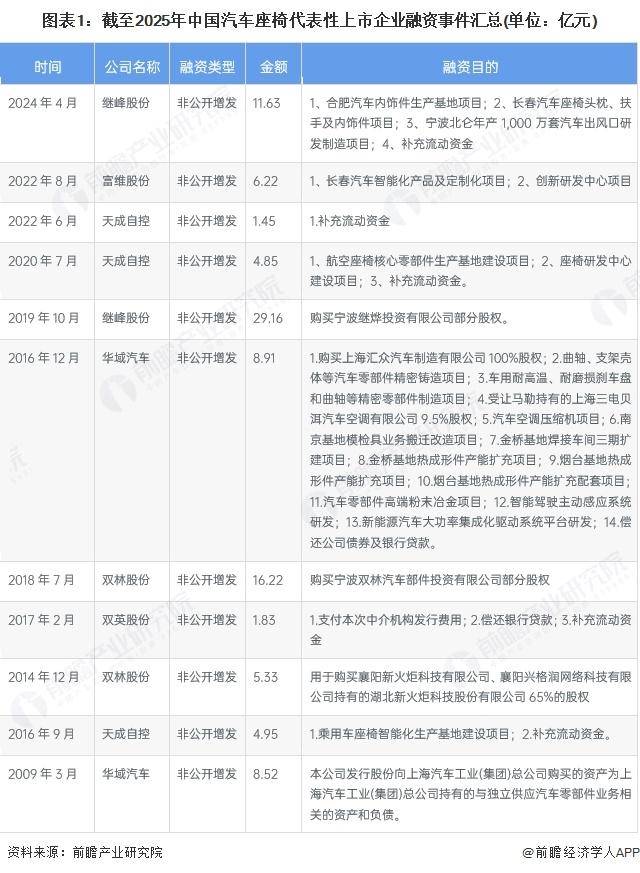
Core Insights - The automotive seat industry in China is experiencing significant financing activities, primarily through private placements aimed at acquiring equity and expanding production capacity [2][3][11] - Major players in the industry include Huayu Automotive, Fuwei Co., Tianc Control, Jifeng Co., Shuanglin Co., and others, with a focus on innovative and intelligent seat solutions [1][11] Financing Activities - The financing methods of listed companies in the automotive seat industry mainly involve private placements, with funds primarily allocated for equity acquisitions and working capital [2][3] - Notable financing events include: - Jifeng Co. raised 1.163 billion yuan for multiple projects including automotive interior production and flow capital [3] - Fuwei Co. raised 622 million yuan for smart automotive products and R&D center projects [3] - Huayu Automotive raised 891 million yuan for various projects including acquisitions and production capacity expansions [3] Investment Trends - The automotive seat industry is seeing a trend towards A-round financing, with a variety of companies involved in smart seat technology and component R&D [4][5] - Key investment events include: - Guanghua Rongchang's undisclosed amount in a private investment [5] - Tiancheng Control's 164.22 million yuan equity transfer for seat development [5] - Yanfeng's 8.06364 billion yuan equity transfer for innovative seating systems [5] Market Dynamics - The market concentration in the automotive seat industry is significant, with major global players like Lear, Faurecia, and Adient dominating the market [13] - The industry's concentration ratio (CR3) is 50% and CR5 is 69%, indicating a competitive landscape with a few key players holding substantial market shares [13][14] - The shift towards electric and intelligent vehicles is driving demand for integrated cockpit solutions, pushing suppliers to innovate and enhance their offerings [13]


健盛集团20251029
2025-10-30 01:56
Summary of the Conference Call for Jian Sheng Group Company Overview - **Company**: Jian Sheng Group - **Industry**: Seamless garment manufacturing Key Financial Performance - **Q3 Revenue**: 1.67 billion CNY, a year-on-year decrease of 2.75% [2][3] - **Q3 Net Profit**: 23.53 million CNY, a year-on-year increase of 56.53% [2][3] - **YTD Revenue**: 13.87 billion CNY, a year-on-year decrease of 1.65% [2][3] - **YTD Net Profit**: 253 million CNY, a year-on-year increase of 11.13% [2][3] Performance by Factory - **Vietnam Factory**: Achieved a net profit of over 95 million CNY in the first three quarters, compared to a loss of over 2 million CNY in the same period last year [2][5] - **Guizhou Base**: Maintained stable profitability with slight improvement compared to last year [5] - **Shaoxing Base**: Increased management profit by 50% through loss control [2][5] Business Outlook - **Q4 Expectations**: Performance is expected to be stable or better than the same period last year, with successful new client acquisitions such as Arisa, Brooks, and NB [2][6] - **New Client Orders**: UGG expected to place orders next month, and Lululemon anticipated to place orders early next year [2][6] Challenges and Market Dynamics - **Cotton Socks Revenue Decline**: Due to longer order cycles from Uniqlo, limited dyeing capacity in Vietnam, client order shifts, and poor sales from Puma [2][7] - **Future Growth in Cotton Socks and Seamless Business**: Expected progress in new client acquisition, focusing on the high-end market [2][8] Seamless Business Insights - **Current Operating Rate**: Seamless business operating rate is around 50%, with significant potential for profit margin improvement [4][9] - **Profitability**: Current profit margin for the Vietnam factory is approximately 5%, with expectations to reach double-digit margins through improved management [4][14] Cost Management and Investments - **Cost Reduction**: All bases have reduced production and operational costs, reflecting effective management strategies [5] - **Investment in Automation**: Plans to increase investment in automation and smart factory construction to enhance productivity and employee welfare [4][16] Tax and Revenue Composition - **Tax Rate**: The annual income tax rate is expected to remain around 15% [4][15] - **Revenue Composition**: Revenue from seamless business in Vietnam and domestically is approximately 40% to 60% [4][15] Future Directions - **Focus Areas**: Emphasis on manufacturing, automation, and smart factory initiatives, alongside ongoing share buybacks for long-term investment returns [4][16]

晶方科技20251029
2025-10-30 01:56
Summary of the Conference Call for Jingfang Technology Company Overview - **Company**: Jingfang Technology - **Industry**: Semiconductor and Optical Devices Key Points Business Growth and Financial Performance - Jingfang Technology benefited from the trend towards smart technology, with increased demand for sensors and cameras driving business growth [2][3] - In Q3 2025, revenue reached 1.065 billion yuan, a year-on-year increase of approximately 30%, while profit was 1.273 billion yuan, up nearly 50% [3] - Gross margin in Q3 2025 reached 52%, the second highest in nearly a decade, attributed to improved capacity utilization and product structure optimization [2][11] Optical Devices and Product Segments - Optical device business accounts for about 30% of total revenue, with hybrid lenses achieving profitability and wafer-level micro-array lenses expanding into automotive smart projection [2][6] - The company is focusing on increasing production capacity to meet customer demand in the optical segment [6] CS Packaging Business - The structure of the CS packaging business has changed significantly, with automotive-grade CS packaging accounting for nearly 70% of the business [2][8] - The company’s automotive CS packaging capacity is expected to double in 2025, reflecting strong demand and contributing to a nearly 50% year-on-year profit increase in the first three quarters [2][9] TSV Technology and Market Position - Jingfang Technology is one of the few companies globally capable of automotive CAS packaging using 12-inch wafers, with significant advantages in TSV technology over traditional IDG processes [2][14][15] - The company is experiencing rapid market share growth in the automotive camera packaging sector due to the advantages of TSV technology [15] Strategic Acquisitions and New Markets - The acquisition of VISIC has allowed Jingfang Technology to enter the silicon-based gallium nitride power module design field, with products covering voltage ranges from 200V to 1,200V [2][7] - The company is actively expanding into new markets such as data centers and has plans for further acquisitions and potential listings, including in Amsterdam [4][22] Future Outlook and Industry Trends - The demand for sensors and cameras in automotive smart technology, consumer electronics, and security monitoring is expected to continue driving business growth [3] - The company anticipates that the ongoing trend towards smart technology will stabilize or further enhance gross margins in the future [12] Capacity Expansion and Global Competitiveness - Jingfang Technology is advancing its capacity planning in Malaysia, with expectations to achieve small-scale production by Q4 2026, potentially doubling its production capacity [4][17][18] - The integration of the acquired Henan company has shown significant results, with plans for further expansion and development [19][20] Financial Considerations - Financial gains from currency fluctuations and interest rate declines have positively impacted profits, although overall financial gains have decreased compared to the previous year [10] - The company’s gross margin has fluctuated historically, with a peak of 56% and a low of below 40%, indicating potential for future improvements [11][12] Customer Dynamics and Market Trends - The customer structure for automotive clients has evolved, with a shift in demand patterns, particularly from BYD [13] - The company remains committed to the smart technology direction despite short-term market fluctuations, with expectations for rapid market penetration overseas by 2027 [13] Collaboration and Supply Chain Security - There are no supply chain security concerns regarding the collaboration with the Henan semiconductor equipment company, which has a long-standing relationship with Jingfang Technology [22] This summary encapsulates the key insights and developments discussed during the conference call, highlighting Jingfang Technology's strategic positioning and growth prospects within the semiconductor and optical device industry.

华菱钢铁(000932) - 2025年10月28日投资者关系活动记录表(二)
2025-10-30 01:22
Financial Performance - In the first three quarters of 2025, the company achieved total revenue of CNY 95.048 billion and a total profit of CNY 4.229 billion, with a net profit growth of 33.64% year-on-year [3] - In Q3 2025, the company reported a total profit of CNY 1.246 billion and a net profit of CNY 1.054 billion, marking a 73.22% increase compared to Q3 2024 [3][13] - The company's financial costs decreased by 89.56% year-on-year, and the asset-liability ratio dropped by 0.48 percentage points since the beginning of the year [4] Market Conditions - The steel industry continues to face supply-demand imbalances, with raw material prices rising significantly; iron ore prices increased by 4.37% and coking coal prices by 11.09% in Q3 [3] - Steel sales volume in the first half of 2025 was 11.1 million tons, a decrease of 12.6% year-on-year [11] Strategic Initiatives - The company is focusing on high-end, intelligent, and green transformation, with significant investments in product structure optimization and high-end product development [5][7] - The company has made progress in its silicon steel project, with expectations of reduced losses and improved profitability in 2025 [8] - VAMA's automotive steel project is advancing, with plans for new high-performance steel introductions and a focus on green low-carbon development [9] Production and Operations - The company has developed over 160 high-strength, high-toughness, and high-corrosion-resistant products in the industrial bar and rod sector, achieving full coverage in five key areas [3] - The company is implementing cost reduction measures, with a focus on optimizing procurement channels and reducing energy costs [3] Future Outlook - The company plans to continue enhancing cost efficiency and aims to maintain a profit margin of CNY 200-300 per ton above average for specialty steel products [6] - The steel industry is expected to see continued supply-side reforms, with policies emphasizing green transformation and capacity reduction [12]

特斯拉三季报营收创新高但盈利不及预期,以旧换新补贴申请量突破1000万份 | 投研报告
Zhong Guo Neng Yuan Wang· 2025-10-30 01:21
Market Overview - The automotive sector experienced a growth of +2.92%, with the best-performing sub-sector being automotive parts [1][2] - The Shanghai Composite Index rose by +3.24%, while the automotive sector ranked 10th among 31 primary industries [2] - Sub-sectors performance: automotive parts +4.04%, automotive services +3.94%, commercial vehicles +3%, motorcycles and others +0.92%, passenger vehicles +0.63% [2] Company Performance - Top five companies in terms of growth: - Markor International: +23.22% - Aolian Electronics: +18.28% - Qingdao Double Star: +16.57% - Taixiang Co.: +16.09% - Zotye Auto: +15.98% [2] - Bottom five companies in terms of decline: - Haima Automobile: -16.98% - Chaojie Co.: -10.61% - Hanma Technology: -10.23% - Bohai Automobile: -4.36% - Riying Electronics: -4.24% [2] Sales Data - From October 1-19, the national retail of passenger vehicles reached 1.128 million units, a year-on-year decrease of 6% but a month-on-month increase of 7% [2] - Wholesale of passenger vehicles was 1.155 million units, down 5% year-on-year and flat month-on-month [2] - Retail of new energy vehicles (NEVs) reached 632,000 units, up 5% year-on-year and 2% month-on-month, with a penetration rate of 56.1% [2] - Wholesale of NEVs was 676,000 units, reflecting a year-on-year increase of 6% and a month-on-month increase of 5% [2] Industry Trends - Tesla reported a record high revenue of $28.1 billion in Q3, a 12% year-on-year increase, but net profit fell by 29% to $1.77 billion [3] - Tesla's global vehicle deliveries reached 497,000 units, a 7.4% increase year-on-year [3] - The "old-for-new" vehicle subsidy applications exceeded 10 million by October 22, 2025, with NEVs accounting for 57.2% of the applications [3] - The recycling of scrapped vehicles reached 7.345 million units in the first three quarters, a 47.9% increase year-on-year, contributing to significant carbon reduction [4] Investment Recommendations - Focus on companies involved in intelligent vehicle technology and those with potential overseas sales [5] - Recommended automotive manufacturers: BAIC Blue Valley, Great Wall Motors, GAC Group [6] - Recommended automotive parts manufacturers: Songyuan Safety, Zhejiang Xiantong, Lingyun Co., Yinhong Co., Bertley, Doli Technology, Longsheng Technology, Huguang Co. [6]





研判2025!中国医用回旋加速器行业产业链、发展现状、竞争格局及发展趋势分析:癌症治疗需求增加,医用回旋加速器行业潜力逐步释放[图]
Chan Ye Xin Xi Wang· 2025-10-30 01:20
Core Insights - The medical cyclotron industry in China is experiencing continuous growth, with the market size expected to reach 413 million yuan in 2024, driven by technological advancements, increasing market demand, and supportive policies [1][11]. Technological Advancements - The performance and stability of medical cyclotrons have significantly improved due to ongoing technological developments, enabling better service to medical institutions and patients [1][11]. - The application of new materials and advanced manufacturing processes has enhanced the reliability and durability of the equipment, laying a solid foundation for the industry's long-term development [1][11]. Market Demand - The aging population and rising incidence of diseases such as cancer are leading to an increased demand for radiation therapy, which in turn boosts the market demand for medical cyclotrons [1][11]. - As healthcare standards improve and public health awareness rises, medical institutions are increasingly seeking high-end medical equipment, creating more opportunities for the development of medical cyclotrons [1][11]. Policy Support - The Chinese government has introduced several policies to support the industry, including initiatives aimed at promoting the upgrade of large-scale equipment and high-end medical devices [1][11]. Industry Overview - Medical cyclotrons are essential devices used in radiation therapy, particularly for tumor treatment, by generating high-energy electron or X-ray beams to damage cancer cell DNA [4][6]. - The industry has evolved through three stages: initial stage, preliminary development stage, and rapid development stage, with significant milestones such as the establishment of the first cyclotron in China in 1958 and the first domestic cyclotron being put into use in 2021 [6][7]. Industry Chain - The upstream of the medical cyclotron industry includes raw materials and components such as metals, plastics, electronic components, and magnetic systems, which directly affect the manufacturing quality and performance of cyclotrons [8]. - The downstream applications primarily involve medical and research institutions, where cyclotrons are used for medical diagnostics and scientific research [8]. Competitive Landscape - The market is currently dominated by international giants like Siemens Healthineers, GE Healthcare, and IBA, while domestic companies such as Sichuan Jiu Yi Yuan Particle Technology Co., Ltd. and Shaanxi Zhengze Biotechnology Co., Ltd. are rapidly emerging and achieving technological breakthroughs [12][13]. - Sichuan Jiu Yi Yuan Particle Technology Co., Ltd. focuses on high-end nuclear medical equipment and has developed a series of cyclotron products, while Shaanxi Zhengze Biotechnology Co., Ltd. specializes in small negative hydrogen cyclotrons and related equipment [12][13]. Future Trends - The medical cyclotron industry is expected to move towards greater intelligence, with advancements in control systems and beam stability, enhancing safety and reducing the need for manual intervention [15]. - There is a trend towards miniaturization and compactness of cyclotrons, which will lower installation costs and space requirements, facilitating wider adoption in medical institutions [15]. - The push for domestic alternatives is also a significant trend, with increasing government support for the localization of high-end medical equipment, which is expected to accelerate the industry's domestic production capabilities [15].

华菱钢铁(000932) - 2025年10月28日投资者关系活动记录表(一)
2025-10-30 01:18
Financial Performance - In the first three quarters of 2025, the company achieved total revenue of 950.48 million yuan, with a net profit of 42.29 million yuan, representing a year-on-year growth of 33.64% [3] - In Q3 2025, the company reported a total profit of 12.46 million yuan and a net profit of 10.54 million yuan, with a year-on-year increase of 73.22% [3] - The company's financial expenses decreased by 89.56% year-on-year, and the asset-liability ratio dropped by 0.48 percentage points compared to the beginning of the year [3] Market Conditions - The steel industry continues to face supply-demand imbalances, with raw material prices rising significantly; iron ore prices increased by 4.37% and coking coal prices by 11.09% in Q3 [3] - The company’s steel sales volume in the first half of 2025 was 11.1 million tons, a decrease of 12.6% year-on-year [6] Strategic Initiatives - The company is focusing on high-end, intelligent, and green transformation, with projects like the large-diameter seamless steel pipe production line expected to start in early 2026 [4] - The company has developed over 160 high-strength and high-toughness products in the industrial bar and rod sector, achieving five domestic firsts [3] Investor Relations - The company has increased cash dividends and conducted share buybacks to enhance shareholder returns, with a cash dividend ratio rising from 21% in 2021 to 34% in 2024 [11] - Long-term capital investment in the company has shown a rising trend [5] Environmental Compliance - The company has completed all ultra-low emission transformation projects and submitted evaluation reports, with verification expected to be completed by the end of November [11] - The company is actively addressing downstream lightweight emission reduction needs, having released an Environmental Product Declaration (EPD) for seamless steel pipe products [4] Future Outlook - The company plans to continue reducing costs and increasing efficiency, aiming for continuous improvement in iron water costs compared to industry benchmarks [5] - The company is committed to developing high-performance steel products to meet the needs of the manufacturing sector, with a target to maintain a profit margin of 200-300 yuan per ton over standard materials [5]
汽车业携手保险业同题共答
Jing Ji Ri Bao· 2025-10-29 22:04
Core Insights - The 2025 Financial Street Forum's China-Europe Insurance Innovation Forum focused on the theme of "New Intelligence, New Energy, New Future," emphasizing the exploration of smart and green initiatives in the insurance industry [1] - The forum highlighted the need for the insurance sector to adapt to trends of intelligence, greening, integration, and standardization to enhance service quality and regulatory effectiveness [1] Group 1: Industry Trends - The integration of information technology is increasingly evident, particularly in the automotive sector, where vehicles are becoming data-rich platforms, necessitating closer collaboration between insurance companies and car manufacturers [1] - The penetration rate of L2-level advanced driver assistance systems in new cars reached 62% in the first seven months of this year, with predictions indicating that over 90% of new cars will have L2-level or higher systems in ten years [2] Group 2: Insurance Platforms - The "Car Insurance Good Insurance" platform, established under the guidance of the National Financial Regulatory Administration, has successfully facilitated insurance for over 1.1 million new energy vehicles, with a risk coverage scale exceeding 1.1 trillion yuan [2] - The platform has recently expanded to include high-risk fuel-operated vehicles, addressing the insurance challenges faced by trucks and taxis, thereby enhancing accessibility for vehicle owners [3] Group 3: Regulatory Measures - The National Financial Regulatory Administration is promoting the inclusion of high-risk fuel-operated vehicles in the "Car Insurance Good Insurance" platform to ensure comprehensive coverage and improve customer satisfaction [3] - A monitoring mechanism will be established to ensure the stable operation of the platform and compliance with regulatory requirements, preventing false advertising and bundled sales [4]
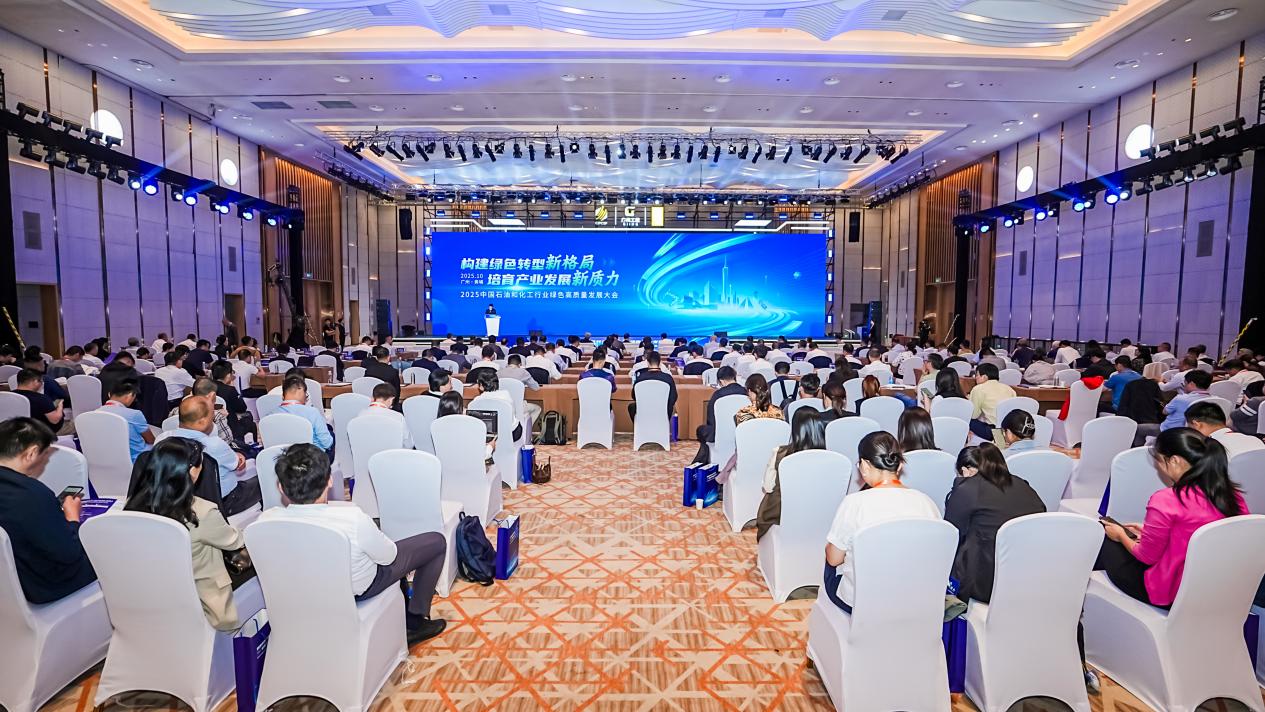
这场大会解码“十五五”石化行业高质量发展路径
Zhong Guo Jing Ying Bao· 2025-10-29 19:31
Core Insights - The "2025 China Petroleum and Chemical Industry Green High-Quality Development Conference" was held in Guangzhou, focusing on the theme of building a new pattern for green transformation and cultivating new quality forces for industrial development [1] - The conference released significant outcomes including typical case practices, industry blue papers, and ESG industry evaluation reports, providing essential data support and practical references for the industry's green development [1] - A strategic cooperation agreement was signed between Guangzhou Industrial Control Group and the China Petroleum and Chemical Industry Federation to deepen collaboration in industrial synergy, technological innovation, and green development [1] Group 1: Industry Development Direction - The 20th Central Committee of the Communist Party of China emphasized the need to focus on the real economy, with a direction towards intelligent, green, and integrated development for the petroleum and chemical industry over the next five years [2] - Guangzhou aims to accelerate innovation breakthroughs in key areas such as special engineering plastics and new energy battery materials, relying on new materials as a starting point [2] - The city plans to enhance energy management systems and promote collaborative development within chemical parks to improve the efficiency of the industrial chain [2] Group 2: Environmental Responsibility - The Ministry of Ecology and Environment highlighted the importance of managing new pollutants and accelerating the green replacement of toxic and harmful substances as a critical mission for the petrochemical industry [4] - The China Petroleum and Chemical Industry Federation stressed the need for the entire industry to focus on innovation-driven high-end breakthroughs, systematic thinking for green transformation, and digital empowerment for intelligent upgrades [4] Group 3: Digital Transformation and Upgrading - The former Minister of Industry and Information Technology emphasized the need to establish a carbon footprint management system and actively participate in carbon trading markets to enhance resource efficiency and environmental benefits through digital technologies [5] - Experts noted that developing corrosion control technology is essential for upgrading the petrochemical industry and achieving green development [5] - The main theme for the "14th Five-Year Plan" in the petrochemical industry is optimizing capacity structure, with core development paths focusing on high-end, internationalization, and avoiding excessive competition [5]