
碳中和

Search documents
铁龙物流的前世今生:2025年Q3营收85.82亿行业排名第四,净利润5.45亿与行业中位数持平
Xin Lang Cai Jing· 2025-10-30 11:48
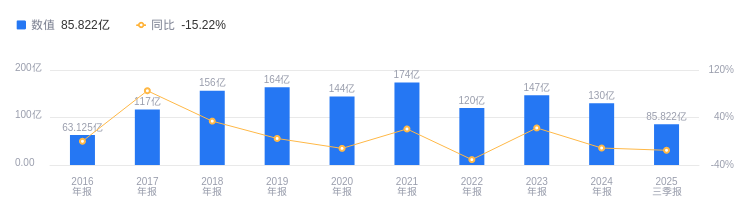
Core Viewpoint - Iron Dragon Logistics is a leading enterprise in China's railway special container transportation sector, with the largest domestic fleet and operational network in this field [1] Group 1: Business Performance - For Q3 2025, Iron Dragon Logistics achieved a revenue of 8.582 billion yuan, ranking 4th in the industry, below the industry average of 18.613 billion yuan [2] - The main business segments include supply chain management (3.361 billion yuan, 60.96%), railway special container business (1.361 billion yuan, 24.68%), and railway freight and port logistics (696 million yuan, 12.62%) [2] - The net profit for the same period was 545 million yuan, also ranking 4th in the industry, below the industry average of 2.867 billion yuan [2] Group 2: Financial Ratios - As of Q3 2025, the debt-to-asset ratio was 21.86%, higher than the industry average of 21.36% [3] - The gross profit margin was 10.75%, lower than the industry average of 16.06% [3] Group 3: Management and Shareholder Information - The total compensation for General Manager Li Fengyan was 1.1264 million yuan, an increase of 443,700 yuan year-on-year [4] - As of September 30, 2025, the number of A-share shareholders decreased by 6.57% to 61,700 [5] Group 4: Market Outlook and Analyst Ratings - Huatai Securities noted that Iron Dragon Logistics' H1 2025 performance exceeded expectations, with a proposed interim dividend and maintained an "overweight" rating [6] - The company is expected to see a net profit increase of 53.2%, 17.9%, and 16.7% for 2025-2027, with a target price adjustment of 4.9% to 7.44 yuan [6][7]


成都燃气前三季度营收37.77亿元同比降0.78%,归母净利润4.16亿元同比降0.84%,研发费用同比下降72.95%
Xin Lang Cai Jing· 2025-10-30 11:12
Core Insights - Chengdu Gas reported a slight decline in revenue and net profit for the first three quarters of 2025, with total revenue at 3.777 billion yuan, down 0.78% year-on-year, and net profit at 416 million yuan, down 0.84% year-on-year [1][2] Financial Performance - The company's basic earnings per share for the reporting period was 0.47 yuan, with a weighted average return on equity of 8.69% [1] - The gross margin for the first three quarters was 21.25%, an increase of 0.93 percentage points year-on-year, while the net margin was 11.57%, up 0.08 percentage points year-on-year [1] - In Q3 2025, the gross margin improved to 29.38%, up 5.05 percentage points year-on-year and 9.92 percentage points quarter-on-quarter, with a net margin of 15.34%, an increase of 1.36 percentage points year-on-year and 6.24 percentage points quarter-on-quarter [1] Expense Analysis - Total operating expenses for the company were 315 million yuan, an increase of 787,000 yuan year-on-year, with an expense ratio of 8.34%, up 0.09 percentage points year-on-year [2] - Sales expenses decreased by 2.89% year-on-year, while management expenses increased by 10.04%. R&D expenses saw a significant decrease of 72.95%, and financial expenses decreased by 0.55% [2] Shareholder Information - As of the end of Q3 2025, the total number of shareholders was 21,200, an increase of 1,038 from the end of the previous half-year, representing a growth of 5.14% [2] - The average market value per shareholder rose from 422,800 yuan to 435,200 yuan, an increase of 2.93% [2] Company Overview - Chengdu Gas, established on April 11, 1986, and listed on December 17, 2019, is based in Chengdu, Sichuan Province. Its main business includes urban gas distribution, sales, engineering construction, and gas meter sales [2] - The revenue composition is as follows: gas sales account for 85.23%, other services for 9.15%, and gas connection services for 5.62% [2] - The company operates within the public utility sector, specifically in gas distribution, and is associated with concepts such as Western Development, natural gas, carbon neutrality, hydrogen energy, and the Chengdu-Chongqing economic circle [2]

新天绿能前三季度营收144.45亿元同比降8.51%,归母净利润15.59亿元同比增4.23%,研发费用同比下降22.17%
Xin Lang Cai Jing· 2025-10-30 11:01
Core Viewpoint - Xintian Green Energy reported a decline in revenue for the first three quarters of 2025, while net profit showed a slight increase, indicating mixed financial performance amid challenging market conditions [1][2]. Financial Performance - The company's revenue for the first three quarters of 2025 was 14.445 billion yuan, a year-on-year decrease of 8.51% [1]. - The net profit attributable to shareholders was 1.559 billion yuan, reflecting a year-on-year increase of 4.23% [1]. - The basic earnings per share stood at 0.37 yuan [1][2]. - The gross profit margin for the first three quarters was 20.64%, up 0.73 percentage points year-on-year, while the net profit margin was 12.12%, an increase of 1.18 percentage points compared to the previous year [2]. Quarterly Analysis - In Q3 2025, the gross profit margin was 12.01%, down 0.62 percentage points year-on-year and down 11.13% quarter-on-quarter [2]. - The net profit margin for Q3 was 3.08%, up 1.86 percentage points year-on-year but down 9.70 percentage points from the previous quarter [2]. Expense Management - Total operating expenses for the period were 1.441 billion yuan, a decrease of 174 million yuan year-on-year [2]. - The expense ratio was 9.98%, down 0.25 percentage points from the same period last year [2]. - Sales expenses decreased by 23.94%, while management expenses increased by 1.46%, R&D expenses decreased by 22.17%, and financial expenses decreased by 13.37% [2]. Shareholder Information - As of the end of Q3 2025, the total number of shareholders was 39,200, an increase of 637 from the end of the previous half-year, representing a growth of 1.65% [2]. - The average market value per shareholder decreased from 841,700 yuan at the end of the previous half-year to 825,900 yuan, a decline of 1.88% [2]. Company Overview - Xintian Green Energy, established on February 9, 2010, and listed on June 29, 2020, is primarily engaged in natural gas sales and wind power generation [3]. - The company operates in three segments: natural gas sales (67.46% of revenue), wind and solar power generation (30.88%), and other services [3]. - The company is classified under the public utility sector, specifically in electricity and wind power generation, and is associated with clean energy and carbon neutrality concepts [3].

独家专访冰岛总统托马斯多蒂尔:冰岛创新与中国规模是完美组合
第一财经· 2025-10-30 10:49
Core Viewpoint - The article discusses the growing cooperation between China and Iceland, particularly in the geothermal energy sector, highlighting the potential for sustainable development and green energy initiatives between the two countries [3][4][6]. Economic and Trade Relations - Iceland is the first Western European country to recognize China's market economy status and has established a free trade agreement and currency swap agreement with China [4]. - China is currently Iceland's fourth-largest trading partner and has been the largest trading partner in Asia for 19 consecutive years [4]. Geothermal Energy Cooperation - Iceland has rich geothermal resources, with 95% of its heating needs met through geothermal energy, and has been promoting its geothermal technology globally [5][6]. - A joint statement was released during the visit, emphasizing the commitment to enhance cooperation in geothermal energy and green transformation, aiming to reduce greenhouse gas emissions and create new green industries and jobs [5][6]. - The partnership has been ongoing for decades, with a joint venture established in 2006 providing renewable energy heating services to over 70 regions in China [5][6]. Sustainable Development Initiatives - The 2025 Sustainable Global Leaders Conference aims to transform discussions on sustainability into actionable initiatives, connecting policy, business, and innovation [9]. - Iceland's strengths in sustainable practices and innovation are highlighted, with a focus on collaboration with China's execution capabilities and scale [9][10]. Tourism Growth - The number of Chinese tourists visiting Iceland reached 75,000 in the first eight months of the year, with expectations for continued growth [12][13]. - The unique natural landscapes of Iceland attract Chinese tourists, providing a stark contrast to their densely populated environments [12][13]. - There is a call for direct flights to enhance connectivity and promote further exchanges between the two nations [13][14].

徐工机械前三季度营收781.57亿元同比增13.72%,归母净利润59.77亿元同比增12.59%,毛利率下降1.30个百分点
Xin Lang Cai Jing· 2025-10-30 10:49
Core Insights - XuGong Machinery reported a revenue of 78.157 billion yuan for the first three quarters of 2025, representing a year-on-year increase of 13.72% [1] - The net profit attributable to shareholders was 5.977 billion yuan, up 12.59% year-on-year, while the net profit excluding non-recurring items was 6.002 billion yuan, reflecting a 22.76% increase [1] - The basic earnings per share stood at 0.51 yuan, with a weighted average return on equity of 9.92% [1] Financial Performance - The gross profit margin for the first three quarters was 22.33%, a decrease of 1.30 percentage points year-on-year, while the net profit margin was 7.78%, an increase of 0.04 percentage points compared to the same period last year [1] - In Q3 2025, the gross profit margin was 23.02%, down 0.63 percentage points year-on-year but up 1.03 percentage points quarter-on-quarter; the net profit margin was 7.14%, down 1.29 percentage points year-on-year and down 1.38 percentage points quarter-on-quarter [1] Expense Management - Total operating expenses for the company were 9.257 billion yuan, a decrease of 1.386 billion yuan year-on-year, with an expense ratio of 11.84%, down 3.64 percentage points from the previous year [2] - Sales expenses decreased by 17.99% year-on-year, while management expenses increased by 17.20%, and R&D expenses rose by 14.43%; financial expenses saw a significant reduction of 83.74% [2] Shareholder Dynamics - As of the end of Q3 2025, the total number of shareholders was 106,100, a decrease of 26,700 from the end of the previous half-year, representing a decline of 20.10% [2] - The average market value of shares held per shareholder increased from 687,800 yuan at the end of the previous half-year to 1,274,000 yuan, an increase of 85.22% [2] Company Overview - XuGong Machinery, established on December 15, 1993, and listed on August 28, 1996, is located in Xuzhou Economic and Technological Development Zone, Jiangsu Province [2] - The company's main business includes the research, manufacturing, sales, and service of various types of construction machinery and parts, with revenue composition as follows: earthmoving machinery 31.05%, other construction machinery and parts 28.09%, lifting machinery 19.11%, mining machinery 8.64%, aerial work machinery 8.34%, and piling machinery 4.77% [2] Industry Classification - XuGong Machinery belongs to the machinery equipment sector, specifically in the engineering machinery category, and is associated with concepts such as hydropower station, engineering machinery, waste classification, carbon neutrality, and hydropower [3]

华润微2025年前三季度营收同比增长7.99% 高端市场突破赋能业绩稳健成长
Zheng Quan Ri Bao Wang· 2025-10-30 09:41
Core Insights - The company reported steady growth in its operations, with Q3 revenue reaching 2.851 billion yuan, a year-on-year increase of 5.14% [1] - For the first three quarters of 2025, total revenue was 8.069 billion yuan, up 7.99% year-on-year, and net profit attributable to shareholders was 526 million yuan, reflecting a 5.25% increase [1] - The company is transitioning from a "supply chain leader" to an "industry ecosystem leader," focusing on application-driven scenarios and technology integration [1] Business Growth Strategies - The company has established three integrated business growth curves: 1. Upgrading traditional power devices to high-end products 2. Deepening the industrialization of third-generation semiconductors 3. Proactively developing high-end sensors and system solutions [1] Third-Generation Semiconductor Development - The company has accelerated the industrialization of third-generation semiconductors, particularly in silicon carbide (SiC) and gallium nitride (GaN), maintaining a leading position in China [2] - Since 2025, the production and sales of SiC have continued to grow, with significant orders from industry benchmark clients for various applications [2] - The company has achieved mass production of its SiC platform products, marking a substantial breakthrough in the electric drive system market for new energy vehicles [2] GaN Business Progress - In 2025, the company made significant advancements in GaN technology, capacity building, and customer collaboration [3] - The company has completed the verification of its 2200V SiC platform and is developing a series of related products [3] - Multiple GaN products have entered the testing and certification phase with leading industry clients, with some products in the mass production stage [3] Sensor Business Breakthroughs - The sensor technology sector is undergoing significant transformation, leading to the development of new intelligent sensors for various applications [4] - The company has achieved important breakthroughs in its sensor business, with new absolute pressure sensor products shipping over 1 million units monthly [4] - The company plans to focus on high-end sensor markets, enhancing manufacturing capabilities and technology advantages [4] R&D Investment and Market Position - The company invested 851 million yuan in R&D in the first three quarters of 2025, representing 10.55% of its revenue, maintaining a leading position in R&D intensity [5] - The company has established a robust R&D system that facilitates rapid product transformation across key areas such as power semiconductors and intelligent sensors [5] - The company aims to leverage its technological breakthroughs to expand into high-end markets, supporting the growth of China's semiconductor industry [5]

环球热点丨建设绿色亚太,中国彰显担当
Ren Min Ri Bao Hai Wai Ban· 2025-10-30 08:49
Core Viewpoint - The article emphasizes China's role in promoting green development in the Asia-Pacific region, highlighting its contributions to regional transformation and sustainable growth through various initiatives and investments [1][2][10]. Group 1: China's Green Development Initiatives - China has proposed a series of green development concepts at APEC, which have been well-received by regional stakeholders, focusing on low-carbon development and the establishment of a green economy [2][6]. - The APEC region, accounting for over 60% of the global economy and being the largest energy consumer, faces significant challenges in achieving carbon neutrality, necessitating urgent green transformation [3][4]. - China's commitment to green development is exemplified by the "APEC Blue" initiative, which has led to a significant reduction in PM2.5 levels in Beijing, showcasing successful environmental management [7][8]. Group 2: Challenges and Opportunities in the Asia-Pacific - The Asia-Pacific region possesses abundant renewable energy resources and a vibrant market for technological innovation, which are crucial for supporting green development [4][5]. - However, the region also faces challenges such as extreme weather events, high energy demand, and uneven distribution of renewable resources, which complicate the green transition [5][9]. Group 3: China's Experience as a Model - China's experience in balancing ecological, economic, and social development offers valuable lessons for other countries, emphasizing the importance of sustainable practices and green technology [9][12]. - The country promotes a collaborative approach to green development, encouraging international cooperation and sharing of green technologies to enhance regional capabilities [12][14]. Group 4: Investment and Economic Transformation - Chinese investments in green infrastructure and technology across the Asia-Pacific, such as renewable energy projects and electric vehicle initiatives, are driving local economies and fostering sustainable practices [10][11]. - Projects like the opening of the Chancay Port in Peru and wind power initiatives in Laos illustrate China's commitment to enhancing regional connectivity and supporting sustainable development [10][12]. Group 5: Future Directions and Multilateral Cooperation - Looking ahead, China aims to continue its leadership role in promoting green development through initiatives like the Belt and Road Initiative, fostering broader consensus on sustainability within APEC and other multilateral frameworks [15]. - The emphasis on building a community of shared future and enhancing green cooperation among countries is seen as essential for achieving global sustainability goals [14][15].

核电势头稳健,4年核准41台机组投资超8000亿|解读“十五五”
Di Yi Cai Jing· 2025-10-30 08:45
Group 1: Nuclear Power Development Outlook - The core viewpoint is that China's nuclear power development will continue to maintain a steady momentum over the next five years, as indicated by the recent guidelines from the Central Committee [1] - The expected annual approval of new nuclear units may decrease to around 8 from the previous 10, but the overall development scale will remain stable and continuous [1] - As of now, China has 59 operational nuclear units with a total installed capacity of 62.48 million kilowatts, and 53 units under construction with a capacity of 62.93 million kilowatts, leading to a total installed capacity exceeding 125 million kilowatts, maintaining the world's largest scale [1] Group 2: Advantages of Nuclear Power - Nuclear power is crucial for optimizing China's energy structure, providing a clean and efficient energy source that reduces reliance on traditional fossil fuels [2] - It plays a significant role in stabilizing energy supply, as it is not affected by weather or seasonal changes, ensuring a consistent power supply, especially during peak demand [2] - China has developed a complete nuclear power industrial system, accumulating rich experience in technology research, equipment manufacturing, construction, and operation management [2] Group 3: Challenges in Nuclear Power Sector - A major challenge facing the third-generation nuclear power plants is the issue of electricity pricing, which is closely linked to reducing construction costs [3] - Continuous efforts to lower construction costs are seen as key to enhancing the competitiveness of nuclear power [3] - The nuclear giant China General Nuclear Power Group has implemented comprehensive cost control from the design phase through to construction and management [3] Group 4: Safety and Sustainability Concerns - The positive outlook for nuclear energy development is fragile and can be reversed by a new nuclear accident, emphasizing the need for high-level nuclear safety [4] - China faces significant challenges in ensuring the safe operation of numerous nuclear units and maintaining construction quality during peak development periods [5]
四线小城的暴富神话
投资界· 2025-10-30 08:36
Core Viewpoint - Yulin, located in Shaanxi province, is identified as the strongest prefecture-level city in China's Midwest, surpassing many well-known cities in terms of GDP and development potential [4][5]. Economic Performance - In the first half of this year, Yulin's GDP reached 348.5 billion, ranking first among Midwest prefecture-level cities and exceeding cities like Jinhua, Luoyang, and provincial capitals such as Nanning and Taiyuan [5]. - Yulin's per capita GDP has shown significant growth, reaching 199,630 in 2023, up 15 places to rank 5th nationally, and projected to rise to 209,300 in 2024, nearing Shanghai's figure [9]. Resource Abundance - Yulin is rich in mineral resources, including the Shenfu coalfield with 877 billion tons of coal reserves, and various other minerals such as natural gas and oil, making it a strategic resource hub [6][8]. - The region has a diverse range of mineral resources, including 48 types, and is a major producer of magnesium, contributing to its economic strength [8]. Historical Context - Yulin's transformation began in the 1980s when coal mining became a focus due to national energy needs, leading to rapid economic growth and the emergence of numerous wealthy individuals [7][11]. - The city has a history of resilience and sacrifice, which has shaped its development trajectory [6][21]. Industrial Evolution - Yulin has shifted from a coal-dependent economy to a more diversified industrial base, focusing on coal chemical industries and high-end energy products [12][14]. - The city is positioning itself as a future energy incubator, emphasizing sustainable development through technology and talent [17][20]. Technological Advancements - Significant investments in technology and research have led to the establishment of large-scale projects, such as the world's largest coal-based ethanol facility, enhancing Yulin's industrial capabilities [17][18]. - The integration of coal and salt chemical industries is being explored to produce essential chemical raw materials, further diversifying the economy [14][20]. Environmental Initiatives - Yulin has made substantial progress in environmental restoration, increasing forest coverage and reducing sediment flow into the Yellow River, showcasing a commitment to sustainable development [21].
通威广元光伏硅材料制造项目机电设备安装工程顺利通过竣工验收
Xin Hua Cai Jing· 2025-10-30 08:29
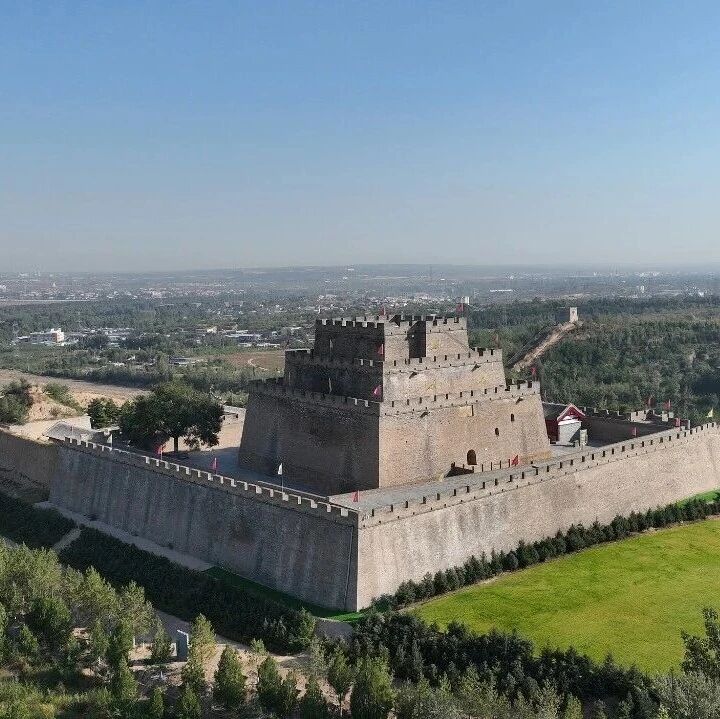
Core Insights - The completion and acceptance of the photovoltaic silicon material manufacturing project by Tongwei Green Materials (Guangyuan) Co., Ltd. marks a significant advancement for the largest industrial project in Cangxi County, laying a solid foundation for subsequent full-scale production [1][3] - The project is expected to generate an annual output value of approximately 8 billion yuan once fully operational, contributing significantly to the local economy [1] Project Details - The project underwent a rigorous acceptance process involving multiple parties, including construction, supervision, design, and construction units, which formed specialized inspection teams to ensure compliance with design and regulatory standards [1] - The project team adhered to principles of compliance and quality, integrating craftsmanship into every aspect of the installation and commissioning processes, ensuring reliability and safety [1] Industry Impact - Industrial silicon, a core raw material in the photovoltaic industry chain, is considered a cornerstone for the new energy and electronic information sectors [1] - The project will not only drive breakthrough development in the local industrial economy but also support national energy security strategies and contribute to China's goals of carbon neutrality and peak carbon emissions [3]
