
双碳目标

Search documents
经导财评丨碳市场扩围加速推进,为绿色低碳转型提供支撑
Da Zhong Ri Bao· 2025-11-21 09:45
Core Viewpoint - The Ministry of Ecology and Environment has issued the "Quota Allocation Plan for National Carbon Emission Trading Market for Steel, Cement, and Aluminum Smelting Industries for 2024 and 2025," indicating a significant step towards expanding the carbon market to cover major industrial sectors [1][2]. Summary by Sections Carbon Market Expansion - The national carbon market, which started in 2021, has expanded from covering only the power generation sector to now include steel, cement, and aluminum smelting industries, marking its first major expansion [1][2]. - The types of greenhouse gases covered have also increased from solely carbon dioxide to include carbon dioxide, tetrafluoromethane, and hexafluoroethane [1]. Quota Allocation Framework - The "Quota Allocation Plan" continues the practice of free allocation of quotas based on carbon emission intensity, linking the quota amount to actual production levels without setting an absolute cap on total emissions [2]. - The focus is on direct emissions during production, excluding indirect emissions from purchased electricity and heat, emphasizing a "big fish, small fish" approach to target major emitters [2]. - The plan highlights the importance of data quality, stating that reliable carbon emission data is essential for an effective market, and introduces advanced monitoring technologies like blockchain and AI to combat data fraud [2]. Future Expansion Plans - Preparations for expanding the carbon market to include the chemical, petrochemical, civil aviation, and paper industries have already begun, with a goal to cover major industrial sectors by 2027 [3]. - The policy direction is clear, adhering to the principle of "mature one, include one," and will expand based on industry development, pollution reduction contributions, data quality, and emission characteristics [3]. - The ongoing improvements in the carbon emission management system and the implementation of reduction measures will enhance the role of the national carbon market in promoting green and low-carbon transformation in the economy and society [3].
关于召开 2025 年矿热炉节能供电(直流电)技术研讨会的通知
中国有色金属工业协会硅业分会· 2025-11-21 08:58
Group 1 - The article highlights the significance of direct current smelting technology in promoting industry technological advancement under the national "dual carbon" goals [1] - A seminar titled "2025 Mineral Thermal Furnace Energy-saving Power Supply (Direct Current) Technology Seminar" is scheduled to take place from December 4 to 6, 2025, in Hohhot, Inner Mongolia [1][2] - The seminar aims to facilitate in-depth exchanges and collaborative development within the industry [1] Group 2 - The seminar's theme is "Practicing Energy-saving and Low Carbon, Promoting Green Development" [2] - The event is organized by the China Nonferrous Metals Industry Association Silicon Branch and Beijing Antai Technology Information Co., Ltd., with support from various local government and industry partners [2] - The preliminary agenda includes registration, opening ceremony, technical reports, discussion sessions, and site visits to relevant companies [2]


2025金融街论坛楼宇经济发展论坛举行
Jing Ji Guan Cha Wang· 2025-11-21 06:15
Core Insights - The forum emphasized the theme of "Collaborative Creation and Ecological Co-construction," focusing on new dynamics and innovative service paths for high-quality development in the building economy amidst profound changes in the real estate industry [1][2][3] Group 1: Policy and Government Initiatives - The government of Xicheng District is enhancing the building economy policy framework and service ecosystem, promoting high-end industries such as wealth management and financial technology through initiatives like the "Ten Financial Services Measures" [1] - The district is also advancing smart building construction to integrate digital technology with the real economy, aiming to transform buildings from mere "space providers" to "value co-creators" [1] Group 2: Market Outlook and Economic Analysis - The former chief economist of the Ministry of Housing and Urban-Rural Development expressed confidence in the core building market of China's first-tier cities, highlighting the irreplaceable value of locations like Beijing's financial district [2] - Long-term structural opportunities are expected to arise as a result of effective government policies aimed at stabilizing the real estate market, encouraging a shift towards high-quality operational services [2] Group 3: Industry Trends and Innovations - A consensus emerged that the building economy has entered a new development stage characterized by "operation, content, and ecology as kings," moving beyond reliance on geographical and hardware advantages [3] - The focus is now on creating a symbiotic industrial ecosystem through precise policy guidance, cutting-edge technology applications, and mature financial services to preserve and enhance asset value in a stock-driven market [3]

中极氢能段晚儿:未来3—5年氢能汽车逐步缩小与燃油车成本差距
Zhong Guo Jing Ying Bao· 2025-11-21 05:55
Core Viewpoint - The hydrogen energy vehicle sector is characterized by commercial vehicles leading the way, policy-driven growth, and accelerated technological breakthroughs, with expectations for hydrogen applications in transportation to achieve lower lifecycle costs than fuel vehicles by the mid-point of the 14th Five-Year Plan [1][2]. Group 1: Market Development - As of July 2025, the cumulative sales of fuel cell vehicles in China are projected to reach 30,000 units, with over 90% localization of fuel cell systems [1]. - The 300kW fuel cell system has achieved a hydrogen consumption of 8kg per 100km and a range of 700km [1]. - Commercialization has been established in mid-to-long-distance heavy-load scenarios such as trunk logistics, cold chain logistics, and mining port applications [1]. Group 2: Infrastructure and Policy - There are nearly 600 hydrogen refueling stations nationwide, with over 10 provinces implementing free ETC policies for hydrogen vehicles, although regional coverage remains insufficient [1]. - The hydrogen industry during the 14th Five-Year Plan needs to address issues such as cost competitiveness, storage and transportation bottlenecks, standards and safety, industrial chain collaboration, and regional mismatches [2]. Group 3: Future Outlook - In the next 3-5 years, fuel cell vehicles are expected to narrow the cost gap with fuel vehicles through technological iterations, focused application scenarios, and policy collaboration, creating a complementary relationship with pure electric vehicles in differentiated scenarios [2]. - The hydrogen industry is transitioning from demonstration and exploration to large-scale commercialization, requiring policy support to enhance technological innovation, improve infrastructure, establish a sound standard system, optimize regulation, and strengthen regional collaboration and international layout to achieve carbon neutrality goals [2].
国家电投资产整合:电投能源百亿并购白音华煤电
Zhong Guo Jing Ying Bao· 2025-11-21 05:39
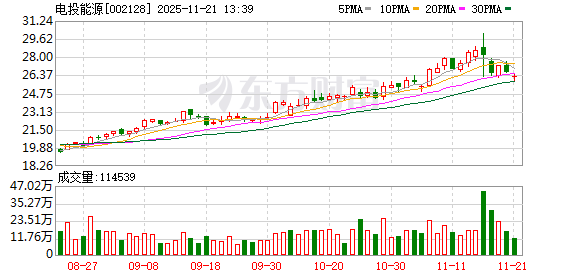
Core Viewpoint - The acquisition of 100% equity in Baiyinhu Coal Power by Electric Power Investment Energy (002128.SZ) from the State Power Investment Corporation's Inner Mongolia Energy Company is a strategic move to deepen the integration of coal, thermal power, and electrolytic aluminum assets, with a transaction value of 11.149 billion yuan [2][3]. Group 1: Acquisition Details - Electric Power Investment Energy plans to issue approximately 649 million shares at a price of 14.77 yuan per share and pay part of the cash to acquire Baiyinhu Coal Power, which will account for 22.46% of the company's total share capital post-transaction [3]. - The company aims to raise up to 4.5 billion yuan from no more than 35 qualified investors to support the acquisition and related projects [3]. - Baiyinhu Coal Power, established in October 2003, is a wholly-owned subsidiary of Inner Mongolia Company and has a coal production capacity of 15 million tons per year [3][4]. Group 2: Financial Performance - In the first half of 2025, Baiyinhu Coal Power reported revenue of 5.552 billion yuan and a net profit of 762 million yuan [4]. - For the first three quarters of 2025, Electric Power Investment Energy achieved revenue of 22.403 billion yuan, a year-on-year increase of 2.72%, while net profit decreased by 6.40% [4]. Group 3: Industry Context - The coal market has experienced price fluctuations, with the Qinhuangdao 5500 kcal thermal coal price rising from 621 yuan/ton on June 30 to 699 yuan/ton on September 30, marking a 12.6% increase in the third quarter [6]. - The coal industry is witnessing a trend towards consolidation, with several companies, including Electric Power Investment Energy, engaging in strategic mergers to enhance operational efficiency and market competitiveness [6][7]. - The restructuring in the coal sector is driven by policy and strategic considerations, aiming to optimize energy resource allocation and improve the resilience of large energy groups in meeting national energy security needs [7].

新能源汽车政府采购需求标准征求意见,透露了怎样的信号?
Zhong Guo Qi Che Bao Wang· 2025-11-21 04:02
Core Viewpoint - The Ministry of Finance and the Ministry of Industry and Information Technology have released a draft for public consultation on the government procurement demand standards for new energy vehicles, marking a significant step towards promoting hydrogen fuel cell vehicles alongside electric and hybrid models in government procurement [1][2]. Group 1: Policy Implications - The inclusion of hydrogen fuel cell vehicles in the government procurement standards signifies a shift from pilot projects to large-scale procurement, aiming for a balanced market structure among electric, hybrid, and hydrogen vehicles [2][4]. - The new policy mandates that at least 30% of annual government vehicle purchases must be new energy vehicles, reflecting a strong governmental commitment to green transportation [4][8]. - The draft aims to eliminate unreasonable barriers in supplier qualifications, fostering a fair competitive environment for all new energy vehicle manufacturers [3][6]. Group 2: Market Impact - The government procurement policy is expected to significantly increase the market share of hydrogen fuel cell vehicles, which currently account for less than 5% of the new energy vehicle market [2][4]. - The policy is anticipated to enhance public acceptance of new energy vehicles, particularly in high-usage scenarios like taxis and ride-hailing services, potentially increasing private consumer adoption by 15%-20% [7][8]. - By integrating hydrogen fuel cell vehicles into public transport and logistics, the policy aims to address urban pollution and improve environmental quality [6][8]. Group 3: Technological Development - The draft emphasizes the importance of service response and charging infrastructure, encouraging companies to transition from pure technology development to comprehensive product and service solutions [6][9]. - The government procurement process will focus on the entire lifecycle of vehicles, ensuring quality and performance standards are met to support carbon reduction goals [8][9]. - The policy is seen as a catalyst for technological innovation and competitiveness in the global market, providing a window of opportunity for domestic companies to enhance their capabilities [9].

南网科技荣获中上协“2025年度上市公司董事会优秀实践案例”
Quan Jing Wang· 2025-11-21 03:01
Core Insights - The China Listed Companies Association announced the selection results for the 2025 Best Practices in Board Governance, with Southern Power Grid Electric Technology Co., Ltd. recognized for its outstanding practices in governance, strategic leadership, investor relations, and social responsibility [1][2]. Governance and Compliance - Southern Power Grid Electric Technology has established a robust governance system centered around its Articles of Association, with supporting rules for shareholder meetings, board meetings, and independent director operations, ensuring compliance and efficient operations [1][2]. - The company has received an A-level rating for information disclosure from the Shanghai Stock Exchange for three consecutive years, making it one of the few central enterprises on the Sci-Tech Innovation Board to achieve this highest rating [1]. Strategic Decision-Making and Risk Management - The company focuses on strategic decision-making and risk prevention, aligning its operations with the construction of a "new power system" and "dual carbon" goals, while promoting green and low-carbon transformation [2]. - Southern Power Grid Electric Technology has established an internal control and compliance management system covering all business processes to ensure sustainable and stable development [2]. Investor Relations and Shareholder Returns - The company prioritizes investor relations by enhancing the quality and transparency of information disclosure, utilizing various formats to improve the readability and practicality of reports [2]. - A dual dividend mechanism has been implemented, with cash dividend plans announced for both the first half of 2024 and mid-2025, aimed at sharing development results with investors [2]. Social Responsibility and ESG Management - Southern Power Grid Electric Technology has established a dedicated ESG management position and publishes an annual sustainability report, highlighting its contributions to rural revitalization, green development, and employee care [3]. - The company’s poverty alleviation procurement amount reached 238,800 yuan in 2024, with its ESG practices recognized by authoritative institutions [3].

建立多层次新能源消纳调控体系
Jing Ji Ri Bao· 2025-11-21 01:20
Core Insights - The National Development and Reform Commission and the National Energy Administration have issued guidelines to establish a multi-level system for renewable energy consumption and regulation by 2030, aiming for new electricity demand to be primarily met by renewable energy sources [1] - China has announced ambitious targets for renewable energy capacity, aiming for wind and solar power to reach over six times the 2020 levels by 2035, which poses new challenges for large-scale renewable energy consumption [1] - The guidelines categorize renewable energy development and consumption into five types, enhancing the precision of renewable energy utilization [1] Group 1 - The guidelines emphasize the importance of local consumption of renewable energy, promoting new business models and integrated development of renewable energy with industries [2] - The focus on local consumption aims to improve the efficiency of renewable energy use, reduce system pressure, and lower investment costs associated with long-distance transmission [2] - The guidelines address the unique characteristics of renewable energy generation, such as randomness and high system costs, and propose improvements to the electricity market to better accommodate these features [2] Group 2 - Continuous improvement of market systems and pricing mechanisms is essential to resolve the challenges faced by renewable energy companies, ensuring they can compete effectively and achieve reasonable market returns [3] - Companies are encouraged to develop differentiated strategies in response to market changes, particularly in the context of a unified electricity market and various market segments [3] - The new policies are expected to boost confidence among companies in the renewable energy sector, facilitating high-level consumption and regulation of renewable energy [3]
科陆电子(002121) - 2025年11月20日投资者关系活动记录表
2025-11-21 00:52
Production Capacity - The current annual production capacity of the Yichun energy storage base is 10GWh, which is operating at full capacity [2][6][12] - The planned initial production capacity for the Indonesian energy storage base is 3GWh, with a target operational date in 2026 [5][12][19] Financial Management - The company is addressing high debt levels by enhancing accounts receivable management, expanding bank credit, and disposing of non-core assets [3][20] - Measures to ensure cash flow include optimizing cash management and strengthening cooperation with banks [20][37] Market Strategy - The company is focusing on expanding its domestic and international energy storage markets, particularly targeting strategic clients such as state-owned enterprises [10][20] - The company aims to establish a localized team in overseas markets to better meet customer needs and drive business growth [10][20] Order and Project Updates - The company has not yet signed contracts for the Saudi Red Sea New City project and is actively monitoring market dynamics [8][19] - There is a focus on core business areas, with specific order situations to be disclosed in regular reports [8][20] Risk Management - The company acknowledges that its stock price is influenced by macroeconomic conditions, industry policies, and market sentiment, urging investors to be aware of investment risks [2][20] - The company is committed to improving operational management and quality to create more value for shareholders [2][20]

分类引导合理统筹供需 建立多层次新能源消纳调控体系
Jing Ji Ri Bao· 2025-11-20 23:14
Core Viewpoint - The recent "Guiding Opinions" issued by the National Development and Reform Commission and the National Energy Administration aim to establish a multi-level system for the consumption and regulation of renewable energy by 2030, with a focus on meeting new electricity demand primarily through renewable energy sources [1] Group 1: Renewable Energy Development and Consumption - By 2035, China aims to achieve a total installed capacity of wind and solar power that is more than six times that of 2020, targeting 3.6 billion kilowatts [1] - The "Guiding Opinions" categorize renewable energy development and consumption into five types, enhancing the precision of renewable energy utilization [1] Group 2: New Models and Business Formats - The "Guiding Opinions" outline new models and business formats for promoting renewable energy consumption, including integrated development models and support for local consumption through smart microgrids and increased distribution networks [2] - Local consumption is emphasized as a priority for the 14th Five-Year Plan, aiming to improve overall utilization efficiency and reduce system pressure [2] Group 3: Market Adaptation and Challenges - The "Guiding Opinions" focus on enhancing the adaptability of the electricity market to the characteristics of renewable energy, addressing challenges such as randomness and intermittency [2] - Improving market mechanisms and pricing systems is essential to help renewable energy companies compete effectively and achieve reasonable market returns [3] Group 4: Corporate Preparedness - Companies are encouraged to develop differentiated strategies in response to market changes, leveraging the unified electricity market and various market segments such as long-term, spot, and carbon markets [3]