增收不增利

Search documents
股价单日暴跌超18% 一季度增收不增利!名创优品背后隐忧重重
Xi Niu Cai Jing· 2025-05-31 02:00
Core Viewpoint - Miniso's stock price plummeted over 18% on May 26, primarily due to concerns raised by its Q1 2025 financial report, which showed revenue growth but a significant decline in net profit [2] Financial Performance - For Q1 2025, Miniso reported revenue of 4.43 billion RMB, an 18.9% year-on-year increase, while net profit fell by 28.92% to 417 million RMB [2][3] - The increase in revenue was overshadowed by a sharp rise in sales and distribution expenses, which reached 1.02 billion RMB, a 46.7% increase year-on-year [3][4] - General and administrative expenses also rose by 26.6% to 242 million RMB, further squeezing profit margins [3][4] Cost Structure - The rise in sales and distribution expenses was attributed to direct investments in new stores and interest expenses from loans related to the acquisition of Yonghui Superstores [4] - High operational costs associated with overseas expansion, including rent, depreciation, and wages, increased by 71.4%, leading to low profit contributions from new stores [5] Market Expansion and Competition - As of March 31, 2025, Miniso had expanded its overseas store count to 3,213, a net increase of 617 stores year-on-year [5][6] - The company faces challenges in the domestic market due to increased competition and changing consumer preferences, which have diminished the effectiveness of its low-price strategy [6] - Same-store sales have shown a mid-single-digit decline, indicating reduced operational efficiency and growth potential in the domestic market [6] Debt and Financial Health - Miniso's total liabilities nearly doubled from 7.77 billion RMB to 15.51 billion RMB, with the debt-to-asset ratio rising from 42.85% to 59.22% [7][8] - Despite revenue growth, the significant drop in net profit, risks from overseas expansion, and intense market competition raise concerns about the company's future profitability and ability to manage costs effectively [8]


名创优品单日暴跌背后:增收不增利困境凸显 国内增长触顶、TOP TOY难挑大梁?
Xin Lang Zheng Quan· 2025-05-30 07:24
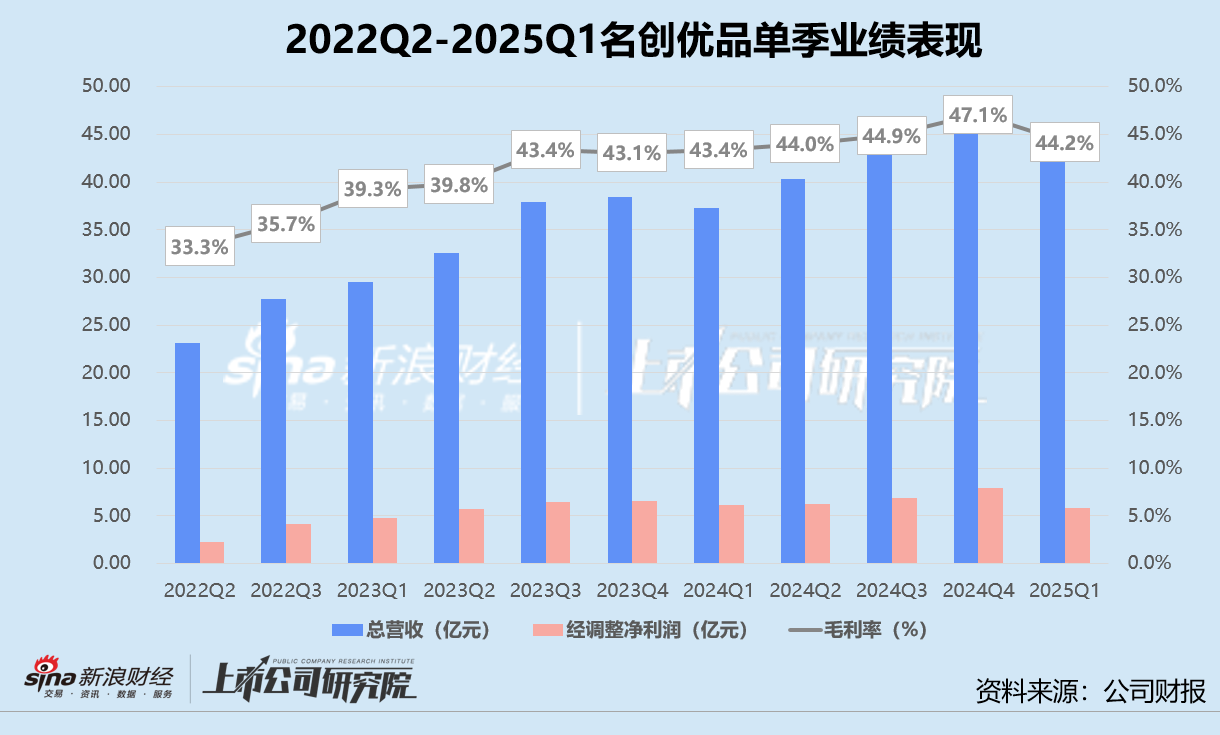
Core Viewpoint - MINISO's stock price has significantly dropped in both US and Hong Kong markets, leading to a market value loss exceeding $2 billion since the beginning of the year, following disappointing quarterly earnings reports [1][2]. Financial Performance - For Q1 2025, MINISO reported total revenue of 4.427 billion yuan, a year-on-year increase of 18.9%, but net profit fell by 28.9% to 417 million yuan [2][4]. - Adjusted net profit for the same period was approximately 587 million yuan, down from 617 million yuan in Q1 2024, marking a new low in nearly seven quarters [2][4]. - The company's gross profit increased by 21.1% year-on-year, with a gross margin improvement of 0.8 percentage points to 44.2% [2]. Cost and Expense Management - Sales and distribution expenses surged to 1.021 billion yuan, a 46.7% increase compared to Q1 2024, with sales expenses accounting for 52.2% of gross profit [4][6]. - The company’s costs related to rent, depreciation, and labor rose by 71.4% during the reporting period, indicating challenges in cost control [4][6]. Store Expansion and Strategy - MINISO's overseas store count nearly doubled from 281 to 548, while the number of TOP TOY stores increased from 17 to 40, reflecting aggressive expansion strategies [4][5]. - The average size of new stores opened in Q1 2025 was approximately 300 square meters, with a focus on upgrading store formats [5][6]. Market Position and Competition - The domestic store count showed signs of stagnation, with a net increase of only 241 stores in mainland China, marking the first sequential decline since Q2 2022 [7][11]. - The main brand's revenue in mainland China was approximately 2.494 billion yuan, with a modest year-on-year growth of 9.1%, indicating a slowdown compared to previous high double-digit growth rates [11]. Future Outlook - The company is considering a potential spin-off of TOP TOY for a Hong Kong listing, aiming to raise $300 million, but faces challenges related to high licensing costs and the need for a distinct brand identity [12][14].
莱绅通灵连亏三年 黄金业务狂飙下的结构性隐忧
Xin Lang Zheng Quan· 2025-05-29 07:52
Core Viewpoint - The company is experiencing significant revenue growth while simultaneously deepening its losses, indicating a fundamental operational and strategic imbalance [1][2]. Revenue and Profitability - In 2024, the company achieved a revenue of approximately 1.22 billion yuan, representing a year-on-year increase of 66.81% [1]. - The net profit attributable to shareholders was approximately -184 million yuan, indicating an increase in losses [1]. Strategic Shift and Challenges - The company's strategic focus has shifted entirely towards the gold business, which has not yielded the expected results and has instead become a liability for profitability [2]. - The low gross margin of the gold business and the volatility of industry prices have led to a significant divergence between revenue growth and profit levels [2]. - The rapid growth of the gold segment has diluted the overall gross margin, while traditional high-margin businesses like diamonds continue to decline, further complicating profit recovery [2]. Operational Efficiency and Management Issues - The company's operational management is misaligned with its aggressive expansion strategy, resulting in inventory turnover efficiency significantly below the industry average [3]. - Excessive inventory of gold and diamonds not only ties up cash flow but also poses a risk of impairment due to price declines [3]. - Accounts receivable are growing at a rate far exceeding revenue growth, indicating a heavy reliance on credit sales, which exacerbates cash flow pressures and raises doubts about revenue authenticity [3]. Governance and Market Confidence - Governance issues, such as share reductions by major shareholders and the founder's exit from management, have shaken investor confidence in the continuity of the company's strategy [3]. - The management has failed to propose effective solutions to core issues like inventory buildup and cash flow depletion, instead revealing strategic inconsistency through repeated adjustments in store expansion and contraction [3]. Conclusion and Implications - The case of the company illustrates a typical dilemma: during a period of industry decline, relying solely on trending product categories while neglecting internal capability development can lead to a "false prosperity" trap [4]. - The rapid scale of the gold business is overshadowed by a collapse in profitability logic and operational foundations [4]. - For investors, the lesson is clear: revenue growth disconnected from efficiency improvements is merely a numerical game, and building a differentiated value moat is essential to navigate cyclical fluctuations [4].

一季度增收不增利!与投资永辉有关?名创优品回应了
Nan Fang Du Shi Bao· 2025-05-27 04:45
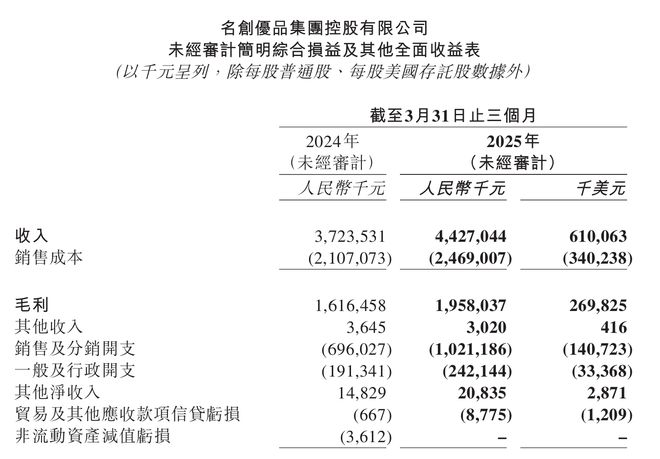
Core Viewpoint - Miniso's Q1 2025 financial report shows a revenue increase of 18.9% year-on-year to 4.43 billion RMB, but a decline in operating profit by 4.51% to 710 million RMB, and a net profit drop of 28.92% to 417 million RMB, indicating challenges in profitability despite revenue growth [1][3][6]. Financial Performance - Revenue for Q1 2025 reached 4.43 billion RMB, up from 3.72 billion RMB in Q1 2024, marking an 18.9% increase [3]. - Operating profit decreased to 710 million RMB, down 4.51% from the previous year [1]. - Net profit fell to 417 million RMB, a decline of 28.92%, with adjusted net profit at 587 million RMB, down 4.81% [1][3]. - Net profit margin dropped from 16.6% in the previous year to 13.3% [1]. Cost Structure - Sales and distribution expenses increased by 46.7% to 1.02 billion RMB, driven by rising overseas store rental, depreciation, and amortization costs [7]. - General and administrative expenses rose by 26.6% to 242 million RMB [7]. - Financial expenses increased due to a convertible bond issuance and loans for acquiring a stake in Yonghui Superstores, impacting overall profitability [6][7]. Market Expansion - Overseas business revenue reached 1.59 billion RMB, a 30% increase, accounting for 36% of total revenue [8]. - Total store count increased to 7,768, with 4,275 stores in mainland China and 3,213 overseas [8][9]. - The number of direct-operated stores in mainland China decreased to 20, while overseas direct-operated stores increased significantly [8][9]. Strategic Outlook - The company aims for healthy growth in operating profit in 2025, focusing on cost control and long-term revenue and profit growth [6][9]. - Direct-operated store revenue contribution rose from 14% to 22%, with a year-on-year growth of 86% [9]. - The company plans to continue expanding its overseas business, particularly in strategic markets like the U.S. [9].
旅游市场恢复却增收不增利,出行平台活力集团再度递表港交所
Nan Fang Du Shi Bao· 2025-05-23 10:46
Core Viewpoint - Vigor Group, a pioneer in the travel service market, is seeking to go public on the Hong Kong Stock Exchange to expand internationally despite not holding a leading market share in online ticket booking [2][3] Group 1: Market Position and Performance - Vigor Group is currently the fifth largest third-party platform for online flight bookings with a market share of approximately 1.9% and the third largest for online train ticket bookings with a market share of about 2.4% as of 2024 [3] - The largest competitor in the comprehensive internet travel service market holds around 44.4% market share, indicating significant competition [3] - Despite a notable revenue increase from 280 million yuan in 2022 to 647 million yuan in 2024, the company faces a situation of revenue growth without profit growth [3][4] Group 2: Revenue Breakdown - Vigor Group's revenue is derived from three main segments: travel-related services, online marketing services, and data and technology services [4] - Travel-related services generated 267 million yuan, accounting for 41.3% of total revenue, primarily from flight ticket commissions [4] - Online marketing services and data and technology services contributed 55.1 million yuan and 20.9 million yuan respectively, with travel-related services making up 85.2% of total revenue [5] Group 3: Profitability Challenges - The company reported a decrease in net profit from 59.3 million yuan in 2023 to 51.2 million yuan in 2024, a decline of 13.8% [5][6] - Increased costs from service providers and rising sales and marketing expenses contributed to the profit decline, with sales costs rising from 217 million yuan to 301 million yuan and marketing expenses increasing from 115 million yuan to 145 million yuan [6] Group 4: Future Expansion Plans - Vigor Group plans to leverage its technology platform to enter overseas markets, particularly in Asia, focusing on Singapore, Japan, and South Korea, where market concentration is lower than in China [6] - The company has established a regional headquarters in Hong Kong and aims to gradually penetrate these markets over the next five years [6]

同方全球人寿高层“大换血”,如何推动业绩新增长点?
Nan Fang Du Shi Bao· 2025-05-22 13:39
Core Viewpoint - Tongfang Global Life Insurance Co., Ltd. has undergone significant management changes, raising questions about its strategic direction amidst a backdrop of increasing revenue but declining net profits from 2021 to 2023, although a turnaround was noted in 2024 with both premium and net profit growth [2][11]. Management Changes - The company has recently announced a broad adjustment in its executive team, including the promotion of internal talent to various key positions such as Secretary of the Board and Chief Executive Officer of Group Insurance [2][3]. - Chen Shangwen, who has over 30 years of experience in international finance, was appointed as the new chairman in October 2024, succeeding Wang Lin [3][4]. - Zhang Yuanyuan was appointed as the vice chairman, bringing a wealth of experience from various roles within the company [4]. Financial Performance - Despite a steady increase in premium income from 26.99 billion in 2017 to 87.37 billion in 2024, the company faced a decline in net profits from a peak of 4.26 billion in 2020 to 0.31 billion in 2023, indicating a "growth without profit" scenario [5][6]. - In 2024, the company reported a net profit of 0.36 billion, a 15.76% increase year-on-year, alongside a 6.88% growth in insurance business revenue [11]. Investment Strategy - The company has demonstrated strong investment performance, leading the industry with an average comprehensive investment return of 8.98% over the past three years [9]. - In 2024, investment income reached 1.53 billion, with 64.3% derived from available-for-sale financial assets, showcasing a diversified investment strategy aimed at risk mitigation and stable returns [10][11]. Strategic Focus - The new management team is focused on product transformation to meet the growing wealth management needs of clients, emphasizing the development of dividend-based insurance products and enhancing the sales system [12]. - The company aims to strengthen its offerings in health and retirement insurance, enhancing customer experience through product upgrades [12].

祖名股份2024年增收不增利,董事长蔡祖明年薪60万元、与妻儿把控董事会3席
Sou Hu Cai Jing· 2025-05-20 01:24
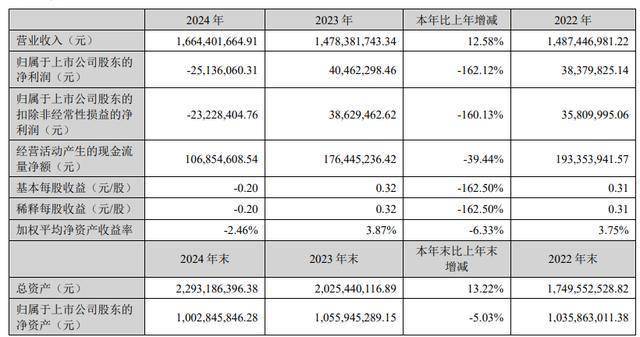
| | 2024 年 | 2023 年 | 本年比上年增减 | 2022 年 | | --- | --- | --- | --- | --- | | 营业收入(元) | 1.664.401.664.91 | 1.478.381.743.34 | 12.58% | 1.487.446.981.22 | | 归属于上市公司股东的 净利润(元) | -25.136.060.31 | 40.462.298.46 | -162.12% | 38.379.825.14 | | 归属于上市公司股东的 扣除非经常性损益的净 | -23.228.404.76 | 38,629,462,62 | -160.13% | 35.809.995.06 | | 利润(元) | | | | | | 经营活动产生的现金流 量净额(元) | 106.854.608.54 | 176.445.236.42 | -39.44% | 193.353.941.57 | | 基本每股收益(元/股) | -0.20 | 0.32 | -162.50% | 0.31 | | 稀释每股收益(元/股) | -0.20 | 0.32 | -162.50% | 0 ...

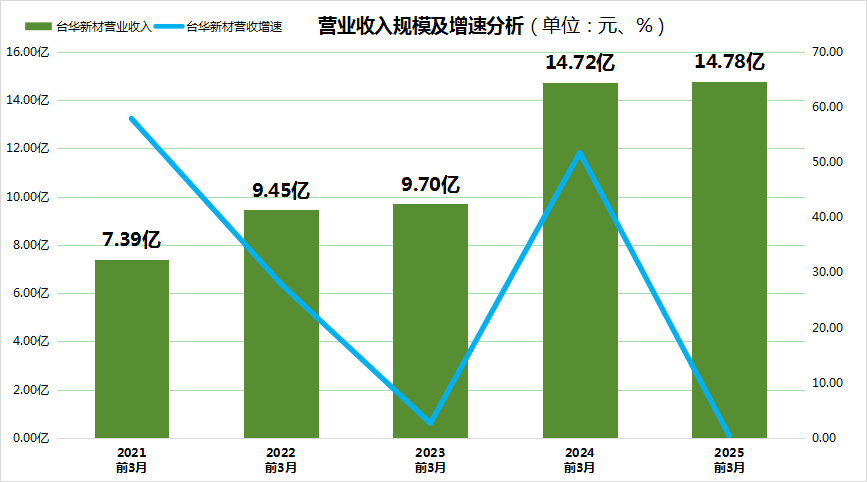
台华新材“增收不增利”谜团:毛利率跌至冰点,董事长施清岛被查揭开“护盘”骗局
Sou Hu Cai Jing· 2025-05-19 03:06
Core Viewpoint - Taihua New Materials (603055.SH) is facing challenges with "increasing revenue but decreasing profit," as indicated by its declining gross margin and recent financial performance, raising concerns in the market [1][2][4]. Financial Performance - In Q1 2025, Taihua New Materials reported revenue of 1.478 billion yuan, a year-on-year increase of 0.38%, while net profit attributable to shareholders was 163 million yuan, up 8.92% [2]. - However, the company's non-recurring net profit fell by 22.62% year-on-year, indicating a significant decline in profit quality [2]. - The gross margin for the company was 22.33%, slightly above the 20.58% recorded in the same period of 2023, but still at a historical low [4]. Market Dynamics - The decline in performance is attributed to seasonal fluctuations in market demand, as Q1 is typically a slow season for the textile industry, leading to reduced orders from downstream customers [2]. - The nylon textile industry is characterized by intense competition and relatively low market concentration, which has also impacted the company's revenue growth [2]. Cash Flow and Financial Health - Despite a significant improvement in net cash flow from operating activities, the company's cash reserves decreased from 1.03 billion yuan in 2024 to 732 million yuan by the end of Q1 2025, a decline of 13.15% [6]. Stock Price and Corporate Governance Issues - Since its IPO in 2017, Taihua New Materials' stock price experienced a significant rise in 2021, followed by a substantial decline, returning to levels close to its initial listing price [7]. - The company's actual controller and chairman, Shi Qingdao, along with the former secretary of the board, Dai Tao, are under investigation for alleged stock price manipulation, which has drawn considerable market attention [8][9].

只要熬过楼市的“过山车”,龙一贝壳就没毛病
海豚投研· 2025-05-17 09:29
Core Viewpoint - The overall performance of Beike's latest earnings report is better than expected, with significant revenue growth, but the persistent issue of increasing revenue without profit remains unresolved [1][12][46]. Group 1: Existing Home Business - The GTV (Gross Transaction Value) of the existing home business increased by 28% year-on-year, outperforming the expected 24% growth, indicating the continued impact of policy benefits [1][15]. - Revenue from the existing home business grew by 20%, but this was lower than the GTV growth, reflecting a decline in the comprehensive commission rate [1][17]. - The comprehensive commission rate for existing homes decreased by 1.4 basis points to 1.18%, attributed to a higher proportion of non-self-operated business and potential commission discounts to stimulate transactions [1][17]. Group 2: New Home Business - The new home business saw a remarkable growth in transaction value, with a year-on-year increase of 53%, significantly exceeding market expectations [2][20]. - However, the revenue growth rate for new homes was lower than expected due to a decline in the comprehensive realization rate, which fell by 20 basis points [2][24]. - The new home business's revenue increased by 64% year-on-year, but the growth rate showed a deceleration compared to the previous quarter [2][24]. Group 3: Secondary Business Lines - The secondary business lines, including home decoration, rental, and home services, generated total revenue of 8.38 billion, a year-on-year increase of 39%, surpassing expectations [3][27]. - The rental business experienced a significant growth of 94% year-on-year, indicating a strong market position despite a generally weak rental market [3][29]. - The home decoration business, while improving, still underperformed expectations with a revenue growth of 22% [3][29]. Group 4: Profitability Issues - Despite revenue growth, the adjusted net profit remained nearly flat year-on-year, highlighting the ongoing issue of revenue growth not translating into profit [4][6][34]. - The overall gross profit margin decreased to 20.7%, down 2.3 percentage points from the previous quarter, primarily due to rising commission costs and a higher proportion of low-margin rental business [5][37]. - The operating profit margin fell from 3.2% to 2.5%, reflecting the challenges in maintaining profitability amidst rising costs [5][43]. Group 5: Market Outlook - The performance of Beike is significantly influenced by macroeconomic conditions in the real estate market, making future predictions challenging [12][13]. - Long-term prospects for Beike remain positive due to its dominant market position and execution capabilities, despite short-term volatility [12][13]. - Current valuation corresponds to an adjusted net profit multiple of approximately 16-17x PE, with potential for higher multiples if profit growth resumes [12][13].


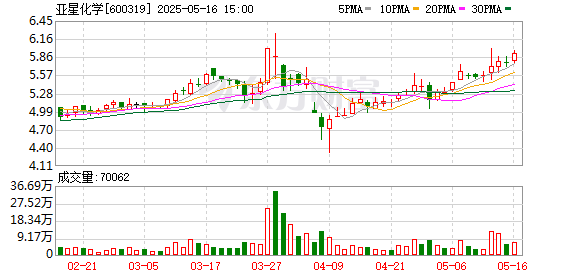
亚星化学“增收不增利” 计划发债募资纾困
Zhong Guo Jing Ying Bao· 2025-05-16 08:09
Core Viewpoint - The company, Yaxing Chemical, plans to raise up to 220 million yuan through a private bond issuance to optimize its debt structure and alleviate financial pressure, despite facing significant losses in net profit and a rising debt ratio [2][4][7]. Financial Performance - In 2024, Yaxing Chemical reported operating revenue of 910 million yuan, a year-on-year increase of 10.37%, but the net profit was a loss of 97.03 million yuan, a decline of 1624.63% [7]. - The company's non-recurring net profit was -156 million yuan, down 39.53% year-on-year [7]. - As of the end of Q1 2025, the company's debt ratio reached 80.50%, up from 76.87% at the end of 2024 [4][8]. Debt Management - The bond issuance has a face value of 100 yuan per bond, with a maximum issuance scale of 220 million yuan and a term of no more than 7 years [4]. - The funds raised will primarily be used to repay interest-bearing debts and for other compliant purposes, aiming to optimize the debt structure and reduce financial costs [4][6]. - Yaxing Chemical's total liabilities were reported at 1.832 billion yuan, with current liabilities at 1.565 billion yuan, while cash on hand was only 163 million yuan [4]. Industry Context - Yaxing Chemical is a state-controlled company listed on the Shanghai Stock Exchange, primarily engaged in the production and sale of chemical products such as chlorinated polyethylene (CPE), polyvinyl chloride (PVC), and caustic soda [3]. - The company has faced challenges due to intensified industry competition and weak downstream demand, leading to low sales prices for its main products [7][8]. Operational Challenges - The company's liquidity ratio has been declining, with figures of 0.30, 0.26, and 0.28 from 2022 to 2024, indicating a potential struggle in meeting short-term obligations [5][6]. - Financial expenses increased by 68.80% year-on-year to 75 million yuan in 2024, further straining the company's financial position [6].