情绪经济

Search documents
疯狂动物城周边热卖,淘宝搜索量环比上月增长超1000%,盲盒和黄金被热捧
Sou Hu Cai Jing· 2025-12-04 08:27
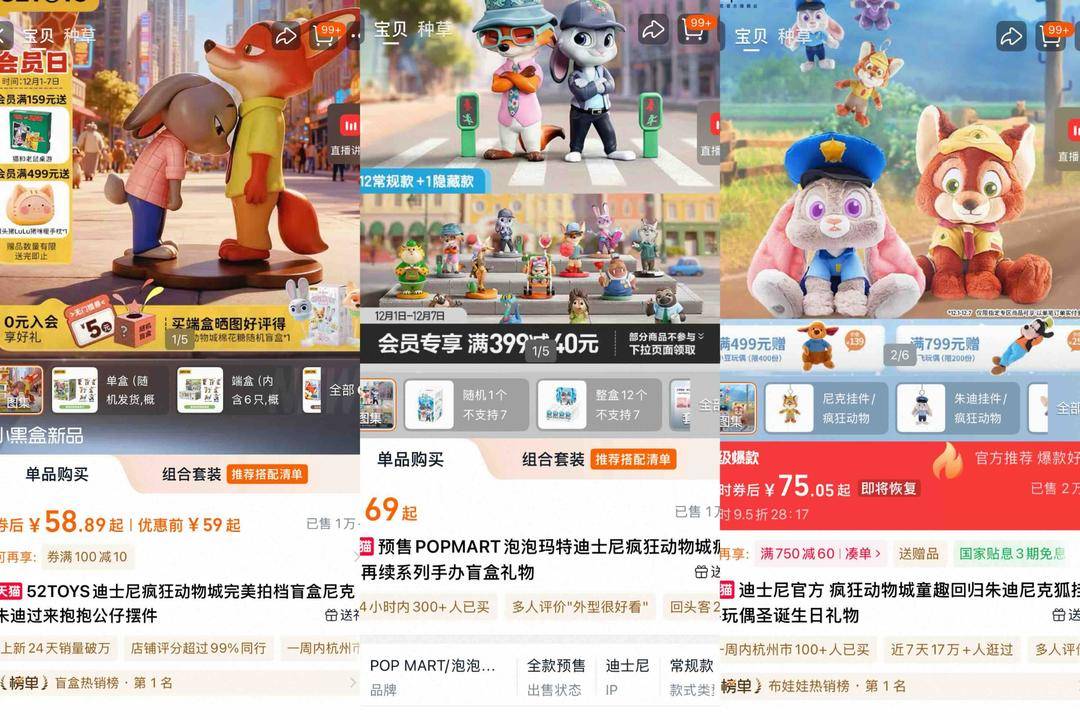
Core Insights - The release of "Zootopia 2" has sparked an unprecedented consumer frenzy, with related searches on Taobao and Tmall increasing over 1000% compared to the previous month [1][2] - The film's merchandise sales have seen a remarkable surge, with toy and collectible sales rising over 600% month-on-month, primarily driven by young consumers [1][2] Group 1: Merchandise and Sales Trends - Over 20,000 related merchandise items are currently available on Taobao, covering various categories such as trendy toys, gold jewelry, clothing, and digital accessories [2] - The core segment of this consumer trend is the collectible blind boxes, particularly those that resonate emotionally with the film's narrative, such as the "Perfect Partners" series by 52TOYS [2][4] - High-priced gold jewelry items, such as a carrot-shaped pendant priced over 3000 yuan, have broken the norm of low-priced animation merchandise, attracting a significant number of young customers [4][5] Group 2: Emotional and Cultural Impact - The phenomenon of "emotional economy" is evident in cultural consumption, where consumers are purchasing not just products but the emotional experiences and stories associated with them [5] - The connection to characters like "Judy" and "Nick" serves as a form of "emotional currency" for young consumers, allowing them to express themselves and seek recognition [5] - Taobao and Tmall's efficient commercial ecosystem has enabled brands to capture and convert emerging consumer emotions into tangible commercial value, marking a new narrative in emotional and consumer engagement [5]


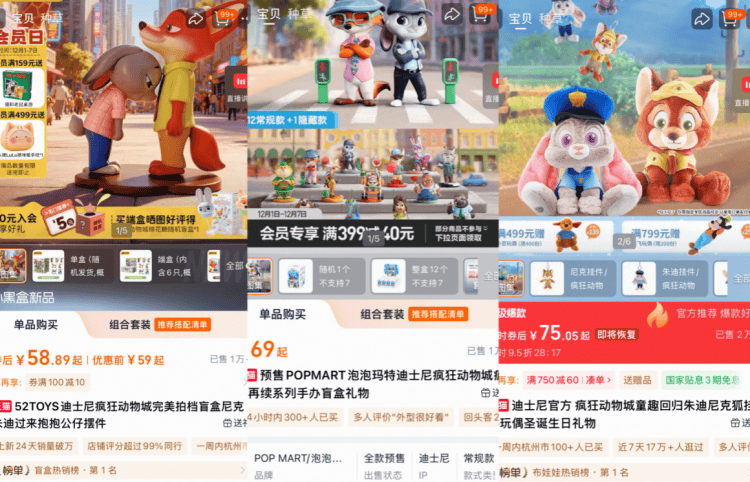
疯狂动物城周边销售爆火,淘宝搜索量环比增超1000%
Yang Zi Wan Bao Wang· 2025-12-04 06:02
Core Insights - The release of "Zootopia 2" has sparked an unprecedented consumer frenzy, with related searches on Taobao and Tmall skyrocketing over 1000% post-release [1][2] - The film's merchandise, including toys and jewelry, has seen a significant sales increase, with toy sales up over 600% and over 20,000 related products available on Taobao [2][4] Group 1: Consumer Behavior - The surge in searches for "Zootopia" merchandise indicates a strong consumer interest, particularly among younger demographics, who are driving the sales [1][2] - Emotional connection to characters like Judy and Nick has led to a "sentiment-driven consumption" trend, where consumers seek to bring the film's warmth into their lives through merchandise [2][4] Group 2: Merchandise Performance - The merchandise related to "Zootopia 2" has achieved a rare "synchronous surge" in sales, with products like 52TOYS' blind boxes and Disney's toys becoming top sellers immediately after the film's release [1][2] - High-value items, such as gold jewelry themed around the film, have broken the norm of low-priced merchandise, with sales exceeding one million on Tmall for brands like Chow Tai Fook and Lao Feng Xiang [4] Group 3: Market Dynamics - The successful launch of merchandise is attributed to brands' strategic planning based on data insights from Taobao, allowing for effective supply-demand matching [1][4] - The phenomenon reflects the "emotional economy" in cultural consumption, where consumers are purchasing not just products but the stories and emotional experiences associated with them [4]
细分赛道|香氛品牌如何做好线下实体店?
Sou Hu Cai Jing· 2025-12-03 22:18
Group 1 - The core viewpoint of the article highlights the coexistence of essential and emotional consumption in the fragrance market, particularly in China, where the penetration rate is only about 5%, compared to over 40% in Western countries, indicating significant growth potential in this sector [4][5] - The fragrance market is experiencing a "lipstick effect" during economic downturns, leading traditional beauty brands to enter the fragrance space, recognizing its potential as a product that combines necessity and emotional appeal [4] - The characteristics of fragrance consumption vary by product type, with essential items like car air fresheners being more functional and price-sensitive, while products like perfumes and scented candles are more emotional and require consumer education [5] Group 2 - Offline stores face challenges such as low brand recognition and price competitiveness, but they offer unique emotional value through real-life experiences that online shopping cannot provide [7] - Successful offline operations require careful site selection and strong operational management, as demonstrated by a case where a store achieved high sales despite being in a less trafficked area due to effective service and product quality [8][10] - Strategies for offline stores include enhancing store ambiance, product offerings, and customer service to create memorable experiences and emotional connections with customers [10][14] Group 3 - A balanced product structure that includes both essential and emotional fragrance products, along with personalized customization options, can improve customer conversion rates and sales [13] - Strengthening service details and providing emotional value can enhance customer loyalty and retention, as seen in a store that focuses on personalized follow-up and customer engagement [14] - Expanding both C-end private domain maintenance and B-end business development through partnerships and event collaborations can further drive sales and brand recognition [15]

整个社会都在喊没钱了,为什么这些公司反而年赚百亿?
创业家· 2025-12-03 10:19
Core Insights - The article emphasizes that despite the prevailing narrative of economic hardship, certain industries are thriving and generating substantial profits, particularly in the context of Japan's "lost 30 years" and its implications for China [3][4]. Group 1: Economic Trends - The concept of a "low-desire society" does not equate to a lack of opportunities, as consumer behavior is shifting towards different spending patterns [4]. - The article identifies "consumption upgrading" and "demand migration" as significant business opportunities in the current economic landscape [5]. Group 2: Key Industries - The second-hand economy is booming, with examples like Japan's "Daikokuya" and China's "Hongbulin" and "Panghu" seeing significant revenue increases as consumers opt for second-hand luxury goods [6][7]. - The pet economy is on the rise, with brands like "Inaba" in Japan and "Guobao" in China experiencing strong sales growth, reflecting a shift in spending towards pet care products [12][13][14]. - The adult care market is expanding, with Japan's "Unicharm" leading the adult diaper segment, which has surpassed $10 billion in market size [17][18]. - Health food and beverage sectors are thriving due to changing demographics and rising health consciousness, with brands like "Oriental Tree Leaf" and "Jianchun" gaining traction in China [21]. - The beauty economy remains robust, with products like collagen supplements and home beauty devices seeing high sales, indicating a persistent consumer desire for self-improvement [23][24][26]. - Outdoor leisure activities are gaining popularity, with brands like "Kailas" and "Camel" in China experiencing rapid sales growth as consumers seek outdoor experiences [29][31]. - The "lazy economy" is emerging, with increased demand for convenience foods and smart home appliances, as consumers prioritize time-saving solutions over traditional cooking [39][40][42]. Group 3: Market Opportunities - The article suggests that the current economic climate presents opportunities for those willing to invest in counter-cyclical sectors, highlighting the importance of recognizing and seizing these opportunities [44].


Soul上市之路持续推进,近10亿净利答卷讲述“情绪经济”新故事
Sou Hu Cai Jing· 2025-12-03 04:21
Core Insights - Soul has submitted its IPO application to the Hong Kong Stock Exchange, focusing on the emotional economy of Generation Z and disclosing an AI ethics governance framework in its prospectus [1][6] - The platform's narrative centers around the emotional value of Generation Z, with over 78.7% of its daily active users belonging to this demographic [3][6] - Soul's financial performance is strong, reporting nearly 1 billion yuan in adjusted net profit within three years [3] Company Overview - Founded in 2015 by Zhang Lu, Soul aims to provide emotional value to users by emphasizing interest-based connections and non-real identity expressions [4] - The platform encourages users to interact through virtual identities rather than real photos, promoting a focus on shared interests and emotional understanding [4] - As of 2021, Soul had 9.1 million daily active users, with over 70% being post-90s generation, and has attracted significant investment from major firms including Tencent and MiHoYo [4] Market Context - The emotional economy in China is projected to reach approximately 24.25 trillion yuan by 2024, with an expected compound annual growth rate of 22.2% until 2030 [5] - The immersive emotional economy segment is anticipated to grow even faster, from about 291.7 billion yuan in 2024 to 1.191 trillion yuan by 2030 [5] User Engagement - As of August 2025, Soul is expected to have around 390 million registered users, with daily active users reaching 11 million in the first eight months of the year, 80% of whom are from Generation Z [6] - Users spend an average of over 50 minutes daily on the platform, and the average monthly revenue per paying user is 104.4 yuan, indicating a strong monetization potential [6] IPO Considerations - The market's interest in Soul's IPO is increasing, particularly regarding its AI ethics governance framework, which is seen as a crucial factor in building investor confidence [6]
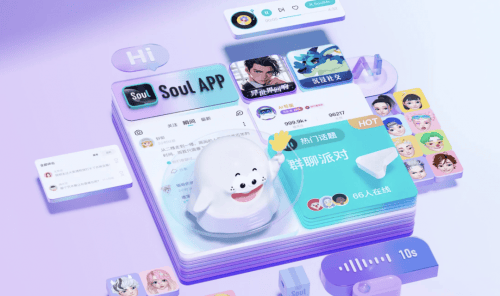
130亿社交APP,3年狂赚10亿
3 6 Ke· 2025-12-02 03:21
Core Viewpoint - Soul is attempting its fourth IPO, shifting its narrative from focusing on the single economy and metaverse to emphasizing the emotional value for Generation Z users, who make up over 78.7% of its daily active users [1][5]. Group 1: Company Overview - Soul was founded in 2015 by Zhang Lu, who aimed to create a platform that prioritizes emotional value over appearance, addressing a gap in the social app market dominated by familiar and appearance-based interactions [2][3]. - The platform allows users to interact through virtual identities, avoiding the use of real photos and locations, which caters to the Z generation's desire for a pressure-free social environment [3][4]. - As of 2021, Soul had reached 9.1 million daily active users, with over 70% being post-90s users, and introduced the concept of metaverse social interactions [3][6]. Group 2: Financial Performance - Soul reported a revenue of 1.846 billion yuan and a net profit of 361 million yuan in 2023, with projected revenues of 2.211 billion yuan and a net profit of 337 million yuan for 2024 [6]. - The company has accumulated nearly 1 billion yuan in net profit over three years, indicating strong financial performance [6]. - The primary revenue sources are "emotional value services" and advertising, with emotional value services accounting for 90.8% of the revenue in 2025 [5][6]. Group 3: Market Potential - The emotional economy in China is projected to grow from 24.25 trillion yuan in 2024 to 80.69 trillion yuan by 2030, with a compound annual growth rate of 22.2% [4]. - The immersive emotional economy segment is expected to expand from 291.7 billion yuan in 2024 to 1.191 trillion yuan by 2030, indicating a faster growth rate [4]. Group 4: User Engagement - As of August 2025, Soul had approximately 390 million registered users, with daily active users reaching 11 million in the first eight months of the year, 80% of whom are from Generation Z [5][6]. - Users spend an average of over 50 minutes daily on the platform, showcasing high engagement levels [5]. Group 5: Industry Significance - Soul's IPO represents a significant milestone for the emotional economy, as it introduces a quantifiable business model into mainstream capital market discussions [6].
四闯IPO的Soul:在“孤独经济”里炼金,谁在为Z世代的情绪买单?
Sou Hu Cai Jing· 2025-12-02 03:20
Core Viewpoint - Soulgate Inc. is making a renewed attempt to go public with a more solid financial performance, moving away from its previous "burning cash for growth" strategy to a sustainable profit model driven by AI technology and user engagement [2][10] Financial Performance - For the first eight months of 2025, Soul achieved a revenue of 1.683 billion yuan, a year-on-year increase of 17.86%, and an adjusted net profit of 286 million yuan, marking a significant 73% increase [2] - The sales and marketing expenses have significantly decreased to 38.3%, down from an astonishing 124.8% in 2020, indicating a shift in operational strategy [4] User Engagement - As of August 2025, Soul maintains an average of 11 million daily active users, with an average usage time of 50 minutes, demonstrating strong user retention despite reduced marketing spending [5] - The platform has a high percentage of Gen Z users, accounting for 78.7%, which is crucial for its growth and profitability [5] Revenue Model - Soul's revenue model is heavily reliant on value-added services, contributing over 90% of its revenue, which is a departure from traditional advertising-based monetization [7] - The platform exhibits a low payment rate of 6.5%, but the average monthly contribution from paying users is 104.4 yuan, reflecting a 140% increase over five years, indicating a focus on deep service rather than just user acquisition [7] Technological Integration - The introduction of the self-developed Soul X model and AIBooster features has lowered the barriers for social interactions, enhancing user experience and emotional engagement [9] - AI technology acts as a "super connector," strengthening user emotional ties and supporting the platform's high pricing capabilities, creating a technology-driven business monetization loop [9] Challenges Ahead - Soul's revenue structure is highly concentrated, with over 90% of income dependent on value-added services, posing risks if user interest shifts or competition increases [10] - The company faces significant financial burdens due to ongoing investments in AI technology, with over 400 million yuan spent on R&D in the first eight months of 2025, raising concerns about sustainability if revenue growth does not keep pace with these costs [10]

洗浴行业生变:跨界融合不断与同质化待解
Zhong Guo Jing Ying Bao· 2025-11-30 07:24
Core Insights - The bathing industry is rapidly expanding, with a significant increase in transaction orders and average transaction amounts for new stores, indicating a strong growth trajectory [1][9] - The trend of "bathing+" is reshaping the industry, integrating various services such as dining, entertainment, and accommodation to enhance customer experience [3][5] Industry Expansion - Since 2025, the national bathing service transaction order volume has increased by over 30%, with a 60% year-on-year growth in average transaction amounts for new stores from January to September this year [1][9] - The integration of services like self-service dining and entertainment areas is attracting a diverse customer base, including families and young people [3][4] Market Trends - The rise of the "emotional economy" and O2O (online-to-offline) services is driving the transformation of bathing spaces into "emotional healing spaces," with market sizes exceeding 2 trillion and 3 trillion yuan respectively [4] - Popular combinations in the industry include "bathing + self-service dining," "bathing + hourly rooms/accommodation," and "bathing + KTV/entertainment" [5] Challenges of Homogenization - The industry faces increasing homogenization, with many new bathing centers offering similar features, leading to a sense of familiarity among consumers [6][7] - The competitive landscape is intensifying, with operators needing to differentiate themselves through unique offerings and experiences [7][8] Structural Opportunities - Despite the competitive pressures, there are still structural opportunities in the market, particularly for innovative concepts targeting younger demographics and community health [10][12] - The potential for light-asset operations and partnerships with traditional owners is highlighted as a strategy to mitigate risks while entering the market [10][12] Future Directions - Experts suggest that the bathing industry will evolve towards health-oriented, intelligent, and diversified services, moving from a focus on cleanliness to comprehensive leisure experiences [5][10] - The emphasis on local culture and unique dining experiences is seen as a key differentiator for future success in the industry [8][12]
AI社交平台Soul App向港交所递交上市申请 累计注册用户达3.9亿
Zheng Quan Ri Bao Wang· 2025-11-28 04:19
Soul建立了规模庞大且高活跃、高黏性的年轻用户生态,平台累计注册用户约3.9亿,2025年前八个月 日均活跃用户(DAU)约1,100万,用户日均使用时长超50分钟,人均每日发出点对点私信交流约75 条,月均三个月用户留存率达80%。根据弗若斯特沙利文报告,截至2025年前八个月,该公司日均活跃 用户(DAU)、日人均启动次数(20.1次),及新安装用户30日留存率(23%)均在中国AI+沉浸式社 交平台中排名第一。 AI技术是Soul App在沉浸式情绪经济领域快速发展的核心引擎。公司自研原生情绪价值第一大模型Soul X极大地提升了用户体验与社区活跃度。用户的高参与度推动模型和算法持续优化,及AI应用的智能 化,加速平台数字社会的繁荣和用户体验提升,拓宽AI赋能下情绪经济商业化的潜在市场空间,赋能 广告及IP生态等业务增长,形成了独特的"用户–AI–平台"飞轮体系,实现商业化复利效应。 Soul此次申请上市,其他股东包括米哈游、Genesis Capital等。根据文件,公司发售所得款项将用于AI 能力研发、全球范围拓展、用户群扩大、各类内容开发,以及用作营运资金及一般企业用途。 本报讯 (记者梁傲男) ...
Soul冲刺港交所:国内领先的「AI+沉浸式社交平台」,累计注册用户达3.9亿
IPO早知道· 2025-11-28 01:16
Core Viewpoint - Soulgate Inc. is leveraging AI technology as the core engine for rapid development in the immersive emotional economy, positioning itself as a leading AI-driven social platform in China [2][5]. Company Overview - Founded in 2015, Soul is an AI + immersive social platform that creates a warm emotional oasis based on user interests and personalities, utilizing advanced AI models and algorithms [3]. - Soul is the first AI + immersive social network platform in China where all users interact through virtual identities (avatars) [3]. User Engagement - As of August 31, 2025, Soul has approximately 390 million registered users, with daily active users reaching 11 million, 78.7% of whom are Gen Z [5]. - Users spend over 50 minutes daily on the platform, with an average monthly active user interaction rate of 86.0%, sending about 75 point-to-point messages per day [5]. - The platform sees over 323 million active "experience" scenarios created or participated in by users each month, with a three-month average user retention rate of 80% [5]. Financial Performance - Soul's revenue for 2022, 2023, and 2024 is projected at 1.667 billion, 1.846 billion, and 2.211 billion yuan, respectively, with a compound annual growth rate exceeding 15% [6]. - In the first eight months of this year, revenue grew by 17.8% year-on-year to 1.683 billion yuan, with AI-driven emotional value services accounting for over 90% of total revenue [6]. - The average revenue per paying user (ARPPU) is 104.4 yuan, indicating strong willingness to pay for emotional value services [6]. - Soul has achieved stable profitability since 2023, with an adjusted net profit of 337 million yuan projected for 2024, and an adjusted net profit of 286 million yuan in the first eight months of this year, reflecting a 73% year-on-year growth [6]. Investment and Funding - Soul has received investments from notable institutions including Tencent, miHoYo, and several venture capital firms, with Tencent holding a 49.9% stake as a strategic investor [6]. IPO Plans - Soul plans to use the net proceeds from its IPO primarily for further development of AI capabilities, GPU capabilities, data analytics, talent retention, global platform expansion, user base growth, content development, and general corporate purposes [7].