智能体

Search documents
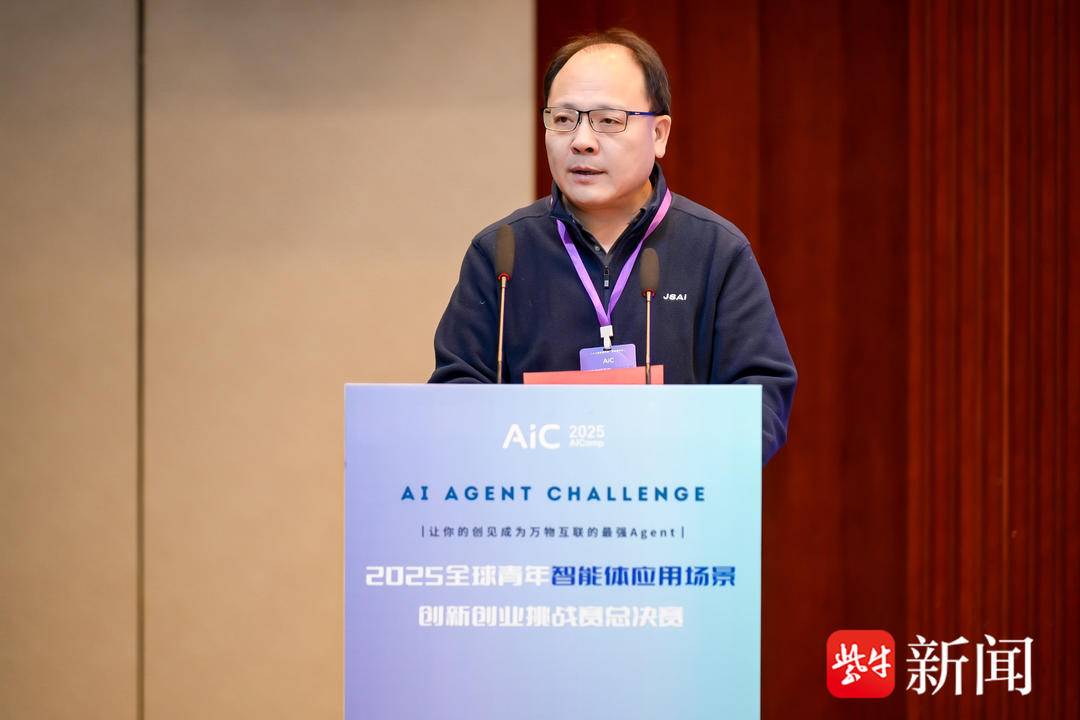
全球青年智能体应用场景创新创业总决赛在南京举行
Yang Zi Wan Bao Wang· 2025-12-26 12:31
Group 1 - The global youth intelligent agent application scenario innovation and entrepreneurship finals officially opened in Nanjing, focusing on cutting-edge technology and showcasing innovation strength [1][3] - The competition attracted 738 teams from 250 universities and 42 corporate teams, with 85 outstanding teams advancing to the finals after rigorous selection [1][3] - The event aims to build a platform for global youth to display their talents and foster collaboration and win-win opportunities [1][3] Group 2 - Nanjing Bank is advancing its digital transformation through "cloud, online, and intelligent" initiatives, emphasizing the cultivation of financial technology talent and promoting school-enterprise cooperation [3] - The bank's involvement in the event is a practical step to support youth innovation and nurture scientific and technological talent, aiming to create a long-term platform for scientific and technological exchanges [3] - The competition includes three main tracks: scenario innovation, scenario entrepreneurship, and scenario challenges, assessing participants' algorithm innovation, engineering practice, innovative thinking, and teamwork abilities [1][13] Group 3 - The event's opening ceremony included a pledge to ensure fairness and adherence to competition rules, with key figures from Nanjing University and Nanjing Bank participating [7][8] - The competition showcased the innovative vitality and youthful spirit of global youth in the intelligent agent field, with participants demonstrating solid technical skills and innovative ideas [13] - The organizing committee plans to deepen the event's brand development and expand the boundaries of global youth innovation exchanges, optimizing the competition structure to attract more international participants [13]



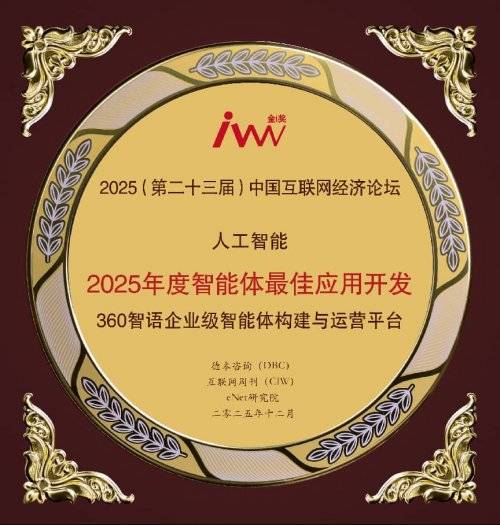
驱动企业级Agent多场景落地 360智语获“2025年度智能体最佳应用开发”大奖
Sou Hu Cai Jing· 2025-12-26 11:41
Core Insights - 360 Zhiyu's enterprise-level intelligent agent platform won the "Best Application Development Award" at the 2025 China Internet Economy Forum, recognizing its comprehensive capabilities in agent development, management, and operation [1][4] - The platform is positioned as a new benchmark in the AI agent field, providing practical AI application solutions for large organizations [1][4] Group 1: Technological Breakthroughs - The platform is the world's first enterprise-level intelligent agent platform covering L2-L4 capabilities, establishing a new industry standard through three technological advantages [3] - It features a leading technical architecture based on the SEAF intelligent agent factory, integrating eight infrastructures and ten enhancement capabilities, supporting flexible combinations of multiple models and knowledge bases [3] - A pioneering security protection system for the entire lifecycle of intelligent agents has been established, covering 12 dimensions including supply chain security and data access auditing [3] Group 2: Industry Applications - The platform has successfully implemented benchmark cases in over 20 fields, including urban governance, aviation, healthcare, and education, demonstrating its business value transformation capabilities [3] - For instance, a smart government agent cluster developed for a municipality improved policy matching efficiency by 95%, while a police smart agent increased warning accuracy to over 90% [3] Group 3: Future Outlook - The award validates 360 Zhiyu's commitment to the "All In Agent" strategy, creating a complete closed loop of technology, products, and ecosystem [4] - The company plans to launch a "Thousand Industries" ecological cooperation plan to address AI pain points in enterprises, providing comprehensive support from solutions to implementation [4] - The modular architecture and adaptability to trusted environments effectively address the high development threshold, industry adaptation challenges, and security concerns for government and enterprise users [4]

蒸馏、GEO、氛围编程 2025年度“AI十大黑话” 能听懂几个?
3 6 Ke· 2025-12-26 09:16
Core Insights - The article discusses the rapid development of AI in 2025, highlighting ten key terms that reflect how AI is reshaping industries and society. Group 1: AI Concepts - Vibe Coding redefines programming by allowing developers to express goals in natural language, with AI generating the necessary code [2] - Reasoning models have emerged as a core focus in AI discussions, enabling complex problem-solving through multi-step reasoning [3] - World Models aim to enhance AI's understanding of real-world causality and physical laws, moving beyond mere language processing [4] Group 2: Infrastructure and Investment - The demand for AI has led to the construction of super data centers, exemplified by OpenAI's $500 billion "Stargate" project, raising concerns about energy consumption and local impacts [5] - The AI sector is experiencing a capital influx, with companies like OpenAI and Anthropic seeing rising valuations, though many are still in the high-investment phase without stable profit models [6] Group 3: AI Challenges and Trends - The term "intelligent agents" is popular in AI marketing, but there is no consensus on what constitutes true intelligent behavior [7] - Distillation technology allows smaller models to learn from larger ones, achieving high performance at lower costs [8] - The concept of "AI garbage" reflects public concern over the quality and authenticity of AI-generated content [9] Group 4: AI in Real-World Applications - Physical intelligence remains a significant challenge for AI, as robots still require human intervention for complex tasks [10] - The shift from traditional SEO to Generative Engine Optimization (GEO) indicates a change in how brands and content creators engage with AI-driven information retrieval [11]
2025,AI圈都在聊什么?年度十大AI热词公布
3 6 Ke· 2025-12-26 07:33
Core Insights - The development of AI in 2025 is marked by emerging concepts that are reshaping the industry landscape, as highlighted by the "MIT Technology Review" which identifies the top ten AI buzzwords of the year [1] Group 1: Emerging Concepts in AI - Vibe Coding redefines programming by allowing developers to express goals and logic in natural language, with AI generating the corresponding code [2] - Reasoning models have gained prominence, enabling AI to tackle complex problems through multi-step reasoning, with major advancements from OpenAI and DeepSeek [3] - World models aim to enhance AI's understanding of real-world causal relationships and physical laws, moving beyond mere language processing [4] Group 2: Infrastructure and Economic Implications - The demand for AI has led to the construction of super data centers, exemplified by OpenAI's $500 billion "Stargate" project, raising concerns about energy consumption and local community impacts [5] - The AI sector is experiencing a capital influx, with companies like OpenAI and Anthropic seeing rising valuations, although many are still in the high-investment phase without stable profit models [6] Group 3: Quality and Standards in AI - The term "intelligent agents" is widely used in AI marketing, but there is no consensus on what constitutes true intelligent behavior, highlighting a lack of industry standards [7] - Distillation technology allows smaller models to learn from larger ones, achieving high performance at lower costs, indicating that effective algorithms can drive AI advancements [8] Group 4: Content Quality and User Interaction - "AI garbage" refers to low-quality AI-generated content, reflecting public concerns about the authenticity and quality of information in the AI era [9] - Physical intelligence remains a challenge for AI, as robots still require human intervention for complex tasks, indicating a long road ahead for AI to fully understand and adapt to the physical world [10] - The shift from traditional SEO to Generative Engine Optimization (GEO) signifies a change in how brands and content creators engage with AI, emphasizing the importance of being referenced by AI in responses [11]
超11.9亿台
Xin Lang Cai Jing· 2025-12-25 22:29
Core Insights - During the "14th Five-Year Plan" period, significant advancements have been made in fields such as integrated circuits, artificial intelligence, and foundational software, with over 1.19 billion products equipped with the open-source Harmony operating system [1] - More than 700 generative artificial intelligence models have been registered, indicating a rapid development in intelligent applications and innovation [1] Group 1: Information Technology Advancements - The level of information application in China has significantly improved, with internet penetration increasing from 70.4% to 79.7% [1] - The gap in internet penetration between urban and rural areas has narrowed by 8.2 percentage points compared to the end of the "13th Five-Year Plan" [1] Group 2: Agricultural and Rural Development - The rate of informationization in agricultural production has risen from 22.5% to over 30% [1] - The national rural online retail sales are projected to exceed 2.5 trillion yuan, representing a 43% increase compared to the end of the "13th Five-Year Plan" [1] - Telemedicine services are now available across all cities and counties in the country [1]
智能体如何重塑金融业?这场会议给出答案
Guo Ji Jin Rong Bao· 2025-12-25 02:34
Group 1 - The core theme of the event is the transformation of the banking industry through AI technology, emphasizing that the application of intelligent agents has shifted from optional to essential for banks [2][4] - The "14th Five-Year Plan" highlights the importance of AI in driving the digital transformation of the financial sector, positioning it as a key practice for enhancing financial services and promoting high-quality development [2][3] - Experts suggest that the focus of digital finance should shift from the "household sector" to the "enterprise sector," as the latter has a lower level of digitalization, which can enhance the efficiency of financial institutions [2][3] Group 2 - The development of digital finance is seen as a means to support supply-side structural reforms, requiring banks to apply digital capabilities across various management and operational levels [3] - The successful implementation of intelligent agents in finance relies on three factors: technological breakthroughs, iterative business scenarios, and supportive policies [4][5] - Financial institutions are encouraged to enhance their technological maturity and adapt to new business scenarios while building a collaborative ecosystem for the deployment of intelligent agents [5][9] Group 3 - The event highlighted the challenges faced by banks in AI application, including the need for high-quality knowledge bases and the integration of business and technology [6][7] - There are significant challenges in software testing for AI applications, including the need for comprehensive testing across various dimensions and ensuring fairness and safety in AI applications [8][9] - The future of intelligent agents in banking is expected to focus on creating operational loops that assess both business outcomes and model parameters for continuous improvement [9][10]


倒计时三天,吴晓波科技人文秀节目单出炉啦!(内附参会指引)
吴晓波频道· 2025-12-25 00:29
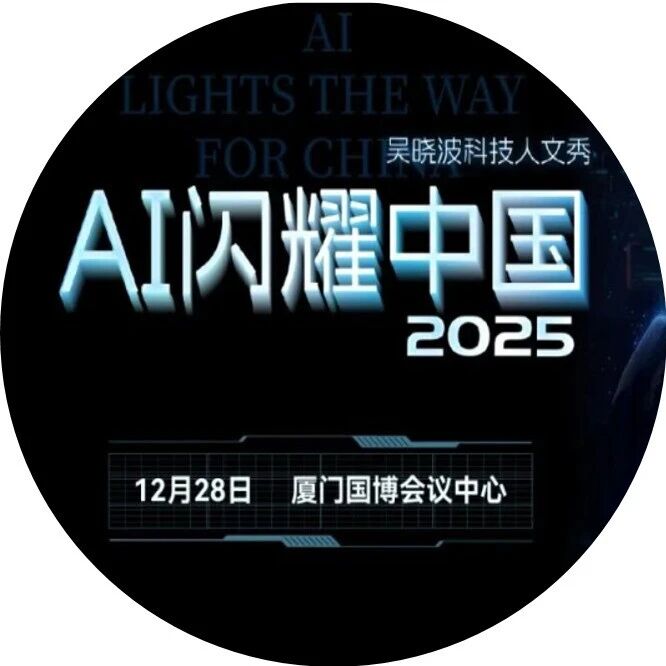
Core Viewpoint - The article emphasizes the upcoming AI showcase titled "AI Shining China," which aims to present the latest findings in artificial intelligence and robotics, highlighting the transformative impact of AI across various sectors [2][32]. Group 1: Event Overview - The AI showcase will take place on December 28, featuring a four-hour presentation that includes performances and insights into AI advancements [3][32]. - The event is described as a blend of stunning visuals, impressive performances, and deep reflections on the future of AI [2][3]. Group 2: AI Trends and Insights - The article identifies 2023 as the "Year of AI Enlightenment" and "Year of AI Applications," noting significant changes in areas such as text writing, e-commerce, and industrial applications due to AI [2]. - Key themes for the showcase include the competition between China and the U.S. in AI, the revolution in content production through multimodal capabilities, and the emergence of AI models that are reshaping industries [6][7]. Group 3: Future Market Potential - The article suggests that robotics represents a potential market worth 10 trillion, indicating significant growth opportunities in this sector [7]. - The event will also explore the concept of "Industrial 5.0" and the end of the "traffic era" in e-commerce, signaling a shift in how businesses operate and engage with consumers [7].
从工具升级到生态重塑:智能体开启银行业“人机共生”新图景
Zheng Quan Shi Bao Wang· 2025-12-24 12:18
Group 1 - The banking industry is undergoing a significant transformation driven by artificial intelligence, particularly through the integration of AI agents, which are reshaping the development landscape of the sector [1][2] - The Chinese banking sector is currently at the L3 level of AI integration, focusing on human-machine collaboration, with expectations for AI to evolve from being a mere assistant to having comprehensive decision-making capabilities by 2025 [2][8] - AI agents are expected to unlock new revenue streams by enabling banks to better identify risks and expand their service ecosystems, particularly in high-value scenarios that involve complex processes and large data analysis [3][8] Group 2 - Despite the promising outlook, the deployment of AI agents in the financial sector faces challenges such as uncertainty in AI outputs, which are probabilistic rather than deterministic, raising concerns about reliability [4][5] - Issues related to organizational responsibility and ethical considerations are emerging, including the need for clear delineation of responsibilities between business and technical teams, as well as the challenges in training personnel who understand both domains [5][6] - The industry is actively exploring solutions to these challenges by developing a "trustworthy" AI framework that emphasizes reliable domain knowledge, transparent decision-making processes, and continuous operational capabilities [6][7] Group 3 - The future of banking services is anticipated to shift towards a more seamless and ecological model, with profitability moving from interest margins to data-driven and open ecosystem competition [8][9] - The role of human employees in the banking sector is expected to evolve, with a focus on supervisory and strategic functions rather than routine tasks, leading to the creation of new job roles related to AI assessment and knowledge management [8][9] - The development of AI agents is seen as a catalyst for a deeper transformation in the banking industry, impacting productivity, relationships, and the essence of finance itself [9]
直面AI泡沫争议,亚马逊云科技交出了一份实干答卷
Di Yi Cai Jing· 2025-12-24 09:29
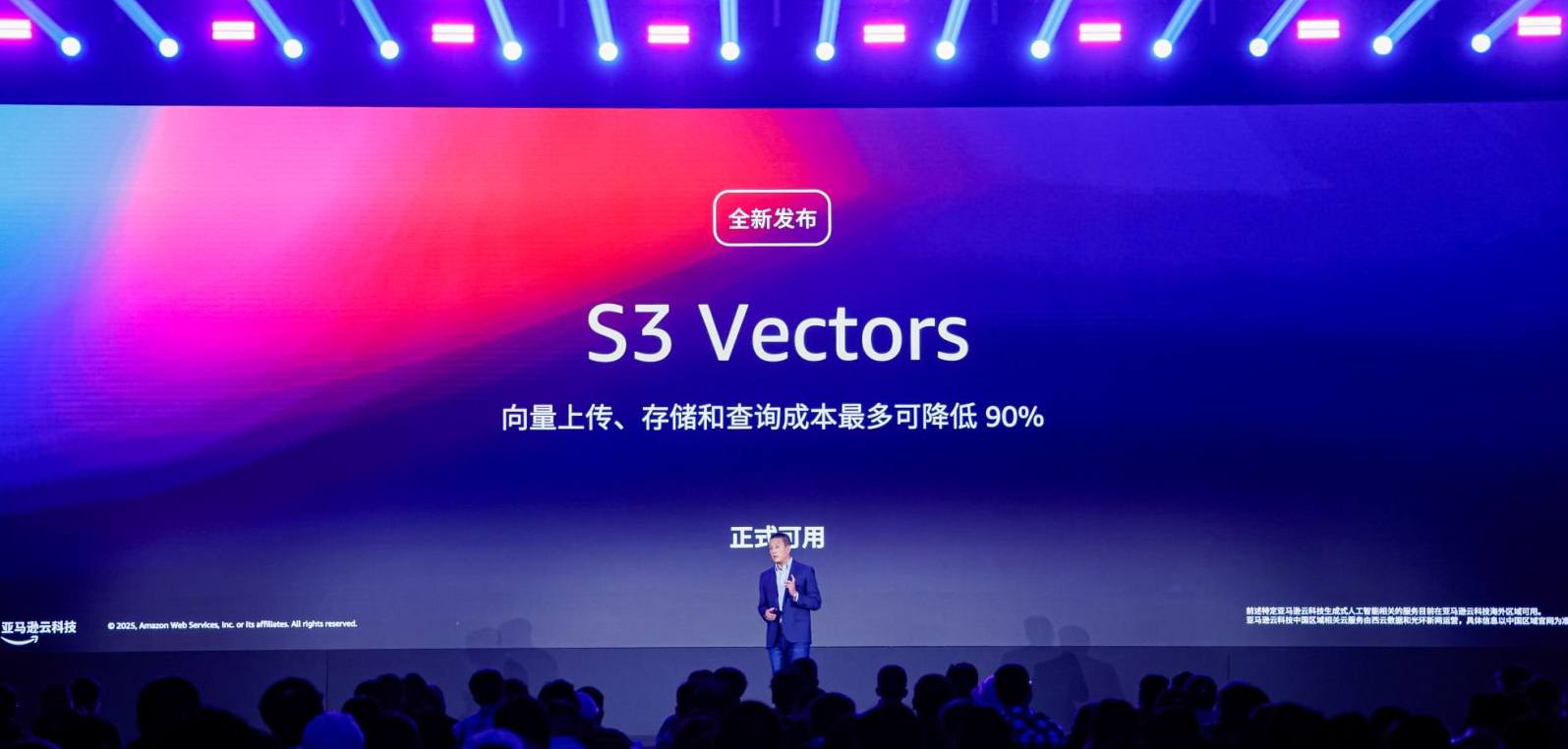
Core Insights - AI technology is undergoing a paradigm shift, evolving from simple chatbots to autonomous agents capable of complex task execution and integration into core business processes [1] - The capital market is reassessing AI investments, with discussions around the AI bubble as tech giants' spending on infrastructure reaches trillions, while short-term revenue growth appears disproportionate [1] - Amazon Web Services (AWS) is addressing market concerns by providing a systematic approach to AI cost management and infrastructure upgrades [2] Infrastructure Innovations - AWS is restructuring its AI cost model by upgrading core services, including a significant increase in Amazon S3's object storage limit from 5TB to 50TB, simplifying the handling of large models [3] - The introduction of Amazon S3 Vectors allows for the storage and management of trillions of vector data at a 90% lower cost, enhancing efficiency in data handling [4] Computing Resource Strategy - AWS employs a dual-track strategy for computing resources, ensuring compatibility with NVIDIA while developing proprietary chips like Amazon Trainium to offer cost-effective options [6][7] - The latest Amazon Trainium 3 UltraServers demonstrate a 4.4x increase in computing power and a 5x improvement in energy efficiency compared to previous generations [9] AI Model Ecosystem - AWS's Amazon Bedrock platform offers a diverse range of models, including new additions from Google and OpenAI, allowing businesses to select models tailored to their specific needs [11][13] - The launch of the Nova 2 model series focuses on cost efficiency and performance, with Nova 2 Lite designed for low-complexity tasks and Nova 2 Pro for high-demand scenarios [14][15] Agent Development Framework - Amazon Bedrock AgentCore standardizes the development of AI agents, enabling businesses to assemble agents that can independently execute tasks [16][17] - The framework allows for the integration of multiple specialized agents within a single workflow, enhancing flexibility and efficiency in task execution [18][19] Quality Control and Trust - AWS introduces a policy management feature in AgentCore to ensure compliance and control over agent actions, addressing concerns about reliability and safety [20] - The AgentCore Evaluations tool provides comprehensive performance assessments, allowing for early detection of issues during the development phase [20] Enterprise Integration - Amazon Quick Suite aims to streamline data access across various business systems, enhancing productivity by reducing the need for manual data retrieval [22] - The introduction of Amazon Transform facilitates the modernization of legacy systems, enabling smoother transitions to cloud environments [24] Software Development Evolution - The Kiro Autonomous Agent represents a shift in software engineering, allowing AI to autonomously complete tasks and collaborate with human developers [25][27] - This evolution signifies a move towards a model where AI handles routine coding tasks, freeing developers to focus on core business innovations [27]

【钛晨报】北京发放首批L3级高速公路自动驾驶车辆专用号牌,三个路段可开启;字节跳动据称拟豪掷千亿加码AI布局,预留850亿狂囤芯片;《行政执法监督条例》...
Tai Mei Ti A P P· 2025-12-23 23:28
Group 1: Autonomous Driving - Beijing has issued the first L3-level highway autonomous driving vehicle license plates, marking a significant milestone in China's autonomous driving industry [2] - Three vehicles received the special license plates, which can operate under specific conditions at speeds up to 80 km/h on designated highways [2] - The autonomous driving function is currently limited to certain routes in Beijing, with a requirement for a driver to be present to take control in emergencies [2] Group 2: AI Investment - ByteDance plans to invest 160 billion RMB (approximately 23 billion USD) in AI by 2026, increasing its investment from 150 billion RMB this year [4] - About half of this budget is allocated for advanced semiconductor procurement necessary for AI model development [4] Group 3: Automotive Industry - Mercedes-Benz has agreed to pay approximately 1.5 billion USD (around 10.56 billion RMB) to settle a diesel emissions dispute with a coalition of attorneys general from nearly 50 U.S. states [6] - The settlement will cover 39,565 vehicles that have not been repaired or scrapped as of August 2023 [6] Group 4: Market Trends - The bond ETF market has seen significant growth, with a total scale of 731.29 billion RMB, reflecting a 320.20% increase from the beginning of the year [15] - The net inflow of funds into bond ETFs reached 455.91 billion RMB, a 455.33% increase compared to the previous year's total [15] Group 5: Food Safety Regulations - The State Administration for Market Regulation has introduced new regulations to enforce food safety responsibilities for food sales chain enterprises [9] - The regulations require headquarters to establish comprehensive food safety risk prevention mechanisms across all levels of the organization [9] Group 6: Real Estate Market - The National Housing and Urban-Rural Development Conference emphasized stabilizing the real estate market in 2026, focusing on controlling supply, reducing inventory, and optimizing supply [11] - The conference highlighted the importance of supporting residents' housing needs and promoting the construction of quality housing [11]