消费品以旧换新政策

Search documents
5月家电音像零售额同比增长53%
财联社· 2025-06-16 02:29
Group 1 - The core viewpoint of the article highlights the effectiveness of the consumption upgrade policy in May, leading to significant growth in retail sales across various categories of household appliances and electronics [1] Group 2 - In May, retail sales of household appliances and audio-visual equipment increased by 53.0% [1] - Retail sales of communication equipment grew by 33.0% [1] - Retail sales of cultural and office supplies rose by 30.5% [1] - Retail sales of furniture increased by 25.6% [1]

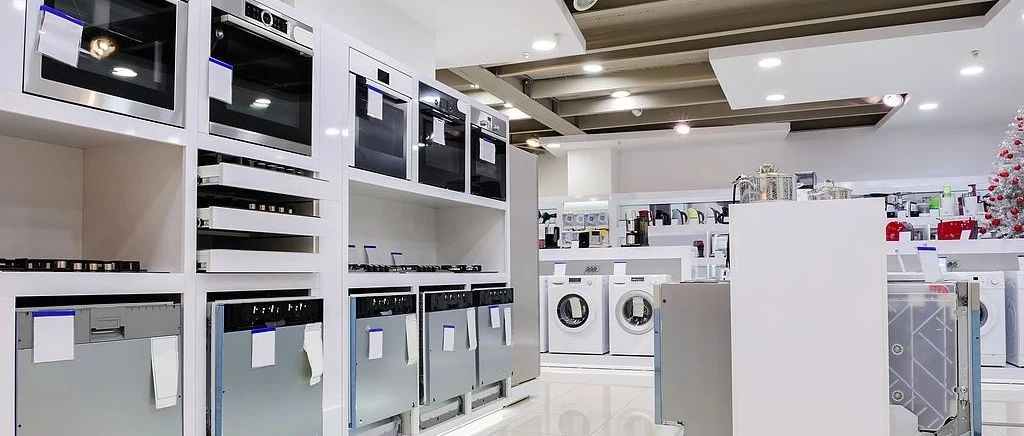
国家统计局:5月份家电和音像器材类商品零售额同比增长53%
news flash· 2025-06-16 02:12
Core Viewpoint - In May, the retail sales of household appliances and audio-visual equipment experienced a significant year-on-year growth of 53% due to the effectiveness of the consumption upgrade policy [1] Group 1: Retail Sales Growth - The retail sales of household appliances and audio-visual equipment increased by 53.0% year-on-year [1] - Other categories also saw substantial growth, with communication equipment rising by 33.0%, cultural and office supplies by 30.5%, and furniture by 25.6% [1]
如何做好“管低价”,补贴服务消费或是政策选项之一
Sou Hu Cai Jing· 2025-06-16 01:16
Core Insights - The People's Bank of China is shifting its price control strategy from managing high prices to managing low prices, focusing on stabilizing the "old-for-new" consumption policy in the short term and promoting service consumption in the long term [1] - The Consumer Price Index (CPI) has shown negative growth for four consecutive months, primarily due to food and energy prices, while the core CPI has rebounded significantly since October last year, indicating a more stable economic supply-demand relationship [1][2] - Analysts emphasize the importance of maintaining the stability of the "old-for-new" policy to boost core CPI, alongside direct subsidies to stimulate demand and regulate industry pricing [4][5] Price Trends - Home appliance prices have improved from a year-on-year decline of -3.3% in October 2024 to -0.2% in May 2025, while transportation tools and communication tools have also shown recovery in price growth [2] - Residential prices have remained stable with minimal fluctuations, while other service prices continue to be a drag on the overall CPI [4] Future Outlook - Analysts predict that boosting core CPI will require further recovery in the real estate market and increased direct subsidies to demand, rather than solely focusing on housing prices [4][5] - The "old-for-new" policy is seen as a critical lever for maintaining price stability, with suggestions to expand subsidy coverage to service sectors like home services and education to stimulate consumption [5][6] - Long-term strategies should include "new supply-side reforms" to enhance the proportion of final consumption expenditure in GDP, alongside measures to improve social security standards and reduce household burdens [6][7]
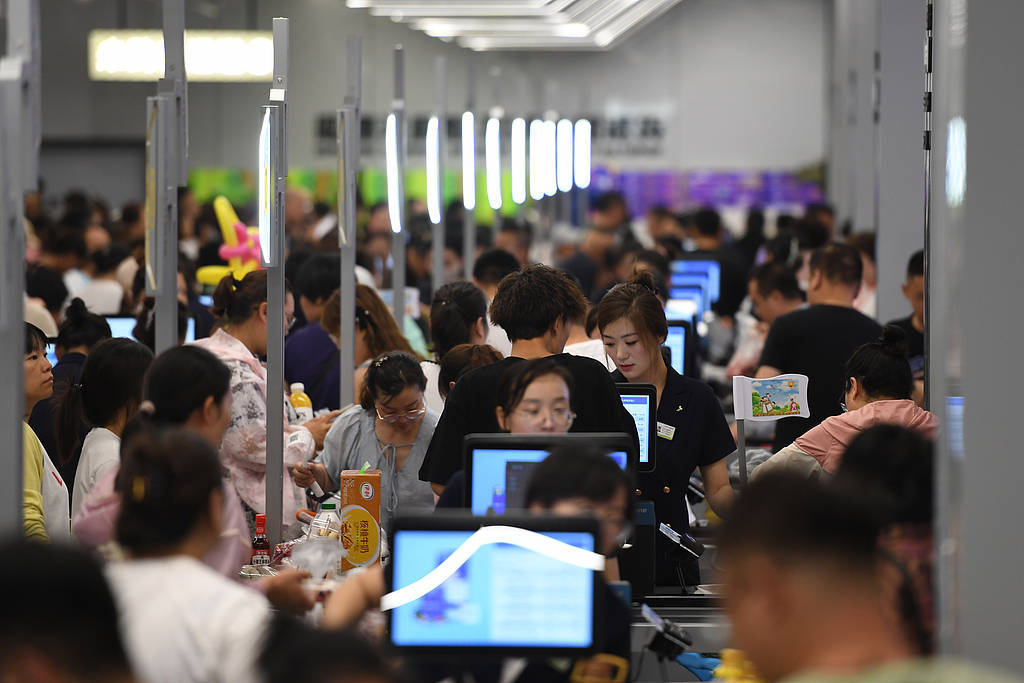
时报观察丨提高“国补”资金时空匹配精准度
证券时报· 2025-06-14 00:13
应当说,在总量上,3000亿元超长期特别国债的资金支持为全年消费品以旧换新政策的实施提供了重要助 力,分别于1月、4月下达的两批合计1620亿元资金也体现了"既定政策早出台早见效"的部署安排。市场机构 根据销售数据测算出,截至5月末,消费品以旧换新"国补"资金使用进度为1439亿—1632亿元,接近已下达资 金规模;进入6月,叠加端午节促销、"6·18"等购物节点,预计当月资金消耗将攀升至500亿元。 不过,从区域分布看,各地资金使用进度和政策效果不能一概而论。部分地区暂停"国补"领取主要是因为前 期所获资金额度已消耗接近上限,新一轮补贴发放安排需等待中央资金下拨;另有部分地区采取每日"限量发 放"模式控制资金消耗进度。与此同时,还有地区维持现有"普惠式补贴"模式,部分省市还在辖内扩大补贴覆 盖范围,以此进一步提高政策吸引力、带动消费。 根据前期中央部委印发的政策文件,今年消费品以旧换新的资金分配总体上是向2024年工作成效较好的地区 适度倾斜。行至年中,站在新一轮中央资金下拨的时点上,优化资金额度分配一定程度上也将影响接下来政 策的实施效用。更进一步来看,优化资金分配机制,尤其是根据政策实施效果更为动态地调 ...

时报观察 提高“国补”资金时空匹配精准度
Zheng Quan Shi Bao· 2025-06-13 18:14
Core Viewpoint - The suspension of the old-for-new subsidy for consumer goods during the "6.18" shopping festival has raised widespread attention, highlighting the importance of this policy in boosting consumption and expanding domestic demand [1][2]. Group 1: Policy Impact - The old-for-new policy has shown significant effects, with sales in five major categories reaching 1.1 trillion yuan in the first five months, nearing the total sales of 1.3 trillion yuan for the entire previous year [1]. - The implementation of 300 billion yuan in long-term special treasury bonds has provided crucial support for the old-for-new policy, with 162 billion yuan allocated in two batches in January and April [1]. Group 2: Regional Variations - There are notable differences in the usage progress and effectiveness of the subsidy across regions, with some areas suspending the "national subsidy" due to nearing the funding cap, while others adopt a daily "limited issuance" model [2]. - Some regions maintain a "universal subsidy" model and expand coverage to enhance policy attractiveness and stimulate consumption [2]. Group 3: Future Considerations - The distribution of funds is expected to favor regions that perform well in 2024, and optimizing fund allocation based on policy effectiveness will be crucial for improving subsidy implementation [2]. - Upcoming promotional events in the second half of the year will require precise management of fund usage to maximize the impact of fiscal resources on consumer spending [2].
乘用车零售增势走强
Jing Ji Ri Bao· 2025-06-10 22:09
Core Insights - In May, China's retail sales of passenger cars reached 1.932 million units, a year-on-year increase of 13.3%, with cumulative retail sales for the year at 8.811 million units, up 9.1% [1] - Passenger car production and wholesale also hit historical highs in May, with production at 2.270 million units (up 12.6%) and wholesale at 2.310 million units (up 12.8%) [1] - The "old-for-new" policy significantly boosted retail sales, with 4.12 million applications for subsidies by the end of May, and May's applications estimated at 1.23 million, a 13% increase from April [2] - The penetration rate of new energy vehicles (NEVs) reached 52.9% in May, with retail sales of NEVs at 1.021 million units, a 28.2% year-on-year increase [2] - Exports of passenger cars (including complete vehicles and CKD) reached 448,000 units in May, a year-on-year increase of 13.5% [2] Industry Trends - The automotive market is expected to maintain growth in June, although the growth rate may slow due to high base effects from the previous year [3] - Government policies aimed at stabilizing fuel vehicle consumption and promoting vehicle scrappage are expected to support the overall positive trend in the automotive industry [3]
落实落细以旧换新 充分激发消费活力
Zheng Quan Ri Bao· 2025-06-10 17:23
Core Viewpoint - The "618" shopping festival is driving a new wave of consumer enthusiasm, supported by the "old-for-new" policy and promotions from major e-commerce platforms, significantly boosting sales in consumer goods [1] Group 1: Policy Implementation - The "old-for-new" policy is a crucial measure for accelerating the construction of a new development pattern and promoting high-quality economic and social development [1] - As of May 31, 2023, the five major categories of consumer goods under the "old-for-new" policy have generated a sales volume of 1.1 trillion yuan, with approximately 175 million subsidies issued directly to consumers [1] Group 2: Recommendations for Improvement - Dynamic adjustment of the funding pool is suggested, introducing a "rolling allocation" measure to enhance the precision and efficiency of subsidy distribution [2] - Transitioning from "price subsidies" to "technology subsidies" is recommended to guide industrial upgrades, focusing on supporting green appliances and smart manufacturing products [3] - Establishing a multi-party collaborative model is essential, enhancing the role of enterprises in driving the initiative through data sharing and innovative subsidy mechanisms [4] Group 3: Future Outlook - Continuous experience accumulation and collaborative efforts are expected to sustain the "old-for-new" policy, injecting strong momentum into high-quality economic development [5]
CPI增长持续承压 研究者建议尽快出台新的增量政策
Jing Ji Guan Cha Wang· 2025-06-09 10:54
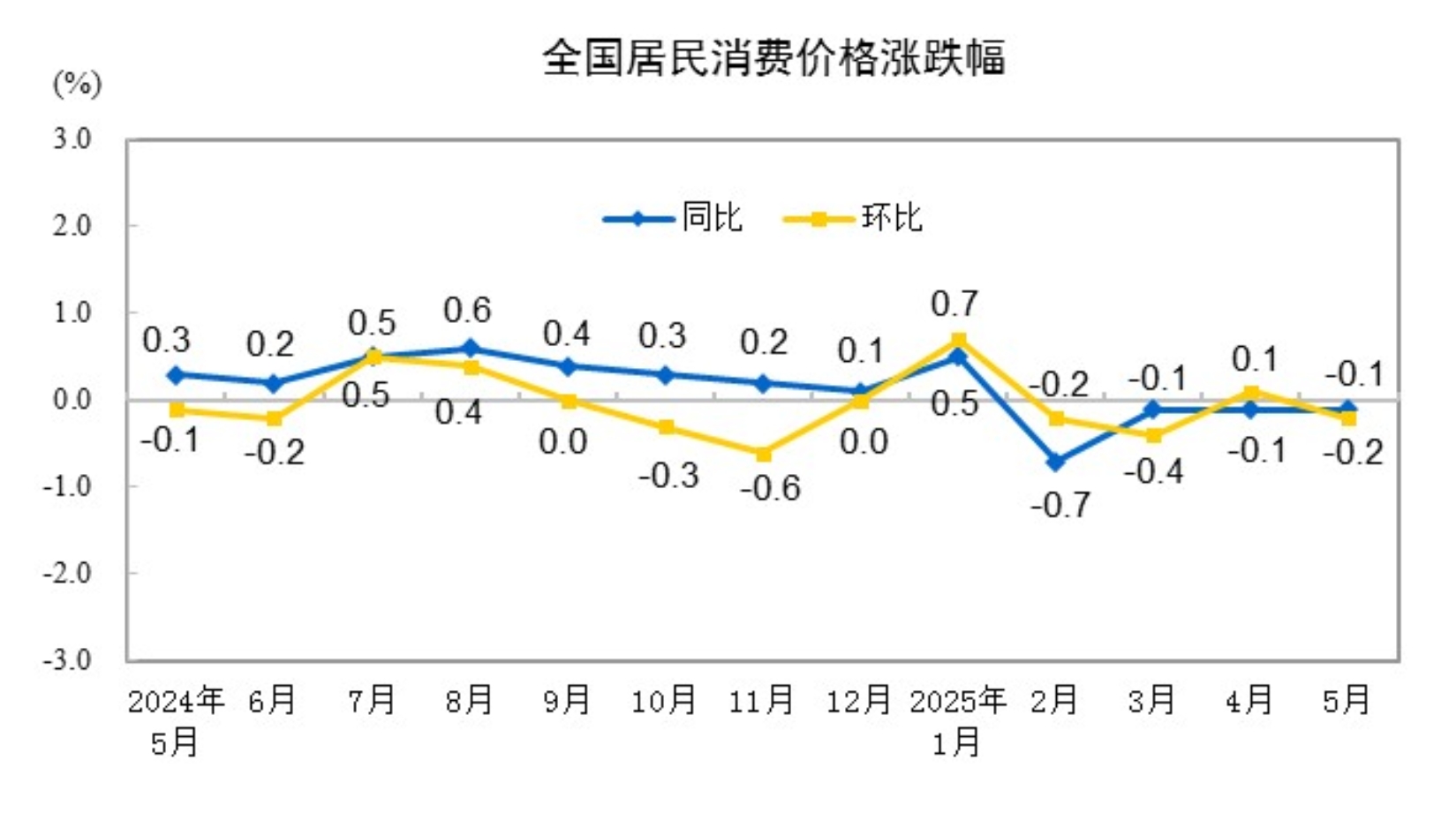
5月CPI数据发布当天,东方金诚宏观研究发展部发布的报告提出,剔除波动较大的食品和能源价格,更能反映基本物价水平的核心CPI同比持续处于1.0%以 下的低位,表明当前国内物价水平稳中偏弱,其中消费需求不足是主要原因。 国务院发展研究中心宏观经济研究部研究员张立群表示,近几个月CPI的走势说明,国内由市场引导的供求总量失衡态势仍在发展中。这种现象会进一步弱 化企业预期、打击企业信心,进而使居民消费活动向更谨慎的态势发展,为此要高度重视并尽快扭转此态势。 启铼研究院首席经济学家潘向东表示,物价是经济活跃度的一个反映。近期物价下跌的核心原因是需求不旺和供给过剩。需求不旺与国内经济面临的内外部 环境密切相关,包括外部的国际贸易摩擦,以及内部的就业压力和财产性收入增长压力等。 6月9日,国家统计局公布的数据显示,2025年5月全国居民消费价格指数(CPI)同比下降0.1%,CPI同比增速已连续四个月出现负增长。1—5月平均,CPI 比上年同期下降0.1%。 具体来看,5月蔬菜价格同比降幅由上月的-5.0%扩大到-8.3%,猪肉价格同比涨幅也出现回落。此外,受5月上旬国际原油价格走低影响,当月国内成品油价 格下调,能源价 ...
以旧换新国补资金如何抵达消费者,消费,势头强劲。这些政府补贴是如何落地的?
Sou Hu Cai Jing· 2025-06-08 06:36
Group 1 - The government has been implementing a "trade-in" policy for consumer goods, benefiting consumers and boosting consumption momentum since last year [1][3] - Funding for the trade-in policy comes from tax revenues, with both central and local governments contributing [3][5] - Central government funding for the trade-in program has doubled this year, with 300 billion yuan in special bonds issued to support the initiative, an increase of 150 billion yuan from the previous year [3][7] Group 2 - Local governments are required to match central funding, with provinces like Shandong actively raising funds to meet the 15% local contribution requirement [6][8] - The trade-in policy has led to significant sales growth for companies, with a reported 30% increase in sales for Shandong Sanyuan Home Appliances in the last quarter and the first four months of this year [8][10] - The scope of the trade-in policy has expanded to include a wider range of consumer products, enhancing the benefits for consumers [10][11]
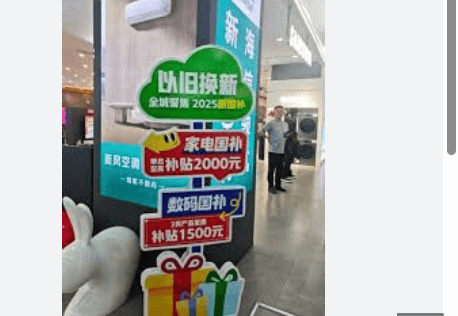
一文读懂:“国补” 资金如何精准触达消费者
Sou Hu Cai Jing· 2025-06-07 07:23
Group 1: Policy Source - The funding for the consumer goods replacement policy comes from fiscal funds, with central and local governments collaborating to contribute [3] Group 2: Fund Flow - Unlike traditional subsidy methods, the consumer goods replacement policy directly allocates funds to local governments, allowing for quicker delivery of benefits to consumers [4] Group 3: Claim Process - Consumers can claim subsidies through both online and offline channels, with specific procedures for each [5][10] Group 4: Regional Funding Distribution - The central government and local governments share the subsidy costs in a 9:1 ratio, with varying central government contribution rates across eastern (85%), central (90%), and western (95%) regions [7] - Local governments allocate matching funds based on central funding distribution, considering factors like population and economic activity to optimize support [7] Group 5: Consumer Experience - For example, consumers can receive a 15% subsidy on a smartphone priced at 3000 yuan, saving 450 yuan when using the appropriate payment method [9] - In Changsha, consumers can claim a subsidy through a mobile app and receive a discount at participating stores [10] Group 6: Fund Management and Oversight - Strengthening fund supervision and ensuring the safe use of funds has become a priority for local governments as the subsidy amounts increase [13] - Various measures are in place to ensure compliance and prevent fraud, including real-name management for applications and cross-departmental oversight [14]