财富管理

Search documents
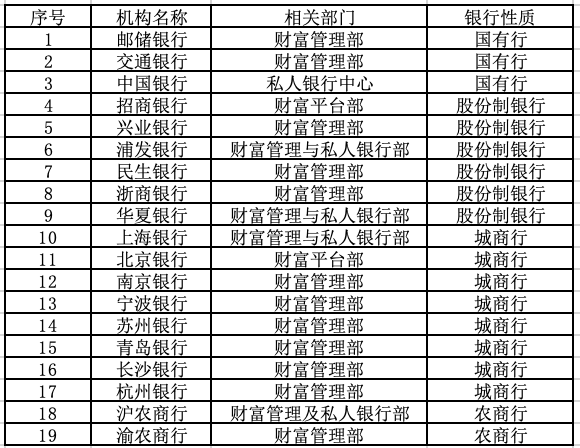
19家上市银行加码财富管理赛道,2026年战略布局将提速
Di Yi Cai Jing· 2026-01-05 12:50
Core Insights - The rapid expansion of high-net-worth client groups is prompting domestic listed banks to accelerate the establishment of dedicated wealth management departments, shifting their retail banking strategy from "product sales" to "full lifecycle asset allocation" [1][2] - By the end of 2025, 19 listed banks are expected to have established or adjusted their wealth management-related departments, including 3 state-owned banks, 6 joint-stock banks, 8 city commercial banks, and 2 rural commercial banks [2][3] Group 1: Wealth Management Department Establishment - State-owned banks like Postal Savings Bank, Bank of China, and Bank of Communications are completing wealth management business integration at the head office level by 2025 [1][4] - Joint-stock banks and city commercial banks are adopting a model that integrates wealth management with private banking, with several banks like Shanghai Bank and Hangzhou Bank establishing new wealth management departments [5][6] Group 2: Strategic Shifts and Market Positioning - The establishment of wealth management departments reflects a strategic shift towards enhancing professional capabilities and resource integration, aiming to upgrade wealth management as a core strategy for banks [7][8] - Compared to state-owned banks, joint-stock banks and city commercial banks focus on precise market positioning, with banks like China Merchants Bank prioritizing wealth management as a core capability [7][8] Group 3: Growth and Performance Metrics - As of Q3 2025, the wealth management AUM of listed banks continues to expand, with Postal Savings Bank reaching 17.89 trillion yuan and significant growth rates reported by other banks [9] - The future of wealth management business is expected to accelerate due to the continuous accumulation of resident wealth and the diversification of high-net-worth client needs, with strategic investments and organizational adjustments being crucial for competitive positioning [9]

岁末年初银行揽储有何变化
Jing Ji Ri Bao· 2026-01-04 21:49
Core Viewpoint - The current atmosphere for bank deposit acquisition is more rational compared to previous years, with state-owned banks adopting a more restrained approach and smaller banks utilizing non-price methods for attracting deposits [1][2][3] Group 1: Deposit Acquisition Strategies - Major state-owned banks are generally low-key in their marketing efforts, while many smaller banks are using physical rewards and promotional activities to attract deposits [1] - Smaller banks are offering slightly higher interest rates for new customers, such as 1.75% for a 3-year deposit, compared to the 1.55% offered by larger banks [1] - The overall deposit acquisition strategy is characterized by a focus on cost control and structural optimization rather than aggressive interest rate hikes [2][3] Group 2: Market Dynamics and Competition - The banking sector is experiencing a structural differentiation, with larger banks focusing on stabilizing costs and durations, while smaller banks exhibit varied responses based on regional competition [2][3] - Some smaller banks are slightly increasing interest rates for specific deposit terms to capture market share, while others are using promotional gifts to attract deposits [3][4] - The competitive landscape for smaller banks is challenging due to their limited brand influence and customer base, leading to a reliance on price competition [4] Group 3: Economic Environment and Regulatory Impact - The macroeconomic policy is expected to maintain a moderately loose monetary stance, which will keep market interest rates low and reduce the overall cost pressure on banks [4][5] - The average net interest margin for commercial banks has narrowed to 1.42%, with state-owned banks at 1.31% as of the third quarter of 2025 [5] - Regulatory measures are suggested to promote market-oriented deposit rate reforms and prevent irrational pricing competition among banks [5][6] Group 4: Long-term Strategies for Smaller Banks - To escape the cycle of high-interest deposit acquisition leading to reduced profitability, smaller banks need to shift from price competition to comprehensive service competition [5][6] - Developing unique products tailored to community needs, such as "retirement deposits" and "education savings," is essential for smaller banks to enhance their competitive edge [6] - Wealth management services are becoming increasingly important for banks to adapt to evolving customer needs and improve client loyalty [6]
理财众生相!普通人的2025投资故事
Xin Lang Cai Jing· 2026-01-04 04:33
Core Insights - The 2025 financial management landscape in China has seen a significant shift, with the market size surpassing 32 trillion yuan for the first time, driven by new investors exploring alternatives to traditional savings due to declining deposit rates [2][6]. Group 1: Market Trends - The long-term fixed deposit rates have dropped to the "1" range, with major banks offering rates around 1.55%, significantly lower than the 4% or 5% rates available a decade ago [3]. - The financial management market in 2025 reached a historical high, indicating a growing trend among individuals to seek investment opportunities beyond traditional savings [2]. Group 2: Investor Experiences - New investors like Cheng Ayi have transitioned from traditional savings to financial products, learning about investment risks and asset management to make informed decisions [3]. - Young professionals, such as Zhang Xin, faced challenges with initial investments in pure bond funds but found success with "fixed income plus" products, highlighting the importance of adapting to market conditions [4]. - Experienced investors like Mr. Yin capitalized on market opportunities, investing in mixed products that include equity assets, demonstrating a more aggressive investment strategy [5]. Group 3: Future Expectations - Investors have set realistic expectations for 2026, with Cheng Ayi aiming for stable returns above 3%, while Zhang Xin plans to focus on reliable "fixed income plus" products [7]. - Mr. Yin anticipates a recovery in the equity market and hopes for regulatory improvements to enhance market stability and investor confidence [7].
持续打造数字金融服务新范式 光大银行APP获评“年度用户青睐产品”
Cai Jing Wang· 2025-12-31 11:28
Core Insights - The article emphasizes the transformation of financial institutions, particularly through mobile banking, as a key platform for enhancing service experience, security, and convenience, marking a shift from traditional transaction processing to comprehensive financial service platforms [1][2] Group 1: Mobile Banking Evolution - China Everbright Bank has launched the 13.0 version of its mobile app, focusing on wealth management, retirement finance, retail credit, and credit cards, with a goal of connecting users to a better life [1][2] - The new app design is centered around user needs, restructuring the homepage into five main modules: Home, Borrowing, Wealth, Activities, and My Account, indicating a fundamental shift from a bank-centric to a user-centric service logic [2] Group 2: Wealth Management Focus - The retail asset management scale of China Everbright Bank has surpassed 3.15 trillion yuan, with wealth management products reaching 1.89 trillion yuan, showcasing its robust capabilities in providing a reliable wealth management platform [3] - The app's wealth management section emphasizes the "Sunshine Wealth" brand, focusing on trust, security, and professionalism, while introducing the "Four Types of Money" asset allocation concept to guide users in financial planning [3][7] Group 3: Retirement Financial Services - The bank has upgraded its mobile banking features to address the growing demand for diverse retirement solutions, transitioning from a single product sales approach to a comprehensive "finance + ecosystem" service model [5][6] - The app includes dedicated sections for retirement finance and personal pensions, offering a one-stop service that aligns with the national multi-pillar pension system, enhancing the planning of future retirement funds [6] Group 4: User-Centric Innovations - The 13.0 version of the app includes a "Simplified Love" version tailored for elderly users, improving usability through optimized design and simplified processes, thereby lowering barriers for older customers to access digital financial services [6][7] - The bank's initiatives reflect a commitment to redefining the relationship between banks and users in the digital economy, positioning itself as a co-creator of value and an enabler of a better life [7]

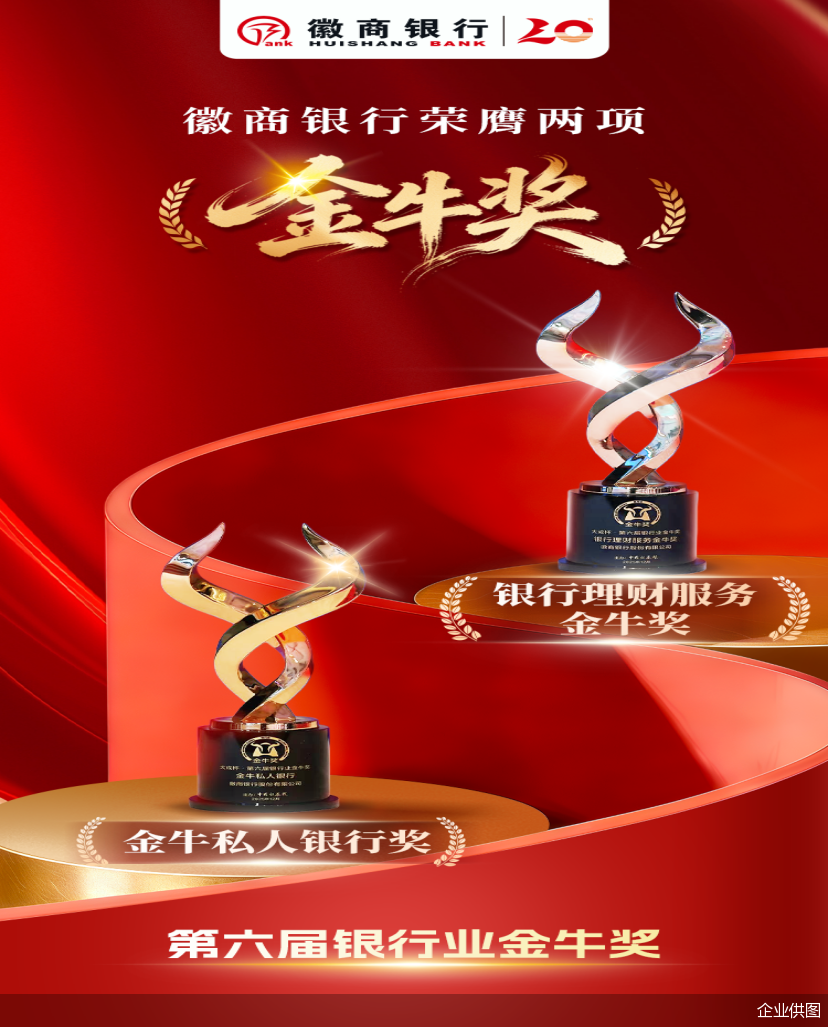
深耕专业,优质服务 徽商银行着力提升财富管理与私人银行服务能力
Bei Jing Shang Bao· 2025-12-31 11:08
Core Viewpoint - Huishang Bank has been awarded the "Bank Wealth Management Service Golden Bull Award" and the "Golden Bull Private Banking Award" at the 6th Banking Golden Bull Awards, recognizing its excellence in wealth management and private banking services [1] Group 1: Awards and Recognition - The Golden Bull Awards are considered the "Oscar" of China's asset management industry, emphasizing fairness and respect for industry development [1] - The awards reflect Huishang Bank's comprehensive strength in product innovation, customer service, and team building in wealth management and private banking [1] Group 2: Customer-Centric Approach - Huishang Bank adheres to a customer-centric business philosophy, prioritizing customer needs and providing multi-layered, full-process companion services [3] - The establishment of the Wealth Management and Private Banking Department in July 2022 aims to enhance service quality and product offerings [3] - As of November 2025, the bank has 1.309 million wealth clients, with a compound annual growth rate (CAGR) of 17.5% over the past three years [3] Group 3: Product Diversification - The bank aims to create an open, all-term wealth product shelf, continuously innovating its product system to meet diverse and personalized wealth management needs [4] - Huishang Bank collaborates with multiple leading wealth management institutions, offering a diversified product system that includes personal finance, funds, insurance, and more [4] - As of November 2025, the bank has partnered with 54 institutions and offers 1,688 products [4] Group 4: Private Banking Services - The bank focuses on building a "small but beautiful" private banking service system, emphasizing professional and personalized services [5] - A joint service model involving branch financial managers, wealth consultants, and product experts is implemented to provide customized asset allocation solutions [5] - The bank has launched a mobile banking private banking section and a service platform, enhancing customer engagement through exclusive benefits [5] Group 5: Talent Development - Professional talent is viewed as the core competitive advantage in wealth management, and the bank is committed to strengthening its wealth management team [6] - A tiered training system has been established to enhance the capabilities of the wealth management team at various levels [6] - The bank has achieved notable recognition in industry competitions, showcasing its professional standards and talent advantages [6] Group 6: Brand Building and Social Responsibility - Brand building is essential for establishing long-term trust and differentiation, with the bank promoting rational investment education and a positive wealth philosophy [7] - The bank actively engages in financial literacy campaigns, particularly targeting elderly clients, to enhance their financial awareness and risk prevention [7] - The recent awards serve as both recognition of the bank's comprehensive strength and motivation for future development, aiming to become the preferred bank for regional wealth management [7]
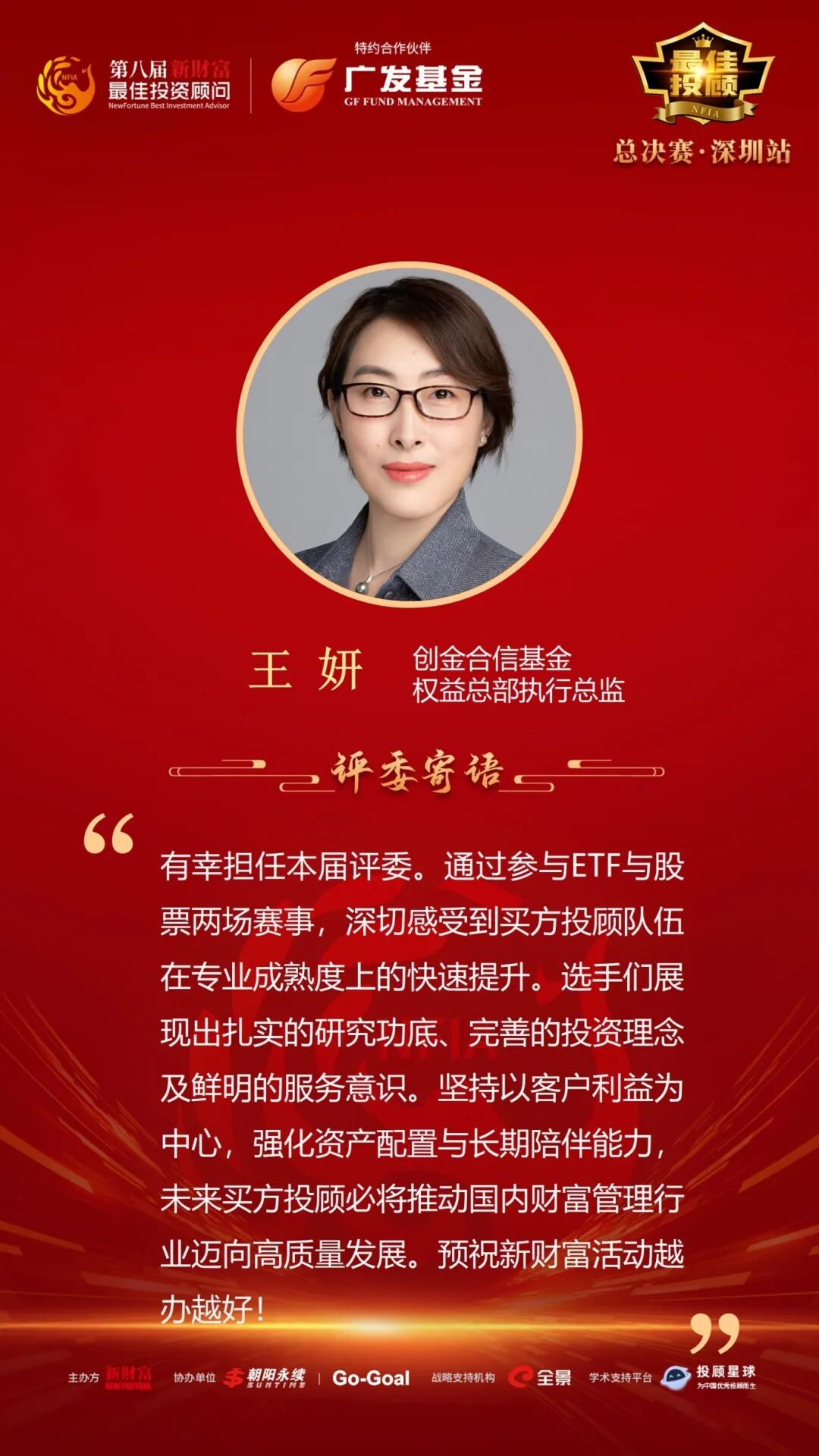
第八届新财富投顾评选评委观点集:为什么说“信任复利”才是财富管理最深的护城河?
Xin Lang Cai Jing· 2025-12-30 11:08
Core Insights - The eighth New Wealth Best Investment Advisor selection has concluded, with 91 industry representatives recognized after rigorous evaluations across four cities [1][66][67] - The evaluation process highlighted the increasing professionalism and service capabilities of investment advisors, indicating a shift towards high-quality development in the wealth management industry [1][68][76] Group 1: Industry Trends - The wealth management market in China is transitioning from "scale expansion" to "deep service," emphasizing the need for professionals who understand clients and can navigate market fluctuations [17][80] - Investment advisors are evolving from "product sellers" to "asset allocators and companions," with a focus on long-term client relationships and risk management [12][56][65] Group 2: Professional Development - Advisors showcased high research standards and investment philosophies, with a strong emphasis on client service and asset allocation as core competencies [1][68][26] - The integration of quantitative metrics and tools in investment strategies has enhanced the professionalism and replicability of advisory services [109] Group 3: Future Expectations - The future of investment advisory lies in enhancing three key capabilities: asset allocation, risk communication, and the use of digital tools to improve service efficiency [60][122] - The industry is expected to continue evolving towards a more professional, transparent, and client-centered approach, fostering trust and long-term relationships [65][128]
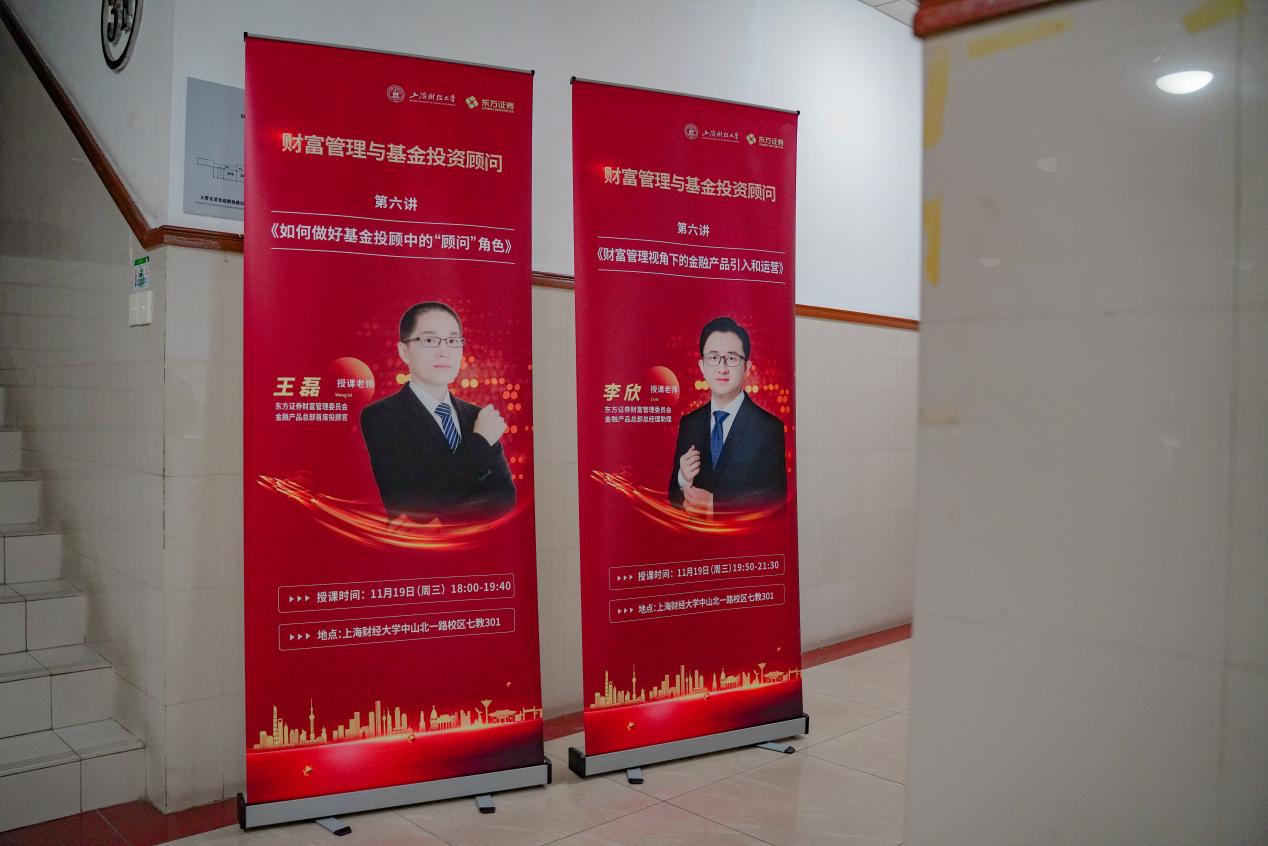
2025年度《财富管理与基金投资顾问》系列课程第六讲:《如何做好基金投顾中的“顾问”角色》与《财富管理视角下的金融产品引入和运营》
Jin Rong Jie· 2025-12-30 09:08
Group 1 - The core value of fund advisory is highlighted, addressing the industry pain point where 720 million public fund investors face challenges such as selecting from numerous funds, lack of professional knowledge, and frequent trading behaviors [3] - The "three parts investment, seven parts advisory" approach is emphasized to achieve dual alpha returns, with specific strategies outlined for constructing advisory portfolios [3] - The importance of investor education and continuous support is stressed, showing that educational efforts can increase the probability of investor profitability by 19.1% [3] Group 2 - The development trajectory of China's public funds is traced, revealing a growth to 36.1 trillion in scale and 13,000 products, alongside the necessity for brokerage wealth management to transition from channel services to buyer services [6] - The core logic and processes for introducing financial products are detailed, focusing on due diligence across macro, meso, and micro levels for public products, and governance and risk-return matching for private products [6] - Strategies to respond to industry fee reduction trends are proposed, including expanding retained scale and transitioning to buyer advisory services [6] Group 3 - The course series effectively clarifies the core framework of wealth management and conveys an industry value perspective centered on client interests, serving as a practical model for talent cultivation in the wealth management sector [9]

2025年度《财富管理与基金投资顾问》系列课程第三讲:《宏观市场与资本市场投资策略》与《营业部财富管理的美名和执业务实》
Sou Hu Cai Jing· 2025-12-30 08:36
随后,在《营业部财富管理的美名和执业务实》课程中,毛彩华先生结合其二十余年的一线从业经历,分享了财富管理行业的真实图景与执业心得。他深刻 剖析了行业在转型过程中的挑战与机遇,指出真正的财富管理应以客户为中心,超越传统的通道服务,提供涵盖资产配置、风险管理、财富传承的综合解决 方案。毛彩华先生通过丰富的客户案例,生动展示了在实践中如何理解客户需求、建立信任关系并提供务实服务。他鼓励同学们积极投身财富管理事业,从 基础做起,在实践中锤炼专业能力与客户服务精神。 本次课程,白建国先生与毛彩华先生以前瞻的宏观洞察与深厚的实战经验,成功搭建了一座连接学术理论与行业实践的桥梁,不仅启发了同学们对资本市场 的深入思考,也为其未来职业规划提供了宝贵的方向指引。 在《宏观市场与资本市场投资策略》课程中,白建国先生以风趣幽默的讲述风格,系统梳理了当前宏观经济形势与资本市场走势。他不仅从经济增长、政策 导向、产业结构等多维度解析了"十五五"时期的宏观背景与投资逻辑,还通过生动的案例与故事,深入浅出地阐释了科技成长、出海破局、资产配置等关键 策略。白建国老师强调,在当前经济转型与政策托底并存的背景下,资本市场正迎来"慢牛"格局,投资 ...

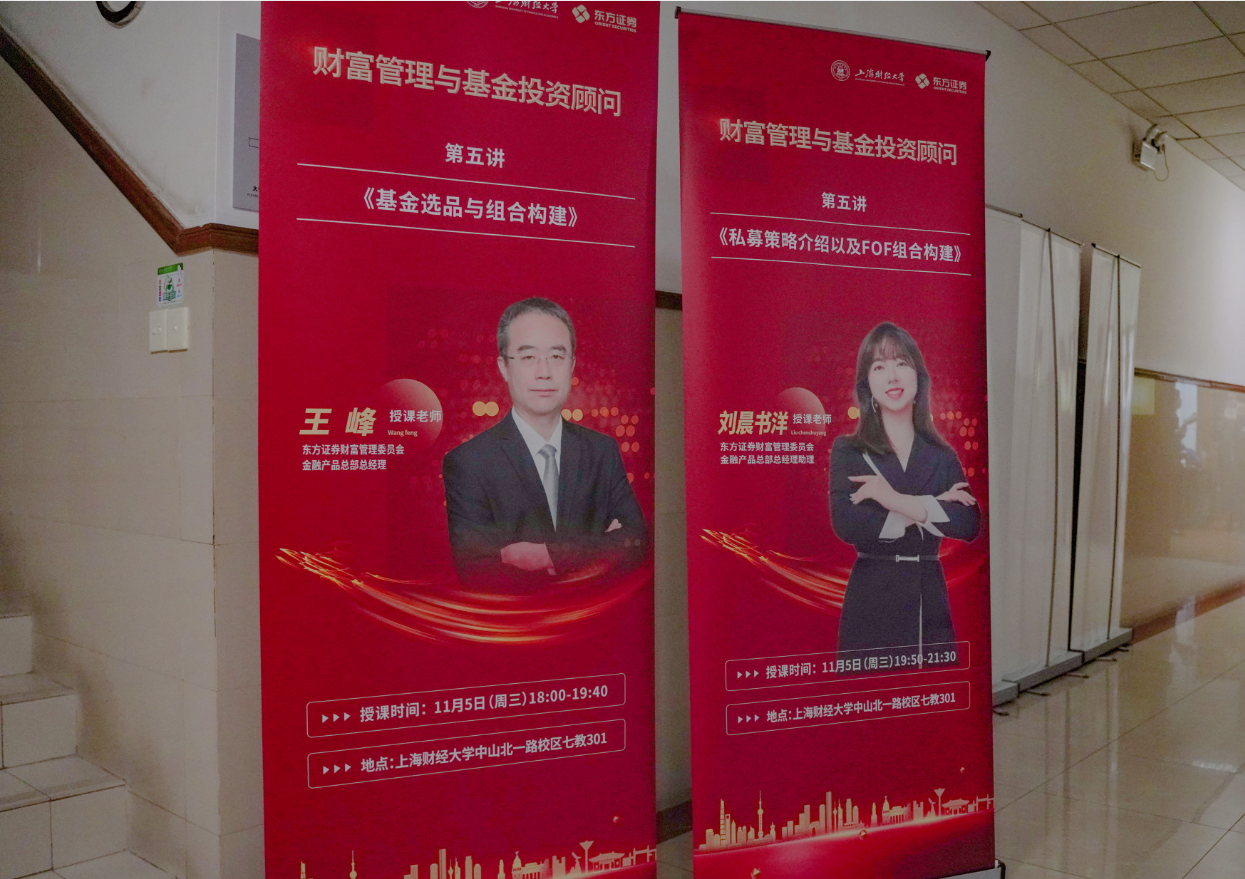
2025年度《财富管理与基金投资顾问》系列课程第五讲:《基金选品与组合构建》与《私募策略介绍以及FOF组合构建》
Jin Rong Jie· 2025-12-30 08:05
Core Insights - The course series "Wealth Management and Fund Investment Advisory" is a collaboration between Shanghai University of Finance and Economics and Dongfang Securities, aimed at enhancing students' understanding of fund investment practices [1][10] Group 1: Course Content Overview - The fifth lecture featured two main topics: "Fund Selection and Portfolio Construction" by Wang Feng and "Introduction to Private Equity Strategies and FOF Portfolio Construction" by Liu Chenshuoyang [1][10] - Wang Feng introduced the core investment research capabilities under the Dongfang Securities TPS system, focusing on "Fixed Income +" and active equity as the main investment lines, detailing a comprehensive investment framework from macro analysis to market response [3] - Liu Chenshuoyang outlined the label system and strategy classification of private equity managers, covering various strategies such as subjective long, index enhancement, market neutral, and commodity futures [6] Group 2: Practical Applications - The course emphasized the importance of combining quantitative and qualitative scoring systems for deep alpha extraction, alongside behavioral data validation and a rigorous performance attribution process for strategy optimization [3] - Liu provided an in-depth analysis of quantitative long strategies, detailing the full process from data collection, factor construction, to portfolio optimization and algorithmic trading, while also discussing strategy allocation and risk management in different market environments [6] - The course successfully established a complete cognitive chain for students, from fund selection to portfolio construction and private equity strategy management, receiving positive feedback for its solid content and clear logic [8]
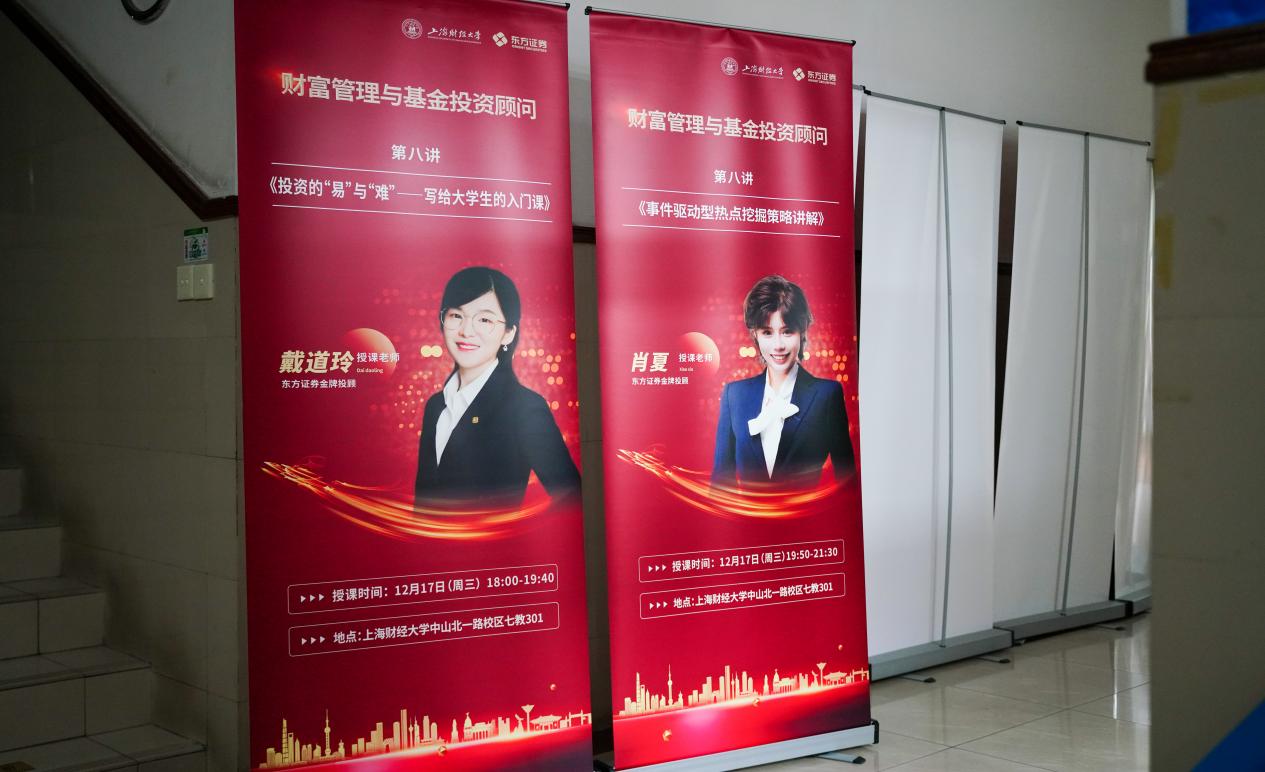
2025年度《财富管理与基金投资顾问》系列课程第八讲:《投资的“易”与“难”——写给大学生的入门课》与《事件驱动型热点挖掘策略讲解》
Jin Rong Jie· 2025-12-30 08:05
Core Insights - The event hosted by Dongfang Securities and Shanghai University of Finance and Economics focused on wealth management and investment advisory, featuring two main lectures aimed at university students [1][9] Group 1: Investment Fundamentals - The lecture titled "The 'Easy' and 'Difficult' Aspects of Investment" by Dai Daoling addressed the investment cognition characteristics of university students, analyzing the core contradictions and practical logic of investing [3] - Dai highlighted the dual nature of investment, where the "easy" aspects include low entry barriers, easy access to knowledge, and diverse product choices, while the "difficult" aspects involve overcoming information gaps, cognitive biases, and human weaknesses like greed and fear [3] - The lecture emphasized the dialectical relationship between the "easy" and "difficult" aspects of investment, promoting the idea that "slow investment is fast, and fast investment is slow" [3] Group 2: Event-Driven Investment Strategies - The second lecture by Xiao Xia focused on the core logic that "investment is a game of cognitive and information differences," establishing a complete system from strategy to practical application [6] - Xiao introduced a formula for high returns: "strong catalyst × high correlation × value mismatch," and analyzed the three essential elements of investment strategy: "people," "way," and "technique" [6] - Practical techniques were shared, including strategy formulation, content definition, and framework establishment, along with insights into industry cycles and consensus formation [6]