科技自立自强

Search documents
上海成立国资创新策源公益基金会 首批发布20个基础研究需求
Di Yi Cai Jing· 2025-07-30 16:23
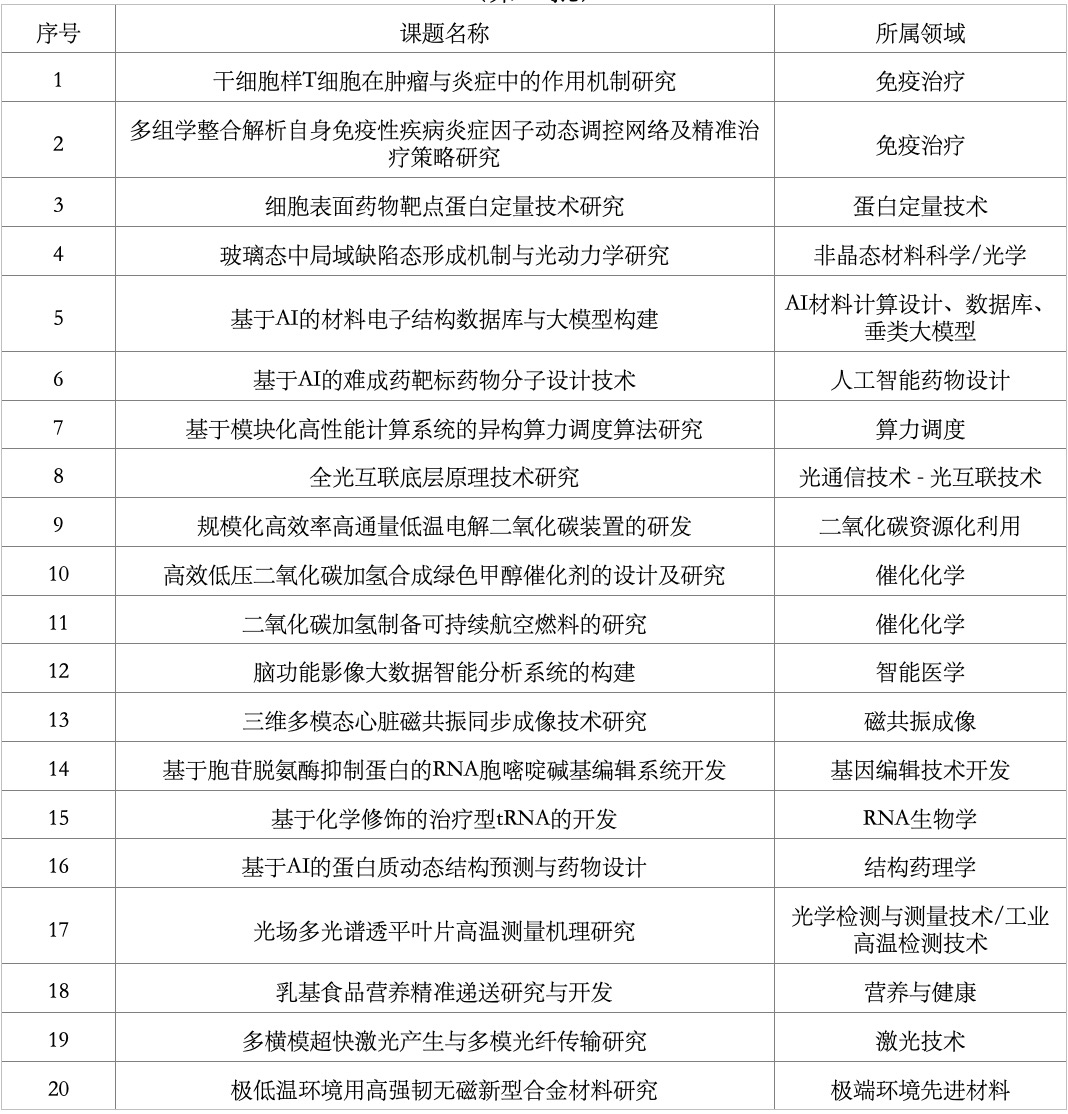
Core Viewpoint - The establishment of the Qiyuan Public Welfare Foundation aims to support basic and applied research in Shanghai, focusing on innovative projects that align with national strategic needs and promote technological self-reliance [1][2]. Group 1: Foundation Overview - The Qiyuan Public Welfare Foundation is the first public welfare foundation for basic research initiated by state-owned enterprises in China, supported by 16 municipal state-owned enterprises [1]. - The foundation's mission is to gather state-owned resources to stimulate innovation and support high-risk, high-value basic research, particularly for young talents [2]. Group 2: Focus Areas - The foundation will concentrate on four key areas: addressing critical technological challenges, exploring frontier scientific fields, facilitating the transformation of research into industry applications, and nurturing innovative young talents [2]. - Specific fields of interest include quantum technology, controllable nuclear fusion, and brain science, among others [2]. Group 3: Research Demand List - A list of 20 foundational research needs was released, covering various topics such as immune therapy, AI-based drug design, and advanced materials for extreme environments [3][4]. - The topics include studies on the mechanisms of stem cell-like T cells in tumors, AI-driven material structure databases, and the development of new alloys for extreme conditions [4].

炸裂!重磅会议定调,注意这类股的风险!
摩尔投研精选· 2025-07-30 13:11
Core Viewpoint - The article discusses the recent market trends and signals from a significant political meeting, indicating a structural bull market with increasing divergence among stocks and sectors, alongside government policies aimed at stimulating the economy and capital markets [1][5]. Group 1: Market Trends - Major indices have been rising since June 23, with the Shanghai Composite Index reaching new highs for the year, while the Shenzhen Component and ChiNext indices have shown signs of decline, indicating increasing market divergence [1]. - Over 3,500 stocks have declined, with major players selling off 80 billion, highlighting a structural bull market where being on the wrong side can lead to losses [2]. Group 2: Government Policy Signals - A key meeting of the Central Political Bureau on July 30 emphasized the need for sustained macroeconomic policies, including more proactive fiscal measures and moderately loose monetary policies to enhance the effectiveness of these policies [3]. - The meeting called for effective release of domestic demand potential, focusing on boosting consumption and expanding effective investment [4]. Group 3: Focus Areas from the Meeting - The meeting highlighted the importance of technological self-reliance and industrial upgrades, with support for sectors like semiconductors and AI, which has led to increased capital inflow into these areas [7][8]. - Consumer spending was identified as a priority for expanding domestic demand, with policies aimed at increasing household income and supporting service sectors like tourism and childcare [10]. - The meeting addressed real estate risk management, advocating for the acquisition of existing properties for affordable housing, which may alleviate inventory pressures for real estate companies [12][13]. Group 4: Market Implications - The anticipated policies are expected to boost market confidence in economic stabilization, particularly benefiting sectors linked to infrastructure investment and consumer spending [5]. - The emphasis on preventing excessive competition may lead to resource concentration in leading companies with core technologies, potentially enhancing industry concentration [9]. - The article warns of high-level risks in the market, suggesting a shift in investment focus as high-performing stocks may face corrections, especially with upcoming mid-year reports [14].

武汉大学社会实践队赴湘粤两地开展暑期学研活动
Zhong Guo Xin Wen Wang· 2025-07-30 03:31
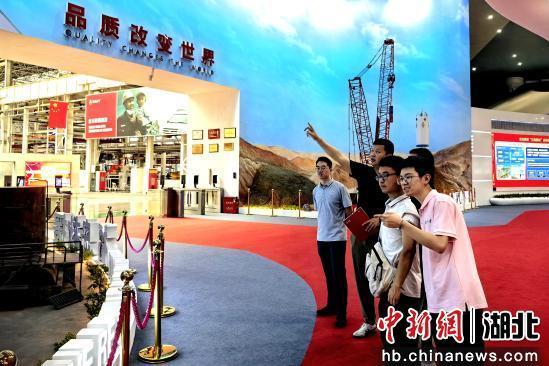
Group 1 - The Wuhan University summer practice team visited key enterprises and research institutions in Hunan and Guangdong, focusing on strategic emerging industries such as "intelligent manufacturing," "technology for a strong military," and "green energy" [1][3][5] - The team observed advanced technologies at SANY Heavy Industry in Changsha, including digital production lines and industrial robots, highlighting the transition from "Made in China" to "Intelligent Manufacturing in China" [3][5] - At CRRC Zhuzhou Institute, the team learned about breakthroughs in key technologies for high-speed trains and the importance of independent innovation for national scientific advancement [3][5] Group 2 - The team visited an intelligent science college in Changsha, focusing on artificial intelligence and unmanned systems, emphasizing the dual transformation of technological achievements and national manufacturing [5][7] - At Guangzhou Development Group, the team explored the company's extensive involvement in clean energy and carbon asset management, discussing the opportunities and challenges in the context of the "dual carbon" strategy [5][7] - The practice highlighted the importance of understanding the real implications of "technological self-reliance" through hands-on experiences and dialogues with industry leaders [8]


加紧推动制定完善人工智能应用规范
Zhong Guo Zheng Quan Bao· 2025-07-27 21:07
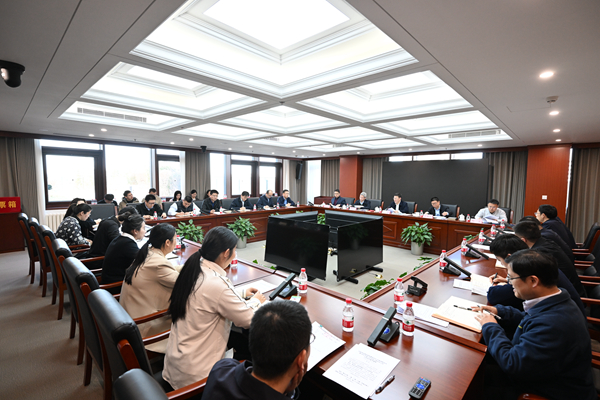
Core Viewpoint - The Chinese government is accelerating the development of artificial intelligence (AI) application standards, ethical guidelines, and emergency response systems to ensure AI is safe, reliable, and controllable [1][2] Group 1: AI Industry Development - The State-owned Assets Supervision and Administration Commission (SASAC) is focusing on high-quality development of the AI industry, emphasizing the importance of adapting to rapid advancements in AI technology [1] - Central enterprises have established a presence in 16 key industries and over 800 application scenarios, forming four data industry communities and continuously upgrading foundational models [1] - The SASAC is promoting the integration of AI into traditional industries to facilitate their transformation and to stimulate explosive growth in emerging industries [1][2] Group 2: Strategic Focus Areas - There is a call to enhance the depth of AI applications by targeting high-value scenarios that have significant strategic importance, economic benefits, and social relevance [2] - The focus is on overcoming critical core technologies by investing in foundational research and addressing key areas such as heterogeneous computing scheduling and advanced chip development [2] - The aim is to build a robust domestic computing foundation and develop high-quality datasets to foster AI innovation [2] Group 3: Collaborative Ecosystem - The SASAC emphasizes the need for an open ecosystem for industrial development, leveraging the advantages of central enterprises in terms of scale and comprehensive industry layout [2] - There is a push for collaborative development among industry, academia, and research institutions to explore new models and mechanisms for shared growth [2] Group 4: Safety Governance - A comprehensive safety governance system is being established, balancing development with governance and innovation with safety across various dimensions [2] - The goal is to create a security governance capability that covers the entire lifecycle of large models, reinforcing the safety framework for AI [2]
每周主题、产业趋势交易复盘和展望:年内AI二波启动,关注国产算力和应用-20250727
Soochow Securities· 2025-07-27 02:46
Market Overview - The average daily trading volume of the entire A-share market reached 1.85 trillion CNY, an increase of over 300 billion CNY compared to the previous week[8] - The Shanghai Composite Index experienced a weekly decline of 1.67%[12] Market Style Performance - The ChiNext 50 index led the gains with a weekly increase of 4.63%[12] - Small-cap growth stocks showed a relative advantage over value stocks, maintaining positive returns in the rolling 30-day performance[15] Participant Performance - The Social Security heavy stock index outperformed with a weekly increase of 3.65%[21] - The Fund heavy stock index also performed well, rising by 3.07% during the week[21] Market Sentiment - The total margin trading balance increased to over 1.94 trillion CNY[30] - The number of stocks hitting the daily limit up was 130, indicating a strong market sentiment at the beginning of the week[25] Industry Trends - Key sectors showing strength included semiconductors and renewable energy, driven by domestic policy support and technological advancements[42] - The launch of the Yarlung Tsangpo River hydropower station on July 19 is expected to boost cyclical industries[42] Risk Factors - Economic recovery may not meet expectations, potentially increasing market uncertainty[49] - Geopolitical risks and uncertainties surrounding U.S. policies towards China could negatively impact A-share liquidity[49]
本周A股稳步上扬4家公司均迎逾50家机构调研
Zheng Quan Shi Bao· 2025-07-25 18:12
Market Overview - A-shares experienced steady growth from July 21 to 25, with the Shanghai Composite Index rising by 1.67% to close at 3593.66 points, the Shenzhen Component Index increasing by 2.33%, and the ChiNext Index up by 2.76% [1] - The majority of Shenwan first-level industries achieved positive returns, with only the banking sector showing a slight decline. Industries such as steel, coal, and building materials led the gains [1] Institutional Research Highlights - A total of 121 listed companies disclosed institutional research records during the week, with over 70% of the surveyed stocks achieving positive returns. Dayu Water-saving led with a 36.24% increase, while Tangyuan Electric, Maolai Optics, Zhejiang Fu Holdings, and Haopeng Technology saw gains exceeding 18% [1] - The concentration of institutional research decreased, with companies like Guangdian Measurement, Dayu Water-saving, Haopeng Technology, and Tangyuan Electric receiving over 50 institutional surveys [1] Guangdian Measurement - Guangdian Measurement received the highest number of institutional surveys, with 54 institutions participating. The company announced a plan to raise 1.3 billion yuan through a private placement for investments in satellite internet, aviation equipment, AI chips, and data intelligence [2] - The management emphasized that the fundraising is a strategic move to enhance technological self-reliance and innovation in high-end intelligent equipment manufacturing and AI, addressing critical technology bottlenecks [2] - The fundraising projects will be implemented in phases over the next three years, with a focus on building multiple bases [2] Haopeng Technology - Haopeng Technology, which received 52 institutional surveys, specializes in the research and manufacturing of lithium-ion and nickel-hydrogen batteries, providing solutions for Fortune 500 companies [2] - The company is transitioning from a consumer battery manufacturer to an "AI + solid-state" core energy solution provider, targeting trillion-level markets such as AI, robotics, and low-altitude economy [2][3] - Haopeng Technology has made significant breakthroughs in emerging fields like AI glasses and robots, with plans for mass production of AI glasses batteries and robot batteries in the second half of the year [3] Flying Dragon Co., Ltd. - Flying Dragon Co., Ltd. has been under institutional scrutiny, particularly regarding its net profit increase and revenue decline in the first half of 2025. The management cited three main reasons for the revenue drop: project lifecycle expiration for overseas clients, short-term order reductions due to U.S. tariff policies, and intensified price competition in the new energy vehicle sector [4] - The company anticipates revenue recovery in the second half of 2025, driven by new overseas projects, increased orders for new energy vehicle integration modules, and growing sales of liquid cooling products [4]
书记谈丨围绕科技自立自强深化政治监督
Zhong Yang Ji Wei Guo Jia Jian Wei Wang Zhan· 2025-07-23 23:43
Group 1 - The article emphasizes the importance of political supervision in ensuring the implementation of the Central Committee's decisions on technological innovation, aiming to create a favorable political environment for scientific and technological development [2][3][4] - The focus is on enhancing the specificity, precision, and normalization of political supervision, which is seen as essential for supporting the construction of a strong technological nation and promoting high-quality development [2][5][6] Group 2 - The article outlines the need for targeted research to identify issues within the scientific and technological sectors, ensuring that political supervision is precise and effective in addressing challenges [5][6][8] - It highlights the role of specialized supervision in addressing systemic issues within the technology sector, particularly in combating misconduct and ensuring integrity in scientific research [8][9] Group 3 - The article discusses the integration of various supervisory mechanisms to form a cohesive political supervision effort, emphasizing collaboration among different departments and agencies to enhance oversight in the technology field [9]
湘电股份定义高端装备制造的中国范式
Xin Lang Cai Jing· 2025-07-21 12:10
Core Viewpoint - Xiangdian Co., Ltd. has achieved significant breakthroughs in the electromagnetic energy and new energy sectors, showcasing China's manufacturing strength and contributing to the country's technological self-reliance [1][5]. Group 1: Technological Breakthroughs - Xiangdian Co., Ltd. has set a global record in magnetic levitation technology, accelerating a 1.1-ton test vehicle to 650 km/h in just 7 seconds, marking a transition from "catching up" to "leading" in ultra-high-speed propulsion technology [3]. - The company has developed a high-speed magnetic levitation bearing motor system, becoming one of the few domestic enterprises to master core technologies in ultra-high-speed magnetic levitation [3]. - Previous achievements include breaking foreign technology monopolies with projects like megawatt-level flywheel energy storage and permanent magnet traction systems [3]. Group 2: Green Energy Initiatives - Xiangdian Co., Ltd. has focused on addressing challenges in integrating renewable energy into the grid, successfully developing a "50Mvar distributed phase shifter" that enhances grid stability [4]. - The distributed phase shifter has been recognized as reaching advanced domestic levels, with its insulation design and rotor ventilation structure optimization being industry-leading [4]. - The company has secured contracts exceeding 100 million yuan in the renewable energy sector, including wind and solar power applications [4]. Group 3: Strategic Positioning - Xiangdian Co., Ltd. is positioned as a core enterprise in China's high-end equipment manufacturing sector, with a focus on "electromagnetic energy + motor + electric control" [2]. - The company aims to fill gaps in high-end equipment localization and establish benchmarks in global competition [4][5]. - The ongoing technological advancements and innovations reflect the company's commitment to national strategic security and the development of new productive forces in various industries [5].

郝敏:中国光学突围历史照见芯片前路
Huan Qiu Wang Zi Xun· 2025-07-20 23:12
Core Viewpoint - The recent shifts in the U.S. chip policy towards China reflect a complex interplay of competition and cooperation, driven by China's technological advancements and the need for U.S. companies to maintain market presence in China [1][4]. Group 1: U.S. Policy Changes - In April, the U.S. government prohibited NVIDIA from selling the H20 chip to China, but by July, the export approval was granted, indicating a reconsideration of the initial ban [1]. - The U.S. aims to balance its national security concerns with the economic necessity of engaging with the Chinese market, as losing access could accelerate China's technological independence [1][4]. Group 2: China's Technological Progress - China's progress in the optical instrument manufacturing sector serves as a historical parallel to its current advancements in the chip industry, showcasing resilience in the face of external restrictions [2][3]. - The development of competitive technologies in China, such as those from Huawei and Cambrian, indicates a growing capability to meet domestic demands while preparing for international expansion [4]. Group 3: Implications for the Industry - The concept of "marginal regulatory effect" suggests that as China develops comparable products, U.S. restrictions may ease to protect market interests, highlighting a dual focus on national security and economic gain [4]. - The approval of NVIDIA's H20 chip sales to China is seen as beneficial for both parties, allowing for resource optimization and mutual benefits in the tech landscape [4]. Group 4: Future Outlook - Despite external pressures, China's commitment to self-reliance and technological innovation remains strong, with ongoing developments in various fields such as space exploration and quantum communication [5]. - The trajectory of China's technological advancements suggests a future characterized by significant achievements and contributions to global technology [5].

我国5辆车年赚300亿,德国技术垄断被打破,只租不卖,卡西方脖子
Sou Hu Cai Jing· 2025-07-19 00:20
Core Viewpoint - China's self-developed SPMT (Self-Propelled Modular Transporter) has achieved a leading position in the heavy transport sector, showcasing advanced engineering capabilities and generating significant rental income for the country [2][11]. Development Journey - The SPMT development program was officially launched in 2007, starting from scratch without any reference designs, data, or experience [4]. - The first SPMT with a Chinese label was produced in 2009, marking a significant milestone in China's heavy transport capabilities [7]. - The second generation of SPMT was introduced in 2014, featuring a modular design and intelligent computer systems, enhancing its operational flexibility [6]. Technological Advancements - The third generation of SPMT was unveiled in 2019, integrating the BeiDou satellite navigation system, enabling features like unmanned driving, obstacle avoidance, and intelligent path planning [9]. - The current SPMT can reach a maximum load capacity of 50,000 tons, with a vehicle length exceeding 100 meters and 1,152 wheels, each capable of supporting 30 tons [9]. Strategic Positioning - China has adopted a "rent, not sell" strategy for its SPMT technology, reflecting a commitment to maintaining control over core technologies [9]. - The SPMT has demonstrated its practical value in various projects, significantly reducing labor costs and time for complex tasks [9]. Future Prospects - The development of the fourth generation of SPMT, which will incorporate AI technology, is already underway, indicating ongoing innovation in this sector [9].