绿色转型

Search documents
“新三样”圈粉 中国出口“含新量”更足
Yang Guang Wang· 2025-08-27 02:30
Core Insights - The "New Three Samples" reflect a significant transformation in China's manufacturing sector, indicating a shift from quantity and price competition to quality and innovation in exports [2][3] - The export of high-tech products such as electric vehicles, lithium batteries, and solar cells has increased by 2.6 times from 2020 to 2024, showcasing the growth of new advantageous industries in China [1] Group 1: Export Trends - The export landscape has transitioned from traditional products like clothing and furniture to high-tech items, marking a new growth point for China's foreign trade [1][2] - New energy vehicles have maintained the top position in global production and sales for ten consecutive years, supported by China's vast market and complete industrial chain [2] Group 2: Cultural Products - Cultural products, represented by online literature, web series, and video games, are gaining popularity overseas, contributing to the global appeal of Chinese culture [2] - Successful cultural exports like "Nezha 2" and "Black Myth: Wukong" are driving service trade growth, showcasing the potential of China's creative industries [2] Group 3: Innovation and Protection - The development of the "New Three Samples" is driven by consumer demand for high quality and new experiences, supported by mature supply chains and production capabilities [3] - Customs authorities have intercepted 1.83 million counterfeit LABUBU items this year, highlighting the importance of intellectual property protection in fostering innovation [3]
一束光照亮一座城 南方电网深圳供电局电力先行护航经济特区高质量发展
Sou Hu Cai Jing· 2025-08-27 02:08
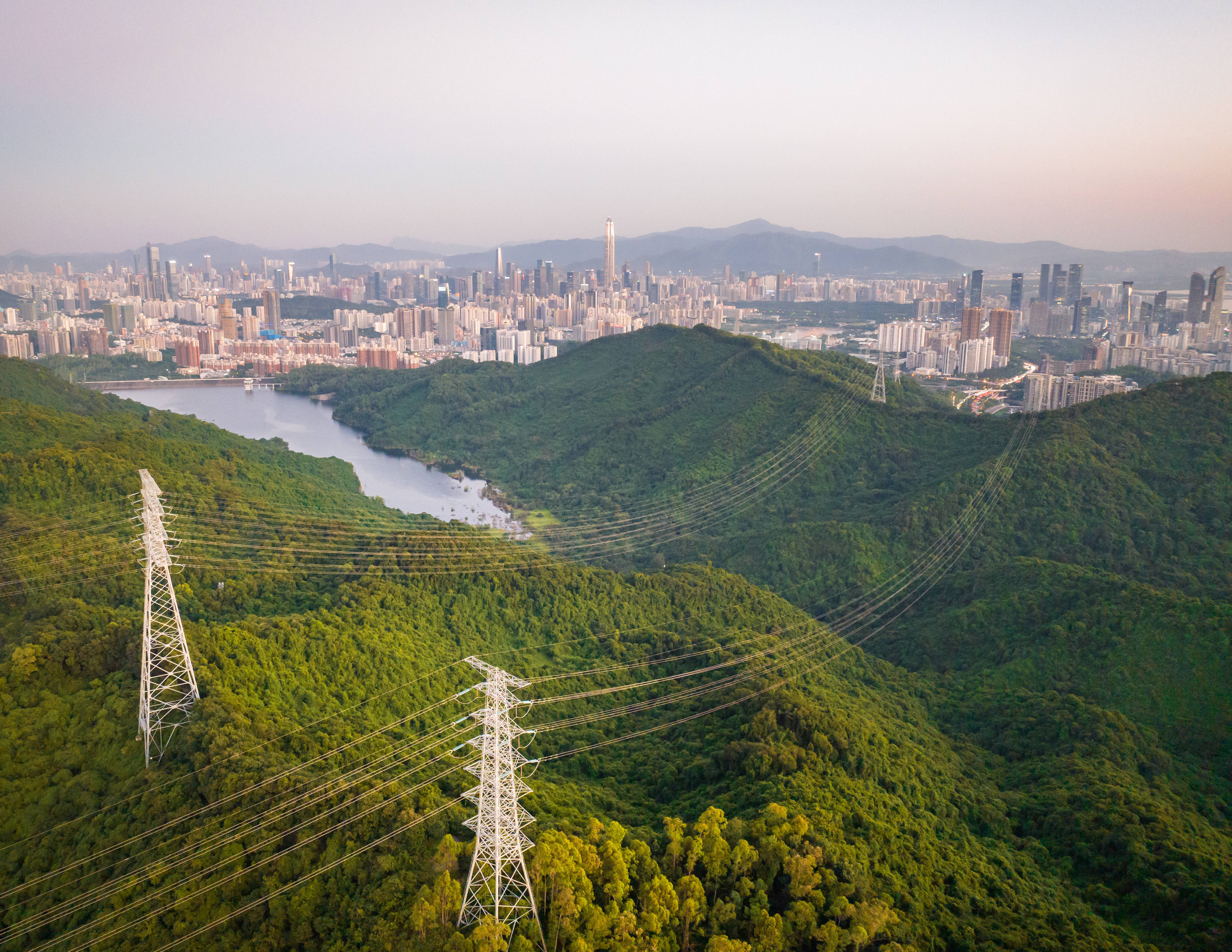
Core Viewpoint - The article highlights the significant advancements and achievements of the Shenzhen Power Supply Bureau in enhancing the city's power infrastructure, ensuring reliable electricity supply, and promoting green energy initiatives as part of Shenzhen's development strategy. Group 1: Infrastructure Development - The 220 kV Shenzhen Energy Eastern Power Plant's second phase transmission line project was launched, injecting 1.34 million kilowatts of green electricity into Shenzhen's eastern region [1] - During the 14th Five-Year Plan, Shenzhen's maximum electricity load is projected to rise from 19.14 million kilowatts in 2020 to 24.01 million kilowatts by 2025, making it the fifth city in China to exceed 20 million kilowatts [6] - The total number of substations in Shenzhen's power grid has surpassed 370, supporting the city's status as a major urban center with significant electricity demand [11] Group 2: Economic Impact - In 2024, Shenzhen's electricity consumption is expected to support a GDP of 3.68 trillion yuan, with a load density of 11,800 kilowatts per square kilometer, the highest among major cities in China [6] - The maximum daily electricity supply in Shenzhen reached 492 million kilowatt-hours, exceeding the total electricity consumption from 1979 to 1982 [6] Group 3: Green Energy Initiatives - Shenzhen has achieved a 90% clean energy installation ratio, with significant contributions from the Eastern Power Plant and other renewable sources [15] - The city has launched a "green car charging green electricity" service, with 11 demonstration stations providing 100% green electricity [14] - The establishment of the first green electricity service center in Shenzhen has facilitated transactions exceeding 68 billion kilowatt-hours of green electricity [15] Group 4: Technological Innovation - The Shenzhen Power Supply Bureau has developed the "Electric Hong" system, a power IoT operating system that enhances real-time monitoring of electricity usage during major events [12] - The first domestic 10 kV three-phase coaxial high-temperature superconducting cable is operational, reducing transmission losses to one-fifth of conventional cables [12] - The implementation of a virtual power plant management center in Shenzhen allows for real-time load adjustments exceeding 1 million kilowatts, showcasing advanced energy management capabilities [16] Group 5: Service Enhancement - The Shenzhen Power Supply Bureau has introduced a "credit-based electricity service" to streamline the electricity application process for businesses, enhancing service efficiency [17] - The average power outage time in Shenzhen is projected to be only 7.5 minutes in 2024, outperforming major global cities [17] - The city has launched 27 initiatives to create a world-class modern electricity business environment, focusing on convenience, quality, and green energy [18]

重庆机电创新驱动再创佳绩,首次中期派息,AIDC柴发需求火爆
Xin Lang Cai Jing· 2025-08-27 01:57
Core Insights - Chongqing Machinery and Electric Co., Ltd. (2722.HK) achieved steady growth in the first half of 2025, with mid-year revenue reaching 4.658 billion yuan, a year-on-year increase of 9.2%, and a significant profit attributable to shareholders of 416 million yuan, up 53.8% year-on-year [1][2] Group 1: Financial Performance - The company's mid-year profit is approaching the total profit of the previous year, indicating strong profitability [1] - A mid-term dividend of 0.01 yuan per share was declared, with expectations for annual dividends to reach a near-high in recent years [1] Group 2: Innovation and Market Demand - Technological innovation remains the core driver of Chongqing Machinery's development, enhancing competitiveness across various sectors, including clean energy equipment and high-end intelligent equipment [2][3] - The gas compressor business showed remarkable performance, participating in the "Chengyu Hydrogen Corridor" project and collaborating with Sinopec to build the first 1000 kg hydrogen refueling station [2] - The hydropower equipment sector achieved a record high in new orders exceeding 77 million yuan, contributing to an 11.3% revenue growth to 3.738 billion yuan [2] Group 3: Global Market Expansion - The company is actively expanding its global market presence while maintaining steady growth in the domestic market, particularly in industrial pumps and cables [4] - A significant order of over 127 million yuan was secured for a diaphragm pump project in Hebei, showcasing the company's ability to penetrate large client markets [4] Group 4: Robotics and Automation - The establishment of Chongqing Machinery Intelligent Manufacturing Company marks the formal entry into the robotics sector, focusing on industrial robots and automation equipment [5] - The collaborative robot automation handling platform project has entered the debugging phase, indicating progress towards becoming a new performance highlight [5] Group 5: Future Outlook - The company plans to continue strengthening core technology research and expand into international markets while deploying strategic emerging sectors [6] - With the acceleration of global smart manufacturing and green transformation, Chongqing Machinery is poised to seize more market opportunities in these emerging fields [6]
中国光热技术点亮绿色未来
人民网-国际频道 原创稿· 2025-08-27 01:52
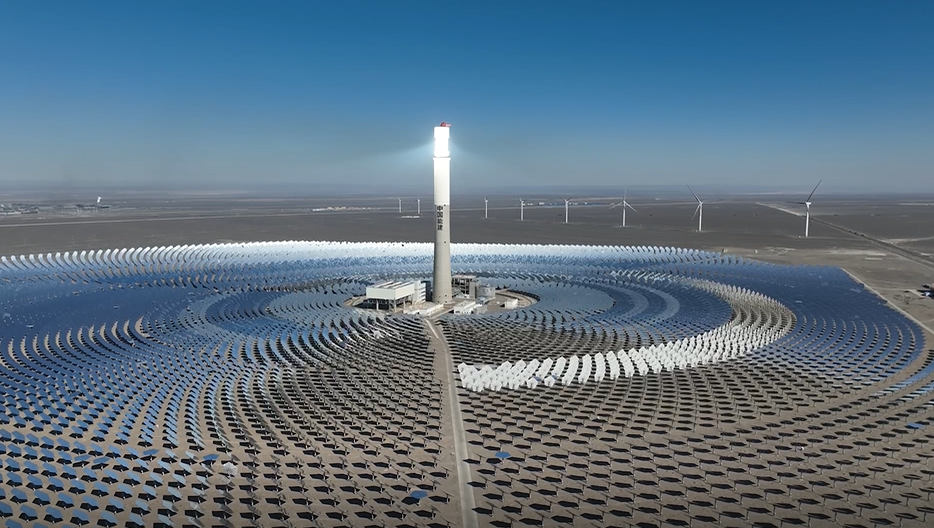
Core Viewpoint - The articles highlight the advancements and significance of solar thermal power generation in China and Africa, particularly focusing on the 50 MW molten salt tower solar power plant in Hami, Xinjiang, and the 100 MW Redstone solar thermal power plant in South Africa, showcasing China's role in green energy cooperation and sustainable development [2][8]. Group 1: Hami Solar Power Plant - The Hami solar power plant utilizes tower-type concentrated solar power technology, featuring over 14,500 heliostats that track the sun to concentrate sunlight onto a central receiver [4][6]. - The plant has an annual electricity generation capacity of approximately 198 million kWh, sufficient to meet the annual electricity needs of 240,000 people, while saving 61,900 tons of standard coal and reducing CO2 emissions by 154,800 tons [6][7]. - Hami's geographical advantages include high solar radiation, with an annual sunshine duration of 3,380 hours, making it an ideal location for solar energy development [3][4]. Group 2: Redstone Solar Power Plant - The Redstone solar power plant, located in South Africa, is the first tower-type molten salt solar power plant in sub-Saharan Africa, featuring over 40,000 heliostats that heat molten salt to 565 degrees Celsius for energy storage and continuous power generation [8][10]. - Once fully operational, the plant is expected to contribute approximately 480 GWh of clean electricity annually to the South African grid, meeting the energy needs of over 200,000 households [10][12]. - The project has created around 1,800 jobs, with over 85% of the workforce being local South Africans, and has injected approximately 7.5 billion rand into the South African economy [12][10]. Group 3: China's Role in Global Green Energy - China's total installed capacity for wind and solar power reached 1,206 million kW by July 2024, more than double the capacity at the end of 2020, significantly contributing to global climate change efforts [7][19]. - The country has signed cooperation agreements with over 40 developing countries to address climate change, establishing a "Belt and Road" green development international alliance [20]. - China's investment in clean energy is projected to reach $625 billion in 2024, accounting for one-third of the global total, with a contribution rate of over 45% to the increase in global non-fossil energy consumption over the past decade [19][20].
赵西君:补短板强协同建设长江经济带
Jing Ji Ri Bao· 2025-08-27 00:14
Core Insights - The Yangtze River Economic Belt has achieved a record high in foreign trade import and export value, reaching 8.31 trillion yuan in the first five months of this year, a year-on-year increase of 5.4%, accounting for 46.3% of the national total [1] - The region has transitioned from extensive growth to high-quality development under the principle of "coordinated protection and no large-scale development," becoming a significant engine for China's modernization [1] - Recent agreements and reports highlight collaborative efforts in technological innovation and high-quality development within the Yangtze River Economic Belt [1] Group 1 - The Yangtze River Economic Belt covers 11 provinces and cities, accounting for 21.4% of the national area, with population and GDP exceeding 40% of the national totals [1] - The region has seen significant improvements in water quality, with an increase in the frequency of sightings of endangered species such as the Chinese sturgeon and Yangtze finless porpoise [1] Group 2 - Challenges remain in the construction of the Yangtze River Economic Belt, including a lack of close cooperation among upstream and downstream enterprises and insufficient release of scale effects and collaborative innovation in emerging industrial clusters [2] - There are structural and trend pressures on ecological environment protection that have not been fundamentally alleviated, and the economic gap between upstream and downstream regions is significant [2] Group 3 - Future development requires breaking down administrative barriers, reshaping competitive advantages through industrial chain collaboration, and fostering new productive forces through green transformation [2] - Strengthening mechanism innovation is essential, including deepening provincial river and lake chief meetings, promoting legal and standardized construction, and establishing cross-regional industrial alliances [2] Group 4 - Enhancing deep collaboration in industrial chains is crucial, focusing on key core technology breakthroughs and the establishment of world-class manufacturing clusters [3] - A "zero tolerance" approach to ecological environment protection is necessary, with the establishment of monitoring systems and economic compensation for regions actively protecting the environment [3]
纺织行业上市公司拥抱AI时代
Zheng Quan Ri Bao Zhi Sheng· 2025-08-26 16:36
Core Viewpoint - The textile industry in China is experiencing mixed performance in the first half of 2025, with some companies reporting revenue growth while others face declines, highlighting the need for innovation and digital transformation to enhance operational capabilities [2][3][4]. Group 1: Company Performance - Among the 38 listed textile companies, 17 reported varying degrees of revenue growth in the first half of 2025 [2]. - Huayi Group achieved a revenue of 12.661 billion yuan, a year-on-year increase of 10.36%, driven by a diversified customer strategy and increased orders from new clients [2]. - Bailong Oriental reported a revenue of 3.591 billion yuan, a decline of 9.99%, but net profit rose by 67.53% to 390 million yuan, attributed to improved capacity utilization and increased main business profits [2]. Group 2: Industry Trends - The textile industry is a traditional advantage for China, with a complete industrial system and a goal for significant digital transformation by 2030, as outlined in the "Implementation Plan for Digital Transformation of the Textile Industry" [3]. - Companies are increasingly focusing on new technologies and research and development to adapt to changes in the global textile competition landscape [3]. - Bailong Oriental plans to enhance production efficiency and reduce costs through technological upgrades and increased investment in innovation, aiming for a green and low-carbon upgrade of the entire industry chain [3]. Group 3: Recommendations for Improvement - Companies are encouraged to enhance operational capabilities through five key areas: technological innovation, digital transformation, supply chain optimization, brand upgrading, and green transformation [4]. - Increased R&D investment is suggested to develop high-value-added products such as functional fabrics and smart wearables, while also leveraging information technology for intelligent production management [4]. - Emphasizing design capabilities and market expansion through cross-border e-commerce is recommended to enhance pricing power and stability [4].

“风”“光”无限 中阿共绘“一带一路”绿色图景
Xin Hua She· 2025-08-26 16:30
Core Insights - The article highlights the significant progress in renewable energy cooperation between China and Arab countries, particularly under the Belt and Road Initiative, showcasing China's leadership in the global renewable energy sector [1][2][4]. Group 1: Renewable Energy Projects - China has established the world's largest and most complete renewable energy industry chain, providing over 80% of global photovoltaic components and 70% of wind power equipment [1]. - The Al Dhafra Solar Power Plant in Abu Dhabi, built by a Chinese company, is currently the largest single photovoltaic power station in the world, generating enough electricity for 200,000 households and reducing carbon emissions by 2.4 million tons annually [1]. - The Al Shubakh Solar Power Plant in Saudi Arabia is expected to have a total emission reduction effect equivalent to planting 545 million trees over 35 years, exemplifying China's role in global energy transition [2]. Group 2: Regional Energy Transition - The Middle East has a low renewable energy installed capacity, accounting for less than 1% of the global total, but it is one of the fastest-growing regions in this sector [2]. - It is projected that by 2028, 30% of the total electricity generation in Bahrain, Iraq, Kuwait, Oman, Qatar, Saudi Arabia, and the UAE will come from renewable sources [2]. - The open attitude of both China and Gulf countries facilitates strong cooperation in the renewable energy sector, driven by complementary market and technology needs [2]. Group 3: Global Cooperation and Technology Exchange - Chinese companies are recognized for their openness and willingness to engage in technical exchanges, which has been crucial for project implementation [3]. - China's achievements in energy transition serve as a practical model for global energy systems, promoting accessibility and technological breakthroughs in renewable energy [3].
濉溪5宗地块成交!河西新区崛起,产城融合加速!
Sou Hu Cai Jing· 2025-08-26 15:51
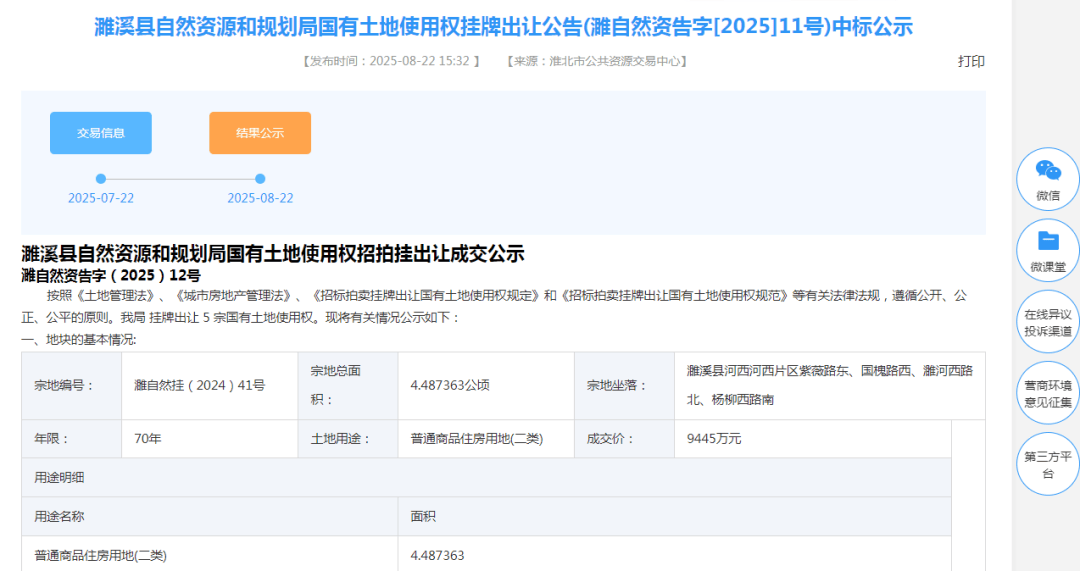
Group 1 - The core viewpoint of the article highlights the successful land auction in Suixi County, which is a significant step in implementing the "National Land Spatial Planning (2021-2035)" and reflects the development logic of "integration of industry and city, ecological livability" [1][9] - The land supply plan for 2025 aims to provide 5,800 acres, including 2,000 acres for commercial and residential use and 3,200 acres for industrial use, with a focus on quality residential areas and concentrated industrial zones [2][4] - The auction results indicate a strong market response, particularly for residential land in the Huaxi New District, which is set to develop into a low-density waterfront residential area linked to cultural tourism projects [2][4] Group 2 - The planning benefits are accelerating, positioning Suixi as a "strong county in northern Anhui" with a shift from a coal-based economy to a diversified industrial cluster [5][9] - The industrial land sold aligns with the county's hydrogen energy strategy and the aluminum-based new materials industry, indicating a focus on high-tech and sustainable industries [4][5] - Population attraction is enhanced through upgraded public services and infrastructure, including the construction of a new railway station to connect with the Yangtze River Delta urban agglomeration [7][9] Group 3 - The article emphasizes the dual focus on "industrial foundation" and "quality of living," with strict matching of industrial land to designated areas and residential land concentrated in urban centers [8][9] - The combination of rigid planning constraints and flexible adjustments allows for the integration of commercial functions in residential areas, enhancing land value while preserving historical features [8] - Regional collaboration is expected to enhance Suixi's position as a hub in the Huaihe Ecological Economic Zone, opening up new opportunities for development [8][9]
2025中国最具投资价值城市50强指数发布!北上广深包揽前四,杭州位居第五
Sou Hu Cai Jing· 2025-08-26 11:33
Core Insights - The article highlights the acceleration of global changes and the importance of high-level openness and technological innovation in driving China's economic growth, particularly in urban investment value and potential [2][10]. Investment Value Rankings - GYBrand's 2025 "Top 50 Most Investable Cities in China" index ranks Shenzhen, Shanghai, Beijing, and Guangzhou as the top four cities, with Hangzhou, Chengdu, Wuhan, Suzhou, Nanjing, and Chongqing following in the top ten [2][4][6]. City Characteristics - Shenzhen leads with a comprehensive index of 95.07, excelling in talent attraction, sustainable development, and future industries, supported by policies like housing subsidies [6][7]. - Shanghai ranks second with a score of 94.34, benefiting from a robust economic foundation and a favorable business environment, particularly in its free trade zone [6][7]. - Beijing, in third place with 93.70, leverages its educational resources and strong policy support to foster emerging industries like AI and biomedicine [6][7]. - Guangzhou, ranked fourth with 92.16, is noted for its quality of life and balanced economic and cultural offerings [7]. Regional Distribution - The cities exhibit a diverse distribution pattern, with strong representation from the eastern coastal cities, which dominate the top rankings due to their economic strength and infrastructure [3][10]. - Central cities like Wuhan and Changsha are emerging as investment hotspots due to their transportation and educational resources [11]. - Western cities such as Chengdu and Chongqing are gaining traction through policy support and complementary industries [11]. Trends in Urban Development - Cities are diversifying their industrial bases, focusing on strategic emerging industries and future-oriented sectors, with Shenzhen and Hangzhou leading in digital economy and AI [15]. - Regional collaboration is strengthening among city clusters like the Yangtze River Delta and the Guangdong-Hong Kong-Macau Greater Bay Area, enhancing overall investment value [15][16]. - There is a growing emphasis on talent attraction and innovation, with cities implementing policies to draw skilled professionals and increase investment in technology [15]. Future Outlook - The acceleration of digital transformation and green transition is expected to create new investment hotspots, with cities investing in new infrastructure like 5G and big data [15]. - The integration of city clusters is deepening, leading to more refined industrial divisions and enhanced resource sharing, which will further elevate investment value [16].
海螺水泥(00914)发布中期业绩,归母净利润为43.68亿元,同比上升31.34%
智通财经网· 2025-08-26 11:24
Core Viewpoint - The company reported a decline in revenue but an increase in net profit, emphasizing its commitment to high-quality development through innovation, digital empowerment, and green transformation [1][2]. Financial Performance - Revenue for the six months ending June 30, 2025, was 41.292 billion RMB, a year-on-year decrease of 9.38% [1]. - Net profit attributable to shareholders was 4.368 billion RMB, reflecting a year-on-year increase of 31.34% [1]. - Earnings per share rose to 0.83 RMB, an increase of 0.20 RMB compared to the same period last year [1]. Innovation and Digital Transformation - The company obtained 162 authorized patents and 13 invention patents during the reporting period [1]. - AI digital tools were implemented across various applications, enhancing quality control, production optimization, equipment management, and safety production [1]. - The company aims to maximize resource utilization and improve operational efficiency through dynamic optimization and rapid anomaly response [1]. Project Development and Industry Expansion - The company signed a contract for the Xinjiang Yaobo project, enhancing its regional market presence [2]. - Internationally, the acquisition of West Papua Conch Cement Co., Ltd. improved competitiveness in Indonesia, while the Cambodia Conch KT Cement (Phnom Penh) Co., Ltd. commenced operations with a daily production capacity of 5,000 tons of clinker [2]. - The company expanded its industrial chain by establishing and expanding four aggregate projects and adding eight concrete projects through leasing and processing [2]. Capacity Expansion - The company added 1.8 million tons of clinker capacity (overseas) and 4 million tons of cement capacity during the reporting period [2]. - Aggregate capacity increased by 3.5 million tons, and ready-mixed concrete capacity rose by 5.25 million cubic meters [2]. - Renewable energy generation capacity increased by 200 megawatts, with total clinker capacity reaching 276 million tons and cement capacity at 407 million tons by the end of the reporting period [2].