
科技自立自强

Search documents
中国一汽转型升级现活力
Jing Ji Ri Bao· 2025-07-18 21:56
Core Viewpoint - China FAW Group Corporation (China FAW) has evolved from a nascent automotive industry in the early years of the People's Republic of China to a leader in innovation and technology, particularly in the fields of electric and hybrid vehicles, showcasing a commitment to self-reliance and technological independence [1][3]. Group 1: Historical Development - The establishment of China FAW in 1953 marked the awakening of the national automotive industry, producing China's first truck and passenger cars, laying the foundation for the industry [1]. - The joint venture with Audi in 1988 represented a significant milestone in the development of China's high-end automotive manufacturing [1]. Group 2: Technological Advancements - China FAW has accelerated its innovation and transformation, implementing advanced automation in production with a capacity of 240,000 vehicles annually, producing a vehicle every 54 seconds [2]. - The company has achieved 100% localization of key components such as air springs, significantly reducing costs from 15,000 yuan to approximately 2,000 yuan per vehicle [2][3]. - In the past five years, China FAW has made breakthroughs in 1,559 key technologies and filed 30,943 patents, demonstrating its commitment to independent research and development [3]. Group 3: Market Performance - In the first half of the year, China FAW's total vehicle sales reached 1.571 million units, a year-on-year increase of 6.1%, with a notable 95.5% increase in sales of new energy vehicles [3]. - The company has maintained a leading position in the market, with joint venture brand sales at 1.121 million units [3]. Group 4: Environmental Commitment - China FAW's Audi FAW Super Intelligent Eco-Factory operates entirely on green energy, with 100% recycling of production waste and wastewater, reflecting the company's commitment to sustainable practices [3].
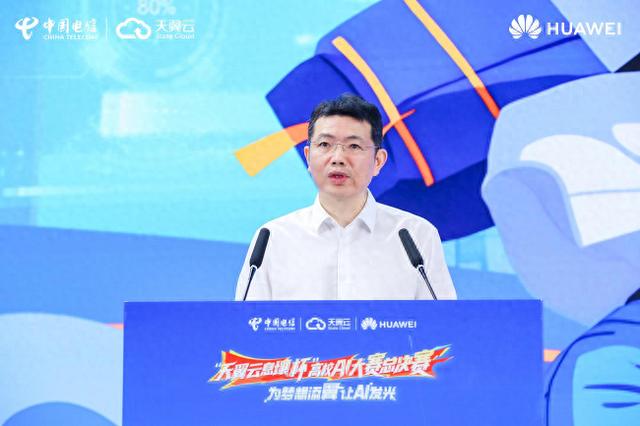
“天翼云息壤杯”高校AI大赛总决赛在京启幕全国顶尖战队竞逐AI巅峰
Huan Qiu Wang· 2025-07-17 08:48
Core Viewpoint - The "Tianyi Cloud Xirang Cup" AI competition aims to promote innovation in artificial intelligence and cultivate young talent, with significant participation from universities across China [1][3]. Group 1: Event Overview - The competition attracted over 3,800 teams nationwide since its launch in September 2024, culminating in 60 elite teams reaching the finals [1]. - The event is co-hosted by major organizations including China Telecom, Huawei, and various academic societies, highlighting its importance in the AI sector [1][3]. Group 2: Strategic Importance - China Telecom emphasizes the need for self-reliance in key technologies and aims to build a strong digital infrastructure, positioning Tianyi Cloud as a national cloud framework [3]. - The competition serves as a platform for collaboration between academia and industry, fostering talent development and innovation in AI [3][5]. Group 3: Technological Advancements - Tianyi Cloud has developed the "Xingchen" model, a trillion-parameter AI model based on domestically produced technology, and the Xirang integrated intelligent computing service platform [3][5]. - The competition demands high computing power and stable technology platforms, which Tianyi Cloud's Xirang platform is designed to meet [5]. Group 4: Future Prospects - The AI competition is seen as a "nurturing ground" for practical AI talents and an "accelerator" for building a domestic AI ecosystem, contributing to the development of China's AI industry [5].

在构建新发展格局中加快推动高质量发展
Ren Min Ri Bao· 2025-07-17 06:29
Group 1: New Development Pattern - The core viewpoint emphasizes the necessity of constructing a new development pattern to adapt to China's new stage of development and to shape new advantages in international cooperation and competition [1] - The new development pattern requires a shift towards domestic demand-driven economic growth, which provides strong support for high-quality development [2] - The strategy of expanding domestic demand has been firmly implemented since the 18th National Congress, with consumption contributing an average of 55% to economic growth from 2013 to 2024 [2] Group 2: Expanding Domestic Demand - The focus is on boosting consumption and enhancing investment efficiency to make domestic demand the main driver of economic growth [3] - Policies are being implemented to support consumption upgrades, including subsidies for replacing old consumer goods and promoting service consumption in various sectors [3] - Effective investment will be expanded, balancing traditional and new infrastructure development, and ensuring the successful completion of major engineering projects [3] Group 3: High-Level Opening Up - The new development pattern calls for expanding high-level opening up to create broader space for high-quality development [4] - The strategy aims to connect domestic and international markets better, enhancing resource allocation capabilities globally [4] - Since the 18th National Congress, a more proactive opening strategy has been adopted, with significant increases in trade volume and foreign investment quality [4] Group 4: Enhancing Independent Innovation - The emphasis is on strengthening independent innovation capabilities as a key driver for high-quality development [6] - The importance of self-reliance in technology is highlighted, with significant increases in R&D investment from 1.03 trillion yuan in 2012 to 3.61 trillion yuan in 2024 [7] - The goal is to master core technologies and enhance competitiveness through innovation-driven strategies [8] Group 5: Ensuring Security - The new development pattern requires a focus on building a new security framework to provide essential guarantees for high-quality development [9] - The approach includes integrating development and security considerations, with measures to stabilize employment, businesses, and market expectations [9] - Significant achievements in food production and energy supply security have been noted, with a focus on enhancing the resilience of key industrial chains [10]
国家知识产权局:当前我国知识产权人才超过100万人
Nan Fang Du Shi Bao· 2025-07-17 04:05
Core Insights - The National Intellectual Property Administration (NIPA) reported significant advancements in China's intellectual property (IP) landscape during the "14th Five-Year Plan" period, highlighting improvements in global rankings and domestic metrics [1][2]. Group 1: Global Rankings and Achievements - China has improved its ranking in the Global Innovation Index to 11th place, leading among middle-income economies, and has maintained the highest number of top 100 technology clusters globally for two consecutive years [1]. - Chinese enterprises have won the most awards from the World Intellectual Property Organization (WIPO) for four consecutive years [1]. Group 2: Patent Utilization and Economic Impact - The industrialization rate of invention patents has increased from 44.9% in 2020 to 53.3% in 2024 [2]. - The contribution of patent-intensive industries to GDP rose from 11.97% in 2020 to 13.04% in 2023 [2]. - The total annual import and export value of IP usage fees increased from 319.44 billion yuan in 2020 to 398.71 billion yuan in 2024, with an average annual growth rate of 5.7% [2]. Group 3: IP Services and Infrastructure - The NIPA has launched a national IP public service platform that consolidates over 400 IP data points, enabling comprehensive online services [3]. - There are now 483 national-level IP public service institutions, achieving full provincial coverage, and 175 municipal-level comprehensive IP service institutions, with a coverage rate of 52.6% [3]. - The number of practicing patent agents exceeds 40,000, and over 1 million individuals are trained in IP-related fields [3]. Group 4: Future Plans and Goals - The NIPA aims to strengthen the leadership of the Communist Party in the IP sector and to complete the "14th Five-Year Plan" with high quality while planning for the "15th Five-Year Plan" [3].
日媒:中国能打造自己的阿斯麦吗?
Huan Qiu Wang· 2025-07-16 23:59
Core Viewpoint - China is striving to develop its own advanced semiconductor manufacturing capabilities, particularly in the area of lithography, which is crucial for chip performance, amidst ongoing U.S. export restrictions [1][2][3]. Group 1: Progress in Semiconductor Manufacturing - SMIC is working diligently to increase the production of 14nm and 7nm chips, marking a significant breakthrough for the company [1]. - Chinese chip manufacturers are making notable advancements in various cutting-edge fields by replacing foreign tools with domestic equipment for processes such as etching, inspection, deposition, and chemical polishing [2]. - Since 2019, the top five Chinese chip tool manufacturers have thrived amid escalating U.S.-China tensions, with local companies challenging global leaders in every chip manufacturing step except lithography [4]. Group 2: Challenges and Obstacles - The lithography process remains a daunting challenge for Chinese companies due to its complexity and the high cost of lithography machines, which are currently produced by only three companies globally [2]. - U.S. export controls have created significant barriers, particularly in limiting ASML's ability to supply advanced lithography machines to China, highlighting the competitive landscape [2][3]. Group 3: Government and Industry Support - The Chinese government is actively supporting initiatives to develop domestic EUV lithography machines and establish an independent ecosystem free from U.S. restrictions [3]. - Huawei is emerging as a major supporter of China's chip manufacturing equipment sector, establishing R&D centers and recruiting talent from leading global chip companies [2][3]. Group 4: Future Outlook - There is a growing belief that Chinese tool manufacturers could become competitive not only domestically but also internationally, despite current performance gaps compared to leading international solutions [3]. - The ongoing efforts and investments in domestic semiconductor capabilities indicate a potential shift in the global semiconductor landscape, with increased competition from China anticipated in the near future [4].


机构排兵布阵 结构性机会成市场共识
Zhong Guo Zheng Quan Bao· 2025-07-16 23:52
Group 1 - Several A-share listed companies, including Shijia Photon, Oriental Bio, and Maiwei Bio, have disclosed their latest top ten shareholders due to buyback activities, revealing adjustments by well-known fund managers [1][2] - Notable fund managers such as Jin Zicai, Wan Minyuan, and Jin Xiaofei have made significant adjustments in their holdings, with Jin Zicai's funds entering the top ten shareholders of Shijia Photon after a 130% increase in its stock price in the first half of the year [2] - Foreign institutions like Barclays, UBS, and JPMorgan have increased their stakes in several A-share companies, indicating growing foreign interest in the market [3] Group 2 - The A-share market is experiencing structural opportunities amid internal and external factors, with a potential upward trend in the short term [4] - The overall investment attractiveness of the Chinese capital market is improving, with an increase in stock buybacks and dividend distributions, which are highly valued by foreign investors [4][5] - Economic indicators show signs of recovery in consumption, investment, and exports, with expectations for a more accommodative monetary policy in the coming quarters [5]



中共国家发展和改革委员会党组:加快构建新发展格局
国家能源局· 2025-07-16 04:26
Core Viewpoint - The article emphasizes the strategic importance of constructing a new development pattern in China, focusing on high-quality economic development and self-reliance as a response to both domestic and international challenges [1][2]. Group 1: Understanding the New Development Pattern - The new development pattern is characterized by a domestic major circulation as its main body, addressing the need for a strong domestic market to enhance economic resilience [3][4]. - It is an open dual circulation model that connects domestic and international markets, aiming to utilize global resources while enhancing domestic economic capabilities [4][5]. Group 2: Advantages of the New Development Pattern - The strategy reflects the central leadership's deep understanding of China's economic and social development, leading to significant progress in policy implementation and institutional improvement [7]. - The domestic major circulation's internal driving force is strengthening, with consumer spending contributing an average of 56.2% to economic growth from 2021 to 2024 [8]. Group 3: Key Components for Implementation - The smooth operation of economic circulation is crucial, requiring a balance between supply and demand, and addressing existing bottlenecks [5][6]. - Emphasis on technological self-reliance is vital for ensuring the stability of domestic circulation and gaining advantages in international circulation [6][11]. Group 4: Enhancing Domestic Demand - The strategy includes expanding effective investment and boosting consumption through various supportive policies, aiming to enhance the overall economic structure [17][18]. - The integration of technology and industry innovation is prioritized to foster new economic growth drivers and improve productivity [18]. Group 5: Regional and International Cooperation - The article highlights the importance of coordinated regional development and the integration of urban and rural economies to optimize the domestic circulation space [19][20]. - It advocates for high-level opening-up to better leverage international circulation, enhancing trade and investment quality [20][21].

人民财评:坚定身姿,我国外贸于变局中驭风浪而笃行
Ren Min Wang· 2025-07-15 06:41
Core Insights - China's total import and export value reached 21.79 trillion yuan in the first half of the year, marking a year-on-year growth of 2.9%, and setting a historical high for the same period, with continuous growth for seven consecutive quarters [1] Group 1: Export Performance - The total export value for the first half of the year was 13 trillion yuan, with a notable growth rate of 7.2%. Mechanical and electrical products accounted for 7.8 trillion yuan, representing a 9.5% increase, solidifying over 60% of the export base [2] - High-tech products have maintained growth for nine consecutive months, with exports of high-end machine tools, ships, and marine engineering equipment exceeding 20% growth. The share of self-owned brands in high-tech product exports rose to 32.4%, and industrial robot exports surged by 61.5% [2] - The "new three types" of green products saw a growth of 12.7% from January to June, with significant increases in exports of wind power equipment and lithium batteries, reflecting a shift towards quality in foreign trade [2] Group 2: Import and Export Enterprises - A record 628,000 enterprises engaged in import and export activities in the first half of the year, with private enterprises making up 547,000 of this total, contributing to a 7.3% growth rate [3] - Private enterprises have shown resilience against external challenges, achieving continuous growth for 21 consecutive quarters, becoming a crucial support for China's foreign trade [3] Group 3: Trade Partnerships - China's trade relationships have diversified, with growth in imports and exports to over 190 countries and regions. Emerging markets, particularly ASEAN, Africa, and Central Asia, contributed significantly, with double-digit growth in trade with Africa and Central Asia [3] - Trade with countries and regions involved in the Belt and Road Initiative grew by 4.7%, accounting for over half of the overall foreign trade [3] Group 4: Economic Environment - The strong performance of foreign trade is attributed to China's increasingly complete industrial system, efficient infrastructure, and continuously optimized business environment, alongside the determination of numerous foreign trade enterprises [4] - With the further release of various policies to stabilize foreign trade, China is expected to inject stronger "Chinese power" into the global economic recovery [4]
精准识别优质科技型企业 科创板试点引入资深专业机构投资者制度
Zheng Quan Ri Bao· 2025-07-14 16:12
Core Viewpoint - The Shanghai Stock Exchange has introduced guidelines for recognizing senior professional institutional investors, aimed at enhancing the listing process for companies applying under the fifth set of listing standards on the Sci-Tech Innovation Board [1][2]. Group 1: Guidelines Overview - The guidelines consist of 13 articles detailing the definition, shareholding, independence requirements, information disclosure, and verification for senior professional institutional investors [1]. - The inclusion of senior professional institutional investors as a reference for evaluating companies applying for the fifth set of listing standards is intended to improve the identification of high-quality technology enterprises [1][2]. Group 2: Investment Characteristics - Companies eligible for the fifth set of listing standards typically exhibit high R&D investment, significant operational uncertainty, long paths to profitability, and potential for explosive growth [2]. - Senior professional institutional investors possess a mature screening mechanism for identifying and investing in technology enterprises, which is crucial for supporting the development of self-reliant technology and new productive forces [2][5]. Group 3: Investment Experience and Requirements - Relevant investment institutions must have invested in at least five technology enterprises that have listed on the Sci-Tech Innovation Board or ten that have listed on major domestic or international exchanges within the last five years [3]. - Institutions are required to invest at least 500 million yuan or hold a minimum of 3% of shares for at least 24 months prior to the issuer's IPO application, preventing sudden investments [3][4]. Group 4: Market Wisdom and International Practices - The introduction of senior professional institutional investors is based on the needs of technology enterprises, successful practices in overseas markets, and a solid foundation for piloting this system domestically [4][5]. - Internationally, similar systems have been implemented, such as the Hong Kong Stock Exchange's requirements for technology companies to secure investments from senior independent investors prior to listing [4]. Group 5: Encouragement for Self-Identification - The guidelines encourage issuers to self-identify and disclose the involvement of senior professional institutional investors, which is particularly relevant for unprofitable enterprises engaged in cutting-edge R&D [6][7]. - The recognition of senior professional institutional investors includes private equity funds, government-established funds, and investment institutions set up by leading enterprises, which are crucial for understanding market dynamics and technological advancements [6][7].
海关总署新闻发言人吕大良:上半年,我国高技术产品出口增长9.2%,连续9个月保持增长。其中,高端机床、船舶和海洋工程装备出口增速都超过两成,仪器仪表出口增长14.7%。科技自立自强促进品牌打造,我国高技术产品出口中,自主品牌比重达32.4%,较去年同期提升了1.2个百分点。
news flash· 2025-07-14 02:52
海关总署新闻发言人吕大良:上半年,我国高技术产品出口增长9.2%,连续9个月保持增长。其中,高 端机床、船舶和海洋工程装备出口增速都超过两成,仪器仪表出口增长14.7%。科技自立自强促进品牌 打造,我国高技术产品出口中,自主品牌比重达32.4%,较去年同期提升了1.2个百分点。 (中国网) ...