
人民币国际化

Search documents
刘世锦:中国资本市场增量资金来源,或已发生转折性变化
券商中国· 2025-09-27 07:52
Core Viewpoint - China has accumulated a significant amount of social net wealth, and with low bank savings rates, the growth of net wealth can only be achieved through capital markets. This marks a transformative change in the sources of incremental funds for capital markets [1]. Group 1: Economic Challenges and Consumption - The Chinese economy has shown a recovery trend post-pandemic, achieving growth rates of 5.2% and 5% in the past two years, placing it among the leading global economies [2]. - The macroeconomic environment faces increasing pressure from declining demand, with the GDP deflator index experiencing negative growth for nine consecutive quarters. The shift in economic growth has moved from supply constraints to demand constraints, primarily due to insufficient consumption [2][3]. - There is a significant structural deviation in consumption, particularly in service consumption, which is lagging behind international averages. This deviation is attributed to various factors, including low levels of public services, urbanization challenges, income disparities, and a long-standing policy focus on investment over consumption [2][3]. Group 2: Structural Reforms to Boost Consumption - To effectively expand consumption, it is crucial to address the structural issues related to low consumption ratios. The focus should be on enhancing the consumption capacity of low-income groups, particularly in areas such as education, healthcare, housing, social security, and elderly care [4][5]. - Three key areas for structural reform are identified: 1. Addressing housing shortages for new urban residents, particularly migrant workers, through government initiatives to convert unsold properties into affordable housing [6]. 2. Reforming the rural pension system to significantly increase pension income for rural residents, thereby unlocking consumption potential for a large segment of the population [6]. 3. Promoting a new wave of urbanization by facilitating the smooth flow of production factors between urban and rural areas, which includes enhancing the market allocation of rural land resources [6]. Group 3: Financial Market Development - A strong financial market is essential for supporting both consumption and manufacturing sectors. The establishment of a robust monetary and capital market is necessary for fostering a consumption-driven economy [7][8]. - The capital market is expected to enter a new development phase, focusing on nurturing large-scale innovative enterprises and creating an attractive investment environment. This will enhance resource utilization efficiency and support pension expenditures in an aging society [8]. - A strategic shift towards balancing imports and exports is recommended, with an emphasis on increasing the internationalization of the Renminbi through substantial imports, thereby enhancing its status as a reserve currency [8].


美债竞局现裂痕!中美高层博弈减持黄金布局,多极化货币时代启幕
Sou Hu Cai Jing· 2025-09-27 02:32
Group 1: Diplomatic Engagement and Financial Implications - A bipartisan U.S. congressional delegation visited China for the first time since 2019, emphasizing the need for high-level dialogue between the U.S. and China [1] - Chinese Premier Li Qiang reiterated the importance of mutual respect in cooperation, while the U.S. seeks to stabilize market confidence by urging China to halt or slow down the sale of U.S. Treasury bonds [1][9] - The backdrop of these discussions includes significant concerns over U.S. Treasury market stability and the implications of China's actions on global financial markets [1][9] Group 2: Trends in U.S. Treasury Holdings - In July 2025, China reduced its holdings of U.S. Treasury bonds by $25.7 billion, bringing its total to $730.7 billion, the lowest level since 2009 [2] - This reduction is part of a broader trend, with China having decreased its U.S. Treasury holdings by $173.2 billion in 2022, $50.8 billion in 2023, and $57.3 billion in 2024, totaling a net reduction of $53.7 billion in the first seven months of 2025 [2] Group 3: Economic and Policy Drivers - The reduction in U.S. Treasury holdings by China is driven by concerns over U.S. fiscal policy, including high national debt and interest payments exceeding $1 trillion annually [3] - The U.S. national debt has reached $37 trillion, leading to fears about the sustainability of U.S. fiscal policy and the credibility of the dollar [3][8] Group 4: Comparative Analysis with Other Nations - Japan and the UK have increased their holdings of U.S. Treasury bonds, with Japan holding $1.147 trillion and the UK $858.1 billion, contrasting with China's reduction [4] - Japan's increase is attributed to trade surpluses and low domestic interest rates, while the UK's increase reflects its role as a global financial hub and the need for liquidity amid economic uncertainty [4] Group 5: Credit Ratings and Market Reactions - Moody's downgraded the U.S. credit rating from AAA to Aa1 in May 2025, reflecting concerns over fiscal sustainability and increasing deficits [5] - The downgrade may trigger passive adjustments by various institutions, impacting the demand for U.S. Treasury bonds [5] Group 6: Shift Towards Alternative Assets - Central banks are increasingly looking for reserve assets that do not rely on U.S. credit, leading to a rise in gold holdings, with China's gold reserves reaching 74.02 million ounces by August 2025 [6] - The global trend shows a significant increase in gold purchases by central banks, with 95% of surveyed central banks expecting to increase their gold reserves in the next 12 months [6] Group 7: Currency and Settlement Changes - The cross-border settlement of digital yuan surpassed 500 billion yuan in 2025, indicating a shift towards de-dollarization [7] - The share of the U.S. dollar in global foreign exchange reserves has decreased to 57.7%, while the use of the yuan in cross-border payments has risen significantly [7] Group 8: U.S. Monetary Policy Responses - The Federal Reserve has expanded its balance sheet from $4.2 trillion in 2020 to $9 trillion in 2025 through quantitative easing to stabilize the Treasury market [8] - The ongoing fiscal debates in the U.S. Congress could lead to a government shutdown, further impacting the credibility of U.S. debt [8] Group 9: Future Observations and Implications - The visit of the U.S. delegation to China highlights the urgency of addressing financial risks and the need for cooperation on key issues [9] - The potential visit of former President Trump to China could signify a shift in diplomatic and financial strategies between the two nations [9][10]
中金研究 | 本周精选:宏观、策略、银行、汽车及零部件
中金点睛· 2025-09-27 00:06
Group 1: Banking Industry - The report tracks the progress of deposit migration from the perspective of financial system liquidity, indicating that the trend of deposit migration continues, reflected in the activation of deposits and increased activity in capital markets, although the pace has slightly slowed down due to three main factors: the front-loaded fiscal and credit monetary supply in the first half of the year, increased investor divergence after the stock market rise, and a slowdown in the return of foreign exchange funds amid export deceleration [5] - The estimated potential for deposit migration remains at 5-7 trillion yuan, suggesting that this trend may continue in the medium term despite the current slowdown [5] Group 2: Macroeconomy - The "14th Five-Year Plan" is a critical period for China's financial cycle and economic transformation, with the "15th Five-Year Plan" expected to enhance supply capacity while addressing debt and demand issues arising from real estate adjustments [7] - To maintain GDP growth within a certain range, a rebalancing of supply and demand is necessary, particularly in boosting demand through debt resolution, consumption promotion, and fiscal reforms [7] - Policies aimed at stimulating demand may also benefit supply in the long term, with a focus on technological innovation and the internationalization of the renminbi amid changes in the international monetary system [8] Group 3: Strategy - In August, while A-shares, particularly the STAR Market, were strong, Hong Kong stocks remained stagnant. However, in September, A-shares entered a phase of fluctuation while Hong Kong stocks gained momentum, supported by expectations of Federal Reserve easing and AI internet developments [10] - The report discusses the potential for market leadership among the three regions (China, Hong Kong, and the US) and identifies which industries may offer greater value [10] Group 4: Automotive and Components Industry - The trend towards liquid cooling solutions in data centers is driving increased demand for liquid cooling components, with domestic automotive parts companies leveraging their capabilities in thermal management to expand into this market [14] - The rise in AI chip power consumption is accelerating the application of liquid cooling solutions, enhancing the demand for core components like quick-connect fittings (UQD) [14] - The domestic supply chain possesses cost advantages and significant potential for domestic substitution in the liquid cooling market [14]

人民币国际化迎来“数字引擎” 上海成为核心枢纽
Guo Ji Jin Rong Bao· 2025-09-26 19:58
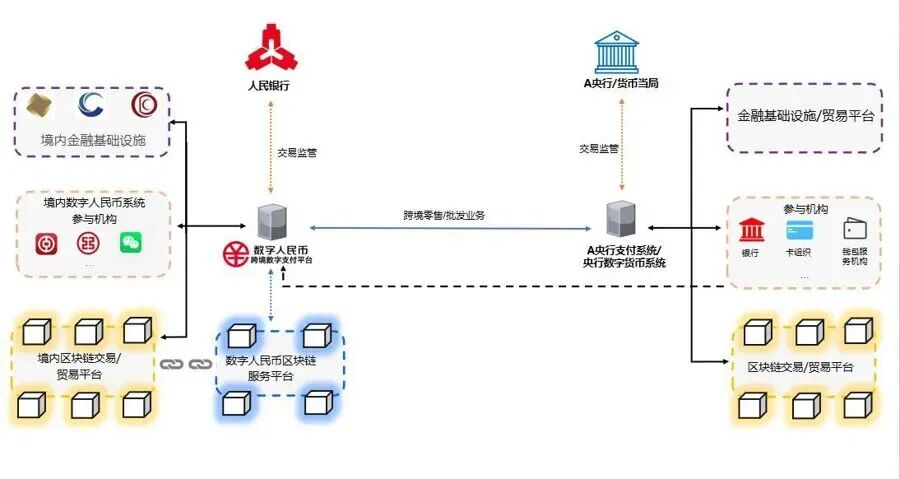
Core Viewpoint - The establishment of the Digital Renminbi International Operation Center in Shanghai marks a significant step towards the internationalization of the digital renminbi, facilitating cross-border payment and blockchain services, and enhancing the global influence of the renminbi [5][6][10]. Group 1: Digital Renminbi Platforms - The Digital Renminbi International Operation Center has developed three main platforms: a cross-border digital payment platform, a blockchain service platform, and a digital asset platform, aimed at addressing traditional cross-border payment challenges and enhancing transaction efficiency [7][8]. - The blockchain service platform and digital asset platform are built on the same blockchain infrastructure, allowing for integrated operations and improved regulatory compliance [4][8]. Group 2: Internationalization of Renminbi - The operation of the Digital Renminbi International Operation Center signifies a shift from domestic trials to international applications, enhancing the renminbi's role in global trade and investment [6][10]. - The center aims to create new opportunities for the renminbi in international transactions, particularly in countries involved in the Belt and Road Initiative, thereby increasing China's influence in the global monetary system [6][10]. Group 3: Shanghai as a Financial Hub - Shanghai was chosen for the Digital Renminbi International Operation Center due to its comprehensive financial market, high degree of openness, and established financial technology ecosystem, positioning it as a key node in the global financial network [9][10]. - The center's operation is expected to significantly enhance Shanghai's international financial status, potentially generating over 100 billion yuan in added value to the digital finance industry by 2030 [10].
数字人民币国际运营中心落沪 国际金融中心建设再添新动能
Shang Hai Zheng Quan Bao· 2025-09-26 18:27
Core Viewpoint - The establishment of the Digital Renminbi International Operation Center in Shanghai marks a significant step towards the internationalization of the digital renminbi, enhancing Shanghai's role as an international financial center [1][4]. Group 1: Launch of Three Major Business Platforms - The Digital Renminbi International Operation Center, managed by the People's Bank of China, aims to build and operate cross-border and blockchain infrastructure for the digital renminbi [2]. - The three platforms launched include: - Cross-border digital payment platform, which addresses pain points in traditional cross-border payments [2]. - Blockchain service platform, which supports standardized blockchain transactions and on-chain digital renminbi payments [2]. - Digital asset platform, which facilitates the issuance, registration, custody, and compliant trading of digital assets [2]. - These platforms are designed to improve payment efficiency, ensure transaction traceability and security, and lay the groundwork for future digital financial asset trading [2]. Group 2: New Path for Renminbi Internationalization - The Digital Renminbi International Operation Center opens new pathways for the internationalization of the renminbi, leveraging technological advantages to overcome existing barriers [3]. - It proposes a new model of "payment first—investment follows—reserve development" to enhance the renminbi's acceptance in international markets [3]. - The establishment of a separate cross-border financial infrastructure for the digital renminbi reduces reliance on traditional international payment systems, thereby increasing China's influence and financial security in the global financial system [3]. Group 3: Empowering Shanghai's International Financial Center - The operation of the Digital Renminbi International Operation Center aligns with the core functions of Shanghai's international financial center, enhancing its financial infrastructure and market stability [4]. - The center's presence is expected to strengthen Shanghai's position in global financial infrastructure and attract related industry enterprises, fostering an ecosystem [5]. - By leading in digital currency applications, Shanghai can transition from being a "rule taker" to a "rule maker" in the evolving landscape of international financial regulations [5].

境外机构银行间债市回购业务全面放开 中国债市高水平开放再迈关键一步
Di Yi Cai Jing· 2025-09-26 14:47
央行数据显示,截至2025年8月末,中国债券市场余额达192万亿元人民币,2025年1-8月债券发行规模 超59万亿元人民币,同比增长14%,债券净融资11.8万亿元人民币,占同期社会融资规模增量的 44.5%,已成为实体经济融资的第二大渠道。 在国际化进程中,中国债券市场的"吸引力磁场"持续增强。业内专家表示,中国债券已先后纳入彭博巴 克莱、摩根大通、富时罗素三大国际债券指数,当前在富时罗素全球国债指数中占比升至全球第二,在 彭博巴克莱全球综合指数中占比升至全球第三,均超纳入时的预计占比,充分体现全球投资者对人民币 债券资产的信心。 从实际持仓与交易数据来看,截至2025年8月末,来自80多个国家和地区的1170家境外机构在华持债约4 万亿元人民币;2025年1-8月,境外机构债券现券成交规模约11.8万亿元人民币,其中"债券通"北向通规 模达7.2万亿元人民币,南北双向交易保持活跃;"互换通"累计成交1.5万多笔,累计成交名义本金约8.2 万亿元人民币,当前成交规模较上线初期增长9倍多。 9月26日晚,中国人民银行、中国证监会、国家外汇管理局联合发布《关于进一步支持境外机构投资者 在中国债券市场开展债券回 ...
人民币国际化迎来“数字引擎”,上海成为核心枢纽
Guo Ji Jin Rong Bao· 2025-09-26 14:37
Core Viewpoint - The establishment of the Digital Renminbi International Operation Center in Shanghai marks a significant step towards the internationalization of the digital renminbi, facilitating cross-border payment solutions and enhancing the renminbi's role in global trade and finance [7][8][10]. Group 1: Digital Renminbi Platforms - The Digital Renminbi International Operation Center has developed three main platforms: a cross-border digital payment platform, a blockchain service platform, and a digital asset platform, aimed at addressing traditional cross-border payment challenges and enhancing financial service efficiency [10][11]. - The cross-border digital payment platform focuses on supporting the internationalization of the renminbi and aims to resolve pain points in traditional cross-border payments through technological integration and innovation [10][11]. - The blockchain service platform is designed to facilitate standardized blockchain transaction transfers and on-chain digital renminbi payment services, while the digital asset platform supports the issuance, registration, custody, and trading of compliant digital assets [10][11]. Group 2: Internationalization of the Renminbi - The operation of the Digital Renminbi International Operation Center signifies a shift from domestic trials to international applications, enhancing the renminbi's influence in international settlements [7][8]. - Analysts believe that the center's operation will create new opportunities for the renminbi in global trade and investment, particularly in countries involved in the Belt and Road Initiative [8][12]. - The center aims to establish a standardized and regulated cross-border payment infrastructure, improving the convenience and acceptance of the renminbi in international trade and investment [8][10]. Group 3: Shanghai as a Financial Hub - Shanghai was chosen as the location for the Digital Renminbi International Operation Center due to its comprehensive financial market, high degree of openness, and established financial technology ecosystem [13][14]. - The center's establishment is expected to enhance Shanghai's role as a digital financial hub, facilitating the internationalization of the renminbi and attracting more international financial institutions and investors [13][14]. - By optimizing cross-border payment and financing mechanisms, the center will contribute to Shanghai's goal of becoming a global center for renminbi assets, potentially generating over 100 billion yuan in digital financial industry value by 2030 [14].
宏观策略周报:LPR连续四月保持不变,数字人民币国际运营中心正式运营-20250926
Yuan Da Xin Xi· 2025-09-26 13:58
Group 1: Key Insights - The Loan Prime Rate (LPR) has remained unchanged for four consecutive months, with the 1-year LPR at 3.0% and the 5-year LPR at 3.5%, aligning with market expectations [10][22]. - The digital RMB international operation center has officially commenced operations, featuring three major business platforms: cross-border digital payment, blockchain service, and digital asset platforms, aimed at enhancing RMB internationalization and cross-border payment efficiency [22][23]. - The Chinese government emphasizes the importance of mutual respect and cooperation in US-China relations, with a focus on creating more opportunities for foreign investment in China [25][26]. Group 2: Market Overview - The domestic securities market showed mixed performance, with the STAR 50 index experiencing the highest increase of 6.47%. The power equipment sector led the industry gains with a 3.86% rise [2][30]. - The LPR's stability suggests a continuation of a loose monetary policy in the short term, although the necessity for further rate cuts appears limited [2][10]. - The market outlook indicates potential growth in the application of digital RMB in cross-border transactions, which could positively influence market dynamics if US-China trade relations stabilize [2][25]. Group 3: Investment Recommendations - Development of new productive forces is a key policy direction, with a focus on sectors such as artificial intelligence, semiconductor chips, robotics, low-altitude economy, deep-sea technology, and controllable nuclear fusion, which are expected to yield excess returns [3][40]. - Consumer spending is anticipated to increase, suggesting investment opportunities in new consumption, home appliances, and automotive sectors [3][40]. - In the context of geopolitical tensions and global economic uncertainty, long-term demand for gold as a safe-haven asset is expected to grow, alongside tight copper supply, presenting investment opportunities in these commodities [3][40].
境外投资者迎利好,央行、证监会、外汇局联合发布
21世纪经济报道· 2025-09-26 13:54
记者丨 张伟泽 编辑丨和佳 9月26日,香港金融管理局与中国人民银行、中国证券监督管理委员会和国家外汇管理局共同 推动的跨境债券回购业务正式推出。 资料图 中国人民银行、中国证监会、国家外汇管理局于9月26日联合发布了《关于进一步支持境外机 构投资者在中国债券市场开展债券回购业务的公告》(下称《公告》),支持所有已进入内地 在岸债券市场的境外机构(包括债券通投资者)参与在岸债券回购业务,从在岸市场获得人民 币流动性,并汇出境外使用。【详见: 三部门:进一步支持境外机构投资者在中国债券市场 开展债券回购业务 】 香港金管局表示,该措施是继香港金管局于今年2月推出离岸人民币债券回购业务之后的又一 项重要政策,将为香港离岸人民币市场提供更稳定的流动性,有效降低人民币融资成本。跨境 回购和离岸人民币回购业务相辅相成,能满足离岸投资者的资产配置和流动性管理需求,盘活 人民币债券持仓,从而进一步提升在岸债券的国际吸引力,增强人民币在国际市场的投融资功 能。 目前,我国质押式债券回购与国际市场债券回购在操作上存在一定差异。中国人民银行、国家 外汇管理局有关负责人指出,《公告》发布后,境外机构投资者在银行间债券市场开展债券回 ...

境外机构银行间债市回购业务全面放开,中国债市高水平开放再迈关键一步
Di Yi Cai Jing· 2025-09-26 13:11
Core Viewpoint - The announcement by the People's Bank of China, the China Securities Regulatory Commission, and the State Administration of Foreign Exchange aims to enhance the international attractiveness of China's bond market and promote the steady progress of the internationalization of the Renminbi [1][2]. Group 1: Market Demand and Growth - China's bond market has shown significant growth, with a total balance reaching 192 trillion RMB by August 2025, and a bond issuance scale exceeding 59 trillion RMB in the first eight months of 2025, marking a 14% year-on-year increase [2]. - The bond market has become the second-largest channel for financing the real economy, with net bond financing accounting for 44.5% of the total social financing increment during the same period [2]. Group 2: Internationalization and Investor Confidence - Chinese bonds have been included in major international bond indices, with their representation in the FTSE Russell Global Government Bond Index rising to the second position globally and third in the Bloomberg Barclays Global Aggregate Index, reflecting strong global investor confidence in Renminbi-denominated bonds [2][3]. - As of August 2025, foreign institutions from over 80 countries held approximately 4 trillion RMB in bonds, with a trading volume of about 11.8 trillion RMB in the first eight months of 2025, indicating active participation in the market [2]. Group 3: Bond Repurchase Business - The opening of the bond repurchase business to all foreign institutional investors is a response to the growing demand for liquidity management tools, aligning with international practices [3][4]. - The new rules allow for the transfer of bond ownership during repurchase transactions, which is expected to enhance market liquidity and efficiency [5][6]. Group 4: Regulatory Framework and Risk Management - The announcement includes detailed operational rules and risk management measures, emphasizing the importance of balancing openness and security in the market [4][6]. - The initial phase of the repurchase business will require foreign institutions to trade with market makers, ensuring a controlled and regulated environment for transactions [6].