关税政策

Search documents
CBO Director Phill Swagel: Seeing a lot of signs that the economy is weakening
Youtube· 2025-09-15 12:22
Economic Outlook - The Congressional Budget Office (CBO) projects higher inflation and unemployment with slowing economic growth for the year [1] - The anticipated population growth due to immigration is expected to be significantly lower, impacting labor supply [2][4] - The reconciliation bill is boosting the economy, while tariffs are raising inflation and slowing down economic growth [3][6] Labor Market Dynamics - Labor demand is decreasing as the economy weakens, while labor supply is also falling dramatically, leading to a complex jobs market [4][6] - The population numbers are projected to be several hundred thousand fewer each year over the next decade, with a million fewer this year alone [4][5] Tariff Impacts - Tariffs are contributing to higher inflation and are expected to reduce the deficit by $4 trillion over the next 10 years, with $3.3 trillion in revenue and $700 billion in averted debt costs [10][11] - The CBO follows the administration's policies closely, adjusting forecasts based on current laws and tariffs [9][18] Inflation and Economic Assumptions - Inflation has come in higher than CBO's expectations, attributed to the impact of tariffs, despite a weakening economy [20][21] - The CBO updates its forecasts a few times a year, with the latest adjustments reflecting higher inflation than previously anticipated [20][22]


河钢资源(000923) - 2025年9月15日投资者关系活动记录表
2025-09-15 10:02
Group 1: Financial Performance - The difference between operating profit and net profit is attributed to income tax expenses and non-operating net expenditures [1] - The gross profit margin for copper products is currently 18.44%, which is considered low due to high fixed costs and low production volume from the copper phase II project [2][3] - Copper business revenue accounts for approximately 27% of total revenue [4] Group 2: Production Capacity and Plans - The designed production capacity for the copper phase II project is 11 million tons per year, with expected full production by the end of 2026 [2][3][4] - The smelting plant has a planned capacity of 80,000 tons [2] - The company is currently constructing several projects, including the copper phase II project and a sixth crusher [3] Group 3: Market and Trade - The primary settlement currency for international trade is USD, with some transactions in South African Rand and Euro [1][2] - The company’s copper concentrate is mainly sold to Europe and domestic markets, with sales channels adjusted based on profit maximization principles [2] - The company is monitoring the impact of a 30% tariff imposed by the U.S. on imports from South Africa, but has already stocked inventory in the U.S. market [4]

特朗普关税面临法律威胁,美国财政赤字改善计划也要“凉凉”?
Di Yi Cai Jing· 2025-09-15 09:12
Core Points - The article discusses the impact of tariffs on the U.S. economy, highlighting that tariffs have led to a significant increase in government revenue but also pose risks to household incomes and economic growth [1][3][4]. Group 1: Tariff Revenue and Economic Impact - As of August 31, the U.S. tariff revenue reached $165 billion, an increase of approximately $95 billion from the previous year [1]. - The Yale Budget Lab estimates that by 2025, tariffs will raise the price level by 1.7%, equating to an average household income loss of $2,300 [1][10]. - The effective average tariff rate for U.S. consumers is projected to be 17.4%, the highest since 1935, with the IEEPA tariffs being a significant component [3]. Group 2: Legal and Political Uncertainties - A recent federal appeals court ruling has raised questions about the legality of tariffs imposed under the IEEPA, with Treasury Secretary Yellen warning of potential refunds if the Supreme Court rules against the administration [1][7]. - The Supreme Court is set to hear arguments regarding the legality of the tariffs in November, which could have significant implications for the administration's trade policies [7]. Group 3: Economic Growth Projections - Economic growth is expected to slow down, with forecasts for Q3 and Q4 annualized growth rates dropping to 1.2%-1.3% from over 3% in Q2 [8]. - The uncertainty surrounding tariffs and economic policies is contributing to a tightening financial environment, which may hinder investment [8]. Group 4: Business Impact - Companies like hand2mind are experiencing increased costs due to tariffs, with one company reporting over $5.5 million in tariffs paid this year, compared to $2.3 million for the entire previous year [10]. - The imposition of tariffs has led to higher production costs and has forced some companies to relocate production to avoid increased tariffs [10].

被特朗普“背刺”?美国多行业掀起裁员潮
Jin Shi Shu Ju· 2025-09-15 08:28
Group 1 - The U.S. labor market is experiencing stagnation due to significant layoffs in manufacturing, wholesale retail, and energy sectors, primarily attributed to tariffs imposed by President Trump, which have increased costs and hindered expansion plans [1][2] - The August non-farm payroll report indicated that the "goods-producing industries" were the main contributors to job declines, with only 22,000 jobs added in the month, and manufacturing alone losing 12,000 jobs [2] - Companies like John Deere reported substantial financial losses due to tariffs, with an estimated $300 million loss by 2025, leading to layoffs and a 26% year-over-year decline in net profit [2] Group 2 - There is a divide between the government and businesses regarding tariffs, with some companies claiming tariffs have prompted increased capital spending and future hiring, while others express uncertainty and a hiring freeze due to unpredictable policy changes [3] - The oil industry is facing dual pressures from tariffs and low oil prices, with significant layoffs occurring, including Chevron and ConocoPhillips planning to cut thousands of jobs [4][5] - Despite challenges, some executives remain optimistic that tariffs will ultimately benefit domestic industries, although they are also implementing layoffs and automation to maintain competitiveness [6]


美国经济学家:约2/3关税相关成本将转嫁给消费者
Zhong Guo Xin Wen Wang· 2025-09-15 07:49
Core Points - The high tariffs imposed by the Trump administration are causing panic among businesses and consumers in the U.S., leading to increased prices and a slowdown in economic activity [1][2] - Approximately two-thirds of the costs associated with the new tariffs are expected to be passed on to consumers, resulting in a gradual increase in prices over the coming months [2] Group 1: Economic Impact - The implementation of tariffs has begun to affect prices, with the Consumer Price Index (CPI) in August showing a year-on-year increase of 2.9% [1] - The delay in the economic impact of tariffs is attributed to businesses stockpiling inventory before the tariffs took effect and some companies initially absorbing the costs [1] Group 2: Consumer Price Increases - Consumers are expected to feel the impact of rising prices, particularly in imported goods such as coffee, audio equipment, and furniture, which have seen significant price increases [2] - Coffee prices are particularly affected as domestic production cannot meet demand, leading to further price hikes as inventory from before the tariffs is depleted [2]
经济学家警告:美关税负担或由美国消费者承担
Yang Shi Xin Wen Ke Hu Duan· 2025-09-15 06:23
美国投资银行高盛首席经济学家扬·哈祖斯当地时间13日在接受德国媒体采访时表示,美国和欧盟之间的新贸易协议虽已达成,但欧盟内部对此有很多不满 的声音。并且由于关税影响,协议将会导致欧盟输美商品价格上涨,而这部分关税负担最终可能将会由美国消费者承担。 哈祖斯援引德国经济研究所的一项研究称,即使欧盟不对美国采取报复性关税,美国也可能会"自吞苦果",因为美国加征关税目录中,很大一部分商品是美 国特别依赖欧盟供应的商品,这些商品在新贸易协议生效后,价格会上涨,而这些额外成本,最终都会落到美国消费者身上。目前美国对欧盟进口的核反应 堆部件、起重机、卡车等商品的依赖性较强,暂时没有更好的替代来源。 哈佛大学经济学教授肯尼斯·罗戈,曾经在国际货币基金组织担任首席经济学家,他在接受德国《商报》采访时称,未来5年美国可能会出现严重的债务危 机,目前在美国投资不是一个安全的选择。 0:00 美国投资银行高盛首席经济学家扬·哈祖斯表示,美国总统特朗普推出加征关税政策之后宣称,这一关税政策只对美国有利,相关的负担完全由外国来承 担。但事实上,这一说法站不住脚。 哈佛经济学教授:美关税政策效果适得其反 罗戈说,目前美国国债飙升速度令人难 ...


特朗普关税阴霾笼罩,美国企业招聘踩下“刹车”
Hua Er Jie Jian Wen· 2025-09-15 03:37
Group 1 - The U.S. labor market is experiencing stagnation, with only 22,000 jobs added in August, indicating a slowdown in hiring due to trade tensions [1] - Manufacturing, wholesale retail, and energy sectors are particularly affected, with significant job losses reported [2] - Companies like John Deere have reported substantial financial losses due to tariffs, with a projected loss of $300 million by 2025, leading to layoffs [2] Group 2 - Uncertainty from fluctuating policies is causing companies to adopt a cautious approach, often leading to hiring freezes [3] - Executives from various sectors express that without stable policies and predictable costs, recruitment and expansion plans are on hold [3] - The Trump administration maintains that tariffs will ultimately boost employment by encouraging businesses to relocate operations back to the U.S. [4] Group 3 - Some companies report benefits from tariffs, claiming they help their business, while others highlight the negative impact on hiring and growth [4] - Economic experts argue that the manufacturing sector's struggles are due to demand slowdown and unresolved policy shifts rather than labor supply issues [4]
卢拉在《纽约时报》撰文 强调巴西民主与主权不容谈判
Xin Hua Wang· 2025-09-15 03:13
Core Points - Brazil is open to negotiating mutually beneficial topics with the U.S., but emphasizes that its democracy and sovereignty are non-negotiable [1] - Lula criticizes the Trump administration's imposition of a 50% tariff on Brazilian goods, labeling it as misguided and illogical [1] - The U.S. has had a cumulative trade surplus of $410 billion with Brazil over the past 15 years, with nearly 75% of U.S. products entering Brazil tariff-free [1] - Lula suggests that the U.S. actions are politically motivated, referencing the use of tariffs and the Magnitsky Act to seek exemptions for former Brazilian President Bolsonaro [1] - Lula defends Brazil's digital regulations against U.S. accusations, stating that all digital platforms in Brazil are subject to the same laws aimed at protecting families from fraud and misinformation [1][2] - Lula dismisses U.S. claims of unfair practices in digital trade and environmental law enforcement as baseless [2] - Emphasizes that abandoning the long-standing relationship between the U.S. and Brazil would harm all parties involved [2]
美国会最新报告预测美今年经济数据将“全面变糟”
Yang Shi Wang· 2025-09-15 02:46
Economic Outlook - The Congressional Budget Office (CBO) projects that President Trump's tariff policies, immigration controls, and tax and spending legislation will increase unemployment and inflation rates while suppressing overall economic growth this year [1][3] - The CBO's updated economic forecast indicates a downward revision of the unemployment rate, inflation rate, and overall growth rate compared to earlier predictions made before Trump's inauguration [3][5] GDP Growth Projections - The CBO expects the real GDP growth rate to decline from 2.5% in 2024 to 1.4% this year, a further reduction from the initial forecast of 1.9% [5] - The decline in GDP growth is attributed to new tariff policies and reduced immigration leading to a slowdown in consumer spending [5] - The report anticipates a rebound in GDP growth to 2.2% by 2026, stabilizing at 1.8% in 2027 and 2028 [5] Economic Impact of Tariffs - Tariffs are reported to have increased the prices of consumer goods and services, thereby weakening household purchasing power and raising production costs for businesses reliant on imports [5] - Morgan Stanley's chief economist noted that the effects of the tariff policy will continue to manifest in the coming months, predicting weak growth in the fourth quarter of this year and the first quarter of next year [7] Government Response - A White House spokesperson expressed confidence that tax cuts, tariffs, deregulation, and energy expansion policies will yield positive results in Trump's second term, countering the pessimistic forecasts [7]

美研究机构:关税政策或“致贫”百万美国人
Xin Hua She· 2025-09-15 01:20
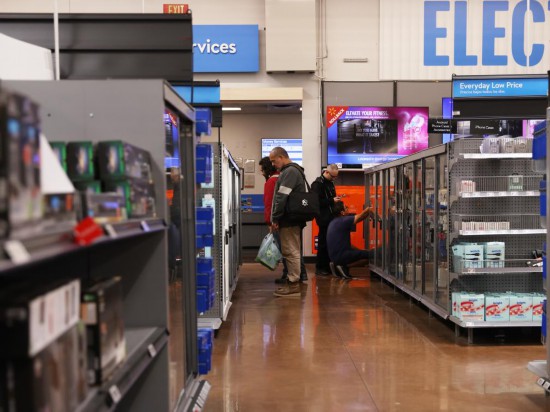
2020年5月14日,人们在美国纽约一个免费食品发放点排队等待。新华社发(郭克摄) 美国有线电视新闻网报道说,关税及由此引发的物价上涨,对低收入家庭的冲击往往最为严重。与 高收入家庭相比,低收入家庭通常会将收入中更大的比例用于生活开支,这意味着他们对物价变动更为 敏感,受影响程度也更高。 "关税本质上是对美国家庭征收的一种税,"耶鲁大学预算实验室政策分析副主任约翰·里科说,"因 为关税针对的是商品和服务,而非收入,所以对于那些收入中消费占比远高于储蓄占比的人群来说,影 响会更为显著。" 新华社北京9月12日电 美国耶鲁大学预算实验室日前发布报告显示,依据不同贫困衡量标准,美国 政府2025年实施的新关税政策将使生活在贫困中的美国人数量增加65万或87.5万,贫困人口比例将提高 0.2%或0.3%。 2025年5月15日,顾客在美国加利福尼亚州洛杉矶县罗斯米德市的一家沃尔玛商店内购物。新华社发 (邱晨摄) 美国普查局制定了两种主要贫困指标:官方贫困指标和补充贫困指标。官方贫困指标是一种长期使 用的贫困指标,比较现金收入与通胀指数阈值。补充贫困指标更多考虑了家庭资源和生活成本因素。 报告显示,按照官方贫困指标测算 ...