绿色转型

Search documents
向“人享其行物畅其流”前行
Jing Ji Ri Bao· 2025-08-15 22:43
Core Viewpoint - The transportation sector in China has achieved historic accomplishments during the 14th Five-Year Plan period, with significant advancements in the construction of a comprehensive transportation system and the establishment of a national integrated transportation network [1] Group 1: Achievements in Transportation - The national integrated transportation network has a completion rate of over 90% for the "6 axes, 7 corridors, and 8 channels" framework [1] - China has built the world's largest high-speed railway network, expressway network, and postal express network, along with the largest maritime fleet and world-class port clusters [1] - The comprehensive capacity, service quality, and operational efficiency of transportation have significantly improved [1] Group 2: Challenges in the Transportation Sector - There are multiple constraints in the development of the transportation industry, including the need to enhance multimodal transport connectivity and the incomplete coverage of dedicated railway lines at key ports [2] - Differences in cargo coding and document formats across various transport modes hinder intermodal efficiency [2] - The core technology's self-control capability needs strengthening, as some key components and patents in the intelligent transportation sector still rely on external sources [2] Group 3: Future Directions - The industry needs to focus on integrated solutions to eliminate transportation efficiency bottlenecks, enhance the national integrated transportation network, and improve the levels of national, regional, and local transportation hubs [2] - There is a push for technological innovation to overcome industry bottlenecks, with an emphasis on deep integration of traditional transportation with new information technologies and new energy materials [3] - A green transition is essential to reshape the development landscape, optimizing transportation structure and increasing the share of rail and inland waterway freight [3]
宏观政策发力显效 今年7月份我国国民经济稳中有进
Xin Hua Wang· 2025-08-15 22:36
Economic Overview - The national economy showed a steady and progressive development in July, with continuous growth in production and demand, stable employment and prices, and significant progress in high-quality development [3][4] - Industrial production and service sectors experienced rapid growth, with industrial added value increasing by 5.7% year-on-year and service production index rising by 5.8% [3][4] Demand and Investment - Market sales continued to grow, with social retail sales increasing by 3.7% year-on-year in July; fixed asset investment also expanded, with a 1.6% year-on-year growth from January to July [3][4] - Despite challenges such as extreme weather and project delays, the investment scale continued to expand [3] Trade Performance - The total value of goods imports and exports increased by 6.7% year-on-year in July, with exports growing by 8%, indicating strong resilience and vitality in trade [3][4] Employment and Prices - The urban unemployment rate remained stable at 5.2%, and the Consumer Price Index (CPI) was flat year-on-year, with core CPI rising by 0.8% [4] New Growth Drivers - New economic drivers are steadily growing, with high-tech manufacturing value added increasing by 9.5% year-on-year from January to July; significant growth was noted in integrated circuit manufacturing and electronic materials [5][6] - The digital product manufacturing sector also saw an 8.4% year-on-year increase, with smart drone and vehicle equipment manufacturing growing by 80.8% and 21% respectively [6] Consumer Trends - New consumption patterns are emerging, with online and instant retail gaining popularity; the silver economy and first-time economy are rapidly developing [7] Economic Outlook - The economic outlook for the second half of the year appears stable, supported by effective macro policies and expanding market demand; consumption of home appliances and communication equipment saw significant growth [8] - The International Monetary Fund has raised its growth forecast for China's economy by 0.8 percentage points, reflecting confidence in the long-term stability and potential of the economy [9]

7月经济保持稳中有进“新”特征明显“含绿量”提升
Zheng Quan Shi Bao· 2025-08-15 17:50
Economic Overview - The national economy is maintaining a steady and progressive development trend, with July's economic indicators showing some fluctuations due to multiple factors, but new growth drivers are emerging under innovation, and high-quality development is being solidly advanced [1] - In July, the industrial added value above designated size grew by 5.7% year-on-year, and the total retail sales of consumer goods increased by 3.7% year-on-year, both down by 1.1 percentage points from June [1] - From January to July, fixed asset investment increased by 1.6% year-on-year, a decrease of 1.2 percentage points compared to the first half of the year [1] Sector Performance - High-tech industries with higher technical content and added value are experiencing rapid growth, with the added value of integrated circuit manufacturing and electronic special materials manufacturing increasing by 26.9% and 21.7% year-on-year in July, respectively [2] - The added value of the digital product manufacturing industry grew by 8.4% year-on-year in July, driven by the increasing application of digital technology across various sectors [2] - Production of smart unmanned aerial vehicles and smart vehicle-mounted equipment surged by 80.8% and 21% year-on-year, respectively, while industrial robots and civilian drones saw production increases of 24% and 18.9% [2] Green Economy - The production of new energy products such as new energy vehicles and lithium-ion batteries increased by 17.1% and 29.4% year-on-year in July, respectively [2] - The production of green materials like carbon fiber and bio-based chemical fibers rose by 43.8% and 19.8% year-on-year [2] - The comprehensive utilization of waste resources saw an added value growth of 11.7% year-on-year in July, indicating a positive trend in green circular industry development [2] Future Economic Outlook - Despite facing risks and challenges, the foundation of the economy remains stable, with strong advantages and potential, supporting a long-term positive trend [3] - The macroeconomic policies are effective, and market demand is expanding, which will support stable economic operation and gradual improvement in development quality [3] - The annual economic growth target of around 5% is expected to be achievable, with further consolidation of high-quality development momentum [3]
二十年,“绿水青山”成世界底色|全球财经连线
2 1 Shi Ji Jing Ji Bao Dao· 2025-08-15 14:56
Core Viewpoint - The concept of "Lucid waters and lush mountains are invaluable assets" has been effectively implemented in China over the past 20 years, leading to a harmonious coexistence between humans and nature, with significant ecological and economic benefits [1][2]. Group 1: Achievements in Green Development - China has contributed to one-fourth of the global increase in greening area and has achieved zero growth in land degradation, with the largest grassland area in the world [1]. - The country generates one-third of its electricity from green sources, and its manufactured new energy vehicles are gaining global traction [1]. Group 2: Global Leadership in Renewable Energy - China leads globally in solar energy, wind energy, battery technology, and new energy vehicles, advancing the net-zero emissions agenda [2]. - The "Green Silk Road" initiative showcases China's commitment to improving ecological environments in collaboration with multiple countries, exemplified by projects like the Mombasa-Nairobi railway in Kenya and the world's largest single solar power station in the UAE [2]. Group 3: International Recognition and Cooperation - Former UN Deputy Secretary-General Erik Solheim praised China's green development as essential for global transformation, highlighting the importance of mangrove protection in climate change mitigation [1]. - Officials and experts from countries like the UAE and Kazakhstan recognize China as a role model in renewable energy, with its green solutions providing valuable experience and motivation for global sustainable development [2].
宏观政策发力显效 国民经济稳中有进
Xin Hua She· 2025-08-15 14:08
Economic Performance Overview - In July, China's national economy maintained a steady and progressive development trend, with continuous growth in production and demand, stable employment and prices, and significant achievements in high-quality development [2][3] - The industrial production and service sectors experienced rapid growth, with industrial added value increasing by 5.7% year-on-year and the service production index rising by 5.8% [2] - The total retail sales of consumer goods increased by 3.7% year-on-year, while fixed asset investment grew by 1.6% from January to July [2] Trade and Export Resilience - China's total goods import and export value increased by 6.7% year-on-year in July, with exports rising by 8%, indicating strong resilience and vitality in the face of a changing global trade environment [2][3] Employment and Price Stability - The urban unemployment rate remained stable at 5.2%, and the Consumer Price Index (CPI) was flat year-on-year, with core CPI (excluding food and energy) rising by 0.8% [3] New Growth Drivers - High-tech manufacturing added value increased by 9.5% from January to July, with significant growth in integrated circuit manufacturing and smart product manufacturing [4] - The production of new energy products, such as electric vehicles and lithium-ion batteries, saw year-on-year increases of 17.1% and 29.4%, respectively [4] Support for Economic Stability - The implementation of proactive macro policies is expected to support stable economic performance in the second half of the year, with a focus on expanding market demand and enhancing new productive forces [6][7] - Retail sales of home appliances and communication equipment supported by consumption upgrades grew by 30.4% and 22.9% year-on-year, respectively [6] International Outlook - The International Monetary Fund (IMF) raised its growth forecast for China's economy by 0.8 percentage points, and several international investment banks upgraded their ratings on Chinese assets to "overweight" [7]
江苏银行“绿色工厂贷”解码企业转型新路径
Mei Ri Jing Ji Xin Wen· 2025-08-15 11:39
Core Viewpoint - The issuance of "Green Factory Loans" by Jiangsu Bank represents a significant step in integrating financial services with green development, supporting the green transformation of the real economy [1][2] Group 1: Policy and Market Context - Jiangsu Bank is responding to national green low-carbon development strategies by providing a 200 million yuan "Green Factory Loan" to a Fortune 500 company, showcasing its commitment to green finance [1] - Recent policy documents, such as the "Guiding Opinions on Promoting the High-end, Intelligent, and Green Development of Traditional Industries" and the "Manufacturing Green and Low-carbon Development Action Plan (2025-2027)," have established a solid institutional foundation for the development of green factories [1] Group 2: Financial Innovation - The core innovation of Jiangsu Bank's "Green Factory Loan" lies in linking loan interest rates to the green factory rating and the company's ESG (Environmental, Social, and Governance) evaluation [2] - Companies can benefit from lower interest rates if they improve their green factory standards and optimize their ESG performance during the loan period, effectively translating green performance into tangible financing cost advantages [2] Group 3: Strategic Positioning - As a globally recognized bank and a systemically important bank in China, Jiangsu Bank is committed to green development, positioning green finance as a key driver of its transformation [2] - The bank aims to establish a "domestically leading and internationally influential" green finance brand, having been elected as the only representative from East Asia on the UNEP FI Banking Council in January 2023 [2] - Jiangsu Bank's green financing balance has exceeded 700 billion yuan, serving over 12,000 green enterprises, with its green loan proportion ranking among the top in the 24 banks directly managed by the People's Bank of China [2]

明天上海见!第三届21世纪“活力·ESG”论坛议程请查收
2 1 Shi Ji Jing Ji Bao Dao· 2025-08-15 09:53
Group 1 - The third "Vibrant · ESG" Innovation Forum is scheduled to be held in Shanghai on August 16, guided by the Southern Finance Media Group and hosted by the 21st Century Business Herald [1] - Key speakers include prominent figures from various organizations, such as Wang Zhongmin, former vice chairman of the National Social Security Fund Council, and Zhang Zhengwei, special advisor to the ISSB chairman, who will discuss the latest policy trends in green transformation and ESG practices [1][2] - The forum emphasizes the importance of ESG as a strategic choice for enterprises to overcome development bottlenecks and internal competition, highlighting the need for digital transformation in traditional energy companies and addressing uncertainties in technology routes for renewable energy firms [2] Group 2 - A session on "Building Green Supply Chains, Industrial Chains, and Value Chains" will feature representatives from major companies like Sony, Adidas, and Mars, focusing on how leading firms can drive green transformation in their supply chains [3] - The forum promotes sustainable practices by encouraging attendees to use public transportation, bring their own cups and utensils, and implement recycling initiatives at the venue, contributing to energy conservation and waste reduction [3]
大连热电2025年半年报:主业韧性承压前行 保供与减亏双线攻坚
Zheng Quan Shi Bao Wang· 2025-08-15 09:13
Core Viewpoint - Dalian Thermal Power faced challenges in the first half of 2025 due to energy price fluctuations and declining industrial demand, yet managed to narrow losses while ensuring supply stability through cost control and operational optimization [1][2]. Revenue and Profit Summary - The company's revenue for the first half of 2025 was 379 million yuan, a year-on-year decrease of 6.41% [2]. - The net loss attributable to shareholders was 40.69 million yuan, a reduction of 1.62% compared to the previous year [2]. - The decline in revenue was primarily due to higher temperatures and a slowdown in industrial activities, with steam sales decreasing by 16,000 tons and high-temperature water sales down by 440,000 gigajoules [2]. - The actual loss from core operations was only 2.3 million yuan after excluding non-operating factors, showing a significant improvement of 39.12 million yuan year-on-year [2]. Cash Flow and Financial Management - The net cash outflow from operating activities was 201 million yuan, an increase of 62.27% year-on-year, mainly due to increased prepayments for coal storage and extended heat fee recovery periods [2]. - Short-term borrowings surged to 901 million yuan, a year-on-year increase of 52.83%, while cash reserves at the end of the period were only 54.52 million yuan, with 35% being restricted funds [2]. Policy and Operational Efficiency - Non-operating income contributed 1.98 million yuan, including government subsidies of 798,700 yuan [3]. - The main drivers for loss reduction were improved machine efficiency, with electricity sales increasing by 14.58 million kilowatt-hours, and a decrease in coal procurement prices leading to an 18.69% reduction in operating costs [3]. - The company serves a heating market covering 1,847 million square meters, with a year-on-year increase of 52,000 square meters, supported by rigid demand for residential heating [3]. Supply Assurance and Management Practices - The company completed major repairs on four boilers and three units at the Beihai Thermal Power Plant, achieving stable electricity supply of 99.38 million kilowatt-hours, a year-on-year increase of 17.2% [4]. - Implementation of comprehensive coal quality control and smart heating platforms improved operational efficiency and reduced fuel costs [4]. - A prepayment system for industrial users improved cash flow quality and reduced accounts receivable risks, with bad debt provisions reaching 45.77 million yuan [4]. Green Transition and Procurement Management - The Beihai Thermal Power Plant completed ultra-low emission renovations, laying the groundwork for future policy benefits [5]. - The company restructured its procurement management system through a dynamic supplier evaluation and inventory warning mechanism, further reducing procurement costs [5].

江苏银行绿色工厂贷解码企业转型新路径
Zhong Jin Zai Xian· 2025-08-15 08:02
Core Insights - The issuance of the "Green Factory Loan" by Jiangsu Bank aligns with national green and low-carbon development strategies, providing strong support for the green transformation of the real economy [1][2] - Jiangsu Bank's innovative approach links loan interest rates to the green factory rating and ESG evaluation, incentivizing companies to improve their green performance for better financing terms [2] Group 1: Policy and Market Context - Recent policy documents such as "Guiding Opinions on Promoting the High-end, Intelligent, and Green Development of Traditional Industries" and "Manufacturing Green and Low-carbon Development Action Plan (2025-2027)" have established a solid institutional framework for the development of green factories [1] - Jiangsu Bank has effectively captured market demand by integrating financial innovation with green development, exemplified by the issuance of the "Green Factory Loan" [1] Group 2: Financial Innovation and Impact - The core innovation of Jiangsu Bank's "Green Factory Loan" is the effective linkage of loan interest rates with the green factory rating and ESG evaluation results, allowing tailored financing solutions [2] - Companies that continuously enhance their green factory standards and optimize ESG performance can benefit from lower interest rates, translating green performance into tangible financing cost advantages [2] Group 3: Jiangsu Bank's Commitment to Green Finance - As a globally recognized bank, Jiangsu Bank is committed to green development, positioning green finance as a key driver for its transformation and development [2] - Jiangsu Bank was elected as the only representative from East Asia on the Board of the United Nations Environment Programme Finance Initiative (UNEP FI) in January 2023, highlighting its influence in the green finance sector [2] - The bank's green financing balance has exceeded 700 billion yuan, serving over 12,000 green enterprises, with a leading proportion of green loans among the 24 banks directly managed by the People's Bank of China [2]
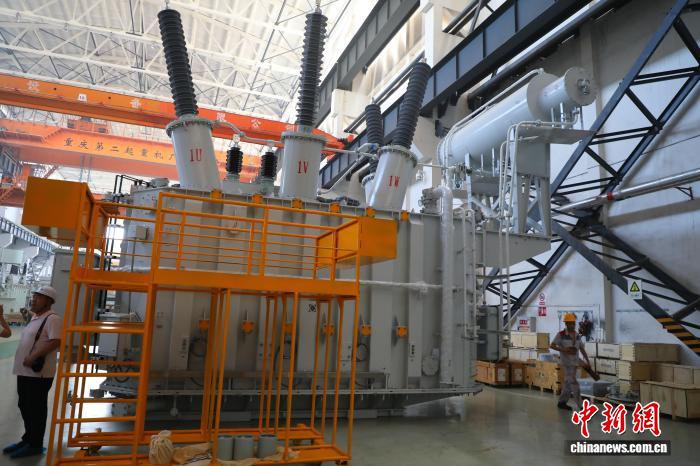
(活力中国调研行)重庆老牌变压器企业转型绿电赛道 国际订单增长态势明显
Zhong Guo Xin Wen Wang· 2025-08-15 06:40
Core Viewpoint - Chongqing Borui Transformer Co., Ltd. is successfully transitioning to the green electricity sector, with a significant increase in international orders, particularly from Europe, indicating a strong market presence and brand influence [3][4]. Group 1: International Expansion - Chongqing Borui has leveraged China's Belt and Road Initiative to focus on the European and American markets, establishing a brand presence in Europe [3]. - A recent collaboration with an Italian company has led to an increase in order volume, with an initial order of 4 units expanded to 5, and potential for 2 additional units [3]. Group 2: Green Transformation - The company reported a production value of 680 million yuan in the first half of the year, reflecting its commitment to green transformation [4]. - Chongqing Borui is integrating wind and solar technologies into its products, showcasing its role in the green transition of traditional manufacturing [4][6]. Group 3: Technological Innovation - The company is focusing on intelligent, green, and low-carbon development, with a high recycling rate of 95% for key raw materials [4]. - Recent projects include customized transformers for large-scale solar projects and upgrades to high-voltage equipment, demonstrating practical applications of its green technology [6]. Group 4: Industry Development - Chongqing Borui is part of a larger green factory cluster in Fuling High-tech Zone, which includes 7 national-level green factories and aims for a near-zero carbon footprint [6]. - The region is expanding its green industry scale, driven by pollution reduction and carbon reduction policies, emphasizing the integration of ecological and economic benefits [6].