创新药出海

Search documents
政策重塑融资格局 海纳医药借力港股迈向创新新阶段
Sou Hu Cai Jing· 2025-12-02 08:51
Group 1: Regulatory Changes and Market Trends - The China Securities Regulatory Commission (CSRC) has implemented the "827 New Policy," which aims to tighten the IPO process and shift the focus of the capital market from "scale" to "quality" [1] - As of August 27, 2025, approximately 560 companies have voluntarily withdrawn their IPO applications, indicating a strategic adjustment by firms in response to stricter disclosure and profitability requirements [1] - Many innovative pharmaceutical companies, particularly those driven by R&D and not yet profitable, are now looking towards more inclusive overseas capital markets, with the Hong Kong Stock Exchange (HKEX) becoming a preferred listing venue [1] Group 2: Company Profile and Growth - Nanjing Haina Pharmaceutical Technology Co., Ltd. has evolved from a preclinical CRO to a comprehensive CXO service provider, covering drug discovery, CMC development, clinical research, registration, and commercial production since its establishment in 2001 [2] - The company has built a replicable and modular technical service system supported by a multi-disciplinary R&D team of over 413 people and eight core technology platforms [4] Group 3: Financial Performance - Haina Pharmaceutical's CXO projects reached 398 as of June 30, 2025, a significant increase from 242 in 2022, with clients including nine of China's top 20 pharmaceutical companies [4] - The company's revenue has steadily increased from 264.7 million yuan in 2022 to 424.6 million yuan in 2024, although there was a slight decline to 177.9 million yuan in the first half of 2025 due to cyclical impacts on CRO projects [4] Group 4: Strategic Shifts and Market Position - Haina Pharmaceutical is transitioning from a service-oriented model to one that emphasizes innovation, actively pursuing value realization through drug technology transfers and self-commercialization [4] - The company holds 82 registered patents and 74 pending patent applications, establishing a strong competitive barrier for participating in global markets [7] Group 5: Capital Market Dynamics - The HKEX has introduced policies such as the "18A Chapter" in 2018, allowing unprofitable biotech companies to list, which has significantly boosted capital inflow into the sector [5] - As of November 24, 2025, over 80 biotech companies are in various stages of the IPO process in Hong Kong, with 23 companies successfully listed, raising nearly 19 billion HKD [6] Group 6: Industry Outlook - The Chinese pharmaceutical industry is undergoing profound changes, with companies no longer solely relying on capital for expansion but focusing on technological innovation and international collaboration [7] - The trend of "going global" for innovative drugs is accelerating, with a record 94 license-out transactions completed in 2024, totaling 51.9 billion USD, reflecting a 26% year-on-year increase [7] - The overall support from national policies reinforces the commitment to original innovation, creating a favorable environment for companies like Haina Pharmaceutical to thrive [7][8]

港股医药:回调之后,机会浮现?|2025招商证券“招财杯”ETF实盘大赛
Sou Hu Cai Jing· 2025-12-02 08:38
Core Insights - The article discusses the recent developments in the Hong Kong pharmaceutical sector, particularly focusing on the innovative drug industry, which is experiencing a shift from short-term volatility to long-term growth potential driven by policy support and market dynamics [1][4][19]. Group 1: Market Trends and Dynamics - The recent pullback in the Hong Kong pharmaceutical sector is attributed to short-term market sentiment fluctuations and profit-taking, rather than fundamental changes in the industry [4][5]. - The innovative drug sector in China is transitioning from a follower to a leader in the global market, supported by favorable policies and capital influx [5][17]. - The performance of CXO (Contract Research Organization) services has significantly improved, with profits increasing over 50% year-on-year, indicating a strong recovery in the pharmaceutical sector [19][20]. Group 2: Investment Opportunities - Investors are encouraged to consider index-based investments in the innovative drug sector, leveraging the advantages of ETFs such as diversification, low entry barriers, and cost efficiency [1][22]. - The Hang Seng Healthcare Index offers broad coverage of the pharmaceutical sector, while the Hang Seng Hong Kong Stock Connect Innovative Drug Select Index focuses on high R&D investment companies [2][21]. - The innovative drug sector is expected to benefit from ongoing liquidity improvements due to anticipated interest rate cuts by the Federal Reserve, making it an attractive investment opportunity [5][24]. Group 3: Policy and Regulatory Environment - Domestic policies are increasingly supportive of genuine innovation, which is expected to stabilize profit expectations for pharmaceutical companies [7][8]. - The introduction of a new pricing mechanism for innovative drugs and the establishment of a commercial insurance directory for high-priced drugs are key developments that enhance market conditions for innovative drug companies [7][8]. - The regulatory environment is shifting towards a more rational approach to drug procurement, which is expected to provide a stable pricing framework for pharmaceutical companies [20]. Group 4: Long-term Growth Drivers - The long-term growth of the innovative drug sector is underpinned by a combination of supportive policies, improving industry fundamentals, and diverse internationalization strategies [15][17]. - The shift from theme-based investment to performance-driven investment in the innovative drug sector reflects a growing focus on actual product commercialization and profitability [11][12]. - The valuation logic for innovative drugs is evolving, with significant overseas licensing deals providing benchmarks for global market potential, thus enhancing company valuations [13][14].

百利天恒收到里程碑付款;迈威生物披露阻塞性肺病新药临床进展|医药早参
Mei Ri Jing Ji Xin Wen· 2025-11-30 23:17
Group 1 - SystImmune, a subsidiary of BaiLi TianHeng, received a milestone payment of $250 million from Bristol-Myers Squibb, with potential future payments totaling up to $2.5 billion and additional payments of up to $7.1 billion based on specific development, registration, and sales milestones [1] - The milestone payment is expected to significantly enhance cash flow and support research and development efforts, serving as a benchmark case for domestic innovative drugs going global [1] Group 2 - Sanofi Biologics announced that two executives plan to reduce their holdings by up to 18,800 shares each, representing 0.012% of the company's total share capital, due to personal financial needs [2] - The combined share reduction is minimal and is not expected to have a significant direct impact on the market, reflecting a common phenomenon in the A-share market [2] Group 3 - Maiwei Biotech's innovative drug 9MW1911 has completed Phase IIa clinical trials in patients with moderate to severe chronic obstructive pulmonary disease (COPD), showing good safety and tolerability across all dosage groups [3] - The annual incidence of acute exacerbations of COPD decreased by over 30% compared to the placebo group at the recommended dose for Phase IIb studies, with a significant reduction in the proportion of patients experiencing severe exacerbations [3] - These results lay a solid foundation for the Phase IIb study, potentially providing new treatment options for the large COPD patient population and showcasing the R&D capabilities and market potential of domestic innovative drugs in respiratory diseases [3] Group 4 - Novartis announced that the FDA has approved Onasemnogene abeparvovec (Itvisma) for treating spinal muscular atrophy (SMA) in patients aged two and older with confirmed SMN1 gene mutations, making it the first and only gene therapy for this broad population [4] - The unique aspect of this drug is its one-time fixed-dose administration, which does not require adjustments based on age or weight, potentially changing the disease progression fundamentally and alleviating the burden of long-term medication [4] Group 5 - Novo Nordisk has submitted a supplemental new drug application to the FDA for a 7.2 mg dose of semaglutide injection, aimed at controlling long-term weight in obese adults in conjunction with a low-calorie diet and increased physical activity [5] - This move is expected to strengthen Novo Nordisk's leading position in the GLP-1 market and provide better treatment options for obese adults [5]


创新药回暖?摩根大通黄旸:行业估值已趋于合理水平
Zheng Quan Ri Bao Wang· 2025-11-30 11:27
Group 1 - The innovation drug sector has shown signs of a slight recovery after a brief pullback, with the Hong Kong Innovation Drug Total Return Index increasing by 4.95% from November 24 to November 28, outperforming the Hang Seng Index's 2.53% increase by 2.42 percentage points [1] - Morgan Stanley's healthcare research head in Greater China, Huang Yang, noted that while the overall industry valuation may have exceeded reasonable levels before the recent adjustment, it is now closer to a rational level [1] - The IPO market remains robust, with over 80 biopharmaceutical companies in various stages of application as of November 24, marking a historical high, and 23 healthcare companies successfully listed on the Hong Kong stock market this year [1] Group 2 - Huang Yang emphasized that "going global" transactions will continue to be a significant driver for innovation drug valuations, as large multinational pharmaceutical companies have substantial cash flow and are likely to supplement their product pipelines through acquisitions [2] - Chinese innovation drugs are now seen to have a "cost-performance" advantage, leading to stable interest from multinational companies in acquiring Chinese innovation drug assets [2] - By 2026, data from overseas Phase III clinical trials for Chinese "going global" innovation drugs will be released, and if the results meet or exceed expectations, it will enhance global confidence in China's drug development capabilities [2]
中国医药产业步入结构性“拐点”
Bei Jing Ri Bao Ke Hu Duan· 2025-11-28 22:16
Core Insights - The Chinese pharmaceutical industry is at a significant "structural turning point," involving a systemic reconstruction of technology, market dynamics, value logic, and global roles [1] - The trend of Chinese pharmaceutical companies increasingly engaging in overseas licensing agreements is notable, with a total of nearly $66 billion in licensing deals in the first half of 2025 [2][4] - China's innovation in pharmaceuticals is gaining global recognition, with a substantial increase in the number of approved innovative drugs and clinical trial registrations surpassing those in the U.S. for two consecutive years [4][5] Group 1 - Chinese pharmaceutical companies are transitioning from generic drugs to innovative drugs, focusing on original drugs with new mechanisms and targets, as evidenced by significant licensing agreements with global pharmaceutical giants [2][3] - The quality of Chinese pharmaceutical innovation is improving, with research and development speeds 30% to 40% faster than global benchmarks, while asset valuations remain lower at 60% to 70% of global levels [4][6] - The number of approved innovative drugs in China reached 43 in the first half of the year, marking a 59% increase year-on-year, alongside a 87% increase in innovative medical devices [5][6] Group 2 - Challenges remain in the industry, including low concentration, poor accessibility of new drugs, and insufficient original innovation, necessitating strategies like internationalization and industrial transformation [6] - The industry is still positioned at the lower end of the value chain, with calls for building international innovation platforms to capture a larger share of global innovation benefits [6] - The integration of basic research with industrial transformation is crucial for achieving a turning point in China's innovative drug sector, focusing on unmet clinical needs rather than competing in existing markets [6]

今日看点|恒生生物科技指数期货上市
Sou Hu Cai Jing· 2025-11-28 03:10
Group 1 - The Hang Seng Biotechnology Index futures will be listed for trading on November 28, reflecting the overall performance of the biotechnology sector in the Hong Kong stock market, covering notable companies such as Innovent Biologics, BeiGene, WuXi Biologics, and others, and is expected to benefit from the overseas expansion of innovative drugs and AI healthcare market trends [2][3] Group 2 - On November 28, a total of 11 companies will have their restricted shares unlocked, with a total of 109 million shares, amounting to a market value of 2.599 billion yuan at the latest closing price, with Shandong Water Gas and EVE Energy leading in terms of share unlock volume [4] - 16 companies have disclosed stock repurchase progress on November 28, with one company proposing a repurchase exceeding 40 million yuan, and another company, Guizhou Sanli, disclosing a repurchase plan of up to 1.432 million yuan [5]

创新药出海持续推进 BD交易落地或迎密集期
Jin Rong Jie· 2025-11-27 04:19
Core Insights - The innovative drug sector has experienced a rebound followed by a period of adjustment, with the Hang Seng Innovative Drug Index declining approximately 18% since its peak in September [1] - Despite numerous business development (BD) transactions in the past two months, related companies have seen declines rather than increases in stock prices [1] - Major multinational pharmaceutical companies have reiterated their recognition of Chinese innovative drugs and the importance of BD products at recent public meetings, reducing market concerns regarding BD transactions in the biopharmaceutical sector [1] - The recent change in leadership at the FDA's drug evaluation and research center, with a new head maintaining an open attitude towards rapid drug approvals, is favorable for innovative drugs using Chinese data to gain faster approval in the U.S. [1] - With domestic policy support and the Federal Reserve entering a rate-cutting cycle, global innovative drug research and development remains active, indicating a clear industry trend [1] - A significant number of BD transactions, including several worth over $10 billion, are expected to materialize by 2026 [1] - The next generation of immunotherapy and ADC (antibody-drug conjugates) requires PD1/VEGF dual antibodies to significantly outperform existing treatments in overall survival, with clinical data consistency between overseas ADCs and domestic products being crucial [1]
“药二代”娄竞冲击第三个上市平台
Bei Jing Shang Bao· 2025-11-26 15:54
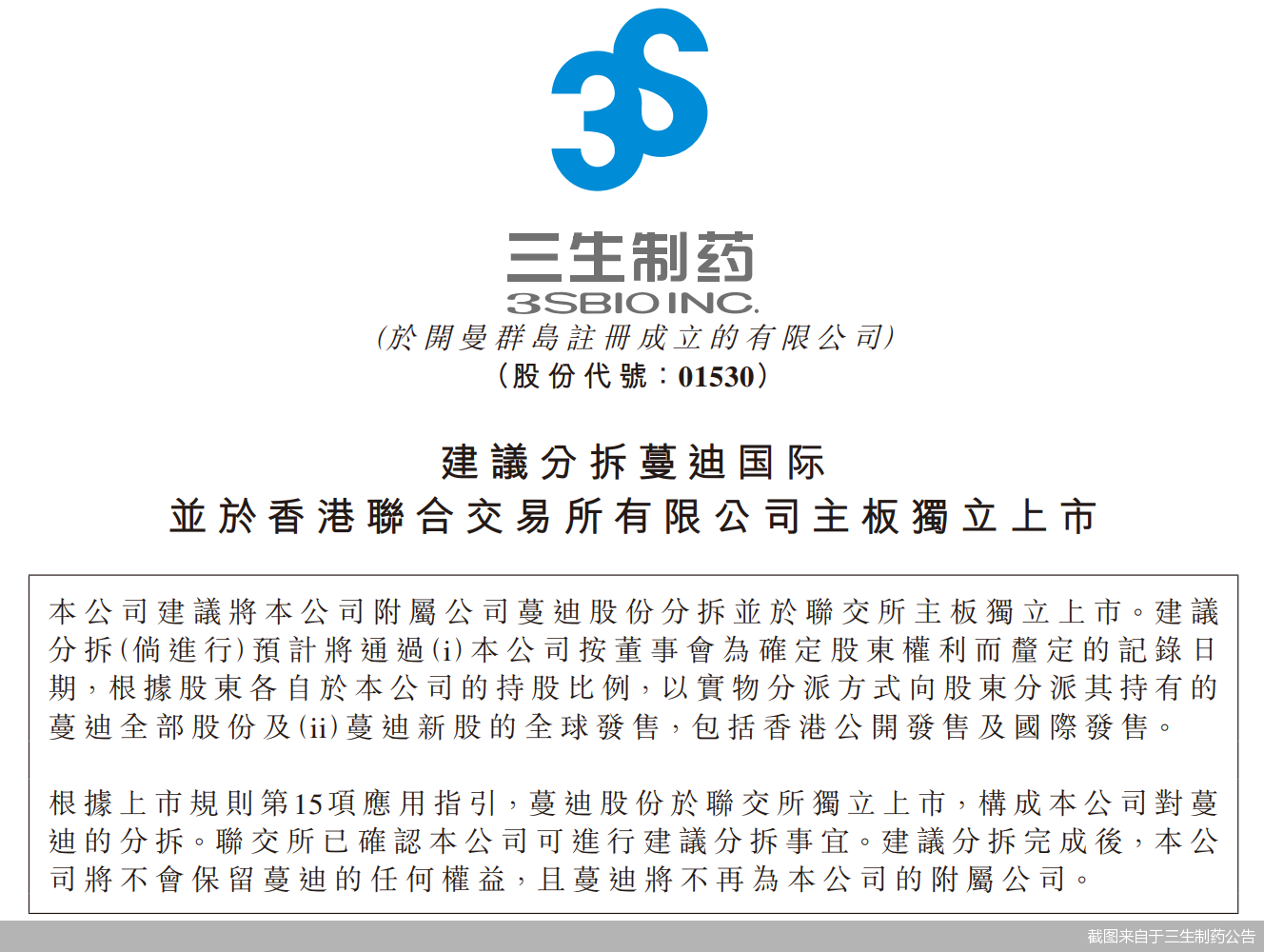
Core Viewpoint - Sanofi Pharmaceutical has emerged as a star in the pharmaceutical industry this year, driven by a BD deal with Pfizer and plans to spin off its subsidiary, Mandi International, for independent listing, marking the potential for a third listing platform within the "Sanofi System" [1][2]. Company Overview - Founded in 1993 by Lou Dan, Sanofi Pharmaceutical has over 30 years of history and has become a prominent player in the biopharmaceutical sector. Lou Jian, Lou Dan's son, has been deeply involved in the company's capital operations and is currently a key figure in the "Sanofi System" [2][3]. - Sanofi Pharmaceutical was the first Chinese biopharmaceutical company to be listed on NASDAQ in 2007 and later transitioned to the Hong Kong Stock Exchange in 2015 [2][3]. Recent Developments - The company has seen significant stock price increases this year, with Sanofi Pharmaceutical's stock rising nearly fourfold, attributed to the positive news surrounding its dual-antibody drug's international expansion [4][6]. - A major factor in the stock surge was a BD deal announced on May 20, 2023, granting Pfizer exclusive rights to develop, produce, and commercialize a dual-specific antibody product, with an initial payment of $1.25 billion and potential milestone payments up to $4.8 billion [5][6]. Strategic Moves - The spin-off of Mandi International aims to create an independent fundraising platform, with plans to use the raised capital for product expansion, digital operations, marketing, and enhancing early-stage research capabilities [6]. - The "Sanofi System" is structured with clear layers and specialization, with Sanofi Pharmaceutical focusing on biopharmaceutical and innovative drug development, while Mandi International targets consumer healthcare [3][6]. Market Performance - As of November 26, 2023, Sanofi Pharmaceutical and Sanofi Guojian have seen year-to-date stock price increases of 384.39% and 219.07%, respectively, reflecting strong market recognition of their strategic direction and value [6].
创新药崛起!院内用药占比持续增长,中国医药行业结构性拐点已至
第一财经· 2025-11-26 13:49
Core Viewpoint - The Chinese innovative drug market is experiencing a "structural turning point," which is expected to reverse the downward trend in the pharmaceutical industry [3][11]. Industry Overview - The domestic pharmaceutical terminal sales have shown negative growth since 2024, with over 30% of regulated pharmaceutical companies reporting losses in the first half of this year [3][7]. - The low concentration in several sub-sectors, particularly in the generic drug industry, has led to "price internalization," which is a key constraint on the development of the Chinese pharmaceutical industry [3][7]. Innovative Drug Market Potential - Despite the challenges, there has been a significant emergence of innovative drug achievements in China this year, with innovative drugs rapidly increasing their market share and frequent external licensing deals [3][5]. - The market share of innovative drugs in China is currently only 8.6%, compared to over 70% in the US and European countries, indicating substantial growth potential [5][17]. Financial Performance - The overall revenue of pharmaceutical companies in China decreased by 5.5% year-on-year, but innovative transformation companies and some emerging innovative drug firms have maintained good growth and profitability [3][7]. - In the first half of 2025, 34.3% of the surveyed companies reported losses, highlighting the financial strain within the industry [7][10]. Market Dynamics - The average price level of generic drugs has been further reduced due to policies on price governance and drug price control, leading to intensified competition and downward pressure on prices [8][9]. - The Chinese pharmaceutical industry is still primarily driven by domestic circulation, with exports contributing only 10% to 15% of industrial revenue over the past four years [7][10]. Future Outlook - The commercialization of innovative drugs is expected to become the core driving force for industry growth during the downturn [11][12]. - The market for innovative drugs (including biosimilars) reached 120 billion yuan in 2023, with a growth rate of 27%, indicating a robust pipeline of new products [12][17]. Export Performance - From January to October 2025, China's pharmaceutical product exports reached 91.17 billion USD, a year-on-year increase of 3.5%, with a significant growth in formulation exports [15][16]. - The proportion of formulation exports in total pharmaceutical exports reached a historical high of 16.1%, indicating a shift in the export landscape [16]. Challenges and Opportunities - The domestic innovative drug market is still not large enough, and the pricing support system needs improvement to sustain growth [17][21]. - The industry faces challenges from funding shortages and low accessibility of innovative drugs, with about 88% of respondents in a survey indicating insufficient funding for innovative drug development [17][21]. Strategic Recommendations - To enhance the commercialization efficiency of innovative drugs, the industry should focus on reducing competition among numerous players and fostering a healthier market structure [23][24]. - Building an international innovation platform is crucial for Chinese pharmaceutical companies to capture a larger share of the global innovation dividend [24].

左手创新药、右手生发剂,“药二代”娄竞冲击第三个上市平台
Bei Jing Shang Bao· 2025-11-26 13:35
Core Viewpoint - Sanofi Pharmaceutical is set to become a star in the pharmaceutical sector by 2025, following its collaboration with Pfizer and the planned spin-off of its subsidiary, Mandi International, for independent listing, marking the potential emergence of a third listing platform within the "Sanofi System" [1][4]. Group 1: Company Developments - Mandi International, a Cayman Islands-registered company, focuses on consumer pharmaceuticals, particularly in skin health and weight management solutions, and is known for its flagship Minoxidil-based hair loss treatment products [5]. - The valuation of Mandi International has increased over nine times since its acquisition by Sanofi Pharmaceutical in 2015 for 528 million yuan [6][7]. - Mandi International's financial performance shows projected revenues of approximately 982 million yuan, 1.228 billion yuan, 1.455 billion yuan, and 743 million yuan for the years 2022 to 2025, with profit margins consistently above 80% [5]. Group 2: Market Strategy - The spin-off aims to allow for more accurate market valuation of Mandi International, isolating consumer healthcare market risks from Sanofi Pharmaceutical's core focus on innovative drugs and biopharmaceuticals [8]. - The spin-off will utilize a stock distribution and new global share issuance method, allowing existing shareholders to receive shares in Mandi International proportionate to their holdings [8]. Group 3: Historical Context - The "Sanofi System" has a clear capital structure, with Sanofi Pharmaceutical focusing on biopharmaceuticals, Sanofi Guojian on antibody drugs, and Mandi International on consumer healthcare, maximizing capital value across different market segments [11]. - The history of Sanofi Pharmaceutical includes its founding in 1993, its listing on NASDAQ in 2007, and its transition to the Hong Kong Stock Exchange in 2015, alongside strategic acquisitions that expanded its product offerings [9][10]. Group 4: Recent Performance - The stock prices of Sanofi Pharmaceutical and Sanofi Guojian have surged significantly this year, with Sanofi Pharmaceutical's stock increasing nearly fourfold, driven by a lucrative business development deal with Pfizer [13][15]. - The deal with Pfizer involves a $1.25 billion upfront payment for a dual-target antibody product, which has sparked a broader rally in the innovative drug sector [14][15].