
反倾销调查

Search documents
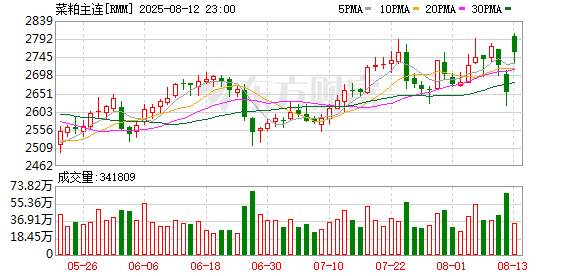
菜粕期货近、远月合约走势分化
Qi Huo Ri Bao· 2025-08-13 00:49
Core Viewpoint - The divergence in the futures market for rapeseed meal contracts is attributed to a combination of high inventory levels and changing supply-demand dynamics, influenced by trade policies and market expectations regarding Canadian canola production [2][3][4]. Group 1: Market Dynamics - The near-month rapeseed meal futures have seen a significant decline due to high inventory levels and weak demand, despite previous strong price increases [2]. - As of August 1, port rapeseed meal inventory reached 610,000 tons, significantly higher than the 291,300 tons recorded in the same period last year [2]. - The recent increase in registered warehouse receipts for rapeseed meal is at the highest level for this time of year in a decade, contributing to downward pressure on near-month contract prices [2]. Group 2: Future Expectations - The strength in far-month rapeseed meal contracts is supported by low import expectations for canola, the impact of a 100% tariff on Canadian rapeseed meal, and anticipated reductions in Canadian canola production for the 2025/2026 season [3]. - The recent preliminary ruling by the Ministry of Commerce on anti-dumping investigations against Canadian rapeseed will impose a 75.8% deposit rate on imports, further constraining supply and potentially increasing prices [3]. - The market is currently at a crossroads between high inventory levels and weak demand versus strong expectations of reduced production, necessitating close monitoring of USDA reports and market conditions [3][4]. Group 3: Supply Chain Considerations - The potential improvement in trade relations between China and Canada, along with the new season's canola supply, may lead to a weakening of rapeseed meal prices despite current high inventory levels [4]. - The ongoing assessment of canola yield and production in Canada is expected to influence the pricing of rapeseed meal contracts in the coming months [4]. - A decrease in demand from aquaculture may further impact rapeseed meal demand, although overall supply-demand dynamics are expected to remain stable [5].

综合晨报:美国7月未季调CPI同比升2.7%-20250813
Dong Zheng Qi Huo· 2025-08-13 00:42
1. Report Investment Ratings No investment ratings for the entire industry are provided in the report. 2. Core Views - The US CPI data in July generally support the Fed's rate cut in September, but the slightly higher-than-expected core inflation fails to strengthen the market's rate cut expectations and limits the subsequent rate cut space [2][14]. - The A-share market is strong, and the two loan discount policies announced yesterday may have a positive impact on reducing the debt costs of enterprises and residents and stimulating purchasing power [3][17]. - In the second half of August, factors unfavorable to the bond market are increasing, and the bond market is expected to be slightly weaker in a volatile manner. However, due to the lack of obvious improvement in the fundamentals, it is hard to say that the bond market will turn bearish trend - wise. The upward - trending interest rates in the second half of August will bring allocation opportunities [4][23]. - Steel prices are running strongly, mainly driven by the strong expectation of environmental protection production restrictions. However, since the terminal demand has not changed much, risks should be watched out for [5][43]. - Due to supply - side risks such as production line maintenance and mine shutdowns, the prices of lithium carbonate and other products are expected to be strong in the short term [6][58]. - Oil prices are oscillating weakly, and both EIA and OPEC slightly raise the market demand forecast for next year [7][60]. 3. Summary by Directory 3.1 Financial News and Comments 3.1.1 Macro Strategy (Gold) - The US July unadjusted CPI rose 2.7% year - on - year, and the gold price oscillated slightly lower. The CPI data support the Fed's rate cut in September, but the core inflation limits the rate cut space. Short - term gold remains in a volatile pattern [14][15]. 3.1.2 Macro Strategy (Stock Index Futures) - Two loan discount policies are introduced, and China and the US agree to continue suspending the implementation of 24% reciprocal tariffs. The A - share market is approaching the previous high of 3674. It is recommended to allocate various stock indices evenly [16][17][18]. 3.1.3 Macro Strategy (US Stock Index Futures) - Fed officials have different views on monetary policy. The US July CPI is slightly lower than expected, but the core CPI exceeds expectations, increasing the probability of a rate cut in September. The US stock market is expected to remain strong, but inflation risks exist [19][20][21]. 3.1.4 Macro Strategy (Treasury Bond Futures) - Three departments issue the implementation plan for the fiscal discount policy on personal consumption loans. The bond market is under pressure, and it is recommended that trading desks be cautious when betting on rebounds [22][23][25]. 3.2 Commodity News and Comments 3.2.1 Agricultural Products (Soybean Meal) - USDA unexpectedly lowers the US soybean ending inventory. The report is beneficial to soybean meal, and it is expected that the soybean meal futures price will remain strong before China resumes purchasing US soybeans [26][27]. 3.2.2 Agricultural Products (Soybean Oil/Rapeseed Oil/Palm Oil) - The expected ending inventory of US soybeans in 2025/2026 is lower than expected, and the anti - dumping investigation on Canadian rapeseed is initiated. It is recommended to take long positions in the domestic oil market or adopt the strategy of going long on rapeseed oil and short on soybean oil in the 01 contract [28][30][31]. 3.2.3 Agricultural Products (Cotton) - The cotton textile industry PMI in July drops significantly, and the new order index reaches a low level. The growth progress of US cotton is slow, and the ICE cotton price is expected to be weak and volatile in the short term. Zhengzhou cotton is expected to oscillate [32][34][35]. 3.2.4 Agricultural Products (Corn Starch) - The spot price of corn starch is weak. The terminal demand is weak, and the rice - flour price difference has no driving force to strengthen [36]. 3.2.5 Agricultural Products (Hogs) - The cost of hog farming is under control. It is recommended to pay continuous attention to the opportunity of reverse spreads [37][38]. 3.2.6 Agricultural Products (Corn) - The import corn auction turnover rate is low, and the corn price is weak. It is recommended to avoid the 09 contract and hold short positions in the 11 and 01 contracts [39][40]. 3.2.7 Black Metals (Rebar/Hot - Rolled Coil) - The sales of key real - estate enterprises decline, and the steel price is strong due to the expectation of environmental protection production restrictions. However, risks should be watched out for as the terminal demand is stable [41][43][44]. 3.2.8 Non - ferrous Metals (Alumina) - Shanxi Province adjusts the mining rights policy. The current supply - demand of alumina is in surplus, and it is recommended to wait and see [45][46][47]. 3.2.9 Non - ferrous Metals (Lead) - Some refineries have maintenance plans in August. It is recommended to hold long positions established at low levels and pay attention to the opportunity of internal - external positive spreads [48][49]. 3.2.10 Non - ferrous Metals (Zinc) - LME zinc inventory decreases slightly, while domestic social inventory increases significantly. It is recommended to manage positions for unilateral positions, pay attention to medium - term positive spreads, and wait and see for internal - external spreads [50][51]. 3.2.11 Non - ferrous Metals (Nickel) - The future demand for nickel ore in Indonesia is expected to increase. In the short term, it is recommended to pay attention to band - trading opportunities, and in the medium term, pay attention to short - selling opportunities at high prices [52][53][54]. 3.2.12 Non - ferrous Metals (Lithium Carbonate) - There are supply - side risks such as mine shutdowns. It is recommended to pay attention to the opportunity of buying on dips and positive spreads between months [58]. 3.2.13 Energy and Chemicals (Crude Oil) - OPEC's oil production increases in July, and oil prices are weakly volatile. It is expected to remain volatile in the short term [59][60][61]. 3.2.14 Energy and Chemicals (Carbon Emissions) - The CEA price is oscillating narrowly, and it is expected to continue to oscillate in the short term [62][63][64]. 3.2.15 Energy and Chemicals (Caustic Soda) - The spot price of caustic soda is gradually weakening, and the futures price is expected to oscillate [65]. 3.2.16 Energy and Chemicals (Pulp) - The price trends of different pulp varieties are differentiated. The pulp futures price may rise, but the upward space is limited [66]. 3.2.17 Energy and Chemicals (PVC) - The PVC market price rises, but the fundamentals are weak. The market is expected to oscillate [67]. 3.2.18 Energy and Chemicals (PX) - The PX price is weak, and the market structure changes. It is expected to adjust in a volatile manner in the short term [68][69]. 3.2.19 Energy and Chemicals (Bottle Chips) - The export quotation of bottle chips is stable, and the industry is in a state of production reduction. The absolute price follows the fluctuation of polyester raw materials [70][72]. 3.2.20 Energy and Chemicals (Urea) - The urea market is volatile. The short - term supply - demand pattern is weak, and the price may be under pressure, but the downward space is limited [73][74]. 3.2.21 Energy and Chemicals (PTA) - The PTA futures is strongly oscillating, and the demand side is weak. It is expected to adjust in a volatile manner in the short term [75][77]. 3.2.22 Energy and Chemicals (Styrene) - The price of pure benzene is expected to be strong, and the production of styrene is high. It is recommended to treat it in a volatile manner and pay attention to cost - side changes [78][79]. 3.2.23 Energy and Chemicals (Soda Ash) - Due to the investigation of an official in Qinghai, the market is worried about supply - side disturbances. It is recommended to manage positions [80][81][82]. 3.2.24 Energy and Chemicals (Float Glass) - The glass futures price decline narrows, and the fundamentals are weak. It is recommended to operate with caution on the single - side and focus on arbitrage operations [83].
商务部公布反倾销调查的初步裁定
Qi Huo Ri Bao Wang· 2025-08-13 00:34
Core Viewpoint - The Ministry of Commerce of China has initiated an anti-dumping investigation into imported canola seeds from Canada, concluding that there is dumping and substantial damage to the domestic canola seed industry, with a causal relationship between the two [1][2][3] Group 1: Investigation Details - The investigation was officially announced on September 9, 2024, under the Anti-Dumping Regulations of the People's Republic of China [1] - The preliminary ruling determined that imported canola seeds from Canada are being dumped, causing significant harm to the domestic industry [2][3] - The Ministry of Commerce has stated that the investigation was conducted transparently and fairly, adhering to relevant laws and WTO rules [3] Group 2: Preliminary Ruling and Measures - A preliminary anti-dumping duty of 75.8% will be imposed on all Canadian companies starting from August 14, 2025, calculated based on the customs-determined taxable price [2] - The Ministry of Commerce emphasized the presence of government subsidies and preferential policies in Canada's agricultural sector, particularly in the canola seed industry, which distorts market supply and demand [3] - The Ministry will continue to conduct the investigation and ensure the rights of all stakeholders are protected, aiming for an objective and fair final ruling [3]
商务部,最新公告!
Zheng Quan Shi Bao· 2025-08-12 14:15
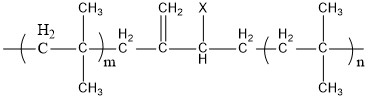
Group 1 - The Ministry of Commerce of China initiated anti-dumping investigations against imported canola seeds and halogenated butyl rubber from Canada, citing evidence of dumping and substantial damage to domestic industries [1][11][21] - The preliminary ruling on canola seeds indicated a dumping margin of 75.8% for Canadian companies, while the halogenated butyl rubber case showed dumping margins ranging from 26.2% to 40.5% [1][19][9] - The investigations were launched in response to applications from domestic industries, highlighting significant increases in imports and lower prices compared to domestic products, leading to operational difficulties for local producers [3][21] Group 2 - The Ministry of Commerce announced that the anti-dumping investigation for halogenated butyl rubber included products from Canada and Japan, with a preliminary finding of dumping and substantial damage to the domestic industry [5][11] - The investigation for halogenated butyl rubber will require importers to provide a cash deposit based on the determined dumping margins starting from August 14, 2025 [6][12] - The specific products under investigation include halogenated butyl rubber, which is used in various applications such as airtight layers for tires and sealing materials [8][7] Group 3 - The anti-dumping investigation for pea starch from Canada was initiated following a request from domestic producers, with evidence showing a significant increase in imports and lower pricing compared to local products [21][3] - The investigation period for pea starch is set from January 1, 2024, to December 31, 2024, with the damage assessment period from January 1, 2021, to December 31, 2024 [21][22] - The product is primarily used in food production and various industrial applications, indicating its importance in the domestic market [25][24]
商务部:中方对自加拿大进口豌豆淀粉发起反倾销调查与加方近期对中方采取的违反世贸组织规则的歧视性措施有本质区别
Ge Long Hui· 2025-08-12 12:50
(责任编辑:宋政 HN002) 【免责声明】本文仅代表作者本人观点,与和讯网无关。和讯网站对文中陈述、观点判断保持中立,不对所包含内容 的准确性、可靠性或完整性提供任何明示或暗示的保证。请读者仅作参考,并请自行承担全部责任。邮箱: news_center@staff.hexun.com 格隆汇8月12日|商务部新闻发言人就对原产于加拿大的进口豌豆淀粉发起反倾销调查答记者问。问: 我们关注到商务部对原产于加拿大的进口豌豆淀粉发起了反倾销调查。可以介绍下相关情况吗? 调查机关收到国内产业申请后,根据中国有关法律法规并遵循世贸组织规则对申请书进行了审查,认为 申请符合反倾销调查立案条件,决定发起调查。调查机关将依法开展调查,根据调查结果客观公正作出 裁决。 我想强调的是,反倾销调查是符合世贸组织规则,保护国内产业的正当贸易措施,中方对自加拿大进口 豌豆淀粉发起反倾销调查与加方近期对中方采取的违反世贸组织规则的歧视性措施有本质区别。 答:本次反倾销调查是应国内产业申请发起的,被调查产品为豌豆淀粉。申请人提交的初步证据显示, 近年来,自加拿大倾销进口豌豆淀粉的数量显著增长,进口价格持续低于国内产品销售价格,造成国内 产 ...
我国对原产于加拿大的进口豌豆淀粉发起反倾销调查
Xin Hua Wang· 2025-08-12 09:53
Core Viewpoint - The Ministry of Commerce of China announced an anti-dumping investigation into imported pea starch from Canada, set to begin on August 12, 2025, due to significant increases in imports and pricing below domestic sales prices, causing operational difficulties for the domestic industry [1][1][1] Group 1: Investigation Details - The investigation was initiated in response to a domestic industry's application, which provided preliminary evidence of a notable increase in the quantity of imported pea starch from Canada in recent years [1] - The application indicated that the import prices of Canadian pea starch have consistently been lower than those of domestic products, leading to losses for the domestic industry [1][1] - The investigation will be conducted in accordance with Chinese laws and WTO rules, ensuring an objective and fair judgment based on the findings [1][1][1] Group 2: Product Information - The product under investigation is unmodified starch made from peas, primarily used in the production of noodles and jelly, and can also serve as a thickening agent, stabilizer, emulsifier, and adhesive [1] - Applications of pea starch span various industries, including food, pharmaceuticals, papermaking, textiles, coatings, and animal feed [1][1] Group 3: Context and Implications - The spokesperson emphasized that this anti-dumping investigation aligns with WTO rules and is a legitimate trade measure to protect domestic industries [1] - The investigation is positioned as fundamentally different from recent discriminatory measures taken by Canada against China, highlighting the complexities of international trade relations [1][1]
商务部公布对原产于加拿大的进口油菜籽、原产于加拿大等国的进口卤化丁基橡胶反倾销调查初裁
Xin Hua Wang· 2025-08-12 09:42
Core Viewpoint - The Ministry of Commerce of China has announced preliminary anti-dumping measures against Canadian companies, with dumping margins of 75.8% for canola seeds and between 26.2% to 40.5% for halogenated butyl rubber [1]. Group 1: Anti-Dumping Investigation - The Ministry initiated anti-dumping investigations on imported canola seeds from Canada on September 9, 2024, and on halogenated butyl rubber from Canada and other countries on September 14, 2024 [1]. - The investigations were conducted under principles of fairness, justice, openness, and transparency, adhering to Chinese laws and WTO rules [1]. Group 2: Preliminary Rulings - The preliminary evidence indicated that the imported products were being dumped and that the domestic industry suffered substantial damage, establishing a causal relationship between dumping and the damage [1]. - For the halogenated butyl rubber case, the volume of imports from India during the investigation period was less than 3% of the total imports of halogenated butyl rubber in China, leading to the termination of the anti-dumping investigation for Indian products [1]. Group 3: Implementation of Measures - Starting from August 14, 2025, importers of canola seeds from Canada and halogenated butyl rubber from Canada and Japan must provide corresponding deposit rates to the customs of the People's Republic of China based on the preliminary ruling [2].
商务部,最新公告!
证券时报· 2025-08-12 09:32
Core Viewpoint - The Ministry of Commerce of China has initiated anti-dumping investigations against imported canola seeds, halogenated butyl rubber, and pea starch from Canada, citing evidence of dumping and substantial harm to domestic industries [1][2][14]. Group 1: Anti-Dumping Investigations - On August 12, 2025, the Ministry of Commerce announced the initiation of anti-dumping investigations for imported canola seeds and halogenated butyl rubber from Canada [1][2]. - The preliminary ruling indicated that the dumping margins were 75.8% for canola seeds and between 26.2% to 40.5% for halogenated butyl rubber from Canada [1][14]. - The investigations are based on evidence showing that the imported products were sold at prices significantly lower than domestic products, causing operational difficulties for local industries [2][14]. Group 2: Specific Product Details - The halogenated butyl rubber is categorized under the import and export tariff codes 40023910 and 40023990, and is primarily used in applications such as airtight layers for tires and sealants [8][10][11]. - The canola seeds are classified under tariff codes 12051090 and 12059090, mainly used for producing canola oil and meal [17][21]. - The pea starch, which is also under investigation, is used in various applications including food production and as a thickening agent, and is classified under tariff code 11081900 [26][28][29]. Group 3: Investigation Procedures and Outcomes - The Ministry of Commerce will impose temporary anti-dumping measures starting August 14, 2025, requiring importers to provide corresponding deposit amounts based on the determined dumping margins [6][15][22]. - The investigation period for the pea starch will cover from January 1, 2024, to December 31, 2024, while the damage assessment period will span from January 1, 2021, to December 31, 2024 [24][30]. - Stakeholders have a 20-day window to register for participation in the investigation and submit relevant information [30][34].

商务部公布对原产于加拿大、日本和印度的进口卤化丁基橡胶反倾销调查初步裁定
Yang Shi Xin Wen Ke Hu Duan· 2025-08-12 07:52
央视新闻消息,8月12日,商务部公告2025年第39号公布对原产于加拿大、日本和印度的进口卤化丁基 橡胶反倾销调查的初步裁定。 根据《中华人民共和国反倾销条例》(以下简称《反倾销条例》)的规定,2024年9月14日,商务部 (以下称调查机关)发布2024年第38号公告,决定对原产于加拿大、日本和印度的进口卤化丁基橡胶 (以下称被调查产品)进行反倾销立案调查。 调查机关对被调查产品是否存在倾销和倾销幅度、被调查产品是否对国内卤化丁基橡胶产业造成损害及 损害程度以及倾销与损害之间的因果关系进行了调查。根据调查结果和《反倾销条例》第二十四条的规 定,调查机关作出初步裁定(见附件)。现将有关事项公告如下: 一、终止对原产于印度的进口被调查产品的反倾销调查 经调查,调查期内自印度进口被调查产品数量占同期中国进口卤化丁基橡胶总量的比例低于3%。根据 《反倾销条例》第九条和第二十七条规定,调查机关认定该进口数量属可忽略不计,决定终止对原产于 印度的进口被调查产品的反倾销调查。 二、初步裁定 调查机关初步认定,原产于加拿大和日本的进口被调查产品存在倾销,国内卤化丁基橡胶产业受到实质 损害,而且倾销与实质损害之间存在因果关系。 ...
商务部贸易救济调查局负责人就对原产于加拿大的进口油菜籽反倾销调查初裁答记者问
Shang Wu Bu Wang Zhan· 2025-08-12 07:51
问:我们注意到商务部公布了对原产于加拿大的进口油菜籽反倾销调查初裁,商务部在调查中发现加拿 大存在大量农业补贴政策,认定其存在特殊市场情形,能否介绍相关情况? 答:商务部在掌握立案所需充分证据的基础上,依法自主对原产于加拿大的进口油菜籽发起反倾销调 查。立案后,商务部严格按照中国相关法律法规和世贸组织规则,公开透明进行调查,充分保障利害关 系方权利,广泛听取各方意见。调查中,我们注意到,加拿大农业领域,特别是油菜籽行业,存在大量 政府补贴和优惠政策,扭曲市场供求,导致产能严重过剩,初裁暂认定加拿大油菜籽市场存在特殊市场 情形。基于事实和证据,初裁裁定自加拿大进口油菜籽存在倾销,倾销幅度为75.8%,并于2025年8月 12日发布初裁公告,实施临时反倾销措施。 我想强调的是,中方一贯审慎、克制使用贸易救济措施,维护公平和自由贸易,下一步,我们将继续依 法开展调查,充分保障各利害关系方权利,根据调查结果客观公正作出最终裁决,采取必要措施坚决维 护国内产业的合法权益。 ...