
国内大循环

Search documents
金观平:有能力实现全年经济社会发展目标
Jing Ji Ri Bao· 2025-12-08 02:08
岁末将至,中国经济书写的答卷愈发清晰。面对严峻复杂的国际环境和艰巨繁重的国内改革发展稳定任 务,以习近平同志为核心的党中央总揽全局、科学决策,各地区各部门凝心聚力、真抓实干,中国经济 顶住压力延续稳中有进发展态势。我们有能力、有条件、有信心实现全年经济社会发展预期目标。 更要看到,中国经济长期向好的基本趋势没有改变,中国特色社会主义制度优势、超大规模市场优势、 完整产业体系优势、丰富人才资源优势更加彰显。无论未来遇到什么样的挑战,我国都有能力有信心保 持经济航船行稳致远。 当前,外部环境不稳定不确定因素较多,国内有效需求不足、部分企业经营困难等问题尚需着力破解。 实现全年预期目标有基础有支撑,但仍需付出艰苦努力。年终岁尾,各项工作任务进入冲刺阶段,要围 绕实现全年经济发展预期目标,提高政策实施的精准性和有效性,确保实现"十四五"圆满收官和"十五 五"良好开局。(本文来源:经济日报 作者:金观平) 稳的基础继续夯实。经济增长稳中有进,前三季度,我国国内生产总值同比增长5.2%,对于我国这样 的超大体量经济体而言,这样的增长既是量的积累更有质的支撑。就业形势总体稳定,10月份全国城镇 调查失业率为5.1%,比上月 ...
学习规划建议每日问答丨怎样理解坚持惠民生和促消费紧密结合
Xin Hua Wang· 2025-12-07 05:28
必须深刻认识到,只有就业更加充分、更高质量,居民收入持续稳定增加,社会保障和公共服务水平不 断提升,消费增长的基础才能更加稳固;只有不断加大投资于人的力度,加强覆盖全生命周期的人力资 源开发投入,才能形成"人力资本提升-居民收入增加-消费拉动经济增长"的良性循环;只有不断完善 消费政策,解决好优质消费供给不足、促进消费的制度机制不健全等突出问题,才能更好满足人民生活 品质提升的需要。在外部不确定因素增多,国内稳增长、稳就业、稳预期压力加大的情况下,坚持惠民 生和促消费紧密结合,推动宏观政策的着力点更多转向惠民生、促消费,是践行以人民为中心的发展思 想、促进经济和社会发展相协调的必然要求,是破解外部遏制打压、增强国内大循环内生动力和可靠性 的必然要求,是进一步提升宏观经济治理效能,促进形成更多由内需主导、消费拉动、内生增长的经济 发展模式的必然要求。要从全局高度和长远角度,理解和把握坚持惠民生和促消费紧密结合的重要性。 "十五五"时期,要精准施策推动惠民生和促消费紧密结合。在深入实施提振消费专项行动的具体工作 中,一是统筹促就业、增收入、稳预期,增强居民消费能力。强化就业优先政策,多渠道稳定和扩大就 业,优化创 ...
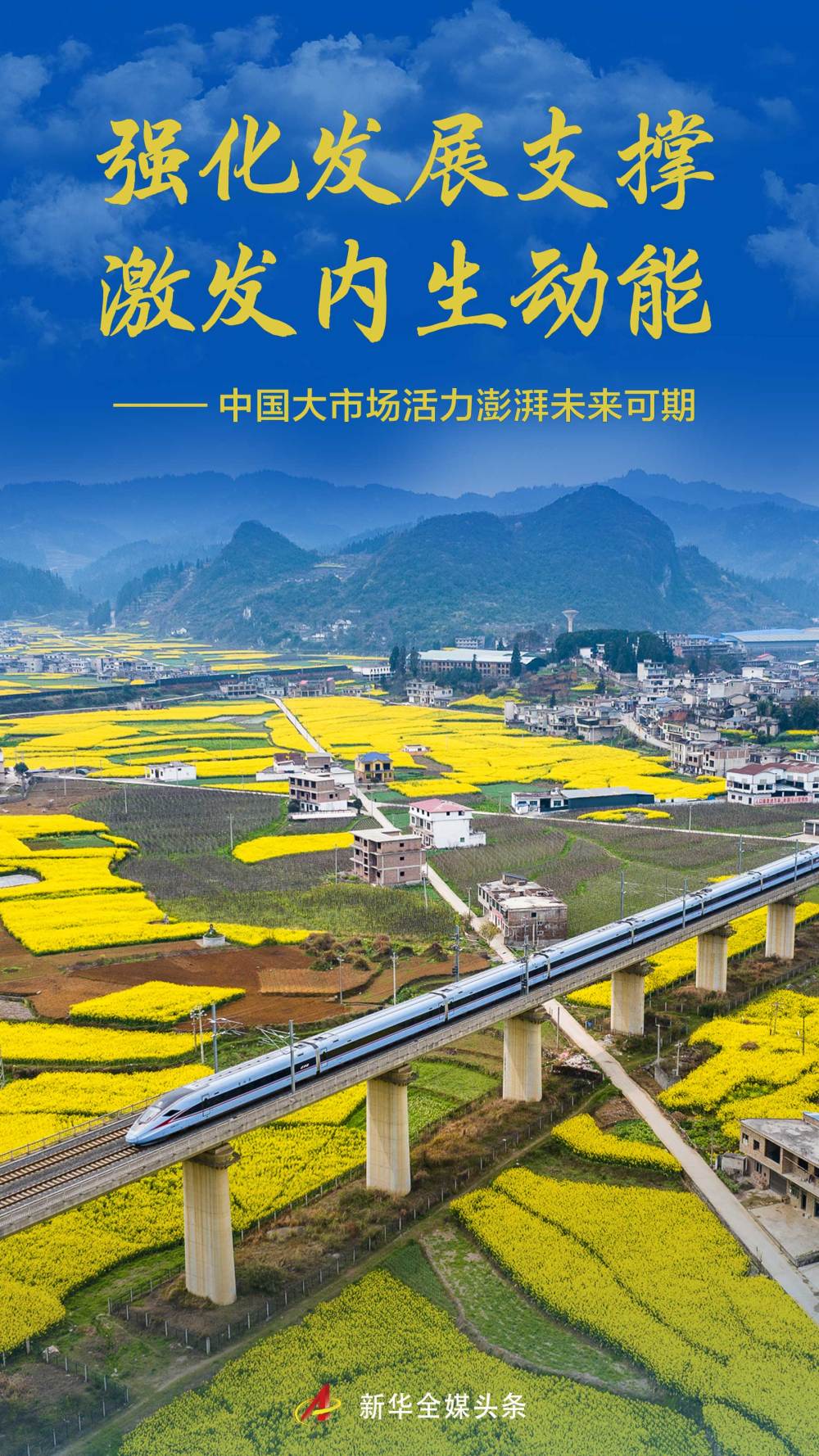
2025中国经济回眸|强化发展支撑 激发内生动能——中国大市场活力澎湃未来可期
Xin Hua Wang· 2025-12-05 15:06
Group 1 - China's economy is leveraging its vast domestic market to navigate external challenges, emphasizing the importance of resource allocation and market advantages [3][19][20] - The country has seen a significant increase in express delivery volume, surpassing 1.8 billion packages, reflecting the vitality of its large-scale market [4][6] - Consumer spending has contributed 53.5% to economic growth in the first three quarters, an increase of 9 percentage points compared to the previous year [7][9] Group 2 - Investment in fixed assets reached 40.89 trillion yuan from January to October, with notable growth in infrastructure and internet-related services [7][9] - The retail sector has shown resilience, with a 4.3% year-on-year increase in total retail sales of consumer goods, surpassing 40 trillion yuan in the first ten months [7][9] - The tourism sector is also thriving, with significant pre-sale figures for winter sports and a growing demand for senior travel services [10][12][13] Group 3 - The government is implementing policies to enhance consumer spending, including a 300 billion yuan special bond for consumption upgrades and a focus on service consumption [7][18] - The market is witnessing a shift towards high-quality supply and diverse consumer demands, with sectors like smart home appliances and digital consumption growing rapidly [16][26] - The potential for growth in the silver economy is substantial, with over 310 million people aged 60 and above, and projections indicating a market size exceeding 30 trillion yuan by 2035 [26]

【好评中国】担当作为,激荡国内大循环新活力
Sou Hu Cai Jing· 2025-12-05 12:09
夯实发展根基。构建新发展格局是适应我国发展新阶段形势、塑造国际合作和竞争新优势的必然要求。 当前我国不断加快构建新发展格局,国内大循环主体地位不断巩固、空间布局逐步优化,国内国际双循 环质量稳步提升,经济发展根基更加坚实,安全性稳定性进一步增强,展现出强大的活力、韧性和潜 力。2021年至2024年内需对经济增长的平均贡献率达到86.4%;货物贸易规模稳居全球第一,货物进出 口总额从2020年的32.2万亿元增加到2024年的43.8万亿元,年均增长8.0%。展望未来,要以国内大循环 为主体,建设强大国内市场,要更好联通国内市场和国际市场,更好利用国内国际两个市场两种资源。 要更加注重供需两端同时发力、协调配合,从畅通循环出发,把扩大内需战略同深化供给侧结构性改革 有机结合起来,形成需求牵引供给、供给创造需求的更高水平动态平衡。 汇聚发展合力。强大国内市场,是中国式现代化的战略依托。各地各部门要全力落实加快构建新发展格 局的战略部署,抓好贯彻落实,着力拓展增量、提升效益、畅通循环。拓展增量方面,要坚持惠民生和 促消费、投资于物和投资于人紧密结合,深入实施提振消费专项行动,保持投资合理增长,全方位扩大 国内需求 ...
以人为本为城镇注入灵魂
第一财经· 2025-12-05 00:24
Core Viewpoint - The article emphasizes the importance of a people-centered new urbanization strategy in China, aiming to enhance urbanization quality and unleash the potential of urban-rural integration for economic growth [2][3]. Group 1: New Urbanization Strategy - The new urbanization strategy focuses on improving the quality of urbanization by prioritizing human needs, which is seen as a shift from infrastructure-centric development to a more holistic approach that considers the well-being of individuals [2][3]. - The strategy aims to address the structural issues in China's economy, particularly the shortcomings in domestic demand and consumption, by fostering vibrant urban markets [3][5]. Group 2: Historical Context and Evolution - Urbanization has been a key driver of China's economic rise since the reform and opening up, with significant government-led initiatives contributing to urban development [2][3]. - The article highlights the transition from a focus on physical infrastructure ("seeing things") to a focus on human experiences and community engagement ("seeing people") as a necessary evolution in urbanization thinking [3][4]. Group 3: Implementation Challenges - To effectively implement the people-centered urbanization, it is crucial to overcome the traditional reliance on infrastructure expansion and instead focus on community involvement and public decision-making [4][5]. - The article stresses the need for reforms in the household registration system to facilitate population mobility and address long-standing gaps in public services provided by local governments [5][6]. Group 4: Future Outlook - The new urbanization strategy is positioned as a critical component of China's broader economic and social policies, aiming to create a more inclusive and resilient urban environment that reflects the diverse needs of its residents [4][6]. - By prioritizing human-centered development, the strategy seeks to enhance the overall quality of life in cities, making them more attractive and livable for all [4][6].

一财社论:以人为本为城镇注入灵魂
Di Yi Cai Jing· 2025-12-04 13:36
Core Viewpoint - The essence of the new urbanization is to prioritize people, emphasizing that urbanization should focus on human needs and experiences rather than merely infrastructure development [1][4]. Group 1: New Urbanization Strategy - The Chinese government is advancing a new urbanization strategy centered on human needs, aiming to enhance the quality of urbanization and unlock the potential of urban-rural integration to drive economic growth [2][3]. - This approach marks a shift in understanding urbanization from a focus on physical infrastructure ("seeing things") to a focus on people ("seeing people"), recognizing cities as places of opportunity and freedom for individuals [2][3]. Group 2: Economic Implications - The new urbanization strategy is crucial for addressing structural issues in the Chinese economy, particularly the shortcomings in domestic demand and consumption [3][5]. - By embedding a people-centered philosophy into urbanization, the strategy aims to stimulate market activity and economic vitality, which are essential for overcoming deep-seated economic challenges [3][4]. Group 3: Implementation Challenges - To effectively implement this people-centered urbanization, it is necessary to break away from traditional urbanization models that overly focus on infrastructure, ensuring that urban development genuinely reflects the needs and aspirations of residents [4][5]. - The strategy requires reforms in the household registration system to facilitate population mobility and address long-standing gaps in public services provided by local governments [5][6]. Group 4: Social and Public Services - Enhancing social security and public service equality is vital for providing citizens with a sense of security, which in turn encourages consumer confidence and spending [6]. - The new urbanization approach emphasizes the importance of open governance and public service that prioritizes human development, aiming to create a supportive environment for all residents [6].
四中全会精神在基层丨花湖一夜
Xin Hua Wang· 2025-12-03 12:19
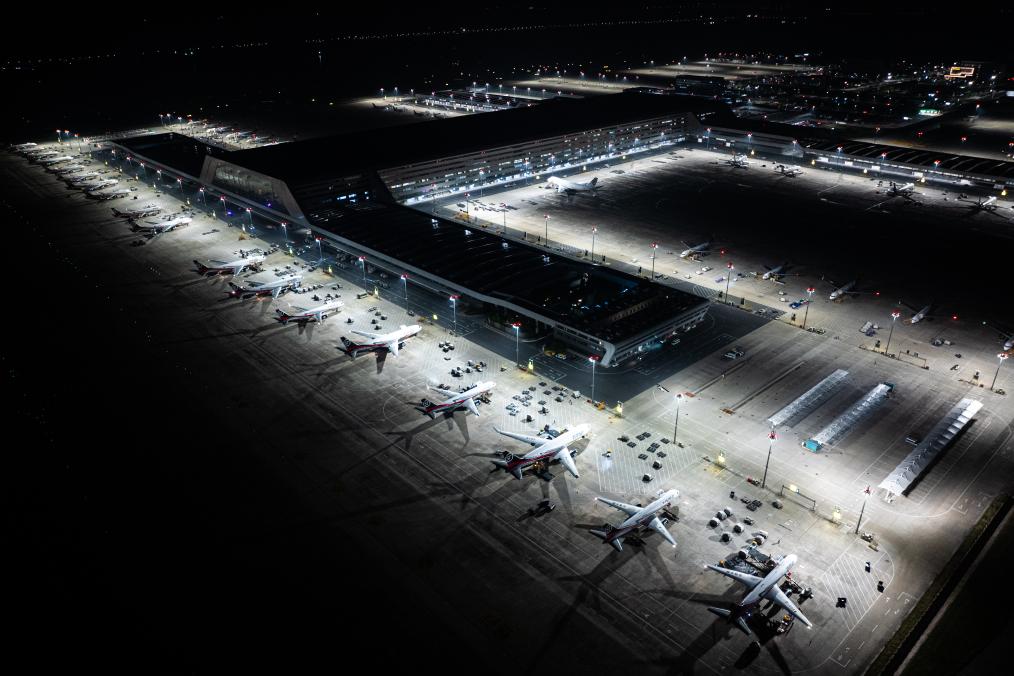
新华社武汉12月3日电 题:花湖一夜 新华社记者王自宸 不沿边、不靠海的湖北,何以成为全球生鲜进入中国的"高速入口"?答案藏在我国首个专业货运枢纽机场——鄂州花湖国际机场里。 子夜时分,记者驱车来到这座机场时,扑面而来的是一派"不夜空港"的繁忙景象:雪亮的停机坪上,货机刚一停稳,工作人员便操控牵引 车、加油车、转运车簇拥而上,卸货、加油、检查,井井有条,一刻也不耽误。 党的二十届四中全会审议通过的《中共中央关于制定国民经济和社会发展第十五个五年规划的建议》提出,优化区域开放布局,打造形态多 样的开放高地。 "这一提法进一步坚定了我们的发展信心。"湖北国际物流机场有限公司企业管理部总经理王资峰介绍,作为湖北打造国内大循环重要节点和 国内国际双循环战略链接的重要支撑,花湖机场自2022年7月投运以来,就肩负着打造内陆"空中出海口"的使命。 目前,花湖机场货运航线已达111条,数量位居全国第一。今年前三季度,花湖机场国际货邮吞吐量超36万吨,货运航班量在国内仅次于香 港机场、上海浦东机场、深圳宝安机场。 图为凌晨拍摄的鄂州花湖国际机场停机坪一角。 新华社记者肖艺九 摄 "'双十一'以来,货运量明显增长,挪威三文鱼、 ...
预计今年经济总量将达到140万亿元左右!
Jin Rong Shi Bao· 2025-12-03 06:20
Core Viewpoint - The article emphasizes the achievements and foundations laid during the "14th Five-Year Plan" period, highlighting the importance of high-quality development and the strategic direction for the upcoming "15th Five-Year Plan" period [2][3]. Economic Performance - The average economic growth rate during the first four years of the "14th Five-Year Plan" reached 5.5%, ranking among the top major economies globally, contributing approximately 30% to world economic growth [2]. - The expected total economic output for this year is around 140 trillion yuan [2]. Technological and Industrial Development - The value added by the manufacturing sector has consistently exceeded 30 trillion yuan, with high-tech manufacturing increasing by an average of 9.2% annually [2]. - By 2025, China is projected to rank 10th in the global innovation index [2]. Reform and Market Development - Comprehensive reforms are being advanced, with a reduction in the negative list for market access to 106 items and the elimination of over 4,200 measures that hinder the flow of factors [2]. - The construction of a unified national market is progressing, enhancing the efficiency of domestic and international market connections [5]. Employment and Income Growth - Urban employment has stabilized with over 12 million new jobs added annually, and residents' per capita disposable income has grown by an average of 5.5% per year, keeping pace with economic growth [2][6]. Green Development - Efforts towards green and low-carbon transformation are accelerating, with continuous improvements in ecological quality [2][4]. - The concept of "green mountains and clear waters are as valuable as mountains of gold and silver" is being firmly established [4]. National Security and Risk Management - There is a focus on enhancing national security capabilities, particularly in food and energy supply, as well as risk management in key sectors [7]. - The ability to manage risks in real estate, local government debt, and small financial institutions is being systematically improved [7].
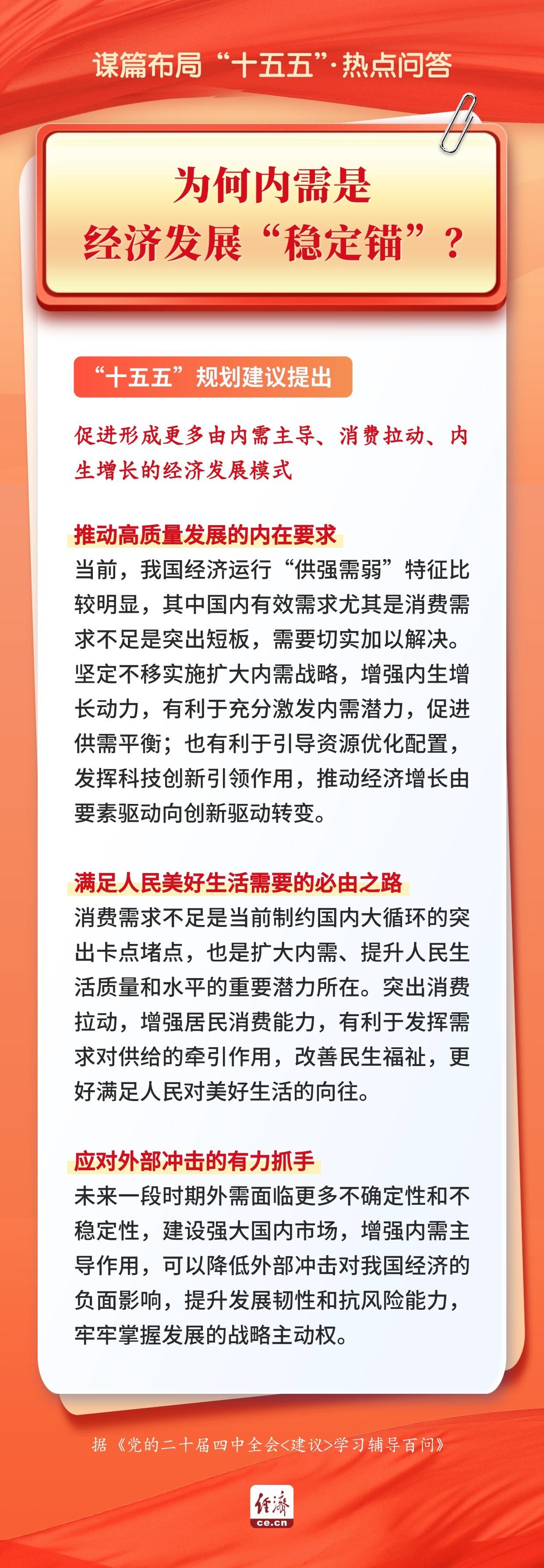
谋篇布局“十五五”·热点问答|为何内需是经济发展“稳定锚”?
Zhong Guo Jing Ji Wang· 2025-12-03 01:57
Group 1 - The core viewpoint emphasizes the importance of domestic demand as a "stabilizing anchor" for economic development, advocating for a shift towards an economy driven by consumption and endogenous growth [2][4]. - The current economic situation in China is characterized by a strong supply but weak demand, with insufficient domestic effective demand, particularly in consumption, identified as a significant shortcoming that needs to be addressed [2][3]. - Implementing a strategy to expand domestic demand is crucial for stimulating internal growth potential, promoting supply-demand balance, and transitioning economic growth from factor-driven to innovation-driven [3][5]. Group 2 - Insufficient consumer demand is a major bottleneck in the domestic circulation, which restricts the expansion of domestic demand and the improvement of people's living standards, highlighting the need to enhance consumer capacity [4]. - Strengthening the domestic market and enhancing the role of domestic demand can mitigate the negative impacts of external shocks, thereby improving resilience and risk management capabilities in the economy [5].
“2030年,中国有望实现8个‘超大规模’”
Guan Cha Zhe Wang· 2025-12-03 01:08
Core Insights - The conference highlighted China's ambitious goals for 2030, predicting significant economic growth and development across various sectors [1][2][3] Economic Growth - By 2030, China's GDP is projected to reach 190 trillion yuan, with a purchasing power parity estimate of 53 trillion USD, solidifying its status as a major global economy [1] - The country aims to establish itself as the largest entity economy, focusing on strengthening its real economy amidst a global trend of virtual economic expansion [1] Market Development - China's market size is expected to grow from 700 trillion yuan in 2024 to 1,070 trillion yuan by 2030, driven by a 6% annual growth rate [1] - The formation of a unified socialist market is anticipated, enhancing economic integration and efficiency [1] Urbanization and Infrastructure - China plans to develop super-large urban clusters, with three world-class city clusters identified: the Guangdong-Hong Kong-Macao Greater Bay Area, Beijing-Tianjin-Hebei, and the Yangtze River Delta [2] - By 2030, it is expected that five cities will achieve a GDP of 5 trillion yuan, contributing to local economic sustainability and competitiveness [2] Strategic Initiatives - The Belt and Road Initiative has fostered deeper international cooperation, serving as a strategic foundation for China's foreign relations and geopolitical positioning [2] - The focus on addressing domestic challenges is seen as essential for contributing to global stability and certainty [2][3] Governance and Reform - The need for improved national governance and timely implementation of reform measures is emphasized, with over 300 reform initiatives proposed [3] - Addressing social issues such as education, healthcare, and elderly care is crucial for enhancing the quality of life and supporting sustainable development [3]