
智能网联汽车

Search documents
全国首个!功能型无人车实战大赛深圳鸣枪
Nan Fang Du Shi Bao· 2025-12-30 13:45
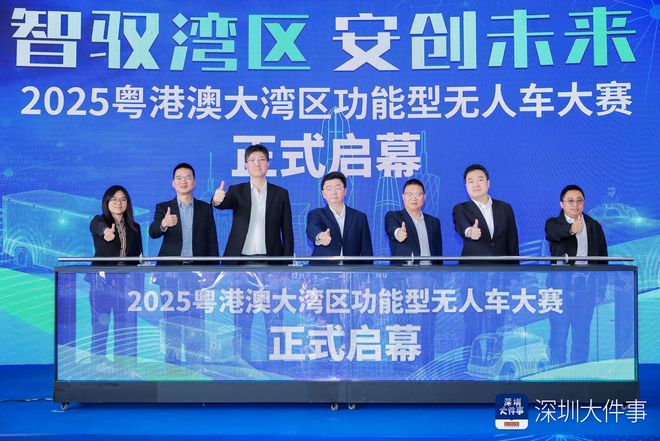
Core Viewpoint - The first professional competition focusing on functional autonomous vehicle technology and safety verification in China, the 2025 Guangdong-Hong Kong-Macao Greater Bay Area Functional Autonomous Vehicle Competition, was held in Shenzhen, emphasizing real-world testing and safety capabilities of autonomous vehicles in complex environments [1][8]. Group 1: Event Overview - The competition was themed "Intelligent Driving in the Bay Area, Safe Innovation for the Future" and was guided by multiple local government bodies and associations [1]. - The event featured a dual-track model of "Specialized Testing and Excellent Scenario Competitions," integrating compliance requirements from both Guangzhou and Shenzhen [3]. Group 2: Industry Participation and Challenges - Companies such as Meituan, New Stone Technology, JD.com, and others participated, facing challenges like traffic signal response, fog recognition, and obstacle avoidance [3][5]. - The competition included hidden challenges that addressed real operational safety and efficiency pain points, effectively validating vehicles' perception, decision-making, and control capabilities [3]. Group 3: Commercial Application and Innovation - The Excellent Scenario Competition attracted teams from various sectors, showcasing applications in areas like urban logistics, public transport integration, and instant retail [7]. - The event highlighted the potential of autonomous driving technology to enhance efficiency and reshape services across multiple fields [7]. Group 4: Industry Development and Standards - The competition aimed to shift the industry's focus from mere expansion to high-quality, safe development, promoting a collaborative development model of "technology-scenario-standards" [8]. - Shenzhen has deployed over 1,200 autonomous vehicles, with nearly 1.29 million monthly delivery orders, leading the nation in scale [8]. Group 5: Future Directions - The Shenzhen Intelligent Connected Transportation Association plans to use the competition as a starting point to expand application scenarios and industry collaboration, exploring extensions into autonomous passenger transport [12]. - The initiative aims to create a fusion innovation system driven by scenarios, co-research in technology, and ecosystem building, contributing to a new phase of scaled and safe intelligent connected vehicle industry in the Greater Bay Area [12].

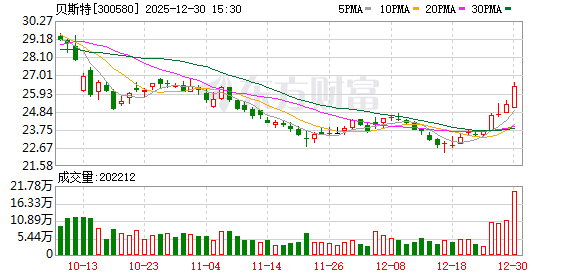
贝斯特:公司全资子公司宇华精机已全面布局直线运动部件领域
Zheng Quan Ri Bao· 2025-12-30 12:43
Core Viewpoint - Best has fully laid out its subsidiary Yuhua Precision Machinery in the linear motion components sector, targeting high-end equipment, automation, humanoid robotics, and intelligent connected vehicles industries [2] Group 1: Business Development - The company’s product offerings include high-precision ball screw assemblies, high-precision linear guide assemblies, planetary roller screw assemblies, micro screws, and linear actuators [2] - The company is actively expanding its market presence in the mid-to-high-end equipment industry and automation sector [2] Group 2: Information Disclosure - The company stated that specific business cooperation details are confidential and will adhere to information disclosure management regulations when necessary [2]
2025汽车行业年鉴|政策篇:精准出击、关键护航
Jing Ji Guan Cha Wang· 2025-12-30 10:23
Core Insights - The Chinese automotive industry is facing intense competition and price wars as it approaches an annual production and sales milestone of 32.3 million vehicles, with one in three cars sold globally coming from China. The industry is experiencing a shift from quantity expansion to quality improvement, driven by a series of government policies aimed at stabilizing growth and promoting transformation [2][10]. Policy Measures - The 2025 automotive policies focus on stabilizing consumption and fostering transformation, addressing the current "involution" issues in the industry. Key measures include extending the exemption of the vehicle purchase tax for new energy vehicles (NEVs) until the end of 2027 and increasing the maximum tax exemption from 30,000 RMB [4][5]. - A new action plan for large-scale equipment updates and consumer goods replacement will continue into 2025, with subsidies of up to 10,000 RMB for scrapping old vehicles and purchasing new energy passenger cars, stimulating demand in the stock market [4][5]. - The introduction of a pilot program for intelligent connected vehicles, allowing for conditional Level 3 autonomous driving, marks a significant regulatory advancement, clarifying liability and encouraging innovation [5]. Industry Challenges - The intensifying price wars are squeezing profits for automakers, leading to extended payment terms for small suppliers, which can exceed 120 days. This creates financial strain on smaller companies and hampers the overall efficiency of the automotive supply chain [5][9]. - The implementation of the "Regulations on Payment of Small and Medium-sized Enterprises" aims to alleviate financial pressures by mandating that payments to small suppliers be made within 60 days [5]. Future Outlook - For 2026, the automotive market is expected to see a decline in sales, with predictions of a 5% drop in passenger vehicle sales to 28.5 million units. The focus will remain on stabilizing consumption incentives, achieving breakthroughs in core technologies, and enhancing export quality [6][7]. - New policies will include a reduction in the NEV purchase tax by half starting January 1, 2026, and a continued emphasis on key technology breakthroughs, particularly in automotive chips and solid-state batteries [7][8]. - The export strategy will shift towards quality enhancement, with measures to regulate the export of used cars and improve after-sales service networks, ensuring better quality control [8][9]. Regulatory Environment - The introduction of the "Automotive Industry Price Behavior Compliance Guidelines" aims to curb the detrimental effects of price wars and promote a focus on product quality and technological innovation [9].

外资品牌深度链接本土“双智”供应商 华为、Momenta成赢家
Xin Lang Cai Jing· 2025-12-30 08:49
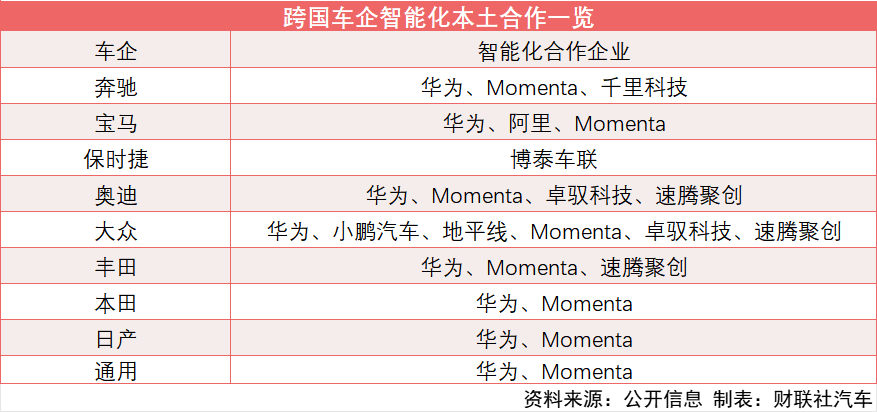
Core Viewpoint - The global automotive industry is undergoing significant transformation, presenting both challenges and opportunities for foreign car manufacturers in China. Collaborating with local intelligent suppliers is emerging as a major trend for the automotive industry by 2025 [1] Group 1: Collaborations and Partnerships - Major foreign car manufacturers, including Mercedes-Benz, BMW, and Audi, are forming strategic partnerships with local Chinese companies in the fields of intelligent driving and smart cockpits [2][3] - Mercedes-Benz has entered a long-term strategic cooperation agreement with Qianli Technology, focusing on artificial intelligence, intelligent driving, and smart cockpit technologies [2] - Other notable collaborations include partnerships between BMW and companies like Huawei and Momenta, as well as Audi's cooperation with multiple local suppliers [2][3] Group 2: Financial Performance and Market Trends - Foreign car manufacturers are experiencing declining profits, with BMW reporting a 16.2% year-on-year decrease in EBIT to €8.06 billion for the first nine months of the year, alongside a 5.6% drop in revenue to approximately €100 billion [3] - Sales figures for major brands in China from January to November show significant declines: BMW down 14.7% to 528,000 units, Mercedes-Benz down 18.7% to 518,000 units, and Audi down 13.3% to 518,000 units [4] - Industry experts suggest that the shift towards collaboration with local technology firms is a response to the pressures of profitability and the need for transformation in the automotive sector [3][4]

吉利李书福2026新年致辞:将投入3亿元启动青年创新创业激励计划
Feng Huang Wang· 2025-12-30 05:18
Core Viewpoint - Geely Holding Group's Chairman Li Shufu emphasizes the company's commitment to smart electric transformation and high-quality development in technology innovation, brand enhancement, globalization, and green development in his New Year address for 2026 [1] Group 1: Technological Innovations and Achievements - Geely has made significant progress in its smart and electric transformation, showcasing a robust development trend [1] - The completion of the first phase of the Geely constellation network deployment enables global service capabilities [1] - The successful rollout of the first AE200 aircraft marks a significant milestone in the development of large manned vertical take-off and landing vehicles in China [1] - The launch of the first future urban transportation hub "Green Intelligent Passage Island" by Cao Cao Mobility accelerates the commercialization of Robotaxi [1] Group 2: Future Outlook and Investments - Li Shufu believes that regardless of technological and market changes, the core of the automotive industry remains a safe, green, and enjoyable travel experience [1] - Geely plans to invest 50 million yuan initially and a total of 300 million yuan in the future to launch a youth innovation and entrepreneurship incentive program starting in 2026 [1] - The company will support the China University Student Formula Racing Competition, integrating cutting-edge hydrogen power exploration into the event to foster sustainable development in the automotive industry [1]



中国汽研(601965):L3级自驾车型获批、智驾标准2027年实施
NORTHEAST SECURITIES· 2025-12-30 01:44
Investment Rating - The report assigns a "Buy" rating to the company, indicating a positive outlook for its stock performance in the near future [3][6]. Core Insights - The first batch of L3 autonomous driving vehicles has been approved by the Ministry of Industry and Information Technology, including the Changan Deep Blue SL03 and BAIC Arcfox Alpha S, which will conduct pilot tests in designated areas of Beijing and Chongqing [1]. - A mandatory national standard for intelligent connected vehicles will be implemented starting January 1, 2027, which is expected to significantly increase the mandatory testing items for intelligent driving, leading to higher testing costs for vehicles [2]. - The i-VISTA platform, developed by China Automotive Research, is enhancing industry influence and testing capabilities for intelligent connected vehicles, with significant investments planned for testing bases in East and South China, expected to be completed by 2026 [2]. Financial Summary - Projected revenues for the company from 2025 to 2027 are estimated at 46.60 billion, 53 billion, and 67.91 billion yuan respectively, with net profits expected to be 9.31 billion, 10.65 billion, and 14.69 billion yuan [3][4]. - The company is expected to see a revenue growth rate of 14.7% in 2024, followed by a slight decline of 0.8% in 2025, and then a recovery with growth rates of 13.7% and 28.1% in 2026 and 2027 respectively [14]. - The earnings per share are projected to increase from 0.92 yuan in 2024 to 1.46 yuan in 2027, reflecting a positive trend in profitability [4][14].

汽车行业周报:“十五五”汽车持重,智能豪华定义新方向-20251229
Guoyuan Securities· 2025-12-29 09:14
Investment Rating - The report maintains a "Recommended" investment rating for the automotive industry [6] Core Insights - The automotive industry is experiencing a decline in sales due to tightening subsidies, but the annual cumulative sales remain within a reasonable range. Retail sales of passenger cars from December 1-21 reached 1.3 million units, a year-on-year decrease of 19%, but a month-on-month increase of 5%. Cumulative retail sales for the year stand at 22.783 million units, a year-on-year increase of 4% [2][20] - The penetration rate of new energy vehicles in the passenger car market reached 60.6% during the same period, with cumulative retail sales of 12.26 million units for the year, reflecting an 18% year-on-year growth [2][20] - Regional "14th Five-Year" plans emphasize the importance of the automotive industry, particularly in promoting smart and connected vehicles, with significant investments expected in key areas like Beijing, Shanghai, and Shenzhen [3][30][31] - Leading automotive companies are focusing on smart vehicle strategies, with domestic luxury car brands beginning to define their identities in the market [4][36] Summary by Sections Weekly Market Review - The automotive sector saw a 2.74% increase in the week of December 20-26, outperforming the Shanghai and Shenzhen 300 index by 0.79 percentage points [13] - The automotive parts sector had the highest increase at 4.25%, while the passenger car sector saw a 3.39% rise [15] Data Tracking - Retail and wholesale sales data for passenger cars indicate a mixed performance, with retail sales declining year-on-year but showing month-on-month growth [20] - New energy vehicle sales also reflect a similar trend, with a year-on-year increase in retail sales but a decline in wholesale figures [20] Industry News - The report highlights significant developments in the automotive industry, including organizational changes at Li Auto and the launch of new smart vehicle models by various manufacturers [25][36] - The implementation of the "Shenzhen-Hong Kong Automotive Fast Pass Plan" aims to streamline the export process for new energy vehicles, significantly reducing time and costs [29] Investment Recommendations - The report suggests focusing on the definitions of the automotive industry in various regional "14th Five-Year" plans and the upward trend in autonomous luxury vehicles [5]
2025汽车大事记:从舆情风暴到行业重构 监管护航智驾安全第一
Zhong Guo Jing Ji Wang· 2025-12-29 07:23
宣传语从"智能驾驶"变为"辅助驾驶",似乎是一夜之间的事。 2025年3月,一辆小米SU7在安徽德上高速发生严重事故,将智驾安全推上风口浪尖,智能驾驶不等于自动驾驶的技术区分被广泛警示。此次事件影响之 大,甚至可以视为"辅助驾驶"营销宣传转变的导火索。 在此之前,"全程零接管""高阶智驾""准L3级"等模糊表述充斥全网,事件发生后,整个市场短期内噤若寒蝉,几乎所有车企都闭口不谈"智能辅助驾驶",以 上海车展为分水岭,车企开始全面替换宣传物料,取消"自动驾驶""高阶智驾"等表述,突出"辅助驾驶"等字眼,强调L2级辅助驾驶功能开启时,驾驶员必须 实时监控和控制。 全行业能如此的步调一致,一定有一只"大手"在背后提出了强制要求。实际上,智能化一直是我国在本轮汽车产业变革中的优势领域,加速发展智能网联技 术既是车企的盈利诉求,也是我国汽车产业在全球争夺话语权的重要锚点。在这一点上,国家层面与企业层面的目标是一致的,但遗憾的是,企业在激烈的 市场竞争中似乎身不由己"杀红了眼",在营销上愈发剑走偏锋,失去了"务实"的精神,偏离了正轨,此时监管对车企的约束就尤为重要且必要。 监管精准出手,直击"虚假宣传""术语误导" 4月 ...
法雷奥:武汉基地锚定“跃升 2028”战略 研发制造协同打造汽车零部件智造高地
Zhong Guo Qi Che Bao Wang· 2025-12-29 03:47
Core Insights - Valeo has launched its "Leap 2028" global strategic plan, aiming for sales to exceed €22-24 billion by 2028, with an operating profit margin of 6%-7% and free cash flow of at least €500 million after interest [3] Group 1: Manufacturing and R&D Capabilities - The Valeo Wuhan plant is a key part of the company's strategy in China, featuring advanced automation and a production rate of one headlight every 36 seconds [1][3] - The plant covers an area of 21,000 square meters and includes fully automated production lines, achieving 100% in automation coverage, CNC level, and production equipment networking [3] - The Wuhan Technical Center is one of Valeo's largest R&D centers globally, employing over 1,500 R&D personnel, which is one-third of Valeo's total R&D workforce in China [3][4] Group 2: Innovation and Product Development - The development cycle for headlight products in Wuhan has been reduced to as short as 7 months, compared to the typical 2 years for similar products overseas [4] - The Wuhan plant produces over 4 million headlights annually, covering 74 categories, including smart headlights with multiple functions such as welcome, navigation, and hazard warning [4] - Valeo has established the first CarLab smart connected vehicle innovation studio in Wuhan, providing an open platform for exploring cutting-edge technologies [4] Group 3: Market Expansion and Strategic Importance - Valeo's growth in Wuhan is contributing significantly to the automotive supply chain in the Wuhan Economic Development Zone, with 33 other parts suppliers establishing operations in the area [5] - China is identified as one of Valeo's most important core markets and innovation sources for the coming years, with plans for continued investment and strengthening of smart manufacturing and R&D capabilities [5] - The company aims to expand into new markets, including two-wheeled and three-wheeled vehicles, urban microcars, charging solutions, and data center cooling, leveraging its key bases like Wuhan [5]

港股异动 智驾概念股早盘走高 国内首批L3级自动驾驶汽车开启规模化上路运行
Jin Rong Jie· 2025-12-29 03:20
Core Viewpoint - The smart driving concept stocks have seen a significant rise, driven by the introduction of L3-level autonomous driving vehicles in Chongqing, marking a milestone in the development of intelligent connected vehicles in China [1]. Group 1: Stock Performance - Youjia Innovation (02431) increased by 8.89%, reaching HKD 13.6 [1] - Zhejiang Shibao (01057) rose by 6.97%, trading at HKD 5.22 [1] - Tudatong (02665) saw a gain of 1.98%, priced at HKD 10.82 [1] Group 2: Industry Developments - On December 26, the first batch of 46 L3-level autonomous driving vehicles, equipped with the L3 autonomous driving system from Changan Deep Blue, was officially launched for road use in Chongqing [1] - The approved routes for these vehicles include major roads such as the inner ring expressway and Yudu Avenue in Chongqing [1] Group 3: Regulatory and Market Insights - According to Xinda Securities, the regulatory framework for intelligent connected vehicles in China is continuously improving, leading to a more standardized industry development environment [1] - Domestic brands are accelerating the research and development of smart driving technologies, with the penetration rate of L2-level and above advanced driving assistance systems increasing rapidly [1] - The market for Robotaxi is projected to reach a scale of RMB 270 billion by 2030 [1]