
电动化

Search documents
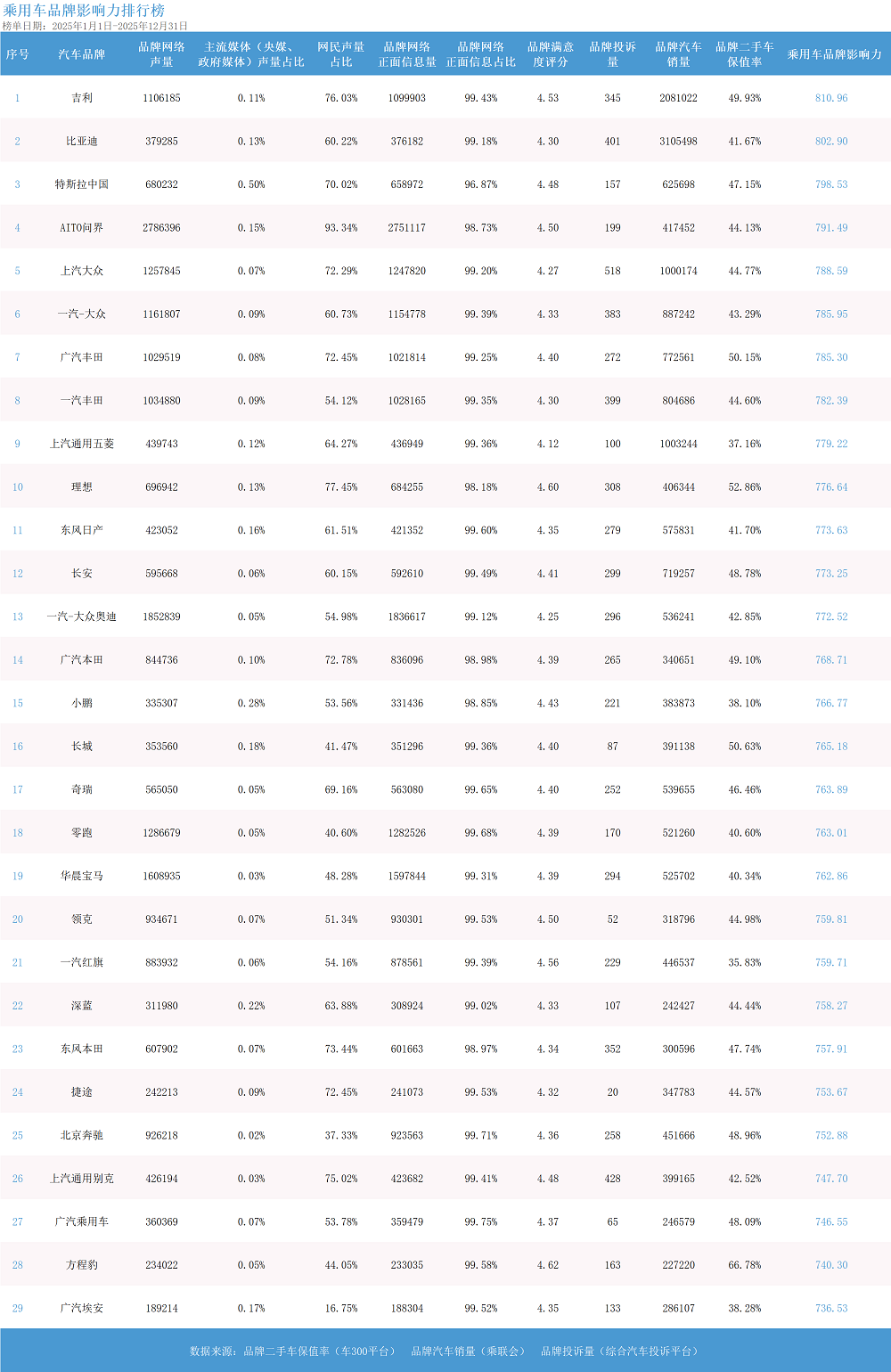
2025年中国乘用车头部品牌“强者恒强”,新势力破局高端市场
Zhong Guo Jing Ji Wang· 2026-01-26 08:37
Core Insights - The article highlights the competitive landscape of the Chinese passenger car market in 2025, emphasizing the rise of domestic brands leveraging technology and user engagement to reshape market dynamics [1][2]. Group 1: Market Dynamics - By 2025, leading Chinese passenger car brands have established competitive advantages based on large-scale operations and strong brand reputation [1]. - Domestic brands, particularly Geely, BYD, and AITO, dominate the market, significantly altering the long-standing influence of joint venture brands [2][4]. Group 2: Brand Performance - Geely ranks first with a comprehensive influence score of 810.96, supported by 1,106,185 annual brand network mentions and 2,081,022 vehicle sales, alongside a 99.43% positive information ratio [4]. - BYD follows closely with a score of 802.90, showcasing a sales figure of 3,105,498 vehicles and a 99.18% positive sentiment [4]. - Tesla China maintains a strong position with a score of 798.53, attributed to its media presence and brand premium [5]. Group 3: Emerging Trends - AITO's performance is notable, with a network mention count of 2,786,396 and a 93.34% user sentiment ratio, indicating a strong foothold in the high-end market [6]. - New energy brands are rapidly growing, with Geely's Galaxy series becoming a key growth driver, while traditional automakers like Great Wall and Changan continue to innovate in hybrid and electric technologies [6]. Group 4: Challenges for Joint Ventures - Traditional joint venture brands face pressure from the rise of domestic brands, leading to a critical phase of adjustment and strategic transformation [7]. - Brands like SAIC Volkswagen and FAW-Volkswagen, despite their historical market presence, show signs of stagnation in user engagement and satisfaction compared to their domestic counterparts [7]. - The need for joint ventures to accelerate local electric vehicle development and adapt global technologies to meet Chinese consumer preferences is emphasized as a core challenge [7].




汽车行业周报:政策托底静待反弹,关注海外电动化
Guoyuan Securities· 2026-01-26 06:24
Investment Rating - The report maintains a "Recommended" investment rating for the automotive industry [6] Core Insights - The automotive market is experiencing significant negative growth, with retail sales of passenger vehicles dropping by 28% year-on-year in the first half of January 2026, and wholesale sales declining by 35% [1][19] - The report emphasizes the need for supportive policies to stimulate market recovery and highlights the potential for growth in the overseas electric vehicle market due to favorable policies in countries like Canada and Germany [3][4] - The report suggests that the domestic market may rebound following the implementation of supportive policies, which could positively impact leading brands [4] Summary by Sections Market Overview - As of January 1-18, 2026, retail sales of passenger vehicles in China reached 679,000 units, a decrease of 28% compared to the same period last year, while wholesale sales totaled 740,000 units, down 35% year-on-year [1][19] - In the same period, retail sales of new energy vehicles were 312,000 units, reflecting a 16% decline year-on-year, and wholesale sales were 348,000 units, down 23% [1][19] Policy Developments - Canada announced plans to import 49,000 electric vehicles from China, significantly reducing tariffs from 100% to 6.1% [3] - Germany introduced a new subsidy program for electric vehicles, offering up to 6,000 euros to families purchasing new electric cars, effective from January 1, 2026 [3][44] - The UK government has launched a substantial subsidy program for electric trucks, with a total budget of 318 million pounds [48] Investment Opportunities - The report highlights the potential for Chinese new energy vehicles to expand into overseas markets, driven by favorable international policies [4] - It suggests that the recovery of the domestic automotive market could benefit leading brands significantly [4]




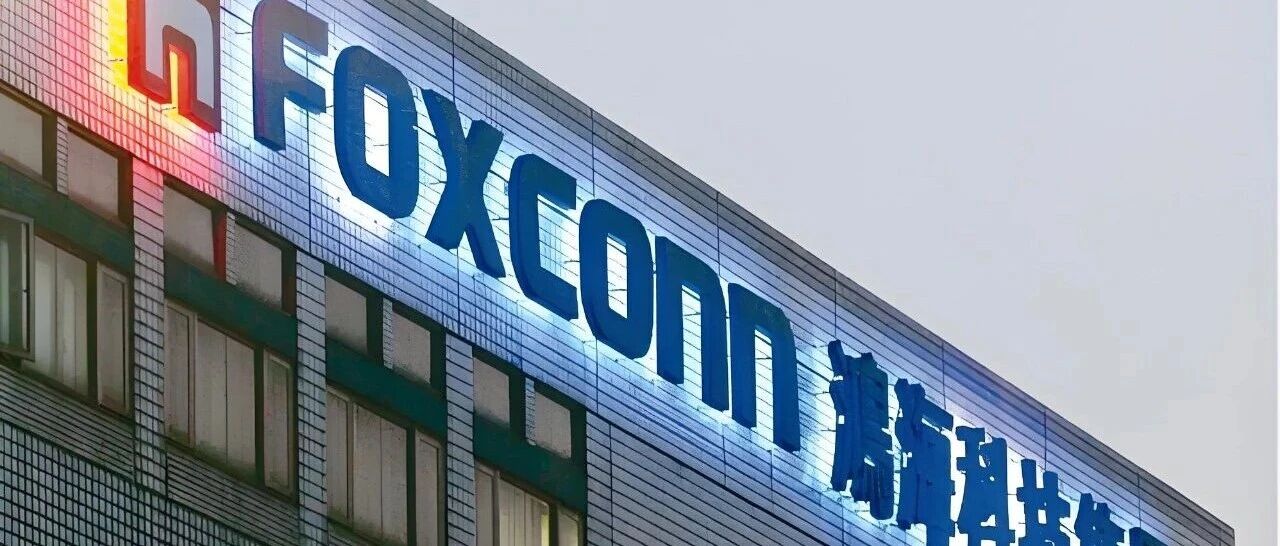
鸿海叩开日本汽车大门
汽车商业评论· 2026-01-25 23:07
Core Viewpoint - Foxconn's parent company, Hon Hai, is making significant strides in the automotive sector by establishing a joint venture with Mitsubishi Fuso Truck and Bus Corporation to produce electric buses in Japan, aiming to strengthen its foothold in the Japanese automotive market and accelerate the adoption of electric vehicles [4][6][11]. Group 1: Joint Venture and Production Plans - Hon Hai and Mitsubishi Fuso will each invest 50% to create a bus joint venture, set to launch in the second half of 2026, with its headquarters in Kawasaki [4]. - The joint venture will focus on manufacturing Hon Hai's pure electric buses while also handling the development and production of existing diesel buses [6]. - The goal is to secure orders for the Hon Hai EV bus Model T by 2027 and expand to other product lines like the EV microbus Model U [6]. Group 2: Market Context and Challenges - The Japanese automotive industry is facing challenges such as declining competitiveness and a need for restructuring, with foreign investment becoming a key driver of this change [9][11]. - The traditional "Made in Japan, exported globally" model is becoming unsustainable due to rising tariffs and protectionism, leading to an urgent need for localized production [11]. - The Japanese electric vehicle (EV) market is lagging, with EV buses currently accounting for less than 1% of the total bus market, presenting a significant growth opportunity [21][26]. Group 3: Strategic Importance of the Joint Venture - The partnership with Mitsubishi Fuso is seen as a critical step for Hon Hai to establish a local production base in Japan, which is essential for future expansion and collaboration with Japanese automakers [11][20]. - The joint venture is expected to help absorb some of the production capacity needs in Japan, which is crucial for maintaining local employment and manufacturing capabilities [24]. - The Japanese Bus Association has set a target to introduce 10,000 EV buses by 2030, indicating substantial market potential for Hon Hai's offerings [26].
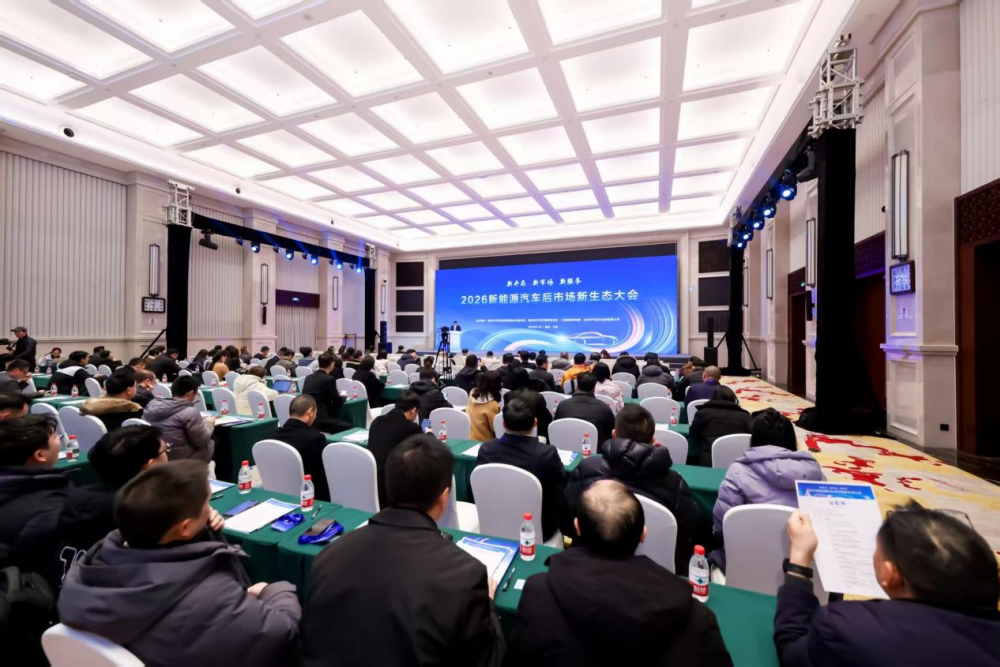
2026新能源汽车后市场新生态大会在重庆万州举办
Zhong Guo Qi Che Bao Wang· 2026-01-25 05:22
Core Insights - The 2026 New Energy Vehicle Aftermarket New Ecology Conference was held in Wanzhou, Chongqing, focusing on "new beginnings, new markets, and new services" to promote a safe, efficient, and green aftermarket ecosystem [1][3]. Group 1: Conference Overview - The conference was organized by various governmental and industry bodies, including the Chongqing Municipal Economic and Information Commission and the China Automotive Engineering Research Institute [1][3]. - Key figures from the Ministry of Industry and Information Technology and various industry organizations attended, emphasizing the importance of the new energy vehicle industry as a driver for high-quality manufacturing development [3][6]. Group 2: Industry Development Goals - The Chongqing government aims to enhance the automotive aftermarket system, focusing on smart connected new energy vehicles and establishing a globally influential hub for this sector [8][10]. - Key initiatives include improving vehicle inspection and maintenance capabilities, financial and insurance services, and fostering the battery recycling and automotive modification industries [8][10]. Group 3: Market Trends and Innovations - During the conference, it was noted that during the 14th Five-Year Plan, China's new energy vehicle sales and penetration rates were among the highest globally, driven by policy support and innovation [11]. - The industry is expected to continue evolving with a focus on quality improvement, internationalization, and the integration of services and products [11][14]. Group 4: Future Directions - The automotive aftermarket is anticipated to undergo significant changes, with trends towards openness, digitalization, and lifecycle services becoming prominent [17][20]. - Companies are encouraged to leverage AI technology for improved diagnostics and repair efficiency, and to establish standardized supply chains for new energy vehicle components [25][29]. Group 5: Recycling and Sustainability - The recycling of retired lithium batteries is highlighted as a critical national resource strategy, with significant market potential [34][36]. - Companies are urged to develop efficient recycling technologies and localized closed-loop networks to meet international regulatory requirements and support global carbon neutrality goals [37][39]. Group 6: Collaborative Efforts - The conference featured discussions on policy guidance, ecological collaboration, and innovative business models, showcasing the vibrant development of China's new energy vehicle aftermarket [40]. - The insights and consensus reached during the conference are expected to strengthen capabilities, enhance quality, and foster resource connections within the industry [40].
30亿欧元锂电项目落地葡萄牙!
起点锂电· 2026-01-24 11:10
Core Insights - Portugal is actively investing in the new energy sector, signing six investment agreements totaling €30.77 billion, with an additional €699.7 million in incentives aimed at promoting energy transition [2][3] - The projects cover various aspects of the lithium battery supply chain, including raw material extraction, battery production, and automotive component manufacturing, highlighting the importance of battery production for the automotive industry [2][3] Investment Agreements - Among the signed projects, China Innovation Aviation plans to invest €20.67 billion to establish a battery cell factory in Sintra, expected to create approximately 1,800 jobs [3] - Topsoe, a Danish company, will invest around €110 million to build a cathode active material (CAM) factory, while Portuguese company Lift One will invest €514 million to construct a lithium refining plant [3] - Savannah Lithium from the UK intends to invest €313 million in a lithium spodumene mining and production base [3] Strategic Importance - The projects are set to enhance China Innovation Aviation's international competitiveness and align with its German project, as European battery companies face challenges and some are retreating from the market [4] - The European market's approach to lithium batteries remains conflicted, with previous support for companies like Northvolt resulting in bankruptcy, indicating a need for collaboration with Chinese battery firms for technological advancements [4] Market Dynamics - The electric vehicle transition in Europe is facing challenges, including the cancellation of the 2035 ban on fuel vehicles, which reflects a cautious attitude among automakers towards the transition [5] - The lack of adequate charging infrastructure in Europe is a significant barrier to electric vehicle sales, prompting domestic companies to focus on solid-state battery production to alleviate consumer range anxiety [6] Future Opportunities - The demand for energy storage is expected to surge in the coming years, presenting significant opportunities for battery manufacturers, as energy storage becomes a crucial component for energy consumption and power assurance [6] - European policies are promoting local battery production, with associations like RECHARGE and BEPA advocating for a strategic report to build a domestic supply chain, which may create initial barriers for companies expanding abroad but ultimately presents both challenges and opportunities [6]
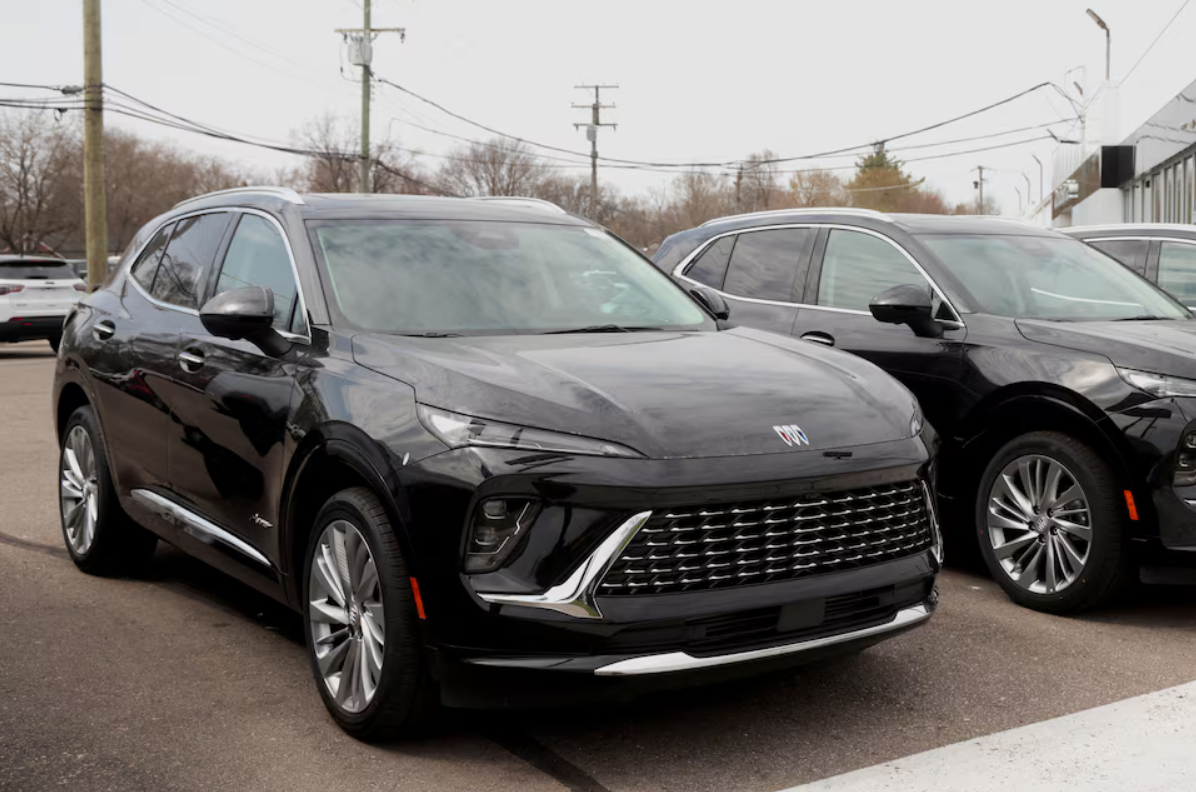
别克昂科威将把产线从中国迁往美国?通用汽车中国回应
Guan Cha Zhe Wang· 2026-01-23 08:59
Core Viewpoint - General Motors (GM) is shifting the production of Buick SUVs from China to the United States to strengthen its manufacturing footprint for domestic customers while maintaining long-term investments in the Chinese market [1][3]. Group 1: Production Shift - GM announced the cessation of Buick Envision production in China and the transfer of Buick SUV production to the U.S., emphasizing that this move is to enhance domestic manufacturing and support U.S. job opportunities [1][3]. - The production capacity being transferred is for the next generation of SUVs, not the existing production lines, and the Buick Envision models currently sold in China will continue to be produced locally [1][3]. Group 2: Trade and Tariff Context - This decision is part of GM's response to the U.S. tariff policies initiated during the Trump administration, which aimed to boost domestic manufacturing [3]. - Since 2017, GM has been exporting the Buick Envision produced in China to the U.S., but faced criticism and tariff challenges, including a 25% tariff since 2018, which has influenced its global production strategy [3]. Group 3: Future Production Plans - GM plans to move the production of Chevrolet SUVs, including the Equinox and Blazer, from Mexico to U.S. facilities, with production starting in Kansas City by 2027 and in Spring Hill, Tennessee, by 2028 [5]. - The shift in production capacity from China is a significant adjustment in GM's global strategy, particularly as the Buick brand is largely defined by local market demand in China [5]. Group 4: Local Market Focus - GM's local subsidiary, SAIC-GM, has emphasized its commitment to the Chinese market, highlighting that its high-end electric vehicle brand "Zhijing" and other models are fully defined and developed in China to meet local consumer needs [8].

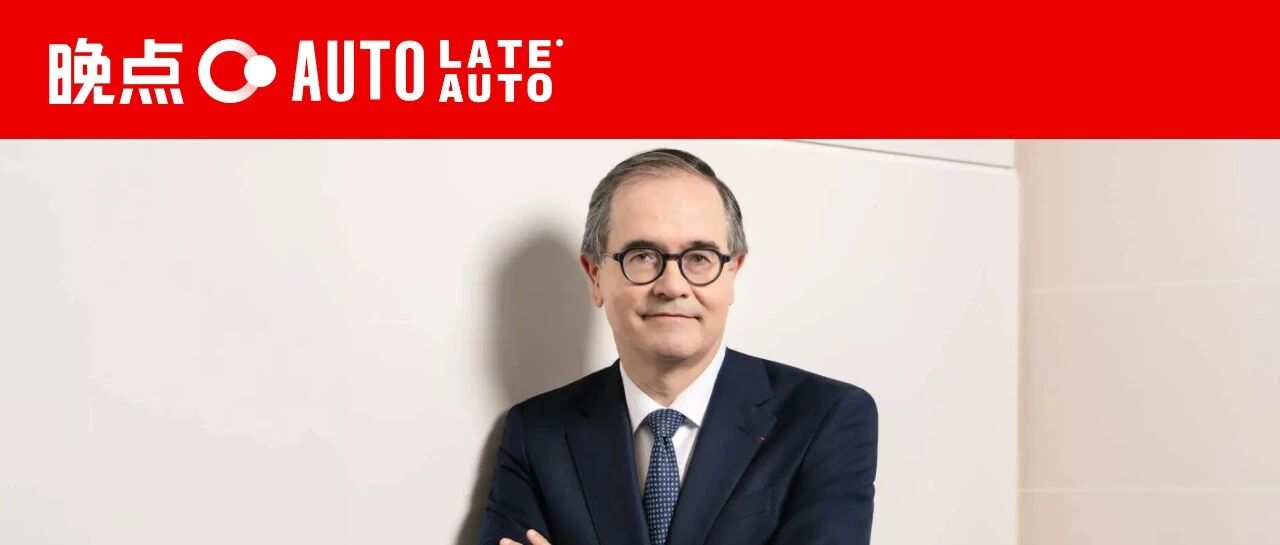
对话雷诺集团 CEO 福兰:短期内不会重返中国卖车,但用中国供应链把车卖到全世界
晚点Auto· 2026-01-23 07:52
Core Viewpoint - The traditional automotive business model based on scale and volume is ending, and companies must learn from China's speed to enhance efficiency in global projects [3][4][22]. Group 1: Old Business Model and New Strategies - The old model of automotive business relied on developing a platform to maximize global production and sales, exemplified by the Renault-Nissan-Mitsubishi alliance [4]. - The CEO of Renault emphasized the need for European companies to adopt the rapid decision-making pace seen in China, where projects can move from concept to production in significantly shorter timeframes [4][10]. - Renault's Twingo E-Tech project was developed in just 21 months, compared to the typical three years for European automakers [4][10]. Group 2: Collaboration and Partnerships - Renault's strategy includes viewing "partnerships" as a key pillar, alongside product development, operational excellence, and talent capital [6][11][24]. - The company is focusing on building win-win relationships with Chinese suppliers, leveraging their desire to expand internationally [20][25]. - Renault's collaboration with Geely in various markets, including Korea and Brazil, is seen as a model for mutual benefit, allowing both companies to leverage each other's strengths [9][23]. Group 3: Innovation and R&D - The establishment of the ACDC (Advanced China Design Center) in 2024 aims to utilize China's supply chain efficiency to support Renault's global product offerings [10][19]. - ACDC is expected to drive the company's technological transformation and enhance its product development speed [20][24]. - The center will focus on three main goals: understanding the Chinese automotive ecosystem, building collaborative models with suppliers, and exporting efficient R&D paradigms globally [20]. Group 4: Market Dynamics and Future Outlook - The CEO expressed confidence that deep ties with the Chinese supply chain will not dilute Renault's brand value, as the company has been an early investor in electric vehicles [11][14]. - The competitive landscape in China is shifting, with a strong demand for larger vehicles, while European markets are moving towards more compact models [22]. - Renault aims to adapt to these market changes by focusing on customer needs and minimizing resource investment through partnerships [16][22].
广汽集团:公司高度重视自主品牌发展
Zheng Quan Ri Bao· 2026-01-22 13:40
Core Viewpoint - GAC Group emphasizes the importance of its independent brand development in the context of electrification and intelligent innovation, facing challenges due to market competition and structural issues in sales and marketing [1] Group 1: Challenges and Responses - Since 2025, the sales of key new energy models have been under pressure due to intense market competition, price wars, and inefficiencies in the sales system [1] - The company is adopting a strategy of relying on sales in the short term, products in the medium term, and reforms in the long term to improve sales and profitability [1] Group 2: Reform Initiatives - The "Panyu Action" integrated reform was launched in November 2024, aiming to strengthen the independent brand [1] - The reform is structured in a "2+3+X" phase, with initial achievements including a reduction in model development cycles to 18 months and a decrease in R&D costs by over 10% [1] - Business efficiency and decision-making efficiency have improved by approximately 50% [1] Group 3: Future Goals - The company aims to create a "New GAC" by solidifying its seven major sectors, focusing on "stabilizing joint ventures, strengthening independence, and expanding ecosystems" [1] - The company is committed to enhancing operational quality and achieving sustainable, high-quality development through three key battles: user demand, product value, and service experience [1]
宇通客车:2025年以来公司国内座位客车市占率有所提高
Zheng Quan Ri Bao Wang· 2026-01-22 13:12
Core Viewpoint - Yutong Bus (600066) has seen an increase in its domestic bus market share since 2025 and is implementing strategies to address industry competition [1] Group 1: Market Strategies - The company will enhance research and analysis of market demand to deeply understand customer needs and develop differentiated products and solutions that meet and lead customer operational requirements [1] - Yutong Bus aims to accelerate the development of medium and large buses towards electrification, intelligent networking, and high-end features to improve product competitiveness [1] - The company plans to further strengthen customer relationships by helping clients explore new development models, improve operations, and support order conversion [1] - Yutong Bus is actively seizing opportunities in niche markets such as high-end business vehicles, airport shuttle buses, and trackless trams [1]
东海证券:2025年叉车内销外销齐增长 全球市场渗透率逐步提升
智通财经网· 2026-01-22 06:24
Core Viewpoint - The forklift industry is experiencing stable growth driven by the recovery of manufacturing and logistics demand, with domestic and overseas sales both increasing in 2025 [1][2] Group 1: Industry Overview - Forklift sales in 2025 are projected to reach 145.18 million units, a year-on-year increase of 12.9%, with domestic sales at 90.68 million units (up 12.6%) and export sales at 54.50 million units (up 13.4%) [1] - The domestic forklift market is closely linked to the manufacturing and logistics sectors, with a positive correlation to the manufacturing PMI and social logistics growth [2] - The overall forklift sales in December 2025 are expected to be 11.14 million units, with domestic sales at 6.38 million units (down 5.17%) and overseas sales at 4.76 million units (up 7.97%) [1] Group 2: Company Performance - Hangcha Group anticipates a net profit of 21.13 billion to 23.15 billion yuan for 2025, representing a year-on-year increase of 5% to 15% due to strong market demand and improved product structure [3] - The company is focusing on electric forklifts and high-value products, which are becoming the main drivers of growth [3] - Hangcha Group is expanding its global presence, particularly in Southeast Asia, Brazil, and the Middle East, with an increasing share of overseas sales [3][4] Group 3: Strategic Developments - Hangcha Group established a Southeast Asia service center to enhance local operations and service capabilities, marking a significant milestone in its regional development strategy [4] - The service center aims to provide comprehensive support, including spare parts, technical assistance, and after-sales service, improving efficiency and reliability [4] - The company's manufacturing base in Thailand is expected to commence operations in 2026, further expanding its global manufacturing capabilities [4]
