
细胞治疗

Search documents
iPSC领军药企通用细胞新药获批中美7项注册临床批件,细胞治疗帕金森病长期随访安全且有效
生物世界· 2025-05-26 23:57
编辑丨王多鱼 排版丨水成文 近期, iPSC 衍生细胞领域领军药企 士泽生物医药 (苏州 /上海) 有限公司 相继取得多项突破性进展, 士泽生物 自主开发的多款通用细胞治疗新药 已获得 中国国家药监局 ( NMPA) 和 美国 食品药品监督管 理局 ( U.S. FDA ) 正式批准的 七 项 正式 注册临床试验批件 , 且全部聚焦于: 通用 型 iPSC 衍生细 胞 新药 用于治疗中枢神经系统疾病 ( CNS Diseases) 。 士泽生物 已获批并完成两项国家级备案干细胞临床研究项目 (均为 "国内首个") ,拥有一项美国 FDA 认证全球孤儿药资格新药,多个"国内首个或全球首款 (FIC) "新药产品已进入 中美注册临床试验阶段, 且 均由 国家级神经疾病医学中心为代表的 顶级医院神经内外科牵头及联合开展 注册临床试验 , 包括用 于治疗: 全球第二大神经退行性疾病 原发性帕金森病 (中美注册临床 I期) ; 早发性帕金森病 (中国注册临床I/II 期) ; 重大神经系统疾病脊髓损伤 (中美注册临床 I期) ; 肌萎缩侧索硬化症/渐冻症 (中国注册临床 I/II期 及 美国注册临床 I期) , 为 中 ...


恒瑞医药引爆港股!上周7只基金扎堆申报,瞄准科技医药汽车
Hua Xia Shi Bao· 2025-05-23 22:11
Group 1: Market Performance and Trends - Heng Rui Pharmaceutical, a leading innovative drug company, debuted on the Hong Kong Stock Exchange with an opening day increase of over 30%, reflecting strong market interest in the innovative drug sector [2] - The Hang Seng Healthcare Index has shown a cumulative increase of 31.8% as of May 23, 2025, significantly outperforming the Hang Seng Index during the same period, indicating the attractiveness of the healthcare sector in the Hong Kong market [4] Group 2: Institutional Investment Activity - Seven new Hong Kong Stock Connect thematic funds were submitted for approval, focusing on popular sectors such as innovative drugs, technology, and automobiles, demonstrating institutional investors' ongoing interest in structural opportunities in the Hong Kong market [3] - Eight additional funds, including ETFs focused on consumption and dividends, have been accepted, reflecting a broad interest in various themes within the Hong Kong market [3] Group 3: Innovation and Technology - The upcoming ASCO annual meeting is expected to catalyze the innovative drug sector, with many companies revealing significant clinical and research data [5] - The emergence of the open-source large model DeepSeek-R1 is anticipated to lower training costs in AI, potentially reshaping the value distribution within the AI industry [6] Group 4: Automotive Sector Developments - The penetration rate of domestic brands in the passenger car market has increased from over 30% to over 60% since 2020, indicating a rapid enhancement in the competitiveness of Chinese car manufacturers [7] - Over 20 domestic and international car manufacturers are entering the humanoid robot field, suggesting a trend of cross-industry innovation between automotive and robotics [7] Group 5: Consumer Market Dynamics - The Hong Kong consumer market is characterized by service and emotional consumption, contrasting with the traditional essential consumption focus seen in the A-share market [8] - The Z generation is driving emotional consumption and the "self-pleasing economy," supporting the growth of high-end brands that cater to emotional needs [8]


科普|儿童肾病40%与遗传相关,细胞疗法后基因治疗曙光初现
Di Yi Cai Jing· 2025-05-23 14:22
沈茜告诉第一财经记者,除了细胞治疗之外,在复旦儿科医院肾脏科和风湿科学科带头人徐虹教授的带 领下,一种目前用于法布雷病的基因疗法未来也有望用于肾病治疗。目前该疗法已经进入IIT(研究者 发起研究)阶段。 除了细胞治疗之外,在复旦儿科医院肾脏科和风湿科学科带头人徐虹教授的带领下,一种目前用于法布 雷病的基因疗法未来也有望用于肾病治疗。目前该疗法已经进入IIT阶段。 近日,浙江大学医学院附属儿童医院肾脏内科公布消息称,一名多药耐药型肾病综合征患儿接受了一种 靶向BCMA/CD70自体CAR-T细胞治疗后,在回输的第3个月,尿蛋白11年来首次转阴。 这一病例的救治成功意味着CAR-T细胞治疗在治疗儿童肾病方面迈出重要的一步,有望帮助更多疑难疾 病患儿实现治愈。 此前,细胞治疗已经用于儿童系统性红斑狼疮以及难治性幼年皮肌炎等疾病。 5月22日,在复旦大学附属儿科医院肾脏科的一场儿童肾病公益项目中,复旦大学附属儿科医院肾脏科 主任沈茜教授对第一财经记者表示:"系统性红斑狼疮会导致狼疮性肾炎,肾炎会影响肾功能,如果不 及时治疗就会发展成为尿毒症。" "法布雷病是一种基因遗传性疾病,会导致包括肾衰竭在内的多种脏器的功能损伤 ...
全球无血清细胞冻存培养基市场前10强生产商排名及市场占有率
QYResearch· 2025-05-22 08:38
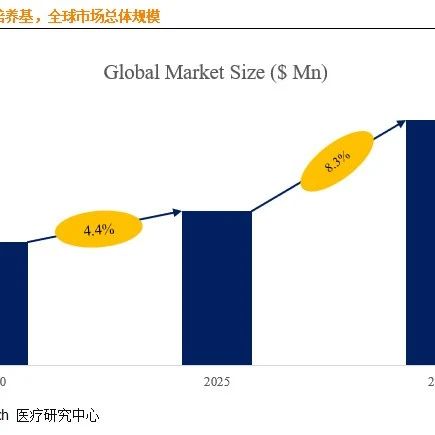
Core Viewpoint - The article discusses the advantages and market potential of serum-free cell freezing media, highlighting its growing importance in cell therapy, regenerative medicine, and biopharmaceuticals, while also addressing the challenges faced in its market adoption [1][2][3]. Group 1: Advantages of Serum-Free Cell Freezing Media - Serum-free cell freezing media offers clear composition, better batch stability, reduced immunogenicity, and lower contamination risks compared to traditional serum-containing freezing solutions [1]. - The media typically contains appropriate cryoprotectants (like DMSO), carbon sources, buffering agents, and cell-protective factors, effectively maintaining cell viability during freezing and thawing processes [1]. - The rapid market growth is driven by the increasing demand for high-value cell products such as stem cells, immune cells, and CAR-T therapies, which require high-quality freezing media [1][3]. Group 2: Market Challenges - The development of serum-free formulations has a high technical barrier, requiring extensive experimentation to optimize cell survival and functionality, leading to long development cycles and high costs [2]. - There is a lack of universal products due to the varying dependence of different cell types on freezing environments, which limits large-scale adoption [2]. - Cost sensitivity among users leads some to still prefer traditional serum-containing freezing solutions, and the absence of standardized product evaluation criteria creates information asymmetry for users [2]. Group 3: Future Market Trends - The serum-free cell freezing media market is expected to evolve towards customization, high performance, and compliance, with advancements in AI and high-throughput screening enabling more precise formulation development [3]. - Increasing regulatory scrutiny on cell-based therapies is pushing companies to expedite the registration and certification processes for serum-free products [3]. - The Asia-Pacific region, particularly China, is projected to be one of the fastest-growing markets due to supportive policies, biopharmaceutical investments, and technological advancements [3]. - According to QYResearch, the global serum-free cell freezing media market is expected to reach USD 410 million by 2031, with a compound annual growth rate (CAGR) of 8.3% in the coming years [3]. Group 4: Market Share and Key Players - Major manufacturers in the global serum-free cell freezing media market include Thermo Fisher, Merck, Zenoaq, Cytiva, and STEMCELL, with the top five companies holding approximately 70% of the market share as of 2024 [8]. - DMSO-containing products dominate the market, accounting for about 84.6% of the total share [10]. - Biopharmaceutical companies represent the largest downstream market, capturing around 53.9% of the demand for serum-free cell freezing media [12].
生物医药ETF(512290)当日上涨1.40%,创新药出海与治疗技术突破驱动行业复苏
Mei Ri Jing Ji Xin Wen· 2025-05-20 04:23
Core Viewpoint - The biopharmaceutical sector is experiencing growth driven by innovation and increasing domestic demand, with significant developments in various therapeutic areas and technologies [1][2][3]. Group 1: Market Performance - The Biopharmaceutical ETF (512290) opened with a gain of 1.40% [1]. - The CS Biomedicine Index (930726), which the ETF tracks, reflects the overall performance of listed companies in the biopharmaceutical, medical device, and healthcare service sectors in China [1]. Group 2: Industry Developments - The biopharmaceutical sector is witnessing a recovery in exports, with Q1 2025 pharmaceutical exports reaching $26.632 billion, a year-on-year increase of 4.39%, and exports to the U.S. growing by 9.6% [2]. - Companies like Maiwei Biotech are advancing differentiated innovation in R&D, with key clinical studies underway for core products [1][2]. - New products in the biopharmaceutical space, such as the C-reactive protein testing kit by New Industry Biotech, are enhancing the company's product line [1]. Group 3: Innovation and Growth Potential - The global market for gout treatment is projected to reach 1.42 billion patients by 2030, with significant opportunities for new drugs targeting URAT1 [2]. - The cell therapy sector is making strides with universal CAR-T technologies showing breakthroughs in efficacy and cost-effectiveness [2]. - The medical device sector is transitioning from manufacturing to intelligent manufacturing, with new technologies like pulsed field ablation (PFA) improving surgical safety and efficiency [3].
商业秘密|医疗企业利润承压,转型大健康能否让企业迅速“回血”?
Di Yi Cai Jing· 2025-05-17 13:46
Core Insights - The healthcare industry is increasingly shifting towards consumer health and wellness sectors, with companies like Kelun Pharmaceutical entering the market to diversify their revenue streams amid declining traditional business performance [1][6][7] - The demand for stem cell therapy is rapidly growing in China, with some treatments costing up to 1 million yuan, leading to significant profits for service providers [1][3] - The aesthetic medicine sector is witnessing a surge in new registrations, with nearly 10,000 new medical beauty-related companies registered in early 2023, indicating a trend of traditional pharmaceutical companies pivoting to this area for survival [3][4] Company Strategies - Kelun Pharmaceutical's chairman has publicly stated the company's commitment to the health and wellness sector, highlighting the need for diversification due to intense competition in traditional medical fields [1][6] - Many companies are forming new entities or acquiring existing firms to enter the aesthetic medicine market, leveraging their traditional business strengths in production or marketing [3][4] - Companies like Chuaning Bio, previously focused on antibiotic intermediates, are now developing anti-aging products, although their contribution to revenue remains minimal at this stage [7] Financial Performance - Kelun Pharmaceutical reported a 30% decline in revenue and a 43% drop in net profit in Q1 2025, prompting a focus on anti-aging products [6] - Four环医药's aesthetic medicine segment generated approximately 323 million yuan in revenue in the first half of 2024, a 66.4% increase year-on-year, contributing significantly to the company's overall income [8] - Companies in the biological materials sector, such as Guanhao Bio, are also seeing growth in cell technology services, with related revenues exceeding 10% of total income [8] Regulatory Environment - Recent regulatory guidelines from the National Medical Products Administration are clarifying the direction for the commercialization of cell therapies, emphasizing the need for a robust management system to ensure safety [9] - The aesthetic medicine field is currently seen as a simpler entry point for regenerative medicine technologies, although many practices may not meet the rigorous standards of true regenerative medicine [5][9]


研判2025!中国再生医学行业产业链图谱、政策、市场规模及未来趋势:先进医疗技术需求不断增长,全球再生医学市场规模加速扩容[图]
Chan Ye Xin Xi Wang· 2025-05-15 01:20
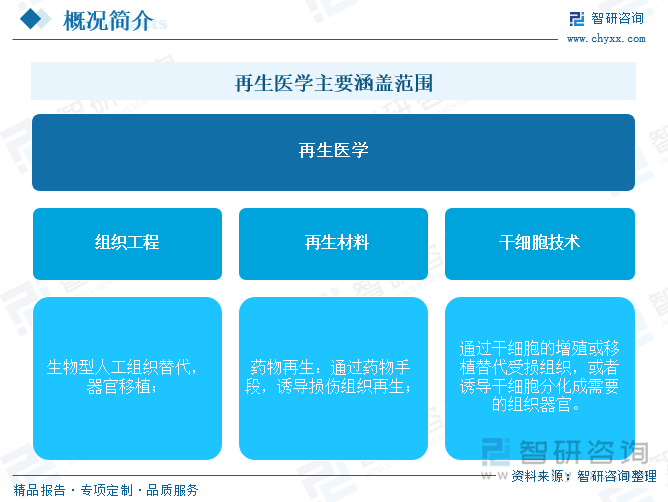
Industry Overview - Regenerative medicine (RM) utilizes biological and engineering theories to promote self-repair and regeneration of the body, or to construct new tissues and organs for repairing, regenerating, and replacing damaged tissues and organs [1][4] - The global regenerative medicine market is expanding, with the market size projected to grow from $20.04 billion in 2021 to $35.82 billion in 2024 [1][12] Market Status - Regenerative medicine is considered the "third medical revolution" following drug and surgical treatments, becoming a core component of life science strategies globally [6][12] - The industry includes upstream raw materials and equipment supply, midstream product R&D and production, and downstream application through medical institutions and aesthetic organizations [4][12] Policy and Regulatory Environment - Various countries have implemented policies to promote the development of regenerative medicine, such as the U.S. "21st Century Cures Act" and the EU's regulations on biotechnology [7][9] - In China, policies have been established to support the clinical application of regenerative medicine technologies, including the management of stem cell therapies and the promotion of innovative medical technologies [9][23] Market Competition - The regenerative medicine sector has attracted numerous companies, with major players including Johnson & Johnson, Bard, Geistlich, and domestic firms like Zhenghai Biological, Guanhou Biological, and Maipu Medical [16][18] - The market is characterized by a diverse range of products and applications, with companies focusing on specific therapeutic areas such as cancer treatment, tissue repair, and organ transplantation [18][20] Development Trends - The industry is witnessing technological integration and innovation, with advancements in 3D bioprinting, gene editing, and artificial intelligence enhancing treatment efficacy [22][24] - The dual drive of policy support and capital investment is accelerating the commercialization of regenerative medicine, with increasing coverage of medical insurance for regenerative products [23][24]


方大集团东北制药持续发力新药研发
Liao Ning Ri Bao· 2025-05-12 22:01
Core Insights - Liaoning Fangda Group Northeast Pharmaceutical's Q1 2025 report shows a significant increase in R&D investment by 88% year-on-year, indicating a strategic shift towards R&D-driven growth and quality enhancement over mere revenue increase [2][4] Group 1: Quality Improvement and Financial Health - Despite a slight revenue increase of 0.36% in Q1 2025, the company achieved steady improvement in operational quality through refined management and structural optimization [2] - Sales expenses decreased by 20.5% year-on-year, while management expenses also reduced, and R&D expenses rose strategically to 32 million yuan, reflecting precise resource allocation [2] - The company's debt-to-asset ratio fell to 58.82%, a decrease of 2.63 percentage points from the beginning of the year, indicating enhanced financial health and reduced short-term repayment risks [2] Group 2: Innovation and Product Development - Northeast Pharmaceutical is implementing a dual-driven strategy of "innovative drugs + generic drugs," creating a product matrix covering various therapeutic areas including neurology, digestion, endocrinology, oncology, and autoimmune diseases [3] - The company is accelerating its strategic layout in cutting-edge fields, particularly in tumor immunotherapy, with over 10 immune therapy products targeting diseases like pancreatic cancer and colorectal cancer [4] - A notable product in development is a TCR-T cell drug targeting KRASG12D, which is expected to be the first of its kind in China to enter Phase I clinical trials [4] Group 3: Global Market Expansion - The company is leveraging its international presence to enhance its global sales network, with its main products exported to over 100 countries and regions [5] - The global sales strategy has effectively diversified market risks and established sustainable revenue capabilities [5] - Although there may be short-term profit fluctuations due to increased R&D investments, the strategic transformation is showing initial positive results, positioning the company for future growth cycles as innovative therapies are commercialized [5]


中源协和: 中源协和细胞基因工程股份有限公司2024年年度股东大会会议资料
Zheng Quan Zhi Xing· 2025-05-09 09:12
Core Points - The company is holding a shareholder meeting on May 20, 2025, to discuss various agenda items including the independent director's report for 2024 and voting on resolutions [1][2] - The company reported a revenue of 1.585 billion yuan for 2024, a slight decrease of 0.27% compared to the previous year, with a net profit of 100 million yuan, down 5.73% [10][11] - The company has made significant progress in stem cell drug development, with multiple clinical trials approved and ongoing for new treatments [12][22] - The company is focusing on enhancing its governance structure and compliance, having received various quality management certifications [17][18] Company Operations - The board of directors has operated in compliance with relevant laws and regulations, approving 32 resolutions with a 100% approval rate [5][6] - The company has established a governance structure involving the shareholder meeting, board of directors, and supervisory board, ensuring clear responsibilities and effective operation [10] - The company has implemented a comprehensive quality management system, achieving ISO certifications in quality, environmental management, and occupational health and safety [17][18] Financial Performance - The company reported a total asset value of 5.249 billion yuan as of December 31, 2024, a decrease of 3% from the previous year [30] - The company’s cash flow from operating activities was negative 64 million yuan, indicating challenges in cash generation [30] - The company has initiated a share buyback program, repurchasing shares worth 200 million yuan, which is 199.32% of its net profit for the year [31] Future Plans - The company aims to deepen its research and development in stem cell therapies and expand its market presence both domestically and internationally [22][24] - The company plans to enhance its automated production capabilities and improve the efficiency of its cell therapy products [23] - The company is committed to building a comprehensive health management ecosystem for families, integrating various health services and insurance collaborations [25]

Bio-Techne(TECH) - 2025 Q3 - Earnings Call Transcript
2025-05-07 14:02
Financial Performance - The company reported a 6% organic revenue growth for Q3, with adjusted operating margin at 34.9% [5][20][22] - Adjusted EPS increased to $0.56 from $0.48 year-over-year, while GAAP EPS decreased to $0.14 from $0.31 [20] - Q3 revenue reached $316.2 million, a 6% increase year-over-year on an organic basis [20][21] - Total adjusted gross margin was 71.6%, slightly down from 71.9% last year [22] Business Segment Performance - The Protein Sciences segment achieved 7% organic revenue growth, driven by large pharma customers [10][26] - The Diagnostics and Spatial Biology segment reported 2% organic revenue growth, with strong performance in automated spatial instruments [13][27] - The GMP reagents business saw a trailing twelve-month growth of over 13% [12] Market Performance - North America experienced low single-digit growth, while Europe saw mid single-digit growth, and China faced a mid single-digit decline [21] - The biopharma market increased mid single digits, while the academic market remained flat [21][22] Company Strategy and Industry Competition - The company is focusing on balancing investments for future growth while driving operational efficiencies [5][19] - The FDA's recent emphasis on reducing animal testing is seen as an opportunity for the company's organoid solutions [11] - The company is well-positioned to mitigate tariff impacts through its global operational footprint [17][18] Management Commentary on Operating Environment and Future Outlook - Management expressed confidence in navigating uncertainties related to NIH funding and tariffs, expecting to mitigate impacts by the start of fiscal year 2026 [28][32] - The company anticipates a temporary slowdown in growth momentum to low single digits in Q4 due to macro uncertainties [32] - Management believes that potential NIH funding cuts may not significantly impact long-term growth expectations [29][68] Other Important Information - The company generated $41.1 million in cash from operations and returned $12.6 million in dividends and $100 million through stock buybacks [25] - A new share repurchase program has been authorized for up to $500 million [25] Q&A Session Summary Question: Impact of NIH funding on guidance - Management indicated that while there is uncertainty, they believe severe cuts to NIH funding are unlikely and would have an immaterial impact on long-term growth [29][68] Question: Clarification on pharma growth rates - Management clarified that pharma experienced double-digit growth in Q3, but they expect a step down in Q4 due to order timing and tariff impacts [36][41] Question: Tariff exposure and local manufacturing - Management explained that they have pathways to mitigate tariff impacts and emphasized the importance of their local manufacturing footprint in China [48][50] Question: Academic market headwinds - Management acknowledged headwinds in the academic market due to NIH funding uncertainties but expressed confidence in their competitive positioning [70][72] Question: Growth expectations for GMP reagents - Management noted that the cell and gene therapy product line has shown a trailing twelve-month growth of over 30% [80]
