
货币宽松

Search documents
华西证券:看好未来黄金价格
Ge Long Hui· 2025-11-04 00:16
Core Viewpoint - The ongoing U.S. government shutdown and the recent 25 basis point rate cut indicate a clearer outlook for future interest rate reductions, despite suppressed expectations for a December cut [1] Group 1: Economic Environment - The prolonged U.S. government shutdown continues to impact economic stability [1] - Geopolitical conflicts are accelerating the trend of "de-dollarization" globally, influencing central banks and investors to increase gold purchases [1] Group 2: Gold Market - Concerns over global currency and debt are benefiting gold as a trade direction linked to debt and monetary easing [1] - There is an optimistic outlook for future gold prices due to these economic conditions [1] Group 3: Investment Opportunities - The rise in gold prices is enhancing profit expectations for gold resource stocks [1] - Current valuations of gold stocks are considered low, presenting potential investment opportunities in this sector [1]

固收-债市行情升温能否持续?
2025-11-03 15:48
Summary of Key Points from the Conference Call Industry Overview - The conference call primarily discusses the bond market, focusing on the impact of central bank policies and market dynamics on fixed income securities, particularly government and credit bonds [1][2][4]. Core Insights and Arguments - **Central Bank Actions**: The central bank's resumption of bond purchases is viewed as a signal of renewed expectations for monetary easing, significantly boosting market sentiment despite limited liquidity increase [1][2][4]. - **Market Sentiment**: Short-term trading sentiment has exceeded expectations, with a notable recovery in market activity following the central bank's actions [2][3]. - **Institutional Buyers**: The primary buyers of long-term government bonds are brokerages and insurance companies, while public funds show limited expectations for future yield declines [3][4]. - **Credit Bond Performance**: The credit bond market has shown strong performance, with demand driven by insurance funds, wealth management products, and asset management products. Public funds have increased their allocation to credit bonds, particularly in the 3 to 5-year maturity range [8][9][11]. - **Yield Movements**: Recent yield declines for government bonds ranged from 8.9 to 11.5 basis points for 1 to 5-year maturities, while credit bonds showed more significant declines for maturities beyond two years [10][12]. Additional Important Insights - **Market Dynamics**: The bond market is expected to face challenges in forming a smooth bull market due to year-end redemption pressures and new public fund fee regulations [6][7]. - **Investment Strategies**: Recommendations include extending duration and focusing on 3 to 5-year AA/AA2 rated municipal bonds, which offer high coupon rates as a core allocation. Super long-term bonds should be approached cautiously, with a focus on liquidity [16][18]. - **Future Market Outlook**: The market's recovery is ongoing, but caution is advised as the absolute yield levels are currently in the historical top 25%, indicating potential risks of rapid increases [14][15]. - **ETF and Insurance Trends**: The growth of new ETF products is limited, and insurance premium growth is not expected to be significant in the fourth quarter, suggesting weaker demand for long-term bonds [17][18]. This summary encapsulates the key points discussed in the conference call, providing insights into the current state and future outlook of the bond market.
11月,预期在变,利率变不变?
CAITONG SECURITIES· 2025-11-02 12:42
1. Report Industry Investment Rating No specific industry investment rating is provided in the content. 2. Core Views of the Report - The 10 - year Treasury bond may break below 1.75% (250016) and reach a new low by the end of the year (250011 breaking below 1.6%). The trend of bond market interest rate decline will not change, as the fundamental weakness and monetary easing are the general trends, and the supply - demand relationship is becoming more favorable for the bond market [3]. - The final version of the fund sales new regulations may be released in November, and the impact on the bond market is considered to be positive overall. The incremental growth - stabilizing policies are mainly focused on next year. The fundamental stabilization still needs time, and the central bank is likely to maintain a supportive monetary policy stance. The supply - demand structure is becoming more favorable for the bond market [3][4]. 3. Summary According to the Table of Contents 3.1 10 - month Bond Market: Ready to Take Off - In October, the bond market interest rate fluctuated downward and the curve flattened. The main driving factor was the central bank's announcement to restart Treasury bond purchases, which increased the market's expectation of monetary easing. The 10 - year Treasury bond yield dropped 6.51bp to 1.80%, and the term spread between 1 - year and 10 - year Treasury bonds narrowed 8.24BP to 41.28BP [8]. - Other factors included Sino - US trade frictions and subsequent improvement in relations, the release of the Fourth Plenary Session of the 20th CPC Central Committee and the 14th Five - Year Plan, and the weakening of the fundamentals [8][9]. 3.2 Historical Performance of the Bond Market in November - Historically, in November, Treasury bond interest rates mostly declined, which was related to macro data pressure, policy implementation, and institutional cross - year allocation demands. There were only two significant adjustments in 2020 and 2022 [14]. - The release of October macro data has an impact on the November bond market trend, especially economic and financial data. The main factors to focus on in November include policy implementation, fundamental stabilization, monetary policy and capital flow, and cross - year allocation [16][17]. 3.3 Policy Implementation - **Fund Sales New Regulations**: The final version may be released in November, which may cause a structural impact on the bond market. However, the overall view on regulatory impact is positive. The demand for bonds will not disappear, and the central bank has set an upper limit for the 10 - year Treasury bond yield. After the policy is implemented, the bond market may experience a situation of "bad news is out" [18][19]. - **Incremental Growth - Stabilizing Policies**: There have been incremental policies in the broad - sense fiscal area to hedge against the economic downturn pressure. The subsequent focus is on next year, and attention should be paid to the possible impact of policy expectations [4]. 3.4 Fundamental Stabilization - Recently, the demand and price of rebar have shown signs of stabilization and rebound, but the cement price remains at a low level. The PPI and bill interest rates indicate that the effect of previous incremental policies is not significant, and the fundamental stabilization still needs time [4]. 3.5 Supportive Monetary Policy Stance - The central bank is likely to maintain a supportive monetary policy stance. The probability of an overall interest rate cut within the year is limited, but DR001 can decline to OMO - 20bp, and the market expectation can further ferment. The restart of Treasury bond purchases is beneficial to the bond market, and the long - term and ultra - long - term yield spreads can continue to compress [4]. 3.6 Supply - Demand Structure Favors the Bond Market - **Supply Side**: The supply of government bonds is decreasing, and credit is relatively sluggish, which is conducive to pushing down interest rates [4]. - **Demand Side**: The central bank's restart of bond purchases, the low - level replenishment of institutional duration, and the cross - year allocation market are all beneficial to the bond market. The cross - year allocation will not be absent, and non - bank institutions have shown a trend of net buying in the secondary market recently [4].
世界黄金协会:三季度各国央行加快购金步伐,黄金ETF资金流入创新高
Hua Er Jie Jian Wen· 2025-10-30 09:31
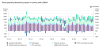
Core Insights - Gold prices are surging while demand is increasing significantly, with central banks accelerating gold purchases and gold ETF inflows reaching record highs [1][3][4] Central Bank Purchases - In Q3, central banks bought 220 tons of gold, a 28% increase from the previous quarter, reversing the earlier decline in 2023 [1] - Kazakhstan's central bank emerged as the largest single buyer, while Brazil's central bank made its first gold purchase in over four years [1] - By September, central banks had cumulatively increased their gold reserves by 634 tons in 2023, which is lower than the previous three years but significantly above the average level before the Russia-Ukraine conflict in 2022 [4] Gold Demand Forecast - The World Gold Council forecasts that global gold demand will reach 1,313 tons in Q3 2025, with a total value of $146 billion, marking the highest quarterly demand on record [1] - The annual central bank gold purchases are expected to range between 750 to 900 tons for 2025 [3] Gold ETF Inflows - Q3 saw unprecedented inflows into gold ETFs, totaling $26 billion, driven by investor concerns over missing out on rising prices and the asset's dual role as a safe haven and hedge [1][7] - Expectations of further monetary easing by the Federal Reserve and concerns about the health of the U.S. economy have led to increased investor interest in gold [7]

无畏金价历史新高!全球央行三季度加速购金
Sou Hu Cai Jing· 2025-10-30 08:45
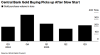
Core Insights - Central banks accelerated gold purchases in Q3, with a 28% increase in buying volume compared to the previous quarter, totaling 220 tons, reversing the earlier slowdown in 2023 [1][4] - Kazakhstan's central bank emerged as the largest single buyer, while Brazil's central bank made its first gold purchase in over four years [1] - Over the past year, central banks collectively increased their gold reserves by 634 tons, which is lower than the average levels seen in the past three years but significantly higher than pre-2022 levels [1] Group 1 - Geopolitical tensions, persistent inflation, and uncertainties in global trade policies have heightened demand for safe-haven assets like gold [4] - Gold prices have surged approximately 50% this year, reaching a record high of over $4,380 per ounce earlier this month, driven partly by central bank purchases [4] - The World Gold Council noted that 66% of the demand in the latest quarter remains unreported, indicating ongoing strategic accumulation by central banks [4] Group 2 - Gold-backed exchange-traded funds (ETFs) saw record inflows of $26 billion in Q3, driven by expectations of further monetary easing and concerns about the health of the U.S. economy [5] - Despite high gold prices leading to the lowest jewelry consumption since 2020, consumer spending on jewelry increased by 13% year-on-year, reaching $41 billion [5] - The World Gold Council has adjusted its annual forecasts due to the impact of high prices on jewelry demand, although the overall trend for gold as a hedge remains strong [5]
美联储再次降息25个基点 国际金价震荡下行
Zhong Guo Jing Ying Bao· 2025-10-30 04:49
Core Points - The Federal Reserve announced a 25 basis point interest rate cut, lowering the federal funds rate target range to 3.75% to 4%, which aligns with market expectations [1] - Following the announcement, spot gold prices briefly fell below $3930 per ounce, despite reaching a high of $3965.84 per ounce earlier [1] - The Fed will end its quantitative tightening on December 1, but Chairman Powell expressed skepticism about further rate cuts in December, leading to reduced market expectations for additional monetary easing [1]
分析师:鲍威尔的言论对股市造成短暂冲击
Ge Long Hui A P P· 2025-10-29 22:50
Core Viewpoint - The recent interest rate cut was anticipated by the market, but Powell's comments have dampened optimism regarding another cut in December [1] Group 1: Federal Reserve and Interest Rates - Powell's statements reflect internal tensions within the Federal Reserve regarding further rate cuts, especially with inflation remaining high and exceeding the Fed's own targets [1] - Investors should expect inflation to remain elevated for an extended period, which will limit the extent of further monetary easing [1] Group 2: Market Reaction - Following Powell's remarks, the stock market experienced a pullback as investors had initially expected more rate cuts to provide a boost [1] - This reaction is seen as temporary, with the underlying driver of the stock market still being corporate earnings, which remain strong [1] - The company maintains a fully invested position in its portfolio despite the market fluctuations [1]
贵金属策略报告-20251029
Shan Jin Qi Huo· 2025-10-29 10:20
Report Industry Investment Rating No relevant content provided. Core Views of the Report - Today, precious metals rebounded from a low level. The main contract of Shanghai Gold closed down 0.55%, while the main contract of Shanghai Silver closed up 1.91%. The short - term outlook for precious metals is expected to be volatile and bullish, with a high - level oscillation in the medium term and a step - by - step upward trend in the long term [3]. - The gold price trend is the anchor for the silver price. In terms of capital, the net long position of CFTC silver and the iShare silver ETF increased slightly. In terms of inventory, the recent visible inventory of silver decreased slightly [6]. Summary by Relevant Catalogs Gold - **Core Logic**: In the short - term, regarding risk aversion, there may be a meeting between China and the US, easing the risk of a trade war. The risk of stagflation in the US economy is increasing, with weak employment and moderate inflation, and the market's expectation of the Fed's interest - rate cut is being realized. In terms of the risk - aversion attribute, although the trade - war risk has eased, geopolitical fluctuations still exist. Regarding the monetary attribute, the US consumer confidence in October dropped to a six - month low, and the Fed may stop shrinking its balance sheet in the coming months. The market expects a 25 - basis - point interest - rate cut by the Fed in October with a probability of over 90%, and about 2 more cuts within the year. The US dollar index and US Treasury yields are oscillating strongly. In terms of the commodity attribute, the CRB commodity index is oscillating downward, and the appreciation of the RMB is negative for domestic prices [3]. - **Strategy**: Conservative investors should wait and see, while aggressive investors can buy on dips. With the Fed's decision and the China - US talks this week, risk management is recommended [4]. - **Data**: Various data on gold, including international and domestic prices, basis and spreads, positions, inventories, etc., are presented with their changes compared to the previous day and the previous week [4]. - **Net Position Ranking**: The top 10 net - position rankings of futures companies' members in Shanghai Gold on the Shanghai Futures Exchange are provided, including the rankings of long and short positions [5]. Silver - **Core Logic**: The gold price trend is the anchor for the silver price. There are slight increases in the net long position of CFTC silver and the iShare silver ETF, and a slight decrease in the recent visible inventory of silver [6]. - **Strategy**: Conservative investors should wait and see, while aggressive investors can buy on dips. With the Fed's decision and the China - US talks this week, risk management is recommended [7]. - **Data**: Various data on silver, including international and domestic prices, basis and spreads, positions, inventories, etc., are presented with their changes compared to the previous day and the previous week [7]. - **Net Position Ranking**: The top 10 net - position rankings of futures companies' members in Shanghai Silver on the Shanghai Futures Exchange are provided, including the rankings of long and short positions [8]. Fundamental Key Data - **Fed - Related Data**: Data such as the federal funds target rate, discount rate, reserve balance rate, total assets of the Fed, M2, etc., are presented with their changes compared to the previous week [9]. - **Other Key Indicators**: Key indicators including various interest - rate spreads, inflation data, economic growth data, labor - market data, real - estate market data, consumption data, industrial data, and trade data are provided with their changes [11]. - **Central Bank Gold Reserves and Related Ratios**: Data on central bank gold reserves of different countries, the proportion of different currencies in IMF foreign exchange reserves, the ratio of gold to foreign exchange reserves, and other related data are presented [13]. - **Risk - Aversion and Commodity Attributes**: Data on the geopolitical risk index, VIX index, CRB commodity index, and offshore RMB are provided with their changes [13]. - **Fed's Interest - Rate Expectations**: The expected probabilities of the Fed's interest - rate ranges at different meeting dates are presented [14].
债市日报:10月29日
Xin Hua Cai Jing· 2025-10-29 07:46
Core Viewpoint - The bond market experienced volatility on October 29, with short-term instruments performing better initially, but long-term bonds weakened towards the end of the trading day. The People's Bank of China (PBOC) injected a net amount of 419.5 billion yuan into the market, indicating a focus on liquidity management and potential monetary easing [1][6]. Market Performance - The majority of government bond futures closed higher, with the 30-year main contract down 0.27% at 115.83, while the 10-year contract rose 0.13% to 108.57. The 5-year and 2-year contracts also saw slight increases [2]. - The interbank bond yield initially decreased before rising again, with the 10-year China Development Bank bond yield up 0.7 basis points to 1.8875% [2]. International Market Trends - In North America, U.S. Treasury yields showed mixed results, with the 2-year yield up 0.37 basis points to 3.486% and the 10-year yield down 0.01 basis points to 3.976% [3]. - In Asia, Japanese bond yields mostly increased, with the 10-year yield rising 0.7 basis points to 1.652% [4]. Primary Market Activity - Agricultural Development Bank of China issued financial bonds with yields of 1.4811% for 1.074 years, 1.7549% for 3 years, and 1.9480% for 10 years, with bid-to-cover ratios indicating strong demand [5]. Liquidity and Funding - The PBOC conducted a 557.7 billion yuan reverse repo operation at a fixed rate of 1.40%, resulting in a net injection of 419.5 billion yuan after accounting for maturing repos [6]. - Short-term Shibor rates declined across the board, with the overnight rate down 5.5 basis points to 1.414% [6]. Institutional Insights - Different institutions exhibit varying preferences for bond allocations, with banks focusing on interest rate bonds and insurance companies favoring low-risk bonds to meet liability requirements [7][8]. - The resumption of government bond trading by the PBOC is seen as a move to support fiscal efforts and enhance liquidity for financial institutions, confirming a loose monetary stance [8].
东方汇理资管:市场对人工智能主题的大规模资本开支计划过于乐观
Zhi Tong Cai Jing· 2025-10-29 06:49
智通财经APP获悉,东方汇理资产管理公司近日发布10月投资观点,其中提到,美国市场以及某种程度 上的全球股市一直受到人工智能主题相关的利好消息带动,但东方汇理资管认为,市场对人工智能主题 的大规模资本开支计划过于乐观。关键问题在于:如果出现更廉价(例如"深度求索(DeepSeek)时刻")且 更快速的技术,投资回报将有何影响?此外,财政扩张和央行降息亦令乐观情绪升温。不过,这构成最 大的脆弱因素。因此,风险管理日趋重要。与此同时,东方汇理资管正物色一些更细致的主题,例如日 本企业改革、英国缔造收益,以及欧洲财政刺激(有利中小型股)。整体而言,仍聚焦于优质业务模式及 估值。 东方汇理资管称,由于在经济占主导地位的消费疲弱,因此美国经济活动可能在今年下半年放缓。此 外,预期通胀将在短期内保持一定的韧性。即使在英国,英伦银行亦正致力应对物价压力升温的情况。 然而,欧洲的环境略有不同,通胀目前受控。风险资产方面,虽然部分领域的估值偏高,但考虑到基本 因素及盈利潜力,维持略为正面的风险立场(不作出进取的预测)。另一方面,东方汇理资管重申需要对 冲股票,并配置于黄金等其他可为投资组合分散风险/带来稳定效益的工具。 美国债 ...