
车路云一体化

Search documents
广汽、一汽等均布局“车路云一体化”迎阶段性成果
Mei Ri Jing Ji Xin Wen· 2025-10-23 18:12
Core Insights - GAC Group collaborates with 14 domestic and international automotive and autonomous driving companies to participate in a demonstration event for "Vehicle-Road-Cloud Integration" organized by the National Intelligent Connected Vehicle Innovation Center [1] - The event showcased two key application scenarios: "Cloud-Supported Automatic Emergency Braking" and "Cloud-Supported Green Wave Speed Guidance" [1] - The "Vehicle-Road-Cloud Integration" initiative is expected to significantly support the commercialization of smart public transport and unmanned delivery systems, with a projected industry scale exceeding 300 billion yuan by 2030 [1] Industry Overview - "Vehicle-Road-Cloud Integration" utilizes advanced information and communication technologies to create a cyber-physical system that integrates people, vehicles, roads, and clouds, enhancing traffic safety, energy efficiency, comfort, and operational efficiency [2] - This system allows vehicles to interact with roadside devices and cloud servers, improving safety through real-time risk information sharing and decision-making support [2] - The initiative represents an upgrade from the previous "Vehicle-Road Collaboration" concept, focusing on a holistic design for better synergy between smart vehicles and traffic systems [2] Technological Development - Various regions are actively promoting "Vehicle-Road-Cloud Integration" technology, with significant investments such as Beijing's 9.9 billion yuan project for smart road upgrades [3] - There is ongoing debate in the industry regarding the merits of "Single Vehicle Intelligence" versus "Vehicle-Road-Cloud Integration," with some companies advocating for the former due to lower costs and shorter implementation times [3][4] - GAC Group emphasizes that "Vehicle-Road-Cloud Integration" is a new phase in smart vehicle development, enhancing existing single-vehicle systems with digital infrastructure to overcome perception limitations [3] Market Challenges - Despite policy support and expanding pilot cities, "Vehicle-Road-Cloud Integration" lags behind single-vehicle intelligence in terms of industry enthusiasm, market acceptance, and technological maturity [5] - High costs and long infrastructure development cycles pose significant challenges, leading some companies to pivot towards more popular AI technologies [5][6] - The reliance on government investment for infrastructure and the current inadequacy of roadside technology to meet autonomous driving needs are critical barriers to progress [5][6] Future Directions - Experts suggest a phased approach to promoting "Vehicle-Road-Cloud Integration," starting with closed environments to refine technology before broader implementation [6] - Vehicles must possess standalone intelligent driving capabilities to ensure effective integration with roadside systems, creating a commercial ecosystem that enhances traffic safety [6]

专访 || 清华大学车辆与运载学院教授李升波:我们正在推动一条全新的端到端自动驾驶路线
Zhong Guo Qi Che Bao Wang· 2025-10-23 09:58
Core Insights - The recent regulatory changes in the intelligent connected vehicle sector aim to enhance safety and set higher standards for products, responding to market and consumer concerns [1][4] - The concept of "intelligent driving equity" reflects the industry's ambition to make advanced features accessible to lower-end models, but safety must remain the priority [2][4] - The distinction between assisted driving and autonomous driving is crucial, as current mass-produced vehicles only offer assisted driving capabilities, requiring driver supervision [3][4] Regulatory Developments - New policies have been introduced, including a notice on product recalls and safety standards for intelligent connected vehicles, indicating a shift towards stricter oversight [1][4] - The government emphasizes the need for accurate marketing and consumer education regarding intelligent driving features to ensure public safety [4] Industry Trends - The industry has seen a shift from aggressive marketing of intelligent driving technologies to a more cautious approach, reflecting the need for safety and reliability [2][4] - The evolution of intelligent driving technology is marked by a transition from rule-based systems to data-driven, end-to-end solutions, enhancing performance and adaptability [5][6] Technological Innovations - The end-to-end approach in autonomous driving leverages neural networks for all system modules, aiming for a direct mapping from perception to control commands [6][7] - China's exploration of end-to-end technology has led to the development of unique solutions that address local challenges, such as data scarcity and computational limitations [8][9] Future Directions - The integration of "vehicle-road-cloud" systems is proposed as a solution to enhance the capabilities of autonomous driving, allowing for better data collection and real-time decision-making [13][14] - The focus on ensuring safety in extreme scenarios is critical, as the consequences of failures in autonomous driving can be severe [16]

“十四五”答卷·创新驱动产业蝶变|技术创新助推中国新能源汽车驶向全球
Ke Ji Ri Bao· 2025-10-23 09:15
Core Insights - The 2025 Intelligent Connected Vehicle Conference showcased advancements in China's smart vehicle industry, highlighting innovations in autonomous driving and vehicle operation systems [1] - China's new energy vehicle (NEV) industry has achieved significant breakthroughs in production scale, core technologies, and supply chain ecosystems during the 14th Five-Year Plan, leading to a rise in global exports [1][3] Group 1: Industry Developments - The conference featured a fully autonomous Robotaxi operation model and a new generation of autonomous vehicles equipped with 33 high-precision sensors for comprehensive environmental recognition [1] - The integration of domestic chips in vehicles is emphasized, showcasing a model that incorporates products from ten leading Chinese chip manufacturers [1] - The Ministry of Industry and Information Technology noted the establishment of a complete industrial system encompassing smart cockpits, autonomous driving, and connected cloud control [1] Group 2: Technological Innovations - A new material developed by the Chinese Academy of Sciences enables a flexible battery that can withstand 20,000 cycles, improving energy density by 86% when used in composite cathodes [2] - Over the past five years, the charging efficiency of power batteries in China has increased by more than four times, with a domestic vehicle localization rate exceeding 95% [3] Group 3: Smart Mobility Transformation - The definition of "automobile" is evolving into a smart mobility terminal, integrating advanced voice interaction systems and real-time monitoring technologies for driver safety and comfort [3] - The automotive industry is entering an era of deep exploration in artificial intelligence, with innovations leading to five major transformations in new vehicles [3] Group 4: Collaborative Innovation - The "vehicle-road-cloud integration" system addresses challenges in signal recognition for autonomous driving, enhancing safety through real-time traffic information sharing [4] - The demand for over 2,000 chips per vehicle is accelerating the growth of the electronic information manufacturing sector [4] - The NEV sector is projected to exceed 2 trillion yuan in consumption by 2024, driving rapid development across the supply chain and related industries [5] Group 5: Global Market Impact - In the first nine months of the year, China's NEV exports reached 1.758 million units, marking a year-on-year increase of 89.4%, with over 5,000 vehicles exported daily [5] - Chinese brands are progressively establishing a presence in the global market, contributing significantly to the electrification transformation of the automotive industry [5]

如何用“一张网”给汽车装上“最强大脑”?(附图片)
Xin Lang Cai Jing· 2025-10-22 23:52
Core Insights - The 2025 World Intelligent Connected Vehicle Conference highlighted the integration of "vehicle-road-cloud" as a key development path for smart connected vehicles, emphasizing the transformation of vehicles from mere transportation tools to intelligent terminals [4][5][8] - The Chinese government is actively promoting the development of smart connected vehicles through policy frameworks, standardization, and infrastructure initiatives, aiming for high-quality industry growth [5][10] Policy Initiatives - Smart connected vehicles are recognized as a crucial breakthrough for the automotive industry's transformation, integrating with AI, new energy, and next-generation information technologies [5][10] - The Ministry of Industry and Information Technology (MIIT) announced plans to develop a "14th Five-Year" plan for the smart connected vehicle industry, focusing on high-quality development and systematic guidance for future upgrades [5][10] - MIIT has released 88 national and industry standards, including nearly 10 international standards for autonomous driving systems, to ensure product safety and reliability [6][7] Technological Advancements - The "vehicle-road-cloud" integration is described as a distributed supercomputer that enhances vehicle perception and decision-making through real-time data sharing and processing [8][9] - The deployment of intelligent roadside units (RSUs) in 20 cities has enabled real-time communication of critical information, supporting advanced autonomous driving capabilities [8][9] - The system allows for improved traffic management and coordination, shifting from isolated vehicle decisions to a more holistic, system-wide optimization approach [9][10] Application Development - The smart connected vehicle industry is transitioning from pilot projects to large-scale commercial applications, driven by technological breakthroughs and supportive policies [10][11] - As of October 2025, over 35,000 kilometers of testing roads have been established, with more than 11,000 RSUs deployed and over 10,000 test licenses issued [10][11] - Major cities like Beijing and Guangzhou are leading the way in developing advanced autonomous driving demonstration zones and regulatory frameworks to support the "vehicle-road-cloud" integration [11][12] Opportunities and Challenges - The rise of smart connected vehicles presents significant opportunities for the information and communication industry, particularly in enhancing network connectivity and data utilization [13] - However, challenges such as fragmented infrastructure, immature business models, and incomplete legal frameworks pose risks to the industry's healthy development [13][14] - The need for standardized protocols and unified commercial strategies is critical to overcoming barriers and ensuring seamless integration across regions [14]

智能网联汽车多场景落地
Ren Min Ri Bao· 2025-10-22 22:45
Core Insights - The 2025 World Intelligent Connected Vehicle Conference concluded on October 18 in Beijing, showcasing new technologies, products, models, and ecosystems in the intelligent connected vehicle sector [1] - The conference highlighted the rapid development of China's intelligent connected vehicle industry, which has entered a new phase of multi-scenario applications [1] Group 1: Autonomous Driving Applications - In park shuttle scenarios, driverless minibuses have achieved "no safety operator" operation, with companies like WeRide deploying Robobus for conference attendees [1] - WeRide's driverless minibuses are operational in multiple countries, including Singapore and the UAE, marking significant milestones in commercial applications [1] - Didi Autonomous Driving showcased a new generation of autonomous vehicles equipped with 33 sensors, capable of 360-degree perception in various complex scenarios [2] Group 2: Logistics and Delivery Innovations - The X3 container truck from New Stone Age demonstrated automated loading and unloading capabilities, completing the process in just 28 seconds, enhancing efficiency in logistics [3] - The X3 truck can carry 400-500 packages per trip, catering to urban last-mile delivery needs within a 15-kilometer radius [3] - The conference also introduced ten functional scenarios for the "vehicle-road-cloud integration" pilot, supporting commercial applications in smart public transport, autonomous delivery, and urban logistics [3] Group 3: Industry Development and Future Plans - The Ministry of Industry and Information Technology reported significant progress in building a complete industrial system for intelligent connected vehicles, including smart cockpits and autonomous driving [4] - Future plans include the development of the "14th Five-Year" plan for the intelligent connected new energy vehicle industry, aimed at promoting high-quality industry development [4]
广汽、一汽等均布局,“车路云一体化”迎阶段性成果,万亿赛道将迎来爆发期?
3 6 Ke· 2025-10-22 12:39
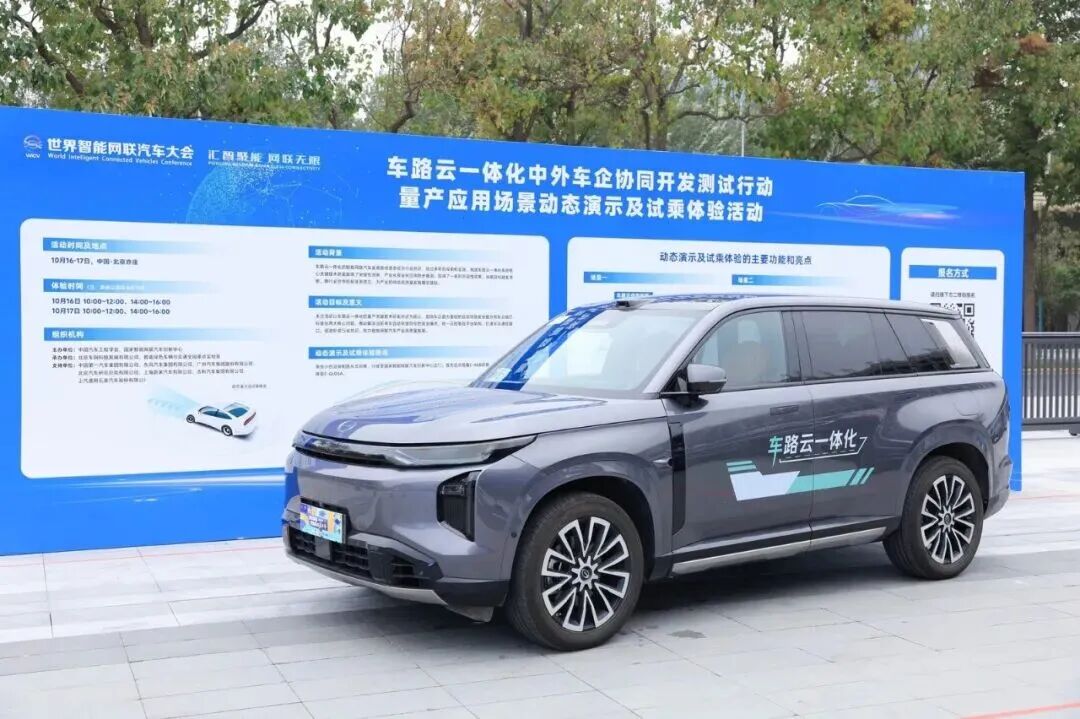
Core Viewpoint - GAC Group collaborates with 14 domestic and international automotive and autonomous driving companies to participate in a demonstration event for "Vehicle-Road-Cloud Integration," showcasing applications like "Cloud-Supported Automatic Emergency Braking" and "Cloud-Supported Green Wave Speed Guidance" [1] Group 1: Industry Development - The "Vehicle-Road-Cloud Integration" initiative has gained traction due to multiple factors including policy support, technological advancements, and market demand, with major players like FAW Group, Geely, and Dongfeng also making strategic moves in this area [1] - By 2030, the smart transportation industry in China is expected to exceed 300 billion yuan, with the economic value generated by "Vehicle-Road-Cloud Integration" projected to reach 25,825 billion yuan by 2030 [1] Group 2: Technical Insights - "Vehicle-Road-Cloud Integration" utilizes advanced information and communication technologies to create a cohesive system that enhances traffic safety, energy efficiency, and comfort by integrating vehicles with roadside devices and cloud servers [2] - The system allows for real-time communication of critical risk information beyond the driver's line of sight, significantly improving safety in complex driving scenarios [4] Group 3: Challenges and Controversies - There is ongoing debate in the industry regarding the reliance on "Single Vehicle Intelligence" versus "Vehicle-Road-Cloud Integration," with some companies emphasizing the high costs and long timelines associated with smart road construction [5] - The current state of "Vehicle-Road-Cloud Integration" is hindered by its dependence on government infrastructure investment and the need for improved roadside technology to meet autonomous driving requirements [8][9] - The integration faces challenges such as high costs for smart road upgrades and low connectivity rates for public transport vehicles, which may hinder the formation of a commercial closed loop [8][9]
数绘未来出行,车路云一体化可感可知
Bei Jing Ri Bao Ke Hu Duan· 2025-10-22 11:14
Core Insights - The article discusses the advancements in future mobility, particularly focusing on autonomous driving, unmanned logistics, and smart transportation systems in Jiaxing Tongxiang, a pilot city for "vehicle-road-cloud integration" [1][3] Group 1: Autonomous Vehicles - Unmanned patrol vehicles have been recently deployed in various scenic spots and roads, serving multiple functions such as intelligent patrolling, security promotion, and emergency response [1][3] - The latest unmanned patrol vehicle developed by Shiyuan Zhixing features L4-level autonomous driving capabilities, equipped with 2 laser radars, 11 cameras, and sensors for 360° environmental perception [3] Group 2: Industry Development - Shiyuan Zhixing has over 50 patents and has deployed more than 6,800 unmanned vehicles across the country, recognized as a highly investable company during the Global Digital Trade Expo [3] - Jiaxing Tongxiang has attracted over 60 enterprises in the intelligent connected vehicle manufacturing sector, creating a comprehensive industrial chain supported by the national supercomputing center "Wuzhen Light" [5] Group 3: Smart Infrastructure - The city initiated a smart road enhancement project in June, focusing on the G320 national road segment, deploying intelligent network infrastructure and a vehicle-road-cloud collaborative system [6] - The integration of 5G-A technology enables real-time traffic event recognition and dynamic response, significantly improving emergency response efficiency [6] Group 4: Legislative Support - Jiaxing is advancing the legislative process for the "Regulations on the Testing and Application of Intelligent Connected Vehicles," providing legal support for unmanned vehicle operations and promoting cross-regional license recognition [7]

广汽、一汽等均布局!“车路云一体化”迎阶段性成果,万亿赛道将迎来爆发期?
Mei Ri Jing Ji Xin Wen· 2025-10-22 10:04
Core Viewpoint - GAC Group collaborates with 14 domestic and international automotive and autonomous driving companies to participate in a demonstration event for "Vehicle-Road-Cloud Integration," showcasing key applications like "Cloud-Supported Automatic Emergency Braking" and "Cloud-Supported Green Wave Speed Guidance" [1] Group 1: Industry Developments - The "Vehicle-Road-Cloud Integration" initiative aims to unify people, vehicles, roads, and cloud systems using advanced information and communication technologies, enhancing traffic safety and efficiency [2] - The initiative has gained traction due to supportive policies, technological advancements, and market demand, with major players like FAW Group, Geely, and Dongfeng also making strategic moves [1] - By 2030, the smart transportation industry in China is projected to exceed 300 billion yuan, with the economic value of "Vehicle-Road-Cloud Integration" expected to reach 25,825 billion yuan [1] Group 2: Application Scenarios - GAC Group's "Cloud-Supported Automatic Emergency Braking" can provide real-time risk information and decision-making support to enhance driving safety in complex scenarios [3] - "Vehicle-Road-Cloud Integration" is an upgraded version of the previously discussed "Vehicle-Road Collaboration," focusing on a holistic design for better synergy between smart vehicles and traffic systems [3] Group 3: Challenges and Controversies - There is ongoing debate in the industry regarding the reliance on "Single Vehicle Intelligence" versus "Vehicle-Road-Cloud Integration," with some companies emphasizing the high costs and long timelines associated with smart road construction [4] - The current state of "Vehicle-Road-Cloud Integration" is hindered by its dependence on government infrastructure investment and the need for improved roadside technology to meet autonomous driving requirements [7][6] - The high costs associated with implementing "Vehicle-Road-Cloud Integration" may deter consumer adoption, as potential increases in vehicle prices could lead to a lack of commercial viability [7][6] Group 4: Future Directions - Experts suggest a phased approach to promoting "Vehicle-Road-Cloud Integration," starting with closed environments to refine technology before broader implementation [8] - Achieving a balance between "Single Vehicle Intelligence" and "Vehicle-Road-Cloud Integration" is essential for developing a comprehensive and effective transportation system [4]
智能网联汽车成果密集发布
Zhong Guo Qi Che Bao Wang· 2025-10-22 02:53
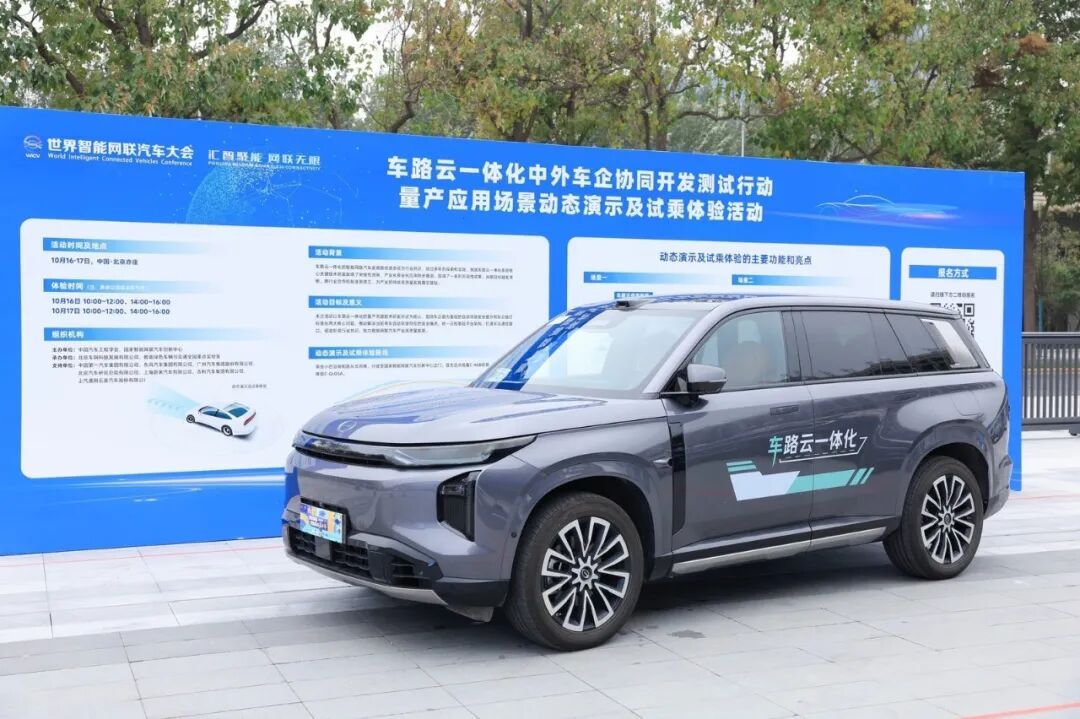
Group 1: Core Insights - The 2025 World Intelligent Connected Vehicle Conference showcased numerous advancements in intelligent connected vehicles, particularly the "Vehicle-Road-Cloud Integration" application pilot results [1] - The pilot identified ten key functional scenarios for promotion, including traffic signal information services and collaborative emergency avoidance, which will support various smart application systems [1] - Three action plans were announced to accelerate the implementation of these ten functional scenarios and advance the "Vehicle-Road-Cloud Integration" industry [1] Group 2: Communication Technology and Standards - The "Intelligent Connected Vehicle Network Technology Roadmap (2025-2030)" was released, emphasizing the need for a comprehensive network system to meet the demands of intelligent connected vehicles [2] - A robust security framework is required to address external threats, involving a full-link defense system and enhanced network security capabilities [2] - The China Automotive Technology and Research Center published ten major achievements in standardization, including the establishment of a standard system and the development of mandatory national standards [3] Group 3: Industry Collaboration and Future Outlook - The conference concluded with the signing of cooperation agreements for the "Ten Cities, Ten Vehicles" traffic management information service, aiming to enhance data quality for commercial production [4] - A new paradigm for "data sharing" in autonomous driving was introduced, promoting data circulation and integration [4] - The continuous breakthroughs in intelligent connected vehicle technology are expected to lead to a smarter, more efficient, and safer transportation era, redefining travel experiences and contributing to sustainable urban development [4]
人工智能成为智能网联汽车产业变革的“关键引擎”
Xin Lang Cai Jing· 2025-10-21 23:23
Core Insights - The smart connected vehicle industry is undergoing a significant transformation, reshaping product forms, industrial patterns, infrastructure, and mobility methods [1] - The integration of artificial intelligence in the automotive sector is becoming a core variable for enterprise survival and development, with a focus on leveraging current advantages for future leadership [2] - Despite progress, the domestic smart connected vehicle industry faces challenges such as insufficient policy coordination, technological silos, and supply chain risks [3] Industry Development - In the first half of 2025, China's new energy vehicle sales reached 6.937 million units, a year-on-year increase of 40.3%, with a market penetration rate of 44.3% [1] - The market share of new passenger cars equipped with L2-level assisted driving functions has exceeded 62%, indicating a leading level of intelligence globally [1] - The automotive industry's transformation towards electrification, intelligence, and low carbon is driving profound changes in the supply chain and industrial ecosystem [1] Technological Trends - The development path of automotive intelligence is being reshaped, with end-to-end large model-based autonomous driving technology becoming a focal point for industry layout [1] - The concept of "embodied intelligence" is emerging, where vehicles are redefined as integrated systems combining a "super brain" and "physical body" [2] - The transition from decentralized to centralized control in vehicle systems is essential for the development of L3 and above autonomous driving [2] Challenges and Recommendations - The smart connected vehicle sector faces challenges including standardization, technological maturity, cost control, and safety risks [2][3] - Recommendations include accelerating the definition of L3-level responsibility boundaries, unifying standards for vehicle-road-cloud integration, and establishing an industry-level autonomous driving data pool [3] - Emphasizing self-research and open collaboration is crucial for industry growth, as no single company can dominate the multi-faceted fields involved in smart connected vehicles [3]