
近岸外包

Search documents
Agnico Eagle Mines (AEM) Sells 38,002,589 Common Shares of Orla Mining Ltd
Insider Monkey· 2025-09-11 07:31
Core Insights - Artificial intelligence (AI) is identified as the greatest investment opportunity of the current era, with a strong emphasis on the urgent need for energy to support its growth [1][2][3] - A specific company is highlighted as a key player in the AI energy sector, owning critical energy infrastructure assets that are essential for meeting the increasing energy demands of AI technologies [3][7][8] AI and Energy Demand - AI technologies, particularly large language models like ChatGPT, are extremely energy-intensive, with data centers consuming energy equivalent to that of small cities [2] - The energy requirements for AI are expected to escalate, leading to potential crises in power grids and rising electricity prices [2][6] Investment Opportunity - The company in focus is positioned to benefit from the surge in demand for electricity driven by AI, making it a unique investment opportunity that is currently undervalued [3][10] - This company is debt-free and has significant cash reserves, equating to nearly one-third of its market capitalization, which positions it favorably compared to other energy firms burdened with debt [8][10] Infrastructure and Market Position - The company plays a crucial role in U.S. LNG exportation and is involved in large-scale engineering, procurement, and construction projects across various energy sectors, including nuclear energy [7][8] - It is noted for its ability to execute complex projects, making it a vital player in the future of America's energy strategy [7][8] Market Recognition - Wall Street is beginning to take notice of this company as it quietly capitalizes on the growing demand for energy without the inflated valuations seen in many tech stocks [8][10] - The company also holds a significant equity stake in another AI-related venture, providing investors with indirect exposure to multiple growth opportunities in the AI sector [9][10]



T-Mobile US, Inc. (TMUS) Is Key To New iPhone Deals, Says Jim Cramer
Insider Monkey· 2025-09-10 17:29
Core Insights - Artificial intelligence (AI) is identified as the greatest investment opportunity of the current era, with a strong emphasis on the urgency to invest in AI technologies now [1][13] - The energy demands of AI technologies are highlighted, with data centers consuming as much energy as small cities, leading to concerns about power grid strain and rising electricity prices [2][3] Investment Opportunity - A specific company is presented as a significant investment opportunity, possessing critical energy infrastructure assets that are essential for supporting the anticipated surge in energy demand from AI data centers [3][6] - This company is characterized as a "toll booth" operator in the AI energy boom, benefiting from the increasing need for energy as AI technologies expand [4][5] Market Position - The company is noted for its ownership of nuclear energy infrastructure, positioning it strategically within America's energy strategy [7] - It is capable of executing large-scale engineering, procurement, and construction projects across various energy sectors, including oil, gas, and renewables [7][8] Financial Health - The company is described as being completely debt-free and holding a significant cash reserve, amounting to nearly one-third of its market capitalization [8][10] - It is trading at a low valuation of less than 7 times earnings, which is considered attractive given its involvement in both AI and energy sectors [10][11] Growth Potential - The company also holds a substantial equity stake in another AI-related venture, providing investors with indirect exposure to multiple growth opportunities in the AI space [9][10] - The overall narrative suggests that investing in this company could yield significant returns, with projections of over 100% potential upside within 12 to 24 months [15][19]

“It Doesn’t All End Well When You Go To Meta Platforms, Inc. (META),” Says Jim Cramer
Insider Monkey· 2025-09-10 17:28
Core Insights - Artificial intelligence (AI) is identified as the greatest investment opportunity of the current era, with a strong emphasis on the urgency to invest now [1] - The energy demands of AI technologies are immense, with data centers consuming as much energy as small cities, leading to concerns about power grid capacity and rising electricity prices [2] - A specific company is highlighted as a key player in the AI energy sector, owning critical energy infrastructure assets that are essential for supporting the anticipated surge in energy demand from AI [3][7] Investment Opportunity - The company in focus is not a chipmaker or cloud platform but is positioned to benefit significantly from the increasing energy needs of AI data centers [3] - It operates in the nuclear energy sector, which is crucial for America's future power strategy, and is capable of executing large-scale engineering projects across various energy sectors [7] - The company is debt-free and has a substantial cash reserve, equating to nearly one-third of its market capitalization, making it financially robust compared to other firms in the energy sector [8] Market Position - The company is involved in U.S. LNG exportation, which is expected to grow under the current administration's energy policies, positioning it favorably in the market [7] - It has an equity stake in another AI-related company, providing investors with indirect exposure to multiple growth opportunities in the AI sector [9] - The stock is considered undervalued, trading at less than seven times earnings, which presents a compelling investment case [10] Future Trends - The ongoing AI infrastructure supercycle, combined with the onshoring boom and a surge in U.S. LNG exports, creates a favorable environment for the company's growth [14] - The influx of talent into the AI sector is expected to drive continuous innovation and advancements, further solidifying the importance of energy infrastructure in supporting this growth [12] Conclusion - The company represents a unique investment opportunity at the intersection of AI and energy, with the potential for significant returns as the demand for energy in the AI sector escalates [11][13]


7 Hot Healthcare Stocks To Buy Right Now
Insider Monkey· 2025-09-10 10:01
Group 1: AI Investment Opportunity - Artificial intelligence is considered the greatest investment opportunity of our lifetime, with a strong emphasis on the urgency to invest now [1] - Wall Street is investing hundreds of billions into AI, but there is a critical question regarding the energy supply needed to support this technology [2] - AI data centers consume as much energy as small cities, leading to concerns about power grid strain and rising electricity prices [2] Group 2: Company Overview - A specific company, largely overlooked by AI investors, is positioned to benefit from the increasing demand for energy due to AI [3] - This company owns critical energy infrastructure assets and is involved in the U.S. LNG exportation sector, which is expected to grow under the current administration's energy policies [7] - The company is debt-free and has a significant cash reserve, amounting to nearly one-third of its market cap, making it financially robust [8] Group 3: Market Position and Valuation - The company is trading at less than 7 times earnings, which is considered undervalued compared to its potential in the AI and energy sectors [10] - It has a substantial equity stake in another AI-related company, providing indirect exposure to multiple growth engines without a premium [9] - Wall Street is beginning to take notice of this company as it benefits from various market trends without the high valuations typical of the sector [8] Group 4: Future Outlook - The future of energy is closely tied to AI, with a focus on the need for infrastructure to support this technological shift [6] - The influx of talent into the AI sector is expected to drive rapid advancements and innovative ideas, reinforcing the importance of investing in this field [12] - The company is well-positioned to capitalize on the upcoming AI energy boom, making it a compelling investment opportunity [14]


兴业证券王涵 | 美国制造业近岸化?——从数据看进展
王涵论宏观· 2025-09-05 01:33
Group 1: Core Insights - The "nearshoring" of the U.S. supply chain has occurred primarily in Mexico, with significant increases in Foreign Direct Investment (FDI) but limited growth in greenfield investments [1][10][11] - Mexico's exports have increased by 18% compared to 2019, while industrial production has only grown by 7%, indicating a lag behind other emerging economies [17][20] - Political uncertainty in Mexico has led to a slowdown in domestic investment, with a notable decline in new investments by 25% in 2024 [11][25] Group 2: Future Outlook - Mexico retains advantages for "nearshoring," including geographical proximity to the U.S., lower labor costs, and favorable tariff rates, despite a 37% increase in wages since 2021 [22][25] - The upcoming review of the USMCA in 2026 is a critical observation point, as U.S. interest in enhancing its semiconductor supply chain may lead to more favorable terms for Mexico's electronic industry [26][27] - Mexico's ability to attract foreign investment is hindered by political uncertainties and infrastructure challenges, with approximately $35 billion in investment projects currently on hold due to judicial reforms [25][26]


美国制造业近岸化?——从数据看进展
王涵论宏观· 2025-09-04 05:49
Group 1: Core Insights - The core viewpoint of the article is that while the "nearshoring" of the U.S. supply chain has progressed, it is primarily concentrated in Mexico, with significant improvements in trade performance but limited growth in investment and production [1][2][5]. Group 2: Trade Performance - From a trade perspective, the U.S. supply chain "nearshoring" has occurred, particularly in Mexico, where the share of imports from Mexico has been increasing since 2018, averaging an annual increase of 1% from 2020 to 2024, and a 3% increase in the first half of 2025 [7][10]. - Mexico's FDI has seen a notable increase, with greenfield investment announcements exceeding the previous average by 45% from 2022 to 2024, but actual FDI inflows only exceeded the previous average by 10% [10][11]. Group 3: Manufacturing and Economic Challenges - Despite the growth in exports, Mexico's manufacturing production has not shown strong growth, with industrial production increasing only 7% compared to an 18% increase in exports from 2019 to May 2025 [17][20]. - Political uncertainty in Mexico has led to a slowdown in investment, with a significant rise in the economic policy uncertainty index and a 25% decline in new investments in 2024 [11][25]. Group 4: Future Outlook - Mexico retains advantages for "nearshoring," including geographical proximity to the U.S., lower labor costs (with wages about one-fifth of U.S. levels), and favorable tariff rates [22][25]. - However, Mexico's capacity to absorb more investment is limited due to its smaller labor force compared to countries like China and India, and ongoing political uncertainties may hinder its ability to attract U.S. capital [25][26]. - The upcoming review of the USMCA in 2026 is a critical observation point, as U.S. interests in enhancing its semiconductor supply chain may lead to more favorable terms for Mexico's electronic industry [26].

家电龙头硬碰硬:格力净利超144亿,海尔智家盈利能力欠缺
3 6 Ke· 2025-08-29 03:44
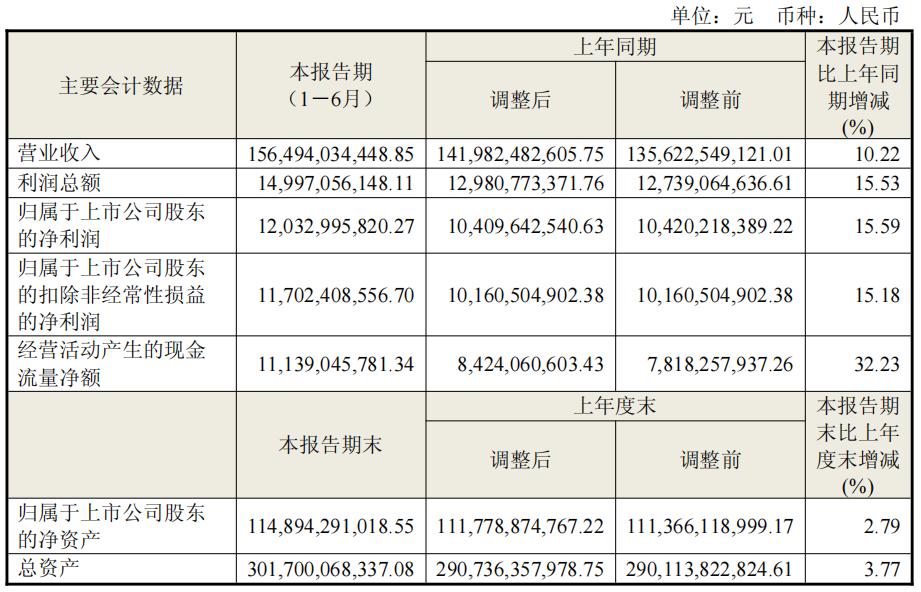
Core Insights - Haier Smart Home and Gree Electric released their 2025 semi-annual performance reports, highlighting the operational status of the home appliance industry and market changes in the first half of the year [1] Company Performance Haier Smart Home - Achieved revenue of 1564.94 billion yuan, a year-on-year increase of 10.22%, with domestic market revenue growing by 8.8% and overseas market revenue increasing by 11.7% [2][3] - Net profit attributable to shareholders was 120.33 billion yuan, up 15.59% year-on-year [2][3] - Major business segments include food preservation and cooking solutions, laundry solutions, air and water solutions, and other businesses [2][7] Gree Electric - Reported revenue of 973.25 billion yuan, a decrease of 2.46% year-on-year, while net profit attributable to shareholders was 144.12 billion yuan, an increase of 1.95% [4][5] - The main business segments include consumer appliances, industrial products, and green energy [14] - Domestic sales revenue was 711.60 billion yuan, down 5.27%, while foreign sales revenue increased by 10.19% to 163.35 billion yuan [17][18] Market Position - Haier Smart Home has maintained its position as the world's largest home appliance brand in retail volume for 16 consecutive years, with significant brand presence [4] - Gree Electric leads the central air conditioning market with over 15% market share in sales scale [6] Industry Trends - The domestic home appliance market saw a retail value of 453.7 billion yuan in the first half of the year, growing by 9.2% year-on-year, driven by the "old-for-new" appliance policy [20] - The overseas market showed mixed results, with developed countries facing demand challenges due to high interest rates and inflation, while emerging markets exhibited growth [20] - The home appliance industry is expected to maintain steady growth, with ongoing product upgrades and a polarization of consumer demand between high-end and cost-effective products [21]


Key Tronic(KTCC) - 2025 Q4 - Earnings Call Transcript
2025-08-27 22:02
Financial Data and Key Metrics Changes - For fiscal year 2025, total revenue was $467.9 million, down from $566.9 million in fiscal year 2024, reflecting a decrease of approximately $100 million [5][6] - Gross margin for fiscal year 2025 was 7.8%, down from 10.1% in fiscal year 2024, while operating margin was negative 2.1% compared to 7.2% in the previous year [5][6] - The net loss for fiscal year 2025 was $8.3 million or $0.77 per share, compared to a net loss of $2.8 million or $0.26 per share in fiscal year 2024 [8][9] - Cash flow from operations was $18.9 million for fiscal year 2025, an increase from $13.8 million in fiscal year 2024 [11] Business Line Data and Key Metrics Changes - The company experienced a significant reduction in demand from two large longstanding customers, which adversely impacted revenue [5][6] - Despite the revenue decline, gross margins improved year over year due to operational efficiencies and cost-saving initiatives [6][7] Market Data and Key Metrics Changes - The company reduced total liabilities by $32.7 million or 14% from the previous year, indicating improved financial health [10] - The current ratio was 2.5:1, down from 2.8:1 a year ago, while accounts receivable days sales outstanding (DSOs) improved to 86 days from 95 days [11] Company Strategy and Development Direction - The company is focusing on expanding its manufacturing capabilities in the U.S. and Vietnam, with plans to invest over $28 million in a new facility in Arkansas [16][18] - The strategy includes transitioning manufacturing to mitigate tariff impacts and enhance competitiveness, particularly in light of geopolitical tensions [15][21] - The company aims to increase its manufacturing footprint in Vietnam, anticipating that it will play a major role in future growth [17][18] Management's Comments on Operating Environment and Future Outlook - Management acknowledged the challenges posed by fluctuating tariffs and reduced demand but expressed optimism about future growth opportunities and operational improvements [13][24] - The company is not providing forward-looking guidance due to uncertainties regarding new product launches [13] - Management emphasized the importance of cost reductions and operational efficiencies in positioning the company for future profitability [24] Other Important Information - The company reduced its workforce by approximately 800 employees, or roughly 30%, primarily in Mexico, to align costs with current demand [6][19] - A new manufacturing services contract with a data processing equipment OEM is expected to generate significant revenue, potentially exceeding $20 million annually [20][46] Q&A Session Summary Question: What is the range of sizes for the new wins in the quarter? - The new wins were predominantly around the $5 million program size, with one data processing contract potentially exceeding $20 million [27] Question: How is the Vietnam medical device manufacturing capability being developed? - The company is certified to build medical products in Vietnam and expects to start a program in fiscal year 2026, anticipating additional opportunities [30] Question: What is driving the increase in new program bids? - The increase is attributed to improved cost competitiveness and pent-up demand for U.S. manufacturing amid tariff uncertainties [32][34] Question: Can you explain the reduction in accounts receivable? - The reduction is primarily due to decreased revenue and improved collection efforts, with no factoring involved [38][39] Question: What is the expected revenue from the new manufacturing services contract? - The expectation is to reach a $20 million annual run rate by fiscal year 2026, with the contract currently ramping up [52][56] Question: How do you see the Mexico operations evolving in fiscal year 2026? - The company anticipates growth in Mexico due to recent program wins and the favorable USMCA agreement for tariff mitigation [55] Question: What are the expectations for gross margin in fiscal year 2026? - The goal is to improve gross margins, potentially reaching 15% to 20% as revenue increases [58][60]

取代英国成为全球第五大经济体,印度将走向何方?
Sou Hu Cai Jing· 2025-08-24 14:42
Core Perspective - India's future development will reshape the global political and economic landscape, necessitating a new development path distinct from traditional East Asian models [2][4][16] Group 1: Economic Challenges and Opportunities - India has become the world's fifth-largest economy, surpassing the UK, but faces challenges in sustaining growth and providing employment for its growing labor force [4][6] - The current economic model is under scrutiny, with debates between optimists who believe in government-led growth and pessimists who highlight existing economic cracks and inequalities [4][8] - A significant portion of India's youth is disillusioned, lacking job opportunities and facing high unemployment rates, particularly among women [8][9] Group 2: Government Initiatives and Reforms - The government has made strides in implementing reforms such as a unified Goods and Services Tax and infrastructure development, which are seen as positive steps [9][10] - However, several government initiatives, including smart city projects and agricultural reforms, have not yielded the expected results, indicating a need for more effective strategies [10][12] - The government's approach to job creation remains outdated, relying on protectionism and subsidies rather than fostering skill development [10][14] Group 3: Global Supply Chain Dynamics - The global supply chain landscape is shifting, with companies reconsidering their production locations due to geopolitical tensions and the impact of the pandemic [8][12] - India faces intense competition from countries like China and Malaysia, which have improved their logistics and labor skills, making it challenging for India to attract manufacturing investments [14][16] - The traditional low-skill manufacturing model may not be viable for India, necessitating a focus on higher-value industries and innovation [14][16]

欧美经济同步扩张折射全球供应链重构成效
Xin Hua Cai Jing· 2025-08-22 05:51
Group 1 - The Eurozone private sector showed unexpected vitality in August, with the composite PMI rising to 51.1, the highest in 15 months, and manufacturing PMI breaking the growth line at 50.5, ending a three-year contraction period [1] - The unexpected growth in the Eurozone contrasts with the U.S. economic data, where the composite PMI surged to 55.4, and manufacturing new orders reached the highest growth since early 2022, indicating a structural adjustment and phase recovery in the global economy [1] - Germany's manufacturing sector is nearing the end of a three-year slump, reflecting the effectiveness of companies diversifying their supply chains, particularly in the automotive industry, which is reducing reliance on U.S. exports by incorporating Southeast Asia into production [1] Group 2 - The U.S. economy demonstrated stronger growth, with the composite PMI rising to 55.4, the highest since December of the previous year, and manufacturing PMI reaching 53.3, reversing the contraction seen in July [2] - The strong demand in the U.S. economy is accompanied by inflation risks, as the input cost index rose to 62.3, and the prices of goods and services reached a three-year high, indicating that companies are passing on cost pressures to consumers [2] - The economic structure between the U.S. and Europe shows a stark contrast, with the U.S. benefiting from the Inflation Reduction Act to stimulate domestic manufacturing, while Europe relies on traditional supply chain recovery for moderate growth [2]