
通胀预期

Search documents
BlueberryMarkets:加拿大通胀预期下降,就业增长放缓?
Sou Hu Cai Jing· 2026-01-19 10:23
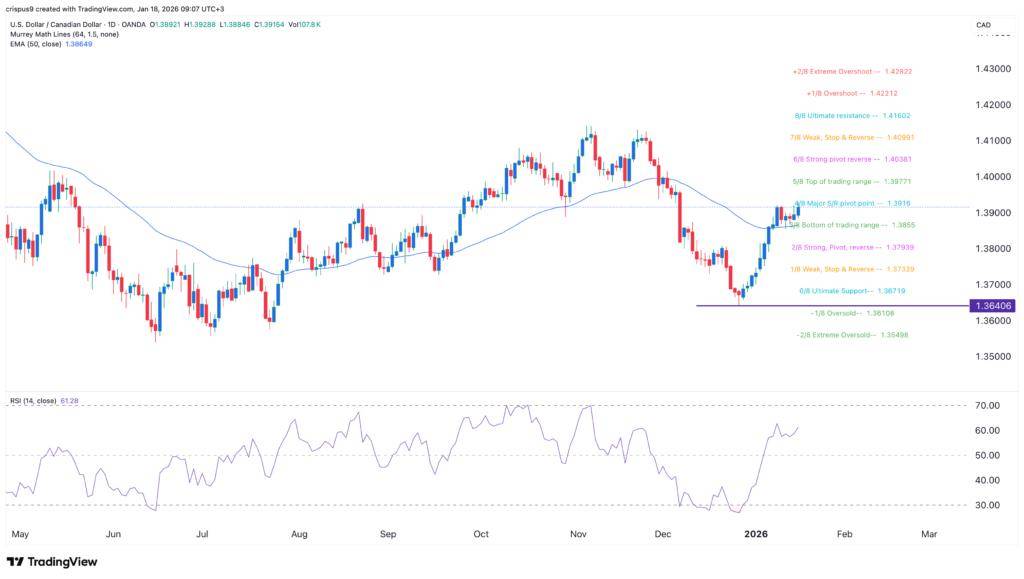
Group 1: Currency Exchange and Economic Data - The USD/CAD exchange rate has rebounded from a low of 1.3640 to the current level of 1.3915, marking the highest level since December 5 [1] - Canada’s consumer price index (CPI) is expected to remain stable at 2.2% year-on-year for December 2022, with a projected month-on-month decline of 0.4% [1] - The core inflation rate, excluding volatile food and energy prices, is anticipated to decrease to 2.8% from the previous 2.9% [1] - Employment data for December shows a minimal increase of 8,200 jobs, significantly lower than the previous three months' average of 181,000 jobs [1] Group 2: Central Bank Policies and Trade Agreements - The Bank of Canada has reduced interest rates from a post-pandemic high of 5% to the current 2.5%, with further cuts anticipated later this year due to economic pressures [2] - A recent agreement between Canada and China involves Canada lowering tariffs on Chinese electric vehicles, while China lifts import restrictions on Canadian canola, potentially enhancing trade relations [2] - The U.S. Federal Reserve is expected to maintain its interest rate range between 3.5% and 3.75% in the upcoming decision, which will significantly influence the USD's performance [2] Group 3: Technical Analysis - The USD/CAD rebound has surpassed key support and resistance pivot points at 1.3916 and is above the 50-day exponential moving average (EMA) [4] - The relative strength index (RSI) is nearing the overbought territory, indicating potential for continued price increases [4] - Key resistance for bullish market participants is targeted around 1.400 [4]

日本央行调查:日本家庭物价预期居高不下
Xin Lang Cai Jing· 2026-01-19 07:59
Core Insights - The Bank of Japan's quarterly confidence survey indicates that Japanese households' long-term inflation expectations remain near historical highs due to rising living costs [1][2] Inflation Expectations - The median annual inflation expectation for the next five years remains stable at 5%, while the average expectation has slightly decreased from 10% to 9.8%, which was the highest recorded since June 2006 [1] - Households expect an average price increase of 11.6% over the next year, a slight decline from the previous survey's expectation of 11.9% [1] Economic Outlook - The household economic outlook index has risen to -18.3, marking the largest quarterly increase since December 2021 [1] - The household land price outlook index has significantly increased to 42.1, reaching the highest level recorded since June 2006 [2]
1.19黄金暴力高开100美金 再战4700
Sou Hu Cai Jing· 2026-01-19 07:20
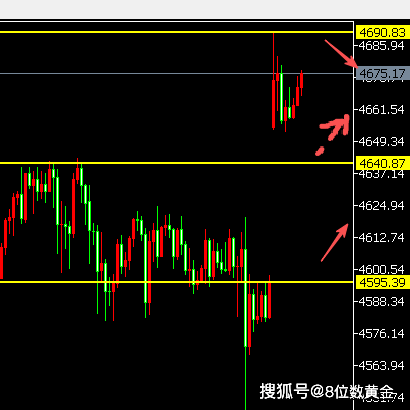
Group 1 - The core viewpoint is that gold prices have shown a strong upward trend, reaching historical highs before experiencing a pullback and then rebounding, with a focus on the 4700 mark [1][10] - Last week, gold experienced a significant drop but quickly recovered, indicating volatility in the market [3][10] - The recent surge in gold prices is attributed to various factors, including a decline in the US dollar's credibility and inflation concerns, which have positively impacted gold [12] Group 2 - Upcoming economic data, such as the US December PCE price index and consumer confidence index, will significantly influence Federal Reserve policy expectations and, consequently, gold prices [13] - The Bank of Japan's potential interest rate decisions may also impact the currency market and gold prices, highlighting the interconnectedness of global economic policies [13] - The importance of timing in entering and exiting gold investments is emphasized, with a focus on maintaining low risk while maximizing profit opportunities [13]
海外宏观及大类资产周度报告-20260118
Guo Tai Jun An Qi Huo· 2026-01-18 12:09
Report Industry Investment Rating No relevant content provided. Core Views of the Report - Geopolitical shocks are frequent, testing the low volatility of cross - asset classes. Geopolitics may be the key short - term market driver, and there is a risk of rising cross - asset volatility. Attention should be paid to non - eurozone safe - haven assets [11][12]. - The IEEPA ruling is still pending. If the US Supreme Court rules it unconstitutional, it may involve a $150 billion tariff refund, causing short - term tariff policy chaos, and the White House may seek an alternative legal framework [14][17]. - Changes in the expected FED chairperson have led the 10 - year US Treasury yield to break through the key level of 4.20%, with the pressure level raised to 4.20 - 4.3% [18][20]. - US fundamental data are relatively comfortable and in line with expectations. Retail sales in November were better than expected, and the CPI data in December were in line with expectations, with core CPI lower than expected [23][24]. - In the FICC precious metals market, the gold - silver ratio is returning. Gold has regained momentum, while silver is at risk of volatility. It is recommended to increase gold allocation and consider taking profit on silver long positions [25][28]. Summary by Relevant Catalogs 1. Week - to - Week Performance of Major Asset Classes and Market High - Frequency Data Fixed Income - **Overseas Fixed Income**: The yields of various - term US Treasuries and major developed country government bonds have changed. For example, the 10 - year US Treasury yield reached 4.22% on January 16, 2026, with a weekly change of 5.76bp [43][44]. - **US Treasury Yield Curve and Credit Spreads**: Track the changes in the US Treasury yield curve over 1, 3, and 6 months, as well as the long - short spreads of US Treasury yields [51]. - **Relative Strength of Credit Bonds of Different Ratings and Eurozone Bond Spreads**: Analyze the relative strength of high - yield and Aaa - rated credit bonds and the spreads of Eurozone government bonds [60]. - **US Treasury Issuance and Primary - Secondary Market Supply - Demand Indicators**: Include the issuance of US short - term Treasury bills and medium - long - term Treasuries, as well as the bid/offer ratios of 2, 10, and 30 - year US Treasuries [69][73]. Exchange Rate Market - **Week - to - Week Performance of Major Exchange Rates**: The US dollar index was 99.3930 on January 16, 2026, with a weekly change of 0.26%. The euro, yen, and other currencies also had corresponding changes [78][80]. - **Yield Spreads between Major Country Government Bonds and US Treasuries**: Analyze the 10 - year yield spreads between US Treasuries and G7 countries, as well as the 2 - year yield spreads between the US and Germany [81]. - **Evolution of China's Monetary Policy Framework**: The inter - bank 7 - day reverse repurchase serves as the "policy rate", and the SLF and excess reserve ratio form the "interest rate corridor" [90]. - **Monthly and High - Frequency Indicators of the RMB Exchange Rate**: Include China's central bank gold and foreign exchange reserves, import and export year - on - year data, and high - frequency indicators such as the yield spreads between Chinese and US 10 - year and 3 - month Treasuries [95][103]. Commodities - **Week - to - Week Performance of Major Commodities**: Brent crude oil had a weekly increase of 3.45%, while Shanghai copper decreased by 0.63% [121][123]. - **Ratios of Major Commodities and Relative Strength of Industrial Chains**: Analyze the gold - silver ratio, gold - copper ratio, and the relative strength of the downstream/upstream of the energy and black metal industrial chains [125][131]. - **Mapping of Commodity Prices in the Equity and Bond Markets**: Examine the relative strength of commodities compared to global equity and bond indices and the rolling correlation between upstream Bloomberg commodities and downstream equity cyclical sectors [134][137]. - **High - Frequency Data of Macro Commodities**: Include OPEC+ crude oil production quotas, US energy department crude oil production, and global crude oil and copper inventory changes [141][144]. Overseas Equities - **Week - to - Week Performance of Global Major Indices and US Stock Sectors**: The S&P 500 index decreased by 0.38%, and the Nikkei 225 index increased by 5.51%. Among the S&P industry indices, the real estate index increased by 3.89%, while the financial index decreased by 2.33% [149][153]. - **Week - to - Week Performance, Valuation, and Earnings Tracking of US Stock Styles**: The US large - cap growth style decreased by 1.52%, and the US small - cap value style increased by 1.34%. The PE ratios and EPS growth rates of major indices are also provided [156][160]. - **Earnings Cycle Positioning - Quarterly EPS YoY Trends of Major Indices**: Track the quarterly EPS YoY trends of the S&P 500, Nasdaq, and other indices [166]. - **Volatility and Risk Sentiment Indicators**: Include the Chicago S&P Volatility VIX index, ICE Bond Volatility MOVE index, and CBOE option PUT/CALL ratio [173]. - **Tracking Factors**: Track the YTW total return performance of US stock market factors [183]. Cryptocurrencies - Track BTC, ETH, and related derivative assets, including the performance of Bitcoin futures main contracts, non - commercial net positions, and the performance of cryptocurrency - related stocks [186][190]. Post - YCC Era of the BOJ - Track high - frequency data of the yen carry - trade system, such as the net amount of Japanese investors' purchases of overseas bonds and stocks, the USDJPY 1 - year exchange - rate hedging cost, and the yen 3M volatility [194][196]. 2. Macro Data Hologram and Fundamental High - Frequency Data Real - Time Economic Momentum - Include the Fed's nominal and real real - time GDP models, US GDP and its sectoral breakdowns, and economic surprise indices of the US, Europe, and China [204][208]. Financial Conditions - Analyze the Fed's balance sheet and its weekly changes, the balance sheets of G4 central banks as a percentage of GDP, and the US and Eurozone financial conditions indices [212][215]. Fiscal Policy - Examine the US federal government's fiscal expenditure and revenue breakdowns, government debt issuance, and the government deficit as a percentage of GDP [220][225]. Employment Market - Track the US employment market on a weekly and monthly basis, including non - farm payrolls, household surveys, ADP data, and job vacancy numbers [229][230]. Inflation Indicators - Analyze the breakdown of US inflation YoY data, the trends of headline and core inflation, and inflation expectations [237][242]. Consumption Demand - Track US consumption data on a weekly and monthly basis, including retail sales, consumer confidence, and personal income and savings [245][252]. Cycle Positioning - Track industrial, manufacturing, and inventory cyclical indicators, such as the LEI leading indicator YoY, ISM PMI, and US manufacturing surveys [267][272]. Credit Cycle - Track US credit surveys, valuations, and high - frequency data in the credit market, such as the SLOOS corporate credit survey and S&P index valuations [280][282]. Transportation and Logistics - Track logistics data between China, Asia, Europe, and the US, including shipping frequencies, port freight data, and aviation passenger numbers [284][297]. Real Estate Market - Analyze the US real estate equity market, credit spreads, and commercial real estate, including real estate indices, mortgage rates, and commercial real estate loan delinquency rates [302][308]. Eurozone - Provide a macro overview, cycle positioning, and relative strength analysis of the Eurozone, including deficit rates of peripheral countries, inflation trends, and retail sales data [311][331].
票委集体力挺鲍威尔,美联储不急降息,黄金多头还能走多远?
Sou Hu Cai Jing· 2026-01-16 06:12
Group 1 - The core viewpoint of the articles emphasizes the cautious and steady approach of the Federal Reserve regarding monetary policy, as indicated by the statements of Philadelphia Fed President Anna Paulson [1][3] - The current benchmark interest rate is maintained in the range of 3.5%-3.75%, with Paulson suggesting that this level is slightly above neutral, aiding in the final push to reduce inflation [3] - The labor market shows structural concerns, with job growth concentrated in specific sectors, indicating potential hidden vulnerabilities despite overall economic expansion [5][6] Group 2 - Inflation is moving towards the 2% target, with companies exhibiting caution in pricing behavior due to competitive pressures, providing a rationale for the Fed to maintain its current stance [8] - Paulson's remarks, while leaning towards a hawkish tone, leave open the possibility of later interest rate cuts, suggesting that the bullish logic for gold remains intact but may slow down [10] - Recommendations for investors include controlling positions before the upcoming FOMC meeting, monitoring inflation boundaries, and considering geopolitical uncertainties as a support for gold prices [10]
Vatee外汇:澳元受通胀预期支撑,但上行空间预计有限
Sou Hu Cai Jing· 2026-01-16 03:55
Group 1 - The Australian dollar (AUD) is currently in a consolidation phase around the 0.6700 level after rising for two consecutive trading days, with market sentiment being cautious due to the uncertain future policy direction of the Reserve Bank of Australia (RBA) [1] - Consumer inflation expectations in Australia remain high at 4.6%, indicating ongoing concerns among households regarding price pressures, with market pricing suggesting a 27% probability of a 25 basis point rate hike by the RBA in February, increasing to 76% by May [3] - Overall inflation in Australia slowed to 3.4% year-on-year in November, the lowest level since August, but still above the RBA's target range of 2% to 3%, making a shift to a more accommodative policy unlikely in the short term [3] Group 2 - The strong performance of the US dollar on Thursday limited further gains for the AUD, as the latest initial jobless claims data from the US showed a decrease to 198,000, which was better than expected and reinforced market expectations for the Federal Reserve to maintain interest rates [3] - The divergence in monetary policy expectations between Australia and the US is not significant at this time, leading to a temporary stabilization of the AUD/USD pair as the market awaits more economic data for direction [4]
大越期货贵金属早报-20260116
Da Yue Qi Huo· 2026-01-16 01:51
1. Industry Investment Rating - No information provided in the report. 2. Core Viewpoints - For gold, Trump denied dismissing Powell and the Trump administration decided not to impose comprehensive tariffs on key minerals, causing metal prices to stop rising and gold prices to fluctuate at a high level. Geopolitical tensions and a cooling risk appetite also contributed to the price volatility. The upward momentum of gold prices exists but is limited due to factors like recent Fed rate - cut expectations and optimistic expectations of Russia - Ukraine peace talks [4]. - For silver, the Trump administration's decision on tariffs led to silver prices stopping their rise and experiencing significant high - level fluctuations. The downward pressure on silver prices increased as domestic sentiment cooled rapidly, and there were geopolitical concerns along with a cooling risk appetite [5]. 3. Summary by Directory 3.1. Previous Day's Review - Gold: COMEX gold futures fell 0.33% to $4,620.50 per ounce. The 10 - year US Treasury yield rose 4.53 basis points to 4.171%, the US dollar index rose 0.28% to 99.35, and the offshore RMB appreciated slightly against the US dollar to 6.9631. The gold futures basis was - 2.98, indicating the spot price was at a discount to the futures price. Gold futures warehouse receipts remained unchanged at 100,152 kilograms [4]. - Silver: COMEX silver futures rose 0.90% to $92.21 per ounce. The silver futures basis was - 15, with the spot price at a discount to the futures price. Shanghai silver futures warehouse receipts increased by 9,703 kilograms to 638,399 kilograms [5]. 3.2. Daily Tips - Today, pay attention to the intensive speeches of Fed members, the US January NAHB housing market index, the opening of the 2026 Nuclear Fusion Energy Technology and Industry Conference, Germany's December CPI final value, European Central Bank Governing Council member Escriva's speech, the US December industrial production, the welcome speech by Boston Fed President Collins at the 2026 New England Economic Forum, Fed Governor Bowman's talk on economic prospects and monetary policy, and the keynote speech by Fed Vice - Chair Philip Jefferson at the US Economic Research Institute meeting [4][14]. 3.3. Fundamental Data - Gold: The inflation expectation has shifted to an economic recession expectation since Trump took office, making it difficult for gold prices to fall. Recent Fed rate - cut expectations and optimistic Russia - Ukraine peace - talk expectations, along with liquidity concerns, have a limited upward impact on gold prices. There are also factors such as global turmoil, South American geopolitical tensions, and inflation concerns that are positive for gold prices, while factors like potential Trump new policies, improved US economic expectations, significant Bank of Japan interest rate hikes, and the end of the Russia - Ukraine conflict are negative [9]. - Silver: Silver prices mainly follow gold prices. Tariff concerns have a stronger impact on silver prices, and there is a risk of an enlarged increase. Positive factors include global turmoil, South American geopolitical tensions, inflation concerns, tariff support for non - ferrous metals, support from the photovoltaic and technology sectors, and low spot inventory. Negative factors include significant Fed internal differences, less - than - expected European fiscal expansion, optimistic Russia - Ukraine peace - talk expectations, and Bloomberg commodity index adjustments [12][13]. 3.4. Position Data - Gold: The net long position of the main players increased. The long positions of the top 20 holders of Shanghai gold decreased by 1.83% to 186,651 on January 15 compared to January 14, the short positions decreased by 2.04% to 47,740, and the net position decreased by 1.76% to 138,911. The SPDR gold ETF position increased slightly, COMEX gold warehouse receipts decreased slightly but remained at a high level, and Shanghai gold warehouse receipts increased slightly [30][34][38]. - Silver: The net long position of the main players decreased. The long positions of the top 20 holders of Shanghai silver increased by 1.46% to 369,580 on January 15 compared to January 14, the short positions increased by 3.30% to 305,332, and the net position decreased by 6.43% to 64,248. The silver ETF position decreased slightly, Shanghai silver warehouse receipts increased slightly and were at the lowest level in the past six years, and COMEX silver warehouse receipts continued to decrease [32][36][40].
黄金4580成短期关键防线,破位警惕调整走势(2026.1.16)
Sou Hu Cai Jing· 2026-01-16 00:55
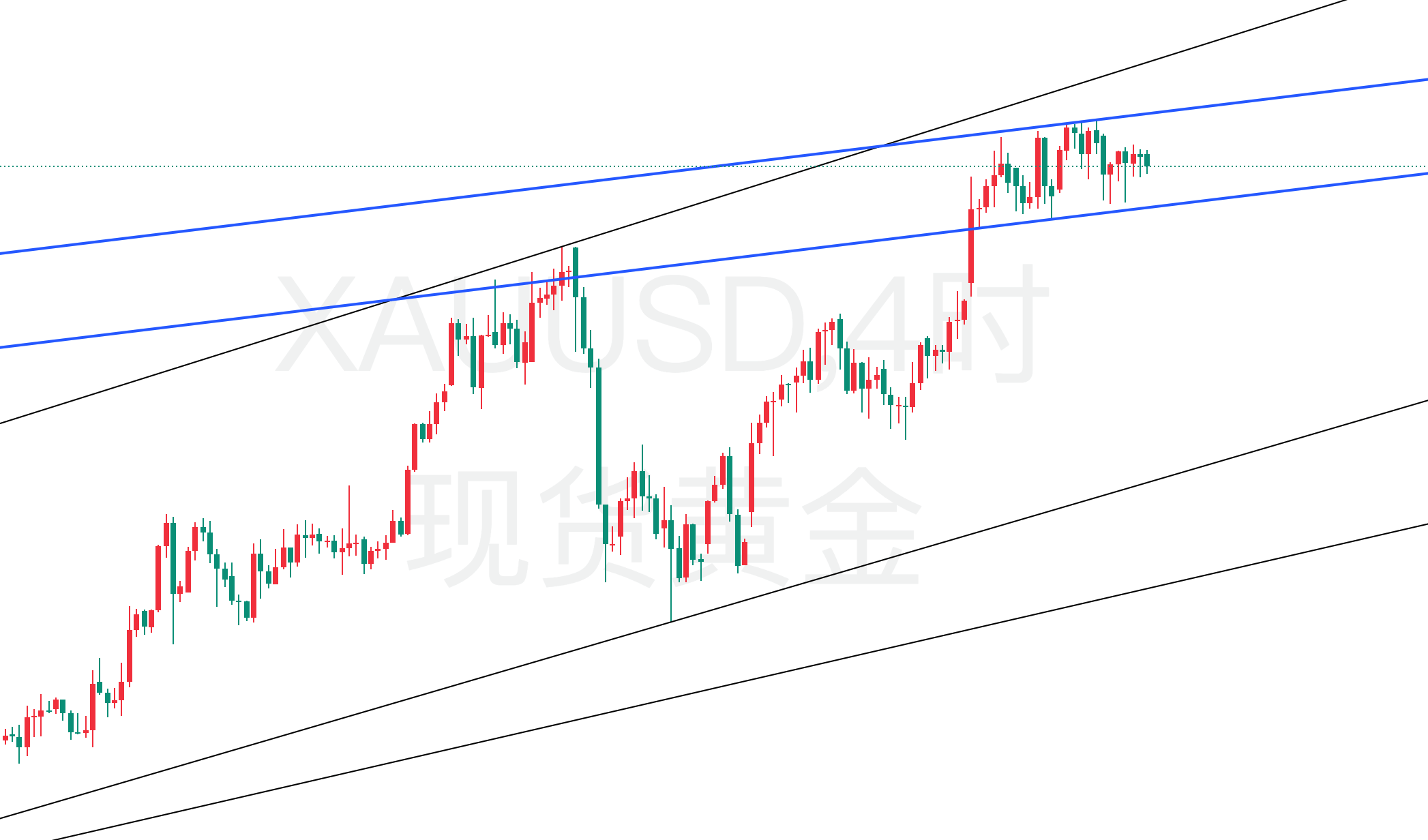
Group 1: Fundamental Analysis - Strong U.S. employment data led to a decrease in initial jobless claims by 9,000, resulting in a seasonally adjusted total of 198,000, significantly below the expected 215,000, which pushed the U.S. dollar index to a six-week high of 99.49, closing at 99.35 with a gain of 0.28% [2] - The strengthening dollar made gold more expensive for overseas buyers, suppressing demand and reinforcing expectations that the Federal Reserve will maintain interest rates in the short term, delaying the next rate cut to June, with the probability of a March cut dropping from 50% to 21.6%, reducing the appeal of non-yielding assets like gold [2] - Easing geopolitical tensions, particularly Trump's softened rhetoric regarding Iran, diminished expectations of escalating Middle Eastern conflicts, thereby weakening gold's safe-haven appeal [3] - Rising bond yields, driven by strong economic data, pushed the 10-year Treasury yield to 4.156% and the 2-year yield to 3.558%, increasing the opportunity cost of holding gold as inflation-protected securities (TIPS) reached new highs [4] - Trump's decision to retain Federal Reserve Chairman Powell alleviated market concerns about Fed leadership instability, boosting risk sentiment and further supporting the dollar's upward momentum [4] Group 2: Technical Analysis - The daily chart indicates that gold exhibited a volatile trading pattern, closing with a long lower shadow on a bearish candle, while remaining above the 5-day moving average, suggesting a continuation of a strong consolidation phase [5] - The current upward trend in gold, which began at 3886, is characterized by a five-wave structure, with the market currently in the fifth wave, necessitating caution regarding potential pullback risks [6] - Key support levels to monitor include the 4540/4535 area, corresponding to the 10-day moving average, while initial resistance is noted at the current high of 4642/4643 [7] - The four-hour chart analysis maintains focus on the five-wave structure since the 4274 point, with the market currently within a rising channel, requiring close monitoring of the channel's performance [9] - The lower support of the channel is near 4580, which aligns with previous low points, while the upper resistance is around 4650; breaking below the channel support would lead to further attention on 4560 and 4540/4535 support levels, while a breakout above resistance would shift focus to 4661 and 4690 [9]
世界黄金协会:2025年12月贵金属大涨但走势分化 白银铂金的变动显示出政策驱动型特征 黄金温和上行
Zhi Tong Cai Jing· 2026-01-15 13:29
Core Insights - The World Gold Council reported that precious metals experienced significant price increases in December, with a notable divergence in trends among different metals, indicating a policy-driven characteristic for silver and platinum, while gold showed a moderate upward movement [1] Group 1: Price Movements - Precious metal prices surged, achieving the highest year-on-year returns in 45 years [1] - The final wave of this price increase was particularly influenced by policy factors and short-term market supply tightening for metals other than gold [1] - December's price trends highlighted the internal divergence within precious metals, with physical supply constraints and policy distortions driving up silver and platinum prices [1] Group 2: Future Outlook - As the distorting factors dissipate, gold's resilience, shaped by macroeconomic concerns and structural demand, is likely to become more pronounced [1] - Future trends for gold will be influenced by policy risks, inflation expectations, and investor positioning [1] - The World Gold Council noted that global geopolitical events have benefited gold, and there are currently no signs indicating a change in this trend [1]
黄金牛市暗含剧震风险 跻身主流资产波动加剧
Jin Tou Wang· 2026-01-15 03:04
尽管黄金牛市势头正盛,但潜在风险不容忽视。Ghali在采访中指出,黄金正从边缘资产转为主流配 置,这意味着市场波动性将显著增加。过去一年,尽管通胀预期回落,但对美国机构信任度的下降成为 推动黄金走强的核心动力。若最高法院对特朗普关税政策及美联储理事辞职案作出不利裁决,美元指数 可能进一步下探(周三已跌0.1%至99.07),从而支撑金价;反之,若通胀得到有效控制、市场情绪逆转, 黄金或面临大幅回调。美联储"褐皮书"显示经济活跃、就业稳定,为美元提供缓冲,但伊朗等地缘政治 紧张局势仍是悬而未决的隐忧。Ghali对黄金持中性态度,建议关注铂族金属等其他机会。 总体而言,2026年黄金市场开局亮眼,在地缘政治、经济数据及政策不确定性共同作用下,金银价格屡 创新高,呈现强劲的结构性牛市特征。投资者需警惕双向风险,但短期金价仍有望延续升势,甚至挑战 更高水平。在充满变数的环境中,黄金不仅是投资标的,更是市场信心的"锚点"。未来,若美联储独立 性得以维护且通胀预期稳定,黄金牛市或持续;反之,新的不确定性也可能孕育更大机遇。建议投资者 密切关注美联储政策动向与地缘局势变化,理性配置贵金属,以应对潜在波动。 【最新现货黄金行 ...