
AI大模型

Search documents
先进制程末日预言:智驾+百亿机器人月吞165万片晶圆!= 3.25个台积电!
材料汇· 2025-07-15 13:31
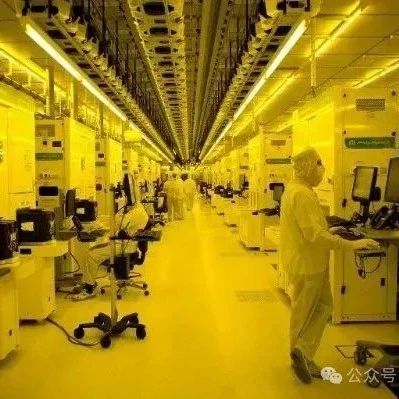
Core Viewpoint - The article emphasizes that the demand for advanced process technology driven by autonomous driving (AD) and embodied intelligence will significantly surpass that of AI GPUs, despite the current hype surrounding AI models like ChatGPT and the performance of companies like NVIDIA [1][2]. Group 1: Wafer Capacity Perspective - The die size of autonomous driving chips is comparable to that of AI GPUs, but the terminal quantity for autonomous driving is several times greater, leading to a much higher demand for advanced process wafer capacity [2][8]. - The value contribution of wafer manufacturing to AI GPU is only 2.25%, indicating that the demand for AI GPUs does not significantly drive wafer capacity needs [10][11]. - The global demand for advanced process capacity for autonomous driving is estimated at 136,200 wafers per month, compared to only 39,700 wafers for AI GPUs [5][6]. Group 2: Application Scenario Perspective - Autonomous driving chips can be viewed as the brain of robots, sharing significant similarities in architecture and application scenarios with robotic intelligence [3][4]. - Companies like Tesla and XPeng are utilizing similar AI chips for both autonomous driving and robotics, indicating a convergence in chip technology across these applications [3][4]. Group 3: Structural Changes in Advanced Process Demand - The anticipated production of robots could reach 1 billion units annually, which, combined with autonomous driving, will disrupt the downstream structure of advanced process applications [4][5]. - The combined demand for advanced process capacity from autonomous driving and embodied intelligence is projected to be approximately 1.65 million wafers per month, significantly exceeding the current capacity of major manufacturers like TSMC [5][6]. Group 4: Die Size and Yield Considerations - The die sizes of autonomous driving chips are generally in the range of 400-600 mm², which is close to that of AI GPUs, but the terminal market for autonomous driving is vastly larger, leading to higher wafer consumption [28][31]. - The yield of larger die sizes is lower, which impacts the overall efficiency of wafer production, making the demand for advanced process capacity even more critical as the industry evolves [39][40]. Group 5: Future Outlook - As the demand for autonomous driving and embodied intelligence grows, the advanced process wafer manufacturing sector is expected to experience a significant expansion, driven by the need for higher performance and more complex chips [6][8]. - The slowdown of Moore's Law suggests that the growth in chip performance will increasingly rely on the volume of chips produced rather than on technological advancements alone [6].


问界M8纯电版车型将于8月上市;李想回应i8内饰被提前泄密丨汽车交通日报
创业邦· 2025-07-15 10:30
Group 1 - Aion M8 electric version will be launched in August, featuring HUAWEI ADS 4 and equipped with a CATL 100 kWh battery [1] - Li Xiang, CEO of Li Auto, commented on the premature leak of the i8 interior, stating it disrupted the release schedule and was due to underestimating user curiosity [1] - "Luo Bo Kuaipao" has introduced an 88 yuan per day rental service for self-driving cars in Wuhan, allowing users aged 18-70 to rent without a driver's license, with specific operational restrictions [1] Group 2 - BMW is collaborating with Momenta to develop AI-based advanced driver assistance software tailored for the Chinese market, aiming for full-scenario navigation assistance by early 2025 [1]

宝马补的第二堂课,从Momenta开始
Jing Ji Guan Cha Bao· 2025-07-15 06:52
Core Viewpoint - BMW has announced a partnership with Chinese autonomous driving company Momenta to develop a new generation of intelligent driving assistance systems, starting with the 2026 domestic iX3 model, marking a strategic shift towards local collaboration in the Chinese market [2][6]. Group 1: Partnership and Strategic Shift - The collaboration with Momenta, rather than a traditional supplier like Bosch, highlights BMW's need for a partner that can quickly adapt to the Chinese market while meeting BMW's stringent safety standards [3][5]. - Momenta, established in 2016, has a strong foundation in AI-driven intelligent driving technology and has also partnered with Mercedes, making it a suitable choice for BMW [3][4]. - This partnership reflects BMW's cautious approach to technology deployment, emphasizing safety and reliability over rapid market entry [5][6]. Group 2: Technical Integration and Market Strategy - The AI-assisted driving system from Momenta will be deeply integrated with BMW's chassis systems, allowing real-time adjustments to suspension and vehicle dynamics during maneuvers [4][5]. - The system will initially be exclusive to domestic models like the new iX3, indicating BMW's cautious strategy of localized testing before broader implementation [5][6]. - BMW's decision to collaborate with a younger Chinese tech company instead of established international suppliers signifies a shift in understanding the automotive market dynamics, where manufacturers must engage with cutting-edge technology ecosystems [5][6]. Group 3: Long-term Vision and Market Position - This collaboration is seen as a long-term strategic adjustment for BMW, aiming to balance driving pleasure with advanced intelligent driving features [6]. - BMW's approach prioritizes thorough validation of technology over rapid deployment, reflecting a commitment to consumer safety and reliability [5][6]. - The success of this partnership could provide valuable insights and methodologies for BMW's future global intelligent driving strategy [6].
姜洪成赴上海市浦东新区三林片区考察调研
Sou Hu Cai Jing· 2025-07-15 04:31
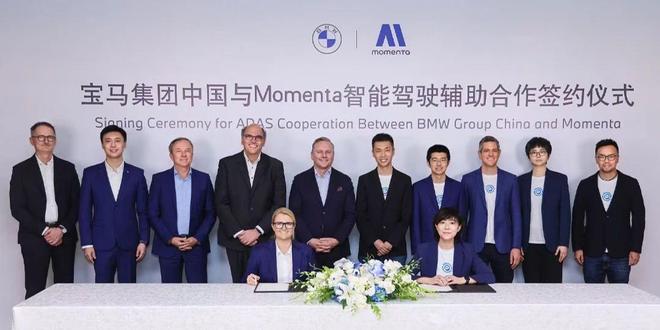
Group 1 - The core focus of the meeting was to enhance cooperation in digital economy and robotics industries, achieving significant consensus on collaborative development [1][3] - Sanlin Town is positioned as a key industrial area in Pudong New District, emphasizing advanced manufacturing, industrial internet, and digital economy as part of its development strategy [3] - The establishment of a liaison office in Shanghai by the Oriental Enterprise Innovation Development Center aims to support local digital economy and humanoid robotics industry development, facilitating technology breakthroughs and result transformation [5] Group 2 - Sanlin Town is actively promoting the digital transformation of manufacturing and building high-standard innovation parks, while also nurturing humanoid robotics as a frontier industry [3] - The collaboration will expand the service network of the Oriental Enterprise Innovation Development Center in the Yangtze River Delta region, supporting the creation of a digital economy hub and humanoid robotics industry cluster in Sanlin [5] - The meeting included discussions on the specific implementation details for the establishment of the Shanghai liaison office, marking a new starting point for cooperation [5]
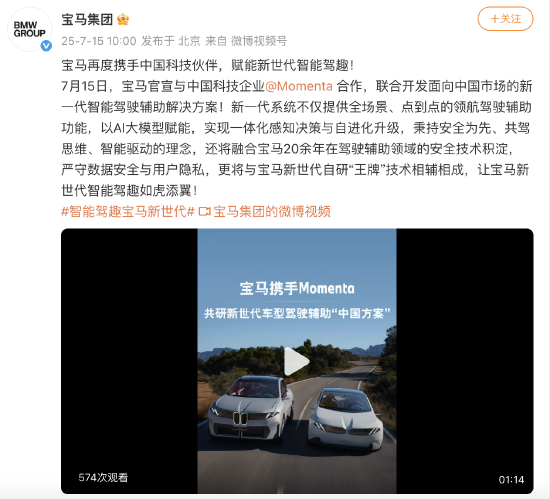
宝马与Momenta官宣合作 决心扎根中国市场
Xin Lang Cai Jing· 2025-07-15 03:36
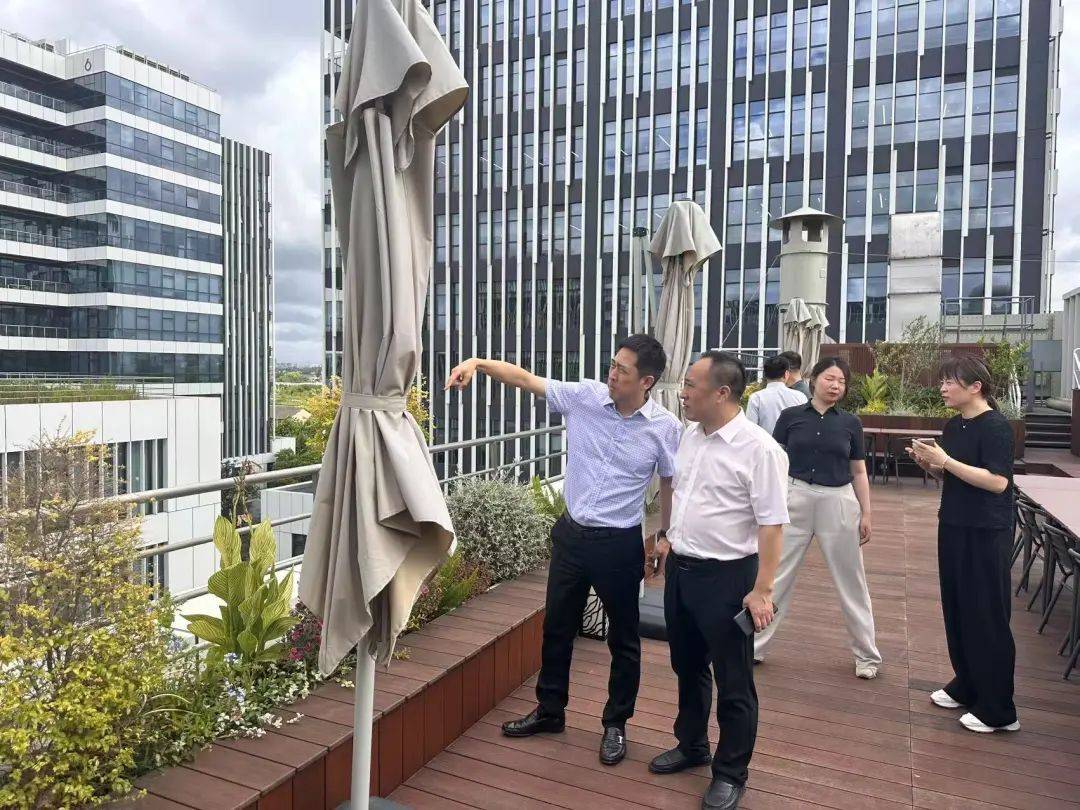
Core Viewpoint - BMW has officially announced a partnership with Chinese tech company Momenta to jointly develop a new generation of intelligent driving assistance solutions tailored for the Chinese market, leveraging both companies' strengths in artificial intelligence and automotive engineering [1][3]. Group 1: Partnership Details - The collaboration aims to create intelligent driving assistance products that integrate German automotive excellence with cutting-edge AI capabilities, enhancing user safety, convenience, and efficiency in future mobility [5][6]. - The new driving assistance solution is specifically designed for the Chinese market, supporting full-scenario, point-to-point navigation assistance, and future capabilities for cross-city traffic management, including parking [8]. Group 2: Technological Integration - BMW's new generation models will feature a "super brain" that integrates power and chassis domains with a response delay of less than one millisecond and a tenfold increase in information processing speed, complementing the local intelligent driving assistance solutions [10]. - The partnership reflects BMW's commitment to deep integration of global technology with local demands, showcasing a forward-looking vision of leading the intelligent driving trend through localized innovation [11].
宝马与Momenta达成合作,将推出中国专属高阶辅助驾驶
Xin Lang Ke Ji· 2025-07-15 02:16
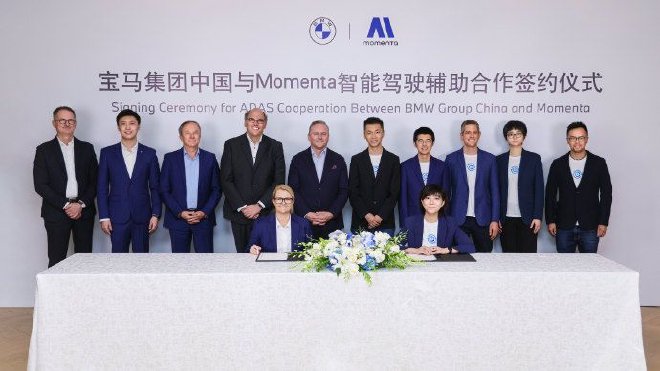
Group 1 - BMW has partnered with Momenta to develop AI-based driving assistance software for various domestic models, including the new generation vehicles [1][2] - The driving assistance solution is specifically designed for the Chinese market, supporting full-scenario, point-to-point navigation assistance, enabling cross-city travel from parking to destination [1] - The new system will integrate over 20 years of BMW's safety technology in driving assistance, emphasizing safety, co-driving philosophy, and intelligent driving while ensuring data security and user privacy [1] Group 2 - The bidding for the driving assistance project will begin in early 2025, with several domestic smart driving technology companies participating, including leading firms like Qingtian Zhihang and Yuanrong Qihang [2] - Momenta, established in 2016, won the bid and has been involved in mass production of driving assistance and autonomous robotaxi, collaborating with over ten global automakers and producing more than 100 mass-produced models [2]
家电龙头企业布局人形机器人赛道,探索新增长点
Di Yi Cai Jing· 2025-07-15 01:34
卡位人形机器人赛道 美的集团(000333.SZ)副总裁兼智能家居事业群总裁王建国7月9日在轻工业百强企业新质发展产业大 会上演讲时透露,未来三年拟投入至少500亿元研发资金,重点布局AI大模型、新能源、机器人、具身 智能、健康医疗等前沿领域。 目前,美的自研工业人形机器人"美罗"已在美的荆州洗衣机工厂实习超过两个月,在做部件送检、设备 检测、补充润滑油、消防和设备巡检等尝试,下半年还将在一些门店部署。美的去年下半年加快推进人 形机器人研发,布局人形机器人核心部件,并在软件方面布局具身智能大小脑等技术。 美的集团中央研究院院长孙年祥7月2日在美的智慧楼宇TRUE大会上演讲时透露,美的集团中央研究院 的九大研究方向之一就是人形机器人,包括研究具身智能、家电机器人化;而其另一研究方向是机器 人,包括研究运控及安全技术、机电设计、精密传动和电机驱动;智能创新也是研究方向之一,包括研 究AI科学、视觉导航等。 而海尔集团董事局主席、首席执行官周云杰近日在夏季达沃斯论坛上表示,海尔已经布局了机器人产 业,既有工业机器人,也做家用机器人,未来可能发展人形机器人,海尔也会与宇树科技探讨合作交流 机会。他认为,人工智能技术的 ...



黄仁勋将再次进京,雷军曾亲自接见,大厂都在等特供芯片!
Sou Hu Cai Jing· 2025-07-14 17:00
Group 1 - NVIDIA CEO Jensen Huang has visited China twice this year, with the latest visit occurring shortly after the U.S. announced restrictions on H20 chip exports to China [1] - Huang's upcoming visit on July 16 aims to strengthen NVIDIA's strategic positioning in the Chinese market, coinciding with the launch of the China-specific Blackwell AI chip RTX Pro 6000 in September [3] - The new chip, while lower in performance due to compliance with U.S. export regulations, is expected to be a key procurement option for major domestic companies due to its compatibility with NVIDIA's CUDA ecosystem [3] Group 2 - A recent photo of Huang and Xiaomi's Lei Jun has sparked speculation about potential new collaborations between NVIDIA and Xiaomi, although the photo was taken during a previous visit [5] - The meeting may be linked to Xiaomi's YU7 series, which is set to utilize NVIDIA's Thor chip, indicating a deeper engagement between the two companies [7] - Xiaomi is heavily investing in AI models and is building a GPU cluster of over 10,000 high-performance GPUs to support the training and inference of large models, highlighting the urgency of the collaboration [7] Group 3 - Xiaomi's approach to AI model development is unique, combining self-research and partnerships, unlike other tech giants that either fully self-develop or rely on third-party APIs [9] - The company has made significant progress with its open-source inference model Xiaomi MiMo, which outperformed competitors in specific tasks, showcasing its innovative capabilities [9] - Xiaomi's strategy focuses on core business areas such as smart devices and automotive technology, aiming to efficiently utilize resources and reduce computational demands [11] Group 4 - Xiaomi plans to complete its GPU cluster by 2025-2026, with a goal of covering 80% of its devices with edge models and achieving L4 autonomous driving by 2027-2028 [13] - The company aims to create an integrated "end-edge-cloud" architecture by 2030, positioning itself competitively against other AI ecosystems [13] - Xiaomi's strategy emphasizes developing models that are best suited for its business needs rather than the most powerful models available, indicating a focused approach in the AI landscape [13]

AI眼镜市场火热 产业链公司纷纷抢抓机遇
Zheng Quan Ri Bao· 2025-07-14 16:20
Core Viewpoint - The recent launch of Xiaomi's new AI glasses has significantly boosted the domestic AI glasses market, with sales exceeding 30,000 units on JD.com within just over half a month since its release on June 26 [1] Market Sales Surge - According to IDC, the shipment volume of smart glasses in China reached 494,000 units in Q1 2025, marking a year-on-year increase of 116.1%. The forecast for 2025 predicts a total shipment of 2.907 million units, representing a growth of 121.1% [2] - AI glasses, evolving from traditional eyewear, offer enhanced convenience for information retrieval and interaction, providing a more immersive experience compared to traditional electronic devices [2] - The acceleration of AI model deployment has resolved early issues of functionality and interaction in AI glasses, leading to features like real-time translation, scene recognition, and health monitoring, which are driving sales growth [2] Product Innovations - Xiaomi's new AI glasses feature immersive photography and video recording capabilities, support third-party app video calls and live streaming, and allow real-time sharing of visual experiences [3] - Rokid Glasses, developed by Hangzhou Lingban Technology, launched the world's first smart glasses payment solution in collaboration with Alipay, enhancing user convenience while ensuring security [3] - The surge in new AI glasses products indicates that 2025 is expected to be a significant year for the concentrated release of smart glasses, potentially accelerating technological iteration and reducing product costs [3] Policy Support and Market Dynamics - The rapid increase in AI glasses sales is also attributed to policy support, particularly the "national subsidy" which has effectively boosted domestic consumer market activity [3] - Despite the current growth, long-term widespread adoption of AI glasses will require overcoming challenges related to battery life, interaction, and ecosystem development [4] Concept Stocks and Investor Interest - The AI glasses industry chain includes hardware suppliers, software and system vendors, and sales channels. Recently, 21 AI glasses concept stocks have undergone intensive research by institutional investors [5] - Investor focus is primarily on new product development and application expansion in the second half of the year, with companies actively responding to market inquiries and disclosing progress [5] - Companies like Tianjian Electric Sound and Hisense Vision Technology are reporting increased orders and strategic collaborations aimed at enhancing product offerings in the AI glasses sector [6]
启明星辰:上半年预计营收11.15亿元至11.75亿元 科技创新加速突破
Zheng Quan Shi Bao Wang· 2025-07-14 13:12
Core Viewpoint - The company expects to achieve operating revenue between 1.115 billion and 1.175 billion yuan for the first half of 2025, focusing on improving operational quality and accelerating the commercialization of innovative technologies [1] Group 1: Company Performance - The company is enhancing operational quality and accelerating innovation, with key indicators such as gross margin and accounts receivable showing continuous improvement [1][4] - The company reported a strong performance in the second quarter, achieving positive operating cash flow, which lays a solid foundation for stable development throughout the year [1][4] - The comprehensive gross margin improved by over 2 percentage points compared to the same period last year, driven by an increase in the proportion of high-margin products [4] Group 2: Innovation and Product Development - The company is rapidly advancing its innovative business, particularly in AI security, launching a series of products and services related to large model applications [2] - The company has established benchmark cases for its large model application security products and has seen a significant increase in order amounts in the second quarter [2] - The company is implementing a data security strategy that includes lifecycle protection and cross-entity data circulation, successfully replicating projects across more than 20 locations [2] Group 3: Industry Outlook - The network security industry faces short-term growth pressures but has strong long-term development momentum, driven by increasing compliance pressures and the evolution of attack methods [3] - The company is expected to benefit from the strengthening of compliance and technological advancements, positioning itself as a leader in the industry [3] - The company aims to enhance collaboration with China Mobile, focusing on improving the quality and scale of cloud security and DICT collaborative revenues [3]
