产业升级

Search documents
财信证券:市场经历快速轮动后或进入震荡整固阶段 但中期向好趋势未改
Sou Hu Cai Jing· 2025-09-04 00:28
Core Viewpoint - The market is expected to enter a phase of consolidation after a rapid rotation, but the medium-term positive trend remains unchanged. The current rally is driven by liquidity, indicating that as long as there is no significant contraction in volume, there will be opportunities for active rotation in the market [1] Group 1: Market Dynamics - The market is likely to experience a short-term consolidation phase while maintaining a structural market characteristic with significant rotation between sectors [1] - Funds are expected to continue seeking a balance between technology growth and defensive sectors, indicating a structural market behavior [1] Group 2: Sector Focus - Hard technology growth areas such as AI, semiconductors, and innovative pharmaceuticals are anticipated to benefit from domestic substitution and industrial upgrade dividends, leading to high-low switching within sub-sectors [1] - The expectation of a rate cut by the Federal Reserve in September may strengthen the weak dollar environment, highlighting the investment value in precious metals [1]
我国西部,正在悄悄推进两个超级“国家工程”
虎嗅APP· 2025-09-04 00:12
Core Viewpoint - China is quietly advancing two major national projects in the western region, which are expected to significantly reshape the economic landscape of China and Asia [6][11]. Group 1: Major Projects Overview - The Yarlung Tsangpo River hydropower project officially commenced in July, with high-level attendance at the opening ceremony [7]. - In August, the New Tibet Railway Company was established, with an investment exceeding 400 billion yuan for the "Heavenly Road" project set to begin [8]. - The total investment for these two projects is projected to exceed 1.6 trillion yuan, accounting for over 1% of the national GDP in 2024 [9][10]. Group 2: Project Details - The Yarlung Tsangpo hydropower project will consist of five cascading power stations with a total installed capacity of 60-81 million kilowatts, generating approximately 300 billion kilowatt-hours annually, equivalent to three Three Gorges dams [14]. - The New Tibet Railway will span about 2,000 kilometers, connecting Xinjiang and Tibet, and will be the highest and most challenging railway in the world, with an average elevation exceeding 4,500 meters [15][16]. - Both projects are located in sparsely populated and economically underdeveloped Tibet, highlighting a strategic investment in a challenging environment [18]. Group 3: Challenges Faced - The projects face "hellish" challenges, including high altitude, complex geological conditions, and extreme weather [21][30]. - The average elevation of the New Tibet Railway is over 4,500 meters, with the highest point exceeding 5,200 meters, posing significant physiological challenges for construction workers [25]. - The construction periods for both projects exceed 10 years, requiring continuous massive funding, with the New Tibet Railway needing 30-40 billion yuan annually [32]. Group 4: Strategic Importance - The Yarlung Tsangpo hydropower project addresses energy security, as China is the world's largest energy consumer, heavily reliant on coal and imports [36][40]. - The New Tibet Railway will connect the largest provinces, facilitating trade and economic integration, which is crucial for the development of Tibet [43][65]. - The completion of these projects will enable the western region to develop its own industries, leading to sustainable growth and reducing reliance on central government transfers [63][66]. Group 5: Geopolitical Implications - China is constructing a land-based transportation network to reshape the geopolitical landscape, moving away from maritime dominance historically held by Western powers [52][60]. - The New Tibet Railway will enhance connectivity with Central Asia, facilitating trade routes to Europe and the Middle East, thus alleviating energy security concerns [54][55]. - The strategic positioning of Tibet as a central hub in Asia could lead to significant geopolitical shifts in the region [58][71].


上半年全市场逾8100亿元研发投入 擦亮上市公司创新底色
Zheng Quan Ri Bao· 2025-09-03 23:03
Core Insights - The total R&D investment of A-share listed companies exceeded 810 billion yuan in the first half of the year, marking a year-on-year increase of 3.27%, with the growth rate improving by nearly 2 percentage points compared to the same period last year [1] - The overall R&D intensity reached 2.33%, showing a slight year-on-year increase, indicating a shift in innovation from being an optional action to a survival necessity [1] - Companies are increasingly viewing R&D as a critical investment for future competitiveness rather than a discretionary expense, thus solidifying the financial foundation for industrial upgrades [1] R&D Investment Trends - R&D investment growth is transitioning from focusing on individual projects to building a comprehensive system, enhancing collaborative innovation [2] - The R&D intensity for the ChiNext, Sci-Tech Innovation Board, and Beijing Stock Exchange was 4.89%, 11.78%, and 4.63% respectively, highlighting the increasing technological attributes of these markets [2] - 113 companies reported R&D investments exceeding 1 billion yuan, while 926 companies had R&D intensities over 10%, showcasing a collaborative R&D landscape that promotes overall industrial upgrades [2] Challenges in R&D Transformation - Despite high R&D investments, some companies face low patent conversion rates, with many research outcomes remaining unutilized in production [2][3] - The lack of a closed-loop mechanism from R&D to commercialization is a significant issue, with many projects failing to align with market needs and lacking professional teams for effective conversion [3] - Future success hinges on transitioning R&D investments from mere scale growth to quality and efficiency improvements, ensuring that R&D becomes a true incubator for technological innovation and an accelerator for industrial upgrades [3]
今日视点:逾8100亿元研发投入 擦亮上市公司创新底色
Zheng Quan Ri Bao· 2025-09-03 22:31
炒股就看金麒麟分析师研报,权威,专业,及时,全面,助您挖掘潜力主题机会! ■ 苏诗钰 上半年,A股上市公司研发投入再上新台阶,全市场超8100亿元,同比增长3.27%,增速较去年同期提 升近2个百分点;整体研发强度2.33%,同比小幅提升。这组数据不仅擦亮了上市公司的创新底色,更 标志着创新由"可选动作"转为"生存刚需",成为驱动中国产业向"智造""创造"跃迁的强引擎。 引擎的价值,不光看马力足不足,更要看方向准不准、耐力久不久。如今,上市公司的研发实践,正从 规模增长向质效提升跨越,在破解创新痛点中释放更深层的动能。 这种"龙头引领、中小企业协同"的研发格局,让创新不再是单打独斗,而是形成了"1+1>2"的协同效 应,推动产业升级从局部突破走向整体跃升。 不过,要让研发投入真正成为创新与产业升级的持久引擎,还需破解"重投入、轻转化"的难题。从半年 报数据看,有些上市公司研发投入虽高,但专利转化率依然较低,大量研发成果"沉睡"在实验室,没能 变成实际生产力。 问题根源在于企业没建立起从研发到转化再到产业化的闭环机制。一方面,研发方向和市场需求脱节, 不少科研项目只停留在"技术可行",却忽略了"市场需要";另一 ...
外资公募机构隐形重仓股曝光 聚焦科技与高端制造
Zheng Quan Ri Bao· 2025-09-03 16:39
Group 1 - The core viewpoint of the articles highlights the significant increase in foreign public funds' holdings in technology and high-end manufacturing sectors, reflecting their long-term optimism towards China's economic transformation and structural opportunities [1][2][3]. - Foreign public funds have notably increased their positions in the technology sector, with specific examples including Fidelity's holdings in Jiangsu Shentong and ZhongAn Online, which saw a rise in their information technology sector allocation from 8.14% in 2024 to 14.10% in 2025 [2][3]. - The investment strategy of foreign public funds is characterized by a "core + satellite" approach, where core holdings focus on high-quality, long-term value stocks, while hidden heavyweights serve to capture alpha opportunities in high-growth sectors [4]. Group 2 - The investment direction for the second half of 2025 emphasizes technology as a main theme, with a focus on AI applications, solid-state batteries, and controllable nuclear fusion opportunities [5]. - Fund managers express confidence in the value reassessment of Chinese stocks due to positive progress in economic transformation and technology development, with a focus on sectors like TMT, machinery, pharmaceuticals, and chemicals [6]. - The changes in foreign public funds' hidden heavyweights reflect global capital's recognition of China's emerging industries and economic transformation, providing diverse perspectives for domestic investors [6].
逾8100亿元研发投入 擦亮上市公司创新底色
Zheng Quan Ri Bao· 2025-09-03 16:10
Group 1 - In the first half of the year, A-share listed companies' R&D investment exceeded 810 billion yuan, marking a year-on-year increase of 3.27%, with growth rate improving by nearly 2 percentage points compared to the same period last year [1] - The overall R&D intensity reached 2.33%, showing a slight year-on-year increase, indicating that innovation has shifted from an optional action to a survival necessity [1] - Companies are increasingly recognizing that market competition is driven by technology rather than just scale and cost, leading to a strategic shift in viewing R&D as a critical investment for future competitiveness [1] Group 2 - R&D investment growth is transitioning from focusing on individual projects to building systems and frameworks, enhancing collaborative innovation and overall industry upgrades [2] - The R&D intensity for the ChiNext, Sci-Tech Innovation Board, and Beijing Stock Exchange are 4.89%, 11.78%, and 4.63% respectively, highlighting the increasing technological attributes of these markets [2] - A total of 113 companies invested over 1 billion yuan in R&D, and 926 companies had an R&D intensity exceeding 10%, indicating a collaborative R&D landscape that fosters synergy and innovation [2] Group 3 - Despite high R&D investments, some companies face challenges in patent conversion rates, with many research outcomes remaining unutilized in production [3] - The lack of a closed-loop mechanism from R&D to commercialization is a key issue, with a disconnect between research directions and market needs [3] - Future success in R&D will depend on enhancing the conversion of research investments into practical applications, moving from mere investment to effective transformation [3]
沪市半年报凸显并购红利 优质资产注入为公司业绩“增色添彩”
Zheng Quan Ri Bao Zhi Sheng· 2025-09-03 11:36
Core Insights - Mergers and acquisitions (M&A) are crucial for enhancing the real economy and driving high-quality development in industries, with significant policy benefits being released since the introduction of the "Six M&A Guidelines" on September 24, 2024 [1] Group 1: M&A Performance and Financial Impact - The Shanghai stock market has seen 104 major asset restructuring disclosures since the new guidelines, indicating a vibrant M&A environment [1] - Companies like Guangdong Songfa Ceramics Co., Ltd. reported a 315.49% increase in total revenue to 6.68 billion yuan and a 15,646.55% rise in net profit to 647 million yuan after acquiring 100% of Hengli Heavy Industry Group [1] - Hanlan Environment Co., Ltd. achieved a revenue of 5.763 billion yuan and a net profit of 967 million yuan, reflecting an 8.99% year-on-year growth after privatizing Yuefeng Environmental Power Co., Ltd. [2] - Ningbo Fubang Precision Industry Group Co., Ltd. reported a 29.18% increase in revenue to 366 million yuan and an 89.52% rise in net profit to 29.63 million yuan following the acquisition of a 55% stake in Jiangyin Electric Alloy Co., Ltd. [2] - Saisir Group Co., Ltd. recorded a revenue of 62.402 billion yuan and a net profit of 2.941 billion yuan, marking an 81.03% increase after acquiring Chongqing Liangjiang New Area Longsheng New Energy Technology Co., Ltd. [3] Group 2: Strategic Focus of M&A - The current wave of M&A is characterized by a shift from quantity expansion to quality enhancement, focusing on industrial integration and transformation [3] - State-owned enterprises are actively consolidating resources, as seen with the National Power Investment Group's acquisition of multiple power companies to enhance its renewable energy capabilities [4] - Gansu Blue Science Petrochemical High-tech Equipment Co., Ltd. is strategically acquiring companies to improve operational efficiency and resource allocation within state-owned enterprises [4] Group 3: Technology and Innovation in M&A - Technology-driven M&A remains robust, with companies like Shanghai Silicon Industry Group Co., Ltd. and Shanghai Pure Clean System Technology Co., Ltd. enhancing their capabilities through strategic acquisitions in the semiconductor and electronic materials sectors [5] - The M&A activities are expected to continue fostering a positive cycle in the capital market, enhancing the profitability and core competitiveness of listed companies [5]
国际顶尖投资机构,这一次为何坚定地选择昆山
Sou Hu Cai Jing· 2025-09-03 11:32
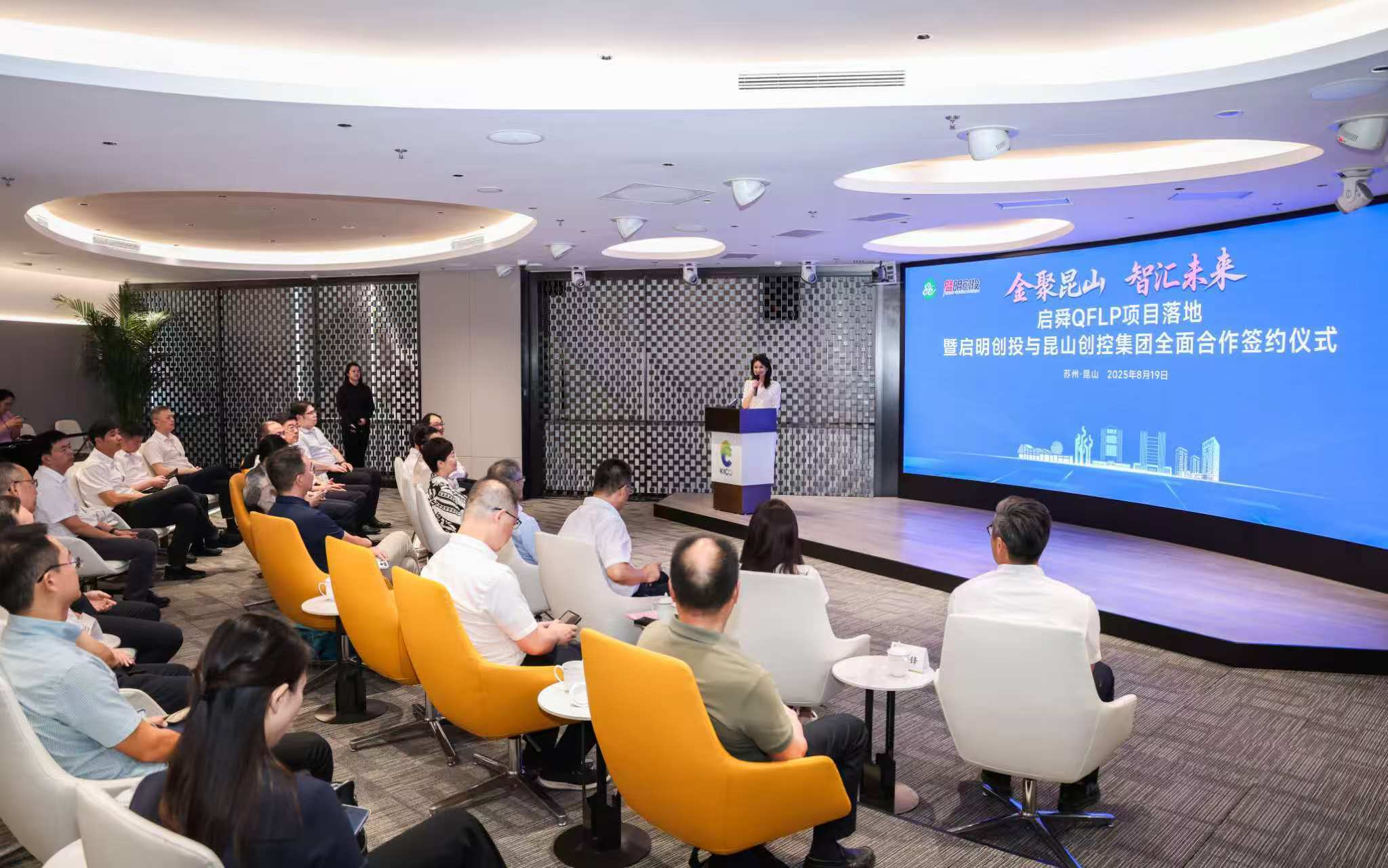
Core Insights - The establishment of the second QFLP fund by Qiming Venture Partners in Kunshan, Jiangsu, marks a significant development in the cross-border investment landscape, following the first fund launched in Shanghai in 2011 [1][8] - QFLP serves as a crucial tool for international investors to access China's private equity market, facilitating the conversion of foreign currencies into RMB and bypassing complex approval processes [4][5] - The successful launch of the QFLP project in Kunshan reflects the city's strong industrial foundation, innovative ecosystem, and favorable regulatory environment, making it an attractive destination for international capital [9][11] QFLP Overview - QFLP (Qualified Foreign Limited Partner) allows foreign investors to invest in domestic equity investment funds after passing qualification reviews and foreign exchange regulations, providing multiple advantages such as flexible currency exchange and investment convenience [4][5] - The QFLP fund can channel investments into emerging sectors like renewable energy and AI, benefiting both foreign capital and local enterprises [4][5] Kunshan's Competitive Advantages - Kunshan is recognized for its robust industrial base, with an economic output exceeding 500 billion RMB, and is focusing on developing a new industrial system that includes core industries, AI, and green low-carbon initiatives [8][11] - The city has established itself as a financial reform pilot zone, offering innovative policies that facilitate cross-border investment, thus creating a "green channel" for QFLP fund establishment [11][19] - Efficient government services and a collaborative mechanism between Kunshan and Qiming Venture Partners have expedited the fund's establishment process, showcasing the city's commitment to fostering a conducive investment environment [15][19] Strategic Collaborations - The partnership between Qiming Venture Partners and Kunshan has been ongoing since 2021, with previous investments in technology companies and a focus on integrating international technological advancements into local industries [12][14] - The recent QFLP project signifies an upgrade in collaboration, with plans for further investments in early-stage and growth-stage companies in technology and medical innovation sectors [7][14] Future Implications - The launch of the QFLP project in Kunshan is seen as a new starting point, transitioning the city from merely attracting capital to leveraging capital to drive industrial growth, providing a model for other cities exploring similar financial and industrial integration strategies [20]
优质资产注入“增色添彩” 沪市半年报凸显并购红利
Zheng Quan Shi Bao Wang· 2025-09-03 09:55
Core Viewpoint - Mergers and acquisitions (M&A) are crucial for enhancing the real economy, driving industrial upgrades, and promoting high-quality corporate development, with significant policy support since the introduction of the "Six M&A Guidelines" on September 24, 2024 [1] Group 1: M&A Impact on Financial Performance - A number of completed M&A projects have directly contributed to impressive financial results for companies in the first half of the year, becoming key sources of revenue growth [2] - *ST Songfa reported a total revenue of 6.68 billion yuan, a year-on-year increase of 315.49%, and a net profit of 647 million yuan, up 15,646.55%, following its acquisition of Hengli Heavy Industry [2] - Hanlan Environment achieved a revenue of 5.763 billion yuan and a net profit of 967 million yuan, reflecting a year-on-year growth of 8.99% after privatizing Yuefeng Environmental [3] - Ningbo Fubang's acquisition of 55% of Electric Alloy led to a revenue of 366 million yuan, a 29.18% increase, and a net profit of 29.63 million yuan, up 89.52% [3] - Sailis reported a revenue of 62.402 billion yuan and a net profit of 2.941 billion yuan, marking an 81.03% increase after acquiring Longsheng New Energy [4] Group 2: Strategic Focus of M&A - The current wave of M&A is characterized by a focus on industrial integration and transformation, shifting from quantity expansion to quality enhancement [5] - State-owned enterprises are actively integrating upstream and downstream resources, as seen with Yuanda Environmental's acquisition of Wuling Power and Longzhou Hydropower, expanding into hydropower and renewable energy [5] - Blue Science High-Tech's cash acquisition of Blue Asia Testing and China Air Separation aims to strategically adjust resources within the state-owned enterprise group, enhancing operational efficiency [5] Group 3: Technology and Innovation in M&A - Technology-driven M&A remains robust, with companies like Hu Silicon Industry consolidating core silicon wafer assets and Zhi Chun Technology acquiring Weidun Crystal Phosphorus to enhance their semiconductor capabilities [6] - Aopu Mai's acquisition of Pengli Biology aims to improve CRO research and development capabilities, while Beizi Technology's acquisition of Suike Intelligent aligns with its focus on smart logistics systems [6] Group 4: Market Outlook - The M&A market in Shanghai is expected to maintain vitality due to supportive policies and market-driven forces, enhancing the profitability and core competitiveness of listed companies [7]
地方经济增长动力从何而来?
申万宏源研究· 2025-09-03 09:22
Core Viewpoint - The article emphasizes the need for local governments to scientifically analyze the economic development environment and growth conditions during the "14th Five-Year Plan" period, focusing on identifying new growth points in industries, expanding consumption, and improving enterprise efficiency to ensure sustainable economic growth in China [4][5][6]. Group 1: Economic Growth and Development Goals - The economic growth in China is transitioning from high-speed to stable growth, necessitating a shift in how local governments set growth targets during the "14th Five-Year Plan" [5][6]. - The contribution of consumption to GDP has increased, with its share rising from 50% at the end of the "11th Five-Year Plan" to 57% by the end of the "14th Five-Year Plan" [7]. - Local governments should set realistic growth targets based on local resources, industry foundations, and development realities, ensuring that these targets are both feasible and positively guiding [8][9]. Group 2: Industry Development and Structural Changes - The service sector has become a core driver of economic growth, with its contribution to GDP increasing from approximately 45% during the "11th Five-Year Plan" to 60% currently [10][11]. - Local governments are encouraged to focus on the service industry, especially in lower-tier cities, to enhance employment and improve living standards [11][12]. - The industrial structure is shifting, with traditional industries declining while high-end manufacturing is on the rise, necessitating targeted policies to support these transitions [12][13]. Group 3: Consumption as a Growth Driver - The article highlights the importance of consumer purchasing power and market demand as fundamental to economic growth, advocating for a focus on consumption-driven growth [16][17]. - Service consumption is identified as having a more direct impact on local economies compared to goods consumption, which often benefits external regions [17][18]. - The growth of service consumption is expected to continue, with a projected increase in service retail sales by 6.2% in 2024, outpacing goods retail sales [18][19]. Group 4: Innovation and Enterprise Development - The vitality and development level of enterprises directly influence the quality and efficiency of local economic operations, making enterprise development a priority [21][22]. - Local governments should promote both technological and model innovations within enterprises to enhance efficiency and competitiveness [23][24]. - There is a need for tailored policies that consider regional characteristics to boost the innovation capabilities of enterprises across different areas [25][26].