养老产业

Search documents
北京市养老服务条例(草案)提请一审 积极构建首都特色养老服务体系
Bei Jing Shang Bao· 2025-07-24 13:17
Core Viewpoint - The legislative work on the "Beijing Elderly Care Service Regulations" has made progress, with the first review of the draft taking place on July 24, 2023. The regulations aim to address the increasing demand for diverse elderly care services in Beijing as the elderly population is projected to exceed 30% by 2030, reaching a severe aging level [2][3]. Summary by Sections Legislative Framework - The draft consists of 9 chapters and 68 articles, covering various aspects such as elderly care planning, community services, institutional care, and integrated medical care. It addresses current challenges in facilities, medical care, regulation, technology, and talent in the elderly care sector [3][4]. Responsibilities - The draft introduces a development guideline that combines the roles of government, market, society, and families in elderly care. The government is tasked with enhancing basic elderly care security and optimizing service supply, while the market is encouraged to play a significant role in the elderly care industry [3][4]. Service Network - The draft proposes a comprehensive elderly care service network that includes district-level guidance centers, community service stations, and a focus on home and community care. It emphasizes the need for services tailored to the elderly, particularly those with disabilities or dementia [5][6]. Supply System - The draft aims to establish a layered supply system for elderly care, ensuring that vulnerable groups receive adequate support. It encourages the development of various types of care institutions to meet the needs of different income groups, from low-income to high-income elderly individuals [7]. Technological Integration - The draft highlights the importance of promoting the elderly care industry through technology and innovation. It calls for the development of smart care systems and the integration of traditional services to accommodate the elderly's needs [7].


专科批次志愿填报开始 如何选择专业?专家建议:结合实际 扬长避短
Yang Shi Wang· 2025-07-24 10:38
Core Viewpoint - The article discusses the ongoing enrollment process for vocational colleges in China, emphasizing the importance of choosing the right major based on industry demand and personal interests [1][3]. Group 1: Enrollment Process - The enrollment for vocational colleges has begun, with most provinces focusing on the application process in late July [1]. - There are 1,554 vocational colleges in China, and students are advised to verify the legitimacy of these institutions to avoid unrecognized schools [1]. Group 2: Choosing a Major - The latest directory from the Ministry of Education lists 19 major categories, 97 subcategories, and 771 specific majors for vocational education, with plans to expand to 67,898 programs by 2025 [1]. - Experts recommend that students consider the future development prospects of industries related to their chosen majors, such as chips, artificial intelligence, new energy vehicles, and high-end CNC machine tools [3]. - It is suggested that students look for vocational colleges that also offer undergraduate programs, as these institutions may have stronger teaching systems and shared resources [3]. Group 3: Regional Industry Considerations - Students should take into account the local industry landscape when selecting a major; for instance, areas with a strong automotive industry may favor majors in new energy vehicle technology [4]. - The article emphasizes the importance of personal interest and strengths in the decision-making process, advising against a one-size-fits-all approach to major selection [4].
工银养老产业股票A:2025年第二季度利润2348.63万元 净值增长率1.28%
Sou Hu Cai Jing· 2025-07-21 04:39
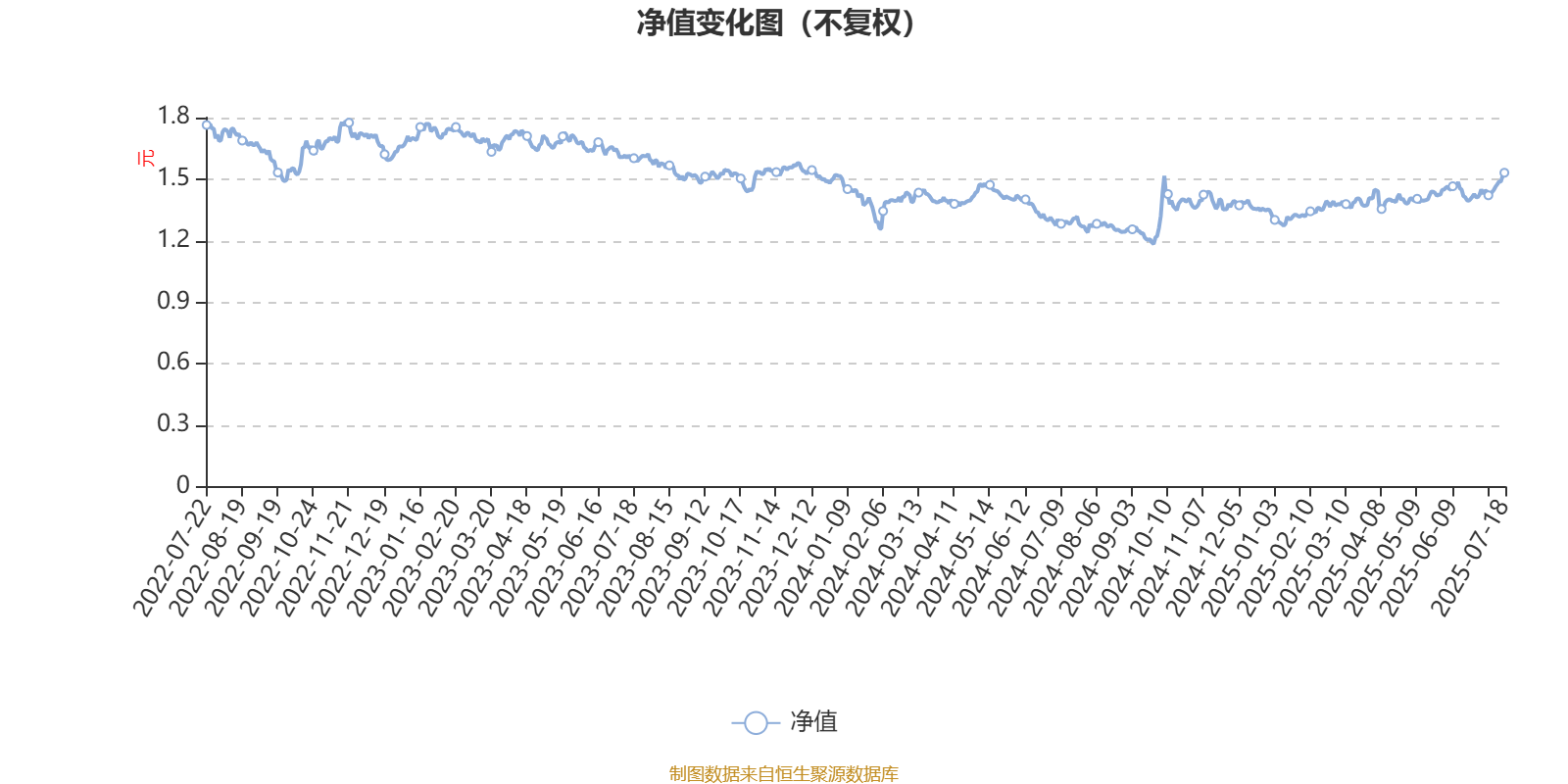
Core Viewpoint - The AI Fund ICBC Pension Industry Stock A (001171) reported a profit of 23.4863 million yuan for Q2 2025, with a weighted average profit per fund share of 0.0195 yuan, and a net asset value growth rate of 1.28% during the reporting period [3][14]. Fund Performance - As of July 18, the fund's unit net value was 1.531 yuan, with a fund size of 1.667 billion yuan [3][14]. - The fund's performance over different time frames includes a 10.38% growth rate over the past three months, 16.34% over the past six months, and 17.05% over the past year, ranking 50/54, 51/54, and 46/53 among comparable funds respectively [3]. - The fund's three-year Sharpe ratio is -0.1879, ranking 38/46 among comparable funds [9]. - The maximum drawdown over the past three years is 34.09%, with the largest single-quarter drawdown occurring in Q1 2021 at 22.75% [10]. Investment Strategy - The fund manager indicated a strategy of moderately increasing holdings in small and mid-cap medical device and upstream research service companies, which are expected to show performance inflection points or accelerated marginal growth, with valuations remaining reasonable [3]. - The fund continues to reduce its allocation in the traditional Chinese medicine sector due to weak short-term demand and significant operational pressure on leading companies [3]. Portfolio Composition - As of June 30, the fund's average stock position over the past three years was 84.97%, compared to the industry average of 88.19% [13]. - The top ten holdings of the fund include companies such as Heng Rui Medicine, Kelun Pharmaceutical, and Mindray Medical [18].
城市24小时 | 中部大省“出分”,湖北暂时领跑
Mei Ri Jing Ji Xin Wen· 2025-07-18 16:14
Economic Performance - Hubei province achieved a GDP of 29,642.61 billion yuan in the first half of the year, with a year-on-year growth of 6.2%, surpassing the national average of 5.3% by 0.9 percentage points [1] - Other central provinces also reported positive growth: Henan's GDP reached 31,683.80 billion yuan with a growth of 5.7%, Hunan's at 26,166.50 billion yuan with 5.6%, and Jiangxi's at 16,719.6 billion yuan with 5.6% [1] Economic Drivers - Hubei's economic growth was driven by three main factors: retail sales of consumer goods increased by 6.9% to 13,073.93 billion yuan, fixed asset investment grew by 6.5%, and exports surged by 38.5% to 2,927.9 billion yuan [1][2] - The province's infrastructure investment reached 659.1 billion yuan, accounting for 32.96% of the annual target, marking a 6.4% increase [2] Export Performance - Mechanical and electrical products remained the main export items for Hubei, accounting for a significant portion of total exports with a growth of 26.8% [2] - Among 17 cities in Hubei, 14 experienced double-digit growth in imports and exports, with Ezhou leading at a remarkable 273.9% increase [2] Future Outlook - Hubei aims to achieve an economic total exceeding 60 trillion yuan by 2024, with a target growth rate of around 6% for 2025 [2] - The gap in GDP between Hubei and Henan is narrowing, with a difference of 2,041.19 billion yuan in the first half of the year, down from 3,884.99 billion yuan in the same period last year [3]

能活到多少岁?中国人均预期寿命79岁,联合国预测2044年中国人寿命将赶超美国【附中国养老产业现状分析】
Qian Zhan Wang· 2025-07-10 11:29
Group 1 - The average life expectancy in China has reached 79.5 years as of 2024, showing a steady increase from 74.8 years in 2010 and 77.9 years in 2020 [2] - China's life expectancy growth rate surpasses that of some developed countries, with projections indicating that by 2044, China's life expectancy may slightly exceed that of the United States [2] - The aging population in China is increasing, with 21.1% of the population aged 60 and above by the end of 2023, and the proportion of those aged 65 and above rising to 15.6% in 2024 [2] Group 2 - Global aging is a widespread trend, with the highest aging rates in ten countries or regions exceeding 20%, and Hong Kong projected to surpass 40% by 2050 [4] - The increase in the elderly population impacts various sectors, including labor supply, economic growth, and social security systems, leading to higher demands for healthcare and pension systems [6] Group 3 - The demand for elderly care services in China is expected to rise significantly, with the number of elderly individuals requiring home care services projected to increase from approximately 40.33 million in 2020 to around 76 million by 2050 [8] - Various companies are actively engaging in the elderly care industry, with technology firms like Xiaomi and Huawei focusing on health monitoring devices and smart products for the elderly [9][10] Group 4 - Recommendations for addressing the challenges of rapid aging include transitioning the pension system from a pay-as-you-go model to a pre-funded investment model, as suggested by experts [12]


(经济观察)中国货币政策加码促消费 5000亿元撬动真金白银
Zhong Guo Xin Wen Wang· 2025-07-01 13:59
Group 1 - The People's Bank of China has established a 500 billion yuan service consumption and elderly care relending facility to support financial institutions in boosting loans for key service consumption sectors and the elderly care industry [1][3] - Financial institutions across various regions are actively increasing support for service consumption and elderly care, with specific loan amounts reported, such as 6.66 million yuan for elderly infrastructure and 13.6 million yuan for a travel agency [1] - The new relending tool is aimed at enhancing the financial supply to sectors like accommodation, dining, entertainment, and education, which are crucial for meeting the rising demand for high-quality services [3] Group 2 - The inclusion of service consumption and elderly care relending in monetary policy tools reflects a proactive approach to counter external shocks and stimulate domestic consumption [2] - China's service consumption potential remains largely untapped, with a projected 18% of GDP in 2024, compared to over 40% in developed countries, indicating significant growth opportunities [2] - The recent policy measures focus on enhancing the quality of service consumption, aligning with China's transition to high-quality development and optimizing consumer spending patterns [2][3]
平安人寿半年内三度举牌招行H股;中邮集团与友邦保险联合注资中邮人寿39.8亿;平安老将余宏出任友邦人寿总经理|13精周报
13个精算师· 2025-06-28 03:22
Regulatory Dynamics - Six departments support optimizing the guarantee system and promoting innovation in pension-related products [5] - Two departments released the "Implementation Plan for High-Quality Development of Inclusive Finance in Banking and Insurance" [6] - The central bank emphasized utilizing securities, fund, and insurance company swap facilities and stock repurchase to maintain capital market stability [7] - The Ministry of Human Resources and Social Security announced a 3% tax on personal pension withdrawals, not distinguishing between principal and investment income [8] - The Medical Insurance Bureau released guidelines for adjusting the basic medical insurance catalog and commercial insurance innovative drug catalog for 2025 [9][10] - The China Trust Industry Association is drafting guidelines for insurance trust business [11] - Former vice chairman of the China Insurance Regulatory Commission, Li Kemu, highlighted the significant potential in advancing the pension industry [12] - The Shanghai Financial Regulatory Bureau issued a plan to enhance pension financial services for the silver economy [13] - Shanghai will adjust unemployment insurance payment standards starting July 1 [14] Company Dynamics - Ping An Life has made three significant investments in China Merchants Bank's H-shares within six months [16] - PICC Pension's Beijing branch has been approved to commence operations [26] - China Ping An increased its stake in Agricultural Bank of China H-shares to 16.09% [17] - JPMorgan's stake in AIA Group has risen to 8.04% [18] - China Life, along with other companies, plans to establish a partnership with a total investment of 1.2 billion [19] - Haigang Life and CITIC Financial Assets have formed an equity investment fund with a total investment of 4.009 billion [20] - China Post Group and AIA have jointly injected capital, elevating China Post Life's registered capital to the fourth largest in the life insurance industry [21][22] - Huatai Asset Management's second-largest shareholder plans to transfer its shares, potentially making Huatai Insurance Group the sole shareholder [23] - Zhong An Insurance initiated a strategic capital increase of 3.9 billion HKD to enhance financial technology innovation investments [24] - China Pacific Insurance's subsidiary completed private fund manager registration [25] - Taikang Insurance has abolished its supervisory board [27] - Beida Forward signed an insurance agency agreement with Ping An Bank, with expected annual agency fees between 230 million to 360 million [28][29] Industry Dynamics - Insurance companies have raised nearly 70 billion in capital through large-scale increases and bond issuances this year [47] - The trend of insurance funds frequently acquiring H-shares has been noted, with significant increases in activity compared to the previous year [48] - Major insurance companies are increasing investments in real estate, with over 4 companies disclosing significant investments totaling over 4.8 billion [49] - Guojin Securities highlighted the potential for a revaluation of insurance stocks under new standards [50] - UBS maintained a "buy" rating for AIA after its investment in China Post Insurance, indicating minimal impact on its solvency [51] - 60% of insurance institutions plan to increase their investment in Hong Kong stocks by 2025, with Hong Kong being the preferred market for overseas investments [52] - The number of pilot cities for long-term care insurance has expanded to 49, with over 180 million participants [53] - The longevity economy presents significant opportunities for the pension industry, as highlighted by industry leaders [54] Product Services - China Life launched two new annuity insurance products: GuoShou XinXiang HongYing and GuoShou XinYue WanGeng [55]






帮主郑重A股早评:外围大涨提振信心,政策利好下如何把握机会?
Sou Hu Cai Jing· 2025-06-25 01:16
Market Overview - The US stock market has shown positive performance recently, with all three major indices rising over 1%, and the Dow Jones reaching its highest level since early March [3] - The Nasdaq China Golden Dragon Index surged by 3.31%, marking its largest single-day gain since May 13, driven by expectations of liquidity easing following signals from Federal Reserve Chairman Jerome Powell [3] Technical Analysis - The Shanghai Composite Index broke through the 3400-point level on June 24, with a trading volume of 1.41 trillion yuan, indicating a positive market signal [3] - Technical indicators such as RSI rising above 50, narrowing MACD bars, and KDJ golden cross suggest improving market sentiment [3] - However, significant selling pressure exists around the 3400-point mark, with historical failures to break through due to insufficient volume and trapped positions [3] Capital Flow - Northbound capital recorded a net sell of 6.304 billion yuan on June 24, with significant sell-offs in electronics, utilities, and home appliances, while sectors like non-ferrous metals, pharmaceuticals, and food and beverage saw net inflows [4] - Main capital flows indicate net inflows in banking, industrial metals, and real estate development, while sectors like semiconductors and computer applications experienced net outflows, reflecting a shift in capital between high and low-performing sectors [4] Policy Support - The People's Bank of China conducted a reverse repurchase operation of 406.5 billion yuan on June 24, releasing liquidity into the market [4] - A joint initiative from six departments introduced a 500 billion yuan loan program to support service consumption and the elderly care industry, which is expected to benefit related sectors in the long term [4] - The China Securities Regulatory Commission emphasized the role of the Sci-Tech Innovation Board in supporting technological innovation, potentially boosting confidence in the tech sector [4] Geopolitical Context - High-level trade talks between China and the US have resumed, which may help ease trade tensions [4] - The ceasefire agreement in the Middle East is in effect, but ongoing conflicts warrant attention to geopolitical risks that could impact the market [4] Investment Strategy - A-shares are expected to continue an upward trend on June 25, but attention is needed around the 3400-point resistance level [5] - Long-term investors are advised to focus on sectors supported by policy, such as consumption, technology, and elderly care, which have strong growth potential [5] - Short-term investors should monitor volume changes, with a sustained increase to 1.5 trillion yuan or more indicating potential for further market breakthroughs [5]

5000亿元政策“红包”落地 银行加速布局养老贷款业务
Zhong Guo Jing Ying Bao· 2025-06-18 06:24
Core Insights - The introduction of the "Longdu Elderly Loan" by the Industrial and Commercial Bank of China in Puyang marks the first specialized loan for the elderly care industry in the city, following the People's Bank of China's 500 billion yuan policy to support service consumption and elderly care [1] - The elderly care industry faces challenges such as long investment cycles and low profitability, necessitating low-cost funding to stabilize banks' net interest margins and reduce financing costs for the elderly care sector [1][3] - The central government's focus on increasing income for low- and middle-income groups and promoting service consumption is driving the development of the elderly care industry [2] Financing Challenges - The elderly care sector, particularly private institutions, often struggles with small business scales, low credit ratings, and long investment return periods, leading to difficulties in obtaining affordable financing [3] - The implementation of elderly care re-loans aims to lower financing thresholds for eligible elderly care institutions by providing low-cost funds from the central bank [3][4] Policy and Implementation - The People's Bank of China has established a framework for service consumption and elderly care re-loans, with specific guidelines released to clarify the support scope and operational requirements [2] - The re-loan policy is designed to target four key areas: facility construction, equipment procurement, operational support, and innovative service development [4] Recommendations for Financial Institutions - Banks are encouraged to enhance their elderly financial services by establishing specialized service mechanisms and developing differentiated credit approval processes [5] - There is a need for innovative financial products that cater to the diverse financing needs of various elderly care institutions, alleviating their financial burdens [6] - Strengthening risk management tailored to the characteristics of the elderly care industry is essential for effective loan management [6]
未来10年,这个专业将持续爆火
3 6 Ke· 2025-06-12 02:01
Core Insights - The annual college entrance examination has concluded, and over 13 million candidates will soon choose their majors, with increasing interest in the elderly care industry due to its high employment rates and future growth potential [1] - The National Health Commission predicts that China will enter a severe aging phase around 2035, indicating a growing demand for professionals in elderly care [1] Group 1: Industry Potential - The elderly care market in China has significant potential, with a projected increase in demand for related professionals over the next decade [1] - Currently, there are only 2 million elderly care workers in China, while the actual demand is estimated to be as high as 30 million [17] Group 2: Professional Experiences - Students in elderly care programs report a stark contrast between their expectations and the realities of the job, including physical and emotional challenges [6][15] - Many students initially face stigma or embarrassment about choosing elderly care as a profession, with a significant number considering changing their majors [15] Group 3: Educational Structure - The elderly care curriculum includes practical courses on elderly health assessment, emergency care, and communication skills, but many instructors lack specific backgrounds in elderly care [13][36] - Newer programs are evolving to meet the demands of the industry, such as the shift towards "Smart Health and Elderly Care Services and Management" [19] Group 4: Job Market and Opportunities - The job market for elderly care professionals is expanding, with various roles beyond caregiving, including management and research positions [36][33] - There is a growing recognition of the need for diverse skill sets in elderly care, including therapeutic recreation and social work [20][22] Group 5: Societal Perceptions - There is a societal stigma associated with elderly care roles, often viewed as low-status jobs, which can deter potential candidates [17] - The industry faces challenges in changing public perceptions and increasing the appeal of elderly care professions to younger generations [19][45]