
合成生物学

Search documents
朸濬国际拟收购奥诺香港已发行股本的100%
Zhi Tong Cai Jing· 2025-12-23 11:40
朸濬国际(01355)发布公告,于2025年12月23日,本公司直接全资附属公司佳怡环球作为买方与卖方郑 彤女士订立买卖协议,卖方有条件同意出售而买方有条件同意购买销售股份(占目标公司奥诺香港已发 行股本的100%)及销售贷款,总作价为2200万港元。于完成后,目标公司将成为本公司的间接全资附属 公司及本公司将持有倍生生物的37.5%权益,倍生生物集团的财务业绩、资产及负债将以权益法会计处 理计入在本集团的财务报表。 倍生生物是专注于菌株设计和发酵工艺开发的合成生物基础设施供应商,为合成生物企业、生物医药企 业及希望利用合成生物技术实现产业升级的传统发酵企业提供更高品质、更便捷、更低成本的技术服务 及相关产品。 本集团认为,医疗保健及美容业务相关专有权利与技术的研发是取得竞争优势的关键。本集团目前的研 发重点领域包括:III型胶原蛋白-透明质酸"双蛋白"水光针,主要采用透明质酸渗透增强技术,以重组 III型胶原蛋白+乙酰化透明质酸(AcHA)为复合成分,提高透皮吸收效率,从而实现即时填充+长期再生; 羟基磷灰石/胶原蛋白复合填料,瞄准颞部填料这一庞大市场;光电激活型胶原蛋白修护精华,主要目标 是开发含有热敏/ ...

产中链脂肪酸突破 9.05 g/L!重庆大学团队实现竹废料与CO₂高效生物合成利用,开辟绿色制造新路径,诚聘弘深青年教师/博士后
合成生物学与绿色生物制造· 2025-12-23 09:07
Core Viewpoint - The article highlights a significant breakthrough in the biosynthesis of medium-chain fatty acids (MCFAs) by a research team led by Professor Wang Dan from Chongqing University, utilizing engineered Escherichia coli and bamboo waste as a substrate, achieving a production yield of 9.05 g/L in a 5 L fermentation tank [2][5]. Group 1: Research Breakthroughs - The research team constructed an efficient synthesis pathway in E. coli by deleting specific genes to block β-oxidation and enhance the utilization of multiple carbon sources, resulting in an initial MCFA yield of 2.29 g/L [4]. - Further enhancements were made using protein engineering techniques, achieving a yield of 5.83 g/L and the first synthesis of C6 fatty acids [4]. - The introduction of a carbonic anhydrase gene from Anabaena sp. 7120 improved CO₂ conversion efficiency, raising the yield to 6.72 g/L, and subsequent overexpression of a fatty acid regulatory factor led to a final yield of 9.05 g/L [5]. Group 2: Economic and Environmental Impact - The economic analysis indicates that using bamboo waste hydrolysate instead of glucose as a carbon source reduces the production cost of MCFAs by approximately 17% per ton, showcasing both economic and environmental advantages of this biosynthetic route [5]. Group 3: Institutional Background - Chongqing University is a key national research university, actively contributing to regional and industrial development, with significant achievements in research funding and project approvals [7][8]. - The university's chemical engineering and technology programs rank highly globally, reflecting its strong academic capabilities and commitment to innovation in fields like bio-manufacturing [8]. Group 4: Research Team and Leadership - Professor Wang Dan leads the research team, focusing on biosynthesis of chemical products and new materials, with numerous publications in high-impact journals and significant contributions to national research projects [9].


印度叫停对华钛白粉反倾销税,西湖集团关停在美4家工厂
Huaan Securities· 2025-12-22 11:11
Investment Rating - The industry investment rating is "Overweight" [1] Core Insights - The chemical sector is expected to continue its differentiated trend in 2025, with recommendations to focus on synthetic biology, pesticides, chromatography media, sweeteners, vitamins, light hydrocarbon chemicals, COC polymers, and MDI [4][5] - The recent suspension of anti-dumping duties on titanium dioxide by India is anticipated to allow Chinese companies to regain market share lost to competitors during the duty period [35] - The closure of four factories by Westlake Group in the U.S. is a strategic move to enhance profitability in high-performance and basic materials [35] Industry Performance - The chemical sector ranked 5th in overall performance for the week of December 15-19, 2025, with a gain of 2.58%, outperforming the Shanghai Composite Index by 2.55 percentage points [3][20] - The polyurethane sub-sector showed the highest increase at 9.04%, while non-metallic materials III experienced a decline of 2.29% [21] Specific Industry Trends - Synthetic biology is at a pivotal moment, with low-energy products expected to see significant growth due to energy structure adjustments [5] - The third-generation refrigerants are entering a high prosperity cycle as supply constraints tighten and demand remains stable [6] - The electronic specialty gases market presents substantial opportunities for domestic companies due to high technical barriers and increasing demand from semiconductor and photovoltaic sectors [7][8] - The trend towards light hydrocarbon chemicals is becoming global, with a shift from heavy naphtha to lighter feedstocks like ethane and propane [8] - The COC polymer industry is accelerating its domestic industrialization, driven by local demand and supply chain security concerns [9] - Potash prices are expected to rebound as major producers reduce output, leading to a tightening supply situation [10] - The MDI market is characterized by oligopoly, with a favorable supply structure anticipated as demand recovers [11]
企业新闻丨华宝股份以科技创新驱动“新质生产力”转型
Xin Lang Cai Jing· 2025-12-22 10:57
Core Insights - The article emphasizes the transformation of the flavor and fragrance industry in China, driven by technological innovation and consumer upgrades, aligning with national strategies like "Healthy China 2030" and the "14th Five-Year Plan" [1][15] Strategic Drive - The company is undergoing a comprehensive transformation focused on "green, nutrition, and health," evolving from a traditional flavor manufacturer to a provider of flavor and health solutions [3][15] - The expansion into food ingredients and the health industry aims to support consumer goods supply chain management, catering to the growing consumer demand for a better quality of life [3][15] Innovation Engine - High R&D investment is a core competitive advantage, with an average of over 9% of revenue allocated to R&D over the past three years, maintaining a leading position in the industry [5][16] - The company has established a global open R&D system, with technology centers and laboratories in multiple countries, ensuring the ability to capture global technological trends and market demands [5][16] Technological Advancements - As of October 2025, the company holds 328 patents and over 10,000 flavor formulas, achieving leading advantages in key technologies such as precision extraction and bioconversion [7][18] - The company is expected to make breakthroughs in synthetic biology and AI applications, continuously setting new technological standards [7][18] Digital Transformation - The company is advancing a comprehensive digital upgrade across its operations, utilizing SAP ERP and PLM systems to enhance efficiency and collaboration among global teams [8][19] - This digital transformation has earned recognition as a "2024 Leader in Digital Transformation" in China's light industry [8][19] Forward-Looking Strategies - The company is extending its innovation into global markets, focusing on high-growth potential areas like heated tobacco and oral nicotine products, leveraging its core advantages in flavor release and functional materials [12][23] - This strategy aims to provide competitive raw materials and technical solutions, driving the transition to reduced-harm products [12][23] - The company is poised to lead the flavor and fragrance industry into a new era of higher quality and creativity through ongoing technological advancements and global expansion [12][24]

巨子生物携手瑞典Nordberg Medical,迈向“生态出海”新阶段
Huan Qiu Wang Zi Xun· 2025-12-22 08:37
Core Insights - Nordberg Medical and Giant Bio have signed a strategic cooperation agreement to advance the global development and commercialization of recombinant collagen in the medical aesthetics and biomedical fields [1][2] Group 1: Strategic Partnership - The agreement grants Nordberg Medical the rights to develop, produce, and commercialize Giant Bio's patented recombinant collagen outside of mainland China [1] - This collaboration aims to develop multiple tissue regeneration products for the medical aesthetics sector, leveraging the low immunogenicity and virus-free characteristics of Giant Bio's recombinant collagen [1] Group 2: Market Potential - The injection-based medical aesthetics market is projected to reach a market size of $10 billion by 2026, highlighting significant growth opportunities for the partnership [2] - The collaboration is expected to enhance Nordberg Medical's innovation capabilities in regenerative medicine by providing a richer product line [2] Group 3: Industry Impact - The partnership is seen as a milestone for both companies, with Giant Bio's technology being recognized as a "Chinese technology business card" in the international market [2] - The collaboration is anticipated to have a profound impact on the global medical aesthetics industry, promoting high-quality health solutions for consumers and practitioners [2]
合成生物2025:资本退烧、技术落地,万亿赛道迈向“成年期”
Xin Lang Cai Jing· 2025-12-22 06:00
Core Insights - The synthetic biology industry is experiencing significant growth, with the global market expected to reach $24.58 billion in 2023 and potentially exceed $100 billion by 2032, while China's market is projected to surpass $70 billion this year [3][9][10] - The industry is transitioning from a story-driven phase to a focus on profitability and commercial viability, marking a maturation process [3][32] - The integration of AI into synthetic biology is reshaping the entire research and production process, enhancing efficiency and reducing development cycles [24][25] Market Overview - The global synthetic biology market was valued at approximately $14 billion in 2022 and is projected to grow to $38.7 billion by 2027 [9][10] - China's synthetic biology market has shown a steep growth trajectory, increasing from $9 million in 2016 to an estimated $70 billion in 2023 [10][11] - The A-share market features over 160 synthetic biology concept companies, collectively valued at around $1.69 trillion, indicating a robust ecosystem [17] Investment Trends - Investment in synthetic biology is shifting from a broad approach to a more targeted strategy, focusing on companies with clear commercialization pathways [11][12] - In 2025, the capital flow in the synthetic biology sector is characterized by a significant concentration in the healthcare field, with major investments in companies like Yikole Biotechnology [11][12] - The beauty sector is emerging as a hot investment area, with over 46.5% of financing events in the cosmetics field related to synthetic biology [11] Policy and Regulatory Environment - The Chinese government is actively supporting the synthetic biology industry through comprehensive policies, including the "14th Five-Year Plan" which emphasizes biomanufacturing [14][33] - Policies are being implemented to enhance the development of biomanufacturing capabilities, with a goal to establish over 20 pilot platforms by 2027 [31][33] Industry Dynamics - The synthetic biology sector is witnessing a diversification of applications beyond healthcare, extending into chemicals, materials, and agriculture [7][9] - The healthcare segment remains the largest market, with a projected size of $10.3 billion by 2027, driven by innovations like CAR-T therapies [17][18] - The food and agriculture sectors are expected to see the fastest growth rates, with annual compound growth rates of 45.4% and 56.4% respectively from 2022 to 2027 [18] Technological Innovations - AI is becoming a core driver in synthetic biology, moving from a supportive role to a central engine in research and production processes [24][25] - Significant advancements in AI and synthetic biology are enabling the design of complex biological systems and enhancing production efficiency [24][25] - Companies are leveraging AI to optimize fermentation processes and improve product quality, demonstrating the practical applications of these technologies [26][27] Challenges and Future Outlook - The industry faces challenges in scaling from laboratory results to commercial production, with a significant drop in success rates without pilot testing [29][31] - The need for a robust ecosystem that supports innovation and commercialization is critical for overcoming existing barriers [32][33] - The future of the synthetic biology industry is promising, with expectations for continued growth driven by technological advancements and supportive policies [32][33]



巨子生物携手瑞典Nordberg Medical,迈向「生态出海」新阶段
Jin Rong Jie· 2025-12-22 05:44
Core Insights - Nordberg Medical and Giant Bio have signed a strategic cooperation agreement to jointly advance the global development and commercialization of recombinant collagen in the medical aesthetics and biomedical fields [1][2] Group 1: Strategic Cooperation - The agreement grants Nordberg Medical the rights to develop, produce, and commercialize Giant Bio's patented recombinant collagen in global markets outside mainland China [1] - This collaboration aims to enhance Nordberg Medical's position in the rapidly growing anti-aging regenerative solutions sector [1][2] Group 2: Market Potential - The injectable medical aesthetics market is projected to reach $10 billion by 2026, highlighting significant growth opportunities for Nordberg Medical [2] - The partnership is expected to diversify the product portfolio and strengthen innovation capabilities in regenerative medicine [2] Group 3: Company Background - Nordberg Medical is a Swedish biotechnology and medical device company focused on creating innovative biomedical solutions that connect nature and science [3] - The flagship brand, JULÄINE of Sweden™, features a new generation of collagen biostimulants that activate the body's natural collagen regeneration [3] - The company has received regulatory approvals for its products in 33 markets and is expanding its direct sales network across over 20 countries, with plans to enter North America, South America, and the Middle East [4]
瞧,天山脚下这支农科“国家队”
Xin Lang Cai Jing· 2025-12-21 19:39
Core Insights - The article highlights the significant advancements in agricultural technology and research in Xinjiang, particularly in cotton and fruit cultivation, driven by experts from the Chinese Academy of Agricultural Sciences (CAAS) [1][2][3][4][5] Group 1: Cotton Research and Innovations - The CAAS has established multiple innovation teams focusing on high-quality cotton production, with a notable achievement of a single yield exceeding 750 kg per hectare in 2024 [1] - The "reduced density and robust plant" technique has been successfully promoted, enhancing cotton yield and reliability for farmers [1] - A new cotton variety developed by Yang Zuoren's team utilizes synthetic biology to produce astaxanthin, aiming for higher value utilization of cotton resources beyond traditional fiber production [5] Group 2: Fruit Cultivation and Genetic Resources - Wang Lirong's team has collected 244 samples of local peach genetic resources in Xinjiang, emphasizing the region's rich biodiversity and the need for improved agricultural techniques [2] - The research aims to enhance the understanding and utilization of Xinjiang's fruit resources, which are currently underutilized due to weak technical foundations [2] Group 3: Livestock and Crop Production - The introduction of the "Huaxi Cattle" breed by Hou Shaohua's team has improved the growth rate and meat yield, contributing to the livestock industry's efficiency in Xinjiang [3][4] - The implementation of precision corn planting techniques has led to a record corn yield of 1,018 kg per mu in Changji, marking a significant milestone in local agricultural productivity [4]
浮萍什么来头?
Xin Lang Cai Jing· 2025-12-21 17:38
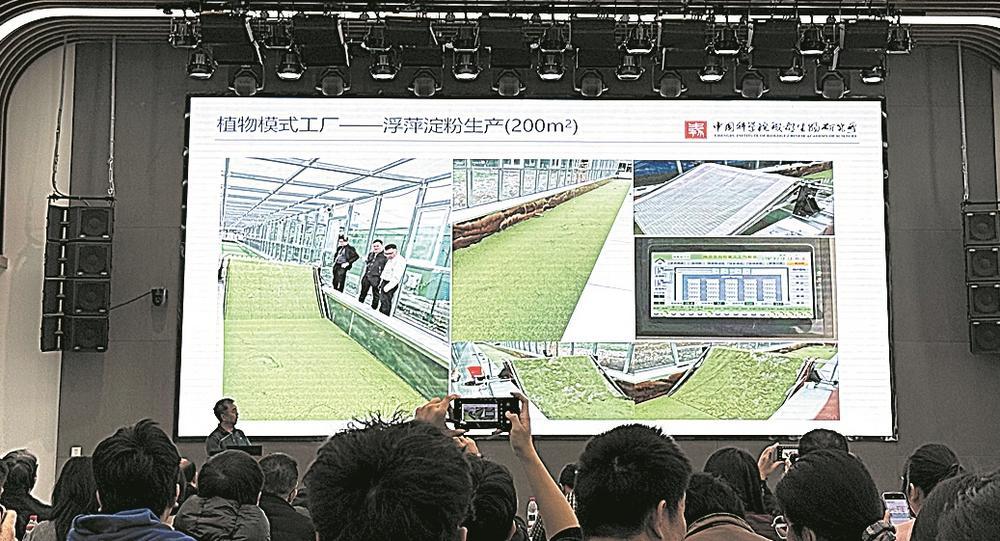
Core Insights - The article discusses the increasing recognition and potential applications of duckweed as a sustainable food source and resource for biomanufacturing, particularly in addressing food security challenges and environmental sustainability [3][5][6]. Group 1: Duckweed's Nutritional and Agricultural Advantages - Duckweed has a higher starch content than rice and a protein content comparable to soybeans, making it a promising alternative food source [4][6]. - Research indicates that duckweed can achieve a starch accumulation rate of 8.55g/㎡/d, which is five times higher than traditional crops, with potential annual starch production exceeding 2 tons per acre, significantly surpassing rice [6]. - The protein yield from various duckweed strains can exceed 1,000 kg/acre annually, with some strains reaching up to 1,567 kg/acre and protein content as high as 50%, indicating its potential as a substitute for soybeans [6]. Group 2: Environmental and Economic Benefits - Duckweed can be cultivated in wastewater, effectively removing nitrogen and phosphorus while sequestering carbon dioxide, thus enhancing wastewater treatment processes [7]. - In specific projects, duckweed cultivation has demonstrated the ability to produce protein yields of 850 kg/acre/year from nutrient-rich wastewater, which is over ten times the protein yield of soybeans, with low production costs [7]. - The cultivation of duckweed offers a sustainable agricultural model that does not compete for arable land, supporting the development of a new food production system that is both economically viable and environmentally friendly [7]. Group 3: Research and Development Initiatives - The third Duckweed Resource Development and Utilization Seminar highlighted ongoing research into duckweed's applications in food security and biomanufacturing [3][5]. - Researchers are actively promoting small-scale duckweed cultivation in regions like Yunnan and Sichuan to explore its practical applications and benefits [7].
生物医药产业:如何从 “上海策源”走向 “长三角共振”?
Di Yi Cai Jing· 2025-12-21 08:13
Core Viewpoint - The integration of technology, talent, and policy tools in the Yangtze River Delta region is crucial for the development and cross-domain collaboration of the biopharmaceutical industry, which has already surpassed a scale of 1.2 trillion yuan, accounting for about one-third of the national total [1] Group 1: Industry Development and Collaboration - The biopharmaceutical industry in the Yangtze River Delta is expected to benefit from the expansion of the international innovation center, leading to better integration of scientific resources across cities [1][2] - The Shanghai Technology Exchange has established a biopharmaceutical special board to address challenges in technology assessment and investment cycles, facilitating 1,835 transactions with a total value exceeding 38 billion yuan [2] - The G60 Science and Technology Corridor in the Yangtze River Delta has 9 cities with 9,813 biopharmaceutical companies, representing 14.67% of the national total, indicating a strong cluster effect [3] Group 2: Regulatory and Policy Tools - Regulatory cooperation agreements among the drug monitoring departments of the three provinces and one city have been signed to enhance efficient development in the biopharmaceutical sector [4] - There is a need for improved tracking of the implementation of signed framework agreements to ensure effective cross-regional collaboration [5] Group 3: Capital Participation and Investment Trends - By 2025, the total investment in the biopharmaceutical sector in the Yangtze River Delta is projected to reach 150 billion yuan, accounting for 45% of the national total, with Shanghai and Jiangsu leading in financing [6] - Companies are increasingly seeking opportunities for pilot testing and production in surrounding areas due to lower labor costs and more available space [6][7] - The establishment of biopharmaceutical funds in the G60 Science and Technology Corridor aims to integrate resources from Shanghai and surrounding cities to support industry development [7] Group 4: Future Opportunities and Strategic Recommendations - The intelligent pharmaceutical sector driven by AI and big data is expected to see significant growth, with AI playing a role in target discovery and clinical design optimization [8] - Companies are advised to actively engage in regional collaborative ecosystems and leverage clinical resources to reduce transformation costs [8] - Emphasis should be placed on addressing unmet clinical needs and ensuring the domestic production of key materials to enhance cost competitiveness [8]