实体经济

Search documents
精准赋能实体经济高质量发展
Jing Ji Ri Bao· 2025-12-08 22:15
Core Insights - The Agricultural Bank of China Shantou Branch is leveraging financial innovation to address financing challenges in the manufacturing sector, aligning with the "Made in China" strategy and Guangdong's manufacturing initiatives [1][2] Group 1: Financial Innovation and Support - The Shantou Branch has successfully established a 280 million yuan medium to long-term syndicate loan for Guangdong Jianda Fiber Technology Co., Ltd., addressing the mismatch between traditional short-term loans and the long investment cycles of major technology upgrades [1] - The loan scheme includes a differentiated repayment arrangement that aligns with the company's investment return cycle and incorporates core process patents into the credit assessment, providing robust support for technological advancements and capacity expansion [1] Group 2: Product Development and Growth Metrics - The Shantou Branch is enhancing its financial product offerings, including "Sci-Tech Loans" and "Technology Innovation Patent Loans," to alleviate financing pressures for technology-driven SMEs lacking sufficient collateral [2] - As of November 2025, the cumulative medium to long-term loans to manufacturing companies reached 1.59 billion yuan, with a net increase of 1.24 billion yuan, reflecting a year-on-year growth rate of 53.6%, primarily directed towards local pillar industries such as textiles and toys [2] - The inclusive loan balance reached 7.76 billion yuan, with an increase of 2.16 billion yuan, including a corporate inclusive loan balance of 2.85 billion yuan, which saw an increase of 760 million yuan [2] Group 3: Future Outlook - The Shantou Branch aims to continue optimizing its financial supply structure to support the industrial transformation and upgrading in Shantou and the broader Guangdong East region, contributing to high-quality regional economic development [2]
巩固壮大实体经济根基|推动更多传统产业“老树发新芽”
Zhong Guo Jing Ji Wang· 2025-12-08 13:40
Core Insights - Traditional industries are the foundation of China's industrial system, contributing approximately 80% to the manufacturing value added, with a focus on optimizing and enhancing these sectors as a priority in the "14th Five-Year Plan" [2] - The integration of traditional industries with emerging and future industries is essential for mutual support and development, providing application scenarios for new technologies and ensuring the supply of critical materials [2] - The National Development and Reform Commission estimates that there will be an additional market space of around 10 trillion yuan in the next five years for traditional industries, emphasizing the need for strategic and tactical approaches to achieve this goal [3] Group 1 - The number of intelligent factories has exceeded 230, and over 1,260 5G factories have been established since the "14th Five-Year Plan," with China's industrial robot installations accounting for more than 50% of the global total [2] - The textile industry has seen exports surpassing 100 billion USD in the first three quarters of this year, with a year-on-year growth of 2.1%, indicating a positive trend in international markets [3] - The shift of traditional industries towards high-end manufacturing is exemplified by companies like Shenyang Machine Tool Co., which has made significant advancements in five-axis machine tools, and the National Energy Group's digital collaboration platform linking thousands of businesses [3][4] Group 2 - High-tech and high-value-added manufacturing sectors have emerged from traditional industries, highlighting the importance of technological upgrades and transformations [4] - Local initiatives, such as the smart manufacturing data platform in Fujian and investments in intelligent shipbuilding in Anhui, demonstrate the ongoing transition of traditional industries towards high-end, intelligent, and green production [4] - The emphasis on enhancing industrial foundations and addressing weaknesses is crucial for traditional industries to thrive in new competitive landscapes [4]
郑永年:科创为“帆” 产业为“锚”——上海“五个中心”建设须以实体经济“领航”
Xin Hua Cai Jing· 2025-12-08 06:05
Core Insights - The article emphasizes the need for Shanghai to leverage its role in the national development strategy by focusing on the real economy and technological innovation, creating a synergistic system of basic research, application technology transformation, and financial services to promote high-quality development of the "Five Centers" [1] Group 1: International Strategic Landscape - The current international order is undergoing four structural changes: the weakening of the US-led alliance system, limitations on multilateral mechanisms like the UN, fragmentation of global governance, and a shift in US strategic focus towards the Asia-Pacific region [1] - The breakthrough in scientific and technological capabilities and the resilience of the industrial system are seen as core determinants of national competitiveness [1] Group 2: Development of New Productive Forces - The core task during the "14th Five-Year Plan" period is to develop new productive forces and build a modern industrial system, which aligns with the strategic positioning of Shanghai's "Five Centers" [1] - Historical examples from Japan and the "Four Asian Tigers" illustrate that sustained investment in technological innovation is crucial for overcoming the "middle-income trap" and achieving a virtuous cycle of technological progress, industrial upgrading, job expansion, tax growth, and reinvestment in innovation [1] Group 3: Shanghai's Unique Advantages - Shanghai's advantages include a well-structured ecosystem for research and development, with a concentration of top universities and research institutions, and the establishment of a "Basic Research Pilot Zone" [1] - The manufacturing strengths of neighboring provinces like Jiangsu, Zhejiang, and Anhui provide ample opportunities for technology transfer from laboratories to production lines [1] - As a national financial center, Shanghai can offer diverse capital support for hard technology projects throughout the entire cycle from research and development to mass production [1] Group 4: Financial Integration with the Real Economy - The construction of a national financial center must prioritize the real economy, avoiding the pitfalls of "de-industrialization" seen in the UK and the US [2] - Financial services should act as a "booster" for technological innovation and industrial upgrading, rather than becoming a self-referential "bubble" [2] - Shanghai should focus on developing venture capital, industrial funds, and technology finance that align with the high-risk, long-cycle nature of hard technology projects [2] Group 5: Global Innovation Landscape - The main battleground for the fourth industrial revolution is concentrated in the US and China, with China having three strategic hubs: Beijing for basic research, the Greater Bay Area for market application, and the Yangtze River Delta, centered in Shanghai, for its integrated advantages in research, manufacturing, and finance [2] - Recommendations for Shanghai include improving the venture capital ecosystem and reforming institutional mechanisms to create an efficient closed loop between innovation, industry, and finance [2]
新华述评·2025中国经济回眸|激活产业动能 构筑战略优势——我国实体经济根基不断巩固壮大
Xin Hua Wang· 2025-12-07 13:34
Core Viewpoint - The foundation of the real economy in China is continuously strengthening, which is crucial for building strategic advantages for future development [1][2]. Group 1: Economic Performance - In the first ten months, the industrial added value of large-scale enterprises increased by 6.1% year-on-year, with 29 out of 41 industrial sectors showing growth, resulting in a growth rate of 70.7% [4]. - The added value of high-tech manufacturing and digital product manufacturing increased by 7.2% and 6.7% respectively in October [4]. - The manufacturing sector's contribution to GDP was 25.7% in the first half of the year, indicating a stable and significant role in the economy [5]. Group 2: Agricultural and Service Sector Developments - The agricultural sector is maintaining a solid foundation, with summer grain production expected to be abundant, contributing positively to the overall economy [5]. - The service sector's value added contributed 3.1 percentage points to GDP growth in the first three quarters, reflecting its improving quality and efficiency [5]. Group 3: Infrastructure and Technological Advancements - By the end of October, the total number of 5G base stations in China reached 4.758 million, an increase of 507,000 from the previous year [5]. - Significant technological innovations include the development of a high-speed real-time oscilloscope and advancements in various sectors such as semiconductors and intelligent driving [9]. Group 4: Financial Support and Market Environment - Financial policies are increasingly focused on supporting the real economy, with multiple government initiatives aimed at enhancing financial services for industrial development [12][13]. - The introduction of new policies to improve market order and streamline factor circulation is expected to foster a healthier business environment [13]. Group 5: International Cooperation and Market Expansion - Several multinational companies are establishing operations in China, indicating a growing international interest in the Chinese market [14]. - The removal of restrictions on foreign investment in the manufacturing sector and ongoing efforts to enhance openness in telecommunications are expected to optimize international market layouts [14]. Group 6: Corporate Resilience and Commitment - Companies are demonstrating resilience and commitment to their core businesses, with examples of significant revenue growth despite external pressures [5]. - The focus on innovation and quality in production is seen as essential for maintaining competitiveness in the global market [15].
华创云信:公司将坚持以AI和服务赋能实体经济
Zheng Quan Ri Bao Zhi Sheng· 2025-12-05 16:35
(编辑 袁冠琳) 证券日报网讯 12月5日,华创云信在互动平台回答投资者提问时表示,公司将坚持以AI和服务赋能实体 经济,加快新型数联网建设运营,扩展应用生态,深化证券金融服务数字化转型,夯实公司综合发展基 础,继续做好经营管理,提升公司运营效益,促进公司指标合理反映公司投资价值,切实维护投资者权 益。 ...

证监会主席吴清:资本市场是人民群众分享实体经济发展成果的重要平台
Xin Lang Cai Jing· 2025-12-04 23:31
Group 1 - The core viewpoint of the article emphasizes the importance of enhancing the inclusiveness and adaptability of the capital market to meet the aspirations of the people for a better life, as highlighted in the 20th Central Committee's fourth plenary session [1] - The capital market serves as a crucial platform for over 200 million stock investors and more than 700 million fund investors to share in the achievements of the real economy [1] - Since the implementation of the new "National Nine Articles," the capital market has shown a stable and positive trend, with an expected cash dividend for investors reaching 2.4 trillion yuan in 2024 [1] Group 2 - There is an increasing willingness and demand among the public to manage personal wealth through the capital market, necessitating the provision of richer and higher-quality financial products and services [1] - The capital market is expected to gradually expand channels for increasing residents' property income [1]
“2030年,中国有望实现8个‘超大规模’”
Guan Cha Zhe Wang· 2025-12-03 01:08
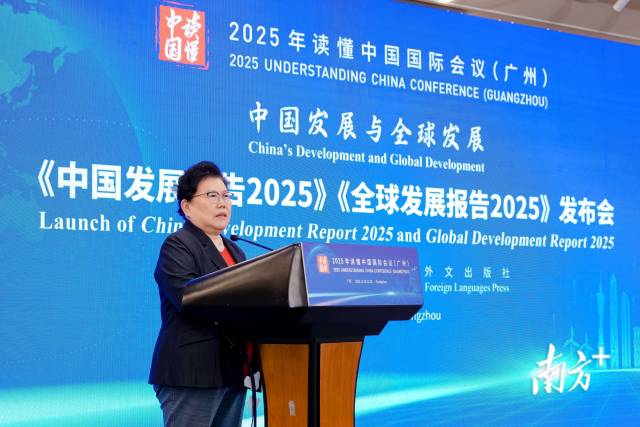
Core Insights - The conference highlighted China's ambitious goals for 2030, predicting significant economic growth and development across various sectors [1][2][3] Economic Growth - By 2030, China's GDP is projected to reach 190 trillion yuan, with a purchasing power parity estimate of 53 trillion USD, solidifying its status as a major global economy [1] - The country aims to establish itself as the largest entity economy, focusing on strengthening its real economy amidst a global trend of virtual economic expansion [1] Market Development - China's market size is expected to grow from 700 trillion yuan in 2024 to 1,070 trillion yuan by 2030, driven by a 6% annual growth rate [1] - The formation of a unified socialist market is anticipated, enhancing economic integration and efficiency [1] Urbanization and Infrastructure - China plans to develop super-large urban clusters, with three world-class city clusters identified: the Guangdong-Hong Kong-Macao Greater Bay Area, Beijing-Tianjin-Hebei, and the Yangtze River Delta [2] - By 2030, it is expected that five cities will achieve a GDP of 5 trillion yuan, contributing to local economic sustainability and competitiveness [2] Strategic Initiatives - The Belt and Road Initiative has fostered deeper international cooperation, serving as a strategic foundation for China's foreign relations and geopolitical positioning [2] - The focus on addressing domestic challenges is seen as essential for contributing to global stability and certainty [2][3] Governance and Reform - The need for improved national governance and timely implementation of reform measures is emphasized, with over 300 reform initiatives proposed [3] - Addressing social issues such as education, healthcare, and elderly care is crucial for enhancing the quality of life and supporting sustainable development [3]
联合国报告:金融波动可能危及全球贸易
Yang Shi Xin Wen Ke Hu Duan· 2025-12-03 00:41
Core Insights - The UN Conference on Trade and Development (UNCTAD) projects global economic growth to slow to 2.6% in 2025, down from 2.9% in 2024 [1] - Financial markets are increasingly influencing global trade, with volatility in financial markets having an impact comparable to that of real economic activity [1] - The report emphasizes that over 90% of global trade relies on bank financing, highlighting the critical role of dollar liquidity and cross-border payment systems in international trade [1] Group 1 - The financial environment is becoming a dominant factor in shaping global trade dynamics, as trade is interconnected with credit limits, payment systems, currency markets, and capital flows [1] - Changes in interest rates in major financial centers or fluctuations in investor sentiment can significantly affect global trade volumes [1] - The report highlights the growing financial factors in commodity markets, particularly in food markets, where pricing increasingly reflects financial strategies rather than supply and demand [1] Group 2 - Developing economies face rising pressures due to their limited role in global financial markets, leading to higher financing costs and increased vulnerability to capital flow volatility [2] - Climate-related financial risks are exacerbating the challenges for developing economies, limiting their fiscal and investment space necessary for growth [2] - The geopolitical landscape and policy shifts are reshaping the globalization process, necessitating adjustments in the financial system to better serve the needs of the real economy [2]
深入学习贯彻四中全会精神,在新征程上展现期货行业新担当
Qi Huo Ri Bao Wang· 2025-12-02 14:56
Core Insights - The 20th Central Committee's Fourth Plenary Session emphasizes the importance of strengthening the financial sector as part of China's modernization and national rejuvenation efforts, providing a strategic blueprint for the 14th Five-Year Plan [1][3] - The State Council's recent guidelines aim to enhance regulation and promote high-quality development in the futures market, aligning with the directives from the Fourth Plenary Session [2][3] Group 1: Strategic Development - The "14th Five-Year Plan" outlines key goals and tasks for China's development, aiming for significant progress towards becoming a moderately developed country by 2035, with a focus on building a modern industrial system and promoting high-level technological self-reliance [3][4] - The plan highlights the need for steady development of futures, derivatives, and asset securitization, positioning the futures market as a critical component of national strategy [3][7] Group 2: Service to the Real Economy - The futures market is recognized for its role in risk management and resource allocation, essential for stabilizing and developing the real economy amid complex external and domestic challenges [4][5] - Companies like Hongyuan Futures are integrating deeply into the industrial chain, enhancing supply chain resilience, and providing tailored risk management services to over a thousand industrial clients [5][6] Group 3: Financial Innovation and Inclusivity - Hongyuan Futures is actively promoting green finance and inclusive finance, offering risk management services to over 300 small and micro enterprises and exploring innovative products like "insurance + futures" to support farmers [5][6] - The company is also focusing on pension finance, enhancing investor education, and applying risk management tools to long-term funds [5][6] Group 4: Compliance and Risk Management - The "14th Five-Year Plan" calls for comprehensive financial regulation and risk management, emphasizing the need for futures companies to strengthen compliance and risk management frameworks [9] - Companies are encouraged to embed futures tools into key operational processes to help enterprises effectively manage market price fluctuations and enhance their risk management capabilities [9]
陈文玲:2030年,中国有望实现8个“超大规模”
Guan Cha Zhe Wang· 2025-12-02 11:38
Core Insights - The article discusses China's potential economic growth and development strategies outlined by Chen Wenling, emphasizing the country's ambition to become a super-large economy by 2030 [1][3][4] Economic Predictions - By 2030, China's GDP could reach 190 trillion yuan, with a purchasing power parity estimate of 53 trillion USD, solidifying its status as a super-large economy [1] - China aims to establish itself as a super-large entity in the real economy, focusing on strengthening its industrial base amidst a global trend of financialization [1] - The market size is projected to grow from 700 trillion yuan in 2024 to 1,070 trillion yuan by 2030, indicating a significant expansion of the unified socialist market [1] Urban Development - China is expected to form super-large urban clusters, with three world-class city clusters planned: the Guangdong-Hong Kong-Macao Greater Bay Area, Beijing-Tianjin-Hebei, and the Yangtze River Delta [3] - By 2030, it is anticipated that five cities will achieve a GDP of 5 trillion yuan, enhancing local economic sustainability and overall urban competitiveness [3] Strategic Initiatives - The Belt and Road Initiative has fostered deeper international cooperation over the past 12 years, serving as a strategic depth for developing countries and reshaping geopolitical relationships [3] Challenges and Reforms - China faces various existing and emerging challenges, including avoiding the pitfalls of excessive financialization seen in Western economies and ensuring a balance between supply and demand in the unified market [4] - The urgency of implementing over 300 reform measures proposed during the Third Plenary Session is highlighted, with a focus on improving national governance capabilities [4] - Ongoing improvements in people's livelihoods, particularly in education, healthcare, and elderly care, are essential for sustainable development [4]