
绿色低碳高质量发展

Search documents
人大常委会|报告显示:我国应对气候变化和“双碳”工作取得显著成效
Xin Hua She· 2025-09-10 08:51
Core Viewpoint - The report highlights China's significant progress in achieving carbon peak and carbon neutrality goals, emphasizing the establishment of the largest renewable energy system globally and the completion of key targets ahead of schedule [1][2]. Group 1: Renewable Energy Development - China has built the world's largest and fastest-growing renewable energy system, contributing to a quarter of the global increase in green areas [1]. - As of June 2025, the proportion of non-fossil energy installed capacity is expected to reach 60.9% of total installed capacity [1]. - The production of photovoltaic components and lithium batteries has increased by 3.7 times and 6.4 times, respectively, since the 14th Five-Year Plan [1]. Group 2: Green Development in Key Areas - In 2024, the area of newly constructed green buildings in urban areas is projected to be 1.69 billion square meters, accounting for 97.9% of the total new urban construction area [2]. - The clean transportation ratio for major goods in key industries is expected to be around 70% in 2024, with notable progress in the green transformation of civil aviation [2]. Group 3: Challenges and Future Goals - The report acknowledges the significant challenges in controlling carbon emission intensity and the ambitious timeline to achieve carbon peak and carbon neutrality [2]. - There is a call for the continuous implementation of a proactive national strategy to address climate change and to formulate and implement the 2035 Nationally Determined Contributions (NDC) targets [2].
山东生态文化新方案出炉!四部门联合发文,2030年要迎来这些变化
Qi Lu Wan Bao Wang· 2025-09-05 12:12
Core Viewpoint - The recent "Work Plan for Strengthening Ecological Culture Construction in Shandong Province" aims to enhance ecological culture through research, transmission, promotion, and utilization, with a target for widespread ecological civilization education and deep integration of ecological culture and tourism by 2030 [1][2][3] Group 1: Research and Preservation - Shandong will focus on building a system for the research and transmission of ecological culture, emphasizing theoretical research, traditional ecological wisdom, and the protection of red ecological cultural resources [1] - The plan includes establishing a research platform that highlights ecological protection and high-quality development in the Yellow River basin, green low-carbon development, and Confucian ecological philosophy [1] - There will be efforts to create an open database for traditional ecological culture materials and to digitize traditional ecological wisdom using modern technology [1] Group 2: Education and Public Engagement - Ecological civilization education will be integrated into various educational systems, including those for officials, party members, and the general public, promoting activities like "Beautiful China, I am an Actor" [2] - The province will organize youth environmental education activities through diverse formats such as science popularization, outdoor learning, and practical experiences [2] - A series of provincial ecological literature creation bases will be established to support ecological artistic expression through competitions and exhibitions [2] Group 3: Industrial Integration and Carbon Neutrality - Shandong will conduct public surveys to assess ecological environmental literacy and promote carbon neutrality in large events [3] - The province encourages the use of carbon reduction credits for offsetting emissions and aims to establish a "carbon-inclusive" mechanism to incentivize low-carbon behaviors among the public [3] - The integration of ecological and cultural tourism resources will be prioritized, with the development of themed tourism routes around "Yellow River Culture," "Marine Culture," "Mount Tai Culture," and "Confucian Culture" [3]
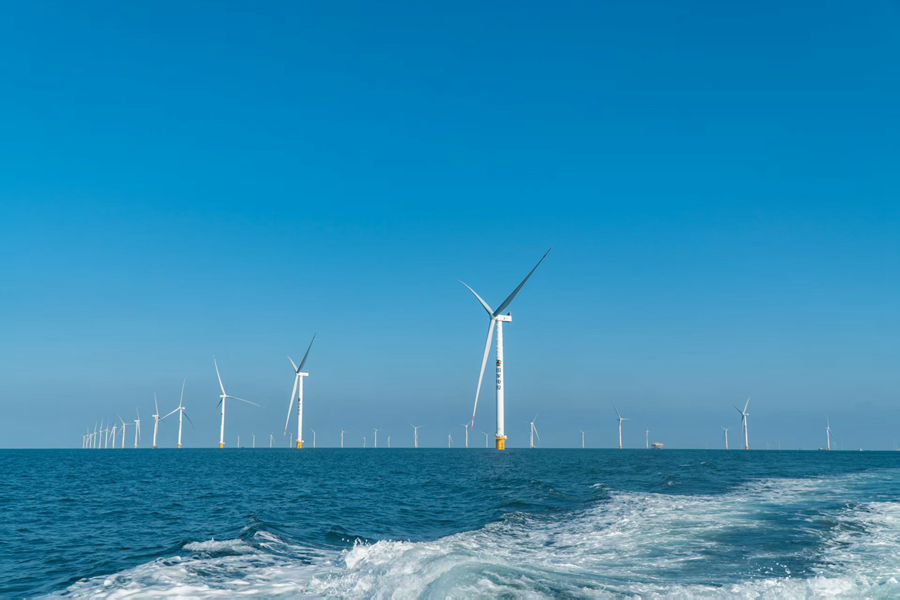
海上风电产业成新“风口”
Qi Lu Wan Bao· 2025-09-05 08:18
Core Insights - The article highlights the development of offshore wind power in Yantai, Shandong Province, emphasizing the transformation of marine wind energy into clean electricity and its contribution to green, low-carbon development [1][3][6] - The establishment of a comprehensive offshore wind power equipment manufacturing industry chain is underway, with major companies setting up operations in the region, particularly around the Yantai Port area [3][6] Industry Development - The offshore wind power project at the southern site of the Shandong Peninsula is a significant initiative, with the installation of 8-megawatt wind turbine monopiles, showcasing the scale of manufacturing capabilities [1][3] - The region has attracted over 100 companies, forming a robust industrial cluster for high-end offshore wind power equipment, which has been recognized as a strategic emerging industry cluster in Shandong Province [3][4] - By the end of this year, the annual output value of offshore wind power in Yantai is expected to exceed 15 billion yuan [3] Manufacturing Capabilities - The article mentions the production of wind turbine blades over 120 meters long, indicating advanced manufacturing processes and logistics advantages for the industry [3][4] - The establishment of a complete supply chain for offshore wind power, including core components such as main engines, towers, monopiles, and subsea cables, is being prioritized [3][6] Future Outlook - The article anticipates a concentrated period of offshore wind power project commissioning in the coming years, which will further enhance the region's manufacturing capabilities and attract high-end products and innovative elements [6] - The strategic planning and scientific layout of the industry are expected to provide sustained momentum for the growth of the renewable energy sector in the region [6]


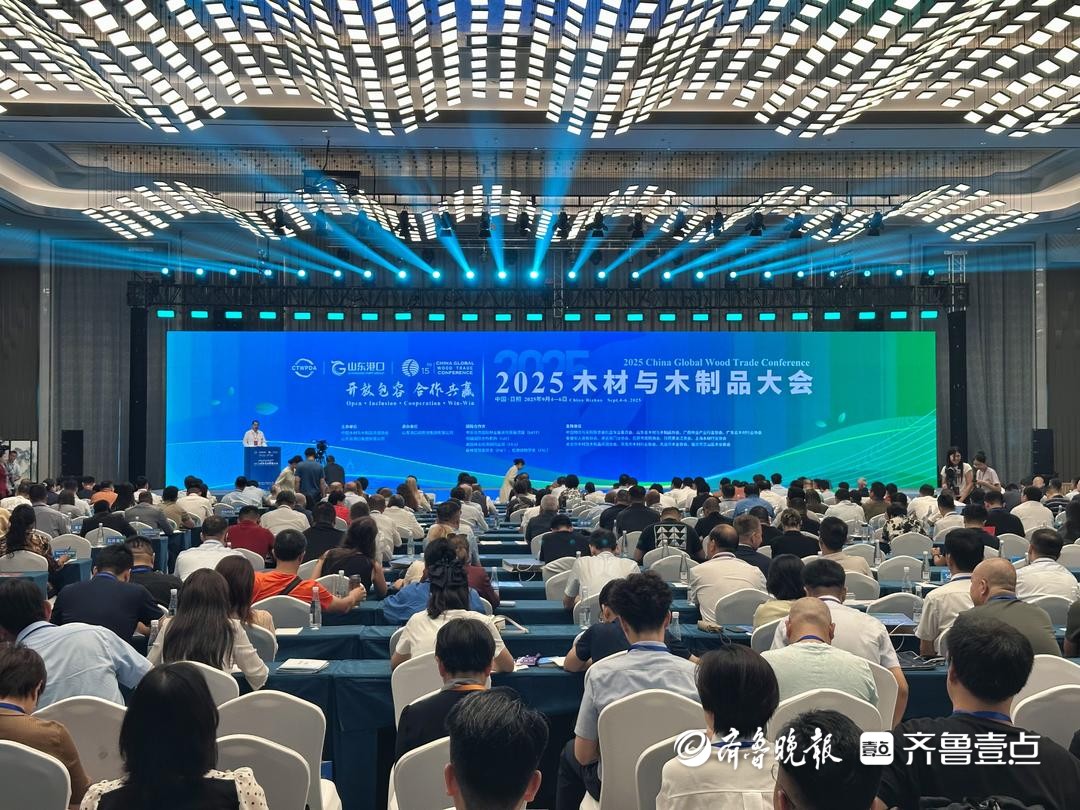
共谋行业发展新机遇!2025木材与木制品大会在日照开幕
Qi Lu Wan Bao Wang· 2025-09-05 07:44
Group 1 - The 2025 Wood and Wood Products Conference opened in Rizhao, focusing on themes of "open, inclusive cooperation for win-win outcomes," attracting nearly a thousand representatives from domestic and international wood industry associations and enterprises [1][3] - The conference addressed topics such as wood trade, supply chain cooperation, deep processing of wood, and the development of wooden structures, aiming for high-quality development in the wood industry [1][3] - An initiative to "resist inward competition and promote high-quality development in the industry" was officially launched during the opening ceremony, followed by a project signing ceremony that marked the establishment of several wood industry cooperation projects in Rizhao [3] Group 2 - The conference included comprehensive analyses of the current state and characteristics of China's macroeconomic development, wood supply and demand, and trends in the wood and wood products industry [3] - Parallel sessions focused on key areas such as China's wood industry overseas markets, global supply and demand for imported wood, and the development of the wooden structure industry, aiming to identify directions for industry development [3] - The wood trading fair organized during the conference was segmented by specific fields, providing a quality platform for investment, trading, and services, facilitating deep connections across the industry chain [3] Group 3 - Shandong Port Rizhao Port, as the largest raw wood import port in China, has 12 dedicated production berths for wood and wood products, with a designated supervision area for A-class raw wood imports and the largest inspection and quarantine processing area in the country [3][4] - In 2024, the Lianshan Port imported 11.488 million cubic meters of wood, accounting for 18.3% of the national total, with raw wood imports making up 31.3% of the national total [4] - The conference is seen as a significant opportunity to promote the transformation and upgrading of Rizhao's wood industry towards green, low-carbon, and high-quality development, further enhancing the brand effect of Rizhao Port as the "largest raw wood import port in the country" [4]

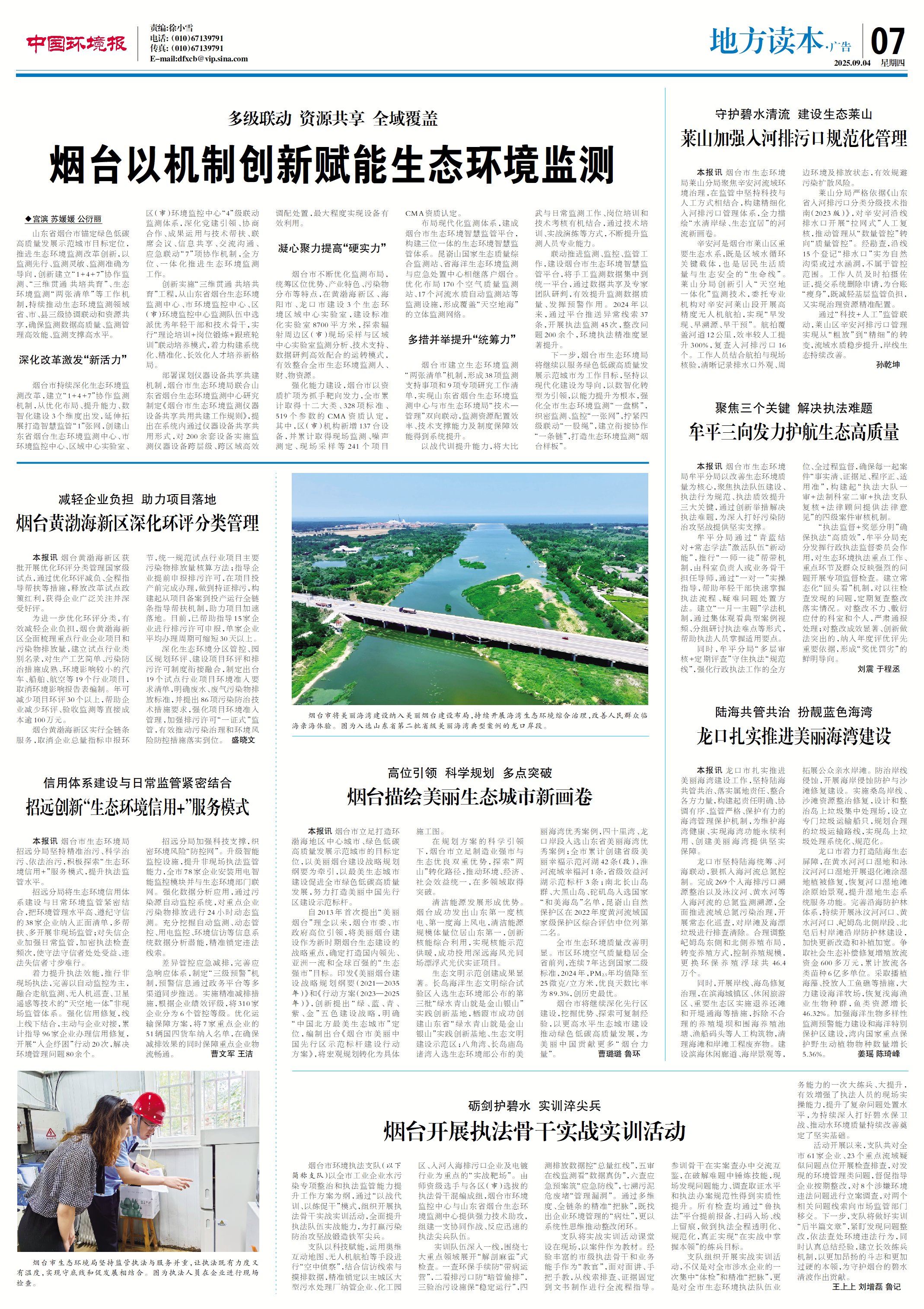
烟台以机制创新赋能生态环境监测
Zhong Guo Huan Jing Bao· 2025-09-04 01:13
Core Viewpoint - Yantai aims to establish itself as a model city for green, low-carbon, and high-quality development through innovative ecological environment monitoring reforms and mechanisms [2][3][12]. Group 1: Ecological Environment Monitoring Innovations - Yantai has implemented a "1+4+7" collaborative monitoring mechanism to enhance ecological environment monitoring, focusing on optimizing layout, improving capabilities, and digital construction [3][17]. - The city has established a comprehensive monitoring system that includes the Yantai Ecological Environment Monitoring Center, municipal monitoring centers, and regional laboratories, creating a four-level collaborative monitoring framework [3][17]. - A "Three-Dimensional Integration and Joint Training" project has been initiated to cultivate young talents and technical experts within the monitoring teams [3][17]. Group 2: Resource Sharing and Equipment Utilization - Yantai's ecological environment bureau has developed rules for sharing and co-building monitoring instruments, allowing for efficient cross-level and cross-regional allocation of over 200 sets of monitoring equipment [4][17]. - The city has constructed three ecological environment regional laboratories and standardized laboratories covering 8,700 square meters to enhance monitoring capabilities [5][18]. Group 3: Capacity Building and Quality Improvement - Yantai has achieved recognition for 328 standards and 519 parameters under CMA certification, with 137 new devices added to district-level institutions [5][18]. - The city has established a "Two Lists" mechanism for monitoring support, enhancing the efficiency of resource allocation and technical support [6][19]. Group 4: Environmental Impact Assessment Optimization - The Yantai Huangbohai New Area has been approved as a national pilot for optimizing environmental impact assessments, aiming to reduce the burden on enterprises and streamline the approval process [8][12]. - The area has implemented measures to guide enterprises in obtaining pollution discharge permits before project commencement, significantly shortening the average processing time by over 30 days [8][12]. Group 5: Integration of Technology and Regulation - Yantai has adopted a "Sky, Land, and Sea" integrated monitoring network, optimizing the layout of 170 air quality monitoring stations and 17 river water quality monitoring facilities [5][18]. - The city is enhancing its regulatory capabilities through non-field enforcement and the use of advanced technologies such as drones and satellite remote sensing [9][10].
威海打造绿色低碳高质量发展样板
Da Zhong Ri Bao· 2025-09-01 01:51
Core Viewpoint - Weihai is committed to high-quality development, focusing on green and low-carbon transformation, and aims to establish a model for sustainable development through various initiatives and projects [1][2][3] Group 1: Economic Development Initiatives - Weihai has been selected as a pilot city for green and low-carbon development in the province and has established a digital economy innovation development experimental zone [1][2] - The city has launched 101 provincial key projects with an investment of 19.26 billion yuan in the first half of the year, enhancing its development momentum [1] - Traditional industries such as shipbuilding and textiles are transitioning towards automation and digitalization, with automation rates reaching 80% in some facilities [2] Group 2: Green Energy and Environmental Impact - As of July, the total installed capacity of renewable energy in Weihai reached 7.71 million kilowatts, accounting for 73.48% of the total, leading the province [3] - The city has achieved significant reductions in energy consumption per unit of GDP, meeting targets ahead of schedule [3] - Weihai has been recognized for its efforts in environmental management, including wastewater treatment and forest restoration, contributing to improved air and water quality [3] Group 3: International Expansion and Trade - Weihai is actively expanding its international market presence, with notable growth in exports to Latin America, the Middle East, and Central Asia, with increases of 22.7%, 23.5%, and 98.4% respectively [2] - The opening of the East Africa Trade and Logistics Center in Tanzania exemplifies Weihai's commitment to high-level foreign cooperation and green development [2]
威海|威海打造绿色低碳高质量发展样板
Da Zhong Ri Bao· 2025-09-01 01:18
Core Viewpoint - Weihai is committed to high-quality development, focusing on green and low-carbon transformation, and aims to establish a model for sustainable development [1][2]. Group 1: Economic Development and Projects - Weihai has been selected as a pilot city for green and low-carbon development and has established various leadership groups to promote this initiative [1]. - In the first half of the year, 101 provincial key projects in Weihai completed investments of 19.26 billion yuan, with 185 new projects launched, indicating significant growth potential [1]. Group 2: Industrial Transformation and Innovation - Weihai is transforming traditional industries such as shipbuilding and textiles towards automation and digitalization, achieving an 80% automation rate in shipbuilding and a 30% efficiency increase in garment production through AI [2]. - The city has been recognized as a provincial digital economy innovation development pilot zone, with high-tech industries accounting for a leading share of industrial output in the province [2]. Group 3: Green Energy and Environmental Impact - As of July, Weihai's total installed capacity of renewable energy reached 7.71 million kilowatts, accounting for 73.48% of the total, leading the province [3]. - The city has achieved significant environmental milestones, including stable PM2.5 levels meeting WHO standards for four consecutive years and a 100% safe utilization rate of polluted farmland and key construction land for five years [3].
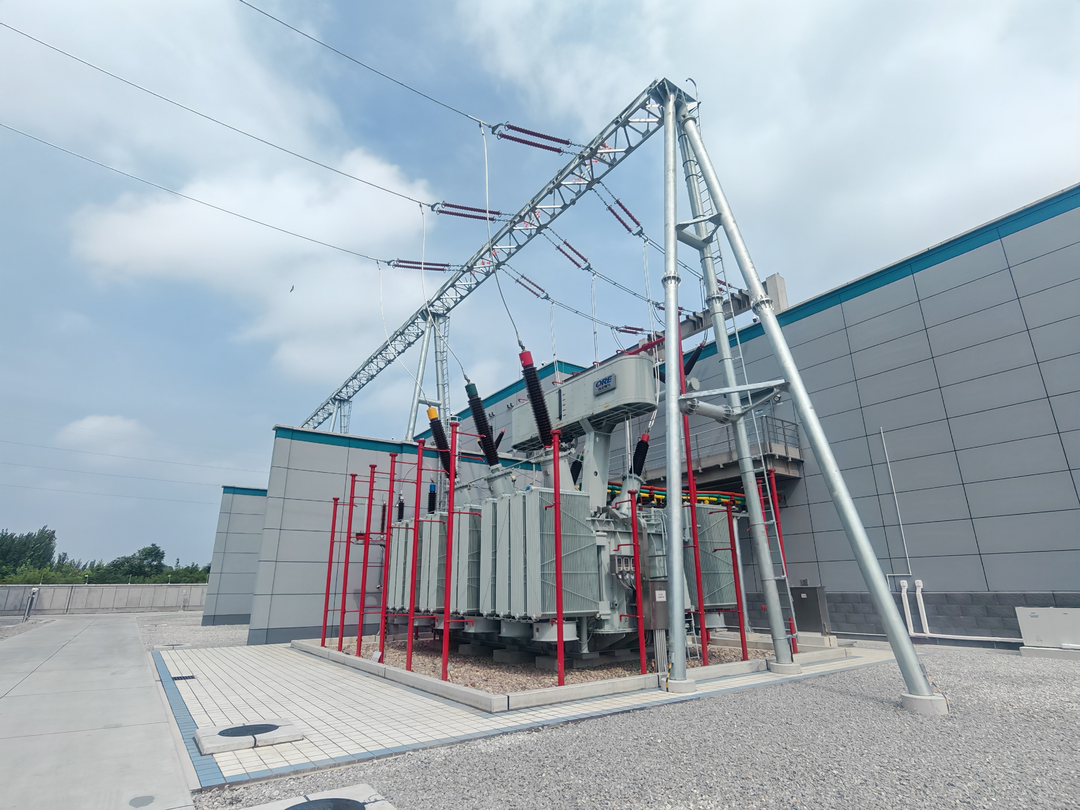
济宁再添电力新引擎!王窑220千伏输变电工程建成投运
Qi Lu Wan Bao Wang· 2025-09-01 00:12
Core Viewpoint - The successful commissioning of the Wangyao 220 kV substation project enhances the power supply reliability in Jining, supporting economic development in the region [1][3]. Group 1: Project Overview - The Wangyao 220 kV substation project is located in Jining Economic Development Zone and commenced construction in December 2023 [3]. - The project includes the construction of one 220 kV substation with a total land area of 13 acres and a building area of 3,911.3 square meters [3]. - It features the installation of one 240 MVA main transformer and three 220 kV incoming lines, along with the construction of 44.56 kilometers of new 220 kV lines [3]. Group 2: Operational Performance - Jining's power grid has experienced record-high loads this summer, reaching a peak load of 8.638 million kW, an increase of 807,000 kW compared to the previous year's peak load of 7.831 million kW [5]. - Despite high temperatures and increased load, the Jining power grid has operated smoothly, demonstrating strong reliability and power supply capability [5]. Group 3: Future Plans and Infrastructure Development - The company aims to strengthen the power grid, improve services, and promote economic development, aligning with the city's broader economic goals [5]. - The company has expanded its power supply network, increasing the number of 500 kV power supply points to four and ensuring "dual insurance" at the county level for 220 kV power supply points [6]. - The total number of substations at 35 kV and above has reached 251, with a total transformer capacity of 33.4855 million kVA and a total line length of 7,636.64 kilometers, representing a 1.2 times and 1.18 times increase compared to 2020, respectively [6].
烟台紧贴产业链布局人才链,重点实施“七项计划”
Qi Lu Wan Bao Wang· 2025-08-29 01:24
Core Viewpoint - Yantai City is actively promoting the "Yantai City Science and Technology Innovation Promotion Regulations" to attract and cultivate technology talent, aiming to support the development of a green, low-carbon, and high-quality economy. Group 1: Talent Introduction Plans - The "Leading Plan" focuses on attracting strategic talents, allowing top enterprises to customize policies for recruiting academicians and teams based on their needs [1]. - The "Preferred Recruitment Plan" assists key enterprises in attracting urgently needed technology talents through a unified recruitment platform and comprehensive support policies [2]. - The "Joint Recruitment Plan" leverages provincial laboratories to facilitate the hiring of PhD talents by small and medium-sized enterprises, allowing shared employment arrangements [2]. Group 2: Technology and Project Support - The "Mutual Recruitment Plan" establishes a mechanism for ongoing collaboration between universities and enterprises to jointly hire technology vice presidents and industry professors [2]. - The "Talent Outpost Plan" enables enterprises to recruit qualified PhDs from outside the province, allowing them to benefit from local talent subsidies [2]. - The "Quota Plan" provides support for major projects by offering talent engineering quotas for urgently needed technology talents [2]. Group 3: Ecosystem Development - The "Strong Chain Plan" aims to attract high-level entrepreneurial projects that can enhance the industrial chain, creating a closed-loop service from introduction to incubation and growth [3]. - The Yantai Municipal Organization Department is committed to implementing more proactive and open talent policies, exploring the delegation of authority to employers to enhance talent competitiveness [3].
以企业文化软实力汇聚国企高质量发展新合力
Qi Lu Wan Bao· 2025-08-28 21:49
Group 1 - The core viewpoint emphasizes the importance of strengthening corporate culture and ideological construction in state-owned enterprises to ensure their green, low-carbon, and high-quality development [1][3] - The focus is on integrating ideological work with the central tasks of the enterprise, promoting a deep fusion of party building and business development to enhance competitiveness [1][2] Group 2 - The principle of innovation and integrity is highlighted, with an emphasis on promoting the positive achievements of state-owned enterprises in green, low-carbon, and high-quality development [2] - There is a call for building a strong team to support ideological work, emphasizing unity and coordination among various departments to enhance political and practical capabilities [2][3] Group 3 - The construction of corporate culture is seen as complementary to ideological work, aiming to enhance the sense of belonging and recognition among employees while improving the enterprise's reputation and influence [3] - The necessity of adhering to the latest theoretical achievements of the party and strengthening party leadership is underscored as a means to convert political advantages into competitive advantages for high-quality development [3]