通用人工智能(AGI)

Search documents
智谱与滴滴达成战略合作,将共同探索出行Agent场景落地
IPO早知道· 2026-01-12 02:04
Core Viewpoint - The article discusses the strategic collaboration between Zhiyun and Didi to advance the application and development of General Artificial Intelligence (AGI) in real-world scenarios, particularly in the transportation sector [3]. Group 1: Strategic Collaboration - Zhiyun and Didi have announced a strategic partnership focusing on key AGI technologies and their application in intelligent agents within the transportation field [3]. - Didi has been increasing its investment in large models and intelligent agents, progressively advancing innovations such as AI travel assistants and business travel assistants based on real and complex transportation scenarios [3]. - The collaboration aims to enhance the implementation of agent scenarios and talent cultivation in the large model field, improving intent alignment and reasoning capabilities in transportation contexts [3]. Group 2: Company Insights - Didi's representative expressed optimism about leveraging each company's strengths to promote the broader application and development of AGI in real-world scenarios [3]. - Zhiyun has a strong foundation in large model architecture, training paradigms, and intelligent agent technology, which will be crucial for the partnership's success [3].


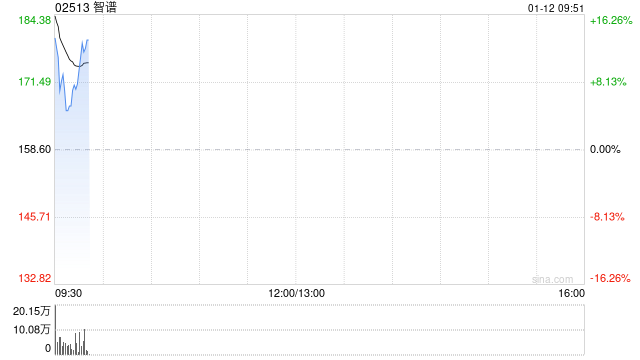
智谱盘中涨近15% 公司与滴滴达成战略合作共同探索出行Agent场景落地
Xin Lang Cai Jing· 2026-01-12 01:51
Core Viewpoint - Zhipu (02513) has entered a strategic partnership with Didi to explore key technologies in General Artificial Intelligence (AGI) and their applications in the transportation sector, aiming to enhance the development of intelligent agents and large model talent cultivation [5]. Group 1: Stock Performance - Zhipu's stock opened nearly 15% higher and is currently up 11.79%, trading at HKD 177.30, with a transaction volume of HKD 195 million [5]. Group 2: Strategic Partnership - The collaboration between Zhipu and Didi will focus on the practical implementation of agent scenarios and the development of reasoning capabilities in transportation contexts [5]. - The partnership aims to validate and implement agents in more complex business scenarios [5]. Group 3: Company Background - Zhipu is recognized as one of the earliest companies in China to engage in large model research and development, having introduced the autoregressive fill-in-the-blank pre-training paradigm GLM [5]. - The company has launched several significant models, including China's first hundred-billion model, the first open-source trillion model, the first dialogue model, the first multimodal model, and the world's first device-controlling intelligent agent [5]. - Zhipu is noted for maintaining a comprehensive model system that aligns with global top-tier standards, earning it the title of "China's OpenAI" [5].
港股异动 | 智谱(02513)高开近15% 公司与滴滴达成战略合作 共同探索出行Agent场景落地
智通财经网· 2026-01-12 01:33
Core Viewpoint - The stock of Zhiyun (02513) opened nearly 15% higher and is currently up 14.94%, trading at HKD 182.3, with a transaction volume of HKD 17.3 million, reflecting an increase of nearly 60% from the IPO price of HKD 116.2 [1] Group 1: Strategic Partnership - Zhiyun has announced a strategic partnership with Didi to explore key technologies in General Artificial Intelligence (AGI) and their applications in the transportation sector [1] - The collaboration aims to advance the implementation of Agent scenarios and talent development in large model fields, enhancing intent alignment and reasoning capabilities in transportation scenarios [1] - The partnership will focus on validating and implementing Agents in more complex business scenarios [1] Group 2: Company Background - Zhiyun is one of the earliest companies in China to engage in large model research and development, having pioneered the autoregressive fill-in-the-blank pre-training paradigm GLM [1] - The company has released several significant models, including China's first hundred-billion model, the first open-source trillion model, the first dialogue model, the first multimodal model, and the world's first device control intelligent agent [1] - Zhiyun is recognized for maintaining a comprehensive model system that aligns with global standards in original technology, earning the title of "China's OpenAI" [1]
从业 43 年的程序员直言:AI 不会取代程序员,软件开发的核心从未改变
程序员的那些事· 2026-01-12 00:48
Core Viewpoint - The article argues that AI will not replace software developers, emphasizing that the future of software development remains in the hands of developers who can translate ambiguous human thoughts into precise computational logic [1][2]. Group 1: Historical Context - The prediction that "programmers will be replaced" has never come true throughout the history of computing, which spans over 43 years [3]. - The author has witnessed multiple technological revolutions, each heralded as the end of programmers, such as the rise of Visual Basic and low-code platforms [4][6]. - Historical cycles show that each wave of technology has led to an increase in the number of programs and programmers, exemplifying the "Jevons Paradox" with a market size of $1.5 trillion [9]. Group 2: Differences with Current Technology - The current wave of Large Language Models (LLMs) differs significantly from past technologies in scale and impact, with LLMs not reliably improving development speed or software reliability [10][11]. - Unlike previous technologies that provided stable and reliable solutions, LLMs often slow down development and create a dual loss situation unless real bottlenecks are addressed [11]. Group 3: Essence of Programming - The core challenge of programming has always been converting vague human ideas into logical and precise computational expressions, a difficulty that persists regardless of the programming tools used [12][17]. - The complexity of programming lies not in the syntax but in understanding what needs to be achieved, a challenge that remains unchanged over decades [17][18]. Group 4: Future Outlook - AI will not eliminate the need for programmers; instead, the demand for skilled developers will continue to grow, especially as companies realize the true costs and limitations of AI technologies [19][20]. - The future of software development will likely see AI playing a supportive role, assisting in tasks like prototype code generation, while the critical decision-making and understanding will still rely on human developers [19][20].

“死了么”APP一夜估值千万,最新回应;佐香园与闫学晶解约;鸿蒙智行首款MPV定档,定位50万级豪华市场丨邦早报
创业邦· 2026-01-12 00:13
Group 1 - The "Did You Die?" app has gained significant popularity, ranking first in Apple's paid tools category, and is designed as a safety tool for individuals living alone, requiring users to check in regularly [3] - The app's creator revealed that it was developed in less than a month with an initial investment of only over 1,000 yuan, and it has already become profitable with a download increase of over 100 times in recent days [3] - The app's valuation is estimated at 10 million yuan based on a proposed sale of 10% equity for 1 million yuan [3] Group 2 - Elon Musk announced that the X platform will open-source its content recommendation algorithm within a week, covering all code used for recommending content and ads [4] - Musk stated that this process will be repeated every four weeks, providing developers with explanations and updates on algorithm changes [4] Group 3 - BYD has launched a new automotive brand called Linghui, which includes four new models, three of which are pure electric sedans and one is a plug-in hybrid MPV [8] - The Linghui brand aims to cater to B-end market demands and is part of BYD's strategy to differentiate between B-end and C-end market vehicles [8] Group 4 - SanDisk is reportedly planning to increase prices by over 100% and has introduced a strict payment policy requiring 100% cash prepayment for future storage chip allocations [10] - This unprecedented move challenges traditional payment practices in the semiconductor supply chain, driven by strong demand for storage devices in AI infrastructure [10] Group 5 - CATL's service brand, NING Service, has opened the largest new energy after-market experience center in the Middle East, providing comprehensive lifecycle services for various battery types [10] - The center aims to support the growing demand for electric vehicle maintenance and battery recycling in the region [10] Group 6 - The Beijing-Tianjin-Hebei region has emerged as a leader in the production of new energy vehicles, with a total automotive output of 285,000 units in 2024, marking an 11.8% year-on-year increase [23] - The production of new energy vehicles in the region surged by 154% year-on-year, highlighting the area's strong industrial growth and leadership in the sector [23]

早报 | “死了么”APP突然爆火;特朗普被曝正考虑多个干涉伊朗方案;马斯克称3年内机器人将超越顶尖医生;演员闫学晶发文致歉
虎嗅APP· 2026-01-12 00:10
Group 1 - The U.S. government is considering multiple intervention options in Iran, including military strikes and deploying a carrier strike group to the region [2][3] - The Federal Communications Commission (FCC) has approved SpaceX's plan to deploy an additional 7,500 Starlink satellites, increasing its total to 15,000, which will enhance global internet services [4] - SpaceX's satellite upgrades will allow operations across five frequency bands and improve network capacity, supporting next-generation mobile communication services with speeds up to 1 Gbps [4] Group 2 - The app "Did I Die?" has seen a price increase from 1 yuan to 8 yuan after gaining popularity, with the developers planning to enhance features and ensure sustainable development [9][10] - San Francisco's Sam's Club has reported a surge in sales of a down jacket priced at 499 yuan, which has a filling weight of 400 grams, indicating strong consumer demand [11][12] - China has applied for over 200,000 satellite frequency resources, indicating a strategic national interest in satellite technology and positioning itself to compete with companies like SpaceX [13] Group 3 - SanDisk plans to raise enterprise-level NAND prices by over 100% in March and is requiring full cash prepayment from customers, reflecting a supply-demand imbalance in the storage market [14] - Semiconductor company Zhongwei plans to reduce its shareholding by up to 2% due to tax-related needs after the chairman renounced U.S. citizenship to regain Chinese nationality [15][16] - The stock of Guosheng Technology will resume trading on January 12 after a period of abnormal fluctuations, with a cumulative increase of 370.20% during the suspension [28]


AI大模型迈向价值兑现
Xin Lang Cai Jing· 2026-01-11 22:25
Group 1 - The core viewpoint of the article is that the listing of Zhipu AI on the Hong Kong Stock Exchange marks a significant milestone in the commercialization of AI large models, transitioning from a phase of technical competition to one focused on delivering real value [2] - Zhipu AI, founded in 2019 from Tsinghua University, has developed its own GLM (General Language Model) technology, which is considered one of the few domestic architectures that can compete directly with the GPT system [3] - The company has achieved significant commercial success through its MaaS (Model as a Service) model, serving over 12,000 enterprise clients and more than 80 million end-user devices by September 2025, with revenue doubling for three consecutive years from 2022 to 2024 [3] Group 2 - The competitive landscape for AI large models is intense, with both international and domestic players like Anthropic and MiniMax entering the market, indicating a "dual-hero competition" scenario [4] - Despite Zhipu AI's successful listing, both it and MiniMax are still operating at a significant loss, highlighting the ongoing "burn rate" competition in the industry due to high R&D costs [4] - The next phase of competition will focus on creating actual value rather than just technical prowess, shifting the emphasis from model performance to real-world application depth, economic value, and ecosystem building [4][5] Group 3 - The market is expected to evolve from a fragmented state to a more concentrated one, with leading companies focusing on differentiated competition and ecosystem construction [5] - The application of AI is transitioning from pilot testing to large-scale value creation, with specialized AI solutions emerging for specific industries and tasks [6] - Zhipu AI's listing signifies a shift in how the market values AI companies, emphasizing the need for a robust ecosystem that can establish the rules of the game in the AI era [6]
深圳最新引入的顶尖科学家首次公开发声!“现在人和人的差距非常大”
Sou Hu Cai Jing· 2026-01-11 15:06
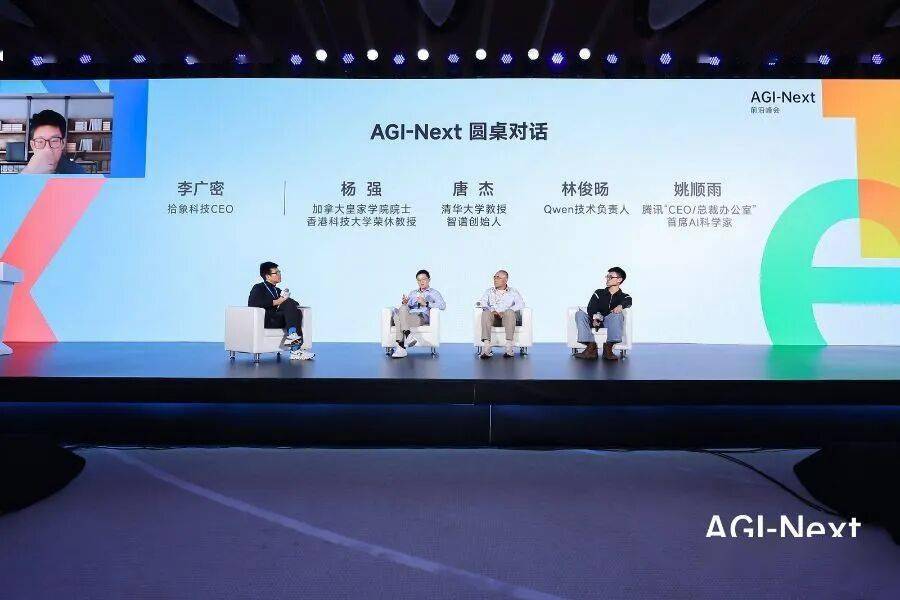
Core Insights - The new CEO of Tencent, Yao Shunyu, emphasizes the importance of education in utilizing AI tools effectively, stating that the current impact of AI on GDP is less than 1%, despite its potential to influence 5%-10% [1][27] - The AGI-Next summit highlighted the shift in AI development from mere conversational models to task-oriented agents, with a focus on enhancing multi-modal capabilities and efficiency [5][15] Group 1: AI Development Trends - The summit participants noted that by 2025, AI models will prioritize intelligent efficiency and practical applications over mere parameter scaling, with advancements in complex reasoning and generalization capabilities [5][15] - Key technical directions discussed include multi-modal models, autonomous learning, and efficiency optimization to address the challenges of data scale and diminishing returns [5][15] Group 2: Market Differentiation - There is a clear differentiation between the toB and toC markets, with toB applications showing a direct correlation between AI intelligence and productivity gains, while toC applications focus more on personalized context [11][18] - The willingness to pay for top-tier models is significantly higher in the toB market, where companies are more inclined to invest in high-performance AI solutions [11][19] Group 3: Education and Tool Utilization - Yao Shunyu stresses that educating users on how to effectively use AI tools is more crucial than the models themselves, highlighting the need for improved tool accessibility in China [1][27] - The disparity in skill levels among individuals using AI tools is significant, with those who can leverage these technologies outperforming those who cannot [1][27] Group 4: Future Opportunities and Challenges - There is optimism regarding China's potential to catch up with the US in AI, contingent on overcoming challenges related to computing power and fostering a culture of innovation [28][29] - The need for a robust software ecosystem and the ability to capture real-world data effectively are identified as critical factors for success in the toB market [28][29]

马斯克称AGI今年就将实现!20年内所有商品服务都将接近免费
第一财经· 2026-01-11 12:54
Core Viewpoint - Elon Musk predicts that the "singularity" of artificial intelligence (AI) has already arrived, leading to a fundamental change in the value of money and material possessions, making saving money meaningless [3][6]. Group 1: Predictions on AI and Robotics - Musk forecasts that Artificial General Intelligence (AGI) will be achieved by 2026, significantly earlier than most mainstream predictions which suggest post-2030 [3]. - He claims that AI is accelerating at an "exponential tsunami" pace, with Grok 5 expected to be released in the first quarter of this year, capable of analyzing circuit diagrams for errors [3]. - Currently, AI can perform about 50% of digital tasks, and once humanoid robots like Optimus can manipulate atoms, blue-collar jobs will also be automated [3]. Group 2: Changes in Economic Concepts - Musk believes that the concept of money will eventually disappear, as AI and robotics will fulfill all human needs, drastically reducing the relevance of money [6]. - He suggests that energy will become the primary measure of currency, as production costs approach zero due to advancements in AI and robotics, leading to a significant drop in prices [6]. - Musk envisions a self-sustaining cycle where AI and robots produce essential goods, detaching from the traditional monetary system [6]. Group 3: Future of Work and Healthcare - Musk predicts that in less than 20 years, work will become optional, akin to a hobby, as productivity increases [9]. - He asserts that robotic surgeons will surpass human doctors in precision and performance within the next 3 to 4 years, providing everyone with access to high-quality medical services [4][7]. - The development of surgical robots will render medical school education less relevant, as these robots will accumulate vast experience through shared knowledge [7]. Group 4: Energy as Currency - Musk posits that energy will be the true currency of the future, with solar energy potentially being free and abundant due to advancements in technology [9]. - He advocates for the deployment of solar AI satellites to enhance existing power grid efficiency, suggesting a need for approximately 8,000 launches to establish this system [10].

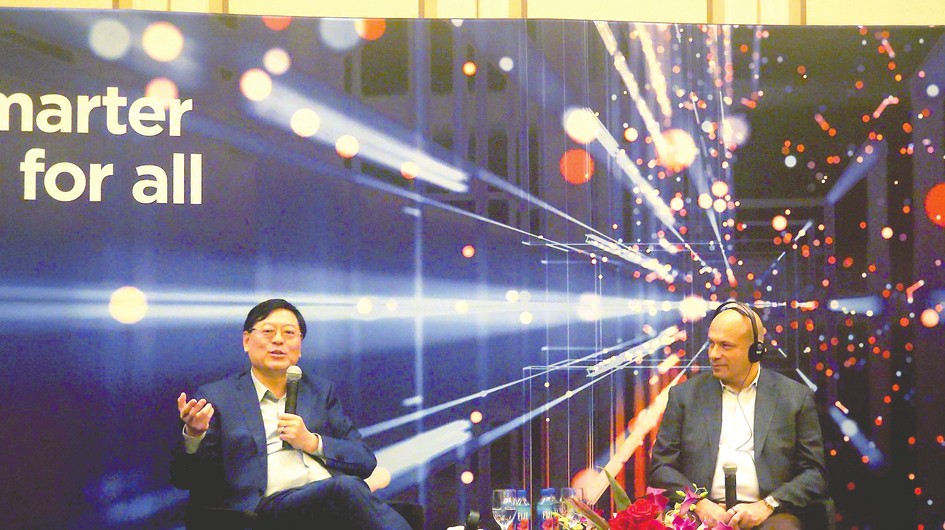
联想集团董事长兼CEO杨元庆:AI时代不存在“单打独斗”,更不可能出现“赢者通吃”
Mei Ri Jing Ji Xin Wen· 2026-01-11 12:31
Core Insights - The CEO of Lenovo, Yang Yuanqing, emphasized that in the AI era, collaboration is essential, and no single company can dominate the entire value chain from computing power to applications [3][4] - Lenovo focuses on personal and enterprise intelligence, which complements the public intelligence provided by large model companies, highlighting the importance of end-user devices in delivering personalized AI [3][4] Collaboration in AI Industry - Yang reiterated the importance of cooperation among hardware manufacturers, chip companies, and large model firms, stating that no single entity can cover all aspects of AI [4][5] - Lenovo's partnerships are based on the strengths of different chip manufacturers, such as NVIDIA for AI cloud, Intel and AMD for PC terminals, and Qualcomm for mobile and wearable devices [5] Concept of Hybrid AI - At CES 2026, Yang introduced the concept of "Hybrid AI," which focuses on personalization rather than just large models, suggesting that every individual and enterprise will have their own dedicated AI [6] - The company aims to empower individuals and businesses through AI, enhancing operational efficiency and creating a collaborative ecosystem [6] Business Impact and Growth Expectations - Lenovo's AI PC business accounted for approximately 30% of its revenue last quarter, with expectations to exceed 50% by the end of the year, indicating a significant shift towards AI-driven solutions [7] - The company believes that AI will transform all business operations and drive future growth [7]