
IP经济

Search documents
泡泡玛特杀入老铺黄金腹地,但labubu二手价格撑不住了
虎嗅APP· 2025-09-13 09:19
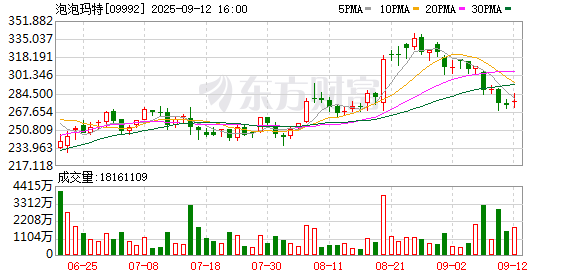
Core Viewpoint - Pop Mart is aggressively entering the gold jewelry market with its new brand popop, aiming to capture a share of the market traditionally dominated by established gold brands [4]. Group 1: Pop Mart's New Initiatives - Pop Mart launched its first gold series products under the popop brand on September 12, featuring items like gold beads, pendants, and ornaments, utilizing its IP Baby Molly [4]. - The popop brand is part of Pop Mart's strategy to expand its boundaries, with significant investments in store locations and design [4]. - The introduction of gold products signifies a direct competition with traditional gold brands, although experts suggest that a full-scale battle is still distant [4]. Group 2: Stock Performance and Market Reactions - Despite the launch of popop's gold products, Pop Mart's stock price has declined by 15.74% since reaching a peak of 339.8 HKD per share on August 26, closing at 276.8 HKD on September 12 [4]. - The decline in stock price is attributed to significant price fluctuations in the labubu plush series in the secondary market, with prices dropping from around 600 RMB to 133 RMB for certain items [5]. Group 3: Supply Strategy and Market Impact - Pop Mart's change in supply strategy, which involved a significant increase in the production of labubu plush products, led to a market oversupply, affecting the stability of secondary market prices [6]. - The monthly production capacity for labubu plush products has surged to 30 million, a tenfold increase compared to early 2025 [6]. - The influx of products has prompted resellers to offload their inventory, further driving down prices and impacting investor confidence [6][8]. Group 4: Long-term Strategy and IP Management - Pop Mart's management aims to diversify its IP portfolio to reduce reliance on a single product, which is seen as a risky strategy [7]. - The company prefers to enhance the liquidity of its IPs rather than relying on their resale value in the secondary market [7]. - The decision to adjust supply strategies is viewed as an opportunity to reshape the secondary market dynamics and regain investor confidence [8].

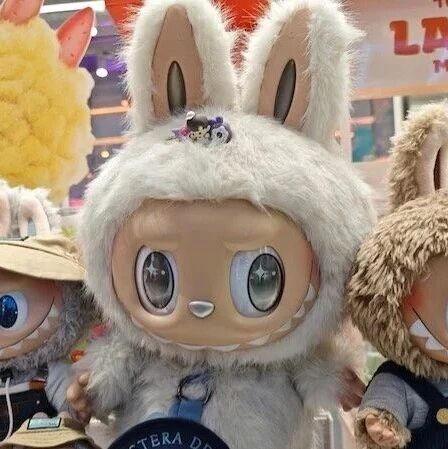
布鲁可(00325.HK):核心IP再推新品计划 持续丰富产品矩阵
Ge Long Hui· 2025-09-13 03:15
Core Viewpoint - The company is set to launch new products, including the third installment of the "Hero Total Mobilization" Starry Edition and the second installment of the Sanrio IP "Kuromi," which are expected to enhance its product matrix and drive revenue growth [1][2]. Group 1: Product Launch and Revenue Growth - The Starry Edition, priced at 9.9 yuan, significantly covers a broad lower-tier market, becoming a key driver for the company's revenue growth [1][2]. - The company's latest half-year performance shows total revenue of 1.338 billion yuan, a year-on-year increase of 27.9%, with revenue from the 9.9 yuan affordable products reaching 216 million yuan [1][2]. - The new product launches will further enrich the Starry Edition product matrix, catering to diverse consumer needs [1][2]. Group 2: IP Matrix Development - The company has commercialized 19 IPs as of the first half of the year, indicating ongoing efforts to enhance its IP matrix [1][2]. - By the first half of 2025, the top four IPs are expected to contribute 83.1% of total revenue, compared to 92.3% from the top three IPs in the same period last year, showing an increase in the contribution from diversified IPs [1][2]. Group 3: Financial Outlook - The company is recognized as a leader in the IP building block toy sector, benefiting from emotional consumption and the growth of the IP economy [2]. - However, the increase in the proportion of 9.9 yuan affordable products may impact gross margins, and the new IPs are in a cultivation phase [2]. - The company's net profit forecasts for 2025-2027 have been revised down to 805 million, 1.138 billion, and 1.506 billion yuan, respectively, with corresponding PE ratios of 27.4, 19.4, and 14.7 times [2].
泡泡玛特 开售“痛金”
Shang Hai Zheng Quan Bao· 2025-09-12 14:22
Core Viewpoint - The launch of the gold jewelry series by Popop, a subsidiary of Pop Mart, reflects the company's strategy to extend its IP value and cater to the growing demand for emotional consumption among young consumers [2][12]. Group 1: Product Launch and Strategy - Popop officially released its first gold series, featuring products like gold beads, pendants, gold bars, and ornaments, on September 12 [2]. - The gold series is part of Pop Mart's core strategy to focus on IP-driven group development, with the global flagship store opening in June being a significant step in this direction [2][7]. - The gold products are priced using a fixed-price model, with prices ranging from 980 yuan to 56,800 yuan, allowing for higher premium margins compared to weight-based pricing [6]. Group 2: Consumer Engagement and Market Response - The Baby Molly gold series attracted significant consumer interest, with customers queuing outside the store at opening time [5][6]. - A consumer reported purchasing nine gold beads for approximately 15,000 yuan, indicating strong demand for the products [2]. - The emotional value associated with IP products is driving consumer interest, as evidenced by the positive feedback from customers who appreciate the blend of fashion and investment value [12]. Group 3: Company Performance and Future Plans - Pop Mart's half-year report for 2025 showed impressive growth, with revenue reaching 13.88 billion yuan, a year-on-year increase of 204.4%, and adjusted net profit of 4.71 billion yuan, up 362.8% [12]. - The company plans to open multiple global flagship stores by 2025, indicating a strategy of continuous expansion and brand development [11].

国信证券:维持布鲁可(00325)“优于大市”评级 上新将进一步丰富星辰版产品矩阵
智通财经网· 2025-09-12 02:19
Core Viewpoint - Guosen Securities maintains an "outperform" rating for Blucoco (00325), but has lowered the projected net profit for 2025-2027 due to the increased proportion of 9.9 yuan products potentially impacting gross margins and the ramp-up period for new IPs [1] Group 1: Financial Performance - The company has revised its net profit estimates for 2025, 2026, and 2027 to 8.05 billion, 11.38 billion, and 15.06 billion yuan, respectively, down from previous estimates of 10.31 billion, 14.67 billion, and 18.88 billion yuan [1] - The latest half-year performance shows total revenue of 13.38 billion yuan, representing a year-on-year increase of 27.9%, with revenue from 9.9 yuan products reaching 2.16 billion yuan [1] Group 2: Product Development and Market Strategy - The company plans to launch the "Hero Total Mobilization" Star Version 3rd product and the second product under the Sanrio IP "Kuromi" on September 12, which will enhance its product matrix and cater to diverse consumer needs [1] - As of the first half of the year, the company has commercialized 19 IPs, with the top four IPs contributing 83.1% of total revenue in the first half of 2025, compared to 92.3% from the top three IPs in the same period last year, indicating an increase in the contribution from diversified IPs [2]
国信证券:维持布鲁可“优于大市”评级 上新将进一步丰富星辰版产品矩阵
Zhi Tong Cai Jing· 2025-09-12 02:19
Core Viewpoint - Guosen Securities maintains an "outperform" rating for Blucor (00325), but has lowered the projected net profit for 2025-2027 due to the increased proportion of 9.9 yuan products potentially impacting gross margins and the ramp-up period for new IPs [1] Group 1: Financial Performance - The company reported a total revenue of 1.338 billion yuan for the first half of the year, representing a year-on-year increase of 27.9% [1] - Revenue from the 9.9 yuan affordable products, including the Ultraman Star Edition, reached 216 million yuan [1] - The revised net profit projections for 2025, 2026, and 2027 are 805 million yuan, 1.138 billion yuan, and 1.506 billion yuan, respectively, down from previous estimates of 1.031 billion yuan, 1.467 billion yuan, and 1.888 billion yuan [1] Group 2: Product Development and IP Strategy - The company plans to launch the "Hero Total Mobilization" Star Edition product on September 12, along with the second wave of the Sanrio IP "Kuromi" products [1] - As of the first half of the year, the company has commercialized 19 IPs, with the top four IPs contributing 83.1% of total revenue in the first half of 2025, compared to 92.3% from the top three IPs in the same period last year [2] - The introduction of new products is aimed at enhancing the product matrix and meeting diverse consumer demands [1][2]
布鲁可(00325):核心IP再推新品计划,持续丰富产品矩阵
Guoxin Securities· 2025-09-11 12:31
Investment Rating - The investment rating for the company is "Outperform the Market" (maintained) [2][4][7] Core Views - The company plans to launch new products under its core IP, including the third series of "Hero Total Mobilization" and the second series of "Cinnamoroll" from Sanrio, which will enhance its product matrix and cater to diverse consumer needs [3][5] - The company's revenue for the first half of the year reached 1.338 billion yuan, representing a year-on-year increase of 27.9%, with 216 million yuan coming from the 9.9 yuan affordable product line [3][5] - The company has commercialized 19 IPs as of the first half of the year, with the top four IPs contributing 83.1% of total revenue in the first half of 2025, compared to 92.3% from the top three IPs in the same period last year, indicating an improvement in the contribution from diversified IPs [3][4][5] Financial Forecasts and Valuation - The company's projected net profit for 2025-2027 has been revised down to 805 million, 1.138 billion, and 1.506 billion yuan respectively, with corresponding P/E ratios of 27.4, 19.4, and 14.7 times [4][7] - The company continues to benefit from emotional consumption and the growth of the IP economy, actively promoting its IP matrix, brand, and channel expansion to solidify its growth foundation [4][7]
名创优品,抄袭?设计师控诉!
Xin Lang Cai Jing· 2025-09-11 10:29
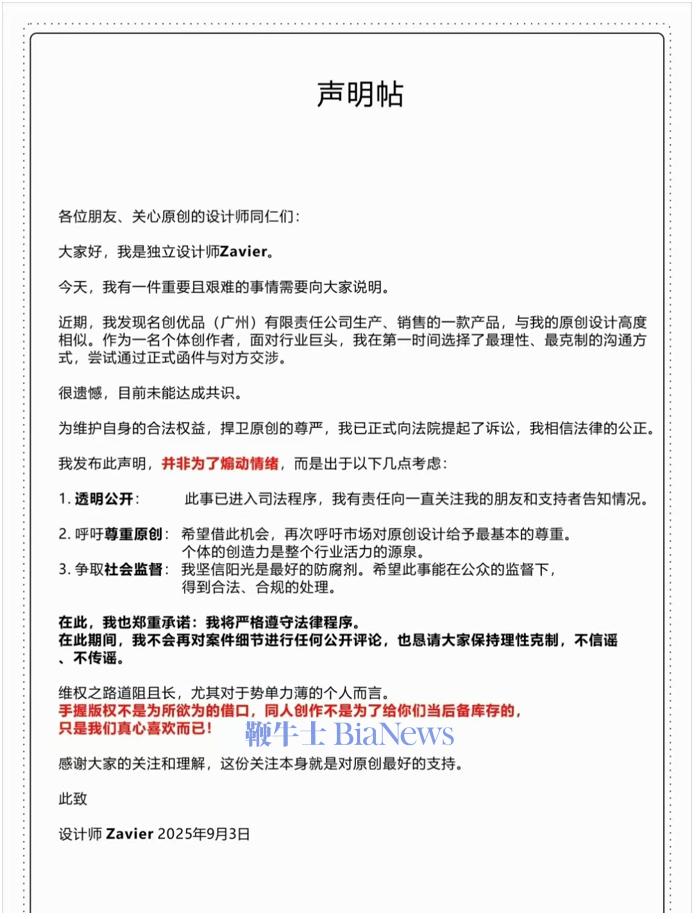
Core Viewpoint - A designer has accused Miniso of copying their original design for a Harry Potter-themed ring, leading to a lawsuit and highlighting ongoing issues with intellectual property disputes involving the company [1][2][4]. Group 1: Lawsuit and Accusations - The designer, Zavier, has filed a lawsuit against Miniso, claiming that the company's product closely resembles their original design [2][4]. - Miniso has not publicly responded to the allegations as of the time of reporting [2][8]. - The designer provided evidence, including original design drafts and comparison images, to support their claims of similarity in design elements [5][4]. Group 2: Intellectual Property Issues - Miniso is currently involved in 13 legal cases related to intellectual property and unfair competition, with 5 cases specifically concerning design patent infringement and copyright issues, where the company is the defendant [2][11]. - The company has faced multiple accusations of copying designs from other brands, including products similar to Starbucks and Dior, raising concerns about its business practices [9][11]. Group 3: Financial Performance and Business Strategy - In the first half of the year, Miniso reported a revenue increase of 21.1% to 9.393 billion yuan, but net profit attributable to shareholders fell by 22.6% to 906 million yuan [15]. - Despite revenue growth, the number of Miniso stores in mainland China decreased by 81, indicating potential challenges in market expansion [15][16]. - The CEO of Miniso stated a shift in focus from quantity growth to optimizing channel combinations, with a new emphasis on larger store models [16].
名创优品,抄袭?设计师控诉!
新浪财经· 2025-09-11 10:14
Core Viewpoint - A designer has accused Miniso of copying their original design for a Harry Potter-themed ring, leading to a lawsuit as the case enters judicial proceedings [3][6][19]. Legal Issues - Miniso has been involved in multiple legal disputes, with 13 judicial cases reported from November 13, 2024, to September 1, 2025, including 5 cases related to unfair competition and infringement of design patents, making up 38.5% of the total cases [4][15]. - The designer has publicly shared comparisons between their original design and Miniso's product, highlighting significant similarities in design elements [7][9]. Company Performance - In the first half of the year, Miniso reported a revenue increase of 21.1% to 9.393 billion yuan, but net profit attributable to shareholders fell by 22.6% to 906 million yuan [19]. - Despite revenue growth, the number of Miniso's main brand stores in mainland China decreased by 81, indicating a negative growth trend [19]. Market Position and Strategy - Miniso's CEO has indicated a shift away from purely pursuing store quantity growth, focusing instead on optimizing channel combinations and emphasizing larger store models [19]. - The company is facing challenges in expanding its IP business, particularly in the competitive landscape dominated by brands like Pop Mart [20][21]. Brand Controversies - Miniso has faced accusations of imitating various well-known brands, including Starbucks and Dior, with products that closely resemble their designs [13][15]. - The company has been criticized for its approach to intellectual property, with ongoing disputes affecting its reputation and market position [15][17].

400元一个的玩偶,正在成为成年人的“精神布洛芬”|乐言商业
Di Yi Cai Jing· 2025-09-06 03:49
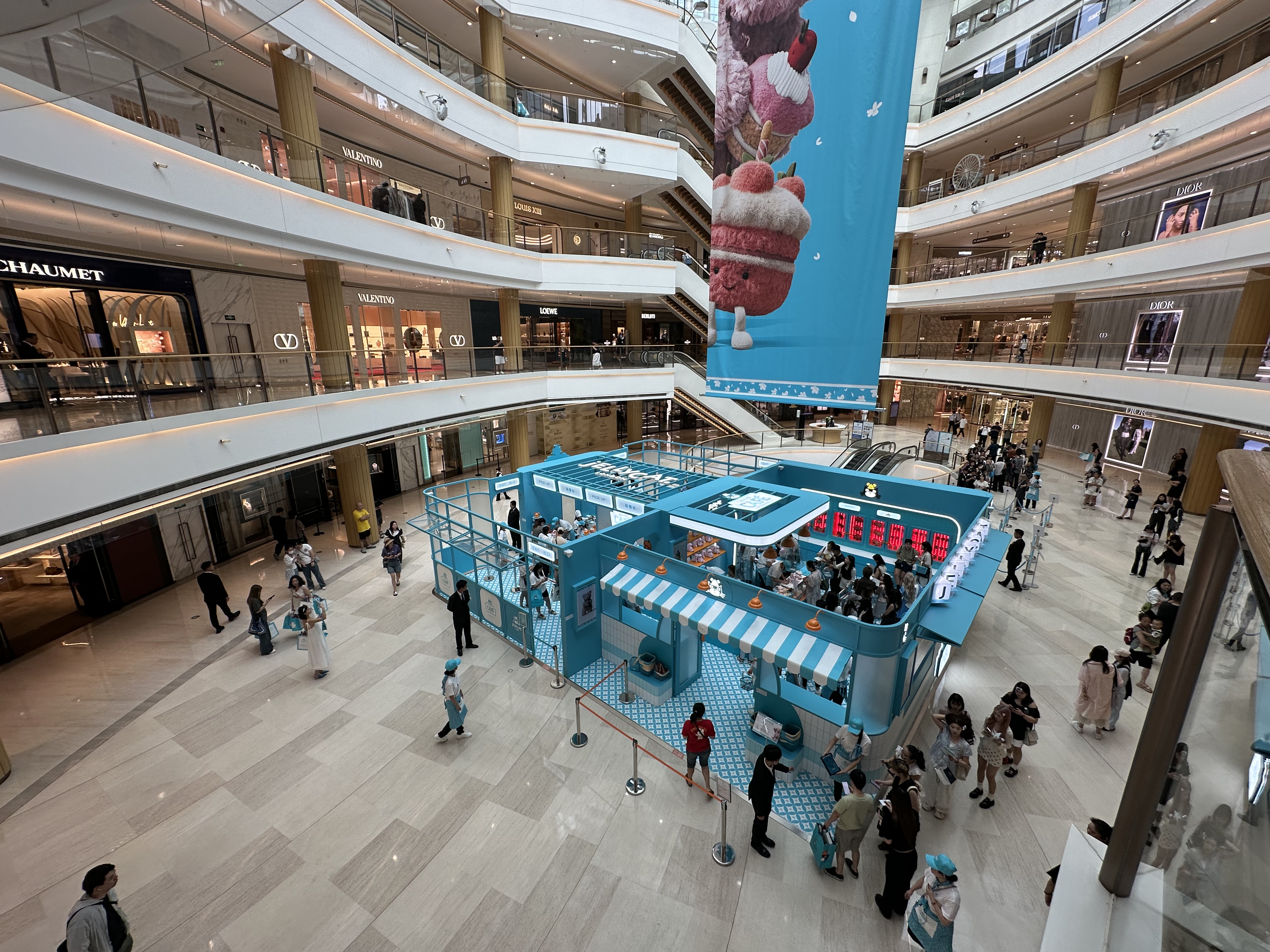
Core Viewpoint - The success of Jellycat's plush toys is attributed to the emotional value they provide, particularly through the immersive "play house" experience that resonates with adult consumers' desire to escape reality and fulfill their inner child [10][12]. Group 1: Product Offering - Jellycat offers a variety of plush toys, including common animal shapes and everyday objects, categorized into different series [4]. - The unique aspect of Jellycat's products is the incorporation of a "ceremonial" experience, such as the themed café where all toys resemble food items, enhancing the overall consumer experience [7]. Group 2: Consumer Engagement - The buying process at Jellycat includes interactive performances, such as candle lighting on plush cakes and tea preparation, creating a sense of ritual that appeals to consumers' nostalgia and emotional needs [10]. - Consumers perceive Jellycat toys not merely as playthings but as "children" that they care for, fulfilling a sense of purpose and control in their lives [11]. Group 3: Market Performance - During the 2023 "Double 11" shopping festival, Jellycat's sales surpassed Disney, establishing it as a leader in the plush fabric category, with an average transaction price of 465 yuan [12]. - In March 2024, data from Tmall indicated that products priced above 400 yuan accounted for 14.1% of sales, with Jellycat's "Pirate Dog" plush toy achieving a remarkable average transaction price of 2759 yuan, ranking as the best-selling item [12]. Group 4: Emotional Connection - The immersive "play house" environment created by Jellycat allows adults to temporarily escape their worries, fulfilling a psychological need for comfort and emotional healing [12]. - The appeal of Jellycat and similar brands lies in their ability to satisfy consumers' emotional needs, making them key players in the toy and IP economy [13].
当黄金成为谷子:情绪消费推高溢价 机构提示隐忧
Zhong Guo Zheng Quan Bao· 2025-09-06 01:34
Core Viewpoint - The rise of "pain gold," a combination of anime, gaming IPs, and gold jewelry, is becoming popular among young consumers, seen as a more valuable alternative to traditional merchandise [1][2][5]. Group 1: Market Trends - "Pain gold" has gained traction on social media and is viewed as a new growth point for jewelers, reflecting a shift in consumer spending towards personal enjoyment and emotional value [1][5]. - The average price of "pain gold" ranges from 1800 to 2000 yuan per gram, significantly higher than the typical gold jewelry price of around 1000 yuan per gram, indicating a substantial premium for these products [5][6]. Group 2: Consumer Behavior - Young consumers are increasingly willing to pay for emotional and nostalgic value, often associating their purchases with personal interests and childhood memories [3][4]. - The trend is supported by a growing number of discussions on social media, with over 20,000 posts and nearly 3 million views related to "pain gold," primarily from consumers born in the 1990s and 2000s [3][5]. Group 3: Industry Insights - The jewelry industry is adapting to the changing preferences of younger consumers, who prioritize design, emotional connection, and social attributes in their purchases [4][9]. - The integration of IP with gold jewelry is seen as an innovative direction for the traditional jewelry market, although concerns about the sustainability of this trend exist due to the varying lifespans of popular IPs [6][9]. Group 4: Pricing and Investment Perspective - Analysts caution that the high premiums associated with "pain gold" may not be justified from an investment standpoint, suggesting that traditional gold bars or coins are more rational choices for value retention [1][6]. - The liquidity of "pain gold" is also questioned, as its resale value may only reflect the gold price rather than any additional IP value, making it less attractive for investment purposes [5][6].