
绿色低碳转型

Search documents
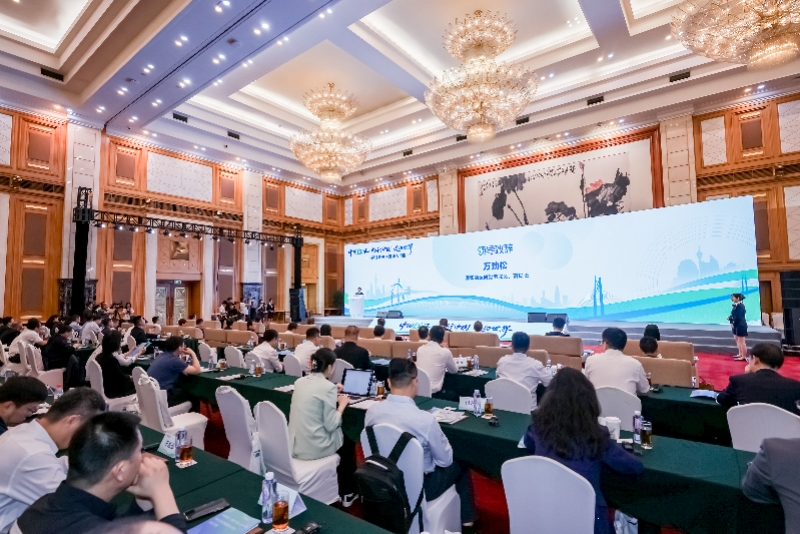
绿电交易增11倍、跨境合作提速,粤港澳大湾区数据亮眼获赞
Nan Fang Du Shi Bao· 2025-05-13 13:09
Core Insights - The event "Green Certificate Entering the Guangdong-Hong Kong-Macao Greater Bay Area" was held in Shenzhen, where representatives from the National Energy Administration, international climate organizations, and local governments discussed the construction and internationalization of the green certificate market [1][3] - China's green certificate has been fully recognized by the global renewable energy consumption initiative RE100, with a signed agreement for a transaction of 40 billion kilowatt-hours of green electricity [1][4] - The 2024 Guangdong-Hong Kong-Macao Green Electricity Consumption Report indicates a remarkable growth in the region, with a transaction volume of 49.1 billion kilowatt-hours, a year-on-year increase of 1100% [1][10] Green Certificate Market Development - The green certificate system in China has rapidly developed since its implementation in 2017, establishing a comprehensive lifecycle management system for green certificates [5][7] - The RE100 initiative, which includes around 430 large companies committed to using 100% renewable electricity, has embraced China's green certificate system, enhancing its credibility and international recognition [7][8] - The Guangdong-Hong Kong-Macao Greater Bay Area has become a significant growth area for green electricity consumption, with transaction volumes expected to reach 78 billion kilowatt-hours in the first quarter of 2025, a 1600% increase year-on-year [10][11] Cross-Border Cooperation and Market Activity - Cross-border green certificate transactions have gained momentum, with Hong Kong and Macau users purchasing 400,000 certificates (equivalent to 400 million kilowatt-hours) since the start of cross-border trading in 2023 [1][11] - Shenzhen leads the region in green electricity consumption, with a total of 12.7 billion kilowatt-hours, while Guangzhou, Dongguan, and Huizhou also contribute significantly to the overall consumption [11][13] - The Guangdong-Hong Kong-Macao region's green certificate market is highly active, with the Guangzhou Electric Power Trading Center accounting for three-quarters of the national green certificate transactions [11][13] Future Prospects and Recommendations - Experts suggest that the international recognition of China's green certificate should be pursued in stages, leveraging the Belt and Road Initiative to promote acceptance in neighboring countries and align with European and American market rules [8] - The establishment of a monitoring and early warning mechanism for cross-provincial green certificate trading is recommended to facilitate a more unified national market [18] - The market is currently influenced by energy consumption control policies, which may create barriers to inter-provincial trading, impacting the overall market dynamics [18]

波司登亮相中国品牌日晚会 以AI美学书写未来时尚新篇章
Zhong Guo Jin Rong Xin Xi Wang· 2025-05-13 08:52
Core Viewpoint - Bosideng showcased its digital transformation in the fashion industry through an innovative AI fashion show at the 2025 China Brand Night, highlighting the integration of technology and fashion [1][2]. Group 1: Digital Transformation and AI Integration - Bosideng's AI model "BSD.AI Aesthetic Brain" demonstrated the complete process of creating a down jacket, from demand generation to design and rendering [2]. - The company has established a comprehensive clothing database by integrating decades of design and user research data with global fashion trends [5]. - The introduction of AI technology has significantly improved design efficiency, reducing sample development time from 100 days to 27 days [5]. Group 2: Product Innovation and Market Response - Bosideng launched various product lines, including the Summit Series and Extreme Cold Series, to meet diverse consumer needs while enhancing product value through technology [5]. - The Extreme Cold Down Jacket features a groundbreaking dynamic cold protection technology, achieving a milestone in the field of scientific research equipment [5]. Group 3: Sustainability and ESG Strategy - Bosideng is accelerating its green and low-carbon transformation, aiming for net-zero emissions in operational aspects by 2038 [6]. - The company has developed an intelligent manufacturing system, GiMS, utilizing digital technologies to enhance production efficiency and reduce carbon footprints [6]. - Bosideng's national-level intelligent manufacturing demonstration factory has achieved 100% coverage of energy consumption monitoring systems, continuously optimizing key performance indicators [6].

宁东基地举办技术成果推介会
Zhong Guo Hua Gong Bao· 2025-05-13 02:33
Group 1 - The Ningdong Base is accelerating the technological innovation and green low-carbon transformation in the coal power industry through a technology achievement promotion conference [1] - The conference featured presentations from experts from universities such as Xi'an Jiaotong University and Dalian University of Technology, showcasing several cutting-edge technological achievements [1] - Key technologies presented include innovative solutions for desulfurization wastewater treatment, EDI modules to enhance water treatment efficiency, integrated technologies for flue gas purification and heat recovery, and energy recovery technologies for industrial water systems [1] Group 2 - Following the conference, the Ningdong Technology Market initiated a special project for achievement transformation, facilitating discussions between key enterprises and technology holders for potential collaboration [2] - The Ningdong Administrative Committee's Science and Information Technology Bureau plans to enhance the innovation hub function of the Ningdong Technology Market, aiming to attract more advanced technological achievements for implementation in the Ningdong Base [2] - The focus will be on matching advanced core technologies with engineering scenarios and promoting their large-scale dissemination to support the Ningdong Base's secondary entrepreneurship and high-quality development through technological innovation [2]
国网开鲁县供电公司:突出政治本色 以高质量党建引领保障中心工作高质量发展
Zhong Guo Neng Yuan Wang· 2025-05-12 06:27
近年来,国网开鲁县供电公司深入学习贯彻习近平总书记关于党的建设的重要思想特别是习近平总书记 关于对国企改革重要讲话和批示指示精神,把政治建设摆在国企高质量发展的首要位置,只有推动党建 与中心业务深度融合,企业才能得到健康稳定的高质量发展。 一、加强政治建设,铸牢党建工作的"压舱石"。 一是强化理论武装。坚持把习近平新时代中国特色社会主义思想、习近平总书记关于党的建设、国企改 革的重要思想等,作为党组理论学习中心组和支部 "三会一课"的"第一议题",扎实开展先进性主题教 育、党史学习教育、党纪学习教育、学习贯彻习近平新时代中国特色社会主义思想主题教育等党内集中 教育,实施党委引领学、支部主体学、先进带动学、案例警示学、党员自觉学"五学"工作机制,常态长 效抓好创新理论的深化、内化、转化工作。二是完善融合机制。把"用政治标准检视中心业务工作"纳入 企业负责人考评体系,推动党建与中心工作同谋划、同部署、同推进、同考核,在全公司推行"党建 +""党建融合"项目,开展党建与安全生产、供电服务、优化营商等深度融合典型案例评选活动,以高质 量的党建工作引领保障公司工作高质量发展。三是加强实践和创新。紧贴电网建设、企业管理和 ...
强化规划衔接,推动交通基础设施绿色高质量发展
Zhong Guo Huan Jing Bao· 2025-05-12 05:32
Group 1 - The core viewpoint emphasizes the need for enhanced coordination between transportation infrastructure planning and national spatial planning, as well as ecological environment management systems to promote high-quality development and ecological protection [1][2][3] Group 2 - The article highlights the significant area designated as ecological protection red lines, approximately 3.19 million square kilometers, with over 30% of the land area being affected, which poses challenges for transportation infrastructure planning [2] - By 2035, the demand for national highway construction and renovation is projected to be around 58,000 kilometers for expressways and 110,000 kilometers for ordinary national roads, with some routes inevitably crossing ecological protection areas [2][3] - The establishment of an ecological environment zoning control system aims to facilitate high-level ecological protection and high-quality transportation development, with a goal to have a comprehensive control system in place by 2035 [3][4] Group 3 - Recommendations for strengthening the connection between transportation infrastructure planning and ecological management include enhancing inter-departmental collaboration, optimizing site selection to avoid ecological sensitive areas, and implementing green construction practices throughout the infrastructure lifecycle [5][6] - The article suggests that transportation projects should prioritize low-impact development techniques and comply with environmental regulations, especially in sensitive ecological zones [5][6] - A monitoring and evaluation mechanism for planning implementation is proposed to ensure that ecological protection goals are met and to provide data support for future planning adjustments [6]
4月全国碳市场交易升温 碳配额日均成交量环比增近50%
Zheng Quan Shi Bao Wang· 2025-05-12 02:57
Core Insights - The national carbon market in China experienced increased trading activity in April, with daily average trading volume of carbon allowances (CEA) reaching 233,100 tons, a nearly 50% increase from March's 158,800 tons [1] - The Ministry of Ecology and Environment issued a notification on April 23 regarding the management of key emission units in the carbon market, which aims to enhance market expectations and promote green and low-carbon transformation in key industries [1][2] Group 1 - The trading activity in the national carbon market improved in April, with over 75% of trading days seeing volumes above 100,000 tons [1] - The notification requires that key emission units in the power generation, steel, cement, and aluminum smelting industries, with annual direct emissions of 26,000 tons of CO2 equivalent, be included in the key emission unit directory [2] - The average closing price of CEA in April was 82.26 yuan/ton, a decrease of 6.42% from March's average closing price of 87.90 yuan/ton [2] Group 2 - The research center forecasts that carbon market prices will continue to decline in May, with expected buy and sell prices of 78.37 yuan/ton and 82.66 yuan/ton, respectively [2] - The buy price index is projected to decrease by 7.70%, while the sell price index is expected to drop by 7.32% [2] - The notification aims to avoid duplicate management of greenhouse gas emissions by ensuring that key emission units included in the national carbon market do not participate in local carbon markets [2]
云南:“税引擎”助力云岭“有色”产业腾飞
Sou Hu Cai Jing· 2025-05-12 02:25
Group 1: Industry Overview - Yunnan is known as the "Kingdom of Nonferrous Metals," with reserves of tin, titanium iron ore, and platinum group metals ranking first in the country [1] - The province is strengthening its nonferrous metal industry chain, transforming resource advantages into industrial advantages, and accelerating the upgrade of the nonferrous metal industry [1] Group 2: Company Profile - Yunnan Jinding Zinc Industry Co., Ltd. is located in the Nujiang Prefecture and is a leading enterprise in the nonferrous metal mining sector, with proven lead-zinc metal reserves exceeding 14 million tons, making it the largest lead-zinc deposit in China and Asia [2] - The company has received over 6.8 million yuan in provincial and municipal awards for four technology projects in 2024 and has obtained an invention patent for its "Oxide Zinc Raw Ore Fluidized Leaching Process" [2] Group 3: Tax Incentives and Support - The tax department in Nujiang Prefecture has implemented a "one-on-one" tax policy promotion team to provide tailored policy guidance to enterprises, resulting in Yunnan Jinding Zinc Industry Co., Ltd. enjoying tax reductions of 73.89 million yuan in 2023 and 8.93 million yuan in 2024 [3] - The company has also benefited from R&D expense deductions amounting to 14.37 million yuan in 2024, significantly reducing tax costs and enhancing competitiveness [3] Group 4: Comprehensive Service Model - Yunnan has established a "full-cycle" service model to support the high-quality development of the nonferrous metal industry chain, providing customized services based on tax data analysis [4] - Yunnan Tin Industry New Materials Company has achieved over 20% market share in the domestic tin product market and over 15% globally, benefiting from tax incentives such as advanced manufacturing VAT deductions and R&D expense deductions [4] Group 5: Green Taxation and Environmental Initiatives - Yunnan is promoting the integration of green energy and manufacturing, with a focus on developing a "green aluminum + deep processing" cluster [6] - Yunnan Yun Aluminum Haixin Aluminum Co., Ltd. has invested 240 million yuan in environmental protection equipment, resulting in a significant reduction in pollutant emissions and a decrease in environmental tax payments by 22.43% compared to 2020 [6][7] - The company has improved water efficiency and received a 20% reduction in water resource tax, amounting to over 7,000 yuan [7]
石化企业积极拓展非油品业务
Zhong Guo Jing Ji Wang· 2025-05-12 01:38
Group 1 - The core viewpoint of the articles highlights the structural transformation in China's refined oil consumption market due to the rapid adoption of electric vehicles and the acceleration of clean energy initiatives [1] - The 2024 report indicates a decline in China's refined oil consumption, primarily driven by the growth of electric vehicles and the development of LNG heavy trucks [1] - The long-term trend of energy substitution under the global green low-carbon transition will continue to exert pressure on refined oil consumption [1] Group 2 - Sinopec's non-oil business is a crucial focus for transformation, with its core brand, Easy Joy, aiming to provide high-quality and convenient services [1] - Easy Joy has established a significant presence with 28,600 convenience stores and over 10,000 Easy Joy car maintenance outlets, making it the largest chain of direct-operated convenience stores and self-operated car wash services in China [1] - Since its establishment in 2008, Easy Joy has built a brand matrix that includes products, services, platforms, activities, and public welfare, achieving a brand value of 22.814 billion yuan by 2025 [2] Group 3 - Industry experts predict that gas stations will evolve from mere energy supply points to comprehensive consumer complexes, offering diverse services such as shopping, car maintenance, and dining [3] - The sustainable innovation of the "energy supplement +" business model at gas stations will create integrated service models that combine energy supply with shopping, car maintenance, dining, and value-added services [3]
国家高新区“攀高逐新”实现开门红
Zhong Guo Chan Ye Jing Ji Xin Xi Wang· 2025-05-12 00:01
Group 1: Core Insights - The high-tech zones across China are experiencing rapid advancements in automation and production efficiency, with companies like Jiangyin Jiexin Electronics achieving a 3 to 4 times increase in production efficiency and zero error in wafer testing [1] - The integration of AI technologies in quality inspection has led to an 80% reduction in error rates in companies such as Yongzhen Magnetic Materials and Antai Northern [1] - The first quarter of 2025 marks a significant push for high-quality development across various high-tech zones, setting a solid foundation for the year ahead [1] Group 2: Innovation and Policy - The innovation landscape in national high-tech zones is accelerating, with the introduction of the "National High-tech Zone New Track Cultivation Action Plan" promoting original and disruptive technology breakthroughs [2] - High-tech zones are focusing on emerging industries such as photonics, aerospace, new materials, and low-altitude economy, aiming to create globally influential innovation clusters [2] - Various regions are enhancing their policy frameworks to support innovation, including reforms like "commitment-based approval" and "land supply lists" [2][3] Group 3: Industrial Upgrades and Collaborations - The integration of traditional industries with new technologies is being prioritized, with significant growth in strategic emerging industries and future industries [7] - Collaborative innovation platforms are being established among regions, such as the G100 alliance formed by five provinces, to enhance resource aggregation and innovation factor mobility [4] - The focus on smart and digital transformation in manufacturing is evident, with high-tech zones like Jiangyin and Baotou implementing extensive automation and digital solutions [7] Group 4: Green Transformation - High-tech zones are making notable progress in green and low-carbon transitions, with significant breakthroughs in pollution reduction and resource efficiency [8] - Qingdao High-tech Zone has achieved a 93.4% reduction in sulfur dioxide emissions and a 45.5% decrease in carbon dioxide emissions per unit of industrial added value over the past five years [9] - The promotion of green supply chains and green product offerings is being emphasized across various high-tech zones to support sustainable development [9] Group 5: Financial Support and Innovation Ecosystem - Financial institutions are increasingly supporting technology enterprises, with significant credit provided to high-tech companies in regions like Xiangyang and Suzhou [12] - The establishment of comprehensive incubation systems for high-growth enterprises is fostering a vibrant innovation ecosystem, with a focus on unicorns and specialized small giants [12][13] - The collaboration between large enterprises and emerging "gazelle" companies is creating a new symbiotic development model in high-tech zones [13]
贵州六盘水:逐“绿”而行 “江南煤都”聚“氢”成“链”
Zhong Guo Xin Wen Wang· 2025-05-11 03:18
Core Insights - The hydrogen energy industry in Liupanshui, Guizhou, is rapidly developing, with the establishment of a complete ecological system for hydrogen energy production, storage, transportation, and utilization [1][2] - The region is transitioning from traditional coal coking to green hydrogen energy, leveraging its abundant coal resources to produce hydrogen efficiently [2][3] - The "Meijin Huayu Coal-Focused Hydrogen Comprehensive Utilization Demonstration Project" is a key initiative, expected to produce 4 million standard cubic meters of high-purity hydrogen annually and significantly reduce carbon emissions [3][4] Industry Development - Liupanshui has established a hydrogen energy industry development plan from 2019 to 2030, focusing on the integration of coal power and new coal chemical industries [2] - The city has achieved several milestones, including the first hydrogen production plant, hydrogen refueling station, hydrogen bus, and hydrogen transport vehicle in Guizhou [2][3] - The local government aims to create a hydrogen energy demonstration area and has outlined a development plan for 2024-2030 to support the entire hydrogen energy industry chain [2][4] Project Details - The Meijin Huayu project utilizes advanced technology to achieve a synergistic production of metallurgical coke and hydrogen, incorporating 12 core technologies for a circular economy model [3] - The project is expected to generate an annual output value of 20 billion yuan and create over 1,500 jobs, while also promoting the transition from coal to hydrogen [3][4] - The deployment of hydrogen fuel cell locomotives, buses, and heavy trucks is set to expand application scenarios and create a demonstration effect for the hydrogen energy sector [4]
