绿色金融

Search documents
申万投资公司顺利完成上海西井科技F+轮融资项目
申万宏源证券上海北京西路营业部· 2025-10-23 02:26
Core Viewpoint - The investment by Shenwan Investment Company in Xijing Technology represents a strategic move to support technological innovation and align with national development goals, particularly in the context of the Belt and Road Initiative [2][3]. Group 1: Investment Overview - Shenwan Investment Company successfully led a financing round (F+ round) for Xijing Technology, a high-tech firm focused on AI and autonomous driving solutions for large logistics scenarios, with operations in 28 countries [2]. - The investment aligns with the central financial work conference's spirit and aims to implement the "five major articles" of financial work [2]. Group 2: Strategic Alignment - Xijing Technology's global business layout is highly compatible with the high-quality development requirements of the Belt and Road Initiative, having successfully implemented smart port projects in several countries along the route [2]. - The company enhances operational efficiency and intelligence at key logistics hubs, promoting the application of Chinese technology and standards in Belt and Road regions [2]. Group 3: Financial Structure and Impact - This investment marks the first use of an SPV structure by Shenwan Investment, connecting with the new "1+6" policy of the Sci-Tech Innovation Board, providing critical support for tech companies from R&D to international development [3]. - The investment exemplifies a virtuous cycle of "technology-industry-finance," demonstrating the effectiveness of financial empowerment in innovation and its service to national strategies [3].

塔吉克斯坦发行首批绿色国债
Shang Wu Bu Wang Zhan· 2025-10-23 02:19
塔吉克斯坦亚洲快讯通讯社10月21日杜尚别报道,日前,塔吉克斯坦财政部发行了首批绿色国债,规模 为2亿索莫尼(约合2200万美元),年收益率为13%,高于普通国债(通常低于10%)。所筹资金将专 门用于环保项目,包括可再生能源开发、水与空气净化、废物回收等领域。 ...
银行业倾力做好金融“五篇大文章” 服务实体经济质效大幅提升
Jin Rong Shi Bao· 2025-10-23 02:02
Group 1: Financial Support for the Real Economy - The financial sector has significantly improved its service quality and efficiency to support the real economy during the "14th Five-Year Plan" period, with a focus on major national strategies and key areas of economic development [1][2] - Over the past five years, the banking and insurance sectors have provided an additional 170 trillion yuan to the real economy through various financing methods, with annual growth rates of 27.2% for scientific research loans, 21.7% for manufacturing medium- and long-term loans, and 10.1% for infrastructure loans [1][5] - The balance of inclusive loans for small and micro enterprises reached 36 trillion yuan, which is 2.3 times that at the end of the "13th Five-Year Plan," with interest rates decreasing by 2 percentage points [1][5] Group 2: Support for Technological Innovation - Financial institutions have strengthened their support for technology-driven enterprises, with the balance of loans to high-tech enterprises reaching nearly 19 trillion yuan and an annual growth rate exceeding 20% [2][3] - The introduction of innovative financial products, such as the "Bank of China Technology Innovation Computing Loan," aims to address the financing difficulties faced by light-asset technology companies [3][4] Group 3: Inclusive Finance and Poverty Alleviation - The development of inclusive finance has been crucial for economic transformation and social equity, with 17 trillion yuan in loans receiving repayment deferral support during the COVID-19 pandemic, benefiting over 10 million businesses [5][6] - In the past five years, 31.5 trillion yuan in loans have been issued to poverty-stricken areas, along with nearly 400 billion yuan in microloans for impoverished populations [6][7] Group 4: Green Finance Initiatives - The banking sector has made significant contributions to green finance, supporting infrastructure upgrades, low-carbon technology innovation, and energy transitions, thereby promoting a comprehensive green transformation of the economy [8] - National Development Bank has financed various green projects, including renewable energy initiatives and ecological restoration efforts, contributing to sustainable development goals [8]

国泰君安期货商品研究晨报:绿色金融与新能源-20251023
Guo Tai Jun An Qi Huo· 2025-10-23 01:31
2025年10月23日 国泰君安期货商品研究晨报-绿色金融与新能源 观点与策略 | 镍:短线窄幅震荡,矛盾仍在积累 | 2 | | --- | --- | | 不锈钢:供需难寻上行驱动,成本限制下方空间 | 2 | | 碳酸锂:偏强震荡 | 4 | | 工业硅:仓单去化,盘面较抗跌 | 6 | | 多晶硅:关注现货成交价格 | 6 | 国 泰 君 安 期 货 研 究 所 期货研究 商 品 研 究 2025 年 10 月 23 日 镍:短线窄幅震荡,矛盾仍在积累 不锈钢:供需难寻上行驱动,成本限制下方空间 张再宇 投资咨询从业资格号:Z0021479 zhangzaiyu@gtht.com 【基本面跟踪】 镍基本面数据 | | | 指标名称 | T | T-1 | T-5 | T-10 | T-22 | T-66 | | --- | --- | --- | --- | --- | --- | --- | --- | --- | | | | 沪镍主力(收盘价) | 121,380 | 200 | 200 | 480 | -600 | 280 | | 期 | | 不锈钢主力(收盘价) | 12,710 | 45 | ...
银行业倾力做好金融“五篇大文章”
Jin Rong Shi Bao· 2025-10-23 01:25
Core Insights - The financial services sector has significantly improved its quality and efficiency in supporting the real economy during the "14th Five-Year Plan" period, with a focus on enhancing financial support for key strategic areas and weak links in economic and social development [1][2]. Financial Support for the Real Economy - Over the past five years, the banking and insurance sectors have provided an additional 170 trillion yuan to the real economy through various financing methods, including loans, bonds, and equity [1]. - The average annual growth rates for loans in scientific research technology, medium to long-term loans for manufacturing, and infrastructure loans are 27.2%, 21.7%, and 10.1%, respectively [1]. - The balance of inclusive loans for small and micro enterprises has reached 36 trillion yuan, which is 2.3 times that of the end of the "13th Five-Year Plan," with interest rates decreasing by 2 percentage points [1]. Support for Technological Innovation - Financial institutions have strengthened their support for technology credit, with the balance of loans to high-tech enterprises nearing 19 trillion yuan and an annual growth rate exceeding 20% [2]. - A "technology-industry-finance" virtuous cycle is being formed, with banks improving financial services for technology enterprises throughout their lifecycle [2][3]. Inclusive Finance Development - The development of inclusive finance is crucial for transforming the economic development model and enhancing social equity [4]. - During the COVID-19 pandemic, 17 trillion yuan in loans received deferred repayment support, benefiting over 10 million businesses [6]. - In the past five years, 31.5 trillion yuan in loans have been issued to poverty-stricken areas, with nearly 400 billion yuan in microloans for impoverished populations [6]. Agricultural Financial Support - Agricultural Bank has prioritized food security as a key financial service, providing comprehensive support for grain and important agricultural products [7]. - The balance of the "Grain Farmer e-loan" product reached 140.1 billion yuan, supporting 910,000 grain and oil planting entities [7]. Green Finance Initiatives - The banking sector has made significant contributions to green finance, supporting infrastructure upgrades, low-carbon technology innovation, and energy transitions [8]. - National Development Bank has financed various projects, including renewable energy and ecological restoration, contributing to the overall green transformation of the economy [8].

兴业银行济南分行:“链”上发力,为全省现代冶金产业注入金融动能
Qi Lu Wan Bao· 2025-10-23 01:24
Core Viewpoint - Shandong is advancing the transformation and upgrading of its modern metallurgical industry under the "dual carbon" goals, with Industrial Bank's Jinan branch playing a crucial role in providing innovative financial support for high-quality development in this sector [1] Green Empowerment - The steel and aluminum industries are key sectors for low-carbon transformation in Shandong's metallurgical industry, with Industrial Bank's Jinan branch integrating green finance into the entire industrial upgrade process [2] - The bank has launched the first low-carbon transformation loan in the steel industry, addressing local companies' needs for flue gas treatment and providing stable funding for low-carbon circular transformation [2] - A 200 million yuan financial loan for aluminum industry transformation was introduced, linking interest rates to product energy consumption to encourage energy-saving and carbon reduction [2] - The bank's "carbon footprint-linked loan" allows companies to reduce financing costs as their carbon footprint decreases, transforming green transition from a passive requirement to an active pursuit [2] - Industrial Bank received the highest AAA rating from MSCI for the second consecutive year, ranking in the top 3 globally among peers [2] Ecosystem Activation - High-quality development in the metallurgical industry requires both core enterprises to lead and upstream and downstream players to collaborate, with the bank creating a service ecosystem that connects core enterprises and the industrial chain [3] - A comprehensive financial solution was tailored for a large steel group, supporting its new energy initiatives and extending supply chain financial services to alleviate financing difficulties for small and micro enterprises [3] - The bank facilitated 1.2 billion yuan in funding for over 50 small suppliers through reverse factoring, improving procurement efficiency by 40% [3] - Customized support was provided to a metallurgical equipment manufacturer facing cash shortages, with a 10 million yuan credit loan approved and disbursed within the same day [3] Technological Efficiency - The fast-paced production in the metallurgical industry necessitates rapid financial services, which the bank has achieved by restructuring service processes through financial technology [4] - A mechanism for front, middle, and back office collaboration was established to expedite funding approvals, with a case showing a 3-day turnaround from account opening to loan disbursement [4] - The bank's manufacturing loan balance exceeded 61.5 billion yuan, with financing for private enterprises surpassing 70 billion yuan, demonstrating the integration of finance and the real economy [4] Comprehensive Support - The bank is committed to supporting Shandong's modern metallurgical industry by providing a seamless financial service that connects various aspects of the industry, from emissions management to urgent funding needs [5]

泰州农商银行:以金融创新赋能地方高质量发展
Jiang Nan Shi Bao· 2025-10-23 01:03
Core Insights - Taizhou Rural Commercial Bank is focusing on serving the real economy and supporting rural revitalization through innovative financial models and technology empowerment [1][2][3] - The bank aims to enhance financial support for local economic development by exploring unique paths in technology finance and green finance [1] Group 1: Technology Finance - The bank addresses the financing challenges faced by technology-based SMEs by creating a dual assessment system that evaluates both hard assets and soft strengths, allowing "technical strength" to be converted into "development funds" [1] - A case study highlights the bank's support for a technology company with no loan history, where it recognized the value of both physical assets and intellectual property, classifying it as a key support target for technology credit [1][2] - The bank customized a service plan for the company, providing a two-year credit line of several million yuan with a low interest rate of 1.7% after applying for government subsidies [2] Group 2: Green Finance - Taizhou Rural Commercial Bank integrates green concepts into its operations, focusing on carbon reduction and environmental governance through product innovation and targeted support [2][3] - The bank has launched products like "Green Carbon Loan" linked to carbon emission monitoring data and "Environmental Loan" aimed at projects in pollution prevention and ecological restoration [2] - The bank prioritizes green projects in its lending practices, simplifying approval processes and actively engaging with new energy industrial parks to meet financing needs for green industries [3] Group 3: Commitment to Local Development - The bank is committed to its local positioning and aims to deepen its "Five Major Articles" practice by providing more precise services and innovative products to nourish the real economy [3] - The bank's actions reflect its mission to support both technology enterprises and green industries, contributing to high-quality local development [3]
苏州国际新能源博览会开幕 未来能源大会同期召开
Su Zhou Ri Bao· 2025-10-23 00:49
Core Insights - The 2025 Suzhou International New Energy Expo has commenced, focusing on "Energy Transformation, Low-Carbon Future" and showcasing cutting-edge technologies and industry wisdom [1] - The expo features a record exhibition scale with eight thematic areas, including photovoltaic technology, new energy vehicles, energy storage, hydrogen energy, and future energy [1][2] - The event serves as a significant platform for global cooperation in the new energy sector, hosting various activities such as international policy analysis, industry reports, and trade negotiations [1][2] Company Overview - Suzhou Energy Development Group Co., Ltd. is the organizer of the expo, aiming for "safe, stable, clean, and low-carbon" energy development while ensuring energy security in Suzhou [2] - The company operates in multiple sectors, including urban gas, new energy development, urban lighting, energy investment, and coal-fired power plants, while also exploring new business models like energy internet and virtual power plants [2] - The group has been recognized as one of China's top 500 energy enterprises for two consecutive years and received an AAA credit rating in 2024 [2] Industry Trends - The concurrent 7th Future Energy Conference addresses topics such as the construction of new energy systems, commercialization of cutting-edge technologies, and green finance, promoting a collaborative global energy ecosystem [2]
他山之石|韩国如何借助绿色金融推进废旧电池回收?
Zhong Guo Huan Jing Bao· 2025-10-23 00:19
Core Insights - The rapid development of the global renewable energy industry has made the recycling and reuse of waste batteries a significant issue, with South Korea establishing a unique model in this area through innovative green finance tools, effectively alleviating environmental pressure and promoting the development of a circular economy [1] Group 1: Key Measures of South Korea's Green Finance Support for Waste Battery Recycling - South Korea has prioritized waste battery recycling and reuse as a key area for green finance support, creating a multi-layered financial support system through policy guidance, product innovation, and market cultivation [2] - A dual-driven mechanism of "legal compulsion + financial incentives" has been established, with the revised Resource Conservation and Recycling Act of 2021 mandating battery producers to take on recycling responsibilities, linking recycling targets to green finance support [2] - As of 2024, 23 waste battery recycling companies in South Korea have received certification under the "Battery Circular Finance Certification System," leading to an average reduction of 1.8 percentage points in industry financing costs [2] Group 2: Analysis of the Advantages and Disadvantages of the South Korean Model - The South Korean model shows significant advantages, including deep collaboration between policy and financial tools, with recycling targets integrated into green finance certification standards, creating a closed loop of "legal requirements—financial incentives—market response" [3] - Comprehensive financial services covering the entire industry chain have been developed, with targeted credit, leasing, and securitization products addressing funding needs at various stages from collection to reuse [3] - A robust risk prevention mechanism is in place, utilizing government risk compensation and specialized insurance products to mitigate environmental and market risks during the recycling process [3] - However, there are shortcomings, such as insufficient financial support for imported waste batteries and a mismatch between the average term of green loans (3-5 years) and the typical profitability timeline of waste battery recycling projects (5-8 years) [3] Group 3: Implications for China's Resource Recycling and Reuse - It is recommended that China constructs a comprehensive green finance support system, drawing on South Korea's "policy guidance + product innovation" model, incorporating waste battery recycling targets into the green finance evaluation system and providing financing incentives for compliant enterprises [4] - Establishing a "waste battery recycling risk compensation fund" could help mitigate risks associated with loans issued by financial institutions for recycling [4] - To promote balanced regional development, pilot programs for "battery recycling green finance" could be initiated in provinces with concentrated new energy vehicle industries, integrating credit, funds, and insurance tools [4] - The South Korean experience demonstrates that green finance is an effective tool for promoting waste battery recycling, but its effectiveness requires policy coordination, product innovation, and international cooperation [4]
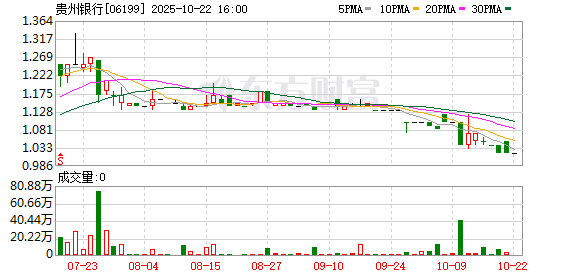
金融笔触绘黔景 谱写贵州现代化产业体系的“用心”答卷——贵州银行2025年中报解读
Zheng Quan Shi Bao· 2025-10-22 17:24
Core Insights - Guizhou Bank reported a stable performance in the first half of 2025, achieving growth in both revenue and net profit, with total assets exceeding 600 billion yuan [2][3] - The bank's commitment to supporting local economic development is evident in its financial results, which align with the modernization of Guizhou's industrial system [2] Financial Performance - In the first half of 2025, Guizhou Bank achieved operating revenue of 6.102 billion yuan, a year-on-year increase of 2.26%, and a net profit of 2.129 billion yuan, up 0.31% year-on-year [3] - As of June 30, total assets reached 603.747 billion yuan, an increase of 13.760 billion yuan or 2.33% from the beginning of the year [3] - Total loans amounted to 364.347 billion yuan, reflecting a growth of 4.97%, while total deposits reached 392.731 billion yuan, up 4.73% [3] - The bank's net interest margin improved to 1.90%, an increase of 0.22 percentage points year-on-year, with a cost-to-income ratio decreasing by 1.37 percentage points to 24.25% [3] Asset Quality - The bank's non-performing loan ratio decreased by 0.03 percentage points to 1.69%, and the proportion of attention-class loans also declined [4] - As of June 30, the provision coverage ratio increased by 15.89 percentage points to 331.87%, indicating enhanced risk resilience [4] Strategic Focus - Guizhou Bank is aligning its resources with the "Five Key Areas" outlined by the Central Financial Work Conference, focusing on technology finance, green finance, inclusive finance, pension finance, and digital finance [5][6] - The bank has increased its loan balance to support the real economy, with a total loan balance exceeding 350 billion yuan, reflecting a nearly 5% increase [5] Sector-Specific Loans - Loans in the "Five Key Areas" have shown significant growth, with technology finance loans increasing by 21.57%, digital economy loans by 28.57%, and pension industry loans by 57.22% [6] - The bank's green credit balance surpassed 60 billion yuan, growing by 2.582 billion yuan to 61.293 billion yuan [6] - Guizhou Bank has actively supported new urbanization, new industrialization, agricultural modernization, and tourism industry development, with substantial loan disbursements in these areas [7] Digital Transformation - The bank's digital transformation focuses on enhancing data-driven capabilities and improving business operations, achieving significant progress in key projects [8] - Guizhou Bank has launched various digital financial products and services, serving over 60,000 small and micro-enterprises [8] - The bank aims to establish itself as a "smart regional bank" that significantly contributes to the high-quality development of Guizhou's economy [9]