
供应链安全

Search documents
中国转向阿根廷大豆,事态严重超出特朗普想象,焦虑全球寻买家,印度首当其冲
Sou Hu Cai Jing· 2025-10-09 15:16
Core Viewpoint - The ongoing soybean trade issue between the U.S. and China highlights the complexities of trade negotiations, where U.S. farmers are facing difficulties due to China's shift in sourcing soybeans from South America and other countries, undermining the U.S. position as a primary supplier [1][5][10]. Group 1: Trade Dynamics - China is the world's largest soybean buyer, accounting for two-thirds of global imports, but has increasingly turned to Brazil and Argentina for its soybean needs [1][5]. - The U.S. soybean market is heavily reliant on China, and the lack of Chinese purchases has left U.S. soybeans with limited alternative buyers, as demand from the EU and other regions is insufficient [5][10]. - The trade conflict is not merely about tariffs but reflects a broader struggle over supply chain security, with the U.S. attempting to leverage its soybean exports as a bargaining chip in negotiations [3][8]. Group 2: Political Implications - The soybean issue poses a significant political challenge for Trump, as many of his supporters are farmers who are now facing financial losses due to the inability to sell soybeans [14][20]. - Trump's administration is considering using tariff revenues to subsidize farmers, but this approach does not address the underlying market access issues [14][16]. - The potential loss of the Chinese market could severely impact U.S. farmers and, consequently, Trump's re-election prospects, as maintaining farmer support is crucial [14][20]. Group 3: Future Outlook - Experts suggest that the U.S. may need to rethink its approach to trade negotiations, as unilateral pressure tactics may not yield sustainable results [7][12]. - The search for alternative markets, such as India, is complicated by India's own agricultural needs, making it a challenging prospect for U.S. soybean exports [18][20]. - The current situation indicates a shift in trade dynamics, with China successfully diversifying its sources for soybeans, thereby reducing its dependency on U.S. imports [5][10].

射频前端国产替代:昂瑞微扮演重要角色
半导体行业观察· 2025-10-06 02:28
Core Viewpoint - The rapid development of Angrui Micro in the RF front-end industry is significantly influenced by the U.S. sanctions against Chinese telecom giants, leading to a wave of domestic substitution opportunities [3][12]. Group 1: Company Development - Angrui Micro's IPO application was accepted on March 28, marking a significant event in the RF front-end industry [1]. - The company has achieved rapid growth, with projected sales in 2024 expected to match that of Weijie Chuangxin, positioning itself among the top tier of RF front-end manufacturers [1]. - Angrui Micro has successfully developed a series of RF front-end chips for high-end flagship smartphones, including the challenging Sub3G L-PAMiD product [3][12]. Group 2: Market Dynamics - The U.S. pressure on Chinese companies has led domestic smartphone manufacturers to recognize the importance of a local supply chain, benefiting companies like Angrui Micro [3]. - The RF front-end market in China is still relatively small, with total sales around 200 billion, compared to a global market size of approximately 1200 billion [9]. Group 3: Supply Chain and Collaboration - Effective supply chain management is crucial for RF front-end companies to ensure security and stability under U.S. pressure [5]. - Collaboration among multiple leading smartphone manufacturers is necessary to drive the entire domestic RF front-end industry, as individual companies alone cannot achieve significant impact [7]. - Angrui Micro has established partnerships with domestic GaAs, SOI, and filter manufacturers, contributing to a higher proportion of domestic procurement [9]. Group 4: Investment and R&D - The rapid development of the domestic supply chain requires RF front-end manufacturers to double their R&D investments due to the need for multiple iterations and maintaining both domestic and overseas supply chains [11]. - Angrui Micro is committed to investing in domestic supply chain development, driven by both customer demand and the need for supply security [11]. Group 5: Long-term Strategy - Domestic substitution is a long-term process, and while rapid progress can be made, surpassing established foreign competitors remains challenging [12]. - Angrui Micro has demonstrated a long-term vision by steadily developing competitive products and leveraging opportunities for domestic substitution since 2019 [12][15].

2025年第39期(总第714期):2025全球关键矿产深度报告-赛迪译丛
Sou Hu Cai Jing· 2025-09-29 23:47
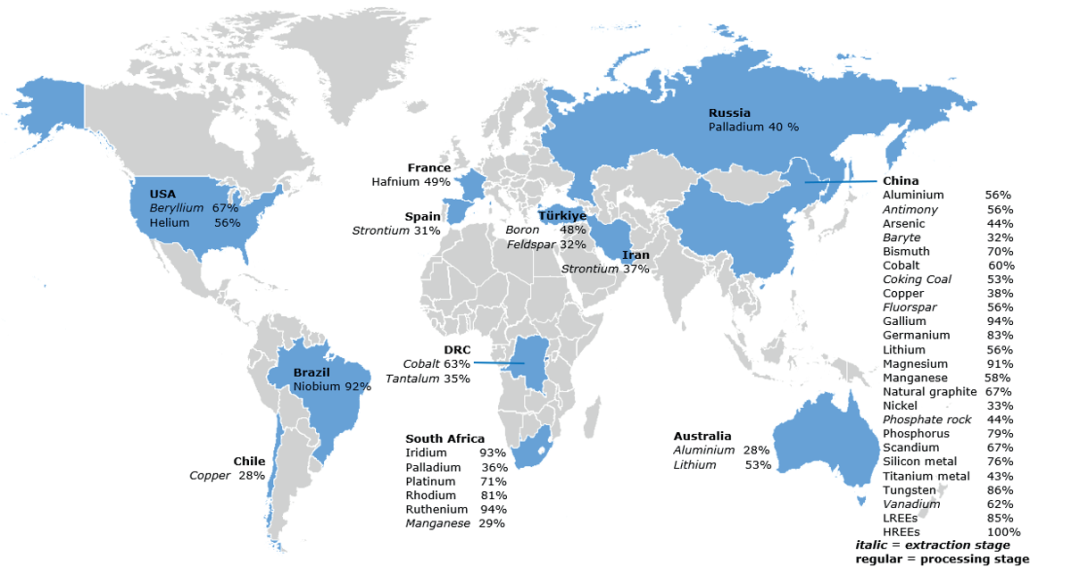
Group 1: Supply and Demand Dynamics - The global supply and demand landscape for critical minerals is undergoing significant changes, with a surge in demand driven by energy transition, particularly in electric vehicles and energy storage [1][6][7] - Lithium demand is expected to increase by nearly 30% year-on-year in 2024, significantly outpacing the average annual growth rate of 10% seen in the 2010s [1][6] - By 2040, lithium, graphite, and rare earth demand is projected to grow by 4.7 times, 2.2 times, and 1.6 times respectively, with electric vehicle batteries consuming 60% of global lithium and 40% of nickel and cobalt [1][7] Group 2: Supply Concentration and Investment Trends - The supply side is characterized by increasing concentration, with China, Indonesia, and the Democratic Republic of Congo dominating the market, leading to an average market share of 86% in the refining sector for the top three producing countries [1][9] - Despite the surge in demand, global investment in critical mineral extraction is expected to slow, with growth rates dropping to 5% in 2024, half of the previous year's rate [1][10] - The International Energy Agency (IEA) warns of potential shortages, predicting a 30% gap in copper supply by 2035 and possible lithium shortages in the 2030s [1][10] Group 3: Geopolitical Influences and Market Pressures - Geopolitical tensions are reshaping resource order, with countries accelerating the establishment of mineral security frameworks, such as the U.S. simplifying licensing processes and the EU passing the Critical Raw Materials Act [2][15] - China's export controls on strategic minerals have led to significant price increases, with bismuth prices rising by 90% and cobalt prices surging by 67% following export restrictions [2][26] - The market faces structural contradictions, with rising costs and environmental pressures hindering development, as emerging producers experience higher operational costs compared to leading producers [2][8] Group 4: Policy Innovations and Technological Breakthroughs - To address these challenges, innovative policy mechanisms are needed, such as establishing certification systems for differentiated pricing and increasing public financial support for high-risk projects [3] - Technological advancements in mining, refining, and recycling are essential, including the development of new techniques to reduce energy consumption and costs in rare earth production [3][29] - The report emphasizes the importance of international cooperation and partnerships to ensure a stable supply chain for critical minerals [30][31]

国际时政周评:关注俄乌冲突外溢风险
CMS· 2025-09-28 13:35
Geopolitical Risks - The risk of escalation in the Russia-Ukraine conflict is increasing, with Ukraine continuing attacks on Russian energy facilities and Russia limiting diesel and gasoline exports, leading to a 4.2% increase in Brent crude oil prices and a 3.5% rise in ICE diesel prices this week[4] - European countries are expressing readiness to respond to Russian incursions, but internal divisions may affect their actual response capabilities[4] - Trump's recent statements indicate a shift towards supporting Ukraine, although actual U.S. actions regarding increased aid remain unclear[4] Middle East Developments - Trump assured Arab and Islamic leaders that the U.S. would not allow Israel to annex the West Bank, proposing a peace plan for Gaza[4] - Ongoing Israeli military actions in Gaza have raised concerns among Arab nations about potential regional conflict escalation[4] U.S. Tariff Policies - Starting October 1, the U.S. will impose new tariffs: 100% on imported brand or patented drugs, 50% on kitchen and bathroom cabinets, 30% on soft furniture, and 25% on heavy trucks produced outside the U.S.[4] - The Trump administration continues to push for tariffs as a tool for trade negotiations, despite facing judicial challenges regarding the legality of these tariffs[4] Economic Indicators - The Shanghai Composite Index rose by 0.2% this week, while the Shenzhen Component increased by 1.1%[6] - Brent crude oil prices reached $68.82 per barrel, reflecting a 4.2% increase, while ICE diesel prices hit $714.25 per ton, up 3.5%[6] Future Outlook - Continued monitoring of the Russia-Ukraine conflict is essential, particularly regarding potential dialogue signals from Russia amid U.S. pressure[18] - The U.S. government faces a potential shutdown if a temporary budget is not passed by September 30, 2024[21] - The expiration of the Iran nuclear agreement and UN Resolution 2231 on October 18 will be critical to watch, as it may impact ongoing negotiations[20]
借所谓“安全风险”对中国稀土产品征税?G7内部有分歧
Huan Qiu Wang· 2025-09-25 22:40
Group 1 - The G7 and EU are considering setting a price floor for rare earths to boost production and may impose taxes on certain Chinese rare earth exports to encourage investment in the sector [1][2] - The G7 countries, except Japan, are highly dependent on China for various materials, including rare earth magnets and battery metals, prompting discussions on regulatory measures to limit investments flowing to China [1][2] - There are internal disagreements within the G7 regarding the implementation of regional restrictions, which may include local procurement rules or limitations on public procurement from specific countries like China [1] Group 2 - The U.S. government is collaborating with the G7 and EU leaders on broader trade measures to prevent low-priced dumping of rare earths, including tariffs and price floors [2] - Canada is positively inclined towards adopting a price floor mechanism similar to the U.S. to support domestic rare earth production, while Australia is also considering similar actions [2] - Despite efforts to reduce reliance on China, the significant role of China in the global rare earth supply chain remains a challenge for G7 countries, as highlighted by industry leaders [2][3]

美豆民喊话特朗普,中方反手增购巴西大豆,赖当局出手砸千亿救美
Sou Hu Cai Jing· 2025-09-25 10:14
Group 1 - Argentina has announced the cancellation of soybean export taxes, leading to a rapid increase in orders from Chinese buyers, with at least 10 to 15 ships ordered within hours [1][3][5] - The Argentine government has reduced the export tax rate on soybeans and other agricultural products to zero to enhance its export competitiveness [3][5] - This move has created a significant price advantage, prompting Chinese buyers to act quickly on pre-prepared orders [5][12] Group 2 - Taiwan's government has signed a controversial agreement to import over $10 billion worth of U.S. agricultural products, including soybeans, over the next four years [6][10] - This procurement deal is seen as a heavy burden for Taiwan, which has a population comparable to Shanghai, and may negatively impact local farmers [10][12] - The U.S. soybean industry is facing challenges as the large orders from Taiwan are insufficient to address the broader issues affecting American farmers [10][12] Group 3 - The contrasting actions of Argentina and Taiwan highlight the shifting dynamics in global soybean trade, with China increasingly supporting its competitors [12][20] - China's investments in South America, including infrastructure improvements, are facilitating a more reliable supply chain for soybeans [13][20] - The establishment of new supply chains and partnerships with South American suppliers is seen as a strategic move to reduce reliance on U.S. soybeans [20][22] Group 4 - The U.S. soybean market is experiencing a loss of trust and long-term relationships due to political risks associated with American exports [18][20] - Historical parallels are drawn between the current situation of U.S. soybean farmers and the decline of the American automotive industry in the 1970s [24][25] - Control over soybean supply is crucial for national protein supply chains, indicating that China's global soybean procurement has transcended mere trade [27][28]
黑客攻击致全球工厂陷瘫痪!捷豹路虎停工停产延长至10月
Zhong Guo Qi Che Bao Wang· 2025-09-25 03:14
Core Points - Jaguar Land Rover, the largest automotive manufacturer in the UK, announced a production halt due to a cyber attack, extending the shutdown period to October 1 [2][4] - The cyber attack occurred at a critical time for the automotive industry, coinciding with the new car registration day in the UK [4] - The hacker group "Scattered Lapsus$ Hunters" claimed responsibility for the attack, which resulted in the suspension of operations across multiple global production lines [4][8] - The attack has led to significant operational disruptions, affecting around 33,000 employees and halting production in the UK, Slovakia, China, India, and Brazil [4][5] - Experts estimate the financial impact of the attack could reach up to £5 million per day, with potential profit losses of £120 million if production remains halted until November [8][10] Company Impact - The cyber attack has caused a ripple effect, impacting small suppliers and retailers who rely on Jaguar Land Rover's systems for parts procurement and vehicle registration [5] - The company is actively investigating the cyber incident and working to restore global operations, which requires time and resources [4][10] - Jaguar Land Rover has already faced challenges this year, including a nearly 11% decline in quarterly sales and a reduction in profit margin targets due to uncertainties in U.S. tariff policies [10]

欧盟关键矿产百亿计划曝光,竟剑指中国?
Hu Xiu· 2025-09-23 03:31
Core Viewpoint - The European Union (EU) is accelerating its strategic layout for critical minerals to reduce dependence on external resources, particularly from China, by implementing the Critical Raw Materials Act (CRMA) and launching various domestic and international projects [1][5][11]. Group 1: Strategic Projects and Goals - The EU has announced the first batch of 47 domestic strategic projects and 13 international projects, covering the entire supply chain of critical minerals such as lithium, cobalt, nickel, and graphite [1][5]. - The CRMA sets ambitious targets for 2030, aiming for at least 10% of critical minerals to be mined domestically, 40% processed, and 25% recycled, with no single country supplying more than 65% of any mineral [12][13]. - The total investment for the first batch of domestic projects is approximately €22.5 billion, involving 13 member states and focusing on key minerals needed for electric vehicles and renewable energy [5][22]. Group 2: Geopolitical Context and Implications - The EU's strategic actions are reshaping the global supply chain for critical minerals amid geopolitical tensions, particularly in the context of the green energy transition and competition with major powers [2][10]. - The EU's focus on resource development with partners aims to create a more resilient supply system in sectors like electric vehicles and defense, while also exerting geopolitical pressure on China [2][10]. - The EU's strategy reflects a response to vulnerabilities exposed by the COVID-19 pandemic and the Russia-Ukraine conflict, elevating critical minerals to unprecedented strategic importance [5][10]. Group 3: Domestic and International Project Characteristics - The domestic strategic projects are characterized by a comprehensive approach to enhance mining, refining, and recycling capabilities across various EU member states [17][19]. - The international projects focus on diversifying supply sources and establishing partnerships with countries rich in critical minerals, such as Canada, Brazil, and several African nations [23][24]. - The EU aims to mitigate risks associated with over-reliance on single countries by developing a multi-faceted supply chain that includes both domestic production and international partnerships [28][29]. Group 4: Challenges and Future Outlook - The EU faces challenges such as high dependence on external sources for critical minerals, weak processing capabilities, and an underdeveloped recycling system [3][16]. - The ongoing competition for resources is expected to intensify, with countries like China and the US also vying for control over critical mineral supplies, leading to a more complex global resource governance landscape [30][31]. - The EU's strategic initiatives may lead to a shift in the global supply chain dynamics, fostering a more regionalized and multi-polar approach to critical mineral sourcing [29][32].
中欧班列骤停:汽车供应链危机加速“重构战”
中国能源报· 2025-09-22 08:33
Core Viewpoint - The sudden closure of Poland's border has caused significant disruptions in the supply chain for automotive parts between China and Europe, leading to a crisis that necessitates urgent restructuring efforts by car manufacturers [1][3][10]. Group 1: Impact of Logistics Disruption - The China-Europe Railway Express has been a critical channel for transporting automotive precision parts, accounting for approximately 35% of the transport share. The abrupt border closure has resulted in a "shock" to this vital artery, creating a deep crisis in supply chain security for the global automotive industry [3][4]. - The automotive supply chain is highly dependent on cross-border transport and precise timing, with key components like control systems and battery modules being extremely time-sensitive. Disruptions in transport can quickly lead to production halts at assembly plants [3][4]. - Some companies are resorting to alternative shipping methods such as sea and air transport to alleviate immediate pressures, but this has led to increased costs and extended delivery times, further exacerbating market stress [3][4]. Group 2: Chinese Automakers' Response - In response to the supply crisis, Chinese automakers have activated emergency plans focusing on localizing production, diversifying logistics, and enhancing technological independence. BYD's factory in Hungary now covers 80% of the Central European market, reducing transportation costs by about 25% and mitigating border closure risks [5][10]. - CATL's battery factory in Germany supports local automakers like BMW and Volkswagen, ensuring production schedules are maintained through localized battery production [5][10]. - Companies are exploring new logistics frameworks, such as utilizing the "China-Southeast Asia-Mediterranean" shipping route to reduce reliance on the China-Europe Railway Express, while also pursuing technological innovations to decrease dependency on single resources or transport channels [5][10]. Group 3: Long-term Strategic Considerations - The logistics crisis serves as a wake-up call for the automotive industry and national strategies, emphasizing the need for supply chain designs that balance efficiency with security in the context of rising geopolitical risks [6][8]. - Future supply chain strategies should favor a "multi-point distribution" approach to minimize intercontinental dependencies, while risk warning mechanisms must incorporate historical geopolitical dimensions to anticipate potential disruptions [6][8]. - The China-Europe Railway Express, as a key achievement of the Belt and Road Initiative, is crucial for China's foreign trade landscape. The Chinese government is actively working to restore operations and explore alternative logistics solutions to safeguard the automotive sector [6][8]. Group 4: Global Implications and Opportunities - The current crisis, stemming from geopolitical tensions, highlights the vulnerabilities of globalized supply chains. For Chinese automakers, this presents both a challenge and an opportunity for industry upgrades and strategic adjustments [10][12]. - The future automotive supply chain must not only adapt to market demand changes but also possess resilience against geopolitical risks. The crisis is seen as a catalyst for accelerating diversification and autonomy within the industry, enabling Chinese companies to maintain stability and competitiveness in the global market [10][12].
格林美:印尼项目伴生钴资源约1.2万金属吨/年
Sou Hu Cai Jing· 2025-09-22 08:12
Core Viewpoint - The company, Greeenmei, is strategically positioned to benefit from the tightening cobalt supply in the Democratic Republic of Congo (DRC) by leveraging its Indonesian nickel smelting project, which has a significant by-product cobalt capacity. Group 1: Company Operations - The Indonesian nickel smelting project has a total capacity of 150,000 metal tons per year, with approximately 12,000 metal tons per year of by-product cobalt [1] - In the first half of 2025, the company expects to produce 3,667 tons of cobalt metal from its Indonesian resources, representing a 125% year-on-year increase [1] - Cobalt recovery is projected to reach 10,128 tons in 2024 and 5,187 tons in the first half of 2025, enhancing the company's self-sufficiency in nickel and cobalt raw materials [1] Group 2: Market Position and Strategy - The tightening of cobalt supply due to DRC export quota policies may increase supply chain tensions and price volatility, but this presents a strategic opportunity for the company to showcase its integrated advantages [1] - The company’s reliance on Indonesian resources for cobalt raw materials effectively mitigates external dependency risks and stabilizes procurement costs [1] - The strong cost competitiveness of MHP products, with nickel costs being highly elastic after cobalt revenue deductions, is expected to significantly expand profit margins [1] - The stable self-supply capability of the company will become a key resource for downstream customers amid industry challenges of cobalt availability, accelerating market share growth and strengthening pricing power [1]
