供应链韧性

Search documents
跨境电商下半场,物流都在拼什么?
2 1 Shi Ji Jing Ji Bao Dao· 2025-06-12 11:02
Core Insights - The cross-border e-commerce sector is experiencing significant changes due to tariff reductions and evolving competition dynamics, with a shift from growth to risk management and supply chain resilience [1][2][3] - The U.S. market remains a primary focus for Chinese cross-border sellers, despite uncertainties in tariff policies, as the market's size and consumer demand are compelling [2][5] - Logistics companies are under increased pressure to adapt to fluctuating tariffs and shipping costs, requiring them to enhance their responsiveness and resource management [3][4] Group 1: Market Dynamics - Cross-border e-commerce sellers are transitioning from a growth-oriented strategy to a focus on stable survival, transferring some risks to logistics providers [2][5] - The demand for reliable logistics services has increased, with sellers seeking comprehensive solutions that include shipping costs, tariffs, and compliance [2][3] - The logistics industry is undergoing consolidation, with smaller firms struggling to keep up with the rapid changes in market demands and geopolitical factors [4][6] Group 2: New Market Opportunities - Sellers are increasingly looking to diversify their market presence beyond the U.S., with new expansions into Europe and Latin America being prioritized [5][6] - Logistics providers are enhancing their networks and service capabilities in emerging markets to meet the growing demand from cross-border sellers [6][7] - The strategic value of overseas warehouses is rising, as they allow sellers to mitigate risks associated with tariff fluctuations and improve delivery speeds [8][9] Group 3: Logistics Strategies - Overseas warehouses are becoming more popular due to their ability to streamline customs processes and reduce delivery times, although they present operational challenges for sellers [8][10] - The coexistence of direct shipping and overseas warehouses is evident, with sellers choosing logistics models based on their specific needs and market conditions [9][10] - The logistics industry is seeing increased concentration, with successful companies needing to understand seller pain points and effectively allocate resources to build long-term trust [10]
西北货航开通广州至北京、上海包机航线 助力水果旺季运输
Zhong Guo Min Hang Wang· 2025-06-12 03:37
Core Viewpoint - The demand for air cargo is increasing as the summer fruit market enters its sales peak, prompting Northwest Cargo Airlines to launch new charter routes to facilitate the transportation of seasonal fruits like lychees and cherries [1][2]. Group 1: New Routes and Operational Efficiency - Northwest Cargo Airlines has officially launched charter routes from Guangzhou to Beijing and Shanghai, utilizing B757-200 freighters with a maximum single-flight capacity of 28 tons, operating five flights per week [1]. - The airline has opened four charter routes this year, transitioning from regular routes to flexible charter services, thereby enhancing aircraft utilization and optimizing route network layout [1][2]. - A new route connecting Xi'an and Guangzhou is planned, aimed at linking cherry production in the northwest with lychee production in southern China, enhancing regional agricultural product circulation [1]. Group 2: Expansion of Transport Categories - The airline plans to broaden its transport categories to include electronic products and cold-chain pharmaceuticals, supporting local industries such as electric vehicles and cross-border e-commerce [2]. - Technological advancements, including a weather warning system and a self-developed flight management system, have improved operational safety and efficiency, providing a solid technical foundation for route expansion [2]. Group 3: Impact on Logistics and Trade - The new routes are expected to significantly reduce transportation time for high-value agricultural products, thereby lowering loss rates and effectively promoting local industry strategies [2]. - By enhancing domestic trunk routes and establishing international routes, the airline has improved its supply chain resilience, increasing stability and reliability in response to unexpected risks [2]. Group 4: Challenges and Competitive Strategy - The airline faces challenges post-fruit season due to seasonal fluctuations potentially affecting route profitability, prompting a focus on high-value categories like electronic components to maintain operational efficiency [3]. - In a competitive market, the airline emphasizes differentiated competition by strengthening its "air + cold chain" service offerings to enhance its competitiveness [3].
日本经济再生大臣赤泽亮正:在讨论供应链时并未针对特定国家,与美国的观点一致,认为两国都需要加强经济安全和供应链韧性。
news flash· 2025-06-11 09:11
日本经济再生大臣赤泽亮正:在讨论供应链时并未针对特定国家,与美国的观点一致,认为两国都需要 加强经济安全和供应链韧性。 ...
特朗普首个“美国制造”成果曝光,但不是iPhone
Feng Huang Wang· 2025-06-11 02:10
Group 1 - The "Made in America" strategy promoted by President Trump is set to achieve its first victory with Foxconn expanding AI server production in the U.S. [1] - Foxconn plans to shift a significant portion of its GPU modules and motherboards production to the U.S., currently over 90% of these components are manufactured in Taiwan [1][2] - The expansion in Texas is crucial for Foxconn to enhance supply chain resilience amid geopolitical uncertainties [1] Group 2 - Foxconn and Wistron are the only two suppliers producing critical components for NVIDIA's AI servers, which require substantial engineering resources [2] - Over 1,000 engineers at Foxconn are dedicated to supporting NVIDIA's AI system development, covering various production stages [3] - Other suppliers like TSMC and SK Hynix are also expanding their operations in the U.S. to support the AI server supply chain [3][4]

渣打高恕年:中国-东盟自贸区3.0版发出倡导贸易开放“最强音”
Xin Hua Cai Jing· 2025-06-09 08:29
Core Viewpoint - The completion of the China-ASEAN Free Trade Area 3.0 negotiations is timely and sends a strong message advocating for multilateralism and trade openness, which will accelerate the development of the China-ASEAN trade corridor and create a multiplier effect for global growth [1][2]. Group 1: Trade Relations and Economic Cooperation - China and ASEAN have become each other's largest trading partners, with trade volumes continuing to grow. The completion of the Free Trade Area 3.0 negotiations signals a commitment to multilateralism and open trade amidst global protectionism [2][3]. - The 3.0 version of the Free Trade Area includes key areas such as digital economy, green economy, and supply chain resilience, making it more modern and forward-looking. Its implementation will enhance cooperation in various sectors, including digital economy, artificial intelligence, e-commerce, and smart manufacturing [2][3]. Group 2: Investment Trends and Strategies - Chinese enterprises are expected to continue investing in ASEAN, particularly those focusing on local market development rather than solely on exports to the U.S. The investment trend remains strong despite uncertainties in U.S. tariff policies [4][6]. - The "China +1" strategy has evolved into a "2.0 version," where Chinese companies are increasingly establishing complete supply chains overseas, indicating a deeper understanding of local markets and partnerships [4][6]. Group 3: Market Potential and Future Outlook - The ASEAN market presents significant long-term investment opportunities due to its political stability, a rapidly growing young population, and a large consumer market. The rise of the middle class in Southeast Asia will create more consumption and investment opportunities for various enterprises, including Chinese firms [6][7]. - Investment from China to ASEAN is projected to grow, with a reported increase of 12.6% year-on-year, primarily directed towards countries like Singapore, Indonesia, and Thailand, and focusing on sectors such as leasing, business services, and manufacturing [7].
5月份全球制造业PMI为49.2% 连续3个月处于收缩区间
Zheng Quan Ri Bao· 2025-06-06 16:30
Core Insights - The global manufacturing PMI for May 2025 is reported at 49.2%, a slight increase of 0.1 percentage points from April, indicating three consecutive months below the 50% threshold, suggesting ongoing contraction in the manufacturing sector [1] - Analysts highlight the increased uncertainty in global economic recovery due to complex international relations, which limits long-term planning for businesses worldwide [1] - Recommendations for enhancing economic recovery stability include improving supply chain resilience, accelerating technological innovation, and promoting diversified market strategies, alongside continued support for multilateral trade cooperation [1] Regional Analysis - In Asia, the manufacturing PMI has risen above 50%, indicating a stronger recovery compared to the Americas, Africa, and Europe, supported by the Regional Comprehensive Economic Partnership [2] - European manufacturing shows a slow recovery with PMIs hovering around 48%, impacted by uncertainties in US trade policies which could affect core industries [2] - The Americas' manufacturing PMI remains unchanged from April, continuing a three-month trend below 49%, while Africa's PMI has dropped below 49% for two consecutive months, indicating weakened recovery momentum [3][4] - The US's tariff policies are negatively affecting African economies, potentially pushing them out of global supply chains, while African nations are seeking to leverage the African Continental Free Trade Area to enhance trade relationships [4]
新加坡副总理:基于规则的多边贸易秩序至关重要
日经中文网· 2025-05-31 02:19
Core Viewpoint - The importance of a rules-based multilateral trading order is emphasized, particularly in the context of small countries being marginalized if trade is conducted on individual terms and tariffs are imposed at will [1][2]. Group 1: Trade and Economic Impact - The potential impact of the end of the grace period for reciprocal tariffs proposed by the Trump administration is identified as the largest uncertainty for Singapore's economy, hindering long-term planning for companies [2]. - The suppression of investment and employment is expected to weaken global growth, with the possibility of an economic recession not being ruled out [2]. Group 2: Call for Reform and Cooperation - A call for reform of the World Trade Organization (WTO) is made in light of escalating tensions between China and the United States, stressing the need to ensure free and fair global trade [2]. - The upcoming 60th anniversary of diplomatic relations between Japan and Singapore in 2026 is seen as an opportunity to explore new areas of cooperation, including digital trade, supply chain resilience, and green technology [2].


孙波:90天关税调整期背后 出海企业有四个转型突围办法
Nan Fang Du Shi Bao· 2025-05-30 15:33
Core Viewpoint - The recent reduction of tariffs between China and the U.S. is seen as a significant easing of trade tensions, with 91% of tariffs being canceled and 24% suspended for 90 days, which may lead to a rebound in Chinese exports and alleviate cost pressures for global businesses [1] Group 1: Short-term and Long-term Impacts - The tariff adjustments are expected to relieve cost pressures for global enterprises and stabilize supply chains, potentially leading to a "revenge growth" in exports from China in the third quarter [1] - The 90-day period is viewed as a critical opportunity for businesses to navigate the tariff dispute and optimize their supply chains [1] Group 2: Strategies for Overseas Expansion - Companies are advised to diversify markets, decentralize supply chains, and promote localization to mitigate risks associated with tariffs [2] - Emphasis is placed on selecting countries with abundant labor and favorable tariff conditions while avoiding double taxation [2] Group 3: Support for Low-Profit Industries - Recommendations for low-profit sectors like hardware and textiles include technological upgrades, production relocation, and product diversification to mitigate risks [3] - Government support should focus on technological transformation and incentives for overseas expansion to reduce tariff risks [3] Group 4: Addressing "Technological Decoupling" - High-tech companies are encouraged to enhance core technology research and development, reduce reliance on foreign technology, and deepen industry cooperation [4] - Expanding domestic and friendly markets while adjusting supply chain layouts is crucial for long-term sustainability [4] Group 5: International Agreements and Regional Cooperation - High-standard agreements like CPTPP and RCEP are expected to accelerate the internationalization of Guangdong enterprises, particularly in production and service sectors [5] - The Guangdong-Hong Kong-Macao Greater Bay Area should leverage its advantages to integrate with ASEAN, enhancing logistics and reducing costs [5] Group 6: Supply Chain Resilience - Companies should focus on expanding domestic consumption, re-evaluating market positioning, and enhancing brand strength to build resilient supply chains [6] - Future trade tensions may center around tariff issues related to re-exported goods and high-tech products, with potential exemptions for certain sectors [6]
从宁波跨博会看外贸新气象:创新优势凸显 出海模式更多元
Zhong Guo Xin Wen Wang· 2025-05-29 15:55
Core Insights - The 2025 Ningbo Export Cross-Border E-commerce Expo showcases the vitality of China's foreign trade, featuring 2,500 foreign trade factories, 36 cross-border e-commerce platforms, and 190 service enterprises across a 70,000 square meter exhibition area [1] Product Diversity and Innovation - The expo highlights the diverse supply advantages of Chinese export products across five major sectors: home furnishings, pet and baby products, electronics and lighting, hardware tools and automotive supplies, and daily necessities and gifts [2] - Companies are increasingly focusing on customized services to meet the varying cultural and functional demands of different markets, such as the preference for cartoon-themed wooden toys in Japan and Viking-themed products in Europe [2] - The demand for chicken coops has surged in the U.S. due to rising egg prices, with one company reporting a monthly order volume exceeding 10,000 sets [2] Strengthening Competitiveness - Chinese companies are enhancing their competitiveness through product innovation, technology development, and brand building, transitioning from OEM to self-owned brands [3] - The introduction of smart features in home products, such as voice control and bone conduction speakers, reflects a trend towards intelligent and differentiated design in consumer goods [3] Supply Chain Resilience - Companies are adopting diversified strategies, such as establishing overseas warehouses and factories, to enhance resilience against international trade fluctuations [4] - A company reported that its U.S. orders remained stable during tariff increases due to pre-stocked inventory in overseas warehouses [4] - The establishment of a factory in the Philippines has allowed one company to maintain 30% of its production capacity, ensuring stable supply to the U.S. and Canada [4] Global Collaboration and Logistics Innovation - The expo featured a Malaysian factory group showcasing American-style and panel furniture, aiming to provide local design and source production resources for Chinese sellers [5] - The logistics model is evolving, with more businesses utilizing overseas warehouses for efficient inventory management and rapid response to market demands [5] - The presence of international trade merchants at the expo indicates a strong interest in collaboration, with over 30 countries represented [6]
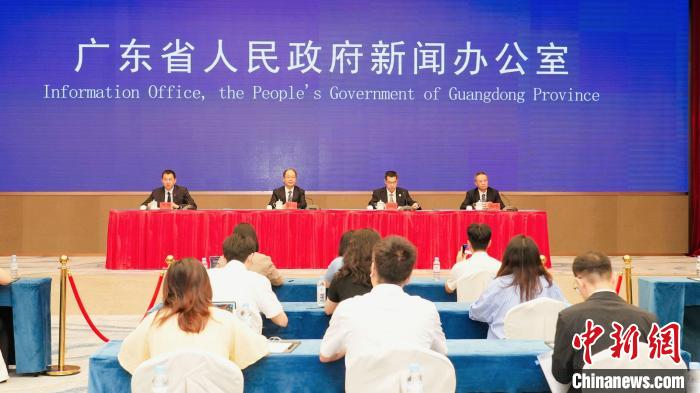
广东与东盟企业国际供应链合作联盟将成立
Zhong Guo Xin Wen Wang· 2025-05-29 06:30
Core Viewpoint - The Guangdong Provincial Government is set to hold the "2025 China (Guangdong) - ASEAN Trade Promotion and Supply Chain Cooperation Mechanism Construction Exchange Conference" on June 10 in Guangzhou, aiming to enhance trade cooperation with ASEAN and establish a long-term cooperation mechanism [1][3]. Group 1: Trade and Economic Cooperation - In 2024, the total trade value between China and ASEAN is projected to reach 6.99 trillion yuan, marking nine consecutive years of import and export growth [3]. - ASEAN is currently Guangdong's largest trading partner, with a year-on-year increase of 6.9% in Guangdong's imports and exports to ASEAN in the first quarter of this year [3]. Group 2: Conference Details - The conference will host approximately 600 participants, making it the highest-level international meeting between Guangdong and ASEAN in recent years [3]. - Over 200 foreign guests, including government officials from ASEAN countries, consulate officials, and representatives from international organizations and business sectors, will attend alongside around 400 domestic guests from state-owned enterprises, key industrial parks, and media [3]. Group 3: Outcomes and Initiatives - The conference will announce the establishment of the "International Supply Chain Cooperation Alliance between Guangdong and ASEAN Enterprises" and sign cooperation memorandums with ASEAN business organizations [4]. - The "Yue Chain ASEAN" online service platform will be launched, along with the establishment of trade and investment service centers for five ASEAN countries: Cambodia, Malaysia, Singapore, Indonesia, and Vietnam [4]. - A report on Guangdong-ASEAN supply chain cooperation and the "RCEP National Investment Legal Guide" for Indonesia, Thailand, and Vietnam will be released during the conference [4].