
制度创新

Search documents
2025张江药谷产业生态全球推介会在上海举行
Zhong Guo Jing Ji Wang· 2025-10-16 08:54
Core Insights - The 2025 Zhangjiang Pharmaceutical Valley Global Promotion Conference and International Innovation Conference was held in Shanghai, emphasizing the importance of the biopharmaceutical industry as a key sector in Shanghai's economic development [1] Group 1: Industry Development - The biopharmaceutical industry is one of Shanghai's three leading industries and a focal point for the new round of technological revolution and competition [1] - Pudong is striving to create a world-class biopharmaceutical industry cluster by enhancing innovation capabilities and promoting the emergence of "First-in-class," "First-in-China," and "First-in-Human" innovative products [1][2] - In the first half of this year, Pudong achieved a biopharmaceutical industry scale of 220 billion yuan, with an annual compound growth rate of 14% [3] Group 2: Policy and Strategic Initiatives - The Shanghai government is aligning with international standards to build a vibrant biopharmaceutical industry cluster, focusing on innovation as the driving force [2] - The State Council issued guidelines to enhance the innovation vitality and global competitiveness of China's pharmaceutical industry [2] - A comprehensive implementation plan for the high-end medical device industry in Pudong was announced, emphasizing "technology innovation + system innovation" as a dual driving force [4] Group 3: Innovation and Achievements - Zhangjiang Pharmaceutical Valley has approved 29 new Class I domestic drugs, with several innovative drugs set to launch in 2025, including the first humanized ultra-long-acting GLP-1 receptor agonist and the first gene therapy drug [4] - In the field of innovative medical devices, 38 innovative device products have been approved, with recent launches filling domestic technology gaps [4] - The establishment of the Pudong New Area Biopharmaceutical Industry Development Expert Committee aims to provide intellectual support for the construction of a world-class biopharmaceutical industry cluster [5]
口岸活力跃动、新职业新场景不断涌现……开放的中国彰显蓬勃活力
Yang Shi Wang· 2025-10-16 02:34
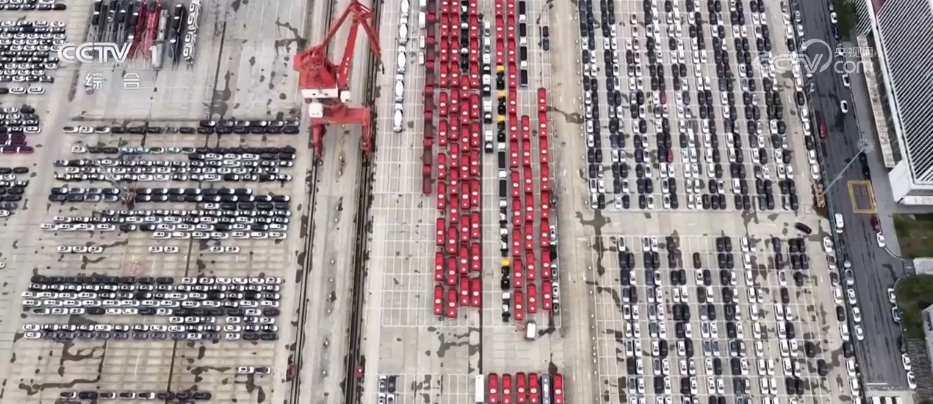
Core Insights - The article highlights the continuous optimization of China's port layout during the "14th Five-Year Plan" period, with the addition and expansion of 40 new open ports, totaling 311 ports nationwide, facilitating a "flowing China" through logistics, capital flow, and information flow [1] Group 1: Port Development - Shanghai Waigaoqiao Port is identified as the world's largest roll-on/roll-off automobile import and export terminal, with 2-3 international vessels departing daily, carrying 4,083 Chinese-made cars to overseas markets [4] - The Guangxi Youyi Pass is noted as one of China's largest land fruit import and export ports, with fruit imports reaching 837,000 tons in the first eight months of the year, a 57% year-on-year increase, effectively doubling since the beginning of the "14th Five-Year Plan" [7] Group 2: Inland Development - Central regions are transforming into new frontiers for opening up, leveraging high-speed rail networks, aviation hubs, and upgraded water transport, with Zhengzhou opening eight intercontinental routes to cities like Luxembourg and Frankfurt, connecting over 200 global cities [9] - Jiangxi Ganzhou has established a westward corridor through the China-Europe Railway Express, expanding its furniture industry output from 30 billion to 280 billion [9] Group 3: New Opportunities - The optimization of port layouts and efficient opening of coastal, border, and inland areas are fostering new professions and scenarios related to foreign trade [12] - The Xinjiang Horgos Port has become the largest land port for automobile exports, with the emergence of "new energy vehicle ferry operators" who deliver vehicles to Central Asian countries, growing from dozens to over 5,000 operators due to a 24/7 customs clearance model [13][15] - In Zhejiang Yiwu, the global digital trade center is utilizing AI navigation and trading models to enhance the global trade chain for small commodities, streamlining processes from design to final transaction [17]

推进全面绿色转型 加快形成绿色生产力
Zhong Guo Huan Jing Bao· 2025-10-16 01:43
Core Viewpoint - The article emphasizes the importance of promoting green and low-carbon development as a key aspect of high-quality development and a fundamental strategy for addressing ecological issues in China [1] Group 1: Economic and Social Development - The 20th National Congress of the Communist Party of China has included accelerating the comprehensive green transformation of economic and social development as a goal for deepening reforms [1] - The government work report for 2025 highlights the need to synergistically promote carbon reduction, pollution reduction, and green growth [1] Group 2: Technological Transformation - Technological transformation is identified as the core driving force for comprehensive green transformation, characterized by substitution, efficiency enhancement, and creation effects [2] - By 2024, the share of clean energy consumption in China is expected to reach 28.6%, with non-fossil energy consumption accounting for 19.8% [2] - China's photovoltaic component production has ranked first globally for 16 consecutive years, supplying 70% of the world's photovoltaic components and 60% of wind power equipment [2] Group 3: Institutional Innovation - A systematic institutional framework has been established through property rights, pricing mechanisms, and judicial collaboration [3] - The carbon emissions trading market in China achieved a cumulative transaction volume of 189 million tons and a transaction value of 18.114 billion yuan in 2024 [3] - The introduction of a coal power capacity pricing mechanism is expected to significantly increase the exit rate of high-energy-consuming industries [3] Group 4: Market System - The market system serves as an effective carrier for comprehensive green transformation, focusing on factor flow, product iteration, and capital circulation [4] - By August 2024, the carbon emissions trading market had a cumulative transaction volume of nearly 700 million tons and a transaction value of approximately 48 billion yuan [5] - In 2024, the issuance of green bonds in China reached 681.433 billion yuan, with a custody scale of 2.09 trillion yuan, reflecting a 5.57% year-on-year growth [5] Group 5: Challenges and Future Directions - Despite significant progress in green transformation, challenges remain in key technology autonomy, regional development imbalances, and international green trade rules [6] - Continuous open innovation and the establishment of a fair and inclusive international cooperation mechanism for green transformation are essential for China to fulfill its role in global ecological civilization construction [6]
创新长三角地区干部队伍激励机制
Xin Hua Ri Bao· 2025-10-15 23:22
Core Insights - The article emphasizes the importance of a high-quality and professional cadre team for the high-quality development of the Yangtze River Delta region, highlighting innovative incentive policies implemented by Shanghai, Zhejiang, and Anhui to encourage cadre responsibility and action [1] Group 1: Innovative Measures in Cadre Incentives - Shanghai has established a "green channel" for quick processing, breaking through career development bottlenecks for grassroots cadres, and has implemented a "three distinctions" guideline for error correction mechanisms [2] - Zhejiang has created a synchronized mechanism for accountability investigations and error correction assessments, detailing 21 specific error correction scenarios [3] - Anhui has introduced a provincial-level typical case guidance mechanism to explore diverse paths for cadre training and incentives, enhancing the quality and capability of cadres through cross-regional exchanges [3] Group 2: Common Features of Cadre Incentive Systems - The policy framework is systematic, with a three-tiered structure of "provincial guidance + local implementation details + departmental operational methods," ensuring coherence in policy formulation and execution [4] - Incentive methods are diversified, with material incentives reflecting differentiation, political incentives focusing on career development pathways, and honor incentives establishing a comprehensive recognition system [4] - Digital implementation paths are being adopted, with precise quantitative assessments and data-driven decision-making processes being developed across the regions [4] Group 3: Implications for Jiangsu's Cadre Incentives - Jiangsu is encouraged to strengthen institutional innovation and improve its incentive system by refining error correction mechanisms and enhancing grassroots cadre treatment [5] - Emphasis on precise policy measures is suggested, including the establishment of rapid response mechanisms for timely rewards and recognition of outstanding performance [6] - The article advocates for regional collaboration and innovation linkage, promoting cross-regional exchanges and resource sharing to enhance overall cadre team development [6]
第二批“8+1”联动创新区浮出 上海更大范围释放自贸区制度红利
Shang Hai Zheng Quan Bao· 2025-10-15 18:35
Core Viewpoint - Shanghai is launching a significant initiative to enhance the influence of its free trade zone by establishing eight key areas and five national economic and technological development zones as part of the second batch of "8+1" linked innovation zones, aiming to promote institutional innovation and economic growth [1][2]. Group 1: Key Features of the Initiative - The initiative introduces a series of pioneering reform measures aimed at addressing investment and trade system shortcomings, significantly lowering foreign investment entry barriers, and effectively dismantling service and digital trade barriers [2]. - The reform approach shifts from "single-point breakthroughs" to "system integration," promoting coordinated progress across multiple dimensions such as market access, talent mobility, and financial openness [2]. - The initiative emphasizes "institutional dividends" over traditional policy incentives, focusing on optimizing the overall business environment and establishing high-standard international trade rules for sustainable competitiveness [2]. Group 2: Financial and Data Flow Enhancements - The initiative will explore optimizing the application process for expanding the scope of FT accounts outside the free trade zone, supporting multinational companies in managing cross-border fund flows more efficiently [3]. - It includes reforms for external debt registration, allowing eligible companies to handle one-time external debt registration instead of individual contracts, and enabling banks to lend short-term RMB funds to overseas financial peers [3]. - The initiative aims to facilitate cross-border data flow while adhering to national security management frameworks, allowing financial institutions to transmit necessary operational data abroad [3]. Group 3: Support for Industry Development - The initiative supports the development of various new industry forms, including cross-border e-commerce, tourism consumption, platform economy, and smart connected vehicles, tailored to the unique characteristics of each linked innovation zone [4]. - The scope of the Hongqiao International Central Business District linked innovation zone is defined to enhance its role in serving national strategies and optimizing the free trade zone's strategic positioning [4].
创新开路 破局而立——安徽自贸试验区五周年观察
Xin Hua Wang· 2025-10-15 14:17
Core Insights - The Anhui Free Trade Zone has achieved significant milestones in its five years, including 236 institutional innovations, with 47 being national firsts, and a market entity growth to 84,000, which is 2.7 times the initial number [1][2] - The zone has attracted a total of 22.1 billion yuan in foreign investment, accounting for 38.1% of the province's total [1][4] - The region has become a hub for strategic emerging industries, with a focus on technological innovation and integration, enhancing its role as a comprehensive experimental platform for reform and opening up [2][6] Institutional Innovations - The introduction of a smart inspection model for hazardous chemicals has significantly reduced the turnover time for key raw materials by 5 days, saving over 10 million yuan annually for companies [2] - The establishment of a new model for ownership of scientific and technological achievements and a one-stop service model for international talent has facilitated the growth of innovation [2] - The Anhui Free Trade Zone has become a "forest of systems" through systematic and integrated institutional innovations [2] Trade and Investment Facilitation - The "linked unloading" model at the Wuhu Port has streamlined the export process for Chery Automobile, reducing logistics costs by approximately 30% and transit time by 20% [3] - The zone's import and export volume has increased from 22.3% in 2021 to 31.1% in the first eight months of 2025, elevating Anhui's national ranking in trade from 13th to 9th [3] - The region has attracted 30 Fortune 500 companies, establishing 39 enterprises within the Free Trade Zone [4] Economic Growth and Industry Development - The Anhui Free Trade Zone has seen a significant increase in market entities, reaching 84,000, and high-tech enterprises have grown to 3,426, which is 2.3 times the initial count [6] - The new display industry in Anhui is projected to achieve over 140 billion yuan in revenue in 2024, with a year-on-year growth of 31.2% [6] - The zone has become a key area for the quantum industry, hosting about one-third of the national quantum enterprises [6] Future Directions - Anhui aims to enhance its policy framework focusing on "five freedoms and conveniences, and one safe and orderly flow," aligning with international high-standard economic and trade rules [7] - The province plans to promote open innovation across the entire industrial chain of smart connected new energy vehicles [7]
张江药谷国际创新大会开幕
Jie Fang Ri Bao· 2025-10-15 01:48
Core Insights - The 2025 Zhangjiang Pharmaceutical Valley Global Promotion Conference and the 2025 Zhangjiang Pharmaceutical Valley International Innovation Conference were held, focusing on innovation achievements and initiatives to establish Zhangjiang as a global hub for innovative pharmaceuticals and medical devices [1] Industry Developments - The biopharmaceutical industry is identified as one of Shanghai's three leading industries and a focal point in the new round of technological revolution and competition [1] - A new implementation plan titled "Implementation Plan for Promoting the Full Chain Development of High-end Medical Device Industry in Pudong New Area (2025-2027)" was released, emphasizing a dual approach of "technological innovation + institutional innovation" [1] Strategic Initiatives - The plan outlines a "1+3" park layout aimed at building a globally influential medical device industry system [1] - The Zhangjiang Pharmaceutical Valley Comprehensive Service Center was officially inaugurated to enhance industry service capabilities [1]
推进全面绿色转型,加快形成绿色生产力
Zhong Guo Huan Jing Bao· 2025-10-14 03:26
Core Viewpoint - The transition to a green and low-carbon economy is a crucial aspect of China's high-quality development and a fundamental strategy for addressing ecological issues, as emphasized in the 20th National Congress and subsequent government reports [1] Group 1: Technological Transformation - Technological transformation serves as the core driving force for the comprehensive green transition, characterized by substitution, efficiency enhancement, and creation effects [2] - Renewable energy technologies are expected to increase the share of clean energy consumption to 28.6% by 2024, with non-fossil energy consumption projected to reach around 25% by 2030 and over 30% by 2035 [2] - China's photovoltaic component production has led the world for 16 consecutive years, supplying 70% of global photovoltaic components and 60% of wind power equipment [2] Group 2: Institutional Innovation - A systematic institutional framework has been established through property rights, pricing mechanisms, and judicial collaboration [3] - The carbon emissions trading market is set to see a cumulative transaction volume of 18.9 million tons and a transaction value of 18.114 billion yuan in 2024, creating an effective mechanism for guiding high-carbon industries towards transformation [3] - The introduction of a coal power capacity pricing mechanism aims to enhance the efficiency of the electricity pricing system, significantly increasing the exit rate of high-energy-consuming industries [3] Group 3: Market System - The market system is a vital vehicle for achieving the comprehensive green transition, focusing on factor circulation, product iteration, and capital circulation [4] - As of August 2024, the national carbon emissions trading market has recorded a cumulative transaction volume of nearly 70 million tons and a transaction value of approximately 48 billion yuan [5] - The issuance of green bonds reached 681.433 billion yuan in 2024, with a custody scale of 2.09 trillion yuan, reflecting a 5.57% year-on-year growth, guiding social capital towards pollution prevention and low-carbon technology development [5] Group 4: Challenges and Future Directions - Despite significant progress in the green transition, challenges remain, including the need for independent control of key technologies and imbalances in regional development [6] - Continuous open innovation and the establishment of a fair and inclusive international cooperation mechanism for green transition are essential for China to fulfill its role as a contributor and leader in global ecological civilization [6]
“穿越”千年外贸史,粤博“广东外贸一千年”大展即将启幕
2 1 Shi Ji Jing Ji Bao Dao· 2025-10-11 10:11
Core Insights - The exhibition "Mutual Benefit Under Heaven: A Thousand Years of Guangdong Foreign Trade" will open on October 15, 2023, at the Guangdong Provincial Museum, showcasing over 200 artifacts that illustrate the evolution of foreign trade in Guangdong over the past millennium [1][2] - Guangdong has played a crucial role in China's integration into the global economy, particularly since the establishment of the People's Republic of China, with the Canton Fair emerging as a key platform for international trade [1][2] Group 1 - The exhibition will feature artifacts such as gold ornaments from the Southern Song Dynasty and gold ingots from the Ming Dynasty, highlighting the historical significance of Guangdong's foreign trade [1] - The narrative of the exhibition will follow a chronological timeline, covering trade systems from the Tang Dynasty to modern reforms and innovations in free trade zones [1] - Guangdong's foreign trade has continuously evolved, with the province leading in exploring new mechanisms for trade and investment facilitation, particularly through its three major free trade zones [2] Group 2 - The 138th Canton Fair will take place from October 15 to November 4, 2023, with a record exhibition area of 1.55 million square meters and over 32,000 participating companies [2] - The fair is recognized as the longest-running, largest, and most comprehensive international trade exhibition in China, with approximately 3,600 companies participating for the first time [2] - Guangdong is actively participating in the construction of the Guangdong-Hong Kong-Macao Greater Bay Area, contributing to high-level foreign trade openness through regulatory alignment and innovative mechanisms [2]
深圳:开放促创新 打造共赢新格局
Xin Hua She· 2025-10-07 06:00
Core Viewpoint - Shenzhen is advancing a series of institutional innovations for high-level opening up, continuously deepening the "bringing in" and "going out" strategies, leading to a new win-win pattern of openness [1] Group 1 - Shenzhen's recent institutional innovations are aimed at enhancing its global openness [1] - The strategies of "bringing in" and "going out" are being emphasized to foster international cooperation [1] - The ongoing reforms are expected to create a more favorable environment for investment and trade [1]