智能汽车

Search documents
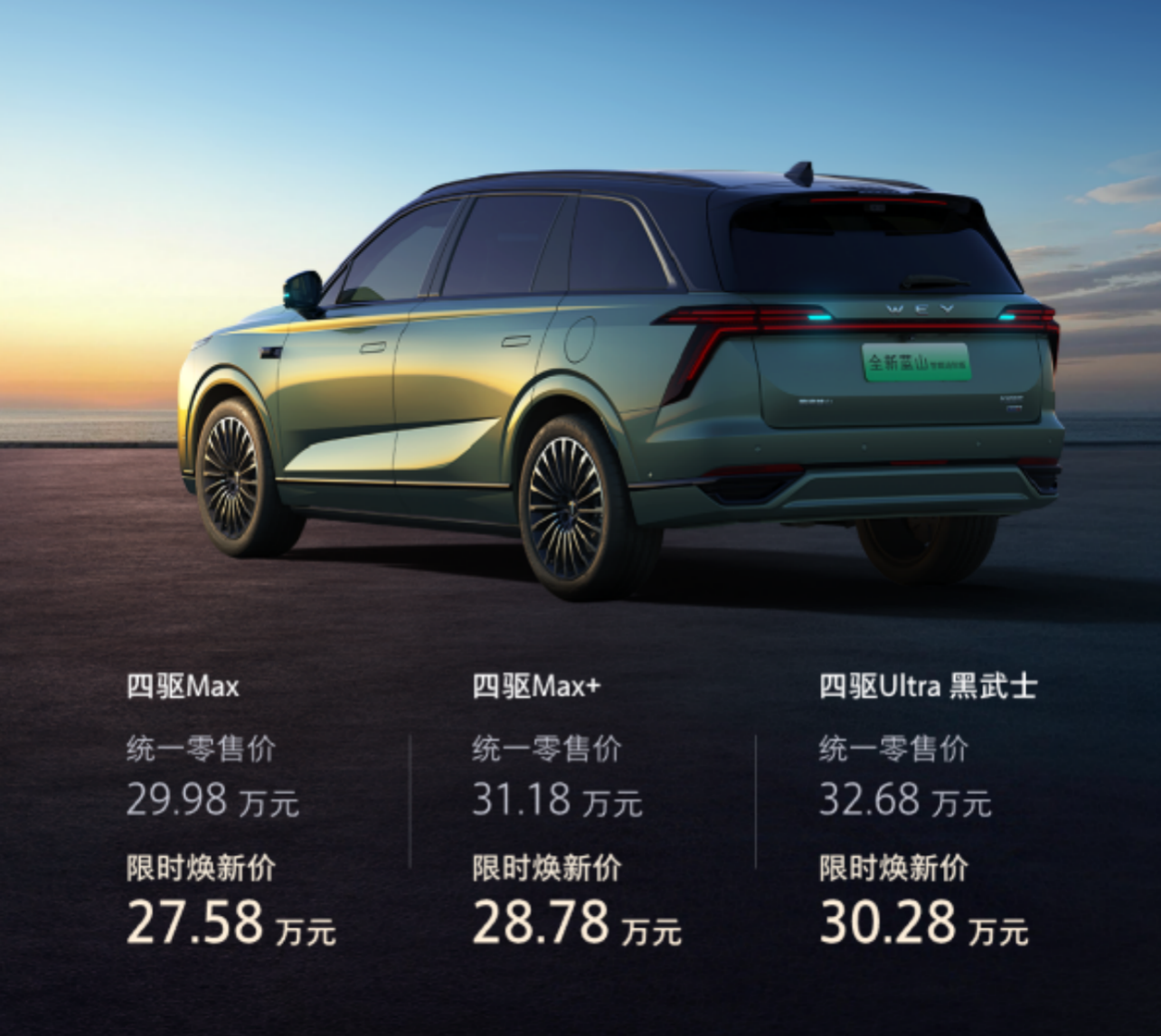
魏牌全新蓝山智能进阶版上市 限时焕新27.58万元起
Zhong Guo Zhi Liang Xin Wen Wang· 2025-12-23 04:57
Core Viewpoint - The new Blue Mountain Intelligent Advanced Edition is positioned as a "VLA large six-seat plug-in hybrid SUV," integrating the VLA large model with Hi4 performance version intelligent four-wheel drive technology, aiming to provide users with a comprehensive and perceptible upgrade experience [2] Group 1: Product Features - The vehicle features the VLA large model, which enables voice control, CoT reasoning cards, defensive driving, and special scenario understanding, creating an intelligent closed-loop from perception to execution [2][6] - The voice control system allows for natural dialogue execution, enhancing driving ease by proactively planning safe routes [6] - The vehicle is equipped with a Thor-U chip with a computing power of 700 TOPS, supporting the smooth operation of the VLA large model [11] Group 2: Performance and Efficiency - The Hi4 performance version utilizes four-speed full-speed direct drive technology, achieving 0-100 km/h acceleration in 4.9 seconds with a fuel consumption of 6.5L/100km and a comprehensive range of 1343 km [16] - The vehicle features a 50:50 front-rear axle load distribution and iTVC intelligent torque control, ensuring a stable driving experience for families [16] Group 3: Safety and Security - The integration of VLA and Hi4 creates a comprehensive safety system, with VLA acting as the "navigator" for understanding and planning, while Hi4 executes with precision and stability [16] - The vehicle incorporates over 30 intelligent assistance functions and will introduce AES automatic emergency avoidance and RAEB systems in the second quarter of next year [21] Group 4: Interior and Comfort - The Blue Mountain Intelligent Advanced Edition emphasizes equal care for all passengers, featuring a spacious layout with various comfort enhancements, including massage seats and a luxury refrigerator [18][20] - The Coffee OS 3.4 system combines AI active services with user-friendly interactions, creating a "five good cabin" experience with advanced audio-visual features [20] Group 5: Material and Health Safety - The vehicle's structure consists of 81% high-strength steel and hot-formed steel, with critical areas achieving a strength of 2000 MPa, ensuring robust safety standards [21] - The cabin materials are certified for antibacterial properties and air quality control, addressing family health concerns [21]

黑芝麻智能荣获“年度港股通卓越奖”:双线布局智能汽车与具身智能,打开长期成长空间
Ge Long Hui· 2025-12-22 09:55
Core Insights - Black Sesame Intelligence has been awarded the "Annual Hong Kong Stock Connect Excellence Award" at the Golden Award selection, indicating a growing recognition among investors and a shift in focus towards the company's long-term growth logic [1] - The capital market's attention has transitioned from merely selling more chips to evaluating whether the company is building a more sustainable growth model [1] Group 1: Smart Automotive Chips - Understanding Black Sesame Intelligence begins with its core business in smart automotive chips, which is crucial for its current revenue and market stability [2] - The smart driving industry is undergoing significant changes, with a shift from competition based on computing power to a focus on system stability, engineering capabilities, cost structure, and long-term supply reliability [2] - The company is enhancing its product matrix to meet diverse smart driving needs, with the Huashan A1000 series chips already in mass production for several vehicle models and the new Huashan A2000 series chips expected to support advanced applications [4][5] Group 2: Ecosystem Development - The company is evolving from a hardware supplier to a platform provider, offering a comprehensive ecosystem that includes self-developed core IP, toolchains, and middleware platforms [5] - Collaborations with algorithm companies are forming a synergistic advantage, and expanding partnerships with leading algorithm firms could enhance the competitiveness of its high-end smart driving chips [5] - The revenue from the company's assisted driving products and solutions reached 237 million yuan in the first half of 2025, reflecting a 41.5% year-on-year growth, validating its underlying business logic [5] Group 3: Embodied Intelligence - While smart automotive chips form the foundation, embodied intelligence represents a significant future growth opportunity for the company [6] - The company has established partnerships in the robotics sector, providing smart solutions and showcasing its full-stack offerings at industry events [6][7] - Recent strategic collaborations in robotics and optical communication are aimed at accelerating the commercialization of technologies in various applications, including autonomous logistics vehicles [8] Group 4: Financial Position and Future Outlook - As of the end of the first half of 2025, the company reported a net cash position of 1.97 billion yuan, providing a solid financial foundation for ongoing product development and exploration of new business opportunities [8] - The recognition from the capital market and the dual-driven strategy of smart automotive and embodied intelligence are expected to enhance the company's growth potential and valuation logic [9]

一汽解放涨2.08%,成交额7674.91万元,主力资金净流入134.16万元
Xin Lang Cai Jing· 2025-12-22 03:15
Core Viewpoint - The stock of FAW Jiefang has shown fluctuations, with a recent increase of 2.08% in price, but a year-to-date decline of 15.58%, indicating potential volatility in the market [1]. Financial Performance - For the period from January to September 2025, FAW Jiefang reported a revenue of 43.996 billion yuan, reflecting a year-on-year decrease of 2.52%. However, the net profit attributable to shareholders increased by 2.34% to 372 million yuan [2]. - Cumulatively, since its A-share listing, FAW Jiefang has distributed a total of 10.055 billion yuan in dividends, with 940 million yuan distributed over the past three years [3]. Shareholder Information - As of September 30, 2025, the number of shareholders for FAW Jiefang reached 82,000, an increase of 4.65% from the previous period. The average number of circulating shares per shareholder decreased by 4.44% to 60,035 shares [2]. - Among the top ten circulating shareholders, Hong Kong Central Clearing Limited holds 35.5357 million shares, a decrease of 2.5704 million shares from the previous period. Additionally, E Fund CSI 300 ETF has entered as a new shareholder with 12.1146 million shares [3]. Market Activity - As of December 22, FAW Jiefang's stock price was 6.88 yuan per share, with a trading volume of 76.7491 million yuan and a turnover rate of 0.23%. The total market capitalization stands at 33.858 billion yuan [1]. - The stock has experienced a slight increase of 2.23% over the last five trading days, but a decline of 3.78% over the last 20 days and 3.10% over the last 60 days [1]. Business Overview - FAW Jiefang, established on June 10, 1997, and listed on June 18, 1997, is primarily engaged in the research, production, and sales of commercial vehicles. The company's main business revenue composition is 92.89% from commercial vehicles and 7.11% from spare parts and others [1]. - The company is classified under the automotive industry, specifically in the commercial vehicle sector, and is involved in various concepts such as mergers and acquisitions, shared economy, complete vehicles, state-owned enterprise reform, and smart vehicles [1].

欧菲光扣非连亏负债率78%处转型阵痛 蔡荣军五度以股抵债25.2亿易主风险加剧
Chang Jiang Shang Bao· 2025-12-21 23:20
长江商报消息●长江商报记者 沈右荣 再度以股抵债,曾经的"果链"企业欧菲光(002456.SZ)易主风险攀升。 12月19日,欧菲光公告,控股股东及其一致行动人完成证券非交易过户。 两天前,欧菲光宣布,公司控股股东及其一致行动人拟将合计所持公司4.75%的股权转让给巢湖市生态 科技发展有限公司(以下简称"巢湖科技"),以抵偿其欠付的债务。 再度以股抵债,欧菲光的实际控制人蔡荣军直接间接持有公司股权比例降至6.35%,略高于巢湖科技的 持股比例4.75%。 作为曾经的明星企业,自2020年被苹果"踢群"后,欧菲光的经营业绩一蹶不振,尽管公司多方努力,推 进产业、客户转型,但截至目前尚处于阵痛期。2020年以来,公司扣非净利润连续亏损。 不仅大股东缺钱,欧菲光自身财务也承压。截至2025年9月末,公司资产负债率达77.86%。前三季度, 公司财务费用2.46亿元。 控股股东转让6770.48万股抵债 无力还债,欧菲光的大股东以股抵偿。 12月18日晚,欧菲光公告,12月17日,公司控股股东欧菲控股与巢湖科技签署了《质押证券处置协 议》,欧菲控股将其质押于巢湖科技的6770.48万股公司(占公司总股本的2.01%) ...

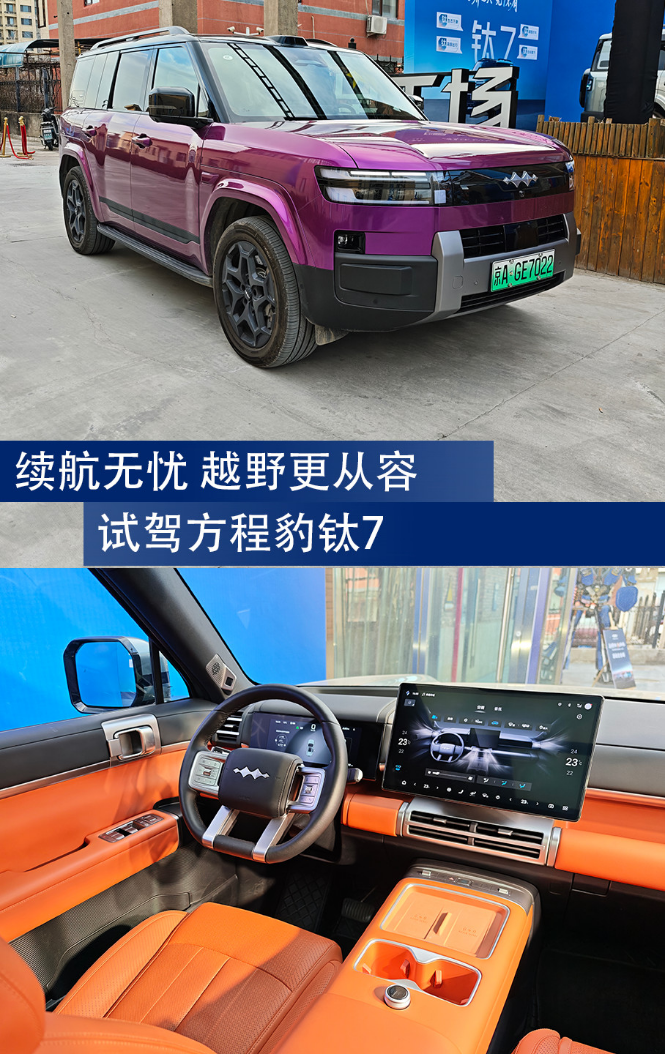
续航无忧 越野也从容 试驾方程豹钛7
Zhong Guo Zhi Liang Xin Wen Wang· 2025-12-21 13:54
续航无忧 越野更从容 试驾方程豹钛7 23 2017 RA GE702 车型基本信息: 车型:方程豹 钛7 指导价:17.98万元—21.98万元 动力配置:插电式混动 两驱/四驱 零百加速:最快4.5秒 CLTC纯电续航:最长200km 满油满电综合续航:1300km 钛7的外观延续了方程豹家族的硬派基因,近5米车长与近2米车宽的宽大尺寸整个车辆轮廓显得方正有 型。双L形灯带搭配方形头灯,既复古又显得前卫。 当开启高级辅助驾驶功能时,位于后视镜灯组和 尾灯组内部独立的蓝色指示灯还会点亮, 提示其 他交通参与者车辆的状态。 临 豹 BA GE7022 钛7拥有70.9%的超高得房率与超过3.3米的乘员舱有效车长,即便是身高1.9米的驾乘者也能挺直腰背, 具体来说,前排头部空间到了1093mm,乘员舱高度更是达到了1364mm,成年人半站空间表现良好,进 出车辆方便,小朋友更是可以在车内自由活动。 全车真皮舒芙蕾座椅由4层软性材料+1层支撑组成,坐感舒适,支撑性也上乘,且带有通风、加热与前 排按摩功能。其中按摩功能使用骨形按摩气袋,提供更好的按摩效果。后排座椅靠背还支持8°电动可 调,长途乘坐也不易疲劳。 车身 ...
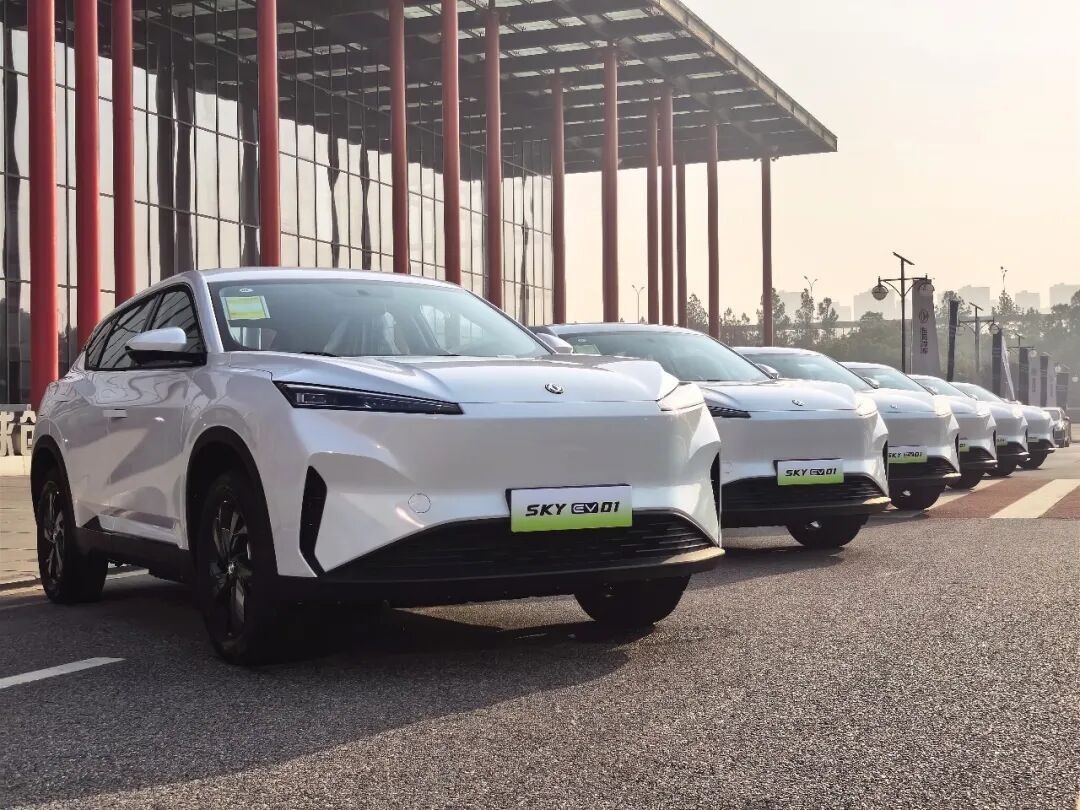
“中国星”指引“中国车” 东风全球首款独立北斗量产乘用车交付
Chang Jiang Ri Bao· 2025-12-21 00:53
Core Insights - Dongfeng has achieved a significant breakthrough in the "Beidou + automotive" application field, marking a transition from "functional integration" to "independent safety" in China's smart automotive industry [2] Group 1: Product Launch and Delivery - The Dongfeng Fengshen SKY EV01, the world's first mass-produced passenger vehicle equipped with an independent Beidou intelligent communication and positioning terminal, was officially launched and the first batch of 500 vehicles was delivered [1][4] - Dongfeng's independent Beidou models have surpassed sales of 100,000 units, with a cumulative total of 2.7 million vehicles equipped with the Beidou system, including 131,000 units exported [2] Group 2: Technological Advancements - Dongfeng has achieved full-stack autonomy in core Beidou application technologies, enhancing the localization rate of independent Beidou intelligent terminals to 90%, thus reducing reliance on foreign positioning systems [2] - The SKY EV01 has undergone successful real-vehicle verification of satellite navigation safety capabilities, demonstrating excellent resilience against common signal interference and attacks, ensuring stable operation of smart driving functions [3] Group 3: Future Directions - Dongfeng plans to continue deepening the iteration of Beidou technology and expanding application scenarios, collaborating with industry partners to promote the large-scale and in-depth application of Beidou technology in the automotive sector [3]

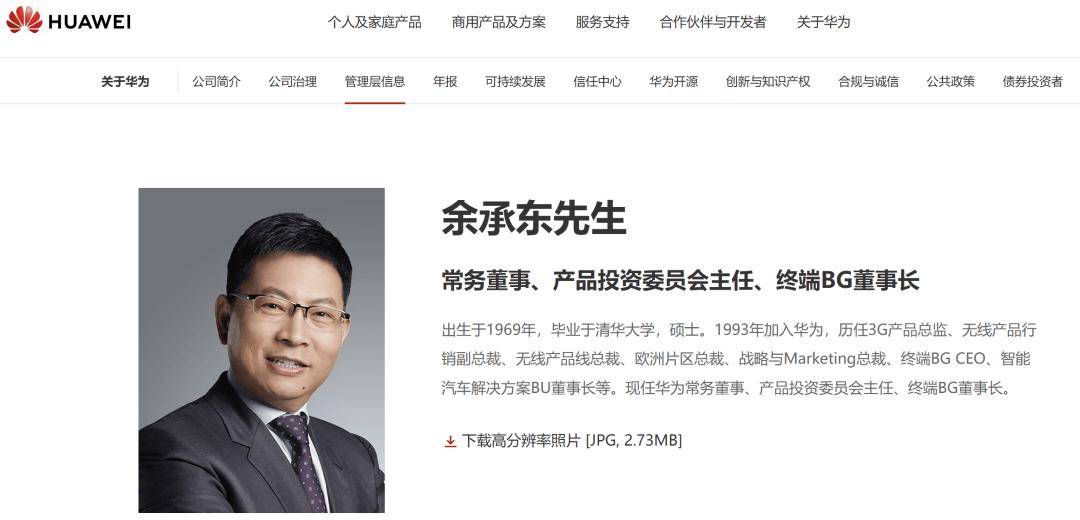
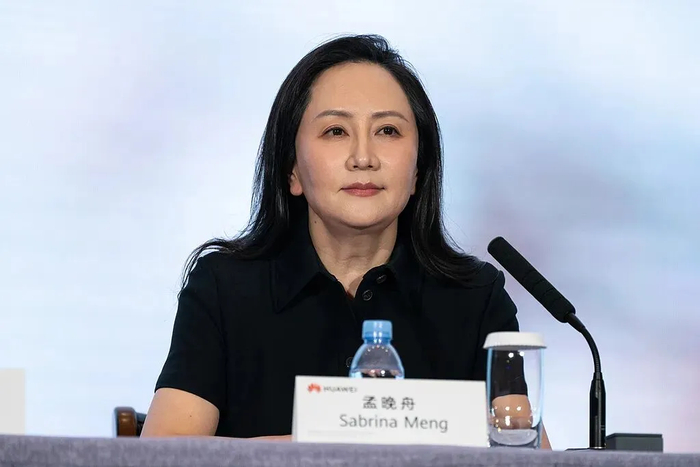
孟晚舟退出,余承东上位:华为权力大地震
Xin Lang Cai Jing· 2025-12-19 16:15
Core Viewpoint - Huawei has undergone a significant leadership change, with Yu Chengdong replacing Guo Ping as the new chairman of Huawei Terminal Co., marking a consolidation of power within the company [1][2][7]. Group 1: Leadership Changes - Meng Wanzhou's exit from the terminal company board is not merely a routine operation but signifies a strategic shift towards a more collective leadership model, emphasizing the principle of letting professionals handle their respective areas [2][4]. - Meng Wanzhou's new role focuses on global strategic planning and risk management, moving away from direct operational responsibilities in terminal business [4][6]. - Yu Chengdong's accumulation of roles as chairman of the terminal BG, chairman of the terminal company, and head of the product investment review committee is unprecedented in Huawei's history, indicating a heightened focus on terminal business [7][9]. Group 2: Strategic Implications - The restructuring reflects Huawei's strategic transformation in its terminal business, transitioning from survival post-U.S. sanctions to a phase of recovery and strategic counterattack [12]. - Huawei's terminal market share reached 27.81% in China, surpassing Apple, and the Harmony ecosystem has over 1 billion devices, showcasing the company's successful navigation through challenges [14][15]. - Yu Chengdong aims for the Harmony ecosystem to capture one-third of the market and plans to launch at least 11 new car models by 2026, indicating a shift from survival to leadership in the market [15]. Group 3: Organizational Dynamics - The power concentration under Yu Chengdong is seen as a response to the fast-paced tech competition, allowing for quicker decision-making and resource allocation [10][11]. - The dual roles of Meng Wanzhou and Yu Chengdong create a complementary relationship, balancing strategic foresight with operational efficiency, which is a sign of Huawei's mature organizational capability [16]. - Huawei's organizational changes are aimed at fostering innovation and establishing a technological ecosystem, positioning the company as a leader in AI and smart automotive sectors [16].
趋势研判!2025年全球汽车无线传感SOC行业发展全景分析:中国市场增长迅速,本土企业正在的崛起,国产替代进程正在加速[图]
Chan Ye Xin Xi Wang· 2025-12-19 01:54
Core Insights - The automotive wireless sensor SoC market is experiencing strong growth driven by the development of smart vehicles and the Internet of Things (IoT) [1][4] - China is a key player in the global automotive industry, being the largest producer and consumer of vehicles, with significant domestic demand and a complete industrial chain [1][4] - The market size for automotive wireless sensor SoCs in China is projected to grow from 1.1 billion yuan in 2024 to 1.4 billion yuan in 2025 [1][4] Industry Overview - Automotive wireless sensor SoCs are specialized chips designed for real-time environmental sensing and short-range wireless communication, integrating various functionalities on a single chip [2][3] - The global automotive wireless sensor SoC market is expected to grow from 1.3 billion yuan in 2019 to 2.9 billion yuan in 2024, with a forecast of reaching 3.6 billion yuan by 2025 [4][6] Market Segmentation - The most mature application in automotive wireless sensor SoCs is the wireless intelligent tire pressure monitoring system (TPMS SoC), which is expected to reach a market size of 2.7 billion yuan in 2024, accounting for 93.1% of the total market [4][6] - The battery pressure sensing chip (BPSSoC) market is projected to be 0.4 billion yuan in 2024, representing 1.38% of the total market [4][6] Competitive Landscape - The global automotive wireless sensor SoC market is characterized by high concentration, with the top five companies holding a market share of 70.4% in 2024 [6][7] - Jiangsu Pantech Electronics is a leading domestic player, ranking third globally with a revenue of 209 million yuan and a market share of 7.3% [6][7] Industry Development Trends - The automotive wireless sensor SoC industry is supported by various national policies aimed at promoting the development of automotive chips and ensuring sustainable growth in the automotive sector [5][6] - The shift towards centralized electrical/electronic architectures in vehicles is driving the demand for wireless sensor SoCs, which are essential for real-time sensing and communication [8]

大众首款CEA架构车型将落地 韩三楚:仅用18个月,送工程师去合作方当“学生”
Zhong Guo Jing Ying Bao· 2025-12-18 05:57
Core Insights - The first model equipped with the CEA electronic and electrical architecture will be launched on December 31 in Anhui, China, significantly shortening the development cycle to 18 months from the previous 24 months target [1][4] - The CEA architecture is a strategic control point for Volkswagen Group (China), emphasizing the need for strong capabilities in both technology development and user experience optimization [2][5] - Volkswagen's collaboration with XPeng is a deep integration beyond typical technology procurement, focusing on joint development and knowledge transfer [4][5] Group 1: CEA Architecture Development - The CEA electronic and electrical architecture is developed in collaboration with XPeng, marking Volkswagen's first locally developed architecture in China [2] - The architecture aims to enhance vehicle software capabilities, electronic platform compatibility, and development efficiency, serving as a core technology for Volkswagen's electrification in China [2][3] - The first model featuring the CEA architecture will be the "Yuzhong 07," developed by a Chinese team, showcasing a rapid development process [4] Group 2: Strategic Collaboration with XPeng - Volkswagen invested approximately $700 million in XPeng to acquire about 4.99% equity, initiating a partnership to develop electric vehicles tailored for the Chinese market [2] - The collaboration includes two clear paths: commercial cooperation and joint research and development of architecture and software [4][5] - Engineers from Volkswagen were initially sent to XPeng for knowledge transfer, evolving into active participation in project development [5] Group 3: Decision-Making and Cultural Differences - Decision-making authority for local new energy vehicle development has shifted to the Chinese team, providing unprecedented autonomy [6] - Cultural differences between Chinese and German teams highlight a focus on rapid execution in China versus a traditional, process-oriented approach in Germany [6] - Discussions between teams have led to a consensus on balancing safety standards with iterative optimization in product development [6]

工商变更!余承东出任华为终端公司董事长
Sou Hu Cai Jing· 2025-12-17 14:28
Core Viewpoint - Huawei Terminal Co., Ltd. has undergone significant management changes, with Yu Chengdong appointed as the new chairman, succeeding Guo Ping, alongside other executive changes [1]. Group 1: Management Changes - On December 12, Huawei Terminal Co., Ltd. experienced a corporate change where Guo Ping stepped down as chairman, and Yu Chengdong took over the role [1]. - Other executives, including Meng Wanzhou and Xu Zhijun, also resigned from their positions [1]. Group 2: Company Background - Huawei Terminal Co., Ltd. was established in November 2012, with a registered and paid-in capital of 606 million RMB, primarily engaged in the manufacturing of computers, communications, and other electronic devices [1]. - The company is wholly owned by Huawei Terminal (Shenzhen) Co., Ltd. [1]. Group 3: Yu Chengdong's Career - Yu Chengdong, born in 1969, has a long history with Huawei, joining in 1993 as a technician and progressing through various roles, including 3G product director and CEO of the consumer business group [5]. - He has been instrumental in Huawei's smartphone business growth since taking over the terminal business in 2012, focusing on Huawei's own brand rather than OEM products [5]. Group 4: Automotive Market Entry - Since 2019, Yu Chengdong has led Huawei's entry into the automotive market, establishing the Intelligent Automotive Solutions Business Unit (BU) [7]. - Huawei has adopted various collaboration models with car manufacturers, including traditional parts supplier, HI model, and the "Smart Selection" model, resulting in partnerships with several automotive companies [8]. Group 5: Sales Performance - Under Yu Chengdong's leadership, the sales of Huawei's automotive products have been notable, with the "Hongmeng Smart Travel" series achieving over 1 million deliveries in just 43 months [8]. - The top three models in sales for the first eleven months of this year were the AITO M8, AITO M9, and AITO M7, with cumulative sales of 133,300, 108,900, and 89,100 units, respectively [9].