
智能网联

Search documents
广汽冯兴亚:市场变化速度几乎用天来衡量,对每个车企都是新考验
Bei Ke Cai Jing· 2025-10-17 04:03
Core Insights - The global automotive industry is undergoing a profound transformation, with China positioned at the center of this change, characterized by rapid technological iteration and shifts in management models and competitive landscapes [1] Group 1: Industry Transformation - The automotive industry is experiencing a deep transformation, with a focus on speed as the key factor driving change [1] - Market competition and evolving user demands are fundamental drivers of transformation for companies like GAC Group [1] Group 2: GAC Group's Strategic Initiatives - GAC Group plans to launch the "Panyu Action" by the end of 2024, aiming for a sales target of 2 million units for its self-owned brands by 2027 [1] - The shift from traditional fuel vehicles to new energy vehicles requires meeting user expectations for performance, such as achieving 0-100 km/h acceleration in 6 seconds [1] - GAC Group is transitioning from a traditional manufacturing enterprise to a "new GAC" driven by both user-centric and technology-focused approaches [1] Group 3: Collaborative Efforts - GAC Group emphasizes the importance of open collaboration in the smart connected vehicle era, partnering with JD.com and CATL to develop a new vehicle tailored to user scenarios [2] - The new vehicle will integrate GAC's manufacturing capabilities, CATL's battery technology, and user insights from JD.com, focusing on safety, battery, and service innovations [2] - GAC Group is prioritizing the development of the high-end smart electric vehicle brand "Qijing" in collaboration with Huawei, with the first model set to launch next year [2]

又一家互联网企业入局汽车赛道,背后逻辑是什么?
Bei Jing Ri Bao Ke Hu Duan· 2025-10-17 03:21
Core Insights - The entry of platform companies like JD.com into the automotive sector highlights significant transformations within the electric vehicle (EV) industry, driven by cross-industry collaboration and innovation [1][2][5] Group 1: Industry Trends - The trend of "cross-industry" collaboration is becoming a key theme in the automotive sector, with companies leveraging their strengths to create customized vehicles based on consumer insights [1][2] - The Chinese EV market has seen continuous growth, with production and sales exceeding 11 million units in the first nine months of the year, indicating a penetration rate nearing 50% [2] - The automotive industry is evolving from traditional vehicles to smart mobility solutions, integrating advanced technologies and becoming an extension of lifestyle [5][7] Group 2: Technological Integration - The integration of various technologies, such as high-performance batteries and smart cockpit systems, is accelerating within the EV sector, creating a "super platform" that combines new energy, data services, and advanced technologies [7][8] - Companies like GAC, CATL, and JD.com are collaborating to cover the entire value chain from R&D to sales and service, enhancing resource integration [8][9] Group 3: Future Directions - Continuous innovation is essential for the EV industry, with a focus on breakthroughs in core technologies like chips and electronic architectures [9][10] - The demand for interdisciplinary talent is increasing, as traditional automotive skills are insufficient to meet the evolving needs of the industry [11][12] - The shift from competition to collaboration among automotive, technology, energy, and financial sectors is crucial for enhancing overall industry efficiency and competitiveness [12]



国家市场监管总局:建立并推动实施新能源汽车火灾事故企业报告制度
第一财经· 2025-10-17 02:46
Group 1 - As of September, a total of 3,230 vehicle recalls have been implemented in China, affecting 120 million vehicles [1] - Among these recalls, 652 were influenced by investigations from the State Administration for Market Regulation, involving approximately 63.79 million vehicles, which accounts for 53.18% of the total recalls [1] - In 2024, 2.56 million vehicles were recalled due to issues with advanced driver-assistance systems, representing 23% of the total recalls for the year [1] Group 2 - An innovative recall regulatory system is being established, which includes a reporting system for fire incidents in new energy vehicles and a remote upgrade reporting system [1] - The State Administration for Market Regulation is collaborating with the Ministry of Industry and Information Technology to draft regulations aimed at enhancing supervision and management of product recalls for intelligent connected and new energy vehicles [1] - The upcoming regulations will also address issues related to false advertising, exaggerated claims, and irrational competition in the automotive sector [1]

市场监管总局:建立并推动实施新能源汽车火灾事故企业报告制度
Di Yi Cai Jing· 2025-10-17 02:35
Core Insights - As of September, China has implemented a total of 3,230 vehicle recalls, affecting 120 million vehicles, with 652 recalls influenced by the State Administration for Market Regulation, involving 63.79 million vehicles, accounting for 53.18% of total recalls [1] - In 2024, 2.5561 million vehicles were recalled due to issues with advanced driver assistance systems, representing 23% of the total recalls for the year [1] - The establishment of an innovative recall regulatory system is underway, including a reporting system for fire incidents in new energy vehicles and a remote upgrade reporting system [1] - A pilot program for automotive safety sandbox regulation is being initiated, alongside a joint effort with the Ministry of Industry and Information Technology to draft regulations aimed at enhancing supervision of smart connected and new energy vehicle recalls [1] - The upcoming regulations will also address issues related to false advertising, exaggerated claims, and irrational competition in the automotive sector [1]
广汽集团冯兴亚:用户驱动变革 智联引领未来
Zheng Quan Ri Bao Wang· 2025-10-16 13:57
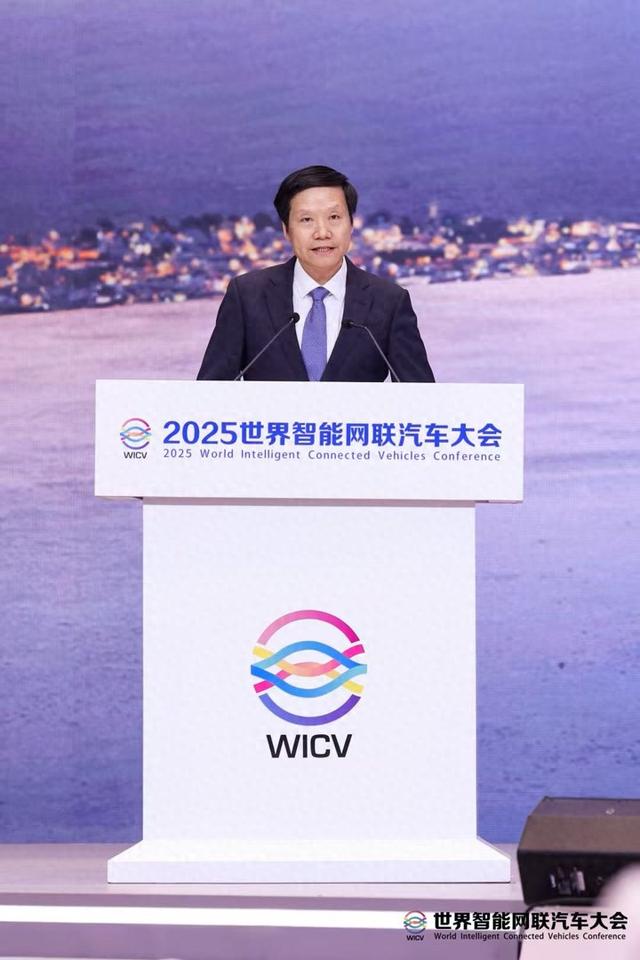
Core Insights - The 2025 World Intelligent Connected Vehicle Conference was held in Beijing, marking China's first state-approved national conference on intelligent connected vehicles, gathering industry organizations, experts, and business leaders to share experiences and insights into future trends [1][2] - GAC Group's Chairman and General Manager, Feng Xingya, emphasized the need for self-transformation in the face of rapid changes in the automotive industry, aiming to transition from a traditional manufacturing company to a "New GAC" driven by both user and technology demands [1][2] Group 1 - The competition in the second half of intelligent connectivity has intensified, prompting GAC Group to embrace user needs and accelerate its transformation [1] - GAC Group initiated the "Panyu Action" last year, focusing on internal reform and achieving significant results in organization, processes, and culture over the past year [1] Group 2 - User expectations have evolved beyond traditional transportation, seeking a smart partner that understands and accompanies them, driving GAC Group towards a dual focus on "user + technology" [2] - GAC Group is building a three-pronged intelligent connected ecosystem focused on "technological innovation, quality assurance, and open cooperation," using metaphors of "spear, shield, and engine" to describe this framework [2] - From January to September this year, GAC Group's overseas terminal sales increased by 42% year-on-year, expanding its international business to 85 countries and regions, with over 570 sales and service points and five overseas factories [2]
雷军、李书福等车圈掌门人论道智能网联行业发展
Bei Jing Ri Bao Ke Hu Duan· 2025-10-16 12:55
Core Insights - The 2025 World Intelligent Connected Vehicle Conference opened on October 16, featuring insights from industry leaders like Lei Jun of Xiaomi, Li Shufu of Geely, and Li Bin of NIO on the development of the intelligent connected vehicle industry [1][3]. Group 1: Industry Development - Lei Jun emphasized that innovations in intelligence are reshaping the definitions of automotive products, production models, business models, and user experiences, calling for industry unity to build a new ecosystem for intelligent connected vehicles [1]. - Li Shufu noted that intelligent connected vehicles have transitioned from conceptual exploration to a new stage of technological breakthroughs and application scenarios, with software-defined vehicles and AI as key drivers [3][4]. Group 2: Key Considerations - Li Shufu outlined four key considerations for the development of intelligent connected vehicles: prioritizing user value while maintaining safety, focusing on self-research for technology, promoting standardization and cross-industry integration, and respecting the essence of manufacturing [4]. - Li Bin highlighted the immense value of achieving fully autonomous driving, which would free up time and create a safer environment by significantly reducing traffic accidents and related casualties [6].



今日看点|商务部将召开新闻发布会,介绍近期商务领域重点工作有关情况
Jing Ji Guan Cha Bao· 2025-10-16 01:34
10月16日重点关注的财经要闻与资本市场大事: 10月16日至18日,2025世界智能网联汽车大会将举行,大会将围绕智能网联汽车产业的政策、技术、安 全、人工智能、应用、数据等方向进行深度探讨。 3、3220.1亿元市值限售股今日解禁 10月16日,共有13家公司限售股解禁,合计解禁量为9.38亿股,按最新收盘价计算,合计解禁市值为 220.1亿元。 从解禁量来看,6家公司解禁股数超千万股。美好医疗、上大股份、中钨高新解禁量居前,解禁股数分 别为2.17亿股、2.07亿股、1.89亿股。从解禁市值来看,6家公司解禁股数超亿元。上大股份、美好医 疗、铭利达解禁市值居前,解禁市值分别为67.81亿元、50.21亿元、38.82亿元。 1、商务部将召开新闻发布会 介绍近期商务领域重点工作有关情况 10月16日下午3时,商务部将举行新闻发布会,新闻发言人介绍近期商务领域重点工作有关情况,并答 记者问。 2、2025世界智能网联汽车大会将举行 (原标题:今日看点|商务部将召开新闻发布会,介绍近期商务领域重点工作有关情况) 4、17家公司披露回购进展 10月16日,17家公司共发布17个股票回购相关进展。其中,3家公司首 ...
工信部新规提升车辆准入门槛 强化智能网联监管
Zheng Quan Ri Bao Wang· 2025-10-14 09:39
Core Viewpoint - The Ministry of Industry and Information Technology is seeking public feedback on three draft documents aimed at strengthening the admission review standards for road motor vehicle manufacturers and products, thereby enhancing product quality and safety standards [1] Group 1: Regulatory Changes - The revised documents aim to raise admission thresholds and strengthen production consistency management, compelling companies to enhance technical reserves and quality control, while also protecting consumer rights and public safety [2] - The new requirements include establishing user notification mechanisms to inform users about design usage scenarios, safety precautions, and potential safety hazards associated with electric vehicles [2][3] - The revisions also simplify application materials by eliminating certain requirements, such as environmental assessments, and implementing a combined announcement and filing management system to reduce the burden on companies [2] Group 2: Safety and Monitoring Mechanisms - The draft requires companies to meet safety monitoring requirements for advanced driver assistance systems and autonomous driving products, including establishing safety event monitoring and reporting mechanisms [3][4] - Companies are mandated to create a vehicle product safety monitoring service platform with capabilities for data reception, reporting, storage, and management of safety event data [3] - The revisions emphasize the need for companies to identify, assess, and manage risks at organizational, personnel, and technical levels, thereby enhancing overall safety management [3][4] Group 3: Industry Impact - The changes reflect a shift from "wild growth" to "regulated development" in the intelligent driving industry, promoting the establishment of safety monitoring, data management, and risk control systems [4] - The updated requirements indicate a significant enhancement in the expectations for intelligent and connected capabilities, aligning with the automotive industry's transition towards electrification and smart technology [4]
韧性增长,上汽集团深化改革路径渐明
Zhong Guo Qi Che Bao Wang· 2025-10-14 08:16
Core Viewpoint - SAIC Motor Corporation has demonstrated significant growth and resilience in the automotive market, achieving record sales and showcasing the effectiveness of its comprehensive reform initiatives [1][3][19]. Sales Performance - In September, SAIC Motor sold 440,000 vehicles, marking a year-on-year increase of 40.4% and a quarter-on-quarter increase of 21%, setting a new high for the year [1]. - From January to September, the company achieved cumulative vehicle sales of 3.193 million units, a year-on-year growth of 20.5%, and maintained a leading position in the industry [3]. Organizational Restructuring - The company restructured its organizational framework by establishing a "Large Passenger Vehicle Sector" and "SAIC Commercial Vehicle" entity to enhance efficiency and responsiveness across the entire product lifecycle [4]. - The restructuring led to a consolidated revenue of 299.59 billion yuan, a year-on-year increase of 5.2%, and a net profit attributable to shareholders of 6.02 billion yuan, with a significant growth of 432.2% in the net profit excluding non-recurring items [4]. Financial Health - The net cash flow from operating activities reached 21.04 billion yuan, representing an 85.9% year-on-year increase, providing ample funding for ongoing technology development and market expansion [4]. - The company’s focus on optimizing production, sales, and inventory structures has resulted in quality growth and improved operational efficiency [4]. Product Innovation - SAIC Motor has launched several innovative products, including the MG4 with solid-state battery technology, which has received over 45,000 pre-orders, and the new generation IM LS6 with advanced range and charging capabilities [10][12]. - The company’s product lineup reflects a strong emphasis on technological innovation, with multiple models achieving significant order volumes shortly after their launch [12]. Technological Advancements - The company has developed a comprehensive technology framework focusing on intelligent connectivity, vehicle safety, and advanced power systems, enhancing its competitive edge in the market [16][17]. - SAIC Motor's DMH hybrid engine has achieved a thermal efficiency of 46.3%, and its vehicles are gaining traction in the European market, showcasing the company's advancements in energy efficiency and sustainability [17]. Strategic Direction - The reforms and innovations at SAIC Motor signify a shift from scale growth to quality management and from price competition to technology competition, reflecting the company's unique market resilience [19]. - The company’s approach emphasizes long-termism and the development of systemic capabilities to secure a sustainable competitive advantage in a rapidly evolving automotive landscape [19].

