超级智能

Search documents
联想集团Q1三大主业呈大双位数增长,混合式AI战略全面开花
Ge Long Hui A P P· 2025-08-14 00:25
Core Insights - Lenovo Group reported a strong Q1 performance for the fiscal year 2025/26, with revenue reaching 136.2 billion RMB, a 22% year-on-year increase, marking a historical high for the same period [1][5] - The company achieved a net profit of 2.816 billion RMB under non-Hong Kong Financial Reporting Standards, also a 22% increase year-on-year, demonstrating enhanced profitability [1][6] - Lenovo's diversified growth strategy has led to a 47% revenue contribution from non-PC businesses, indicating a balanced growth structure and solid foundation for its AI initiatives [2][6] Financial Performance - Revenue for the first quarter reached 136.2 billion RMB, a 22% increase year-on-year, setting a record for the first fiscal quarter [5] - Non-Hong Kong Financial Reporting Standards net profit increased by 22% to 2.816 billion RMB, while under Hong Kong standards, net profit doubled to 3.66 billion RMB due to stock price fluctuations [4][6] - The IDG smart device business group saw a revenue increase of 17.8%, with a PC market share of 24.6%, the highest in history [6][7] Business Segments IDG (Intelligent Devices Group) - IDG achieved a revenue of 97.3 billion RMB, a 17.8% year-on-year growth, with AI PCs driving significant market performance [6][7] - AI PC shipments accounted for over 30% of total PC shipments globally, with a notable 27% share in the Chinese market [3][7] - The global PC market is recovering, with a 6.5% year-on-year increase in shipments, supported by Windows 11 upgrade demand [6][7] ISG (Infrastructure Solutions Group) - ISG reported a robust revenue growth of 35.8%, with AI infrastructure revenue increasing by 155% year-on-year [6][9] - The dual-track strategy of cloud and enterprise infrastructure is driving ISG's strong performance, particularly in the Chinese market, where revenue grew by 76% [9][10] - The global server market is projected to grow by 44.6% in 2025, with significant demand for AI infrastructure [9][10] SSG (Solutions and Services Group) - SSG achieved a revenue increase of 19.8% to 16.3 billion RMB, with an operating profit margin of 22.2% [11][12] - High-value services now account for nearly 60% of SSG's revenue, with support services and operational services showing strong growth [11][12] - DaaS (Device as a Service) is becoming a core growth engine, with significant demand for flexible service models [12] Strategic Initiatives - Lenovo is accelerating its "AI + terminal" strategy, leveraging its PC business to drive growth across IDG, ISG, and SSG [2][3] - The company is investing over 10% more in R&D to enhance its competitive edge in the mixed AI landscape [2][4] - Lenovo aims to create a unified AI experience across devices, enhancing user engagement and operational efficiency [3][8]

奥特曼万字访谈:揭秘GPT-5幕后艰辛,宣告超级智能前夜已至
3 6 Ke· 2025-08-08 11:26
划重点: GPT-5编程与创作能力跃升,7秒完成复杂编程,写作更自然,成"即时创建定制软件" 标志性工具。 AI的发展受四大核心瓶颈制约:算力、数据、算法设计以及明确的产品目标,共同决定AI的进化速度和落地价值。 对愿意投入"认知受力时间"的人,AI是倍增器;未来一个人就可能创办十亿美元级公司,创造力和执行力的门槛被显著降低。 8月8日消息,在GPT-5发布后,OpenAI首席执行官山姆·奥特曼(Sam Altman)做客Huge Conversations访谈,接受了Youtube知名主播克莱奥·阿 布拉姆(Cleo Abram)的独家专访,深入探讨了人工智能(AI)的未来发展及其对社会的深远影响。他一边回忆11 岁时在计算器上艰难编写"贪 吃蛇"的日子,一边展示 GPT-5 用 7 秒生成同款游戏的神奇——这不仅是一次技术展示,更像是在宣告:超级智能的前夜已然到来。 在这场超过万字的对话中,他首次谈到了 GPT-5 背后的研发弯路与惊喜,坦言 AI 发展的"四大瓶颈",并大胆押注 2027 年出现改变人类认知 的科学突破。 以下为访谈精华全文: 01.奥特曼回忆童年编程梦,GPT-5七秒造出贪吃蛇 阿布拉 ...


出海速递 | 宁王闯欧洲:喜忧参半的海外淘金路/实测GPT-5:写作坠入谷底,编程一骑绝尘
3 6 Ke· 2025-08-08 09:42
Group 1 - The article discusses the mixed prospects of Chinese companies expanding into the European market, highlighting both opportunities and challenges posed by competitors and geopolitical factors [2] - The European market is described as large but competitive, with significant pressure from Japanese and Korean rivals, as well as new regulations like the overseas battery act [2] - Success in establishing a foothold in Europe is emphasized as a critical milestone for Chinese companies [2] Group 2 - OpenAI has launched its new flagship AI model, GPT-5, which integrates reasoning capabilities from the O series and rapid response advantages from the GPT series [6] - The release of GPT-5 marks a significant advancement in AI technology, with the company indicating that this is just the first step towards achieving "superintelligence" [6] - The article notes that the performance of GPT-5 in programming tasks has significantly improved compared to its predecessor, GPT-4, while writing capabilities have seen a decline [3] Group 3 - The Chinese robotics industry has shown robust growth, with a reported 27.8% year-on-year increase in revenue during the first half of the year [6] - Industrial and service robots have seen production increases of 35.6% and 25.5% respectively, maintaining China's position as the largest market for industrial robots globally [6] - The growth in the robotics sector is highlighted as a key area of development for the Chinese economy [6] Group 4 - Recent announcements from Chinese pharmaceutical companies indicate a surge in overseas clinical trials and product approvals, with notable FDA designations for innovative drugs [6] - The trend of Chinese innovative drugs gaining international competitiveness is noted, with a wave of products entering foreign markets [6] - The article emphasizes the acceleration of value realization for these innovative drugs as they expand globally [6] Group 5 - In July, China's export growth exceeded expectations, with a projected positive growth rate of around 2.5% for the second half of the year [7] - The export structure has shifted, with significant contributions from the semiconductor and automotive sectors, while labor-intensive products have turned negative [7] - Import growth has also rebounded, particularly from the U.S., with increased quantities of major commodities [7]

OpenAI GPT-5 发布:模型能力全面“屠榜”,构建“超级智能”第一步
3 6 Ke· 2025-08-08 01:20
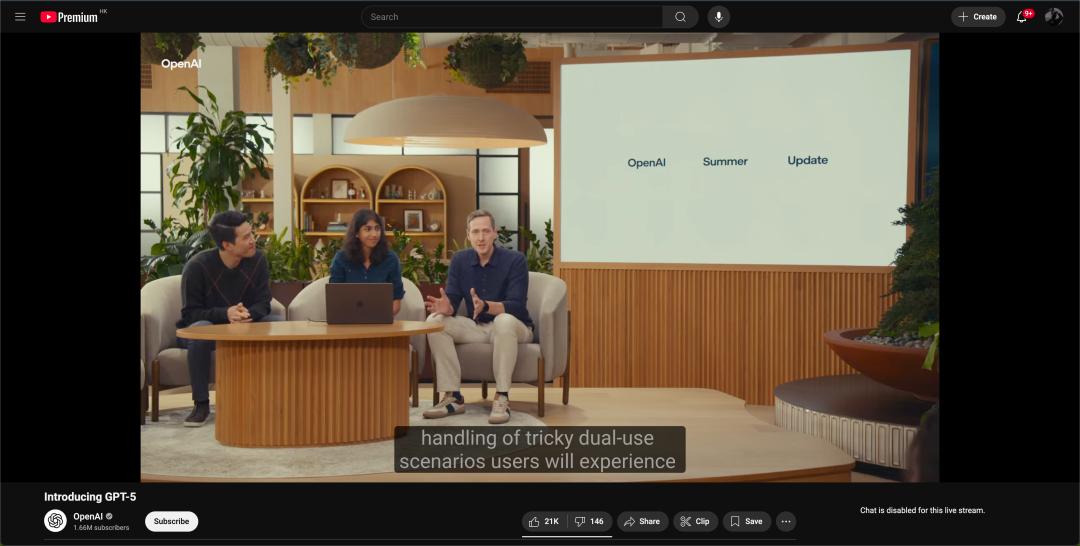
与此前 OpenAI 速通式的发布会明显不同,这次 OpenAI 准备了时长超过一个小时的发布会直播几波人马轮番上阵,你方唱罢我登场,从各种角度展示 GPT-5 的强悍性能。 经历过无数次「跳票」之后,GPT-5 终于来了。 北京时间 8 月 8 日凌晨一点,颇有新一代「科技春晚」架势的 OpenAI 夏季发布会拉开帷幕。 先说重点:GPT-5 在多个领域的表现都迎来了全面提升,在文本、WebDev 和视觉感知能力领域排名第一;在硬提示、编码、数学、创造力、长查询等方 面排名第一 GPT-5,在代号为「峰会」的测试下,目前保持着截至目前最高的 Arena 分数,可以说是字面意义上的「屠榜」了。 | C Model - 224 (224) | Coperad : 11 | Hard Proenpts 11 | Coding Ti | March 10 | Creative Writing : 11 | Instruction Following | Longer Query fi | Mults-Torn 51 | | --- | --- | --- | --- | --- | --- | --- | --- ...
狂揽70亿挑战DeepSeek,AI创企被曝新融资,被英伟达押宝,团队大牛云集
3 6 Ke· 2025-08-05 08:12
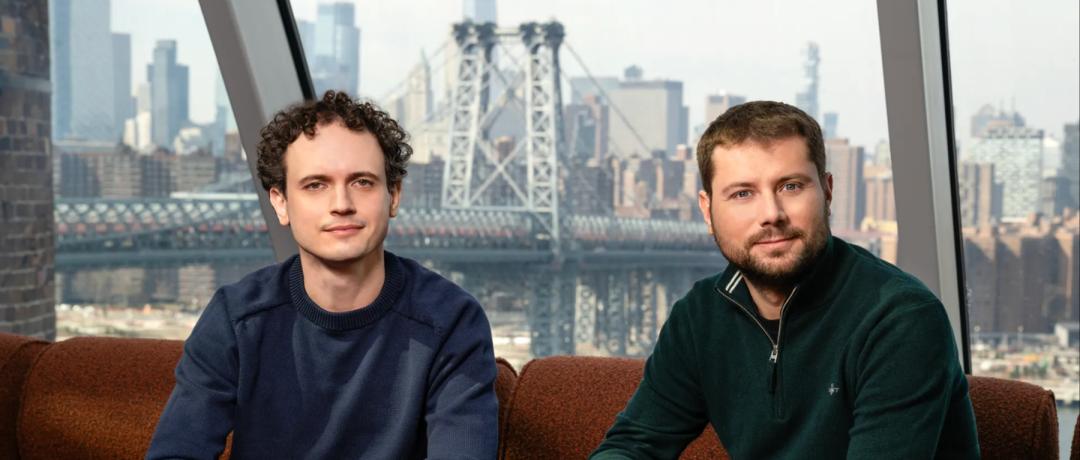
Core Insights - Reflection AI, a US-based startup, is in talks to raise over $1 billion for developing open-source large models to compete with providers like DeepSeek, Mistral, and Meta [2] - The company was founded in 2024 by former Google DeepMind scientists Ioannis Antonoglou and Misha Laskin, who have significant experience in AI development [2][5] - Reflection AI aims to create super-intelligent autonomous systems and has already launched its first programming agent, Asimov, which assists developers in coding tasks [2][11] Company Overview - Reflection AI has raised $130 million in March 2023, with a current valuation of $545 million [3] - The founding team consists of experts from Google DeepMind, OpenAI, and Anthropic, focusing on large language models and reinforcement learning [9][11] - The company emphasizes the importance of autonomous programming as a key step towards achieving superintelligence [11] Product Development - The Asimov agent can analyze enterprise data and generate relevant code, already attracting paying clients in sectors like finance and technology [11][12] - Asimov has reportedly improved developer productivity by tenfold, according to insights from Sequoia Capital [12] Market Positioning - Reflection AI is positioning itself to become a leading provider of open-source AI models in the US, responding to the growing demand for customizable and cost-effective solutions [16][18] - The company is capitalizing on the limitations of closed-source models, particularly regarding data security concerns faced by US companies [16] Industry Trends - The rise of open-source models is prompting US AI companies to accelerate their development efforts, as seen with Reflection AI's ambitions [19] - Training costs for AI models are significant, with OpenAI projecting over $7 billion in training expenses for 2023, highlighting the challenges for startups in this space [19]

The Economist-2.08.2025
2025-08-05 03:16
Summary of Key Points from the Conference Call Industry or Company Involved - The conference call primarily discusses the **European Union (EU)** and its trade deal with **America**, as well as implications for various companies affected by tariffs, including **Mercedes-Benz**, **Ford**, and **Procter & Gamble**. Additionally, it touches on the **artificial intelligence (AI)** sector, particularly regarding **Nvidia** and its chip exports to **China**. Core Points and Arguments 1. **EU-US Trade Deal**: The EU reached a preliminary trade deal with America, imposing a **15% tariff** on EU exports to the US, significantly lower than the **30%** initially threatened by President Trump. The EU will eliminate tariffs on American industrial goods and increase energy purchases from the US [32][55][56]. 2. **Impact on Companies**: - **Mercedes-Benz** reported a decline in sales in North America and Asia due to tariffs, expecting full-year sales to be "significantly below" last year's figures [34]. - **Ford** incurred **$800 million** in tariff costs in Q2, resulting in a net loss [34]. - **Procter & Gamble** anticipates a **$1 billion** cost from trade levies, necessitating price increases across various consumer goods [34]. 3. **Federal Reserve's Interest Rate Decision**: The Federal Reserve maintained its benchmark interest rate between **4.25% and 4.5%**, indicating that inflation remains elevated while growth has moderated, hinting at potential future rate cuts [35]. 4. **AI Sector Developments**: The Trump administration reversed its ban on Nvidia's H20 chip exports to China, a decision seen as detrimental given the competitive landscape in AI. The ban had previously hindered China's AI development by limiting access to necessary computing capacity [66][68][70]. 5. **Nvidia's Market Influence**: Nvidia's status as the world's most valuable company gives it significant sway in market movements, and the decision to allow chip exports is viewed as a strategic misstep amid an ongoing AI arms race with China [66][67][72]. Other Important but Possibly Overlooked Content 1. **Geopolitical Context**: The trade deal and tariff discussions are set against a backdrop of broader geopolitical tensions, particularly concerning security and the ongoing situation in Ukraine [58]. 2. **Internal EU Challenges**: Critics argue that the EU's economic issues extend beyond the trade deal, highlighting the need for internal reforms and investment to address productivity gaps and market fragmentation [59][60]. 3. **AI Hardware vs. Software Development**: The easing of chip export controls may bolster China's hardware industry in the long term, despite immediate benefits for American firms. The complexity of chipmaking means that catching up will take years, making the current advantage critical [69][71]. This summary encapsulates the key discussions and implications from the conference call, focusing on the trade dynamics between the EU and the US, the impact on specific companies, and the strategic considerations in the AI sector.



电子掘金:海外算力链还有哪些重点机会?
2025-08-05 03:15
Summary of Key Points from Conference Call Records Industry Overview - The focus is on the North American cloud computing industry, particularly major players like Google, Meta, Microsoft, and Amazon, and their capital expenditure (CapEx) related to AI and cloud services [1][2][4][5]. Core Insights and Arguments - **Capital Expenditure Growth**: North American cloud providers are expected to exceed $366 billion in total capital expenditure in 2025, reflecting a year-on-year increase of over 47%, driven primarily by Google, Meta, Microsoft, and Amazon [1][2]. - **Google's Investment**: Google raised its 2025 CapEx guidance from $75 billion to $85 billion, a 62% increase year-on-year, with further growth anticipated in 2026 [2][4]. - **Meta's Strategic Goals**: Meta aims for "super intelligence" and has established a dedicated lab for this purpose, indicating a potential CapEx nearing $100 billion by 2026, driven by five key business opportunities [1][7]. - **Microsoft and Amazon's Commitment**: Microsoft plans to maintain over $30 billion in CapEx for the next fiscal quarter, while Amazon expects to sustain its investment levels in the second half of 2025 [2][4]. - **AI Industry Resilience**: Despite concerns over the delayed release of OpenAI's GPT-5, the AI industry continues to innovate, with significant advancements from companies like Anthropic and Xai [1][10]. Additional Important Content - **PCB Market Volatility**: The PCB sector has experienced significant fluctuations due to discussions around COVF/SOP technology paths and increased CapEx expectations from cloud providers [1][14]. - **ASIC Supply Chain Outlook**: The ASIC supply chain is expected to see significant demand elasticity by 2026, with emerging companies like New Feng Peng Ding and Dongshan Jingwang poised to enter the market [3][16]. - **Technological Innovations in PCB**: Innovations such as cobalt processes are being explored to simplify PCB structures, although challenges like heat dissipation and chip warping remain [3][17]. - **Market Trends and Future Projections**: The AI industry's growth is projected to continue, with hardware demand expected to rise significantly by 2026, despite short-term market fluctuations [11][15]. - **Investment Opportunities**: There is a recommendation to monitor potential market pullbacks to capitalize on investment opportunities, particularly in the PCB sector and traditional NB chain stocks [12][15][24]. Conclusion - The North American cloud computing industry is poised for substantial growth in capital expenditures, particularly in AI-related investments. Major players are demonstrating strong confidence in the future of AI, with ongoing innovations and strategic investments shaping the landscape. The PCB and ASIC markets are also highlighted as areas of potential growth and investment opportunity.

哥大学生全员AI作弊?小哥“创业逆袭”:不用AI等于输在起跑线
3 6 Ke· 2025-08-04 01:52
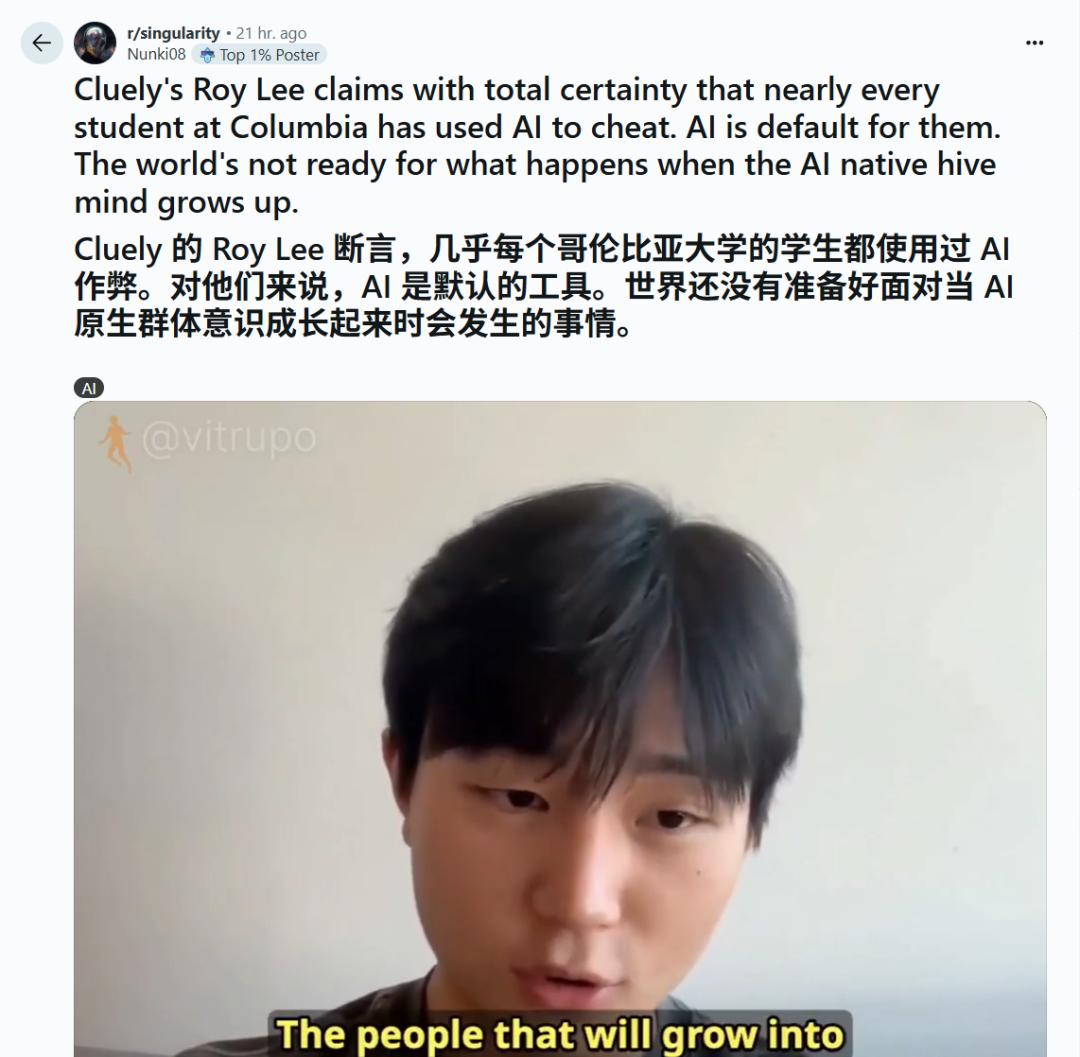
Core Viewpoint - The widespread use of AI tools for cheating among students at Columbia University highlights significant issues within the education system, as claimed by Cluely founder Roy Lee [1][5][36] Group 1: AI Cheating in Education - Roy Lee asserts that nearly every student at Columbia University has used AI tools to cheat, indicating a systemic issue in academic integrity [1][36] - A Reddit user from UC Berkeley confirms that AI tool usage is prevalent among students, suggesting that not using AI puts one at a competitive disadvantage [5] - The reliance on AI for academic tasks raises questions about the validity of traditional grading systems, as AI can produce seemingly perfect essays [6] Group 2: Cluely and Its Vision - Cluely, founded by Roy Lee, recently secured $15 million in funding and promotes the idea of maximizing performance and productivity through AI [7] - The company aims to create a seamless AI assistant that integrates into users' daily activities, providing real-time information without detection [9][10] - Roy Lee envisions a future where AI enhances human capabilities, allowing individuals to pursue their true passions rather than mundane tasks [17][24] Group 3: Societal Implications of AI - The rise of AI tools is seen as a potential catalyst for societal change, with Roy Lee arguing that increased productivity could lead to a utopian society [32][34] - The current educational and employment landscape is shifting, with high unemployment rates among graduates indicating a disconnect between traditional success metrics and real-world outcomes [34][36] - Roy Lee's experience of using AI to cheat during an Amazon interview exemplifies the growing acceptance of AI in professional settings, despite ethical concerns [30][38]

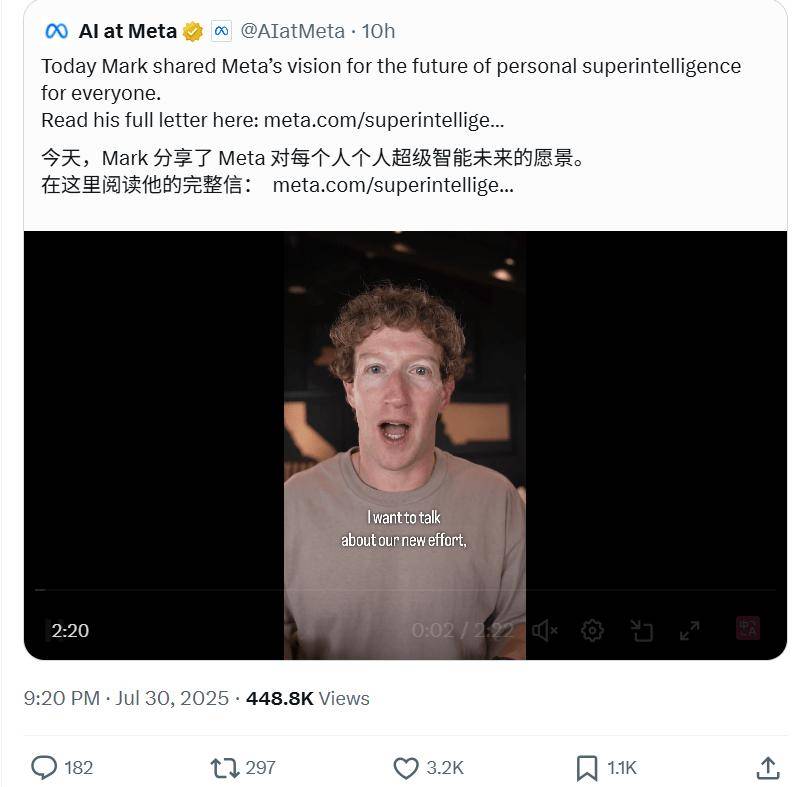
扎克伯格最新公开信:Meta不会开源全部模型
Sou Hu Cai Jing· 2025-08-02 10:16
Core Insights - Meta's CEO Mark Zuckerberg has recruited top AI researchers from companies like OpenAI, Google, and Apple, offering salaries in the hundreds of millions, which has shocked the tech industry [2] - In a recent open letter, Zuckerberg expressed optimism about the nearing development of superintelligence, noting signs of self-improvement in AI systems [6][8] - Meta is shifting its approach to releasing AI models, focusing on open-source options while acknowledging potential security risks associated with superintelligence [4][8] Group 1: AI Development and Vision - Zuckerberg believes that superintelligence will enhance existing systems and lead to unprecedented achievements in various fields [6] - The company envisions personal superintelligence for everyone, allowing individuals to pursue their goals and ideals, contrasting with the view of centralized control over AI [7] - Meta aims to empower individuals through technology, emphasizing the importance of personal agency in driving progress [7][8] Group 2: Financial Commitment and Market Response - Meta plans to invest up to $72 billion in AI infrastructure by 2025, indicating a strong commitment to AI development [9] - Following the announcement, Meta's stock price rose significantly, reflecting positive market sentiment towards the company's AI strategy [9]
24岁辍学博士,小扎捧2.5亿薪酬包亲自上门抢人!AI顶薪已让NBA汗颜
猿大侠· 2025-08-02 04:12
Core Viewpoint - The article highlights the intense competition for AI talent, exemplified by the case of Matt Deitke, who received a staggering $250 million offer from Meta after initially rejecting a $125 million contract. This reflects a broader trend where tech giants are willing to pay astronomical salaries to attract top AI researchers, akin to the sports industry [2][26][29]. Group 1: The AI Talent Market - The AI talent market is likened to the NBA, with young researchers negotiating contracts worth hundreds of millions, showcasing the high demand for AI expertise [2][29]. - Companies like Meta, OpenAI, and Google are offering salaries without any cap, leading to fierce competition for AI professionals [29][30]. - The recruitment of AI experts has become a hot topic on social media, similar to discussions around sports star transfers [29][30]. Group 2: Matt Deitke's Case - Matt Deitke, a 24-year-old AI researcher, initially rejected a $125 million offer from Meta, as he was focused on his startup, Vercept, which had secured $16.5 million in funding [3][5][6]. - After a personal approach from Mark Zuckerberg and a revised offer of $250 million, including $100 million in the first year, Deitke accepted the position [10][12]. - Deitke's journey from a PhD student to a highly sought-after AI talent illustrates the rapid changes in the tech landscape and the opportunities available to young professionals [19][21][26]. Group 3: Industry Dynamics - The competition for AI talent has escalated since the release of ChatGPT in 2022, significantly increasing the bargaining power of AI researchers [44][45]. - The scarcity of qualified AI professionals, due to the unique skill set required, has driven salaries from millions to hundreds of millions [48][45]. - Companies are not only competing on salary but also on resources, with Meta offering access to thousands of GPUs, which is highly valued in AI research [51][52]. Group 4: Challenges for Meta - Despite aggressive recruitment efforts, Meta faces challenges in attracting top talent due to unclear strategic direction and criticism of its AI models [61][64]. - The company has struggled to convert its substantial investments into tangible results, raising concerns about its ability to retain and utilize the talent it recruits [65][66]. - The competitive landscape is further complicated by the strong appeal of companies like OpenAI and Anthropic, which have clearer missions and funding [63][66].