
通胀率

Search documents
今夜美股前瞻 | 空头11月损失惨重,美银改口称12月降息,三大股指期货齐涨
Sou Hu Cai Jing· 2025-12-02 12:48
1. 12月2日美股盘前,美股三大股指 期货齐涨。截至发稿,道指期货涨0.09%,标普期货涨0.21%,纳指 期货涨0.32%。 2. 截至发稿,欧洲股市主要指数齐涨。欧洲斯托克50指数涨0.6%,英国富时100指数涨 0.24%,法国CAC40指数涨0.23%,德国DAX30指数涨0.56%。 3. 截至发稿,WTI原油跌0.27%,报59.16 美元/桶。布伦特原油跌0.36%,报62.94美元/桶。 市场消息 1、试图做空美股的投资者面临严峻挑战, 美股空头在11月最后一周剧烈反转中损失惨重。 2、芝商所月度成交量创历史次高纪录。 3、美联储陷 入降息终点之争,中性利率估算出现12年来最大分歧,基准利率接近估算区间上限,偏鹰派政策制定者 或成进一步降息实质性阻碍。 4、欧元区11月通胀率按年率计算为2.2%,高于10月的2.1%。 5、经合组 织将2025年美国经济增速预期上调至2%,2026年上调至1.7%。 6、OpenAI拉响红色警报,奥尔特曼全 力优化ChatGPT,暂停广告、健康与购物AI项目。 7、美银改口称美联储12月将降息25基点,但预计明 年仅降息两次。 个股消息 1、淡水河谷预计20 ...
【环球财经】欧元区11月通胀率升至2.2%
Xin Hua She· 2025-12-02 12:46
新华财经布鲁塞尔12月2日电(记者康逸)欧盟统计局2日公布的初步统计数据显示,欧元区11月通胀率 按年率计算为2.2%,高于10月的2.1%,继续保持在欧洲央行的中期目标水平之上。 数据显示,欧元区11月食品和烟酒价格上涨2.5%,服务价格上涨3.5%,非能源类工业产品价格上涨 0.6%,能源价格下降0.5%。当月,剔除能源、食品和烟酒价格的核心通胀率为2.4%,与10月持平。 从国别来看,欧元区主要经济体德国、法国、意大利和西班牙11月通胀率分别为2.6%、0.8%、1.1%和 3.1%。 欧洲央行10月决定继续维持欧元区三大关键利率不变,这是欧洲央行自7月以来连续第三次维持利率不 变。欧洲央行将于12月18日举行今年最后一次议息会议。欧洲央行行长拉加德此前表示,当前欧元区通 胀率仍接近2%的中期目标,欧洲央行对通胀前景的评估总体保持不变。 (文章来源:新华社) ...
邦达亚洲:制造业指数表现疲软 美元指数小幅收跌
Xin Lang Cai Jing· 2025-12-02 08:40
Group 1: European Central Bank (ECB) Insights - ECB Governing Council member Joachim Nagel expressed satisfaction with the current monetary policy settings, indicating that interest rates are at an appropriate level [1][7] - Nagel mentioned that the monetary policy of the euro area is currently in a neutral state and new forecasts will include preliminary projections for 2028 [1][7] - ECB President Christine Lagarde stated that the ECB is in a favorable position with borrowing costs at appropriate levels, with a forecasted inflation rate of 2.1% for November in the eurozone [1][7] Group 2: Bank of England (BoE) Perspectives - Bank of England Monetary Policy Committee member Megan Greene stated that the labor market needs to weaken further before she can support another rate cut [2][8] - Greene noted signs of stabilization in employment and job vacancy data, indicating her continued opposition to further easing of monetary policy [2][8] - She emphasized that a significant downturn in consumer spending could alter her view on borrowing costs [2][8] Group 3: Currency Market Movements - The US Dollar Index experienced slight declines, trading around 99.50, primarily due to rising expectations for a Fed rate cut in December and weak economic data from the US [4][9] - The Euro appreciated slightly, trading around 1.1610, supported by the weakening dollar and optimistic comments from ECB officials, although overall economic data from the eurozone limited its upward movement [5][10] - The British Pound showed minor declines, trading around 1.3210, affected by profit-taking and diminishing optimism from the UK budget, while Fed rate cut expectations and hawkish comments from BoE officials limited its downside [6][11]
美国初请失业金人数好于预期——海外周报第116期
一瑜中的· 2025-12-01 12:04
Group 1: Key Economic Data Review - In the US, September durable goods orders were revised up to 3% from 2.9%, with a preliminary month-on-month value of 0.5% [12] - September retail sales increased by 0.2%, below the expected 0.4%, and the previous value was 0.6% [12] - The Consumer Confidence Index for November was reported at 88.7, significantly lower than the expected 93.3 [12] - The Producer Price Index (PPI) for September showed a month-on-month increase of 0.3%, matching expectations, while the year-on-year figure was revised up to 2.7% [12] Group 2: Upcoming Economic Data - Key upcoming US economic data includes the November ISM Manufacturing PMI on December 1, and the November ISM Services PMI on December 3 [14] - In the Eurozone, the October unemployment rate and November CPI preliminary value are set to be released on December 2 [14] Group 3: Weekly Economic Index - The US Weekly Economic Index (WEI) decreased to 2.1% from 2.33% in the previous week, indicating a slight economic slowdown [17] - Conversely, Germany's Weekly Activity Index (WAI) increased to 0.23%, showing continued economic recovery [17] Group 4: Demand Insights - The US Redbook retail sales year-on-year growth slightly declined to 5.9% from 6.1% in the previous week [20] - Global flight numbers showed a year-on-year growth of 3.3%, down from 8.5% the previous week [22] - The US mortgage rate for a 30-year fixed loan decreased to 6.23% from 6.26% [25] Group 5: Employment Data - Initial jobless claims in the US were reported at 216,000, better than the expected 225,000 [28] - Continuing claims rose to 1.96 million, up from a previous value of 1.953 million [29] Group 6: Price Trends - Global commodity prices increased, with the RJ/CRB commodity price index rising by 1.3% [30] - US gasoline retail prices slightly decreased to $2.94 per gallon, down 0.1% from the previous week [30] Group 7: Financial Conditions - Financial conditions in the US and Eurozone showed marginal easing, with the Bloomberg financial conditions index for the US rising to 0.629 [32] - Offshore dollar liquidity improved slightly, with swap points for USD/JPY and USD/EUR increasing [34] - Long-term bond spreads narrowed, with the 10-year bond spread between Italy and Germany decreasing to 71.4 basis points [36]


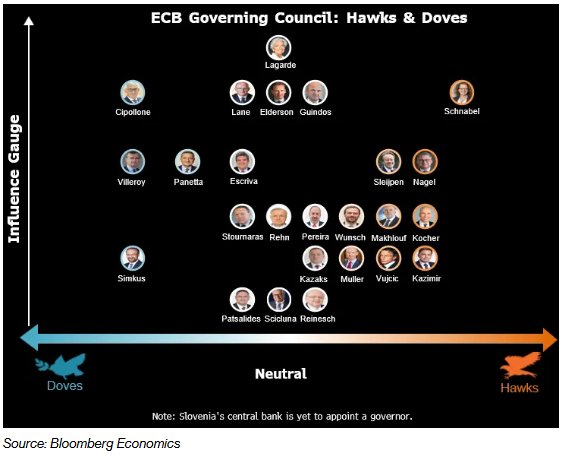
欧洲央行纳格尔:当前利率处于“合适位置” 货币政策“基本中性”
智通财经网· 2025-12-01 07:49
智通财经APP获悉,欧洲央行管理委员会成员约阿希姆·纳格尔暗示,他对欧洲央行当前的货币政策设 置感到满意。 然而,一些央行官员担心经济活动和消费者价格增长存在下行风险。将于12月发布的新预测可能显示 2026年和2027年通胀将低于2%,或将促使各方呼吁在12月降息,进一步宽松政策或纳入明年议程。 "新预测将包含对2028年的初步展望,"被视为管理委员会中较为鹰派成员之一的纳格尔表示,"基于这 些预测,我们将能够判断是否仍有望实现我们的中期通胀目标。" 欧洲央行行长克里斯蒂娜·拉加德上周表示,在借贷成本处于当前适当水平的情况下,欧洲央行处于有 利位置。根据一项调查,周二公布的数据预计将显示,11月份欧元区20国的通胀率将保持在2.1%。 "我们的预测也表明,利率目前处于一个合适的位置,"这位德国央行行长周一发表演讲时表示,呼应了 近几个月欧洲央行官员的标准说法。"欧元体系的货币政策目前基本处于中性状态。" 欧洲央行官员正在筹备本月举行的年内最后一次会议,投资者和经济学家普遍预期央行将连续第四次维 持利率不变。随着通胀率徘徊在2%左右,且经济对美国加征关税表现出韧性,大多数政策制定者对当 前基本中性的政策设置感 ...
德国11月通胀率预计为2.3%
Zhong Guo Xin Wen Wang· 2025-11-29 13:43
分析认为,作为欧元区最大经济体,德国的通胀表现对欧洲中央银行的货币政策具有重要影响。欧 洲央行的中期目标是将欧元区通胀率稳定在2.0%。 中新社柏林11月28日电 (记者 马秀秀)德国联邦统计局28日公布的初步数据显示,德国11月通胀率 预计为2.3%。 数据显示,德国11月通胀主要由服务价格上涨推动。当月,德国服务价格同比上涨3.5%,食品价 格同比上涨1.2%,能源价格则同比下降0.1%。若剔除食品和能源价格因素,德国11月核心通胀率为 2.7%。 德国央行表示,德国消费者短期内仍需接受偏高的通胀水平,这意味着商品价格将继续上涨。目 前,德国通胀率已连续四个月高于2%。能源价格的走低或许能在未来带来缓解的希望。 德国商业银行首席经济学家约尔格·克雷默表示,尽管德国经济在过去两年连续衰退,且今年以来 基本停滞,但剔除波动较大的能源和食品价格因素后,通胀率仍明显高于2%。他指出,德国第三季度 工资加速上涨,也不利于通胀进一步回落。"抗击通胀的最后阶段往往最为困难。" ...
德国11月通胀率为2.3%
Yang Shi Xin Wen· 2025-11-28 17:34
(文章来源:央视新闻) 德国央行表示,德国消费者暂时不得不接受这一高通胀率,这意味着所有商品价格将继续上涨。目前, 德国通胀率已连续四个月高于2%。 当地时间28日,德国联邦统计局公布的初步数据显示,11月份德国通胀率维持在2.3%,仍高于欧洲央 行2%的目标。 能源价格下跌曾是近几个月来抑制通胀的关键因素,但11月份的降幅有限,同比仅下降0.1%。 ...
【环球财经】澳大利亚10月CPI同比上涨3.8% 连续四个月攀升
Xin Hua Cai Jing· 2025-11-26 05:20
(文章来源:新华财经) 同时,10月作为基础通胀率指标的截尾均值通胀率从前一个月的3.2%升至3.3%。而澳大利亚央行设定 的通胀目标区间为2-3%。此外,当月澳大利亚同比商品通胀率从9月的3.7%上升至3.8%,而服务通胀率 则从3.5%上升至3.9%。 具体来说,10月该国食品与非酒精饮料价格月度同比涨幅为3.2%;烟酒价格涨幅为4.4%;服装鞋靴价 格涨幅为5.4%;房屋价格涨幅为5.9%;家具、家居设备与服务价格同比涨幅为2.1%;保健价格涨幅为 4%;交通价格涨幅为2.7%;通讯价格涨幅为0.8%;文娱价格涨幅为3.2%;教育价格涨幅为5.4%;保险 与金融服务价格涨幅为2.5%。 新华财经悉尼11月26日电 澳大利亚统计局26日宣布,10月该国整体消费者价格指数同比涨幅为3.8%, 高于9月的3.6%,也超出市场此前预期的3.6%。这也是该指数连续第四个月走高。 统计局价格统计主管米歇尔·马夸特(Michelle Marquardt)表示,10月同比通胀率上升的背后主要推动 力量是房屋价格上涨5.9%,其次则是食品与非酒精饮料价格以及文娱价格分别上涨3.2%。 ...
旧金山联储主席:担心难以应对就业市场突然恶化 支持美联储12月降息
智通财经网· 2025-11-25 02:46
戴利强调,仍坚信美联储能在不推升失业率的前提下将通胀率降回2%目标区间,若未能达成此目标将 构成政策失败。 美联储越来越多官员近期对进一步降息表达反对或担忧,认为通胀高企的原因包括受关税影响的商品, 以及国内服务业,担心若太快降息,而明年经济增长加快,将使美联储陷入两难。戴利则认为,美联储 不应因担忧日后可能需要逆转政策而延迟降息,而美联储官员间罕见的分歧,反映真实不确定性而非决 策失灵,若"此刻众人意见一致",央行反而会陷入群体思维的错误,"我们的职责并非达成共识"。 智通财经APP获悉,美国旧金山联储主席戴利(Mary Daly)表示,她支持在美联储12月会议上降息,因为 就业市场突然恶化的可能性比通胀骤升更高,且更难应对。她周一接受媒体采访时指出,劳动力市场现 已非常脆弱,"存在发生非线性变化的风险",不确定当局能否提前应对,相较之下,通胀爆发的风险较 低,因为关税驱动的成本上涨幅度低于今年较早时所预期。 有分析认为戴利言论意义重大,因其在公开场合鲜少偏离美联储主席鲍威尔的立场。戴利在2027年才在 联邦公开市场委员会(FOMC)有投票权。 ...
【环球财经】以色列央行时隔近两年再度下调利率
Xin Hua Cai Jing· 2025-11-24 23:59
Core Viewpoint - The Bank of Israel has decided to lower the benchmark interest rate by 0.25 percentage points to 4.25%, marking the first rate adjustment in nearly two years due to a decline in the annual inflation rate [1] Group 1: Interest Rate Adjustment - The interest rate was last adjusted in January 2024, when it was reduced from 4.75% to 4.5% [1] - The current annual inflation rate has decreased to 2.5%, falling within the government's target range of 1% to 3% [1] Group 2: Economic Outlook - The Finance Minister stated that the rate cut is part of a series of measures aimed at achieving "strong economic growth" in Israel [1] - The Bank of Israel acknowledges ongoing risks of inflation acceleration, including geopolitical tensions and their impact on economic activity, as well as concurrent demand growth and supply constraints [1] Group 3: GDP Growth - The Central Bureau of Statistics reported a robust year-on-year GDP growth of 12.4% for the third quarter of 2025, indicating a strong economic rebound [1]