AI智能体

Search documents
AIGC赛道大爆发,创业板软件ETF华夏(159256)持仓股汉得信息大涨超15%
Mei Ri Jing Ji Xin Wen· 2026-01-12 02:58
中信证券认为,以MiniMax为代表的中国独立第三方模型厂商在商业化进展上,相比美国领先玩家有较 多潜力,相比OpenAI的120亿美元ARR对应5000亿美元估值、Anthropic的50亿美元对应1830亿美元估 值,MiniMax2025年前三季度5344万美元意味着未来在收入端有着跨数量级的潜力,而在市值层面,相 比腾讯/阿里/字节从成立到千亿美元市值分别耗时15/15/8年,新一代AI企业将有望加速这一进程。 相关产品:创业板软件ETF华夏(159256)、创业板200ETF华夏(159573)、人工智能AIETF (515070) 1月12日盘中,A股股指涨跌分化,大科技板块表现强势,Sora概念、AIGC概念、AI智能体板块涨幅持 续扩大,软件开发板块异动拉升,创业板软件ETF华夏(159256)大涨超4%,其持仓股昆仑万维、汉 得信息、拓尔思、润泽科技、每日互动、卫宁健康、万兴科技均涨超10%。 消息方面,1月9日,全球化AI第一股MiniMax(股票代码:0100.HK)正式登陆香港联合交易所。 MiniMax本次IPO发行价定为发行上限的165港元,市场认购反响极为热烈,公开发售部分获得1 ...

对话联想ISG总裁:与英伟达合作,帮助客户更快走向“第一个 token” |直击CES
Xin Lang Cai Jing· 2026-01-12 02:47
新浪财经 康路 发自拉斯维加斯 在 CES 2026 期间,联想基础设施解决方案集团(ISG)总裁 Ashley Gorakhpurwalla 在接受提问时,系 统阐述了联想与 英伟达之间的战略合作关系,并强调双方合作并非单一产品层面的绑定,而是覆盖从 规划、制造、部署到运维的全周期协同。 Ashley Gorakhpurwalla 表示,理解联想与 NVIDIA 的关系,需要首先认识到联想 ISG 在业务模式上的高 度灵活性。联想既可以作为 ODM 运作,由合作伙伴提供核心技术,联想负责制造、部署、支持和全生 命周期管理;同时,联想也在持续引入自有 IP,并拥有一整套在全球 180 个国家提供支持的成熟产品 组合。这使得联想能够同时服务于超大规模客户(hyperscale)、新型云服务商(neocloud)、传统服务 提供商,以及仅需要单台服务器或存储设备的企业客户,覆盖从顶级云到企业级 IT 的完整光谱。 专题:2026年度国际消费电子展(CES) Arthur Hu表示,联想正在与 英伟达合作,通过智能体平台帮助企业更快完成从部署到使用的转化。随 着在 CES 上发布 xIQ Agent 平台,联想希望 ...


美国专家热议豆包AI手机:引领全球的“游戏变革者”
Feng Huang Wang· 2026-01-12 02:29
凤凰网科技讯 1月12日,自2025年12月发布以来,豆包AI手机不仅在国内科技圈掀起热潮,成为持续刷 屏的话题中心,其影响力也迅速扩散至海外,引发海外科技博主以及政策专家的关注和解读。 近期,在美国知名智库亚洲协会举行的"中国的DeepSeek时刻"研讨会上,咨询公司DGA Group合伙人、 中美科技政策专家Paul Triolo,以及耶鲁大学法学院高级研究员Samm Sacks给出了高度一致的评价:豆 包AI手机代表真正的技术创新,是足以引领全球AI智能体发展方向的"游戏变革者"。 Paul Triolo认为,豆包AI手机真正的突破,在于它把"与AI的交互方式"从文本时代,推进到了操作系统 级、多智能体协同的新阶段。 在传统具备AI功能的手机上,手机只能被动回答问题、执行单一指令、无法跨应用操作。但在豆包AI 手机上,用户通过语音发出指令后,手机不再只是听懂字面意思,而是能够理解用户的真实意图,并自 主拆解任务、完成一系列原本需要手动操作的复杂流程。 Paul Triolo特别提到了美国投资人Taylor Ogan的实测案例:作为首批体验者,Ogan在社媒平台X上发布 了一系列实测报告,毫不吝啬地盛赞豆 ...
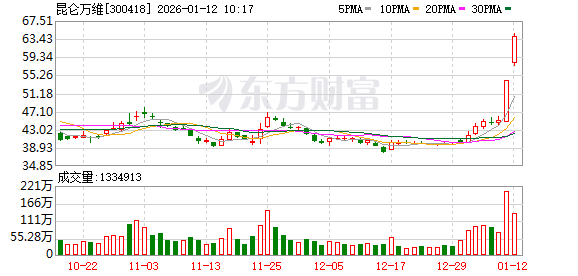
清华AGI-Next峰会研判AI竞争进入Agent阶段,创业板软件ETF华夏(159256)持仓股昆仑万维暴涨超15%
Mei Ri Jing Ji Xin Wen· 2026-01-12 02:17
Group 1 - The A-share market is experiencing fluctuations, with a significant rise in the technology sector, particularly in AI agents, AIGC concepts, and brain-computer interface segments [2] - The software development sector is also seeing a rebound, with the ChiNext Software ETF (159256) rising over 3% during trading, and key holdings such as Kunlun Wanwei, Meiri Interactive, Weining Health, and others seeing gains exceeding 10% [2] - The AGI-Next summit initiated by Tsinghua University highlights a shift in large model competition from "Chat" to "Agent" phase, focusing on executing complex tasks in real environments [2] Group 2 - CITIC Securities reports that the development of AI large models is transitioning from "generation" to "agent" capabilities, emphasizing the importance of logical reasoning in user behavior modification and task processes [3] - The report anticipates that the commercialization process will accelerate by 2026, with AI applications in enterprises shifting from cost reduction to revenue generation [3] - Related products include ChiNext Software ETF (159256), ChiNext 200 ETF (159573), and AI ETF (515070) [3]




AI智能体如何重构B2B电商客服?数商云智能客服系统实战解析
Sou Hu Cai Jing· 2026-01-12 01:55
Group 1 - The article discusses the challenges and advancements in B2B service delivery, highlighting the need for both standardized processes and personalized services [2] - AI agents utilize user profiling and dynamic decision trees to provide tailored services, resulting in an 18% increase in repurchase rates for an electronic components platform [2] - The implementation of a decision tree model has improved the prioritization of urgent work orders by 30% for an MRO platform [2] Group 2 - Knowledge extraction from product manuals and technical documents has enabled a steel e-commerce platform to convert 200,000 documents into searchable knowledge nodes [3] - Knowledge reasoning using Graph Neural Networks (GNN) has increased the technical consultation resolution rate from 65% to 85% for a semiconductor platform [3] Group 3 - The transition from manual responses to AI collaboration in technical consulting has been exemplified by an MRO platform's supply chain optimization [4] - Digital employees utilizing RPA (Robotic Process Automation) have automated end-to-end processes such as work order handling and contract generation [4] Group 4 - Smart quoting integrated with ERP systems has reduced the quoting cycle from 2 days to 10 minutes for an electronic components platform [5] - Demand forecasting has improved cross-selling success rates by 22% for a chemical platform through analysis of inquiry content and historical transaction data [5] - Multi-turn dialogue capabilities have increased the technical consultation resolution rate from 70% to 88% for a robotics platform [5] - Remote assistance using AR technology has decreased on-site service visits by 40% for a medical device manufacturer [5] - Knowledge base linkage has reduced the average time for technical consultations from 25 minutes to 8 minutes for an aerospace components platform [5] Group 5 - Smart work order allocation has improved processing efficiency by 35% for a logistics equipment platform by matching service resources based on various criteria [5] - Predictive maintenance has halved equipment downtime for an energy equipment manufacturer by providing early warnings and maintenance recommendations [5] - Customer satisfaction has risen to 88 points, with response times reduced from 2 hours to 15 minutes and problem resolution rates increased from 72% to 89% [5] - The annual procurement frequency has increased by 1.5 times, leading to a 12% rise in repurchase rates through personalized recommendations and demand forecasting [5] - Work order processing time has been shortened to 8 hours, with AI improving manual processing efficiency by three times [5] - Customer churn rate has decreased to 8%, with a 40% increase in customer retention through predictive maintenance and proactive services [5] - Supply chain costs have been reduced by 20 million yuan per year by minimizing emergency stock and on-site service visits [5] Group 6 - The integration of large models with hundreds of billions of parameters has enhanced the understanding and generation capabilities for complex issues [5]

深入了解AI智能体
Nan Fang Du Shi Bao· 2026-01-11 23:17
oll Dop s ( ) ( ) ( 元 分 · 完 分 · 完 明 下载 克明星 分布 腹 6 L 一 乙 L B L 出 品 山 叶 成 Karl Kraus to 154 3000 格言与随笔 1912-1919 NACHTS Aphorismen the state of the state 一这是单一的、我用一生去追寻的关联。" *在调语与本质之间= 于三分之大呼出家社 面方都市和 奥一网oeeee 18 位 15 求 打 24位来客 官网 本 新闻 中 at E H 官网 英国 - 皇帝 / 天 Ningg Hsul Ningg Hsul 学 想 神 个 日常 三重十章章 Nanua Ha T NT Hol 上海国瑞蘭 - 防衛家 C 一流傳說所 OSS網站 C 如何活、怎样做,当生命走到尽头时才不觉得遭憾? 人生的病,文学里藏着解药, 送给不愿被卡在社会时钟里的你 国 清潔及出身体 上海社会平学院出版社 精神分析师乔希 · 科恩的诊疗室里 迎来了 24 位特殊的"搞人" 中值出版架通 南方都在報 奥一网 Oceee CID 智能体的 [英]佩塔尔·拉丹利耶夫 著 PETAR RADANLIEV ...

我国新增20万颗卫星申请,卫星频轨资源申请已上升至国家战略层面;人形机器人T链一级供应商新剑传动冲刺IPO——《投资早参》
Mei Ri Jing Ji Xin Wen· 2026-01-11 23:12
Key Market News - China applied for frequency orbit resources for over 200,000 satellites to the International Telecommunication Union (ITU) by December 2025, with more than 190,000 satellites coming from the newly established Radio Innovation Institute, indicating that satellite frequency resource applications have reached a national strategic level [1][2] Industry Insights - The satellite internet sector is becoming a new frontier in global technology competition, with the space economy expected to encompass satellite communication, navigation, remote sensing, and space tourism. The satellite-ground communication industry is projected to exceed 200 billion to 400 billion yuan by 2030, with an annual compound growth rate between 10% and 28% [2] - The industry is at a critical turning point from "concept validation" to "scale application," with advancements in technology, cost reductions, and expanded application scenarios expected to create a new communication landscape characterized by "integrated space and ground, interconnected everything" over the next decade [2] - Key concept stocks in this sector include Yinbang Shares, Hangyu Micro, and Tianyin Electromechanical [2] Company Developments - Hangzhou Xinjian Electromechanical Transmission Co., Ltd. initiated its listing guidance on January 9, with CITIC Securities as the advisory institution. The company is known for its close ties to Tesla's Optimus supply chain and is recognized as a primary supplier for humanoid robots [3] - The humanoid robot industry is anticipated to enter a critical phase from 0 to 1 in 2025, driven by leading companies enhancing component performance and reducing costs. This is expected to lead to significant growth in domestic robot shipments, benefiting core supply chains and application scenarios [3] - Key concept stocks related to humanoid robots include Hangyu Micro, Lixing Shares, and Haozhi Electromechanical [3] AI and Technology Advancements - The founder of Moon's Dark Side, Yang Zhilin, stated at the AGI-Next Summit that the next generation of models (K3 and beyond) will focus on optimizing architecture and technology while emphasizing data quality and model "taste." The goal is to develop intelligent agents that can explore unknown worlds and push the limits of human civilization [4] - AI capabilities are shifting from cloud-based to edge-based, allowing for local understanding, generation, and decision-making. The emergence of AI agents is recognized as a necessary evolution, with major internet companies targeting both consumer and business sectors [4] - Key concept stocks in the AI sector include Hand Information, Cai Xun Shares, and Tuoer Si [4]

洲明科技:牵手全球大模型第一股智谱,加速AI场景化落地进程
Zheng Quan Shi Bao Wang· 2026-01-11 12:13
Core Viewpoint - The investment by Zhouming Technology in Zhipu Technology marks a significant step in deepening its AI strategy and aims to capture the technological high ground in AI industry development [1][2]. Group 1: Investment and Strategic Importance - Zhouming Technology's wholly-owned subsidiary, Zhouming Hong Kong, successfully subscribed to 66,900 shares of Zhipu Technology, amounting to HKD 7.7738 million, indicating a strategic move towards AI integration [1]. - The investment is not merely financial but a strategic positioning in the AI sector, aligning with national policies promoting AI innovation and integration with the real economy [2][5]. Group 2: Technological Synergy - Zhipu Technology is recognized as a leading AI large model enterprise, focusing on model development and deployment, which complements Zhouming Technology's strengths in end-user applications [2][3]. - The collaboration allows Zhouming to leverage Zhipu's advanced AI technologies, enhancing its transition from a traditional hardware manufacturer to an AI-focused entity [3]. Group 3: Joint Ventures and New Market Opportunities - The establishment of Shenzhen Zhixian Robot Technology Co., a joint venture with Zhipu and Yuankexijie, aims to create a new market for AI smart terminals, with Zhouming holding a 50% stake [4]. - This partnership integrates hardware manufacturing capabilities, AI model technology, and visual interaction expertise, forming a comprehensive solution for AI smart terminals [5]. Group 4: Future Outlook - The ongoing development of Zhipu in the capital market and the gradual rollout of joint venture products are expected to provide Zhouming with a competitive edge in the AI smart terminal sector [6]. - The collaboration is anticipated to drive intelligent upgrades in various industries, including education, meetings, and cultural tourism, marking a transformative shift from traditional display to intelligent interaction [5][6].

三万亿成交下的百花齐放
Changjiang Securities· 2026-01-10 13:07
- The report does not contain any quantitative models or factors for analysis[1][2][3]
2025,AI行业发生了什么?
Jing Ji Guan Cha Bao· 2026-01-10 09:01
Core Insights - The AI industry experienced significant milestones in 2025, marked by technological innovations, business model transformations, and global regulatory dynamics [2] Group 1: Multi-Modal Integration - AI models have advanced rapidly in text and reasoning but lagged in multi-modal capabilities, limiting their effectiveness [4] - Developers are shifting from "assembled" models to "native multi-modal" models that can process text, images, audio, and video simultaneously [5] - The development of multi-modal models is becoming a primary focus for leading AI companies, enhancing their ability to perform real-world tasks [5][6] Group 2: Embodied Intelligence - The focus of embodied AI has shifted from experimental demonstrations to market-ready solutions, with companies announcing mass production of robots [8] - The cost of humanoid robots has significantly decreased, making them more accessible for commercial use [9] - The rise of embodied intelligence is driven by advancements in multi-modal AI and increasing labor costs, leading to greater demand for robotic solutions [9] Group 3: Computing Power Competition - The competition for computing power has evolved from a focus on acquiring GPUs to a more complex, efficiency-driven battle [10] - Companies are now prioritizing how to effectively utilize limited computing resources rather than just increasing their total computing power [10] - Some developers are moving towards self-developed chips to reduce reliance on dominant suppliers like NVIDIA [10] Group 4: Paradigm Controversy - There is a growing debate in the theoretical community regarding the "scale law" that has traditionally guided AI development [12] - Some experts argue that simply increasing model size does not lead to general intelligence, suggesting a need for new training paradigms and reasoning mechanisms [13] - Despite differing opinions, both sides recognize the need for a reevaluation of existing paradigms to find better development paths [13] Group 5: Rise of Agents - The emergence of AI agents, capable of executing complex tasks autonomously, signifies a shift in human-computer interaction from function-driven to task-driven systems [14][15] - This transition is expected to reshape organizational structures and business models, focusing on task completion rather than capability provision [15] Group 6: Open Source Renaissance - Open-source models have become a foundational infrastructure for global innovation, increasingly rivaling closed-source systems in performance and adoption [16] - The rise of open-source is attributed to changing AI innovation logic, where community collaboration and rapid customization are prioritized [17] Group 7: Business Innovation - The AI industry is moving towards clearer business paths, with different players finding monetization strategies that align with their capabilities [18] - The concept of "Outcome-as-a-Service" is gaining traction, shifting the focus from selling functionalities to delivering task completion [19] Group 8: Regulatory Dynamics - AI governance has become a critical area of focus, balancing innovation with regulatory frameworks to avoid stifling technological development [20] - Different regions are adopting varied approaches to governance, reflecting their priorities and institutional frameworks [21][22] Group 9: International Competition - The competition in AI has escalated from corporate to national levels, with countries vying for leadership in defining technological paths and standards [23] - The U.S. maintains a strong position in core technologies, while China focuses on optimizing existing frameworks for scalable applications [23][24] Group 10: Youth Leadership - A trend of young scientists gaining significant influence in AI companies is emerging, reflecting a shift in the industry's leadership dynamics [25][26] - This generational change is seen as essential for navigating the evolving landscape of AI, where innovative problem definition and evaluation are crucial [26]