
L3级自动驾驶

Search documents
出行观|L3级自动驾驶将进入生活,但行业仍需“谨慎乐观”
Guan Cha Zhe Wang· 2025-12-18 23:49
Core Viewpoint - The approval of L3-level conditional autonomous driving vehicles marks a significant milestone in China's autonomous driving technology, transitioning from testing to mass production [2][3] Group 1: Product Approval - The Ministry of Industry and Information Technology approved two models with L3-level conditional autonomous driving capabilities: Changan Automobile's Deep Blue SL03 and BAIC Group's Arcfox Alpha S6 [2] - The Deep Blue SL03 features Changan's self-developed "Tianshu Intelligent" system, while the Arcfox Alpha S6 is equipped with Huawei's QianKun Intelligent Driving ADS system [2] - This approval indicates that L3-level autonomous driving technology is moving from "test tracks" to "mass production" [2] Group 2: Conditional Nature of L3 - L3 is classified as "conditional autonomous driving," meaning the vehicle can perform all driving tasks under specific conditions, but the driver must be ready to take control when requested [4] - The operational limits for these L3 vehicles include specific urban areas, road types, speed limits, and scenarios, as outlined in the Ministry's announcement [4][5] - For instance, the Deep Blue SL03 can operate in congested traffic on highways and urban expressways at a maximum speed of 50 km/h, while the Arcfox Alpha S6 can do so at up to 80 km/h [4] Group 3: Regulatory and Management Framework - The approval of L3 products necessitates the establishment of a management and regulatory framework to address issues such as traffic responsibility, insurance, and policy integration [6] - The process of validating and refining standards, regulations, and policies will be crucial as L3 vehicles are introduced on the roads [6] - This approval is seen as a "constrained advancement," acknowledging technological progress while setting clear operational boundaries for future advancements in autonomous driving [6] Group 4: Future Outlook - A cautious optimism is suggested regarding the impact of L3 product approval on transportation and industry dynamics, emphasizing the importance of not overestimating its current capabilities [7] - The future of autonomous driving in China will depend on both technological capabilities and the patience to progress step by step [7]

L3级自动驾驶大规模落地有多远? 为何限速50km/h?
Xin Hua Cai Jing· 2025-12-18 23:43
Core Viewpoint - The recent conditional approval of two L3 autonomous driving models in China marks a significant step in the automotive industry's development and international technological competition, but large-scale commercialization is still a long way off [1] Group 1: Approval and Commercialization - Obtaining product approval does not equate to imminent mass production of L3 vehicles; it indicates readiness for a trial phase under specific conditions [2] - The path to widespread L3 autonomous driving involves a complex interplay of policy, technology, and industry ecosystem, requiring further legal and regulatory developments [2][3] Group 2: Testing and Pilot Programs - There is a clear distinction between testing demonstrations and pilot approvals; the former focuses on research and development, while the latter aims to transition from technical validation to mass application [3] - Pilot programs are limited to automotive manufacturers, contrasting with broader testing that includes various stakeholders [3] Group 3: Safety and Operational Limits - The approval includes specific operational limits such as designated routes, vehicle types, and a maximum speed of 50 km/h to prioritize safety [6] - The rationale for the 50 km/h speed limit is to mitigate safety risks associated with higher speeds, allowing for gradual technological optimization and experience accumulation [7] Group 4: Consumer Access - Currently, individual consumers cannot purchase or operate these vehicles; they can only experience autonomous driving through designated ride-hailing services [8] Group 5: Future Outlook - The industry aims to conduct small-scale road tests in relatively low-risk areas, with the potential for gradual relaxation of restrictions as safety and operational control are validated [9]

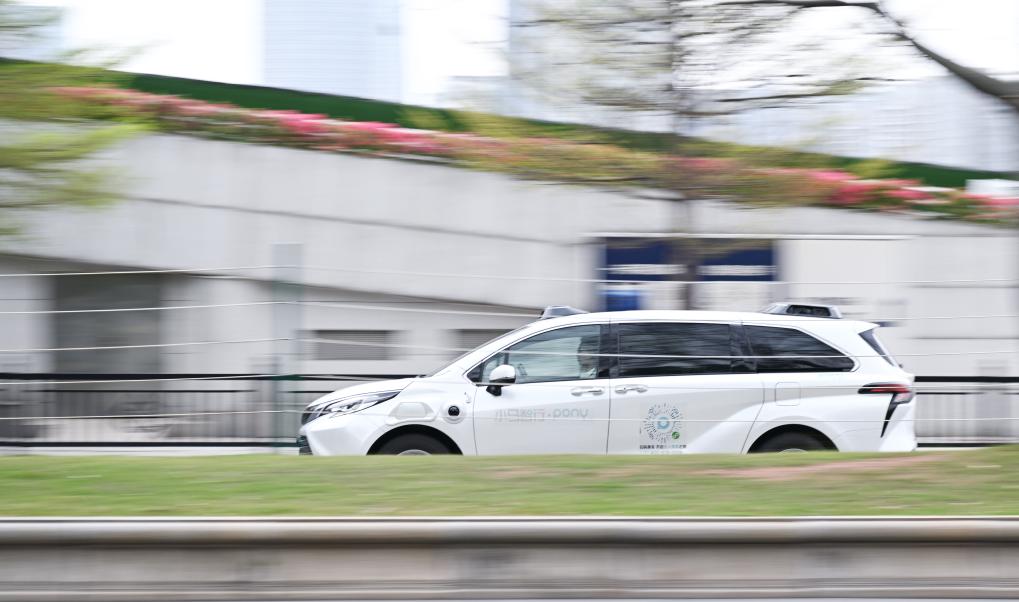
部分车型获准入许可 L3级自动驾驶大规模落地还有多远?
Xin Hua She· 2025-12-18 15:24
新华社记者唐诗凝 新华社北京12月18日电 题:部分车型获准入许可 L3级自动驾驶大规模落地还有多远? 随着L3大幕拉开,产业充满热情,社会充满期待。距离真正的大规模商业化落地还有多远?当前 还有哪些问题需要厘清?记者18日采访了专家。 两者在定位与目标上存在较大差异。 自动驾驶是汽车产业发展、国际科技竞争的重要方向。近日,我国两款L3级自动驾驶车型获附条 件准入许可,引发广泛讨论。 近些年,很多地方都在积极推动智能网联汽车道路测试与示范应用工作,不少车企也都拿到了L3 级自动驾驶"路测牌照"。这和近日工业和信息化部许可的两款产品准入申请有何区别? 刘法旺说,道路测试与示范应用的主体较为多元,既可以是汽车生产企业,也包括科研院所、科技 企业、零部件公司等相关单位,车辆使用测试牌照,核心目标是"以测促研",推动相关功能与性能的持 续完善,属于研发测试阶段。 问题一:获得产品准入许可是否等于L3"量产在即"? 不能画等号。 "根据工业和信息化部、公安部等四部门共同确定的方案,试点工作包括产品准入试点与上路通行 试点两个阶段。"工业和信息化部装备工业发展中心副主任刘法旺告诉记者,车辆获得准入许可,表明 其在自愿申报 ...
市场最前沿|部分车型获准入许可 L3级自动驾驶大规模落地还有多远?
Xin Hua Wang· 2025-12-18 15:11
Core Viewpoint - The recent conditional approval of two L3 autonomous driving models in China marks a significant step in the automotive industry's development and international technological competition, but large-scale commercialization is still a long way off [1] Group 1: Approval and Commercialization - Obtaining product approval does not equate to imminent mass production of L3 vehicles; it indicates readiness for a trial phase under specific conditions [2] - The path to widespread L3 adoption involves a complex interplay of policy, technology, and industry ecosystem, requiring further advancements in legal frameworks, technical capabilities, and user acceptance [2] - The approval of these models will provide valuable practical experience for standard-setting, but significant challenges remain before large-scale commercialization can occur [2] Group 2: Testing and Pilot Programs - There is a clear distinction between testing demonstrations and pilot approvals; the former involves diverse entities and focuses on research and development, while the latter is a critical step towards transitioning from technical validation to mass application [3] - Pilot approvals are limited to automotive manufacturers and aim to explore and refine management systems, processes, regulations, and standards for future large-scale applications [3] Group 3: Safety and Operational Limits - The approved L3 models have specific operational boundaries, including limited road types, vehicle types, and a maximum speed of 50 km/h, reflecting a commitment to safety [6] - The decision to limit speed is based on the understanding that higher speeds increase safety risks and require more stringent performance and safety standards for autonomous systems [7] - The approach aims to start with small-scale, controlled testing environments to gradually optimize technology and accumulate industry experience for safe and orderly application [7] Group 4: Consumer Access - Currently, individual consumers cannot purchase or operate these autonomous vehicles; they are only available for trial use through designated channels like ride-hailing services [8] - The industry aims to conduct small-scale road tests in relatively low-risk areas, with plans to expand applications as safety and operational reliability are validated [8]
广汽昊铂 A800 豪华轿车内饰细节公布:鸿蒙座舱加持,配全球最长 6536mm 双环抱氛围灯
Xin Lang Cai Jing· 2025-12-18 14:25
Core Viewpoint - GAC Aotai A800 luxury sedan has officially launched L3 level autonomous driving road testing, becoming the first model in the country to obtain a license for high-speed testing at 120 km/h [5][35][39] Group 1: Vehicle Features - The GAC Aotai A800 features the HarmonySpace cockpit with a front and rear wrap-around design and a mainless lighting layout, including a touch screen in the rear armrest for vehicle control [2][32] - The vehicle dimensions are 5130 mm in length, 1966 mm in width, and 1500 mm in height, with a wheelbase of 3020 mm [26][56] - It is equipped with a 1.5-liter range extender engine producing 118 kW, paired with lithium iron phosphate batteries from Jiangsu Zhengli New Energy Technology Co., Ltd [27][57] Group 2: Autonomous Driving Technology - The GAC Aotai A800 is equipped with Huawei's QianKun intelligent driving system (HUAWEI ADS 4) and features the new WEWA technology architecture and a comprehensive collision avoidance system (CAS 4.0) [41][56] - The vehicle includes advanced sensing capabilities with a 360° all-weather perception matrix, featuring two 4D millimeter-wave radars and three high-precision solid-state LiDARs, improving detection accuracy from 50 cm to 20 cm [11][41] - The L3 intelligent brain is designed for faster judgment and more precise execution of driving commands [12][42] Group 3: Safety Features - The GAC Starling Safety Guard System incorporates eight redundant designs to ensure stability in extreme scenarios, providing dual insurance through mutual backup [21][53] - The system includes an automatic emergency steering system (AES) to avoid dangers from sudden obstacles [21][53] - The vehicle's safety architecture is aimed at instilling confidence in users regarding smart travel [23][53]

中国智驾驶入“脱手”时代!
Xin Lang Cai Jing· 2025-12-18 14:24
导读 行业普遍认为,L3级是从"辅助驾驶"到"完全自动驾驶"的重要过渡,后续的L4级自动驾驶将实现更大突破——在固定区域内,车辆可完全脱离人类干预, 真正实现无人驾驶。 12月15日,工业和信息化部正式公布了我国首批L3级有条件自动驾驶车型准入许可名单并附条件许可了长安旗下深蓝汽车SL03(L3版)、极狐阿尔法S6(L3 版)这两款车型产品。这是我国L3级自动驾驶从测试阶段迈入商业化应用的关键一步,对高阶智驾进入按法规要求交付、运营并接受监管的新阶段具有重 要意义。 12月15日,工业和信息化部正式公布了我国首批L3级有条件自动驾驶车型准入许可名单并附条件许可了长安旗下深蓝汽车SL03(L3版)、极狐阿尔法S6(L3 版)这两款车型产品。获批车型将分别在重庆指定拥堵路段和北京指定高速路段开展上路试点,最高运行速度分别被限制在50km/h和80km/h。这一举措不 仅是我国L3级自动驾驶从测试阶段迈入商业化应用的关键一步,还意味着高阶智驾不再仅停留于技术展示,而是进入了按法规要求交付、运营并接受监 管的新阶段。 深蓝汽车SL03(L3版)和极狐阿尔法S6(L3版)能够获批搭载L3级自动驾驶功能的智能网联汽车产品 ...


新闻1+1丨首批L3级自动驾驶获批 意味着什么?
Yang Shi Xin Wen Ke Hu Duan· 2025-12-18 05:03
Group 1 - The core point of the article is the approval of the first batch of L3 autonomous driving models in China, indicating a significant step towards the practical application of autonomous driving technology in the country [2][4] - The approval process involved a thorough evaluation, including testing, expert reviews, and safety assessments, which signifies a shift from technical validation to mass production application in the autonomous driving industry [4][7] - The two approved models will be tested in limited areas and scenarios, and they cannot be used by individual car owners but will be operated by designated trial units, allowing consumers to experience autonomous driving through ride-hailing services [9][8] Group 2 - The legal framework surrounding autonomous driving needs to evolve, particularly in distinguishing responsibilities between human drivers and automated systems, especially in L3 to L5 levels of automation [12] - Future regulations should clarify the responsibilities in scenarios where human intervention is required, ensuring a clear distinction between the roles of the driver and the automated system [12] - The industry is moving towards a more refined responsibility allocation mechanism that aligns with the technological advancements in autonomous driving [12]
3800点的博弈,成交额继续缩减
Ge Long Hui· 2025-12-18 05:03
Market Performance - The three major indices showed mixed results, with the Shanghai Composite Index down 0.16%, the Shenzhen Component down 1.85%, and the ChiNext Index down 1.81% [1] - Over 3,600 stocks rose in the two markets, with a total trading volume of 1.05 trillion [1] Sector Highlights - The commercial aerospace concept saw a resurgence, with stocks like Shengyang Technology and Shunhao Co. hitting the daily limit [3] - The consumer sector strengthened, particularly in retail, with Central Plaza and Shanghai Jiubai reaching the daily limit [3] - The IP economy concept was active, with stocks such as Guobo Co. and Sanxiang Impression hitting the daily limit [3] - The AI healthcare concept experienced fluctuations, with Huaren Health rising by 20% and hitting the daily limit [3] - The lithium battery sector faced a decline, with stocks like Hekai Xinyuan and CATL experiencing significant drops [3] Policy and Regulatory Developments - The Central Financial and Economic Affairs Commission emphasized expanding domestic demand as a top priority for next year, focusing on structural changes in consumption [3] - Ant Group's AI health application, Antifufu, saw a surge in downloads, ranking third on the Apple App Store [3] - The Ministry of Industry and Information Technology approved the first batch of L3 autonomous vehicles for mass production, with several automakers announcing they received L3 road licenses [3]

万马科技回应L3级自动驾驶准入:对公司车联网及自动驾驶业务影响积极
Zheng Quan Shi Bao Wang· 2025-12-18 03:36
Core Insights - The approval of the first batch of L3-level conditional autonomous driving vehicle permits in China marks a significant milestone for the market, indicating a new phase for intelligent connected vehicles [2] - The rapid development of the autonomous driving industry is expected to positively impact the company's connected services and autonomous driving-related businesses [1][2] Group 1: Company Developments - The company has established itself as a leading player in the vehicle networking sector, leveraging technological innovations in areas such as dedicated vehicle networks, dual SIM connectivity solutions, and AI operations [1] - The company's connected vehicle business has shown rapid growth, with revenue contribution reaching 46% in the first half of the year [2] - The company’s subsidiary, Youka Technology, has achieved over 17 million connected vehicles, with more than 1.1 million connections overseas, indicating a strong international presence [2] Group 2: Industry Trends - The commercial rollout of L3-level autonomous driving is anticipated to significantly increase the demand for network stability, bandwidth, and low latency services [2] - The recent developments in the autonomous driving sector, including Tesla's Robotaxi testing in Texas, highlight the growing momentum in the industry [1] - The company is enhancing its global business strategy through the "Connection+" plan, collaborating with major global operators to create a unified global SIM solution [2]

浙江世宝再涨超8% 公司称智能转向等产品均适用于L3及以上自动驾驶
Zhi Tong Cai Jing· 2025-12-18 02:03
Group 1 - Zhejiang Shibao (002703) shares increased by over 8%, currently up 6.54% at HKD 4.89, with a trading volume of HKD 1.81 billion [1] - The Ministry of Industry and Information Technology announced the first batch of L3 conditional autonomous driving vehicle permits, with two models designed for urban congestion and highway use to be tested in designated areas of Beijing and Chongqing [1] - Zhejiang Shibao stated on December 17 that it has long-term partnerships with various domestic traditional and new car manufacturers, providing products such as intelligent steering, steer-by-wire, and electric steering columns suitable for L3 and above autonomous driving [1] Group 2 - The release of the L3 autonomous driving permit directory by the Ministry of Industry and Information Technology is expected to facilitate the on-road implementation and popularization of higher-level autonomous driving [1] - This development will promote the marketing and mass production of the company's intelligent steering products [1]
