国产替代

Search documents
黄山谷捷:公司是一家从事功率半导体模块散热基板研发、生产和销售的企业
Zheng Quan Ri Bao Wang· 2025-12-19 11:46
Group 1 - The core viewpoint of the article is that Huangshan Gujie (301581) has successfully achieved "domestic substitution" in the power semiconductor module heat sink substrate industry [1] Group 2 - The company is engaged in the research, production, and sales of power semiconductor module heat sink substrates [1] - The company's products are important components of IGBT power modules [1]
吉林化纤:公司将持续努力不断做强做大做优自己的产品
Zheng Quan Ri Bao Wang· 2025-12-19 11:43
证券日报网讯12月19日,吉林化纤(000420)在互动平台回答投资者提问时表示,公司将持续努力不断 做强做大做优自己的产品,无论是国产替代还是出口市场公司都会积极开拓。 ...

康强电子(002119.SZ):拟拆除公司宁波西厂区北侧旧厂房即资产处置
Ge Long Hui A P P· 2025-12-19 11:13
Core Viewpoint - The company, Kangqiang Electronics, is optimistic about the growth in the semiconductor demand driven by emerging fields such as 5G, artificial intelligence, and new energy vehicles, while also noting the ongoing expansion of the domestic packaging and testing industry and the gradual increase in market share of local enterprises [1] Industry Summary - The domestic packaging and testing industry is expanding due to sustained growth in semiconductor demand from emerging sectors [1] - Local companies are gradually increasing their market share, although high-end products still rely on imports [1] - The Chinese lead frame market is expected to benefit from the accelerated process of domestic substitution and the rising demand for high-end products [1] Company Summary - The company is optimistic about the market demand for high-density etched lead frames and high-precision stamped lead frames [1] - To facilitate future construction projects, the board has approved the demolition of four old reinforced concrete frame factory buildings and various auxiliary steel structures located at the Ningbo West Plant [1] - The management has been authorized to handle all matters related to the demolition of the old factory buildings within the legal framework [1]

【深交所IPO】双欣环保开启申购:聚乙烯醇龙头登陆资本市场,引领绿色材料新趋势
Sou Hu Cai Jing· 2025-12-19 10:26
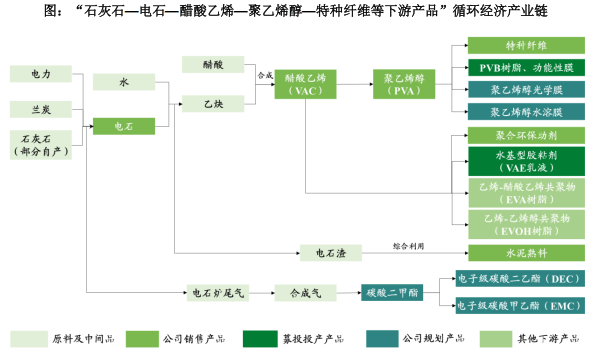
Core Viewpoint - Inner Mongolia Shuangxin Environmental Protection Materials Co., Ltd. is set to launch its IPO with a price-earnings ratio of 16.19 and a share price of 6.85 yuan, marking its entry into the capital market as a leading player in the polyvinyl alcohol (PVA) industry [1] Industry Overview - The PVA industry in China is at a critical turning point for technological upgrades and demand structure optimization, with a projected apparent consumption of 684,000 tons in 2024, representing a year-on-year growth of 4.9%. High-value specialty PVA products are expected to grow at 8.2%, significantly outpacing the 3.5% growth of conventional products [1][6] Company Positioning - Shuangxin Environmental Protection is one of the three major PVA production bases in China, with a full industry chain layout from limestone to specialty fibers. The company is expected to produce 116,900 tons of PVA in 2024, accounting for 13% of the national total, and 7,800 tons of specialty fibers, representing 21% of domestic production [2] Competitive Advantage - The company has established a unique competitive advantage through a circular economy model, utilizing advanced technology in its production processes. It ranks 8th in national carbide production capacity and 5th in commodity carbide sales, with a capacity of 870,000 tons [3] Innovation and R&D - Shuangxin has built a robust R&D system, collaborating with prestigious institutions like Tsinghua University and the Chinese Academy of Sciences. The company has participated in the formulation of 13 national and industry standards and holds 260 authorized patents, demonstrating its commitment to innovation [5] Market Potential - The demand for specialty PVA products is expected to grow significantly, particularly in emerging fields such as pharmaceuticals, optoelectronics, and high-end packaging. The company is actively developing new products to meet this demand, including environmentally friendly additives and PVB resins [6] Policy and Regional Advantages - The company benefits from national policies supporting the development of the western region and its alignment with the "carbon neutrality" goals. Its operations are categorized as encouraged under the industrial structure adjustment guidelines, positioning it favorably in the market [7]

华海清科CMP设备:出货800台
半导体芯闻· 2025-12-19 10:25
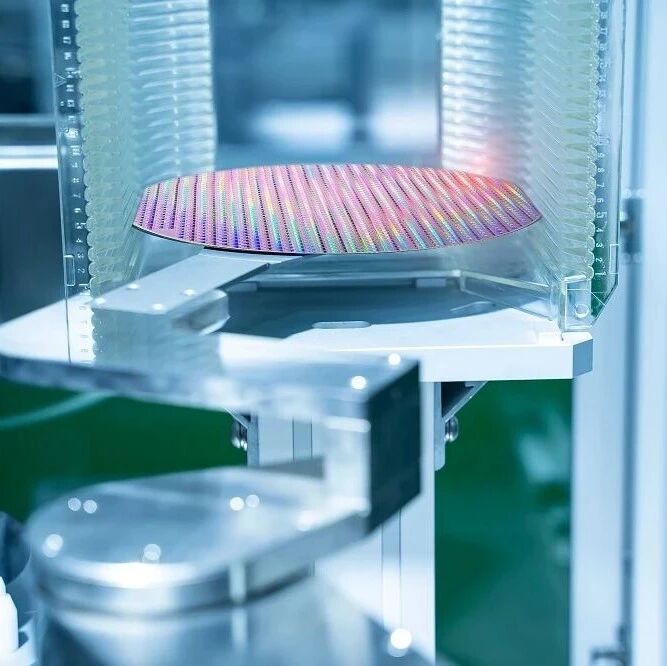
Core Viewpoint - The company, Huahai Qingke, has achieved significant milestones in the Chemical Mechanical Polishing (CMP) equipment sector, with over 800 units delivered, indicating strong market recognition and a leading position in domestic CMP equipment [2]. Group 1: Company Achievements - The company has successfully delivered more than 800 CMP equipment units, including key models like Universal-H300 and Universal-S300, covering major product lines such as logic, 3D NAND storage, and DRAM storage [2]. - The company has penetrated advanced sectors including large wafers, third-generation semiconductors, CIS, MEMS, MicroLED, and advanced packaging, achieving full coverage of domestic integrated circuit manufacturing lines [2]. - The recognition of the company's technology, product maturity, and reliability has enhanced its market influence and solidified its position as a domestic leader in CMP equipment [2]. Group 2: Market Opportunities and Strategies - The advancement of AI technology in algorithm architecture and computing power is creating opportunities for deep development in advanced packaging and chip stacking technologies [3]. - The CMP equipment can synergize with the company's thinning, cutting, and edge polishing equipment, providing comprehensive solutions for advanced packaging and chip stacking, thus expanding future application scenarios [3]. - The company's strategy of "equipment + service" is expected to enhance the volume of key consumables and maintenance services, contributing to stable profit growth [3]. Group 3: Future Directions - The company plans to continue focusing on independent innovation in core technologies and increase R&D investment, targeting breakthroughs in advanced processes and upgrading existing product systems [3]. - The company aims to closely track trends in advanced packaging technologies like HBM and CoWos, promoting product innovation and category expansion to seize opportunities in the integrated circuit industry [3].

打破进口垄断!我国首款飞秒激光角膜屈光治疗机明年上市,近视手术费用有望降50%【附光纤激光器行业市场分析】
Qian Zhan Wang· 2025-12-19 09:58
Core Viewpoint - The launch of China's first femtosecond laser corneal refractive treatment machine, developed by Andun Medical and Anyang Laser, marks a significant milestone in the domestic high-end medical equipment sector, ending the long-standing technological monopoly of foreign brands like Zeiss [2] Group 1: Product Development and Market Impact - The femtosecond laser treatment machine is expected to complete clinical trials by June 2026 and will be 100% domestically controlled in terms of core components, promoting a new phase of domestic substitution in high-end medical equipment [2] - The device features the FemtoYL series ultrafast fiber laser developed by Anyang Laser, with pulse energy stability controlled within 1%, and beam quality significantly surpassing that of foreign counterparts [2] - The anticipated pricing of the new device is expected to be 50% lower than that of imported products, which could lead to a substantial reduction in the costs of femtosecond laser surgeries, making advanced refractive correction technology accessible to a broader patient base [2] Group 2: Industry Context and Trends - The myopia rate among children and adolescents in China reached 52.7% in 2021, with high myopia at 10%, indicating a growing need for effective refractive correction solutions [3] - The SMILE (Small Incision Lenticule Extraction) procedure is currently one of the most advanced corneal refractive surgery methods, but reliance on imported equipment has kept surgery costs high, limiting technology dissemination [4] - The domestic launch of this equipment is expected to fundamentally change the market landscape by significantly lowering costs and enabling high-quality medical resources to reach grassroots levels [4] Group 3: Industry Growth and Competitive Landscape - The Chinese fiber laser market saw a steady increase in sales, reaching 13.59 billion yuan in 2023, with a year-on-year growth of 10.8% [7] - The rise of China's fiber laser industry is characterized by significant advancements, with companies like Anyang Laser, Raycus Laser, and Chuangxin Laser achieving breakthroughs in critical areas, thus enhancing the competitiveness of domestic products [8] - The complete industrial chain of fiber lasers in China has been established, covering core materials, fiber devices, and complete systems, positioning China to compete effectively on a global scale [4][8]

归创通桥(02190):业绩持续快速增长,神经和外周介入管线不断丰富
Guoyuan Securities2· 2025-12-19 09:21
Investment Rating - The report assigns a "Buy" rating with a target price of HKD 28.35 per share, indicating a potential upside of 26% from the current price of HKD 22.50 [5][15]. Core Insights - The company is a leader in the domestic neurovascular and peripheral vascular interventional medical device sector, demonstrating high research and development efficiency with a diverse product line of 73 items, of which 51 are commercialized in China [4][7]. - The company has achieved significant international expansion, with revenue from international markets reaching RMB 15.7 million in the first half of 2025, a year-on-year increase of 36.9% [3][9]. - The company reported a total operating revenue of RMB 482 million for the first half of 2025, representing a year-on-year growth of 31.69%, driven by strong sales in neurovascular and peripheral vascular interventional devices [4][12]. Summary by Sections Investment Highlights - The company has a robust R&D platform that has successfully launched several innovative products, including the Qilin blood flow guiding device and OCT-guided peripheral vascular plaque directional cutting guiding catheter series [4][7]. - The company is actively expanding its international presence, with 22 products commercialized in 27 countries and entering 7 of the top 10 global markets [3][9]. - The company’s revenue growth is supported by the strong performance of its neurovascular and peripheral vascular interventional devices, with neurovascular product sales reaching RMB 304 million, accounting for 63.3% of total revenue [4][12]. Financial Projections - Revenue projections for 2025-2027 are RMB 1.056 billion, RMB 1.377 billion, and RMB 1.797 billion, respectively, with net profits expected to be RMB 223 million, RMB 309 million, and RMB 389 million [5][15]. - The company’s net profit margin is projected to improve significantly, with a forecasted net profit growth of 122.5% in 2025 and 38.6% in 2026 [6][15]. Market Position - The company is well-positioned in the market due to its competitive advantages in domestic substitution and continuous investment in R&D [5][15]. - The optimization of centralized procurement policies by the healthcare authority is expected to further enhance the company's future performance [4][12].
赢在东莞创新创业大赛“莞材行”新材料行业赛圆满收官
Sou Hu Wang· 2025-12-19 09:16
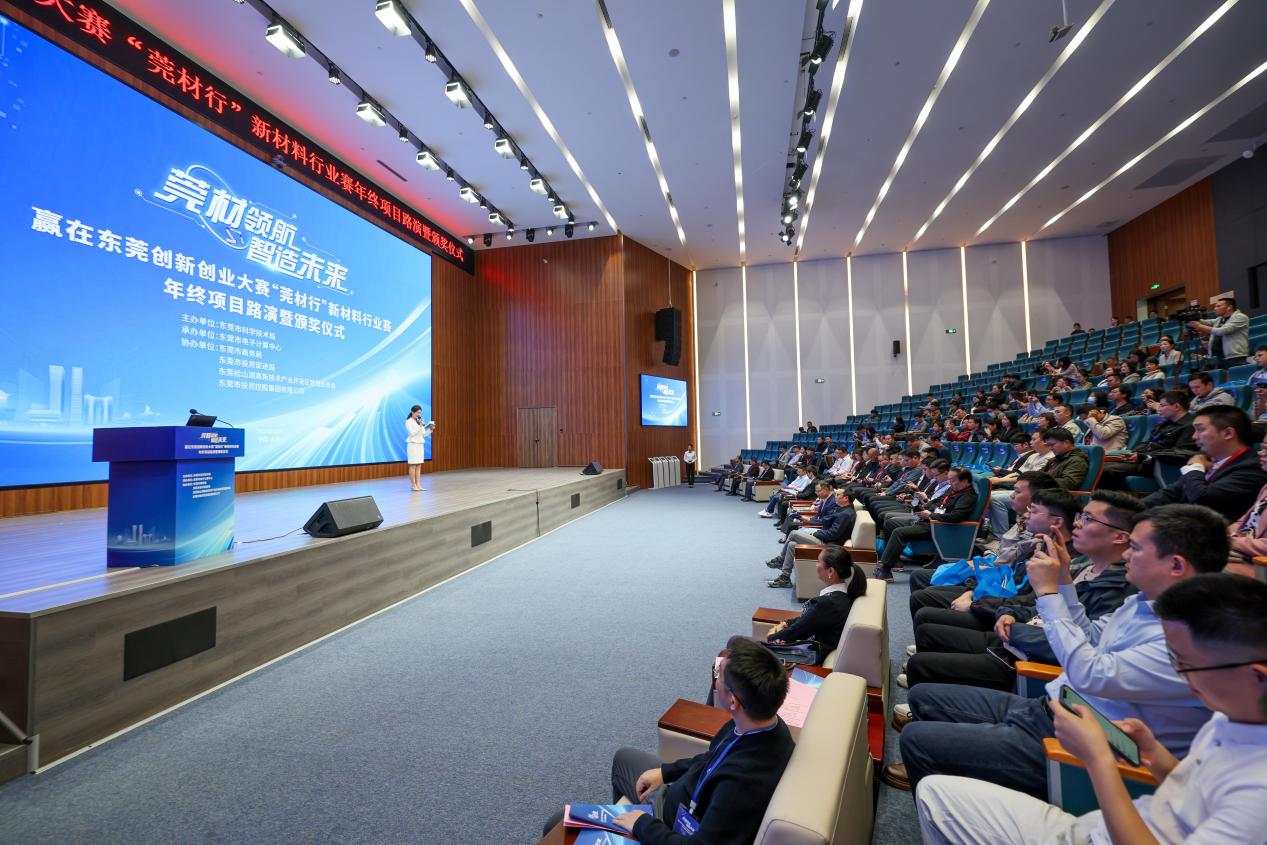
Core Insights - The "2024 Win in Dongguan Innovation and Entrepreneurship Competition" successfully held its year-end project roadshow and award ceremony, focusing on the new materials industry, with many awarded projects expressing a strong intention to establish themselves in Dongguan, thereby injecting new momentum into the local new materials industry [1][9] Group 1: Event Overview - The competition, themed "Dongguan Materials Leading, Intelligent Manufacturing Future," featured 42 cutting-edge new materials projects selected from 206 national entries, covering fields such as new energy, electronic information, biomedicine, and advanced metals [3][4] - The event included policy promotion and project matchmaking to further energize the development of Dongguan's new materials industry cluster [3] Group 2: Project Highlights - Local projects showcased innovations such as the DEAP high dielectric biomimetic material, which requires no mechanical stretching for direct polarization, and the PHA microsphere project targeting the trillion-yuan medical beauty market, seeking 20 million yuan in funding for technology transformation [4] - External projects presented breakthrough technologies, including a Chinese innovation in thermal insulation materials seeking 32 million yuan for funding, aimed at high-end applications in special equipment and aerospace [4][6] Group 3: Awards and Recognition - The award ceremony revealed four first prizes, 16 second prizes, and 17 excellence awards, with first prize winners receiving up to 1 million yuan and second prize winners up to 600,000 yuan in support [7] - Notable first prize projects included a key component technology for high-purity domestic quartz materials and a new generation solid-state battery project focused on high-end electronics, with intentions to establish R&D centers in Dongguan [7][8] Group 4: Policy Support and Future Outlook - Dongguan's Science and Technology Bureau announced comprehensive policy support for awarded projects, including subsidies for R&D investment, support for achievement transformation, talent settlement rewards, and financial assistance [8][9] - The event marked the conclusion of the 2025 "Dongguan Materials Industry Competition," positioning it as an accelerator for high-quality development in the new materials sector, with Dongguan aiming to enhance its innovation ecosystem and support emerging enterprises [9]

尾盘多只热门股突然跳水,什么信号?
天天基金网· 2025-12-19 08:24
| 序号 | J日期 | | | 内节 | | --- | --- | --- | --- | --- | | | | 上涨家数 | 平盘家数 | | | 1 | 2025-12-18 | 2.845 | 199 | 2.416 | | 2 | 2025-12-17 | 3.626 | 198 | 1.635 | | 3 | 2025-12-16 | 1,091 | ୧୧ | 4,302 | | ব | 2025-12-15 | 2,314 | 175 | 2,968 | | 5 | 2025-12-12 | 2,683 | 162 | 2,612 | | દિ | 2025-12-11 | 1.033 | 46 | 4.378 | | 7 | 2025-12-10 | 2,435 | 178 | 2.844 | | 8 | 2025-12-09 | 1.308 | 90 | 4.058 | | ਰੇ | 2025-12-08 | 3,409 | 181 | 1,866 | | 10 | 2025-12-05 | 4,387 | ਰੇਖੋ | 975 | | 11 | 2025-12-04 | 1,455 | ...


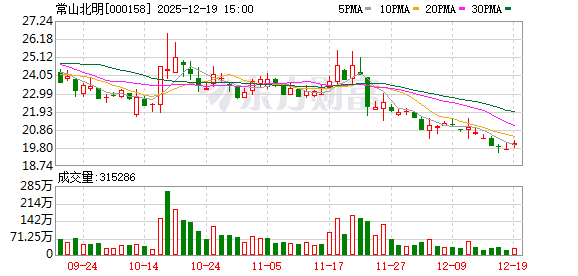
常山北明:公司已取得749项软件著作权和32项发明专利
Zheng Quan Ri Bao· 2025-12-19 08:11
Core Viewpoint - The company is actively engaging in domestic substitution and self-controllable technology, positioning itself as a core strategic partner of Huawei to develop AI industry ecosystems based on Huawei's Kunpeng and Ascend technologies [2] Group 1: Strategic Partnerships - The company collaborates with Huawei to build an AI industry ecosystem around Huawei's Kunpeng and Ascend technologies [2] - It has developed over a hundred joint solutions for various application scenarios involving Kunpeng, Ascend, and Huawei Cloud [2] Group 2: Technological Development - The company has established a development team for Huawei's HarmonyOS, with all members certified as advanced developers [2] - It has obtained 749 software copyrights and 32 invention patents, providing strong support for self-controllable technology [2]