
自动驾驶

Search documents
百度Q3营收312亿,AI增长缓解传统业务压力
3 6 Ke· 2025-11-19 00:30
Core Insights - Baidu's Q3 financial report highlights the significant growth of its AI business, with total AI revenue reaching 9.6 billion yuan, a year-on-year increase of over 50% [1][9] - The report marks the first disclosure of AI business revenue, showcasing the company's strategic pivot towards AI as a growth engine amid pressures on traditional business [1][9] AI Business Performance - AI cloud infrastructure revenue was 4.2 billion yuan, up 33% year-on-year, with high-performance computing subscription revenue increasing by 128% [9] - AI applications generated 2.6 billion yuan, reflecting a 6% year-on-year growth, while AI-native marketing services surged to 2.8 billion yuan, a remarkable 262% increase [9] - The overall AI business is positioned as a transformative force for Baidu, with expectations for continued revenue growth and improved profit margins [9][12] Autonomous Driving Developments - Baidu's autonomous driving service, "Luobo Kuaipao," reported 3.1 million global ride services in Q3, a 212% increase year-on-year, with total rides exceeding 17 million [1][3] - The company aims to expand its autonomous driving operations both domestically and internationally, with plans to increase vehicle deployment in existing cities and enter new markets [3][4] - Baidu's Robotaxi business is expected to focus on expanding order volume, city coverage, and global market penetration in 2026 [6][4] Financial Overview - Baidu's total revenue for Q3 was 31.2 billion yuan, a 7% decline year-on-year, with core revenue also down 7% to 24.7 billion yuan [12][14] - Online marketing revenue fell by 18% to 15.3 billion yuan, while non-online marketing revenue grew by 21% to 9.3 billion yuan, driven by the AI cloud business [12][14] - The company reported a net loss of 11.2 billion yuan for the quarter, compared to a profit of 7.6 billion yuan in the same period last year [14][16] Cost and Investment Strategy - Revenue costs increased by 12% to 18.3 billion yuan, primarily due to rising costs associated with AI cloud and content [13] - Baidu plans to maintain high investment levels in AI, having already invested over 100 billion yuan since the launch of its Wenxin large model [16] - The company anticipates that improvements in asset structure and capital efficiency will enhance profitability as AI business scales [16][17]


小马智行-W(02026)与三一重卡、东风柳汽达成合作,将联合打造第四代自动驾驶卡车家族
智通财经网· 2025-11-19 00:13
Core Insights - The company, Pony.ai, has announced a collaboration with SANY Heavy Truck and Dongfeng Liuzhou Motor to develop a fourth-generation autonomous truck family [1][2] - The fourth-generation autonomous truck system features a platform-based design with strong adaptability for various vehicle models, aiming for mass production of two initial models by 2026 [1] - The new autonomous truck suite will utilize 100% automotive-grade components, significantly reducing the bill of materials (BOM) cost by approximately 70% compared to the previous generation [1] Summary by Sections Collaboration and Development - Pony.ai is partnering with SANY Heavy Truck and Dongfeng Liuzhou Motor to create a new generation of autonomous trucks [1] - The first two models will be based on advanced electric platforms and are expected to enter mass production targeting a scale of around 1,000 units [1] Cost Efficiency and Profitability - The "1+4" platooning autonomous driving scheme is projected to reduce freight costs by 29% per kilometer compared to traditional methods, while increasing freight profit by 195% [1] - This development aims to significantly lower costs and enhance quality and efficiency in freight logistics [1] Safety and Reliability - The fourth-generation autonomous trucks will incorporate a fully redundant design and safety standards, enhancing the safety and reliability of autonomous freight logistics [2] - The system is designed for a lifespan of 20,000 hours and can support up to 1 million kilometers of freight operations [2] - The trucks will undergo rigorous testing to ensure performance in complex road conditions and adverse weather [2] Market Context - China is the largest long-haul truck freight market globally and is accelerating the transformation towards intelligent logistics [2] - Since 2018, Pony.ai has been developing autonomous truck technology, currently operating around 200 autonomous trucks with a freight volume exceeding 10 billion ton-kilometers [2] - The company has obtained various road testing and freight transport operating licenses across multiple regions in China [2]
小马智行-W与三一重卡、东风柳汽达成合作,将联合打造第四代自动驾驶卡车家族
Zhi Tong Cai Jing· 2025-11-19 00:09
Core Insights - The company announced a collaboration with SANY Heavy Truck and Dongfeng Liuzhou Motor to develop a fourth-generation autonomous truck family [1][2] - The fourth-generation autonomous truck system features a platform-based design with strong adaptability for various vehicle models, aiming for mass production of two initial models by 2026 [1] - The new autonomous truck suite will utilize 100% automotive-grade components, significantly reducing the bill of materials (BOM) cost by approximately 70% compared to the previous generation [1] Cost and Efficiency - The "1+4" platooning autonomous driving scheme is projected to reduce freight costs by 29% per kilometer compared to traditional freight, while increasing freight profit by 195% [1] - The mass production of these trucks is expected to facilitate a leap in the industry towards large-scale unmanned commercial operations [1] Safety and Reliability - The fourth-generation autonomous trucks will incorporate a fully redundant design and safety standards, enhancing the safety and reliability of autonomous freight logistics [2] - The system is designed for a lifespan of 20,000 hours and can support up to 1 million kilometers of freight operations [2] - The trucks will undergo rigorous testing to ensure performance in complex road conditions and adverse weather, further improving safety in autonomous freight operations [2] Market Context - China is the largest long-distance truck freight market globally and is accelerating the transformation towards intelligent logistics [2] - Since 2018, the company has been developing autonomous truck technology, currently operating around 200 autonomous trucks with a freight volume exceeding 10 billion ton-kilometers [2]
小马智行-W(02026.HK)与三一重卡、东风柳汽达成合作,将联合打造第四代自动驾驶卡车家族
Ge Long Hui· 2025-11-19 00:05
Core Insights - The collaboration between Xiaoma Zhixing-W and SANY Heavy Truck, Dongfeng Liuzhou Motor aims to develop a fourth-generation autonomous truck family, enhancing the capabilities of autonomous driving technology in logistics [1][2] - The fourth-generation autonomous truck system features a platform-based design, allowing for strong adaptability to various vehicle models, with initial production targeting a scale of around 1,000 units by 2026 [1][2] Company Developments - Xiaoma Zhixing-W's fourth-generation autonomous truck will utilize 100% automotive-grade components, significantly reducing the bill of materials (BOM) cost by approximately 70% compared to the previous generation [1] - The "1+4" platooning autonomous driving scheme is projected to decrease freight costs by 29% per kilometer and increase freight profit by 195%, indicating substantial improvements in logistics efficiency [1] Industry Context - The fourth-generation autonomous trucks will incorporate a fully redundant design and safety standards, enhancing the safety and reliability of autonomous freight logistics [2] - With a design lifespan of 20,000 hours and support for 1 million kilometers of freight operations, these trucks are built to withstand various challenging conditions [2] - China, being the largest long-haul truck freight market globally, is accelerating its transition towards smart logistics, with Xiaoma Zhixing having deployed around 200 autonomous trucks since 2018, transporting over 10 billion ton-kilometers [2]
AI Day直播 | WorldSplat:用于自动驾驶的高斯中心前馈4D场景生成
自动驾驶之心· 2025-11-19 00:03
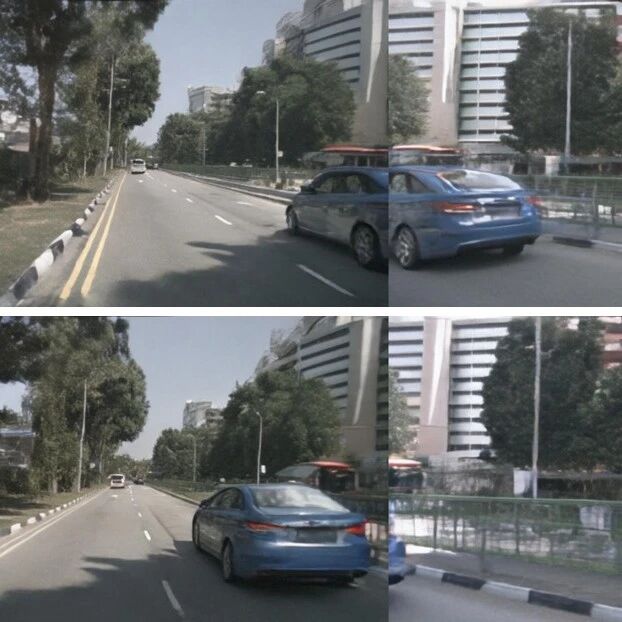
Core Viewpoint - The article discusses the advancements in driving scene generation and reconstruction technologies, highlighting the introduction of WorldSplat, a novel feed-forward 4D driving scene generation framework that effectively generates consistent multi-trajectory videos [3][8]. Summary by Sections Driving Scene Generation and Reconstruction - Recent progress in driving scene generation and reconstruction technologies shows significant potential in enhancing autonomous driving system performance by generating scalable and controllable training data [3]. - Existing generation methods primarily focus on synthesizing diverse and high-fidelity driving videos but struggle with 3D consistency and sparse viewpoint coverage, limiting their ability to support high-quality new viewpoint synthesis (NVS) [3]. Introduction of WorldSplat - WorldSplat is introduced as a solution to the challenges between scene generation and reconstruction, developed by research teams from Nankai University [3]. - The framework employs two key steps: (1) it integrates a multi-modal information fusion 4D perception latent diffusion model to generate pixel-aligned 4D Gaussian distributions in a feed-forward manner; (2) it utilizes an enhanced video diffusion model to optimize new viewpoint videos rendered from these Gaussian distributions [3]. Experimental Results - Extensive experiments conducted on benchmark datasets demonstrate that WorldSplat can effectively generate high-fidelity, spatiotemporally consistent multi-trajectory new viewpoint driving videos [3][8].
自动驾驶之心企业服务与咨询正式推出啦!
自动驾驶之心· 2025-11-19 00:03
Core Insights - The article highlights the launch of enterprise services by the company "Automated Driving Heart," which has transitioned from focusing on the consumer market to addressing business needs in the autonomous driving sector [1][2]. Group 1: Company Services - The company has developed nearly 50 courses related to autonomous driving and embodied technology over the past two years, providing resources for learning, job seeking, and work [1]. - The newly launched enterprise services include brand promotion, industry consulting, technical training, and team upgrades [5]. - The company has accumulated nearly three years of industry consulting and training experience, along with a substantial expert talent pool and a fan base of nearly 400,000 across platforms [1]. Group 2: Partnerships and Collaborations - The company has established partnerships with various domestic universities, vocational colleges, Tier 1 suppliers, OEMs, and embodied robotics companies, aiming to reach more companies in need of upgrades [2].

做自动驾驶VLA的这一年
自动驾驶之心· 2025-11-19 00:03
Core Viewpoint - The article discusses the emergence and significance of Vision-Language-Action (VLA) models in the autonomous driving industry, highlighting their potential to unify perception, reasoning, and action in a single framework, thus addressing the limitations of previous models [3][10][11]. Summary by Sections What is VLA? - VLA models are described as multimodal systems that integrate vision, language, and actions, allowing for a more comprehensive understanding and interaction with the environment [4][7]. - The concept originated from robotics and was popularized in the autonomous driving sector due to its potential to enhance interpretability and decision-making capabilities [3][9]. Why VLA Emerged? - The evolution of autonomous driving can be categorized into several phases: modular systems, end-to-end models, and Vision-Language Models (VLM), each with its own limitations [9][10]. - VLA models emerged as a solution to the shortcomings of previous approaches, providing a unified framework that enhances both understanding and action execution [10][11]. VLA Architecture Breakdown - The VLA model architecture consists of three main components: input (multimodal data), processing (integration of inputs), and output (action generation) [12][16]. - Inputs include visual data from cameras, sensor data from LiDAR and RADAR, and language inputs for navigation and interaction [13][14]. - The processing layer integrates these inputs to generate driving decisions, while the output layer produces control commands and trajectory planning [18][20]. Development History of VLA - The article outlines the historical context of VLA development, emphasizing its role in advancing autonomous driving technology by addressing the need for better interpretability and action alignment [21][22]. Key Innovations in VLA Models - Recent models like LINGO-1 and LINGO-2 focus on integrating natural language understanding with driving actions, allowing for more interactive and responsive driving systems [22][35]. - Innovations include the ability to explain driving decisions in natural language and to follow complex verbal instructions, enhancing user trust and system transparency [23][36]. Future Directions - The article raises questions about the necessity of language in future VLA models, suggesting that as technology advances, the role of language may evolve or diminish [70]. - It emphasizes the importance of continuous learning and innovation in the field to keep pace with technological advancements and user expectations [70].

农业无人机走向自动驾驶
第一财经· 2025-11-18 23:58
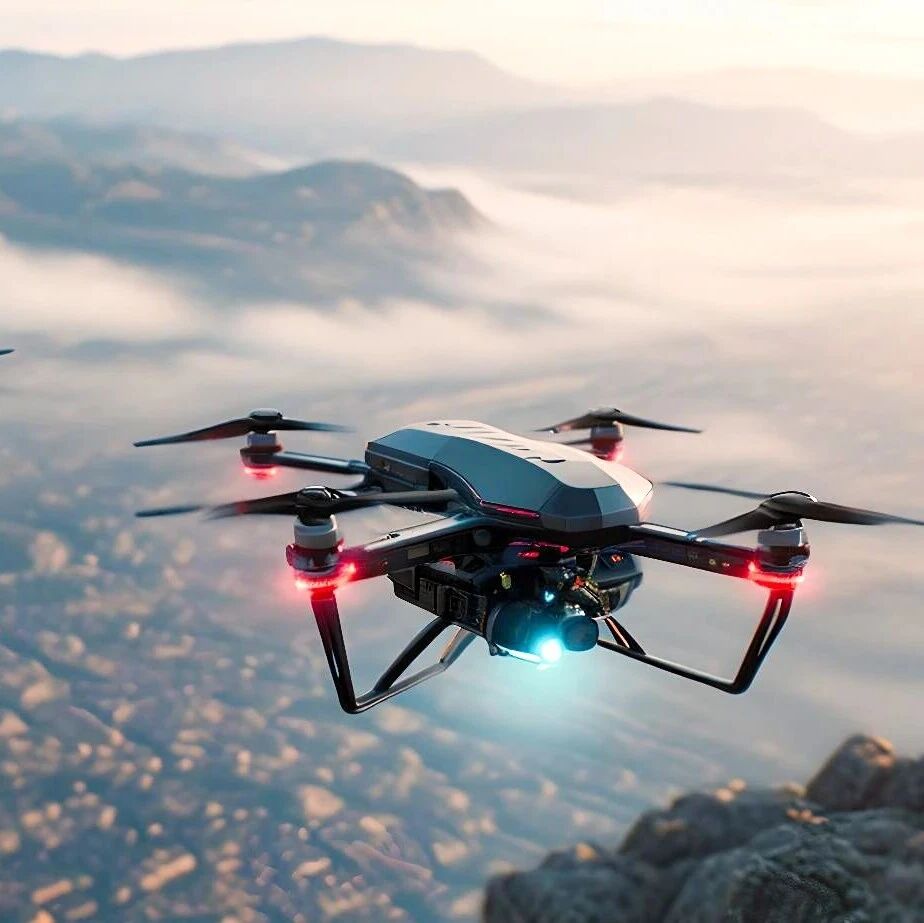
Core Viewpoint - The article discusses the advancements in agricultural drones, particularly focusing on DJI's new products that have reached L3 (conditional automation) levels, highlighting the integration of AI and sensor technologies in enhancing automation and market penetration in agriculture [3][4][7]. Group 1: Technological Advancements - DJI's agricultural drones have achieved L3 automation, allowing for fully automated operations in specific scenarios [7]. - The new T100S drone can carry loads of 90 kg and 95 kg, with production capabilities of 400-500 units per day [6]. - The flight hours of agricultural drones now account for 98% of the entire drone industry, indicating a significant increase in usage [6]. Group 2: Market Penetration and Challenges - DJI's annual shipments of agricultural drones have increased from 2,000 units a decade ago to 200,000 units this year, with a domestic subsidy of approximately 62,000 units out of 70,000 [6][11]. - The penetration rates for different crops show that rice has a 60% penetration, while orange trees have only 40%, primarily due to obstacles like power lines [11][12]. - The average operational frequency for corn in Inner Mongolia is only 1.8 times, significantly lower than the 9.5 times for rice and wheat, indicating a need for increased usage [12]. Group 3: Sensor Technology and AI Integration - The integration of multiple sensors, including visual sensors, laser radar, and millimeter-wave radar, is essential for navigating complex agricultural environments [8]. - AI has been incorporated into mobile applications for pest identification and medication recommendations, enhancing the operational efficiency of drones [9]. Group 4: International Market Expansion - DJI's primary market remains domestic, with significant potential in Latin America and East Asian countries, but faces regulatory challenges in Europe regarding chemical spraying and pilot certification [13]. - The need for adaptation to local regulations and practices presents a barrier to expanding into international markets [13].
农业无人机走向自动驾驶
Di Yi Cai Jing Zi Xun· 2025-11-18 23:40
Core Insights - DJI has launched new agricultural drones that have reached L3 (conditional automation) level, indicating significant advancements in automation and technology in the agricultural sector [1][3] - The penetration rate of agricultural drones in China has reached a certain level, but manufacturers need to address technical and market expansion challenges to capture new markets [1][6] Group 1: Product Development and Technology - The new DJI agricultural drones are capable of carrying loads of 90 kg and 95 kg, with production lines capable of assembling 400-500 units daily [2] - Agricultural drones have seen an increase in flight hours, accounting for 98% of the entire drone industry, with DJI and XAG holding nearly 80% of the global market share [2] - The number of agricultural drones shipped by DJI has increased from 2,000 units ten years ago to 200,000 units this year [2] Group 2: Automation and Safety Challenges - Agricultural drones have progressed from L0 to L3 automation levels, with the latest models capable of fully automated operations in specific scenarios [3][4] - Safety concerns arise from potential collisions with power lines and other obstacles, necessitating the integration of multiple sensors for obstacle detection [3][4] - The use of AI in agricultural drones has been introduced to assist in pest identification and medication recommendations [4] Group 3: Market Penetration and Expansion - DJI's penetration rates in specific crops are approximately 60% for rice and 40% for navel oranges, indicating room for growth in other areas [6][7] - The average usage frequency of drones in major corn-producing regions is only 1.8 times, significantly lower than in rice and wheat areas, highlighting the need for increased usage [7] - Challenges in entering overseas markets include regulatory requirements and varying local practices, which necessitate tailored approaches for different regions [8]
特斯拉(TSLA.US)自动驾驶业务再下一城,获准在亚利桑那州运营Robotaxi
智通财经网· 2025-11-18 23:13
Core Viewpoint - Tesla has received approval to offer autonomous ride-hailing services in Arizona, marking a significant step in its expansion of the robotaxi business [1] Group 1: Regulatory Approval - The Arizona Department of Transportation granted Tesla a transportation network company license on November 17, allowing the use of autonomous driving systems for public vehicle operation with human safety operators [1] - This license facilitates Tesla's plans to provide ride-hailing services in the Phoenix area, building on its existing permits for testing autonomous vehicles [1] Group 2: Business Expansion - Tesla's focus is shifting towards autonomous driving, robotics, and artificial intelligence, with investors closely monitoring the pace of its robotaxi business expansion [1] - The company is already offering driverless taxi services in Austin and ride-hailing services in the San Francisco Bay Area, which are not classified as fully autonomous [1] - CEO Elon Musk has stated the goal to launch ride-hailing services by the end of the year in Arizona, Nevada, and Florida [1]
