
银发经济

Search documents
紫金农商银行:聚焦银发客群 深耕养老金融
Xin Hua Ri Bao· 2025-08-25 07:35
□ 冯 旭 近年来,为有效满足"银发"客群全方位、多层次的金融服务需求,紫金农商银行秉持金融服务的政治 性、人民性,以网点适老化改造、产品适老化倾斜、服务适老化延伸为抓手,统筹推进养老金融综合服 务,用情用力书写养老金融大文章。 网点适老化升级,护航银龄"有所享"。厅堂外设置无障碍通道,增添无障碍扶手,张贴醒目的适老化指 引标识和紧急联络电话;厅堂内配备老花镜等便民服务设施;开通老年客户"绿色服务"通道,开设"爱 心窗口",敬老服务专员全程提供"陪伴式"服务;打造银发金融服务专区、爱心驿站…… 截至7月末,该行135家营业网点全部完成适老化硬件改造,建成"农商·苏服办"营业网点135家,占比 100%,让老年客户办理金融、政务业务"就近办";建成提供适老化服务的农村普惠金融服务点384家, 让老年群体"足不出村"享受综合金融服务;累计创建省级适老网点9家,打造适老服务的"紫金样本"。 产品适老化倾斜,安享晚年"有所依"。该行以"产品+服务"相结合的模式将养老资金管理与老年风险管 理相结合,逐步融入长寿风险管理、养老社区服务、医疗看护服务等,将养老服务模式从金融产品向专 属养老服务转型升级。 同时,结合实际优化 ...

老年人正在挤满上海商场
投资界· 2025-08-25 07:27
Core Viewpoint - The article discusses the emergence of the "silver economy" in Shanghai's shopping malls, highlighting how they are increasingly catering to the elderly population, who are becoming significant consumers due to their social needs and financial stability [5][21]. Group 1: Observations in Shopping Malls - Shopping malls are witnessing a demographic shift with a noticeable presence of elderly individuals, who are actively engaging in social activities and enjoying their time in these spaces [6][7]. - Elderly consumers are not just passive participants; they are seeking social interactions, discussing travel, investments, and enjoying leisure activities like karaoke [9][10]. - Malls are adapting by providing comfortable spaces for the elderly, including rest areas and dining options that cater to their preferences, leading to increased foot traffic during weekdays [10][14]. Group 2: Financial Capability of the Elderly - The median retirement pension in Shanghai has reached over 5,000, with the top 10% receiving more than 8,000, indicating a strong financial position compared to many working individuals [15][16]. - The financial independence of retirees, free from housing and child-rearing burdens, allows them to spend more freely on leisure and social activities [16][19]. - Many elderly individuals are also participating in part-time jobs, contributing to their income and enhancing their social engagement [19][20]. Group 3: Market Adaptation and Strategy - Shopping malls in Shanghai are responding to intense competition by targeting the elderly demographic, recognizing their higher disposable income and willingness to spend [21][22]. - The shift in consumer demographics is prompting malls to redesign their spaces and offerings, moving away from traditional retail to more experience-oriented services that appeal to both the elderly and younger consumers [22][28]. - The silver economy is expected to grow significantly, with projections indicating that by 2038, the retired population may exceed the working population, necessitating further adaptation in retail strategies [24][27].


医疗与消费周报:处方药销售洞察:精准把控灵活应对-20250825
Huafu Securities· 2025-08-25 06:18
Group 1 - The report highlights that five out of six sub-industries in the pharmaceutical index recorded positive returns, indicating a strong market performance [2][3] - The prescription drug market shows significant regional differences, with high order volumes in eastern coastal and densely populated provinces, while western regions like Tibet and Qinghai have low order volumes. For instance, Hebei province accounts for 9.2% of total orders, while Tibet only accounts for 0.1% [8][9] - There is an increasing proportion of female consumers in the prescription drug market, with purchasing times concentrated between 9 AM and 11 AM. This trend suggests that companies should tailor their marketing strategies and optimize operational hours to enhance sales [8][9] Group 2 - The demand for chronic disease medications remains prominent and stable, with primary hypertension and type 2 diabetes medications accounting for 9.7% and 4.3% of prescription drug consumers' conditions, respectively [9] - The report indicates that the prescription drug market presents both opportunities and challenges, with some drug sales growth providing development opportunities for pharmaceutical companies, while intense market competition and changing policy environments pose challenges [9] - The pharmaceutical industry is encouraged to leverage artificial intelligence and focus on innovation to adapt to market changes and enhance competitiveness [21][22]
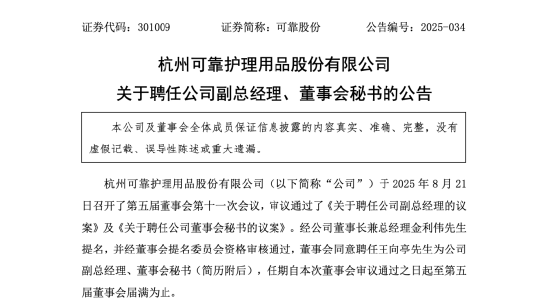
可靠股份聘王向亭任副总兼董秘!20年资本经验加持,上半年营收5.49亿增5.39%,股价年内涨48.56%
Xin Lang Zheng Quan· 2025-08-25 05:38
Core Viewpoint - The appointment of Wang Xiangting as the new Deputy General Manager and Board Secretary of Reliable Co., Ltd. is seen as a significant step towards enhancing the company's governance structure and capital operation capabilities, which is expected to accelerate its development in the adult care products sector [2][4]. Group 1: Management Changes - Wang Xiangting has nearly 20 years of experience in large manufacturing and technology companies, particularly in capital operations and corporate governance [2]. - His previous roles include positions at Guangfa Securities, Hengdian Group, Zhejiang Wanma Cable Co., and Zhejiang Jiemai Electronics, where he was involved in multiple capital operations and the establishment of information disclosure systems [2]. Group 2: Company Performance - Reliable Co., Ltd. reported a total operating income of 549 million yuan for the first half of 2025, representing a year-on-year increase of 5.39%, and a net profit attributable to shareholders of 28 million yuan, up 21.81% year-on-year [4]. - The company has shown robust profitability despite fluctuations in raw material prices and changes in consumer demand, attributed to ongoing product structure optimization and an increased focus on mid-to-high-end products [4]. Group 3: Market Position and Strategy - Reliable Co., Ltd. is a leading manufacturer in the adult diaper industry and has been involved in drafting national standards for adult diapers and pads, maintaining a strong competitive position and industry influence [4]. - The company is expanding its "Reliable Welfare" brand to focus on the silver economy, innovating products and applications for elderly care in various settings, which opens up greater growth opportunities [5]. Group 4: Shareholder Returns - In 2024, Reliable Co., Ltd. implemented a cash dividend of 0.70 yuan per share (before tax), totaling 18.6497 million yuan, reflecting the company's commitment to providing long-term returns to shareholders [4]. Group 5: Stock Performance - As of August 25, the stock price of Reliable Co., Ltd. was 15.80 yuan per share, with a year-to-date increase of 48.56%, indicating market confidence in the company's long-term strategic direction and industry prospects [5].
上海商场最大金主,变成老年人了
创业邦· 2025-08-25 03:28
Core Viewpoint - The article discusses the emerging trend of shopping malls in Shanghai catering to the elderly population, highlighting their increasing social engagement and spending power, which presents a significant opportunity for businesses in the retail sector [5][12][70]. Group 1: Elderly Consumer Behavior - Shopping malls are witnessing a surge in elderly visitors, who are actively socializing and enjoying leisure activities during weekdays [12][14]. - Elderly individuals are not just passive consumers; they are engaging in various activities such as dining, socializing, and even participating in entertainment like KTV [11][18]. - The elderly demographic is increasingly adopting younger consumption habits, including trying new foods and participating in gaming activities [24][29]. Group 2: Business Strategies - Malls are adapting their business models to attract elderly consumers by providing social spaces and tailored services, such as discounts and special events [20][34]. - Specific promotions, like the "9.9畅饮" event at IKEA, have successfully drawn elderly customers, creating a vibrant social atmosphere [20][31]. - Retailers are implementing targeted discounts for seniors, which have led to significant increases in sales for participating brands [34][35]. Group 3: Economic Context - The median retirement pension in Shanghai has reached over 5,000, with the top 10% receiving more than 8,000, indicating a strong financial base for elderly consumers [36][37]. - The financial stability of retirees, combined with reduced living expenses, allows them to spend more freely on leisure and entertainment [39][40]. - The labor market is also benefiting from retirees taking on part-time jobs, which further enhances their disposable income [40][45]. Group 4: Market Trends - The retail landscape in Shanghai is becoming increasingly competitive, with a high density of shopping centers leading to a need for malls to diversify their target demographics [55][56]. - The aging population is projected to grow significantly, with estimates suggesting that by 2038, retired individuals may outnumber the working population, creating a substantial market for elderly-focused services [61][62]. - The concept of "silver economy" is gaining traction, with businesses recognizing the potential of catering to the needs and preferences of older consumers [60][67].

养老机器人产品形态日益丰富
Xiao Fei Ri Bao Wang· 2025-08-25 02:37
Group 1: AI Empowerment for SMEs - The Ministry of Industry and Information Technology has issued a notice to solicit typical application scenarios of artificial intelligence for small and medium-sized enterprises (SMEs) for the year 2025, focusing on innovative product services and optimizing business processes [1] Group 2: Aging Population and AI Demand - China is experiencing accelerated population aging, with the elderly population aged 60 and above reaching 310 million by the end of 2024, accounting for 22% of the total population [2] - The "silver economy" is projected to reach 30 trillion yuan by 2035, indicating a growing market for AI applications in elderly care [2] Group 3: Diversification of Elderly Care Robots - The 2025 World Robot Conference highlighted the potential applications of humanoid robots, particularly in life assistance, companionship, and daily care, driven by the aging population [3] - Various robots showcased at the conference, including home care robots and rehabilitation robots, demonstrate the expanding application scenarios in elderly care [6] Group 4: Market Prospects and Policy Support - The Chinese government is actively promoting the development of elderly care robots, having established the world's first international standard for such robots and initiating pilot projects for smart elderly care service robots [7] - The Ministry of Industry and Information Technology and the Ministry of Civil Affairs have launched a project to validate the application of home care robots in at least 200 households from 2025 to 2027 [7] - The market for elderly care robots is expected to grow significantly as the aging population increases and new AI technologies mature, with a projected core industry scale of over 50 billion yuan by 2027 [7]


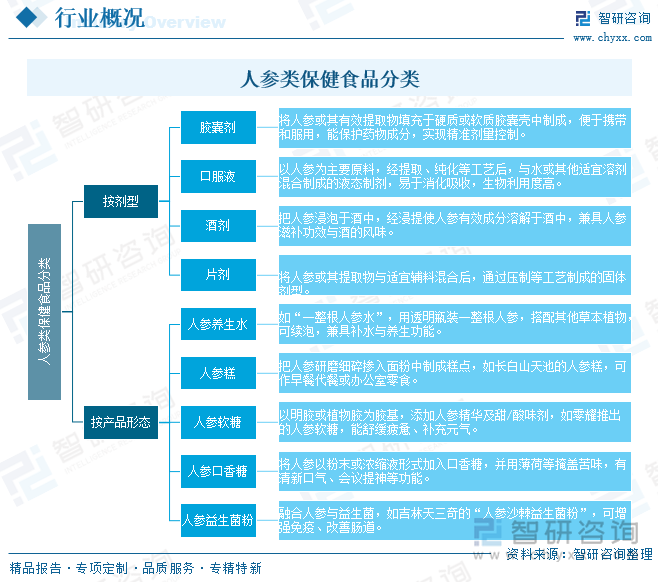
研判2025!中国人参类保健食品行业市场政策、产业链、发展现状、竞争格局及发展趋势分析:市场竞争日趋激烈[图]
Chan Ye Xin Xi Wang· 2025-08-25 01:34
Overview - The demand for health food, particularly ginseng-based products, is increasing due to rising living standards and health awareness among consumers. Ginseng is recognized for its various health benefits, making it increasingly popular among consumers [1][13] - The aging population, referred to as the "silver economy," is driving demand for health products, with ginseng health foods meeting their wellness needs. Additionally, younger consumers are showing interest in ginseng products, such as ginseng gummies and coffee, contributing to market growth. The demand for ginseng health foods in China is projected to reach 17,548.8 million boxes/bottles/cans by 2024, with a market size of 12.593 billion yuan [1][13] Market Policies - The Chinese government has implemented various policies to support the development of the health food industry, including ginseng products. These policies aim to encourage and regulate the industry, creating a favorable environment for growth [4][6] Industry Chain - The ginseng health food industry consists of an upstream segment that includes ginseng, auxiliary materials, production equipment, and packaging materials. The midstream involves research and production, while the downstream encompasses sales channels such as supermarkets, pharmacies, and e-commerce platforms [7][9] Development Status - The market for ginseng health foods is expanding, driven by increased consumer interest and the aging population. The demand is expected to grow significantly, with a projected market size of 12.593 billion yuan by 2024 [1][13] Competitive Landscape - The number of companies in the ginseng health food sector is rapidly increasing, leading to heightened competition. As of August 2025, there are 1,129 approved ginseng health food products, with 1,089 from domestic companies and 40 from imports [15] - Key players in the industry include Yisheng Pharmaceutical, Tongrentang, and Jilin Aodong, among others. Yisheng Pharmaceutical has diversified its operations across the ginseng industry chain, while Jilin Aodong has developed a comprehensive health product portfolio [17][20] Future Trends - The ginseng health food market is expected to see increased product diversification, with new consumption methods and snack-like products emerging. Brands will focus on enhancing their image and marketing strategies to stand out in a competitive landscape [22]
央行将开展6000亿元MLF操作;鲍威尔暗示美联储可能降息
Mei Ri Jing Ji Xin Wen· 2025-08-24 23:34
Group 1: Central Bank Operations - The People's Bank of China will conduct a 600 billion MLF operation on August 25, 2025, to maintain liquidity in the banking system [1] - This operation aims to stabilize market interest rates and support the development of the real economy [1] Group 2: Elderly Finance in Guangdong - Guangdong is accelerating the introduction of provincial-level guiding documents for elderly finance, indicating a strong governmental focus on the elderly industry [2] - The establishment of a "white list" financing mechanism in the elderly sector is intended to inject strong momentum into the coordinated development of elderly finance and the silver economy [2] Group 3: Cross-Border Payment in Zhejiang - Zhejiang supports cross-border payment institutions in applying for global payment licenses, reflecting a forward-looking and open attitude towards digital trade and services [3] - The policy aims to encourage enterprises to achieve international development through cross-border business, enhancing the global competitiveness of trade services [3] Group 4: Electronic Industry Market Capitalization - The A-share market capitalization of the electronic sector reached 11.54 trillion yuan, surpassing that of the banking sector, marking a historical high [4] - The strong performance of technology stocks is driving optimism about the future development of the electronic industry [4] Group 5: Federal Reserve's Open Stance on Rate Cuts - Federal Reserve Chairman Jerome Powell indicated an open attitude towards potential interest rate cuts, citing risks to employment growth and economic slowdown [5] - Despite concerns about inflation, rising risks in the labor market may lead the Fed to consider rate cuts in September [5]

解码银发经济: 在需求迭代中挖机遇 在产业升级中提能级
Zheng Quan Ri Bao· 2025-08-24 22:50
Group 1: Market Potential and Growth - The elderly population in China is expected to exceed 400 million by 2035, indicating a rapid aging process and significant market potential for the silver economy, projected to reach 30 trillion yuan [1] - In 2025, the sales revenue of elderly care services, elderly-friendly household services, and elderly social care services is expected to grow by 40.9%, 14.1%, and 8.8% respectively, significantly outpacing the average growth rate of the service industry [2] - As of now, 49,640 new elderly care-related enterprises have been established in China this year, with a total of 596,100 elderly care enterprises, reflecting strong market recognition of the silver economy sector [1][2] Group 2: Technological Integration - The role of technology, particularly data technology, is becoming increasingly crucial in the elderly care sector, transitioning from an auxiliary tool to a core driving force [3] - Smart monitoring devices, such as health monitoring equipment from Lepu, are being utilized to track vital signs of the elderly, providing real-time data and alerts for medical emergencies [3] Group 3: Policy Support and Capital Investment - Government policies are actively promoting the development of elderly care services, with financial incentives such as construction and operational subsidies for new elderly care institutions [4] - The capital market is increasingly focused on the silver economy, with 56 related enterprises raising 216.43 billion yuan through initial public offerings, and 17 elderly-themed bonds raising 11.82 billion yuan [5][6] Group 4: Consumer Awareness and Market Dynamics - Despite the positive growth trajectory, consumer awareness remains a significant barrier to unlocking the full potential of the silver economy, with many elderly individuals lacking understanding of healthcare products [6] - Companies are adopting experiential marketing and educational initiatives to enhance elderly consumers' understanding of medical products, while local governments are facilitating access to elderly-friendly products through subsidies [7]

解码银发经济:在需求迭代中挖机遇 在产业升级中提能级
Zheng Quan Ri Bao· 2025-08-24 15:59
Group 1: Market Potential and Growth - The aging population in China is expected to exceed 400 million by 2035, leading to a significant market potential for the silver economy, projected to reach 30 trillion yuan [1] - In 2025, the sales revenue of elderly care services is expected to grow significantly, with increases of 40.9% for disability care services, 14.1% for elderly home services, and 8.8% for social care services, all outpacing the national average [2] - The number of newly established elderly care-related enterprises in China has reached 49,640 this year, with a total of 596,100 enterprises in the sector, indicating strong market recognition [1][2] Group 2: Technological Integration - The role of technology in elderly care is evolving from an auxiliary tool to a core driver, with data technology being integrated into care services [3] - Health monitoring devices from companies like Lepu are enabling real-time health data tracking for the elderly, improving emergency response times [3] - The introduction of smart care devices is addressing traditional challenges in elderly safety monitoring, indicating a shift towards intelligent elderly care solutions [3] Group 3: Policy Support and Capital Investment - Government policies are providing substantial support for the elderly care sector, including subsidies for new care facilities and operational support based on occupancy [4] - Capital markets are increasingly focused on the silver economy, with 56 related companies raising 216.43 billion yuan through public offerings, and 17 elderly care-themed bonds raising 11.82 billion yuan [5] - The establishment of 1,190 elderly care-themed funds, with a total scale exceeding 1.45 trillion yuan, is facilitating investment in specialized areas like smart elderly care [5] Group 4: Consumer Awareness and Market Dynamics - Despite positive growth, consumer awareness remains a challenge, with many elderly individuals lacking understanding of healthcare products and services [6] - Companies are addressing this through experiential marketing and educational initiatives to enhance elderly consumers' understanding of medical knowledge [7] - The shift from supply-driven to demand-driven market dynamics is expected to stimulate further growth in the silver economy, as consumer awareness of quality and smart elderly care increases [7]