
主流媒体系统性变革

Search documents
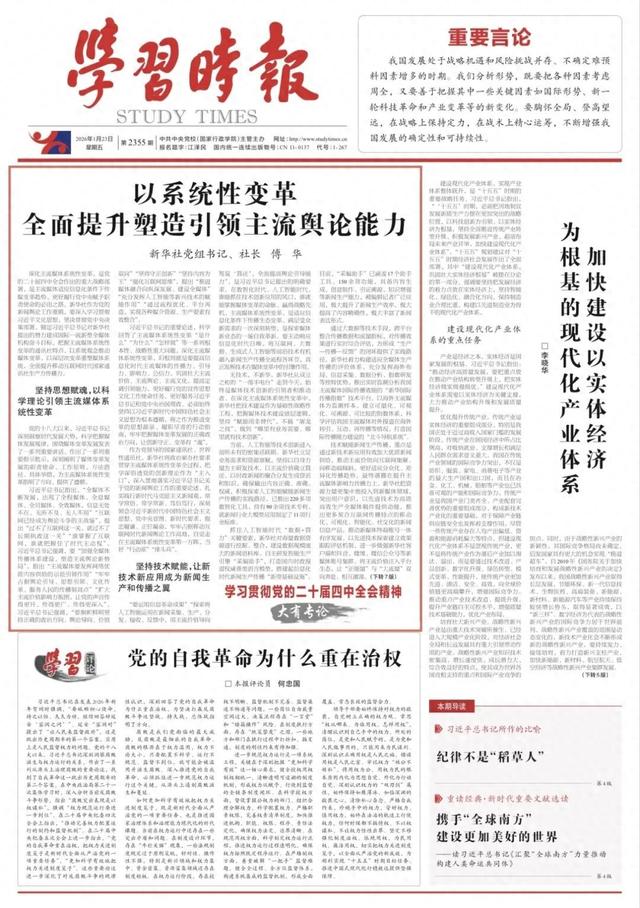
傅华:以系统性变革全面提升塑造引领主流舆论能力
Bei Jing Ri Bao Ke Hu Duan· 2026-01-22 23:56
Core Viewpoint - The systematic transformation of mainstream media is a significant strategic deployment made by the 20th Central Committee of the Communist Party, aimed at adapting to the trends of media reform under information technology conditions and fulfilling the responsibilities assigned by the Party Central Committee [4][6]. Group 1: Systematic Transformation of Mainstream Media - The transformation is essential for enhancing the communication power, guiding capability, influence, and credibility of mainstream media in the information age [8]. - The goal is to solidify and expand mainstream values, public opinion, and culture, while better serving the governance of the Party and the country [8][18]. - The transformation will involve a deep integration of new technologies, such as artificial intelligence, into all aspects of news production and dissemination [9][10]. Group 2: Technological Empowerment - The application of new technologies is crucial for improving the quality of news supply and adapting to the trends of diversified and differentiated communication [12]. - Xinhua News Agency has developed over 220 digital tools and holds more than 90 technical patents to enhance news production efficiency and accuracy [10]. - The agency aims to integrate cutting-edge technologies like big data and AI into the entire news production process, establishing a new infrastructure for news dissemination [10][11]. Group 3: Research and Investigation - Investigative research is highlighted as the core competitive advantage of mainstream media, essential for producing high-quality news content [13][14]. - The agency emphasizes the importance of thorough investigation to ensure unique and impactful reporting, which cannot be replicated by AI [13][14]. - Xinhua has established dedicated research teams and training programs to enhance its investigative capabilities and adapt to the evolving media landscape [14]. Group 4: Mechanism and Process Innovation - The transformation requires a systematic re-engineering of processes rather than mere optimization of individual segments [15][16]. - Xinhua is focusing on creating a collaborative mechanism among various departments to enhance reporting efficiency and effectiveness [16][17]. - The agency has implemented a rapid response mechanism for major news events, achieving high rates of first reporting on significant stories [16][17]. Group 5: Commitment to Cultural Mission - Xinhua News Agency is committed to deepening its understanding of Xi Jinping's cultural thought and aligning its operations with the Party's directives [18]. - The agency aims to leverage its historical strengths and adapt to the new media environment to contribute to national rejuvenation and modernization efforts [18].

中国新闻奖研讨活动在郑州开幕
Zheng Zhou Ri Bao· 2026-01-16 00:40
Group 1 - The event emphasizes the need to implement the spirit of the 20th Central Committee's Fourth Plenary Session and the national propaganda ministers' meeting, focusing on reforming the China News Award selection process to enhance the influence of outstanding works on mainstream media transformation [2] - The theme of the event is "Deepening Systemic Reform of Mainstream Media to Enhance Mainstream Public Opinion Guidance Capability," aiming to explore the creative secrets of excellent works and address deep-seated issues hindering high-quality industry development through exchanges and discussions [2] - The event is seen as significant for promoting Xi Jinping's cultural thought and energizing the start of the 14th Five-Year Plan, with a commitment from Henan to learn from advanced experiences and accelerate the transformation of mainstream media [2]
中国新闻奖研讨活动举行主题研讨 激荡“四力”火花 奏响时代强音
He Nan Ri Bao· 2026-01-14 23:25
Group 1: Core Themes of the Event - The event focused on the themes of content, technology, communication, and culture, exploring innovative paths and methods in journalism through discussions on award-winning works [1] - The forum on "Cultural Roots" emphasized the importance of cultural reporting and the need for journalists to connect historical and contemporary narratives, highlighting the value of academic and storytelling integration [2][3] Group 2: Innovations in Cultural Reporting - The transformation of cultural resources into IPs, such as "Remarkable Oracle Bone Script," has significantly enhanced user engagement and provided a model for systemic media reform [3] - The award-winning work "Beijing Central Axis Heritage Success: Not an End but a Beginning" illustrates a shift from mere reporting to a deeper cultural interpretation, extending the life of news products [3] Group 3: Content and Technology Integration - The core of news production is content, and there is a growing need for high-quality content that resonates with audiences, merging storytelling with meaningful insights [4] - The integration of technology in news production is essential for enhancing the impact and reach of news products, as demonstrated by various successful case studies [5] Group 4: Enhancing International Communication - Improving international communication and enhancing China's narrative power are fundamental for increasing the influence of Chinese culture globally [6] - The shift from traditional media to a more socialized platform for communication is crucial for mainstream media to maintain narrative control in a crowded discourse environment [6] Group 5: Local Innovations in International Communication - Local media organizations are leveraging their unique advantages to enhance international influence through innovative practices in content creation and collaboration [7]

从“边缘”到“爆款”:主流媒体主播播报类短视频的传播逻辑与生态构建
Sou Hu Cai Jing· 2026-01-09 12:37
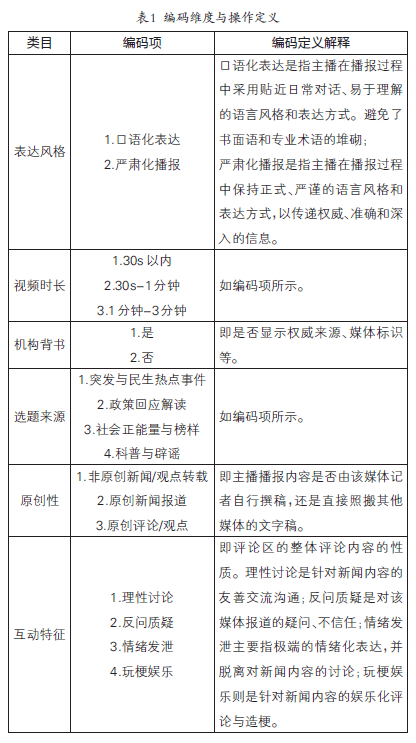
Core Viewpoint - The article focuses on the transformation of mainstream media's news anchor-led short videos from "marginal" attempts to phenomenon-level "hits," analyzing 166 high-engagement short videos from @DaxiangNews and @ShandianNews between May and July 2025, revealing that their "hit" status is driven by content innovation, precise topic matching, and deep platform collaboration [1][2][4]. Group 1: Research Background - 80% of users choose Douyin as their primary source for news, indicating that mainstream media must adapt to short video platforms to maintain their influence [2]. - Local media face dual challenges: insufficient originality and lack of synergy with platform algorithms, leading to diluted authority and content marginalization [2][3]. Group 2: Case Studies - The "Anchor Says" series from @DaxiangNews and @ShandianNews emerged as a breakthrough in original content collaboration, with @DaxiangNews contributing 44.8% of its content's spread on Douyin and @ShandianNews gaining 1.2 million followers and achieving over 100 billion views [4][5]. - Both media outlets effectively combined traditional news authority with platform-specific engagement strategies, creating replicable models for overcoming challenges in the short video ecosystem [4][5]. Group 3: Content Characteristics - The "hit" status of these short videos results from systematic innovations in content form and dissemination strategies, merging institutional authority with platform logic to meet user demands for credibility and convenience [9][11]. - All high-engagement videos retained media branding and utilized specific narrative designs to enhance user trust, with 100% of the videos featuring clear media identifiers [11][12]. Group 4: Topic Selection and Engagement - 80.72% of the high-engagement videos focused on urgent and public interest topics, aligning with user preferences for credible information [15]. - The interaction quality of high-engagement content showed a significant shift, with 58.43% of comments reflecting rational discussions, indicating a strong user recognition of the media's authority [16]. Group 5: Optimization Pathways - To sustain the "hit" phenomenon, mainstream media should focus on content innovation, platform collaboration, and policy guidance to build a long-term communication ecosystem [17]. - Strategies include localized content production to enhance uniqueness, creating series to foster user engagement, and adapting content forms to fit various platform characteristics [20][21][22]. Group 6: Policy and Platform Collaboration - Media and platforms should shift from short-term collaborations to long-term ecosystem building, ensuring transparency in content distribution rules to reduce adaptation costs [22][23]. - Policies should support a sustainable ecosystem by emphasizing qualitative metrics over mere view counts, encouraging media to focus on impactful content [26][27]. Group 7: Conclusion - @DaxiangNews and @ShandianNews have successfully transitioned from "marginal" to "hit" status by enhancing original content production and collaborating deeply with platforms, establishing a model for maintaining authority and engagement in the short video landscape [29].

互联网视域下的主流媒体系统性变革
Xin Hua Ri Bao· 2026-01-06 11:45
Core Viewpoint - The article emphasizes the transformative impact of the internet on mainstream media, necessitating a systemic overhaul rather than mere tactical adjustments [1][2]. Group 1: Decentralization and Restructuring - The internet has fundamentally reshaped the logic of information dissemination and social connections, leading to a decentralization of communication power that undermines traditional hierarchical structures [2][3]. - Mainstream media must adapt to a decentralized, real-time interactive environment to remain relevant, moving away from isolated operations to a more integrated approach [2][3]. Group 2: Digital Transformation and User Engagement - The shift from agenda-setting to user-driven, data-informed content distribution requires mainstream media to digitize their production processes and understand user data to effectively reach audiences [3][4]. - The new media landscape demands that mainstream media evolve from mere information providers to active participants in governance and community engagement, enhancing their connection with the public [5][6]. Group 3: Opportunities in the Internet Era - The internet presents unprecedented opportunities for mainstream media to break traditional boundaries and achieve precise audience targeting through data analytics and user profiling [4][5]. - By leveraging internet capabilities, mainstream media can enhance their perception of public opinion and proactively guide discourse, transitioning from reactive to proactive roles in crisis situations [4][5]. Group 4: Strategic Pathways for Transformation - A shift from short-term content subsidies to long-term investments in media infrastructure is essential for sustainable growth in the digital age [6][7]. - Collaboration and shared technological resources can help local media focus on content creation and user engagement while minimizing operational costs [7][8]. Group 5: Governance and Local Engagement - Mainstream media should actively participate in local governance and community services, utilizing their credibility to become integral players in local development and smart city initiatives [8][9]. - The evaluation metrics for media performance should evolve to include diverse indicators of quality and engagement, moving beyond mere traffic metrics to assess long-term value creation [8][9].
为新征程改革发展保驾护航
Jing Ji Ri Bao· 2025-12-30 22:37
Group 1 - The core idea of Xi Jinping's rule of law thought is to integrate Marxist legal theory with China's specific realities and traditional legal culture, providing a guiding framework for comprehensive rule of law in the new era [1][2] - The "Twelve Persistences" outlined in the latest guidelines emphasize the organic unity of governing the country by law and governing the Party by regulations, which is crucial for long-term legal development [2][3] - Xi Jinping's rule of law thought has led to significant breakthroughs and innovations in legal theory, addressing long-standing legal issues and creating a new landscape for the construction of a rule-of-law China [3][4] Group 2 - The socialist market economy is fundamentally a rule-of-law economy, and the implementation of the new development concept requires law to lead economic transformation towards high-quality development [5][6] - The recent implementation of the Private Economy Promotion Law exemplifies the commitment to legally protect the rights of various ownership enterprises, highlighting the importance of equal protection under the law [6] - Strengthening the legal system for the socialist market economy is essential for creating a favorable business environment and addressing risks associated with inadequate legal protections [7][8] Group 3 - The rapid development of new economic forms necessitates a balance between innovation and regulation, requiring effective legal frameworks to guide economic activities [8][9] - The construction of a comprehensive legal system for foreign-related affairs is vital for maintaining national sovereignty and expanding high-level openness, as demonstrated by the Hainan Free Trade Port [9] - The media's role in promoting legal awareness and compliance is crucial for enhancing the effectiveness of economic reporting and public discourse [10][11]
全景式聚焦主流媒体系统性变革,2025中国应用新闻传播十大创新案例在蓉发布
Xin Lang Cai Jing· 2025-12-21 07:20
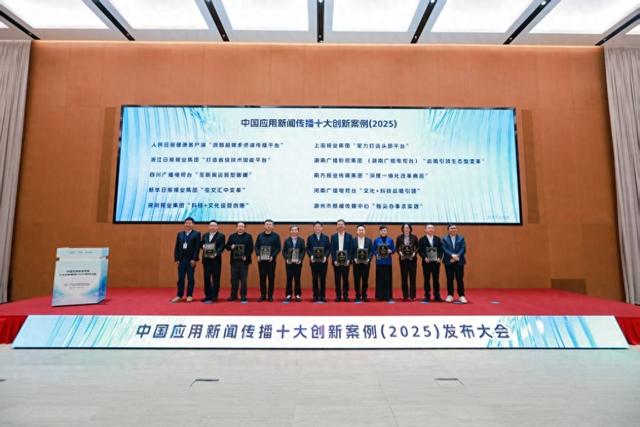
Core Insights - The 2025 China Application News Communication Top Ten Innovation Cases were announced, showcasing the latest explorations and practices of mainstream media in China regarding deep integration, systematic transformation, and cutting-edge technology application [1][4] - The event reflects a significant trend in the field of application news communication in China, evolving from "point innovations" to "systematic reconstruction" [1] Group 1: Event Overview - The announcement took place in Chengdu on December 21, highlighting ten innovative cases from various media organizations [1] - This is the ninth consecutive year that the China News History Society's Application News Communication Professional Committee has released these cases, emphasizing their leading and exemplary nature [1][4] Group 2: Media Transformation Trends - Media integration has shifted from "addition" to "symbiotic coexistence," characterized by professionalization, platform collaboration, and technology-driven industry trends [3] - The transformation of mainstream media is now focused on systematic restructuring, encompassing content production, organizational structure, and a comprehensive media communication system [4] Group 3: Case Summaries - **Case 1: People's Daily Health Client** - Developed a multi-terminal communication platform integrating authoritative health resources, enhancing health communication efficiency through AI technology [9] - **Case 2: Shanghai Media Group** - Initiated a comprehensive transformation to enhance core competitiveness and sustainability, achieving a unified media platform [10] - **Case 3: Zhejiang Daily Media Group** - Focused on self-integration and platform empowerment, creating a unified new media platform to represent Zhejiang's voice nationally [11] - **Case 4: Hunan Broadcasting Group** - Implemented a "Five New" strategy to drive systemic transformation, achieving significant growth in viewership and international presence [12] - **Case 5: Sichuan Broadcasting Group** - Aimed to become a leading new mainstream media platform through an internet operation model, leveraging a large user base [12] - **Case 6: Southern Media Group** - Achieved deep integration across its media platforms, enhancing operational efficiency and collaborative synergy [13] - **Case 7: Xinhua Media Group** - Focused on technology-driven service enhancement, creating a closed-loop service model in education and governance [14][15] - **Case 8: Henan Broadcasting Group** - Transformed cultural resources into modern communication assets, successfully integrating traditional culture with contemporary media [16] - **Case 9: Shenzhen Media Group** - Integrated technology with media operations, exploring new business models and investment opportunities in high-growth sectors [17] - **Case 10: Huzhou News Media Center** - Demonstrated effective integration of media and city governance, creating a comprehensive service platform for local citizens [18]

共谋深化主流媒体系统性变革良策 《中国新闻年鉴》年会在南宁举行
Ren Min Ri Bao· 2025-12-12 23:11
Group 1 - The event titled "Artificial Intelligence + Systemic Transformation of Mainstream Media" is being held in Nanning, Guangxi from December 12 to 13, focusing on the integration of AI in media [1] - The event is co-hosted by the Publicity Department of the Guangxi Zhuang Autonomous Region, the Institute of Journalism and Communication of the Chinese Academy of Social Sciences, and the School of Journalism and Communication at Tsinghua University [1] - Over 300 guests and representatives are attending the event to discuss strategies for deepening systemic transformation in mainstream media and innovative paths for building an all-media communication system [1] Group 2 - The event features the release of the 2024 edition of the "China Journalism Yearbook" and the announcement of the list of outstanding data personnel [1] - A national college student AI content creation competition is being launched during the event [1] - The event includes keynote speeches and four thematic discussions aimed at exploring innovative cases in intelligent communication and systemic changes in mainstream media [1]
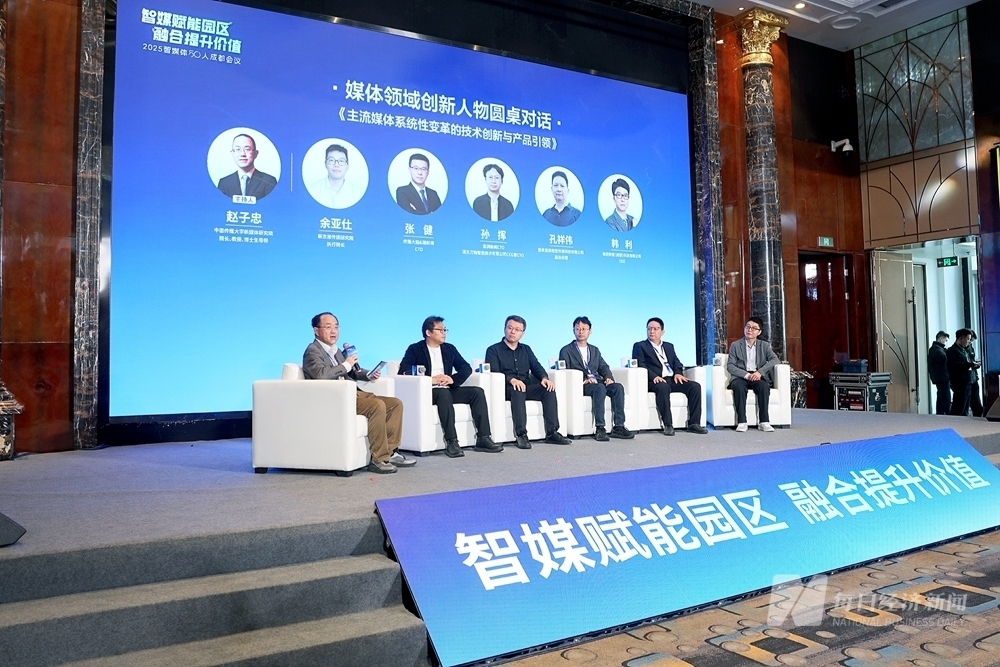
媒体创新人物聚首成都 共话主流媒体系统性变革的技术创新与产品引领
Mei Ri Jing Ji Xin Wen· 2025-11-27 08:18
Core Viewpoint - The conference in Chengdu focused on how mainstream media can leverage artificial intelligence (AI) for systemic transformation, emphasizing the need for innovation in technology and product leadership in the media industry [1] Group 1: AI Implementation and Media Transformation - Zhao Zizhong from China Media University highlighted that the systemic transformation of mainstream media has moved from policy advocacy to practical implementation, driven by economic foundations and intelligent development [2] - The "Communication Brain" technology company has developed a media-specific large model, which has been approved by the Central Internet Information Office, marking it as the first of its kind in the country [2] - The CTO of "Communication Brain" shared that the core of media practice is to deeply integrate large models with media operations, enhancing user experience by transforming channels into interactive service products [2] Group 2: Future Directions and Innovations - "Communication Brain" aims to develop tools for media productivity, create intelligent dialogue systems, and overcome challenges in short video news production regarding accuracy and compliance [3] - The CEO of Zhito Finance discussed the current stage of AI in media as L2-level human-machine collaboration, detailing their practices in content planning, production, and multi-modal content generation [3][5] - The New Beijing News emphasized the importance of maintaining high-quality content amidst technological advancements, advocating for a balance between technology and traditional journalism [6] Group 3: Technological Evolution and Media Integration - The Vice President of Chongqing Daily Media Group discussed the evolution of technology's role from support to driving and leading, entering a new phase of human-machine collaboration [7] - Chongqing Daily has created an open intelligent platform allowing media to select suitable AI technologies tailored to their unique characteristics [7] - The CEO of Meijing Technology highlighted the need for traditional media to transform their core competencies into standardized products to meet the demands of various industries [8]
系统变革 融合向新
Ren Min Ri Bao· 2025-11-25 22:42
Core Points - The 2025 Media Integration Development Forum was held in Qingdao, focusing on the theme "Systemic Reform, Integration Towards New" [8] - Over 300 participants, including officials, media representatives, scholars, and business leaders, gathered to discuss strategies for systemic reform and media integration [8] - The forum emphasized the importance of integrating advanced technologies into media production and dissemination to enhance the influence of mainstream media [8][9] Group 1: Systemic Reform and Media Integration - The forum highlighted the significant attention given by the central government to media integration and the systemic reform of mainstream media since the 18th National Congress [7] - Participants stressed the need for mainstream media to adopt internet thinking for resource allocation and to incorporate advanced technologies throughout the production and dissemination processes [8] - The forum featured three parallel sub-forums focusing on new forms and practices of integrated communication, digital intelligence integration, and new models and directions for intelligent media development [8] Group 2: Technological Empowerment - The rapid advancement of information technologies, particularly artificial intelligence, is reshaping media forms and public opinion ecology [9] - Mainstream media must leverage technological innovations to enhance their production and dissemination capabilities, ensuring they remain relevant in the digital age [14] - The integration of AI, big data, and blockchain technologies is seen as essential for driving systemic reform and creating a new landscape for media development [14][15] Group 3: Content and Value Orientation - The importance of ideological guidance and the promotion of mainstream values were emphasized as foundational for effective media reform [10] - The forum discussed the need for innovative content creation and expression to better convey the Party's innovative theories and values to the public [10] - Participants called for a focus on creating a comprehensive media ecosystem that balances content quality with technological advancement [17][18]
