优供给

Search documents
北京土拍收官总金额超1400亿元
Bei Jing Shang Bao· 2025-12-25 16:02
Core Insights - The Beijing land auction for 2025 concluded with a total of 40 plots sold, generating approximately 1427.42 billion yuan, remaining stable compared to the previous year [1] - Haidian District led in land supply with 7 plots, marking a five-year peak, contributing to a rise in market premium rates, with the highest premium reaching 39.18% [1][3] - Joint land acquisition has become the mainstream trend, with a 180% year-on-year increase in joint acquisitions by real estate companies [1][6] Group 1: Land Supply and Market Trends - In 2025, Haidian District had the highest land supply, followed by Changping District with 6 plots, and Fengtai and Chaoyang Districts each with 5 plots [3] - The average premium rate for land plots in 2025 was approximately 4.92%, an increase of 1.24 percentage points year-on-year [3] - The increase in land supply in the six core districts coincided with the implementation of a price-unrestricted land policy at the end of 2024, boosting market activity [4] Group 2: Joint Acquisition Trends - Central state-owned enterprises dominated land acquisitions, accounting for 92.69% of total acquisitions, with notable participation from the China State Construction group [6] - The trend of joint land acquisition is rising, with 14 out of 40 plots sold through this model in 2025, compared to only 5 in 2024 [6][7] - Joint acquisitions are seen as a strategy for real estate companies to mitigate risks and enhance resource integration during market downturns [7] Group 3: Return of Private Enterprises - Private companies like Maoyuan Real Estate are returning to the Beijing land market, with Maoyuan acquiring 2 plots in 2025, matching its total from the previous five years [8] - The return of select private firms indicates a positive outlook on the Beijing real estate market and suggests that the market adjustment cycle is nearing its bottom [8][9] - The overall sentiment in the market is shifting towards stability, with expectations of a halt in price declines and a potential recovery in housing prices [9]


2026年房地产市场会有哪些变化?一场会议给出答案
Sou Hu Cai Jing· 2025-12-25 11:22
Core Insights - The recent Central Economic Work Conference has significantly impacted the real estate sector, indicating a shift in market dynamics by 2026, which could lead to substantial financial implications for buyers and sellers alike [1] Group 1: Policy Direction - The conference emphasized a tailored approach to real estate policies, focusing on "controlling growth, reducing inventory, and optimizing supply," moving away from a one-size-fits-all strategy [4] - Cities with high inventory, particularly third and fourth-tier cities, are likely to see relaxed policies such as lower down payments and interest rates to facilitate sales [4] - In contrast, first and second-tier cities will focus on optimizing supply by promoting quality properties in desirable locations, highlighting the importance of careful selection to avoid less desirable properties [4] Group 2: Opportunities for Stakeholders - The proposal to encourage the acquisition of existing second-hand homes as affordable housing presents significant benefits for two groups: homeowners with older properties and first-time buyers [5] - Homeowners with older or suburban properties may find new avenues for selling through government buyback programs, alleviating concerns about property depreciation [5] - First-time buyers will have more affordable housing options, as government initiatives aim to provide lower-priced housing alternatives [5] Group 3: Enhancements in Home Buying Experience - Upcoming optimizations in the housing provident fund system are expected to simplify the loan process, making home buying more accessible and efficient [6] - The focus on constructing "better homes" will enhance living conditions through improved design, community environments, and amenities [6] Group 4: Market Stability - The real estate sector is moving away from high leverage and debt, which should reduce the risks of project failures and enhance market stability [8] - The shift towards a more sustainable development model is anticipated to lead to a more rational market outlook, with a focus on the intrinsic value of properties rather than speculative investments [8] Group 5: Strategic Recommendations - The overarching theme for the real estate market in 2026 is stability, with no extreme fluctuations expected [9] - Different stakeholders are advised to adapt their strategies: first-time buyers should act based on genuine needs and policy changes, homeowners should stay informed about local buyback policies, and those looking to upgrade should focus on quality locations [9]

华泰证券:产品力或将成为2026年房企穿越周期的核心竞争力之一,有望重塑企业市场地位和竞争格局
Xin Lang Cai Jing· 2025-12-24 23:56
Core Viewpoint - The report from Huatai Securities indicates that the Ministry of Housing and Urban-Rural Development held a work meeting to summarize the real estate work for 2025 and outline key tasks for 2026, emphasizing a commitment to stabilize the industry and implement policies focused on controlling growth, reducing inventory, and optimizing supply [1] Group 1: Policy Outlook - The policies for 2026 will focus on controlling new supply, reducing inventory, and optimizing supply, which are expected to be further implemented [1] - Potential monetary easing measures, such as interest rate cuts, may support market stabilization [1] Group 2: Market Dynamics - The supply-side optimization is anticipated to enhance product competitiveness, which could become a core strength for real estate companies to navigate through economic cycles [1] - The meeting reflects a firm stance from the central government to stabilize the industry and provides a series of directional guidelines [1] Group 3: Investment Recommendations - Recommended investments include real estate stocks that possess "good credit, good cities, and good products" [1] - Companies that can manage cash flow effectively during market adjustments are highlighted as strong candidates [1] - Local Hong Kong real estate firms are expected to benefit from the recovery of the Hong Kong market [1] - Property management companies with stable cash flow and dividend advantages are also recommended [1]

经济日报:理性看待房地产开发投资下降
Xin Lang Cai Jing· 2025-12-24 00:17
Group 1 - The core viewpoint of the articles indicates a significant decline in real estate development investment, with a year-on-year decrease of 15.9% from January to November, reflecting both the implementation of control measures and a natural market adjustment [1] - The decline in real estate investment is attributed to strict control over new developments, leading to a structural shift from high demand to an oversupply situation, making it impossible to rely on land sales for fiscal revenue [1] - The increasing role of second-hand housing is highlighted, with second-hand transactions accounting for 45% of total housing transactions by November 2025, and major cities like Shenzhen and Shanghai seeing transaction volume growth of 20% to 30% [1] Group 2 - The total transaction volume of new and second-hand homes in 30 key cities has stabilized, indicating a halt in the decline, despite adjustments in new home sales due to high base figures from the previous year [2] - The current situation shows that the sales area of commercial housing exceeds the area of new construction, indicating effective inventory reduction, and calls for tailored policies to manage supply and demand [2] - Long-term prospects for new urbanization in China remain positive, with significant potential for optimizing urban stock and meeting the public's expectations for high-quality housing [2]
理性看待房地产开发投资下降
Jing Ji Ri Bao· 2025-12-23 22:52
Group 1 - The core viewpoint of the articles indicates a significant decline in real estate development investment, with a year-on-year decrease of 15.9% from January to November, reflecting both proactive regulatory measures and market adjustments [1] - The decline in real estate investment is attributed to strict control over new developments and a shift in market dynamics from high demand to structural oversupply, making it impossible to rely solely on land sales for fiscal revenue [1] - The increasing role of second-hand housing is highlighted, with second-hand transactions accounting for 45% of total housing transactions from January to November 2025, and significant growth in major cities such as Shenzhen and Shanghai [1] Group 2 - The total transaction volume of new and second-hand homes in 30 key cities has stabilized, indicating a halt in the decline of sales, despite adjustments in new home sales due to high base figures from the previous year [2] - The current situation shows that the sales area of commercial housing exceeds the area of new construction, suggesting effective inventory reduction, and calls for tailored policies to manage supply and demand [2] - Long-term prospects for urbanization in China remain positive, with ongoing adjustments in urban stock and rising expectations for high-quality housing among the populace, indicating potential growth in the real estate sector [2] Group 3 - The focus on renovating old urban communities, villages, and dilapidated housing aims to address urgent public needs and eliminate safety hazards, emphasizing the importance of quality in housing construction and renovation [3] - The initiative includes building new homes and upgrading old ones to meet diverse housing demands, thereby driving upgrades in the industry chain [3]
广州3天内3宗地块终止出让,有何信号?
Mei Ri Jing Ji Xin Wen· 2025-12-23 13:22
短短3天内,广州多宗地块宣布终止出让。 从区位来看,天河金融城地块北临黄埔大道,距离广州地铁4号线车陂南站约300米,高层住宅可实现南 向望江,具备优质的景观与交通优势。 白云增槎路地块规划计容建筑面积约8.36万平方米,起价约15.04亿元,距离在建的广州地铁13号线罗冲 围站约200至300米,定位为TOD上盖项目。 每经记者查询发现,目前白云增槎路地块周边暂无新房在售,次新房保利珑熙的房源挂牌价约为3.6万 元/平方米。 值得注意的是,这两宗地块均具备江景资源。其中,天河地块南向望江、近广州地铁4号线车陂南站; 白云地块为TOD上盖+西南向一线江景。虽然两宗地块均已优化出让条件,但仍未获得任何房企报名, 最终终止出让。 据广州公共资源交易中心、广州市规划和自然资源局公告,12月18日至20日,天河金融城起步区 AT091007-1地块(起拍价约25.08亿元)、白云区增槎路以西AB3804019地块(起拍价约15.04亿元)、 番禺区洛浦街东乡A地块一期(起拍价约16.62亿元)等3宗涉宅地块相继终止出让,总起拍价合计约 56.74亿元。 《每日经济新闻》记者(以下简称每经记者)注意到,上述地块不乏江景 ...
住建部定调2026楼市调控:因城施策控增量、去库存、优供给
Bei Jing Shang Bao· 2025-12-23 04:24
北京商报讯(记者 王寅浩 李晗)12月22日至23日,全国住房城乡建设工作会议在北京召开。 会议明确,因城施策控增量、去库存、优供给,结合城市更新、城中村改造盘活利用存量用地,推动收 购存量商品房用作保障性住房、安置房、宿舍、人才房等。优化和精准实施保障性住房供应,实施房屋 品质提升工程,有序推进"好房子"建设。 ...
地产专题分析报告:重提“去库存”
SINOLINK SECURITIES· 2025-12-14 06:22
新房景气度下行趋缓,二手房景气度底部企稳,成交量均出现小幅回落。政策方面,经济工作会议再提"去库存",重 点是"因城施策",一线城市重心是"优供给",三四线城市侧重于"控增量"、"去库存"。 风险提示 房价下行幅度和速度超预期,房企债务风险超预期,宏观经济超预期下行。 敬请参阅最后一页特别声明 1 扫码获取更多服务 宏观经济点评 新房方面,本周(12.6-12.12)景气度下行趋缓,新房销售面积小幅回落,47 城新房成交量环比-9.8%,同比-44.9%, 主要受季节性因素影响,降幅较上周走阔。 图表1:新房成交面积保持稳定 0 100 200 300 400 500 600 700 800 900 1000 1W 2W 3W 4W 5W 6W 7W 8W 9W 10W 11W 12W 13W 14W 15W 16W 17W 18W 19W 20W 21W 22W 23W 24W 25W 26W 27W 28W 29W 30W 31W 32W 33W 34W 35W 36W 37W 38W 39W 40W 41W 42W 43W 44W 45W 46W 47W 48W 49W 50W 51W 52W 47城新 ...
2026年房地产市场将迎来哪些变化?记者解读新表述背后的“稳”“优”“进”
Yang Shi Wang· 2025-12-12 08:02
Core Viewpoint - The Central Economic Work Conference has made clear deployments for the real estate work in the coming year, emphasizing the need to "stabilize the real estate market," indicating a shift in policy focus and approach compared to the previous year [1] Policy Objectives - The policy objective has shifted from "continuously promoting the stabilization of the real estate market" to "focusing on stabilizing the real estate market," highlighting a stronger commitment to maintaining stability [1] - In the first eleven months, while development investment has decreased, the housing market has entered a phase of stock, with the proportion of second-hand housing transactions reaching 45% of total transactions [1] - The decline in housing prices is narrowing, with some major cities experiencing year-on-year growth in transaction volumes for both new and second-hand homes [1] Policy Direction - The policy direction has changed from emphasizing "reasonable control of new land" and "promoting the disposal of existing properties" to clearly stating "controlling increments, reducing inventory, and optimizing supply" as core directions [3] - The term "optimizing supply" is introduced for the first time, indicating a coordinated approach to address inventory issues while considering "livelihood security" and optimizing the structure of land supply [3] Policy Tools - The reform of housing provident funds and the construction of "good houses" have been identified as new policy focuses for the coming year [5] - The coverage for flexible employment individuals to contribute to housing provident funds will be expanded, allowing for withdrawals for rental purposes even if they do not purchase a home [5] - The orderly advancement of "good house" construction signifies a shift from quantity-driven housing products to quality-driven ones [5] Urban Renewal - The term "urban renewal" has been prioritized, moving from a secondary position to a key focus area in the first part of the economic work, indicating an increased emphasis and intensity in promoting urban renewal efforts [7]
2026年楼市怎么“稳”?控增量、去库存、优供给
Feng Huang Wang· 2025-12-12 00:42
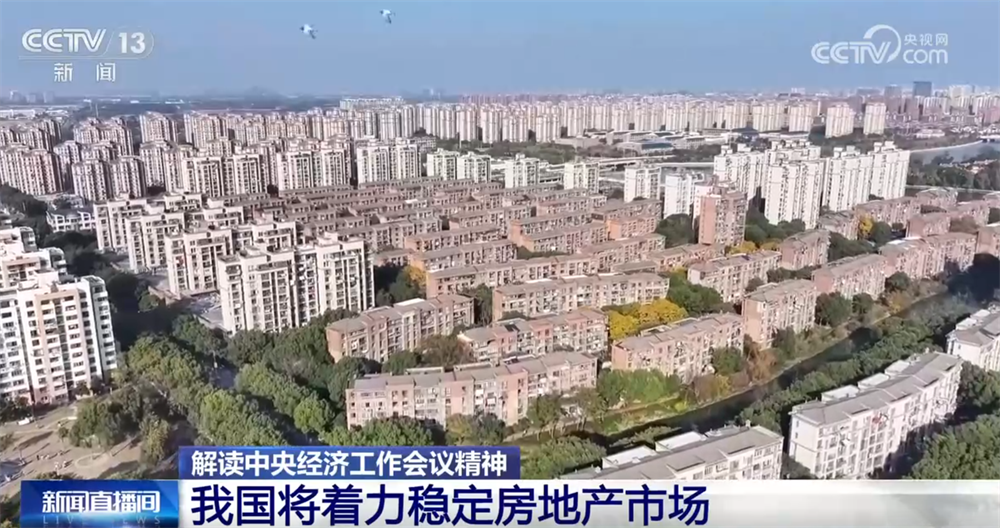
据新华社消息,中央经济工作会议12月10日至11日在北京举行。会议分析当前经济形势,部署2026年经济工作。 对于明年房地产市场的定调,会议提出"着力稳定房地产市场"。这是继2024年中央经济工作会议提出"持续用力推动房地产市场止跌回稳"后,中 央经济工作会议再次强调"稳楼市"。 首都经济贸易大学京津冀房地产研究院院长赵秀池指出,从内容来看,房地产的内容放到了明年工作的第八个重点工作中,即"坚持守牢底线,积 极稳妥化解重点领域风险",亮点主要体现在稳定房地产市场、优供给、好房子建设上。 "稳楼市"政策目标不变 会议提出,坚持守牢底线,积极稳妥化解重点领域风险。着力稳定房地产市场,因城施策控增量、去库存、优供给,鼓励收购存量商品房重点用 于保障性住房等。 根据易居研究院全国百城库存报告,2025年11月,全国百城新建商品住宅去库存周期(存销比)达27.4个月,较行业合理值增加近一倍,去化速 度明显放缓。上海易居房地产研究院副院长严跃进提及,此次是时隔9年再提去库存。上一次中央经济工作会议提及"去库存"是在2016年,彼时主 要针对三四线城市库存过多问题。 "从大方向来看,一线城市去库存的压力相对较小,但在优化供 ...