信任

Search documents
AI惹祸谁来担责? Finoverse首席执行官:应由多方共同承担
Mei Ri Jing Ji Xin Wen· 2025-11-17 13:25
Core Insights - The adoption rate of artificial intelligence (AI) has significantly increased since the release of ChatGPT in 2022, but trust in AI systems remains a critical challenge, with only 46% of respondents willing to trust AI [1] - Many advanced AI models are perceived as "black boxes," making it difficult for even developers to fully understand their decision-making logic, raising concerns about transparency and trust [1] - Establishing trust in AI requires strong human oversight, transparent data usage, and enterprise-level testing, emphasizing that responsible AI should enhance human outcomes rather than replace human judgment [1] Responsibility and Governance - In cases of severe errors caused by AI systems, responsibility should be shared among developers, deployers, and users, similar to how traffic safety relies on the cooperation of drivers, pedestrians, and regulatory bodies [2] - The rapid advancement of AI capabilities raises concerns about malicious use and potential loss of human control, necessitating governance to ensure that technological development serves human welfare [2] - A flexible, risk-based governance model is essential, with stricter regulations in sensitive areas like finance, healthcare, and public safety, while allowing more freedom in low-risk applications under clear ethical guidelines [3]
【独家专访】被网暴后反手用产品力征服全城?一场天花板级“甜品店の逆袭”!
东京烘焙职业人· 2025-10-24 08:33
Core Viewpoint - The article highlights the journey of "Yichun Dessert," a bakery in Handan, which has transformed from facing online backlash to becoming a beloved brand through a focus on product quality and customer trust [5][6][18]. Group 1: Brand Development - The founder of "Yichun Dessert" has over 20 years of experience in the baking industry, which has shaped her understanding of product quality and consumer needs [7][9]. - The brand was established during the pandemic, initially starting with small orders and gradually building a reputation through word-of-mouth [11][18]. - "Yichun" emphasizes transparency and simplicity in its branding, with a focus on the quality of ingredients and the baking process [36][38]. Group 2: Product Philosophy - The brand adheres to three core rules: nuts must be roasted in-house, jams must be homemade, and no additives are allowed [15][16]. - "Yichun Dessert" prioritizes taste over aesthetics, choosing to focus on the quality of flavors rather than trendy designs [31][34]. - The development process includes rigorous testing and customer feedback, ensuring that each product meets high standards before launch [30][26]. Group 3: Crisis Management - The brand faced a significant challenge when it was accused of unsanitary conditions shortly after opening, which led to a surge in customer visits to verify the claims [39][42]. - The founder's response was to invite customers to see the kitchen themselves, which ultimately strengthened trust in the brand [41][45]. - This incident highlighted the importance of trust over explanations, leading to the establishment of a customer testing group for new products [42][45]. Group 4: Growth Strategy - Following initial success, "Yichun Dessert" plans to expand with four new locations in Handan, focusing on maintaining product quality across all outlets [47][50]. - The brand employs a unique non-industrial standard system to ensure consistency in taste and quality, rather than relying on mass production [50][52]. - The founder emphasizes long-term relationships with customers, fostering a sense of community around the brand [55].


美国彼得森国际经济研究所杰弗里·肖特:全球贸易体系面临两大核心挑战|2025外滩年会
Guo Ji Jin Rong Bao· 2025-10-24 05:01
Core Insights - The 2025 Bund Summit will be held from October 23 to 25 in Huangpu District, Shanghai, focusing on the theme "Embracing Change: New Order, New Technology" [1] Group 1: Global Trade Dynamics - Jeffrey J. Schott, a senior researcher at the Peterson Institute for International Economics, emphasized the importance of "trust" and "enforcement" in the global trade system, which he views as core challenges [3] - Schott highlighted that the stability of U.S.-China relations and the multilateral trade mechanism relies on predictable policies and ongoing dialogue [3][4] - He noted that uncertainty in bilateral relations increases operational costs for businesses and creates political risks, advocating for a reduction in uncertainty to facilitate normal trade and investment [5] Group 2: U.S.-China Relations - Schott stated that restoring basic trust is essential for resolving U.S.-China trade tensions, which he believes is a long-term process [5] - He pointed out that even in areas of significant disagreement, communication should be maintained due to the profound impact that policy changes from either country can have on the global economy [3][5] - Schott expressed skepticism about the U.S. rejoining the Comprehensive and Progressive Agreement for Trans-Pacific Partnership (CPTPP) in the short term [5] Group 3: Multilateral Trade Agreements - Schott described the CPTPP as a beneficial complement to the World Trade Organization (WTO) rather than a replacement, noting that the U.S. withdrawal from the Trans-Pacific Partnership (TPP) was a mistake [5] - He mentioned that China's potential accession to the CPTPP would be a cautious and gradual process, with limited short-term progress expected [5] Group 4: WTO and Sanctions - Schott denied claims of WTO marginalization, asserting that it still plays a crucial role but requires updates to reflect contemporary technological and trade dynamics [6] - He differentiated between the quantity of sanctions and their policy impact, stating that current sanctions do not significantly threaten the dollar's status as the world's primary reserve currency [6] - Schott warned that long-term instability in U.S. domestic economic policy could lead to questions about the future of the dollar, similar to the historical decline of the pound [6] Group 5: Service Trade - Schott criticized the U.S. public discourse for often overlooking the significant contributions of service trade, which he considers a vital component of modern globalization [7]

美国彼得森国际经济研究所杰弗里·肖特:全球贸易体系面临两大核心挑战
Guo Ji Jin Rong Bao· 2025-10-24 04:00
Core Insights - The 2025 Bund Summit will be held from October 23 to 25 in Huangpu District, Shanghai, focusing on the theme "Embracing Change: New Order, New Technology" [1] Group 1: Global Trade Dynamics - Jeffrey J. Schott, a senior researcher at the Peterson Institute for International Economics, emphasized that the core challenges of the global trade system are "trust" and "enforcement" [3] - Schott highlighted the importance of maintaining open communication channels between the U.S. and China, stating that any policy changes by either country will have profound impacts on the global economy [3][4] - He noted that the uncertainty in bilateral relations increases operational costs for businesses and creates political risks, advocating for a reduction in uncertainty to facilitate normal trade and investment [5] Group 2: Trade Agreements and Multilateralism - Schott discussed the evolution from the General Agreement on Tariffs and Trade (GATT) to the World Trade Organization (WTO), pointing out that the lack of trust in enforcement is a significant barrier to multilateral negotiations [5] - He described the Comprehensive and Progressive Agreement for Trans-Pacific Partnership (CPTPP) as a beneficial complement to the WTO, arguing that the U.S. withdrawal from TPP was a mistake [5] - Regarding China's potential accession to the CPTPP, Schott characterized it as a cautious and long-term process, with slow progress expected in the short term [5] Group 3: Role of the WTO and U.S. Dollar - Schott denied the notion of WTO marginalization, asserting that it still plays a crucial role but requires updates to reflect contemporary technological and trade dynamics [6] - He differentiated between the quantity of sanctions and their policy impact, stating that current sanctions do not significantly threaten the dollar's status as the world's primary reserve currency [6] - Schott pointed out that the U.S. often overlooks the significant contributions of service trade, which is a vital component of modern globalization [6]

高德“杀入”餐饮业:会边缘化预制菜吗?
Sou Hu Cai Jing· 2025-09-30 01:02
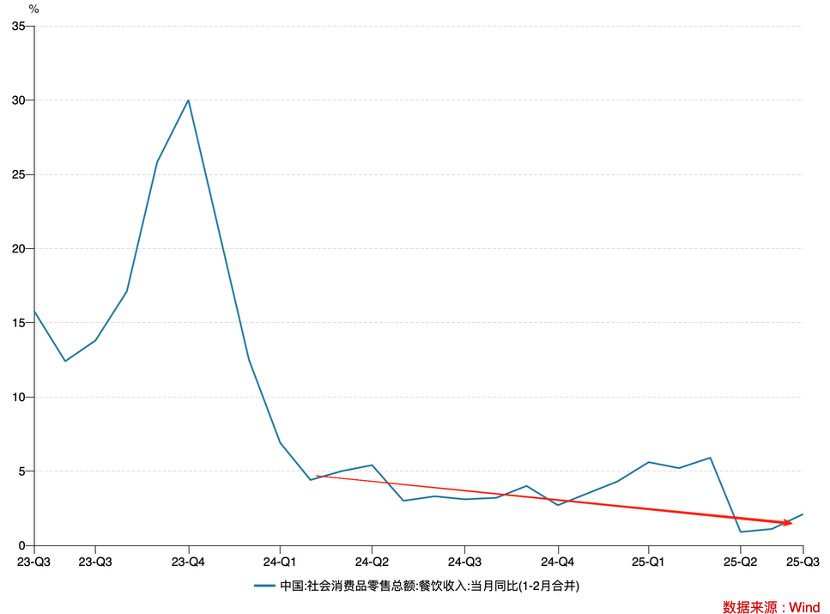
Core Viewpoint - The restaurant industry is currently in a period of internal competition, with the rise of chain operations increasing operational difficulties, leading to the adoption of "pre-made dishes" as a reluctant choice [1][2] - The influence of online marketing on the restaurant industry is weakening, and the trust between users, platforms, and merchants is diminishing [1] - To marginalize pre-made dishes, it is essential to rebuild the trust chain, which is a critical issue that companies like Gaode are addressing [1] Industry Analysis - The restaurant industry has faced significant challenges in recent years, particularly since 2024, with monthly revenue growth lagging behind GDP growth, indicating a period of internal competition [2] - The capital influx into the restaurant sector has led to a significant increase in chain operation rates, from 15% in 2020 to 23% in 2024, which has improved standardization but also increased financial burdens on businesses [5] - Despite high levels of investment, the number of business cancellations and closures has reached new highs, indicating a growing pessimism within the industry [6] Financial Performance - Companies often resort to price reductions as a means of counter-cyclical adjustment, but in the current environment, this strategy may not effectively resolve operational challenges and could worsen financial performance [4][6] - The focus has shifted to "cost-cutting," with pre-made dishes being a method to enhance operational efficiency through modern preservation technologies [7] Trust and Marketing Dynamics - The reliance on online platforms for driving traffic to physical restaurants has not yielded the expected results, as evidenced by the stagnation in growth for companies like Jiumaojiu, which saw only a 1.5% revenue increase despite a nearly 25% rise in marketing expenses [11] - Trust is a critical factor in the restaurant industry, and the erosion of trust due to conflicts of interest and biased reviews has led to inefficiencies in advertising and a mismatch in consumer needs [12] Future Expectations - In the short term, the restaurant industry can leverage trust to improve profitability and emerge from the current competitive downturn, with expectations for significant gains during the upcoming holiday season [14] - In the medium term, there is an anticipated decrease in the proportion of pre-made dishes as the industry refocuses on quality and taste [15] - In the long term, the goal is for consumers to enjoy quality food while businesses concentrate on culinary excellence [15]
最好的管理,靠信任
3 6 Ke· 2025-09-15 01:48
Group 1 - The core idea emphasizes that middle and senior management are crucial for organizational success, needing to enhance their leadership capabilities to drive strategy execution and team cohesion [5][6][59] - Trust is identified as the foundational element of exceptional leadership, with a model for building credibility consisting of four cores and thirteen behaviors [3][61] Group 2 - Exceptional organizations rely on collective intelligence rather than individual heroics, highlighting the importance of teamwork [4] - The four challenges of exceptional leadership include strategic execution gaps, insufficient team management and talent development, limited self-awareness and perspective, and inadequate cultural influence [5][49] Group 3 - Effective organizational performance requires understanding stakeholder needs and aligning mission, vision, and values to meet those needs [21][23] - Leaders must facilitate resource allocation and remove obstacles to ensure strategy implementation is a collaborative effort [28][32] Group 4 - Employee engagement is driven by four key factors: feeling valued, being part of a successful team, finding meaning in work, and working in a trusting environment [52][57] - Leaders must fulfill four essential roles to enhance employee engagement: creating a trustful environment, instilling work significance, driving strategy execution, and mentoring employee growth [58][59] Group 5 - Trust is a critical driver of organizational value, influencing both speed and cost of operations [67][68] - High trust environments lead to better employee retention, satisfaction, and overall organizational performance [74][76] Group 6 - Building trust involves a process of self-assessment and demonstrating integrity, intent, skills, and results [84][85] - The "See-Say-Do" model outlines the importance of recognizing trust's impact, communicating effectively about trust, and engaging in trust-enhancing behaviors [89][90] Group 7 - Leaders can either be "multipliers" who enhance team potential or "diminishers" who stifle it, with the former fostering a positive and productive work environment [96][97] - To become effective multipliers, leaders should ask insightful questions, identify team strengths, create a safe space for growth, and set high standards for performance [102][106]

农行归德支行:万元现金完璧归赵,30分钟完成"爱心接力"
Qi Lu Wan Bao· 2025-08-13 08:37
Core Points - A heartwarming story occurred at Agricultural Bank of China (ABC) Guide Branch, where a good Samaritan and bank staff worked together to return 10,000 yuan in cash to its rightful owner, showcasing social positivity and ABC's customer-centric service philosophy [1][2] Group 1 - A woman named Zhang found a bag containing a large sum of cash outside the bank and promptly handed it over to the bank staff, demonstrating trust in ABC as a reliable institution [1] - An elderly man, who had lost the same amount of cash he withdrew from another bank, rushed to ABC Guider Branch seeking help, and after verification, the bank staff successfully returned the money to him [1] - The incident highlights the importance of customer trust as a valuable asset for the bank, emphasizing ABC's commitment to safeguarding customer confidence and enhancing financial services as a bridge connecting people [2]
X @去码头整点薯条
去码头整点薯条· 2025-08-04 06:31
Market Dynamics - The market is gradually shifting towards a "Zhuang-style" model, seeking trust through funded entities controlling the float, fostering confidence in holding positions, and believing that funds will drive market growth, allowing retail investors to share in the profits [1] - The market needs a role that can restore trust [3] - The collapse of VC coins is attributed to the erosion of trust within the industry [3] Trust & Value - Ability brings value, value brings trust, and trust in turn feeds back into ability [2] - Early profits are given to the community to allow believers to earn money, thereby generating more and more value resonance, and ultimately promoting the community to feed back to its core capabilities [1] Key Stakeholders - Any project basically consists of four roles: project party, investors, market makers, and community [3] - Theoretically, these four parties should be co-builders and win-win [3]
X @子布
子布· 2025-07-09 07:58
Pain Points in Traditional Prediction Industry - Traditional platforms suffer from a lack of fairness and transparency, including issues like manipulating odds and delaying payments [1] - Security and trust are major concerns due to fund freezes and platforms disappearing [1] - Traditional platforms lack effective incentive mechanisms to enhance user loyalty [4] - Traditional prediction ecosystems are closed, lacking asset appreciation channels [7] Hash Epoch's Blockchain Solutions - Blockchain technology ensures data transparency and fairness through immutable smart contracts and hash-based random number generation [1] - Smart contracts manage user funds, and a 1:1 collateral mechanism ensures payment capability [2][3] - A multi-dimensional incentive system rewards users with HEST tokens for tasks, social sharing, and staking [5] - A loss compensation mechanism provides HEST token rewards to users who lose predictions, reducing risk [6] - DeFi integration allows users to earn interest by investing idle funds in liquidity pools [8] - Users can participate in node validation by staking HEST, sharing platform revenue [8]
信任就像一场舞蹈。学习这些步骤,成为更出色的领导者
3 6 Ke· 2025-06-19 07:10
Group 1 - Trust is the cornerstone of leadership, influencing interactions and outcomes within teams [2][3] - Organizations with a culture of trust can unlock potential, while those lacking trust face creativity and engagement declines [2][3] - Trust is built on various factors, including decision-making, protection of team members, and the ability to share information and feelings [2][3] Group 2 - The balance between vulnerability and feedback is crucial for effective leadership, yet it is often challenging to achieve [4][6] - Defensive mechanisms can hinder open communication, leading to a lack of trust and understanding between team members [4][6] - The dynamics of trust can be disrupted by defensive interactions, as seen in the case of Mark and Lisa, where blame-shifting occurred instead of constructive dialogue [13][16] Group 3 - Vulnerability is essential for building trust, as it involves taking risks by sharing personal information and emotions [17][19] - Honest feedback is a key component of trust-building, yet it is often difficult to give and receive due to fear of rejection or conflict [20][21] - Questioning assumptions and beliefs is necessary for deepening relationships, but it requires courage and can provoke defensive reactions [22][24] Group 4 - Effective leadership involves managing emotions and creating space for others to express their feelings, which contributes to trust [26][27] - Leaders must navigate the complexities of vulnerability and distance to foster a trusting environment [26][27] - The interplay of vulnerability, feedback, and questioning forms a dynamic relationship that is essential for trust development [24][27]