
历史经典产业

Search documents
酿酒入列历史经典产业,郎酒的“慢功夫”见真章
Zhong Jin Zai Xian· 2025-11-05 10:26
Core Viewpoint - The Chinese liquor industry, particularly represented by Langjiu, is recognized as a "historical classic industry" alongside silk, tea, and porcelain, highlighting its cultural and strategic significance beyond economic contributions [1][6]. Group 1: Cultural Heritage and Innovation - Langjiu embodies the essence of cultural heritage, being recognized as an important representative of China's intangible cultural heritage, with its brewing techniques listed as a national-level intangible cultural heritage since 2008 [3]. - The company actively promotes the living heritage of its brewing techniques through various cultural events and festivals, transforming traditional practices into public experiences that enhance cultural appreciation [3][4]. - Langjiu integrates modern technology with traditional brewing methods, employing a technical team of over 200 to enhance product quality and innovate within the industry [4]. Group 2: Economic and Community Impact - The "Historical Classic+" initiative aims to create a fusion ecosystem that connects culture, tourism, and rural revitalization, moving beyond single production to multi-dimensional value creation [6]. - Langjiu's estate spans 10 square kilometers, serving as a new experiential venue that combines natural resources with cultural and artistic elements, contributing to local economic development and job creation [6][7]. - The company supports rural revitalization through standardized agricultural practices, benefiting over 600,000 acres of sorghum cultivation and creating thousands of local jobs [6][7]. Group 3: Global Expansion and Future Outlook - The industry is encouraged to enhance international cooperation and maintain competitive advantages, with Langjiu positioning itself as a global ambassador for Chinese liquor culture [7]. - Langjiu has engaged in international collaborations and showcased its products on global platforms, establishing a clear path for international expansion [7]. - The future of the historical classic industry is seen as promising, with expectations for continued cultural depth and technological integration to achieve high-quality development [9].
定位“历史经典产业” 以古井贡酒为例,看中国白酒的历史新机遇
Bei Jing Shang Bao· 2025-11-05 06:47
Core Viewpoint - The Ministry of Industry and Information Technology has issued a draft opinion on promoting the high-quality development of historical classic industries (2026-2030), marking a shift for the liquor industry from restrictive development to strategic support, which is expected to positively impact Chinese liquor companies, particularly Gujing Gongjiu as a model for policy implementation [1] Group 1: Gujing Gongjiu's Alignment with "Historical Classic Industry" - "Historical classic industry" requires a solid foundation in brand history, industry scale, and technical systems, which Gujing Gongjiu aligns well with [2] Group 2: Brand History - Gujing Gongjiu's brewing history is closely tied to the development of Chinese liquor, with its techniques recognized as the world's oldest distillation method. The preservation of traditional brewing sites and the recognition of its brewing techniques as national intangible cultural heritage highlight its historical significance [4] Group 3: Industry Scale - Gujing Gongjiu is a leading enterprise in the liquor industry, contributing over 90% to the total output value of 26.3 billion yuan in Bozhou City in 2024, showcasing its role in driving regional economic development [8] Group 4: Technical Foundation - The company emphasizes the modernization of traditional techniques, standardizing its brewing process while establishing advanced research platforms to enhance production efficiency and quality [9] Group 5: Cultural Empowerment - Gujing Gongjiu has shifted from one-way communication to interactive experiences, creating a cultural IP matrix that enhances brand engagement and emotional connections with consumers [11] Group 6: Digital Transformation - The company is leveraging new information technologies in its smart brewing facilities, enhancing production efficiency and quality control through real-time monitoring and data analysis [14] Group 7: Internationalization - Gujing Gongjiu actively promotes Chinese liquor culture globally, participating in various international events and initiatives to enhance its brand presence and cultural dialogue [16] Group 8: Industry Opportunities - The liquor industry is undergoing a phase of adjustment, which is seen as a necessary stage for self-optimization. Gujing Gongjiu's focus on quality, cultural development, and international exploration aligns with the high-quality development direction of the historical classic industry, positioning it well for future opportunities [19]


定位“历史经典产业” ,以古井贡酒为例,看中国白酒的历史新机遇
Guan Cha Zhe Wang· 2025-11-05 02:30
Core Viewpoint - The Ministry of Industry and Information Technology has released a draft opinion on promoting the high-quality development of historical classic industries (2026-2030), marking a shift for the liquor industry from restrictive development to strategic support, which is expected to positively impact Chinese liquor companies, particularly Gujing Gongjiu as a model for policy implementation [1][12]. Group 1: Gujing Gongjiu's Alignment with "Historical Classic Industry" - Gujing Gongjiu aligns well with the core requirements of the "historical classic industry" in terms of brand history, industry scale, and technological foundation [1]. - The brewing history of Gujing Gongjiu is closely linked to the development of Chinese liquor, with its traditional brewing methods recognized as the world's oldest distillation method [3]. - Gujing Gongjiu is a leading player in the industry, contributing over 90% to the total output value of 26.3 billion yuan in the liquor sector in Bozhou by 2024, showcasing its significant scale and regional economic integration [5]. Group 2: Technological and Cultural Empowerment - Gujing Gongjiu emphasizes the modernization of traditional techniques while ensuring the preservation of its brewing heritage through a structured training approach and the establishment of research platforms [5][11]. - The company has developed a cultural IP matrix that transforms static history into dynamic experiences, enhancing brand engagement through various cultural events and a national industrial tourism demonstration base [8][10]. - The digital transformation of Gujing Gongjiu incorporates advanced technologies such as IoT and big data to optimize the brewing process, improving efficiency and quality while addressing the limitations of traditional methods [11]. Group 3: Strategic Positioning in the Industry - The liquor industry is currently experiencing a phase of adjustment, which is seen as a necessary stage for self-optimization and strengthening core competencies [12]. - Gujing Gongjiu's investments in quality enhancement, cultural development, and international exploration align with the high-quality development direction of the "historical classic industry," positioning the company favorably for future recovery [12]. - The long-term value of liquor as a cultural carrier remains intact, and companies focusing on quality and core strengths are expected to seize new opportunities as policy benefits are realized [12].
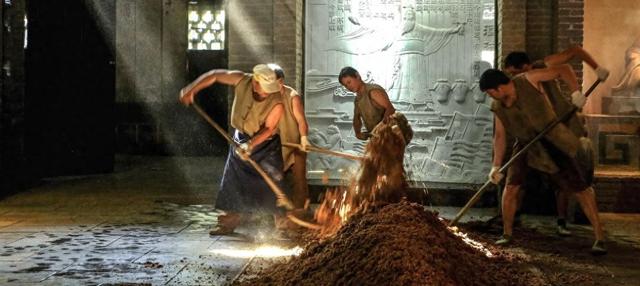
传承千年酿造技艺 2025郎酒重阳下沙大典举行
Zhong Guo Xin Wen Wang· 2025-10-31 06:19
Core Viewpoint - The event "2025 Langjiu Chongyang Down Sand Ceremony" highlights the significance of the brewing season for sauce-flavored liquor, emphasizing the commitment to quality and cultural heritage in the liquor industry [1][3]. Group 1: Industry Significance - The Ministry of Industry and Information Technology has recognized the liquor industry alongside silk, tea, and ceramics as a "historical classic industry," elevating its strategic value at the national level [1]. - The recognition brings a new historical mission to leading companies like Langjiu, which aims to integrate intangible cultural heritage into its development [1][3]. Group 2: Company Strategy - Langjiu Group is guided by a three-pronged strategy focusing on "extreme quality, extreme brand, and extreme taste," creating a diverse brand culture ecosystem [1]. - The company has developed six exclusive IPs, including the Langjiu Manor Three Products Festival and the Ceramic Art Festival, to promote its cultural heritage [3]. Group 3: Quality and Production - Langjiu adheres to the "12987" brewing process, taking a full year to transform red sorghum into 63 types of original liquor, demonstrating a commitment to quality through time [3]. - The company has achieved a new height in the industry with a 20-year accumulation of high-quality sauce liquor storage [3]. Group 4: Future Aspirations - Langjiu aims to establish a significant position in the liquor industry, grow alongside Moutai, and develop the Langjiu Manor into a world-class winery [5]. - The company is committed to preserving traditional brewing techniques while innovating to elevate its cultural significance [5].


从贮存到销售数据全公开:郎酒2025重阳下沙大典诠释“透明”品质观
Huan Qiu Wang· 2025-10-30 07:00
Core Viewpoint - The recent event of the 2025 Langjiu Chongyang Downhill Ceremony highlights the significant advancements in the quality and storage capacity of Langjiu, with a current storage of 300,000 tons of sauce-flavored liquor, marking a new high in the company's history and aligning with the industry's transition to a "historical classic industry" status [1][3][5]. Production Capacity and Quality Control - Langjiu's storage capacity of 300,000 tons is a critical foundation for its positioning as a "historical classic industry," emphasizing the importance of quality control from production to storage [3][5]. - The company has adopted a "production-storage balance" model, where each ton of production corresponds to over 40,000 tons of storage, avoiding past pitfalls of focusing solely on production [5][7]. - Langjiu's strategy of limiting annual market sales to no more than one-tenth of the total storage aligns with the principles of "quality first" in the historical classic industry [5][7]. Cultural Innovation and Brand Development - The event showcased Langjiu's commitment to cultural innovation, transitioning from static heritage to dynamic activation through new product strategies and experiential marketing [7][9]. - The launch of the Langjiu Garden Architectural Art Series and the "Striving Era 1990" limited edition reflects the brand's dedication to quality and cultural expression [9][10]. - The "Red Flower Lang - Longevity Feast Chongyang" event aims to connect classic industry values with public sentiment, promoting family and cultural traditions [10][12]. Market Positioning and Future Outlook - Langjiu's efforts in quality control and cultural engagement position it as a leader in the high-quality sauce-flavored liquor market, with a focus on long-term brand building [7][12]. - The ongoing "Red Flower Lang Spring Festival Season" initiative aims to expand the brand's reach and cultural significance, reinforcing its status as a staple in various celebrations [12][13]. - The Langjiu Garden serves as a cultural experience hub, transforming "Chinese sauce liquor" into a globally understood cultural symbol, embodying the principles of open cooperation in the historical classic industry [12][13].
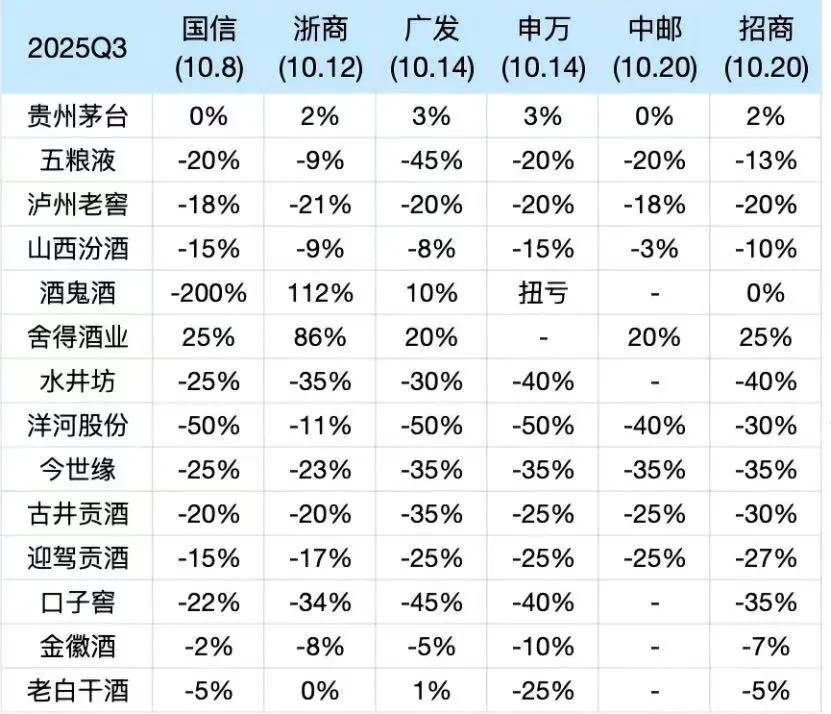
证券机构对白酒“吹冷风”,内涵五粮液降幅45%,是何居心?
Sou Hu Cai Jing· 2025-10-25 13:11
Core Viewpoint - The recent predictions from various securities firms regarding the third-quarter performance of major Chinese liquor companies, particularly in the baijiu sector, indicate a significant decline in net profits for many brands, raising concerns about the industry's stability and future growth [1][2][4]. Summary by Category Company Performance Predictions - Guotai Junan, Zheshang, and GF Securities predict that major baijiu companies will experience double-digit declines in net profits for Q3, with Wuliangye's net profit expected to drop by 45% [1][2]. - GF Securities has the most pessimistic outlook, forecasting a 50% decline for Yanghe and a 200% drop for Jiu Gui Jiu [2][3]. - Shide Jiuye is viewed positively by multiple firms, with predictions of a 20-25% increase in net profit, while Wuliangye received no positive outlook from any firm [2][3]. Market Dynamics - The baijiu industry has been undergoing an adjustment period since 2021, leading to price declines for many products, particularly affecting high-end brands like Wuliangye and Guojiao [6][7]. - The recent sales data during the "Double Festival" period showed a 20-25% decline, but this does not represent the entire quarter's performance, as companies reported stabilization in sales post-July [5][12]. Regulatory and Policy Context - The Ministry of Industry and Information Technology recently classified the baijiu industry as a "historical classic industry," which is expected to provide long-term benefits for financing, market expansion, and industry recognition [12][14]. - This classification is seen as a strategic move to enhance consumer confidence and support the industry's growth, despite short-term challenges [14]. Investor Sentiment and Reactions - The stark differences in profit predictions among securities firms have raised questions about their impartiality and the validity of their analyses, with some likening their predictions to "blind guesses" [4][5]. - Wuliangye's management expressed frustration over GF Securities' predictions, indicating a strong response to perceived inaccuracies in the analysis [5][9].


中经酒业周报∣前9月烟酒类商品零售额同比增长1.6%,酿酒入选“历史经典产业”,茅台集团部署2026年度生产质量工作,舍得“酒糟宠物食品”发布
Xin Hua Cai Jing· 2025-10-24 07:46
Core Insights - The retail sales of tobacco and alcohol products in China increased by 1.6% year-on-year in September, with a cumulative growth of 4% from January to September 2025 [3] - The liquor industry has been recognized as a "historical classic industry," which is expected to inject policy certainty for the long-term development of the sector [3] - Moutai Group has outlined its production quality work for 2026, emphasizing the importance of management, innovation, and talent development [5] Industry Dynamics - The retail sales of tobacco and alcohol products saw a year-on-year increase of 1.6% in September, with a total growth of 4% from January to September 2025 [3] - The Ministry of Industry and Information Technology has included liquor in its guidance for promoting high-quality development of historical classic industries from 2026 to 2030, highlighting the cultural and national significance of the liquor sector [3] - Guizhou Province's government has proposed measures to promote service consumption, including a shift from "selling alcohol" to "selling lifestyle," which may benefit the liquor industry [5] - The county of Gulin is aiming for a production value of 30 billion yuan from its 25 large-scale liquor enterprises, focusing on the sauce-flavored liquor sector [5] Company Updates - Moutai Group held its 2026 production quality conference, where the chairman emphasized the need for crisis awareness, quality consciousness, and a strong sense of responsibility [5] - Wuliangye Group reported a positive trend across its various business segments in the third quarter, indicating stable production and operations [6] - Yanjing Beer reported a 26% year-on-year increase in net profit for the third quarter, with total revenue reaching 13.433 billion yuan [6] - Zhujiang Beer experienced a 1.34% decline in revenue for the third quarter, although it reported a 17.05% increase in net profit for the first three quarters [6] - Shede launched a new line of high-end pet food made from brewery waste, showcasing an innovative approach to integrating the liquor industry with the pet economy [7]



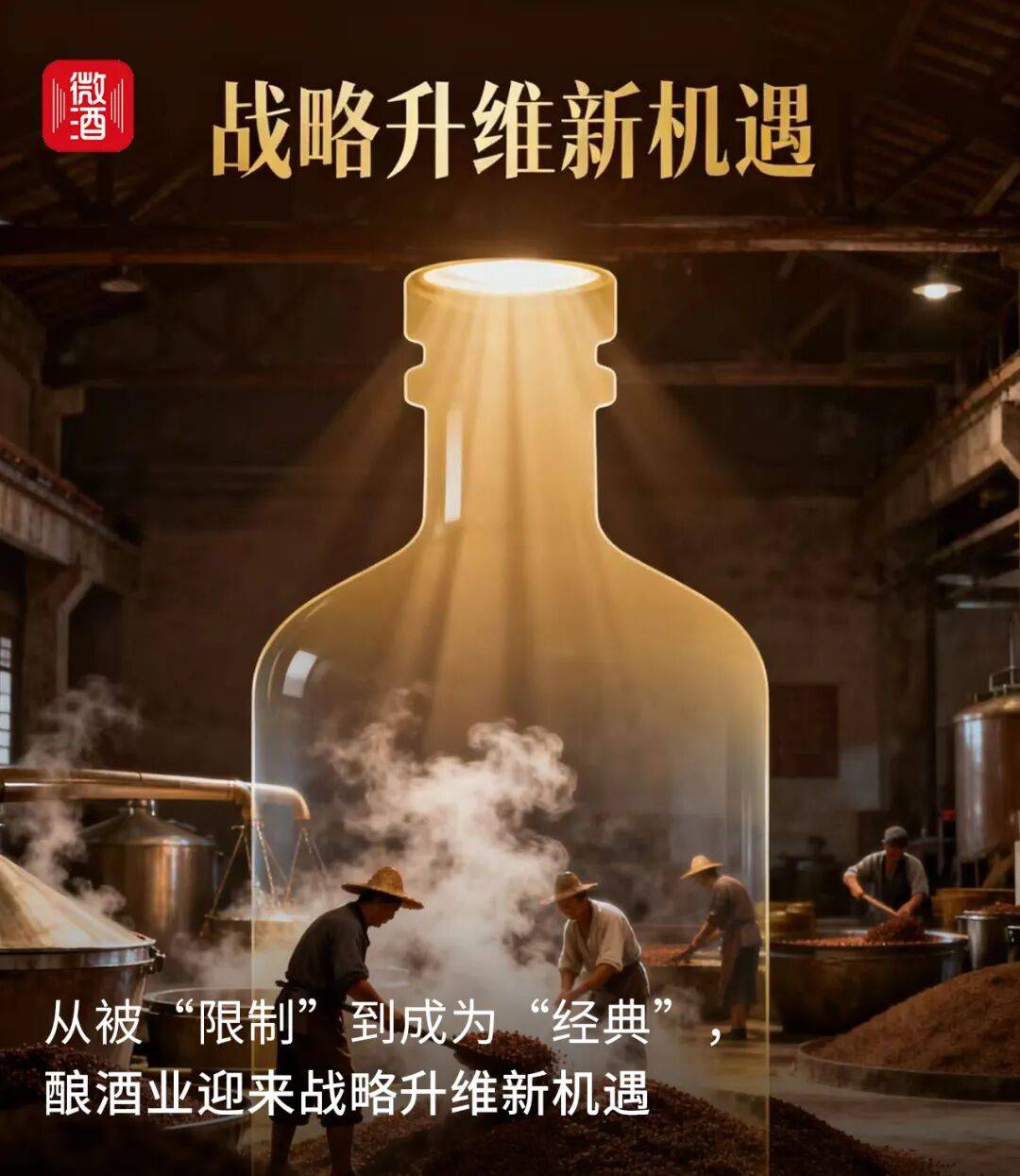
从被“限制”到成为“经典”,酿酒业迎来战略升维新机遇
Sou Hu Cai Jing· 2025-10-17 15:21
Core Viewpoint - The recent guidance from the Ministry of Industry and Information Technology marks a significant shift in the positioning of the liquor industry, elevating it to the status of a "historical classic industry" alongside silk, tea, and traditional Chinese medicine, indicating a transition towards high-quality development and cultural empowerment [2][3][7]. Group 1: Industry Positioning and Development - The liquor industry, previously labeled as a "restrictive industry," is now recognized for its cultural significance and potential for high-quality growth, reflecting a fundamental policy change from restrictive to supportive development [2][7]. - The guidance outlines a clear blueprint for the liquor industry's development over the next five to six years, emphasizing cultural empowerment, innovation, and cross-industry integration [4][5]. Group 2: Specific Goals and Planning - By 2028, the goal is to cultivate over 50 leading enterprises with a scale of 10 billion, create several industry clusters with a scale of 100 billion, and establish over 100 world-renowned brands [5]. - The guidance emphasizes the need for targeted support for leading enterprises, encouraging mergers and resource integration to enhance industry concentration and brand value [5][6]. Group 3: Technological and Cultural Integration - The guidance supports the acceleration of key technologies, such as "fermentation control," from laboratory to industrial application, providing a pathway for smart brewing and technological upgrades in the liquor industry [6]. - It encourages the integration of liquor production with tourism and cultural experiences, promoting immersive marketing strategies that transform production sites into interactive cultural consumption spaces [6]. Group 4: Strategic Implications for Enterprises - Leading liquor companies are encouraged to leverage the "historical classic industry" designation to enhance cultural narratives and pursue brand premiumization and internationalization [8]. - Regional liquor companies should capitalize on local policy advantages to develop distinctive products and explore new models like "liquor-tourism integration" to achieve differentiated growth [8]. Group 5: Overall Industry Transformation - The guidance calls for the liquor industry to redefine its value creation methods through a broader cultural perspective, advanced technology, and an open global framework [8]. - Companies are advised to align their strategies with the macro policy direction while carefully assessing their resources and capabilities to navigate the ongoing industry adjustments [8].
老生意迎来新机遇,兴业银行杭州分行让历史经典产业焕发新生
Zhong Guo Jing Ji Wang· 2025-08-20 08:04
Core Viewpoint - The historical classic industries in Zhejiang are experiencing unprecedented development opportunities, supported by innovative financial services from local banks, particularly the Industrial Bank Hangzhou Branch, which integrates traditional culture with modern financial practices [1][2][3]. Group 1: Financial Support and Innovation - The historical classic industries in Zhejiang face challenges such as long production cycles, high capital occupation, and insufficient collateral for financing [2]. - The Industrial Bank Hangzhou Branch has developed differentiated financial solutions tailored to various stages of enterprise development, including a 5 million yuan loan to support the expansion of a local chrysanthemum production company [2]. - A 200 million yuan project loan was provided for the integration of the white tea industry in Anji, facilitating land transfer and infrastructure development, which is expected to increase the average annual income of over 1,000 tea farmers by more than 8,000 yuan [2]. Group 2: Technological Empowerment - The bank encourages traditional enterprises to invest in technological innovation, promoting the transformation of traditional industries towards smart, digital, and high-end development [3]. - A silk weaving company in Huzhou has upgraded its production line with automated equipment, achieving an annual production capacity of 2 million meters of high-end silk fabric, and has become a long-term partner of several international luxury brands [3]. Group 3: Industry Ecosystem Development - The Industrial Bank Hangzhou Branch has launched various innovative financial products, including long-term low-interest loans and supply chain finance, to create an ecosystem for historical classic industries [5]. - The bank has established a team of over 170 financial specialists to provide on-site support in industrial clusters, assisting enterprises in connecting with government policies and market resources [6]. - The bank emphasizes cross-industry collaboration, integrating cultural, tourism, and technology sectors to avoid single financial services and has provided over 17 billion yuan in loans to related industries [6].

历史经典产业再创经典
Xin Hua Wang· 2025-07-20 02:54
Core Insights - The historical classic industry in Zhejiang is experiencing a revival, with a reported revenue of 33.187 billion yuan in Q1, reflecting a year-on-year growth of 6.17% [1] - The industry is focusing on integrating traditional products into modern lifestyles to attract younger consumers [3][5] Group 1: Industry Performance - Zhejiang's historical classic industry achieved a revenue of 33.187 billion yuan in Q1, marking a 6.17% increase year-on-year [1] - The province has cultivated a total of 252 historical classic old brand names [1] Group 2: Consumer Engagement - The industry is shifting from highbrow to more accessible products, exemplified by the success of the portable Qingci cup, which sold over 1,000 sets in one night [3] - Dragon Spring Sword has redefined its products by creating emotional connections with consumers through the concept of "Six Swords of Life" [4] - The yellow wine industry is innovating with new products like sparkling yellow wine and flavored variants to appeal to younger demographics [5] Group 3: Innovation and Modernization - The industry faces challenges due to a predominance of small workshops, with over 90% of market players being individual or family-run businesses [8] - Zhejiang is addressing these challenges by implementing standardization and scientific production methods in traditional industries [9] - The province is also focusing on talent development, with over 2,800 professionals trained annually in traditional industry fields [9] Group 4: Digital Transformation - The historical classic industry is undergoing digital transformation, with significant investments in projects exceeding 1 billion yuan, totaling 17.91 billion yuan across 109 key projects [10] - The government is launching initiatives to enhance collaboration between various stakeholders in the industry, aiming to establish a high-level development framework by 2027 [10]